This site is supported by our readers. We may earn a commission, at no cost to you, if you purchase through links.

The wrong substrate can kill a corn snake—not dramatically, but slowly, through respiratory damage, failed sheds, and stress that compounds over months. Cedar shavings, for instance, release aromatic oils potent enough to irritate a snake’s lungs within days, yet they still appear in big-box pet stores right next to reptile enclosures.
Picking bedding feels straightforward until you realize how much it affects humidity balance, burrowing behavior, and long-term health. Corn snakes require 3–4 inches of stable, breathable substrate to thrive, as this directly impacts their ability to regulate moisture and exhibit natural behaviors.
The nine options in this buyers guide bedding for corn snakes breakdown cover every serious contender worth your money, ensuring you avoid harmful choices while meeting your snake’s critical needs.
Table Of Contents
- Key Takeaways
- Best Bedding for Corn Snakes
- Top 9 Corn Snake Beddings
- 1. Zoo Med Aspen Snake Bedding
- 2. Galápagos Aspen Digs Natural Bedding
- 3. Zilla Reptile Terrarium Substrate
- 4. Exo Terra Snake Bedding Substrate
- 5. Riare Coconut Coir Terrarium Substrate
- 6. Riare Coconut Husk Reptile Substrate
- 7. Legigo Coconut Chip Substrate for Reptiles
- 8. Flukers Premium Cypress Reptile Bedding
- 9. Rep Buddy Reptile Carpet Mat
- Aspen, Coconut, and Cypress Compared
- Fine Aspen Shavings for Stable Burrows
- Aspen Chips for Easier Spot Cleaning
- Coconut Fiber for Dry-climate Humidity Support
- Coconut Husk Chips for Moisture Retention and Texture
- Cypress Bedding for Humidity-focused Setups
- Reptile Carpet Versus Loose Bedding
- Best Material for Odor Control
- Best Material for Long-term Value
- Safety and Health Buying Factors
- Avoiding Pine and Cedar Shavings
- Why Sand, Gravel, and Walnut Shells Are Unsafe
- Dust Levels and Respiratory Health
- Scent-free Bedding Considerations
- Impaction Risk From Loose Substrates
- Mold Prevention in High-humidity Bedding
- Scale Rot Risks From Overly Damp Enclosures
- Choosing Hypoallergenic and Heat-treated Options
- Cleaning, Humidity, and Maintenance
- Corn Snake Humidity Range: 40–60%
- Shedding Humidity Range: 60–70%
- Using Humid Hides With Dry Aspen Bedding
- Misting Coconut Fiber Safely
- Daily Spot-cleaning Routine
- Full Replacement Schedule for Wood Shavings
- Full Replacement Schedule for Coconut Substrates
- Storing Bulk Bedding Safely
- Reducing Odor Between Full Cleanouts
- Eco-friendly Disposal and Compostable Options
- Frequently Asked Questions (FAQs)
- What’s the best substrate to use for a corn snake?
- What’s the best flooring for a corn snake?
- Can corn snakes use paper bedding?
- What substrate should a corn snake have?
- How deep should corn snake bedding be?
- What is the best bedding for snakes?
- What should I use for snake bedding?
- What is the best bedding for a corn snake?
- What is the best substrate for corn snakes?
- How to choose a corn snake enclosure?
- Conclusion
Key Takeaways
- Cedar and pine shavings release toxic oils that can damage your corn snake’s lungs within days, so stick to aspen, coconut fiber, or cypress every time.
- Aim for 3–4 inches of substrate depth — anything less cuts off your snake’s ability to burrow, regulate moisture, and behave naturally.
- Aspen shavings suit most setups for their low dust and easy spot-cleaning, while coconut fiber is the better pick if you’re keeping humidity stable in a dry climate.
- Keep enclosure humidity at 40–60% year-round and bump it to 60–70% during shedding — your substrate choice drives how easily you hit and hold those numbers.
Best Bedding for Corn Snakes
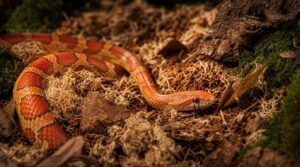
Picking the right bedding is one of the most important decisions you’ll make for your corn snake’s enclosure. The wrong substrate can affect humidity, trigger respiratory issues, or just leave your snake unable to do what it does naturally — burrow.
Getting the substrate right also makes a real difference come shedding time — a good breakdown of corn snake substrate options and humidity control can help you nail both from the start.
Here’s a look at the best options available in 2026.
Why Substrate Choice Affects Health, Humidity, and Comfort
Choosing the right bedding for corn snakes matters more than most keepers realize. The wrong substrate throws off moisture balance, strains respiratory health, and chips away at your snake’s skin integrity over time.
Good bedding provides thermal comfort, keeps humidity stable between 40–60%, and reduces stress by giving your snake a familiar, safe environment to rest and feel secure. Cedar shavings are among the hazardous substrates to avoid for reptile health.
Matching Bedding to Corn Snake Burrowing Behavior
Corn snakes are natural diggers — they burrow to hide, regulate temperature, and feel secure. The bedding you choose directly shapes their burrowing quality and daily comfort. Substrate flexibility is critical: stiff or coarse materials impede smooth tunnel formation.
- Tunnel Shape Influence: Fine particles let snakes push and mold stable passages.
- Burrow Depth Preference: Snakes favor soft, pliable layers they can fully submerse in.
- Particle Size Suitability: Smaller, uniform pieces create drag-free, collapse-resistant tunnels.
- Burrowing Behavior Support: Burrow-friendly bedding like aspen shavings or coconut fiber mirrors their natural instincts.
Ideal Substrate Depth: Minimum 2 Inches, Optimal 3–4 Inches
Depth matters more than most keepers realize. A minimum of 2 inches of substrate keeps things functional, but 3–4 inches is where corn snakes truly thrive — supporting burrowing behavior, stress mitigation, and natural tunnel-building.
Think of it as layered substrate working in layers: each inch adds stability, reduces depth compaction, and lets your snake feel genuinely hidden.
A gradual depth increase also creates aesthetic depth balance without overwhelming the enclosure.
Best Bedding Types for Adult Corn Snakes
Once your enclosure hits that 3–4 inch depth sweet spot, picking the right material makes all the difference for adult corn snakes.
- Aspen bedding — delivers strong burrow stability and quick moisture absorption
- Coconut fiber substrate — facilitates burrowing behavior while managing humidity in dry climates
- Cypress mulch — balances temperature regulation with natural mold resistance
- Heat-treated aspen — best cost efficiency with a lighter environmental footprint
Best Bedding Types for Juvenile Corn Snakes
Young corn snakes require forgiving substrate that aids juvenile burrowing without overwhelming their small bodies. Low dust is crucial, as their lungs are still developing.
Choosing the right bedding from the start is essential. The best options balance burrowing support, cost efficiency, and health. Below are key bedding types and their benefits:
| Bedding | Key Benefit | Humidity Control |
|---|---|---|
| Aspen shavings | Stress reduction, light burrowing | Moderate |
| Coconut coir | Microbe-friendly bedding, soft texture | Excellent |
| Cypress mulch | Temperature compatibility, mold resistance | Good |
The best bedding for corn snakes combines burrowing aid, cost efficiency, and overall health.
Top 9 Corn Snake Beddings
Not all bedding lives up to its label, so I tested and compared nine options to find the ones actually worth your money. Each pick covers a different need — from deep-burrowing support to humidity control to easy cleanup. Here’s what made the cut.
1. Zoo Med Aspen Snake Bedding
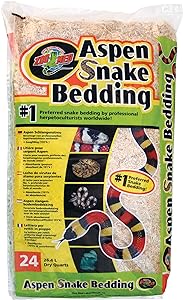
Zoo Med’s aspen snake bedding is one of those products that quietly earns its keep. Made from 100% natural aspen shavings with no cedar oils or toxic resins, it’s genuinely safe for your corn snake’s respiratory health.
The 99.9% dust-free formula means you won’t be sneezing either.
Its high absorbency — around 191% — keeps the enclosure surface dry while controlling odors between spot cleans.
The light color is a bonus too, making shed skin and any unwanted hitchhikers easy to spot.
| Best For | Reptile and small animal owners who want a safe, natural bedding that supports burrowing behavior and keeps enclosures clean and dry. |
|---|---|
| Material | Aspen fiber |
| Dust Level | Low-dust |
| Burrowing Support | Yes |
| Odor Control | Yes |
| Biodegradable | Yes |
| Spot-Cleanable | Yes |
| Additional Features |
|
- Made from 100% natural aspen fiber — no cedar oils or toxic resins, so it’s safe for sensitive respiratory systems
- Absorbs around 191% of its weight, keeping the surface dry and cutting down on odor between cleanings
- Light color makes it easy to spot shed skin, waste, or anything that shouldn’t be there
- Not a good fit for desert species that need dry, sandy substrate or for any aquatic setup
- Bulkier and heavier than standard wood shavings, so storage and shipping can be a bit of a hassle
- Saturated areas need full replacement over time to prevent mold — spot cleaning alone won’t cut it
2. Galápagos Aspen Digs Natural Bedding
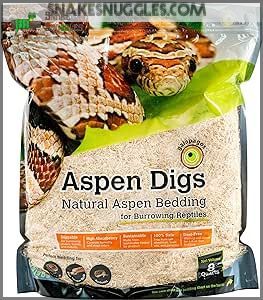
Galápagos Aspen Digs keeps things simple — and that’s exactly what makes it work. It’s 100% pure aspen wood, free of added oils, resins, or cedar, so you’re not gambling with your snake’s respiratory health. The low-dust formula helps there too. At around $8.99 for an 8-quart bag, it’s one of the better budget-friendly options without cutting corners on quality.
The soft, diggable texture enables natural burrowing, and spot-cleaning is quick and easy between full changes.
| Best For | Snake and small mammal owners who want a clean, affordable, natural bedding without the chemical concerns of cedar or pine. |
|---|---|
| Material | Aspen wood shavings |
| Dust Level | Low-dust |
| Burrowing Support | Yes |
| Odor Control | Yes |
| Biodegradable | Yes |
| Spot-Cleanable | Yes |
| Additional Features |
|
- Pure aspen with no added oils or resins — safer for sensitive respiratory systems
- Soft and diggable, so burrowing animals like hamsters can actually do their thing
- Easy to spot-clean and controls odor well between full changes
- Too dry for tropical reptiles that need higher humidity
- Some bags come with more dust than expected — worth sifting before use
- 8 quarts goes faster than you’d think for larger enclosures
3. Zilla Reptile Terrarium Substrate
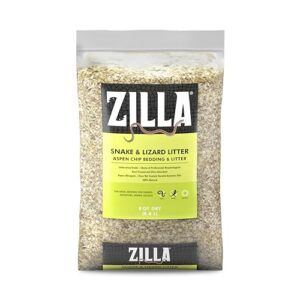
Zilla’s heat-treated aspen chips bring something the budget bags don’t — professional-grade absorbency without the mess. The small, loose chip size makes spot-cleaning genuinely fast, so you’re not digging through a whole layer to find one urate.
Full substrate change every 3–4 weeks keeps things truly hygienic — find out why aspen tops the list in this guide to best substrates for milk snakes.
It’s 100% natural, hypo-allergenic, and unscented, which matters for a snake that lives nose-down in its bedding. The trade-off is tunnel stability — deep burrowers may need hide support.
At 8 quarts, it suits a standard adult corn snake enclosure comfortably.
| Best For | Corn snakes, garter snakes, and sand boas whose owners want a low-maintenance substrate that’s easy to spot-clean and gentle on respiratory health. |
|---|---|
| Material | Aspen chips |
| Dust Level | Low-dust |
| Burrowing Support | Yes |
| Odor Control | Yes |
| Biodegradable | Yes |
| Spot-Cleanable | Yes |
| Additional Features |
|
- Ultra-absorbent chips lock in moisture and odor, so full substrate swaps happen less often
- Low dust means less irritation for snakes that spend most of their time burrowing nose-first
- Small chip size makes spotting and removing waste quick — in and out in under a minute
- Fine chips cling to prey items, making it a poor choice for hatchlings or species eating small whole feeders
- Won’t hold tunnels well for deep burrowers without added hide support
- Pricier than bulk aspen shavings, and the bag itself feels a little flimsy
4. Exo Terra Snake Bedding Substrate
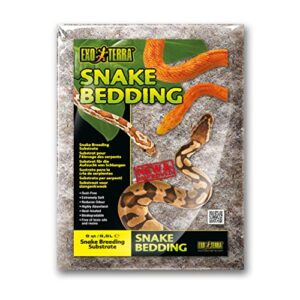
Exo Terra’s snake bedding is where European engineering meets the terrarium floor. Made from sustainably sourced wood fibers, it’s heat-treated for fast drying and absorbs roughly three times its weight in moisture — that’s serious odor control between cleanings.
It’s soft enough for hatchlings and largely dust-free, so respiratory irritation stays low. The substrate’s design prioritizes both comfort and hygiene for your reptile.
Spot-clean daily, swap the whole substrate every eight weeks, and you’re set. This maintenance routine ensures a clean, healthy environment with minimal effort.
One critical note: remove your corn snake during feeding to avoid accidental ingestion of the bedding material.
| Best For | Snake keepers — from first-time hobbyists with hatchlings to professional breeders who need reliable, low-maintenance bedding. |
|---|---|
| Material | Natural wood fibers |
| Dust Level | Low-dust |
| Burrowing Support | Yes |
| Odor Control | Yes |
| Biodegradable | Yes |
| Spot-Cleanable | Yes |
| Additional Features |
|
- Absorbs about 3x its weight in liquid, so odors stay in check between full substrate changes
- Soft and low-dust, making it a safe pick for young or sensitive reptiles
- Supports natural burrowing instincts, which is genuinely good for your snake’s wellbeing
- Not 100% dust-free — fine particles can still show up, especially in enclosed cage setups
- Larger tanks (like a 40-gallon) will need multiple bags to hit the right depth, which adds cost
- You have to pull your snake out during feeding every time, or risk it swallowing bedding with its meal
5. Riare Coconut Coir Terrarium Substrate
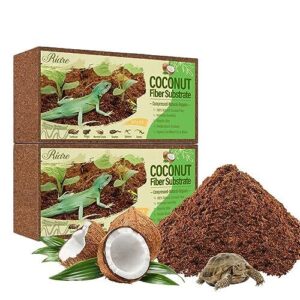
Coconut coir surprises keepers when first used. Its compressed bricks expand into a soft, fibrous bedding that allows corn snakes to burrow without abrasive friction.
It holds moisture well enough to buffer humidity swings between misting sessions.
The substrate is 100% natural, pH-neutral, and free from respiratory irritants found in pine or cedar.
Spot-cleaning is straightforward, and when you’re done, toss it in the compost bin.
| Best For | Keepers of humidity-loving species like ball pythons, tropical frogs, or corn snakes who want a natural, low-fuss substrate they can compost when done. |
|---|---|
| Material | Coconut coir |
| Dust Level | Dust-free |
| Burrowing Support | Yes |
| Odor Control | Yes |
| Biodegradable | Yes |
| Spot-Cleanable | No |
| Additional Features |
|
- Expands from a compact brick into soft, fluffy bedding that’s gentle on burrowing animals
- Holds moisture well and helps buffer humidity between misting sessions
- 100% natural and biodegradable — spent substrate goes straight to the compost or garden
- Two bricks may not cut it for larger enclosures, so budget for extras
- Dries out fast — expect to re-hydrate every five to seven days to keep humidity on track
- Can get sticky on hands and glass when wet, which adds a little extra cleanup
6. Riare Coconut Husk Reptile Substrate
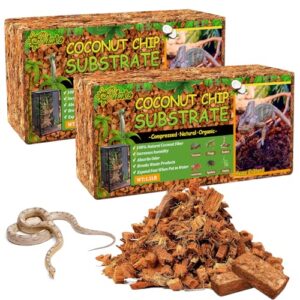
Where the coir is all fine fiber, the husk version brings a chunkier texture to the table. Riare’s compressed bricks expand roughly 3–4 times their dry size once hydrated, creating a loose, breathable bed that corn snakes actively push through.
This substrate holds humidity in the 40–60% range without turning soggy, while its chunky pieces resist compaction better than fine coir. No dyes, no added chemicals—and when you’re done, it goes straight to the compost bin.
| Best For | Reptile owners keeping tropical species like ball pythons, geckos, or frogs who want a natural-feeling substrate that holds humidity without a lot of fuss. |
|---|---|
| Material | Coconut husk chips |
| Dust Level | No added dust |
| Burrowing Support | Yes |
| Odor Control | Yes |
| Biodegradable | Yes |
| Spot-Cleanable | No |
| Additional Features |
|
- Expands 3–4x when hydrated, so two small bricks go a long way
- Chunky texture stays loose and breathable, great for burrowing and resists packing down over time
- No dyes or chemicals, and when it’s spent, toss it straight in the garden
- Some batches have turned up small debris like plastic bits or clay clumps, so a quick screen before use is a good habit
- Too much moisture with poor airflow can lead to mold, so ventilation matters
- Advertised weight and volume specs don’t always match what you actually get, which can make it tricky to plan ahead
7. Legigo Coconut Chip Substrate for Reptiles
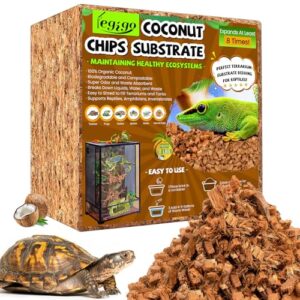
Legigo employs a chunky-chip approach, creating a substrate that expands after hydration into a loose, airy bed. This texture allows corn snakes to push through and tunnel, mimicking natural behavior.
It holds moderate humidity effectively while absorbing waste and odors without becoming waterlogged. The material maintains structural integrity, preventing soggy conditions in enclosures.
One honest caveat: some batches may contain dust, off-odors, or plastic fragments. Always inspect before use to ensure safety for your reptile.
At $23.99, Legigo delivers strong value across multiple tanks, balancing performance and affordability despite minor quality inconsistencies.
| Best For | Reptile and amphibian owners who want a natural, humidity-friendly substrate that doubles as a garden amendment and won’t break the bank. |
|---|---|
| Material | Coconut husk chips |
| Dust Level | Variable dust |
| Burrowing Support | Yes |
| Odor Control | Yes |
| Biodegradable | Yes |
| Spot-Cleanable | No |
| Additional Features |
|
- Expands from a compact brick into a fluffy, burrowing-friendly bed — great for corn snakes and other digging species
- Holds humidity well and soaks up waste and odors, keeping enclosures fresher for longer
- Versatile enough to use across multiple tanks or repurpose in your garden, making the $23.99 price tag go further
- Some batches have shown up with dust, odd smells, or plastic fragments — always inspect before putting it in your enclosure
- Needs regular rehydration in dry climates, which adds a bit of maintenance to your routine
- Chip sizes can vary batch to batch, which makes it trickier to blend consistently with other substrates
8. Flukers Premium Cypress Reptile Bedding
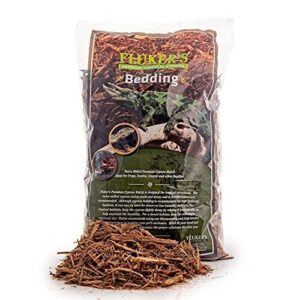
Fluker’s Premium Cypress Bedding offers a softer middle ground for reptile setups where chunky coconut chips feel too coarse. Its twice-milled cypress mulch provides a fine texture that supports burrowing without scratching delicate scales.
When misted lightly, it effectively holds humidity well, aiding reptiles during shedding cycles. However, it stays relatively dry otherwise, making it particularly suitable for corn snakes. For optimal use, it’s best used as a mix-in rather than a solo substrate.
Always watch for over-wetting, as poor ventilation can rapidly invite mold. This substrate demands careful moisture management to maintain a healthy environment.
| Best For | Reptile owners who want a soft, fine-textured substrate that supports burrowing and helps manage humidity for species like corn snakes, frogs, and lizards. |
|---|---|
| Material | Cypress mulch |
| Dust Level | Low-dust |
| Burrowing Support | Yes |
| Odor Control | Yes |
| Biodegradable | Yes |
| Spot-Cleanable | Yes |
| Additional Features |
|
- Twice-milled cypress gives it a smooth, gentle texture that’s easy on scales and great for natural burrowing behavior.
- Holds moisture well when misted, making it a solid pick for humidity-dependent species during shedding.
- Low dust means better air quality for both your reptile and you.
- Some buyers have reported getting noticeably less than the advertised 10 lb — worth keeping in mind before ordering in bulk.
- Works best as a mix-in with something like coconut coir, not as a standalone substrate.
- Needs consistent misting in tropical setups, and over-wetting can lead to mold if ventilation isn’t on point.
9. Rep Buddy Reptile Carpet Mat
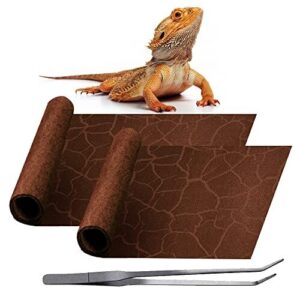
The Rep Buddy Reptile Carpet Mat is a high-density, non-abrasive tech-fiber mat that comes in a two-piece pack — so you always have a clean one ready while the other dries.
It won’t support burrowing, so pair it with hides for enrichment.
Cleaning is simple: shake off debris, rinse with cool water, and hang dry. Just note it’s hand-wash only, not machine-washable.
| Best For | Reptile owners who want a low-maintenance, reusable substrate that’s safe for lizards, geckos, snakes, and other reptiles prone to impaction from loose bedding. |
|---|---|
| Material | Tech-fiber fabric |
| Dust Level | No loose particles |
| Burrowing Support | No |
| Odor Control | Limited |
| Biodegradable | No |
| Spot-Cleanable | Yes |
| Additional Features |
|
- Comes as a two-pack, so you can swap one in while the other dries — no downtime for your tank.
- Soft, non-abrasive surface protects delicate claws and mouths, and cuts down impaction risk.
- Trims to fit any tank shape or size, which makes it way more versatile than pre-cut options.
- Hand-wash only — no tossing it in the machine, which can feel like a chore after messy feedings.
- Bearded dragon claws can snag on the fibers, so you’ll want to keep an eye on that.
- Low absorbency means it’s not a great fit for humid setups or tanks with a lot of water spillage.
Aspen, Coconut, and Cypress Compared
Not all substrates behave the same way once they’re in your enclosure, and picking the wrong one can set you back fast. Aspen, coconut fiber, and cypress each bring distinct advantages—such as burrowing support, humidity control, and texture—to meet your corn snake’s needs.
Here’s how they stack up across the factors that matter most for your corn snake, ensuring you make an informed choice for their habitat.
Fine Aspen Shavings for Stable Burrows
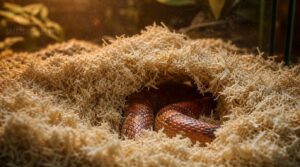
Fine aspen shavings are the ideal choice for burrow collapse prevention in corn snakes. The soft fibers compact just enough to hold tunnel walls steady without sealing shut.
At 3–4 inches deep, your corn snake receives genuine support for its burrowing behavior. This depth ensures the substrate effectively accommodates natural digging instincts.
Natural substrate compaction further aids moisture management, temperature regulation, and air quality control, while keeping dust levels impressively low.
Aspen Chips for Easier Spot Cleaning
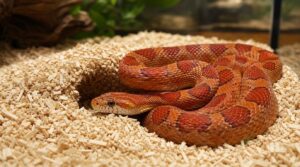
Aspen chips take the hassle out of spot cleaning for corn snakes. Their consistent chip size benefits you immediately — soiled sections stand out against the light wood, giving you a clear visual spotting aid.
Absorbency speed is also impressive, wicking moisture quickly so damp patches don’t linger. This ensures a cleaner environment with minimal effort.
Low-dust, heat-treated aspen bedding options simplify quick waste isolation without disrupting your snake’s burrow. This maintains hygiene while preserving your pet’s natural habitat.
Coconut Fiber for Dry-climate Humidity Support
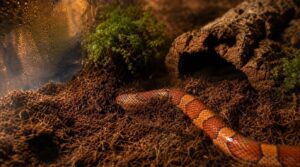
If you keep your corn snake in a dry climate, coconut fiber substrate is your best friend for natural moisture control. It holds water up to ten times its weight, enables gradual moisture release, and supports consistent humidity levels without constant misting.
- Microclimate Creation – builds humidity pockets beneath the surface
- Coir Hydration Technique – hydrate before use, then let it settle
- Dust Mitigation Strategy – rinse first to protect respiratory health
- Extended Substrate Life – lasts months with proper dry climate husbandry
Coconut Husk Chips for Moisture Retention and Texture
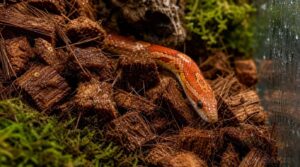
Coconut husk chips work differently than coir — think of them as the three-dimensional version. Their porous structure holds up to 85% of their weight in water, building a natural moisture gradient that releases humidity slowly over hours, not minutes. That steady release matters during shedding cycles.
| Feature | Coconut Chip Substrate | Coconut Husk Brick |
|---|---|---|
| Moisture retention | High, gradual release | Very high after hydration |
| Burrowing substrate texture | Loose, airy, springy | Dense until expanded |
| Mold-Resistant Structure | Strong within 40–60% RH | Moderate if overwatered |
The fibrous composition also offers surprising thermal insulation, keeping burrow zones stable overnight. Add microfauna support and weight efficiency for bioactive builds, and these chips earn their place.
Cypress Bedding for Humidity-focused Setups
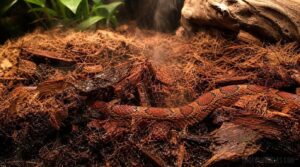
Cypress mulch is a slow-burn solution for humidity-focused setups. It builds a steady moisture gradient through the substrate depth, releasing water gradually rather than dumping it all at once. This temperature interaction maintains stable burrow zones, even overnight.
For corn snake owners in dry environments, cypress blends offer blend optimization without waterlogging. Substrate weight remains manageable at 3–4 inches, ensuring practical usability while preventing excess moisture retention.
Reptile Carpet Versus Loose Bedding
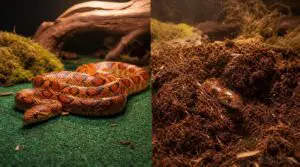
Reptile carpet, like the REP BUDDY Reptile Carpet, excels in cleaning simplicity — lift it out, wash it, done. It also offers decent heat retention under a basking spot.
However, a key trade-off exists: corn snakes lose their natural burrowing behavior entirely when using such substrates.
Loose substrates, by contrast, support texture preference, reduce bacterial growth risks when dry, and deliver better cost efficiency over time.
Best Material for Odor Control
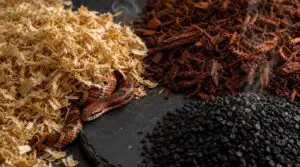
Aspen shavings effectively control odors — their porous surface pulls in ammonia before it builds up. Cypress takes it further, using natural resins for odor mitigation that extends odor control by a few extra days.
For a real boost, pair either one with activated carbon or a light baking soda layer underneath. Both act as an odor absorber without disrupting moisture balance or airflow ventilation.
Best Material for Long-term Value
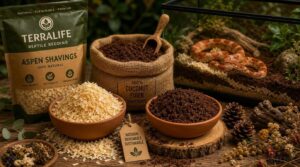
Odor control matters, but so does your wallet. For pure price-to-performance, aspen shavings remain reliable 3–5 weeks per cycle, while coconut fiber lasts up to 6–8 weeks — impressive longevity metrics without premium pricing.
- Bulk savings cut costs across multiple enclosures
- Sustainable sourcing means biodegradable bedding alternatives for reptiles
- Long-term substrate performance and odor control reduce replacement frequency
- Budget-friendly reptile bedding options support value retention over time
Safety and Health Buying Factors
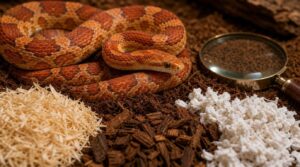
Picking the right bedding isn’t just about comfort — it’s about keeping your snake genuinely safe. Some common substrates can cause serious health problems, from respiratory irritation to life-threatening impaction.
The right bedding protects your snake’s life, not just its comfort
Here’s what to watch for before you buy.
Avoiding Pine and Cedar Shavings
Steering clear of cedar and pine shavings is non-negotiable for corn snakes. Both release aromatic oil hazards and volatile compound risks that irritate the respiratory tract quickly.
Long-term exposure can affect liver enzyme levels, and Resin toxicity doesn’t disappear with heat treatment. When choosing safe reptile bedding, these materials simply don’t belong in your enclosure—full stop.
Why Sand, Gravel, and Walnut Shells Are Unsafe
Sand, gravel, and walnut shells might look tidy in a pet store display, but they’re genuinely harmful for corn snakes. The health implications of inappropriate substrates add up fast:
- Indigestible particle ingestion and impaction hazards of sand and gravel can silently obstruct digestion
- Tunnel collapse from loose particles stresses skin and eyes repeatedly
- Abrasive skin injury, moisture volatility, and crystalline silica dust create compounding daily risks
Stick to softer, proven options.
Dust Levels and Respiratory Health
Fine dust from dry bedding isn’t just a nuisance — airborne dust can trigger respiratory irritation in both your snake and you. Low-dust substrates like heat-treated aspen and coconut fiber support dust reduction and lower bioaerosol risk. During cleaning, protective masks help with dust inhalation prevention, especially for hypoallergenic-sensitive keepers.
| Bedding Type | Dust Level | Respiratory Health Risk |
|---|---|---|
| Heat-treated Aspen | Very Low | Minimal — hypoallergenic |
| Coconut Fiber | Low | Low — dust mitigation built-in |
| Untreated Shavings | Moderate–High | Higher respiratory irritation risk |
Scent-free Bedding Considerations
Choosing unscented raw fibers protects your corn snake, too. Pure material sourcing ensures no hidden non-volatile compounds or masking perfumes that could trigger reactions. Look for a clean packaging seal confirming zero fragrance additives.
Allergen-safe handling remains manageable when you stick to low-dust, hypoallergenic natural materials that rely on genuine absorbency for odor control, not artificial scent coverage.
Impaction Risk From Loose Substrates
Loose substrates with very fine particle size raise impaction risk when your corn snake accidentally swallows bedding during feeding. Keep a dedicated feeding zone free of loose material to cut that risk immediately.
Poor hydration status and a weak thermal gradient slow gut motility, making substrate harder to pass. Fix both, and substrate impaction becomes far less likely.
Mold Prevention in High-humidity Bedding
Mold thrives wherever moisture lingers, so your first defense is a reliable hygrometer placement inside the enclosure — not guesswork. Keep humidity between 40 and 60 percent with smart ventilation strategies, like a quiet fan moving air across the bedding.
Follow a consistent spot-cleaning protocol to remove damp patches daily.
Mold-resistant fibers and moisture barriers under the substrate help block fungal growth before it starts.
Scale Rot Risks From Overly Damp Enclosures
Scale rot doesn’t announce itself — it creeps in through Wet Spot Accumulation and Prolonged Skin Contact when your corn snake burrows into damp zones. Biofilm Development turns soiled bedding into a bacterial reservoir, especially where Cool Moisture Retention lingers after misting. An Improper Humid Hide compounds the problem fast.
Watch for these three warning signs:
- Discolored or blistered ventral scales
- Soft, unusually wet patches in burrow areas
- Persistent musty odor despite regular spot-cleaning
Substrate moisture management and consistent humidity control are your best defense.
Choosing Hypoallergenic and Heat-treated Options
Heat-treated aspen bedding offers benefits your snake in ways untreated wood cannot. The heat-treatment standards used during processing suppress microbial inhibition, killing surface mold spores without degrading structure.
Low dust levels mean fewer airborne particles irritating your snake’s airways. Hypoallergenic bedding choices that disclose fiber denier and allergen certification on the label provide a health-conscious option.
Look for products with transparent labeling — heat-treated aspen chips remain a dependable, health-conscious pick for your reptile’s environment.
Cleaning, Humidity, and Maintenance
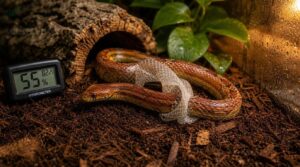
Getting humidity and cleaning right isn’t complicated, but the details matter more than most people expect.
Your substrate choice drives almost every maintenance decision you’ll make, from how often you spot-clean to whether your snake sails through a shed.
Here’s what you need to know to keep things running smoothly.
Corn Snake Humidity Range: 40–60%
Corn snakes thrive when enclosure humidity remains between 40 and 60 percent year-round. Treat this range as your humidity fluctuation buffer — tight enough to prevent dry skin, yet loose enough to avoid mold. Aspen bedding and coconut fiber substrate support microclimate zones within this window, but balanced ventilation is equally critical.
Place your hygrometer at snake head height to ensure accurate readings, and adjust humidity seasonally as indoor air dries in winter.
Shedding Humidity Range: 60–70%
When your corn snake enters a shedding cycle, bump humidity up to 60–70% RH. That extra moisture delivers real skin hydration support, keeping the shed pliable from nose to tail. Use RH monitoring devices to track the gradual humidity increase — sudden spikes stress your snake.
Smart ventilation and humidity balance, combined with careful mist application frequency, prevent substrate saturation while maintaining reliable humidity control and retention.
Using Humid Hides With Dry Aspen Bedding
Once humidity reaches the 60–70% shedding window, a humid hide handles the essential humidity needs — eliminating the need to soak the entire enclosure. Maintain aspen bedding dry outside the hide to support burrowing structures, and use sphagnum moss inside as the chosen moisture source.
- Place the humid hide near the warm side to establish the proper temperature gradient.
- Use a hygrometer daily for humidity testing both inside and outside the hide.
- Keep aspen bedding outside the hide loose and dry to ensure tunneling support.
- Check the hide’s ventilation design daily — trapped moisture can quickly lead to mold.
Misting Coconut Fiber Safely
Aspen keeps things dry, but coconut fiber works differently — it needs moisture to perform well. Mist your coconut fiber lightly, two to three times daily, and always run humidity checks with a hygrometer afterward to maintain the 40–60% range. Use distilled water for better purity, as tap water minerals build up quickly.
| Misting Practice | Why It Matters |
|---|---|
| Light mist volume only | Prevents puddles and mold growth |
| Mist timing log | Tracks patterns, helps you adjust |
| Ventilation after mist | Reduces fungal risk quickly |
| Preparation and hydration of coconut fiber bricks beforehand | Ensures even moisture distribution |
| Humid hide maintenance | Balances dry zones in the enclosure |
For your corn snake’s humidity control, timing matters — mist during daytime hours so moisture levels drop naturally before night.
Daily Spot-cleaning Routine
Think of spot cleaning as your first line of defense — a quick daily pass that keeps bigger problems from sneaking up on you. Grab your spot cleaning tools: a small scoop and forceps work best.
Your daily cleaning schedule looks like this:
- Remove waste and uneaten food within 24 hours
- Replace removed substrate with fresh material immediately
- Wipe surfaces using your preferred surface sanitizing method
Log observations daily — that observation log tracking habit reveals patterns and keeps your maintenance schedule for reptile bedding tight.
Full Replacement Schedule for Wood Shavings
Even with daily spot cleaning, aspen shavings require full replacement every 7 to 14 days — sooner if heavy waste or rising moisture is detected. Ammonia control is your indicator: if the smell sharpens, act immediately.
Wear protective gear during cleanouts, and log each date for accurate record keeping.
Perform moisture checks before laying fresh shavings to maintain a healthy environment.
Full Replacement Schedule for Coconut Substrates
Coconut substrate lasts longer than aspen, but it still requires a full replacement every 4 to 6 months for adult corn snakes and every 2 to 4 months for juveniles.
Use log tracking to proactively address issues. Monitor for mold indicators like white patches or ammonia odor, and check depth monitoring regularly to ensure substrate conditions remain optimal.
Always follow proper sanitation steps when replacing your coconut chip substrate to maintain a healthy environment.
Storing Bulk Bedding Safely
Bulk bedding stored carelessly can turn into a moldy, pest-riddled mess before you ever use it. Keep supplies in breathable containers or canvas bags on fire-proof shelving — never directly on concrete.
Label rotation matters: Mark each bag with the date and check monthly for moisture.
Add silica gel for humidity control.
Use pest barriers to prevent beetles or moths from contaminating your stock.
Reducing Odor Between Full Cleanouts
Odor control doesn’t require a full cleanout every time you notice a smell. Small daily habits make a real difference.
- Scoop waste daily and top with a fresh barrier substrate layer to trap odors at the surface.
- Add an activated carbon mix to absorb odor molecules without raising humidity.
- Place an odor trapping mat near the enclosure entrance.
- Run a low-volume fan nearby for gentle air circulation.
- Use a probiotic litter aid — these biodegradable formulas promote beneficial bacteria that naturally neutralize your corn snake’s waste odors.
Eco-friendly Disposal and Compostable Options
When you’re done with used bedding, don’t just toss it. Coconut fiber and aspen are both biodegradable, making them eco-friendly choices. Proper disposal ensures these materials contribute positively to the environment.
Coconut coir, in particular, is suitable for home composting—it breaks down within 2–6 months when mixed with kitchen scraps to maintain a carbon balance. This process transforms waste into nutrient-rich soil, supporting sustainable practices.
Look for products with biodegradable packaging certified under EN 13432 or OK compost HOME standards. Many municipalities accept these materials through municipal organic waste programs, further enhancing their environmentally sustainable credentials.
Frequently Asked Questions (FAQs)
What’s the best substrate to use for a corn snake?
Aspen shavings and coconut fiber top the list for corn snakes — both support natural burrowing, humidity control, and respiratory safety, making them the go-to choices when selecting the right bedding.
What’s the best flooring for a corn snake?
The best flooring for a corn snake is fine aspen shavings — they nail water absorption, support natural burrowing, and keep humidity control steady at 40–60%, making them the top substrate choice.
Can corn snakes use paper bedding?
Paper bedding works like a placeholder — fine for quarantine use, but not a permanent home. It’s low dust, easy for spot cleaning, but won’t hold humidity or support real burrowing.
What substrate should a corn snake have?
For most setups, fine aspen shavings or coconut fiber hit the sweet spot — both support natural burrowing behavior and keep humidity control manageable without trapping moisture against the skin.
How deep should corn snake bedding be?
Ironically, the most overlooked detail in corn snake care is also the simplest: depth. Aim for minimum 2 inches, but 3–4 inches truly facilitates burrowing behavior support in captivity.
What is the best bedding for snakes?
Aspen shavings top the list for most corn snakes — they support burrowing, lock in humidity control, and are a budget-friendly selection that fits nearly any setup without compromising temperature stability.
What should I use for snake bedding?
Think of substrate as your corn snake’s foundation — it shapes burrowing behavior, humidity control, and daily comfort.
For most setups, fine aspen shavings or coconut fiber are your best starting point.
What is the best bedding for a corn snake?
For corn snakes, fine aspen shavings remain the best substrate overall. They effectively support burrowing behavior in captivity, humidity control, and setup simplicity.
Additionally, this substrate maintains low allergen potential while offering solid bioactive compatibility, making it a well-rounded choice for captive environments.
What is the best substrate for corn snakes?
Fine aspen shavings are the best substrate for corn snakes — they support natural burrowing, stay dry for easy cleaning, and balance humidity control without trapping moisture that causes scale rot.
How to choose a corn snake enclosure?
Your corn snake needs an enclosure at least twice its body length, with a secure lid mechanism, proper ventilation system, and heating integration.
Glass vs PVC both work — prioritize humidity control and substrate depth.
Conclusion
The floor beneath your corn snake is the foundation everything else rests on. Get this buyer’s guide for bedding corn snakes’ decision right, and humidity, shedding, and daily comfort effectively manage themselves. Get it wrong, and you’re chasing problems that compound quietly over months.
Aspen suits most setups, coconut fiber meets humidity-sensitive needs, and cypress bridges the gap. These substrates address specific requirements, ensuring your snake’s environment remains stable and healthy.
You now have everything needed to choose with confidence and never second-guess the substrate again.