This site is supported by our readers. We may earn a commission, at no cost to you, if you purchase through links.

A snake entering a shed looks almost sick—milky eyes, dull scales, and restlessness that worries even experienced keepers. What’s actually happening beneath that faded skin is a precisely orchestrated biological process, one that clears parasites, renews sensory organs, and signals healthy growth all at once.
The problem is that snakes depend entirely on their environment to complete it successfully. Get the humidity wrong by even 10%, and you’re looking at retained eye caps, constricted tail tips, and a stressed animal that can’t finish what its body started.
Creating proper conditions for snake shedding isn’t complicated—but it is specific, and the details matter.
Table Of Contents
- Key Takeaways
- Why Do Snakes Shed Their Skin?
- Signs Your Snake is About to Shed
- Essential Humidity Levels for Shedding
- Temperature Requirements During Shedding
- Hydration and Nutrition for Healthy Shedding
- Setting Up an Ideal Shedding Environment
- Step-by-Step Guide to Supporting Shedding
- Troubleshooting Common Shedding Problems
- Frequently Asked Questions (FAQs)
- How long does it take a snake to shed once it starts?
- How does lighting affect a snakes shedding cycle?
- Can stress from cohabitation disrupt the shedding process?
- Do seasonal changes influence how often snakes shed?
- Should I adjust feeding schedules around shedding periods?
- How does age affect the frequency of shedding?
- Conclusion
Key Takeaways
- Humidity between 50–85% (species-dependent) is the single biggest factor in whether your snake sheds cleanly or ends up with retained eye caps and stuck skin.
- Shedding is a full biological reset—stripping parasites, renewing sensory organs, and triggering hormonal cycles—so a bad shed signals something off in your overall husbandry, not just a one-time glitch.
- Watch for the blue eye phase, appetite loss, and surface-rubbing 5–14 days before the shed begins, because adjusting conditions before the process starts prevents most problems from developing.
- If retained eye caps, persistent incomplete sheds, or signs of infection show up after two cycles, that’s a reptile vet visit—not a home remedy situation.
Why Do Snakes Shed Their Skin?
Shedding isn’t something snakes do by accident — it’s a carefully timed biological process that keeps them healthy and growing. Unlike mammals, their skin doesn’t stretch to fit a larger body, so they replace it entirely.
When something goes wrong mid-shed, knowing how to help safely makes all the difference — snake shedding assistance tips can walk you through it step by step.
Here’s what’s actually happening beneath the surface when your snake starts that cycle.
Biological Purpose of Shedding
Shedding isn’t just about growing out of old skin — it’s a full biological reset. This process, called ecdysis, touches nearly every system in your snake’s body at once:
- Hormonal Regulation triggers thyroid hormones that kickstart metabolic reset
- Sensory Renewal clears the brille, restoring sharp vision and heat-sensing function
- Camouflage Refresh reveals brighter, more vivid scale patterns
- Immune Defense strips away mites and bacteria clinging to old layers
- Parasite Elimination acts as built-in pest control during each complete shed
Reptile health and development genuinely depend on it. Regular shedding frequency helps maintain healthy growth.
Growth and Scale Maintenance
Think of your snake’s scales like a suit of armor that doesn’t stretch. That hard outer layer — built from beta keratin production — can’t grow with your snake, so ecdysis replaces it entirely.
Thyroid regulation drives this cycle, triggering scale morphogenesis beneath the surface.
Juvenile growth cycles run fast, sometimes every few weeks, while adults slow down.
Nutrient-driven scale renewal keeps those new layers strong and intact.
Maintaining proper humidity and suboptimal temperature conditions helps prevent dysecdysis.
Removing Parasites and Skin Damage
Beyond growth, skin shedding pulls double duty as a reset button for your snake’s health. When the old layer peels away cleanly, it takes external parasites — mites, ticks, embedded debris — with it. That single event drives parasite load reduction, microbial load management, and wound healing cycle support all at once.
Each shed is a reset button, stripping away parasites, bacteria, and damage in a single, clean cycle
Incomplete sheds, though, leave damp dead skin behind, opening the door to scale rot mitigation failures and dangerous bacterial overgrowth.
Signs Your Snake is About to Shed
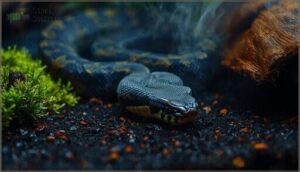
Before your snake actually starts shedding, it gives you a few clear signals that the process is coming. Learning to read early signs helps you act fast and set the right conditions in time.
what to watch for.
Behavioral Changes
Your snake sends clear signals before a shed begins. Increased hiding, reduced movement, and appetite refusal — often starting 5–7 days out — are classic pre‑shedding symptoms.
You’ll also notice heightened irritability; even a docile snake may strike if handled. Watch for rubbing surfaces like bark or enclosure walls, which helps loosen skin.
Recognizing these behavioral shifts early lets you adjust enclosure humidity before problems like stuck shed or partial sheds develop.
Physical Indicators (Dull Eyes, Faded Skin)
Your snake’s body is a roadmap — read it right, and you’ll catch problems early. Before a shed, dull skin and the blue eye phase are the two clearest physical signals.
Watch for these five changes:
- Blue eye phase: fluid buildup turns the eyes milky 4–14 days before shedding
- Dull skin replaces normal gloss as new skin forms underneath
- Pattern fading makes colors look washed-out and muddy
- Belly shows a subtle pinkish tone — normal, not illness
- Inconsistent shedding signs like patchy dullness suggest humidity issues
Retained eye caps and partial sheds often trace back to these early warning signs being missed.
Catching humidity and temperature imbalances early—often tied to improper python enclosure dimensions—can prevent most shedding problems before they start.
Reduced Appetite
Appetite loss — known as premolt anorexia — is one of the most reliable pre-shedding symptoms you’ll notice.
Your snake’s body is busy with energy allocation: building new skin takes priority over digestion.
Vision cloudiness during the blue phase makes hunting feel risky, so most snakes simply stop.
Respect that instinct.
Post-shed appetite usually bounces back strongly within 24–48 hours, making feeding timing straightforward once the shed completes.
Essential Humidity Levels for Shedding
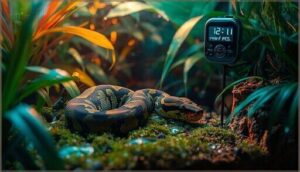
most important — and most overlooked — factors in a successful shed. Get it wrong, and you’ll likely end up with retained skin or worse.
Here’s what you need to know about keeping levels right for your snake.
Ideal Humidity Ranges by Species
Not every snake needs the same level of moisture — and getting this wrong is one of the most common reasons sheds go bad.
- Tropical Python Humidity (ball pythons, carpet pythons): 50–70% baseline; raise to 70–80% during active shed
- Colubrid Moisture Needs (corn snakes, kingsnakes): 60–75% ambient works well for clean, one-piece sheds
- Boas Humidity Peaks: 55–75% normally; briefly push to 80–85% mid-cycle, then drop back down
- Arid Species Levels & Aquatic Snake Humidity: desert species thrive at 30–50% with a humid hide; semi‑aquatic snakes balance 40–60% air humidity with regular soaks
Monitoring Humidity With a Hygrometer
A hygrometer is your clearest window into what your snake actually experiences. For sensor placement, mount it at mid-tank height — not above water bowls or heat lamps, where readings skew.
Use the salt calibration method periodically to verify accuracy. Digital models with data logging help you track humidity levels between checks, which is essential for spotting dips during active snake shedding.
Adjusting Humidity in The Enclosure
Once your hygrometer flags a humidity dip, you have several reliable ways to correct it fast:
- Misting frequency: Hand‑mist once or twice daily with dechlorinated water to briefly push humidity near 90 percent
- Fogger placement: Position the fogger output on the cooler side for steady humidity gradient control
- Water bowl size: A larger, shallow bowl near the warm end boosts evaporation naturally
Substrate moisture retention — cypress mulch or coconut husk — does the quiet, consistent work between sessions.
Temperature Requirements During Shedding

Temperature plays a bigger role in shedding than most keepers realize.
Get it wrong, and even perfect humidity won’t save a bad shed.
Here’s what your enclosure needs to keep things on track.
Importance of Temperature Gradients
A proper temperature gradient isn’t optional — it’s the engine behind successful snake shedding. Behavioral thermoregulation lets your snake self‑regulate, moving between zones to trigger enzyme activation that separates old skin layers.
Without that metabolic rate boost from warm basking areas, shedding stalls. Thermal stress reduction through a well‑designed reptile enclosure management setup keeps ecdysis on track and your snake healthy.
Recommended Temperature Ranges
Species-specific ranges matter more than people realize.
Ball pythons need a basking spot around 88–92°F, while corn snakes do fine near 85°F.
Kingsnakes sit comfortably between 79–86°F on the warm side.
For a nighttime temperature dip, dropping 5–10°F is normal and safe.
Always verify thermostat calibration with a separate digital probe — thermostats alone can mislead you.
Impact of Temperature on Shedding Quality
Temperature does more than keep your snake comfortable — it drives the metabolic rate that makes shedding possible. When it’s too cool, enzyme activity slows, and the skin separation fluid between old and new layers never fully develops.
The result? Patchy, incomplete sheds and risks like retained eye caps. Stable warmth isn’t optional for reptile health and wellness — it’s the engine behind every clean shed.
Hydration and Nutrition for Healthy Shedding
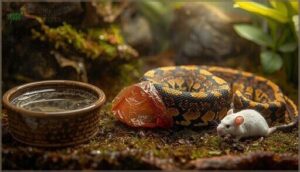
What your snake eats and drinks has a direct effect on how well it sheds. Dehydration and poor nutrition are two of the most overlooked causes of incomplete or problematic sheds.
Here’s what you need to keep in check.
Providing Constant Access to Clean Water
Keeping a clean, well-placed water bowl is one of the simplest things you can do to support reptile health and wellness during shedding. Good Bowl Design and Placement Monitoring matter more than most keepers realize:
- Use a heavy, smooth-sided bowl large enough for soaking
- Change water daily — immediately after any shed skin or waste
- Position it along the warm side to naturally boost humidity levels
Consistent Water Cleanliness and Hydration Support prevent the dehydration that causes patchy, incomplete sheds. A hydrated snake sheds cleaner, every time.
Dietary Needs for Skin Health
What your snake eats directly shapes how cleanly it sheds. Whole prey nutrition covers everything — protein quality for keratin production, essential fatty acids for supple scales, and mineral balance that keeps skin regeneration on track.
Vitamin A intake matters too; without enough, scales turn rough and sheds get patchy.
For solid reptile health and wellness, consistent snake care and maintenance through proper pet care and nutrition start at feeding time.
Preventing Dehydration
Dehydration quietly ruins sheds before you notice anything wrong.
Keep a large water bowl — placed away from heat sources — so your snake can soak freely.
Watch for these warning signs:
- Sunken eyes or wrinkled skin that won’t bounce back
- Chalky urates instead of soft white waste
- Stuck shed on tail tips or retained eye caps
- Lethargy combined with sticky saliva
Seasonal humidity adjustments, consistent misting frequency, and substrate moisture retention all work together. A damp humid hide does the heavy lifting when enclosure humidity levels dip.
Setting Up an Ideal Shedding Environment
Getting the enclosure right is where everything comes together.
It’s not just about one thing — substrate, hides, space, and airflow all work as a system.
Here’s what to focus on for each piece of that setup.
Choosing Suitable Substrate Materials
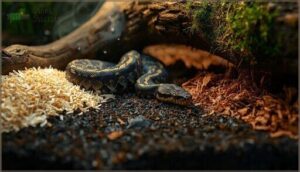
What’s under snake’s body matters more than most keepers realize. The right substrate quietly regulates humidity levels, facilitates natural burrowing instincts, and keeps your reptile enclosure management on point.
| Substrate | Best For |
|---|---|
| Coconut fiber | Tropical species, moisture retention |
| Cypress mulch | Cleanliness control, humidity stability |
| Aspen shavings | Dry-habitat species, natural burrowing |
| Paper towels | Monitoring, toxicity safety |
Match substrate to your snake’s native climate for cleaner, stress-free snake shedding and better reptile health overall.
Creating Humidity Hides and Moist Areas
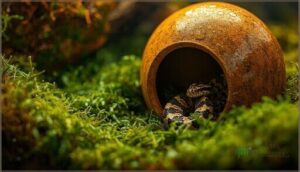
Building a humid hide doesn’t take much — just the right materials and placement. Use an opaque container with a snug entrance hole, filled with damp sphagnum moss for reliable moisture retention. Squeeze the moss until it’s moist, never dripping.
- Moss selection: sphagnum holds moisture without waterlogging
- Container placement: mid-gradient balances humidity levels and drying time
- Ventilation balance: avoid condensation buildup inside the hide
- Filler replacement schedule: refresh after every shed cycle
Enclosure Size, Security, and Ventilation
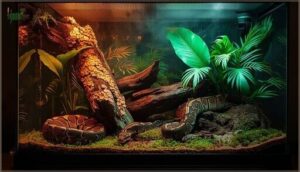
Your enclosure is only as good as its design. For snake shedding and reptile health, size matters — the enclosure should match your snake’s full body length for unrestricted movement.
Space optimization, visual barriers like cork bark, and secure anchoring of decor reduce stress.
Escape-proof lids prevent night-time escapes.
For airflow balance, partially cover mesh tops to maintain humidity without sacrificing fresh air — a critical part of enclosure management and overall snake care.
Step-by-Step Guide to Supporting Shedding

Supporting your snake through a shed doesn’t have to be complicated — it just takes a few deliberate steps done in the right order.
Think of it as setting the stage so your snake can do what it’s naturally built to do.
Here’s exactly what to focus on, from prepping the enclosure to checking that the shed came off clean.
Preparing The Enclosure for Shedding
Think of your reptile enclosure management like prepping a recovery room — every detail matters.
A few days before shedding, raise humidity levels to 70–80%, mist walls once or twice daily, and place a humid hide on the warm side.
Stick to your lighting schedule, clear sharp décor, and complete your enclosure cleaning routine to keep bacteria from interfering with the new skin.
Minimizing Handling During The Shedding Cycle
Your snake’s vision impairment during shedding isn’t just cosmetic — cloudy eyes block clear sight for up to 14 days, triggering defensive behavior and raising bite risk four times above normal.
Stress reduction starts with one rule: don’t handle. Monitor through observation alternatives like visual checks or a camera.
Skin sensitivity means even gentle grip risks tears. Wait until the shed completes.
Checking for Complete Shed and Retained Skin
Once your snake has settled after shedding, a quick but methodical check matters more than most keepers realize.
Start your Eye Cap Inspection — retained caps look cloudy rather than clear.
Move to the Tail Tip Check for tight, raised rings.
Then run a Scale Texture Test from neck to vent, feeling for rough patches that signal incomplete shedding.
- Body Crease Survey along the spine and sides where old skin clings most stubbornly
- Moisture Spot Detection around the vent reveals hidden trapped debris before infections start
- PostShedding Care includes a 15‑minute lukewarm soak if any suspect patch needs softening
Troubleshooting Common Shedding Problems
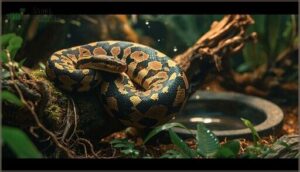
Even with the best setup, shedding doesn’t always go smoothly — and that’s okay. Knowing what to look for and how to respond makes all the difference.
Here’s how to handle the most common problems you might run into.
Identifying Incomplete or Problematic Sheds
Even a single incomplete shed tells you something important about your care setup. Watch for these red flags:
| Warning Sign | What It Means |
|---|---|
| Retained Eye Caps | Stuck eye scales; infection risk |
| Tail Tip Constriction | Restricted blood flow; possible necrosis |
| Patchy Skin Patches | Low humidity or dehydration |
| Prolonged Shedding Cycle | Underlying health concern |
Pain-related behavior signs — like face-rubbing or refusal to eat — confirm incomplete shedding needs immediate attention.
Safe Methods to Assist With Stuck Shed
Once you’ve spotted a problematic shed, acting gently is your best first move. These four methods work well without risking injury:
- Lukewarm soak — 15–20 minutes in shallow water around 80–85°F
- Damp towel wrap — let the snake crawl through warm, moist fabric
- Manual rub — soft damp washcloth, always following scale direction
- Humid hide — damp sphagnum moss held at 75–85% humidity for 48–72 hours
When to Seek Veterinary Help
Home remedies have limits.
If your snake shows retained eye caps after a full shed cycle, persistent dysecdysis across two or more sheds, skin infection signs like discharge or odor, sudden appetite loss lasting beyond a week, or neurological symptoms such as stargazing or tremors, contact a reptile veterinarian immediately.
These aren’t wait-and-see situations — snake health can decline fast without proper veterinary care.
Frequently Asked Questions (FAQs)
How long does it take a snake to shed once it starts?
Once shedding actually begins, most snakes finish within 2 to 24 hours. Smaller species like corn snakes often complete ecdysis in under 4 hours, while larger boas may need a full day.
How does lighting affect a snakes shedding cycle?
Light directly influences snake shedding through photoperiod rhythm. Consistent 10–14 hour cycles stabilize hormonal shed triggers, while light stress from constant exposure disrupts rest, fragments sheds, and weakens overall reptile health.
Can stress from cohabitation disrupt the shedding process?
Yes. Cohabitation, humidity, competition, and dominance hierarchy stress raise cortisol levels, disrupting ecdysis. Resource access disparity leaves submissive snakes drier, causing a stuck shed.
Separate enclosure benefits include cleaner, complete sheds within one or two cycles.
Do seasonal changes influence how often snakes shed?
As the saying goes, every season has its purpose.
Yes, seasonal changes directly influence Snake Shedding frequency through Temperature Metabolism shifts, Photoperiod Effects, Humidity Seasonal Shifts, Brumation Impact, and Seasonal Feeding Patterns — all shaping Reptile health and Ecological Adaptation year‑round.
Should I adjust feeding schedules around shedding periods?
Most snakes naturally reduce appetite during the blue phase.
Skip one feeding if your snake seems stressed, keep meal sizes small post-shed, and avoid handling for 24–48 hours to prevent stress-related regurgitation.
How does age affect the frequency of shedding?
Young snakes shed every 4–6 weeks; adults slow to every 6–8 weeks or longer. The juvenile growth rate drives frequent molts, while adult metabolic slowdown stretches those intervals naturally.
Conclusion
A keeper once watched her ball python shed in a single, unbroken piece—nose to tail—simply because she’d spent two weeks dialing in humidity and adding a moist hide. No soaking, no intervention, no vet visit.
That’s what creating proper conditions for snake shedding actually looks like in practice. When your enclosure works with your snake’s biology instead of against it, shedding becomes smooth—proof that consistent, informed care is the most powerful tool you own.
- https://parker-vet.com/shedding-success-your-guide-to-healthy-snake-molting/
- https://www.petcovergroup.com/au/shedding-in-snakes-dos-and-donts/
- https://www.cascadekennels.com/reptile-shedding-2/
- https://www.petcoach.co/article/help-my-snake-is-shedding/
- https://www.petful.com/pet-health/snake-skin-problems/