
This site is supported by our readers. We may earn a commission, at no cost to you, if you purchase through links.
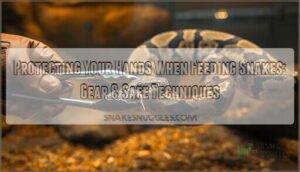
A hungry ball python strikes faster than you can blink—around 50 milliseconds from coil to contact. That’s roughly eight times faster than a human reaction time. Your hand doesn’t stand a chance if you’re holding prey in the wrong spot.
Even non-venomous snakes carry bacteria deep in their mouths, and defensive bites can punch through skin into muscle or tendon. You don’t need venom to end up with a serious infection or nerve damage.
The good news? Protecting your hands when feeding snakes isn’t complicated. It requires the right gear, smart positioning, and recognizing when your snake switches from “dinner mode” to “defend mode.” Get these basics down and feeding time stays routine instead of turning into an ER visit.
Table Of Contents
- Key Takeaways
- Why Hand Protection Matters When Feeding Snakes
- Essential Hygiene Before and After Feeding
- Choosing The Right Protective Gear
- Top 4 Gloves for Feeding Snakes
- Safe Feeding Techniques to Protect Your Hands
- Frequently Asked Questions (FAQs)
- What not to do when feeding a snake?
- Are there snake proof gloves?
- Do you have to wash your hands after handling snakes?
- Why shouldn’t you hold a snake after feeding?
- Can I feed my snake by hand safely?
- What should I do if bitten during feeding?
- How often should I replace feeding gloves?
- Are nitrile gloves sufficient for small snakes?
- Should I wear gloves when feeding frozen prey?
- Conclusion
Key Takeaways
- Ball pythons strike in roughly 50 milliseconds—eight times faster than human reaction time—making proper hand positioning and feeding tongs essential to avoid defensive bites that can drive bacteria deep into muscle or tendon.
- Over half of captive snakes carry Salmonella on their scales, so protective gloves and strict handwashing protocols (20 seconds with soap) aren’t optional, especially around kids under five or anyone immunocompromised.
- Bite-resistant gloves need Kevlar reinforcement, 16+ inch sleeves covering your forearms, and reinforced palms—but no glove eliminates risk if you’re waving hands near the strike zone or misreading defensive body language like S-coils and hissing.
- Most snake bites during feeding happen because handlers skip the basics: keeping tongs at arm’s length, setting up a dedicated feeding area away from the main enclosure, and recognizing when a snake switches from “dinner mode” to threat assessment.
Why Hand Protection Matters When Feeding Snakes
Feeding time is when most snake bites happen. Your hands are in the danger zone, and even a non-venomous strike can break skin or expose you to bacteria.
Using snake feeding tongs for frozen prey keeps your hands at a safe distance while giving you full control during meals.
Understanding the real risks helps you protect yourself without second-guessing every feeding session.
Risks of Bites and Scratches
Snake bites aren’t just about pain. A puncture from even a non-venomous snake can introduce bacteria deep into muscle or tendon, turning a minor wound into a serious infection.
Hand injury risks climb fast when you’re dealing with defensive strikes. Protective gloves and proper bite wound care reduce the chance of scarring, nerve damage, or compromised grip strength down the line.
Because animal bites can transmit infection and sometimes serious diseases, being familiar with animal bite health risks is vital.
Zoonotic Disease Transmission (Salmonella, Etc.)
Beyond bite wounds, infection control becomes even trickier when you factor in zoonotic risks. Over half of captive snakes carry Salmonella on their skin and scales, and bacterial shedding increases during stress or poor husbandry.
Here’s what makes disease transmission a real concern:
- Direct contact with scales transfers bacteria to your hands
- Prey items and feeding tools pick up pathogens from enclosure surfaces
- Cross-contamination spreads through unwashed utensils and clothing
- Environmental reservoirs harbor bacteria for days after feeding sessions
Salmonella prevention starts with personal protective equipment and proper animal handling safety protocols.
Protecting Vulnerable Individuals (Children, Immunocompromised)
Children under five and anyone with a weakened immune system face heightened infection risks during feeding. You’ll need stricter protocols: keep all feeding parent-supervised, restrict access to designated areas, and enforce zero-tolerance rules about hand placement near a snake’s head.
Protective gloves and clothing aren’t optional here. Teach kids proper handwashing before and after any enclosure contact, and maintain separate equipment to prevent cross-contamination.
Essential Hygiene Before and After Feeding

You can’t just rinse and call it good after feeding your snake. Proper hygiene is your first line of defense against Salmonella and other pathogens that thrive on reptiles and their equipment.
Here’s what you need to do before and after every feeding session.
Proper Handwashing Techniques
You can’t skip handwashing after snake handling—it’s your best defense against bacteria that live on over half of all captive snakes.
Here’s what effective germ removal looks like:
- Wet your hands with clean running water, then lather plain hand soap for at least 20 seconds
- Scrub between fingers, under nails, and around thumbs to remove pathogens
- Rinse thoroughly until all soap residue is gone
- Dry completely with a clean towel to prevent recontamination
Proper technique beats fancy antimicrobial formulas every time.
The right pair of snake handling gloves for reptile rescues will keep your wrists secure and your grip steady when it matters most.
Practicing regular hand washing habits is essential for preventing the spread of infections from reptiles to humans.
Sanitizing Tools and Feeding Areas
Disinfection frequency matters as much as technique. Use reptile-safe sanitizers on feeding tools after every use—test strips confirm you’re hitting the right concentration.
Pre-rinse handling tools and feeding areas to clear debris, then apply your chosen surface disinfectant. Let everything air dry completely.
Store cleaned equipment in sealed bins so they’re ready when you need them. Regular cleaning schedules prevent bacterial buildup before it becomes a problem.
Preventing Cross-Contamination
Cross contamination sneaks in faster than you’d think. Change gloves between each snake enclosure to keep pathogens where they belong—nowhere near your hands or other animals.
Follow these cleaning protocols:
- Swap feeding tools for each snake
- Sanitize animal handling equipment after every session
- Store protective gear separately from clean items
- Wash protective clothing weekly minimum
Hand sanitizing works between enclosures when soap isn’t nearby.
Choosing The Right Protective Gear
The right gear makes feeding your snake safer for both of you. You don’t need a full suit of armor, but a few key pieces can prevent most injuries and infections.
Let’s look at what actually works when you’re presenting food to a hungry snake.
Types of Bite-Proof Gloves

Not all gloves are created equal when you’re dealing with reptiles. Kevlar reinforced animal handling gloves offer serious puncture resistance—aramid fibers and nitrile coatings create layered defenses against fangs. Snake bite proof gloves rated under EN 388 standards balance bite resistance with dexterity. Long cuff designs protect forearms.
Check this breakdown:
| Feature | Why It Matters |
|---|---|
| Kevlar lining | Resists punctures up to level 5 |
| Nitrile coating | Chemical barrier, better grip |
| Long gauntlet | Covers wrists to elbows |
| Adjustable cinch | Prevents gaps at cuff edge |
| Breathable liner | Reduces heat during sessions |
Proper sizing keeps your hand protection snug without restricting movement during snake handling.
Benefits of Long Sleeves and Protective Clothing

Your torso and arms deserve the same snake handling safety attention you give your hands. Protective clothing acts as a secondary line of defense when gloves aren’t enough.
Long sleeves deliver concrete arm protection benefits:
- Fabric barriers block Salmonella transfer from snake scales directly to your skin during feeding sessions
- Reinforced sleeves resist abrasions when reaching into rough enclosures or handling substrate-covered snakes
- Breathable layers regulate temperature while maintaining full protective coverage during extended handling
Choose durable, washable materials for reliable containment methods.
Using Feeding Tongs and Hooks Safely

Tongs and snake hooks extend your reach beyond strike range—your first tool-based defense. Inspect tong tips for cracks before each feeding; bent metal fails fast. Grip feeding tool maintenance matters.
Keep tongs at arm’s length, using non-slip grips during prey presentation. Snake behavior awareness prevents fumbles. Clean tools between enclosures to block cross-contamination.
Safe feeding practices start with reliable equipment you trust.
Top 4 Gloves for Feeding Snakes
Not all gloves offer the same protection when you’re working with snakes. Some provide basic coverage against scratches and bacteria, while others can handle serious bite pressure from larger constrictors.
Here are four gloves that consistently deliver on safety without sacrificing dexterity.
1. WZQH Leather Welding Gloves
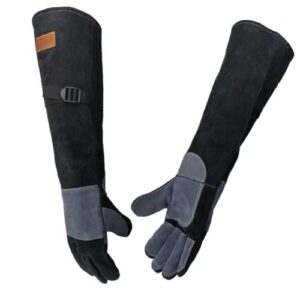
When you’re reaching toward a snake at feeding time, your hands need serious armor. WZQH Leather Welding Gloves give you 16 inches of 1.2mm thick cowhide protection that extends past your wrists.
The double-reinforced palms and Kevlar stitching handle strikes without tearing. These gloves resist heat, punctures, and cuts—useful if your snake mistakes your hand for dinner. They’re stiff at first but break in with use. Available in medium through extra-large, they fit most handlers who need real bite defense.
| Best For | Snake handlers, reptile keepers, and anyone working with animals that bite or scratch who need heavy-duty protection that extends past the wrist. |
|---|---|
| Primary Material | Natural cowhide leather |
| Bite Protection | Yes |
| Scratch Resistant | Yes |
| Heat Resistant | Yes |
| Suitable For | Snakes, cats, dogs, various animals |
| Extended Protection | Adjustable cuffs |
| Additional Features |
|
- 16-inch length with double-reinforced palms and Kevlar stitching provides serious protection against bites, scratches, and punctures
- Multi-purpose design works for animal handling, welding, grilling, gardening, and other high-heat or high-risk tasks
- Made from thick 1.2mm cowhide leather that’s heat-resistant, cut-resistant, and built to last through repeated use
- Gloves are stiff and heavy out of the box, requiring a break-in period before they become comfortable
- Limited dexterity makes them challenging for users with smaller hands or tasks requiring fine motor control
- Not all users found them effective in extreme heat situations despite the heat-resistant claims
2. Surfante Animal Handling Gloves
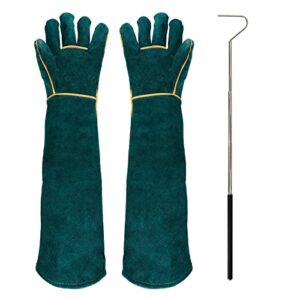
Surfante brings a different approach with 23-inch sleeves that shield your entire forearm. The green cowhide construction resists bites and scratches while staying flexible enough for handling tongs or hooks.
You get a 40-inch collapsible snake hook included—handy for positioning prey without leaning into strike range. The textured grip helps when your palms are sweaty. These gloves run snug on larger hands, so check the sizing before you order.
They’re wipeable with disinfectant between feedings, which cuts down on Salmonella transfer.
| Best For | Reptile keepers and exotic pet handlers who need forearm protection during feeding sessions or routine enclosure maintenance. |
|---|---|
| Primary Material | Thickened cowhide |
| Bite Protection | Yes |
| Scratch Resistant | Yes |
| Heat Resistant | Yes |
| Suitable For | Snakes, cats, dogs, birds |
| Extended Protection | 23-inch long sleeves |
| Additional Features |
|
- 23-inch sleeves protect your entire forearm from bites and scratches during handling
- Includes a collapsible snake hook so you can position animals safely from a distance
- Wipeable cowhide material makes it easy to disinfect between uses
- Runs tight on larger hands, so sizing can be tricky
- The included hook feels lightweight for handling bigger snakes
- Not heavy-duty enough for aggressive animals like large constrictors or defensive mammals
3. Bite Proof Kevlar Animal Handling Gloves
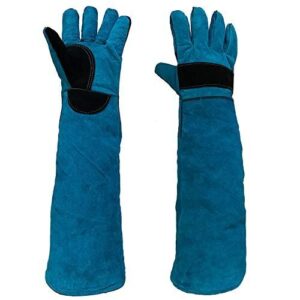
Kevlar-lined gloves deliver puncture resistance all the way up to your elbow—critical when you’re working with constrictors or fast strikers. The outer leather holds up to repeated handling sessions without tearing at the seams.
These run between 18 and 22 inches long, so you can tuck the sleeve under a shirt cuff and eliminate gaps. Palm patches reinforce high-wear zones.
They’re breathable enough that your hands won’t cook during back-to-back feedings. Just remember: bite-resistant doesn’t mean bite-proof. Stay alert.
| Best For | Handlers working with aggressive pets, reptiles, or birds who need elbow-length protection during feeding, grooming, or veterinary tasks. |
|---|---|
| Primary Material | Cowhide leather with Kevlar |
| Bite Protection | Yes |
| Scratch Resistant | Yes |
| Heat Resistant | Yes |
| Suitable For | Dogs, cats, birds, reptiles |
| Extended Protection | 23.7-inch long sleeves |
| Additional Features |
|
- Kevlar reinforcement and thick cowhide leather offer solid puncture and scratch resistance up to the elbow
- Long 23.7-inch sleeves eliminate gaps and protect your forearms during extended handling sessions
- Breathable enough for multiple feedings without overheating, plus they handle gardening and heat tasks like grilling
- Not completely bite-proof—some users report being bitten through the material by determined animals
- Sizing runs large, making them awkward for people with smaller hands
- Quality control issues with some units arriving defective or with inconsistent stitching
4. V Cheetong Snake Bite Proof Gloves
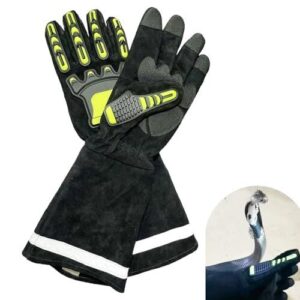
V Cheetong offers customizable length options—18 to 24 inches—so you can match protection to your largest snake. The kevlar-reinforced palm and fingers give you cut resistance without sacrificing grip when you’re juggling feeding tongs and prey items.
Double-stitched seams hold up when you’re grasping squirming rodents or repositioning a restless boa. The adjustable wrist closures lock the glove to your forearm so it won’t slide during a strike.
They’re lightweight enough to wear for extended sessions without hand cramps.
| Best For | Snake handlers and reptile enthusiasts who need reliable bite protection during feeding, handling, or enclosure maintenance sessions. |
|---|---|
| Primary Material | Kevlar with leather |
| Bite Protection | Yes |
| Scratch Resistant | Yes |
| Heat Resistant | Not specified |
| Suitable For | Snakes, reptiles, pets |
| Extended Protection | 18-inch length |
| Additional Features |
|
- Full-area Kevlar construction provides genuine bite resistance against fangs and punctures, backed by a 100% safety guarantee
- Customizable length options (18-24 inches) let you match coverage to your snake’s size and strike range
- Double-layer leather with reinforced stitching holds up to repeated handling of live prey and restless reptiles
- Gloves can be stiff out of the box and need breaking in before finger mobility feels natural
- Shorter wrist and forearm coverage leaves little room for error when handling fast-moving or agile snakes
- Sizing runs inconsistent—may not fit all adult male hands comfortably
Safe Feeding Techniques to Protect Your Hands

Even the best gloves won’t save you if your feeding technique puts your hands where they shouldn’t be. Smart positioning and a solid understanding of snake behavior matter more than any piece of gear.
The best gloves can’t fix bad technique—smart positioning and reading snake behavior matter more than any gear
Here are three core techniques that’ll keep your fingers safely out of the strike zone.
Keeping Hands Out of Strike Range
Your strike zone is everywhere your hands can reach—and that’s exactly where you don’t want to be. Keep feeding tongs extended at arm’s length so fingers stay behind a protective barrier.
Position prey past the snake’s head, not in front of your hands. Use a two-handed grip for control. If the snake coils, pause and reset your approach to maintain safe distance.
Recognizing Defensive Snake Behavior
Reading snake body language keeps you ahead of trouble. Defensive postures tell you when to back off, and behavioral cues give you precious seconds to adjust your approach.
Watch for these strike warning signs:
- S-shaped coil with head pulled back—your snake’s loading the spring
- Hissing or tail rattling—audible warnings you can’t ignore
- Flattened neck and raised head—classic pre-strike theater
- Fixed stare with body tension—threat assessment in progress
Venomous snakes intensify these signals, but non-venomous species bite hard too when cornered.
Setting Up a Safe Feeding Environment
Your feeding area design sets the stage for safety. Clear a counter with at least 24 inches of space, lay down a non-slip mat, and keep your hand washing station within 6 feet.
Maintain room temperature between 72 and 78 degrees, keep noise low, and banish other pets from the zone. Snake enclosure safety starts with environmental controls and food preparation protocols that support safe handling practices and protective gear readiness.
Frequently Asked Questions (FAQs)
What not to do when feeding a snake?
Don’t wave hands near the enclosure or touch your face mid-session. Skip protective gloves and you’ll risk bites or bacterial exposure.
Avoid feeding in the main habitat—prey scent triggers cage aggression and substrate ingestion.
Are there snake proof gloves?
Yes. Bite-proof gloves use multi-layered fabrics like SuperFabric or Kevlar for puncture resistance and hand protection.
They’re designed for reptile handling and hazardous tasks, offering real snake bite prevention when paired with proper feeding tools.
Do you have to wash your hands after handling snakes?
You might look clean, but snake bacteria don’t care.
Hand hygiene after handling prevents zoonotic risks like salmonella.
Wash with soap for twenty seconds—infection prevention and reptile safety demand it.
Why shouldn’t you hold a snake after feeding?
Handling after meals triggers regurgitation and defensive strikes. Your snake enters digestion mode and perceives touch as threat. Post meal handling increases stress, slows digestion, and raises bite risk considerably.
Can I feed my snake by hand safely?
You can, but hand feeding risks like misdirected strikes and defensive bites mean long feeding tongs or forceps are safer.
Keep your fingers several inches from the strike zone and watch for coiled, focused postures.
What should I do if bitten during feeding?
Stay calm and move the snake back to its enclosure.
Rinse the bite under running water, wash thoroughly with antiseptic soap for fifteen minutes, then cover it with a sterile dressing and contact your doctor.
How often should I replace feeding gloves?
Like brake pads, glove replacement depends on wear. Inspect before each use.
Replace disposable feeding gloves after every snake. Swap reusable bite proof gloves every six months or when damage appears.
Are nitrile gloves sufficient for small snakes?
For small snake handling, nitrile gloves work well as protective gloves against scratches and minor bites.
They’re not bite-proof, but they reduce snake bite risk and prevent bacterial transfer during routine feedings.
Should I wear gloves when feeding frozen prey?
Yes. Even frozen prey carries bacteria and parasites that transfer during thawing.
Gloves prevent odor transfer to your skin, reduce bite risk from feeding strikes, and maintain proper hygiene between handling sessions.
Conclusion
Think of protecting your hands when feeding snakes like wearing a seatbelt—it feels unnecessary until the one moment it saves you. Your gloves, tongs, and positioning aren’t paranoia. They’re the difference between routine feeding and explaining bite wounds to a doctor.
Most snakes telegraph their strikes if you’re paying attention. Read the room, respect the animal, and keep your fingers out of the conversation. That’s how you feed hundreds of snakes without a single trip to urgent care.
- https://liferescuetraining.com/2025/06/15/first-aid-basics-for-snake-bites/
- https://www.mayoclinic.org/first-aid/first-aid-snake-bites/basics/art-20056681
- https://ovpr.uchc.edu/services/rics/animal/iacuc/ohshome/risk-assessment/bites-and-scratches/
- https://www.healthline.com/health/ball-python-bite
- https://www.gov.uk/government/news/reptiles-pose-a-risk-of-salmonella-infection