This site is supported by our readers. We may earn a commission, at no cost to you, if you purchase through links.
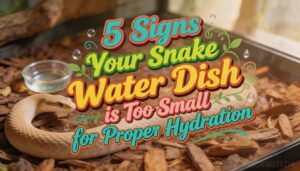
A snake’s water dish can look fine to you and still work against your pet every day. I see this often with attentive owners: the bowl holds water, but it doesn’t let the snake drink, soak, or thermoregulate the way its body needs.
Small dishes dry out faster, foul faster, and turn shedding problems into a pattern instead of a one-off hiccup. Many signs your snake water dish is too small show up in ordinary moments, like awkward drinking, half-finished soaks, or a bowl that skates across the substrate.
Once you know what to watch for, the replacement becomes obvious.
Table Of Contents
- Key Takeaways
- Your Snake Can’t Soak Comfortably
- Drinking Looks Awkward or Difficult
- Water Runs Out Too Quickly
- The Bowl Gets Dirty Fast
- The Bowl Tips or Restricts Movement
- Frequently Asked Questions (FAQs)
- How big does a snakes water dish need to be?
- How do I know if my snakes tank is too small?
- How do I know if I’m underfeeding my snake?
- Where should the water dish be placed?
- Which bowl materials are safest for snakes?
- How often should snake water be changed?
- Can excessive soaking signal a health problem?
- Should the water bowl sit near heat?
- Conclusion
Key Takeaways
- A water dish is too small if your snake can’t fully coil and soak comfortably, because that can quietly lead to poor hydration, bad sheds, and more stress.
- Awkward drinking, like neck stretching, strained head angles, or trouble reaching the water, usually means the bowl is too narrow, too shallow, too tall, or poorly placed.
- If the dish runs dry fast, gets dirty quickly, or needs constant topping off, it likely lacks the size and volume needed to support daily hydration and clean water.
- The best fix is a wider, heavier, non-porous bowl placed on the cool side, where your snake can drink, soak, and move around without tipping or crowding.
Your Snake Can’t Soak Comfortably
A corn snake should be able to soak in its water dish without looking cramped or uncomfortable. When the bowl is too small, the problem usually shows up in ways you can see during normal enclosure checks.
If your snake skips soaking or spills the bowl trying to fit, these affordable corn snake accessories for proper-sized dishes can help.
Here’s what to look for before poor soaking starts affecting hydration and shedding.
Body Cannot Fully Fit Inside The Dish
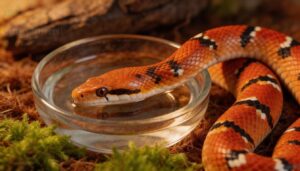
When your corn snake can’t lower its body into the dish, the problem is that it’s not the right water dish.
- Body pressure points form at the rim
- Thermal exchange inefficiency and humidity exposure deficit follow
- Skin scaling risk and hydration stress indicators increase
That’s why size and placement of corn snake water bowls matter when choosing the right water dish.
Snake Cannot Coil in The Bowl
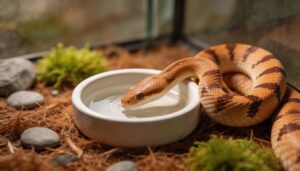
If the body fits but won’t curl, the right water dish is too small. Choosing appropriate water dish size for reptiles means a wide and shallow bowl shape, with size and placement.
| Material Choice | Edge Design | Bowl Positioning |
|---|---|---|
| Clear Visibility | Temperature Control | coil |
| smooth | stable | roomy |
When your snake stays rigid or keeps repositioning, the bowl can’t support a curve.
Only Part of The Body Gets Wet
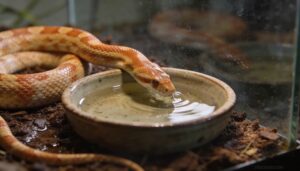
When the third gets wet, you’re seeing Partial Immersion, Localized Hydration, and a Scale Moisture Gradient. That means Partial Soaking Stress and Hydration Inefficiency.
Sizing and positioning of corn snake water bowls, choosing appropriate water dish size for reptiles, and proper placement of reptile water dishes matter; recognizing dehydration in corn snakes includes skin pinch test as hydration indicator here.
Pre-shed Soaking Attempts Fail
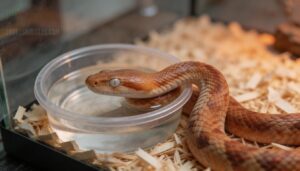
Once only part gets wet, pre-shed trouble often follows. If pre-shed soaking behavior keeps starting and stopping, look beyond the snake: Temperature Mismatch, Humidity Deficit, Water Quality Issues, Inconsistent Soak Timing, and Stress-Related Avoidance all matter.
So, do sizing and positioning of corn snake water bowls, recognizing dehydration in corn snakes, and steady hydration management during the shed cycle.
Adult Snake Has Outgrown a Once-adequate Bowl
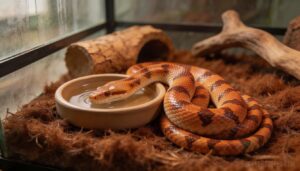
Although the dish once worked, adults outgrow it quietly. Watch for:
- girth and coils can’t settle, despite proper sizing and positioning of corn snake water bowls.
- awkward soaking disrupts Temperature Regulation, Hydration Monitoring, and hydration management.
- frequent upgrades in water bowl maintenance schedule, Material Safety, Placement Strategy, water dish material, reptile health monitoring, and Veterinary Guidance become necessary over time.
Drinking Looks Awkward or Difficult
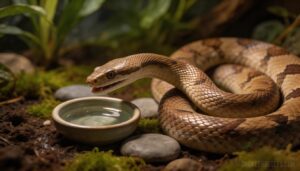
A snake that has to work to get a drink is telling you the dish isn’t sized well. The problem usually shows up in small body cues that are easy to miss at first.
If you’re unsure, these subtle signs of snake dehydration can help you spot trouble before it affects hydration.
Here are the signs that drinking has become awkward, strained, or harder than it should be.
Snake Stretches Its Neck Unnaturally to Reach Water
Watch the reach. If your snake keeps stretching forward to drink, the water bowl is likely too small or poorly placed. High Neck Extension Frequency and repeated Stretching Behavior Patterns point to Postural Alignment Issues, not stubbornness.
Those awkward reaches can reflect Hydration Motivation Signals and early dehydration signs, and may even contribute to Stress Hormone Release during drinking behavior.
Head Angle Looks Strained at The Rim
When your snake drinks, a strained Head Tilt Angle at the water bowl rim often means the water dish is undersized, not stubbornness. Check:
- Rim Edge Geometry
- Rim Surface Texture
- Neck Musculature tension
- Jaw Opening Range limits
These clues, along with dehydration signs, guide reptile hydration and the hydration needs of different reptile species during sipping and swallowing without neck strain.
Bowl Opening is Too Narrow for Easy Access
Too-narrow openings create trouble fast. If the Rim Diameter is tight, Lip Interference and a bulky Edge Lip Profile force awkward entry, increase Scale Snagging, and limit reptile hydration.
Your water dish or water bowl should have an easy Access Port, especially for larger reptiles. Follow guidelines for selecting water dish based on reptile size, not simply shelf appearance alone.
Water Depth is Too Shallow for Comfortable Drinking
Too little water changes everything. If your corn snake can’t manage Snout Submersion, drinking becomes stop-and-start, with Limited Buoyancy forcing constant repositioning.
That raises Stress Behavior, worsens Skin Dryness, and increases Temperature Fluctuation.
In any water bowl or water dish, follow guidelines for selecting a water dish based on reptile size to support fluid balance in reptiles and water quality for reptiles.
Tall Sides Make Entry and Exit Harder
- Elevated Rim Height
- Steep Wall Angle
- Restricted Head Clearance
- Increased Jaw Drag
- Limited Exit Path
In a small water dish or water bowl, follow guidelines for selecting a water dish based on reptile size; wrinkled skin or a positive skin pinch test can mean drinking and soaking are already too hard for your snake now.
Water Runs Out Too Quickly
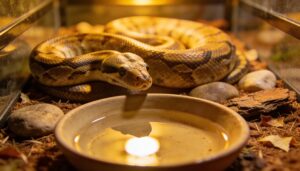
A water dish that runs dry too fast usually means it isn’t keeping up with your snake’s basic needs. You’ll often notice this more during warm days, shedding, or other times when water demand goes up.
If your snake’s water dish runs dry too fast, it’s too small for warm days, shedding, and rising hydration needs
The next signs will help you tell when bowl itself is the problem.
Dish is Empty Before The Next Refill
If your corn snake’s water bowl is bone dry before you even think about the next refill, that’s a clear sign that the dish is too small. A compact bowl holds less volume, so daily water change considerations in hot climates become urgent fast.
Follow basic guidelines for selecting a water dish based on reptile size, and regularly clean and refill the water bowl to stay ahead of shortfalls.
Water Level Drops Fast During Hot Days
Hot weather exposes a too-small dish quickly:
- Evaporation Rate climbs with Airflow Effects and nearby heat sources.
- Heat Source Placement changes the impact of water bowl placement on temperature regulation.
- Substrate Absorption, Dish Material Choice, daily water change considerations in hot climates, and Guidelines for selecting water dish based on reptile size all matter during summer sheds and active afternoons.
Small Volume Cannot Support Daily Hydration Needs
Even when the evaporation rate settles, a too‑small water bowl still leaves Hydration Needs Unmet. That creates a real Hydration Gap: limited moisture retention, more Substrate Moisture Transfer, and Hydration Management Challenges.
Watch for Dehydration Symptoms, use Guidelines for selecting water dish based on reptile size, and make Regular monitoring of reptile water intake part of daily care for you.
Increased Shedding Periods Reveal The Bowl is Undersized
When an Extended Shedding Cycle starts, your snake may show Increased Water-Seeking, longer pre-shed soaking behavior, and higher Posture Adjustment Frequency in the water bowl. Those are Hydration Stress Indicators, especially if Prolonged Soaking Sessions still leave skin dry.
A corn snake shedding guide should mention the skin pinch test as a hydration indicator and Regular monitoring of reptile water intake.
Frequent Topping Off Signals The Bowl Should Be Larger
Often, Frequent Refills tell you the water bowl has Insufficient Capacity, Rapid Evaporation, Temperature Instability, and a Surface Area Deficit.
- Water disappears daily.
- You change the water constantly.
- Levels swing with room heat.
- Small bowls prevent spills poorly.
- Upgrade to heavy ceramic or weighted plastic for steadier volume, cleaner water when your snake drinks or bathes inside.
The Bowl Gets Dirty Fast
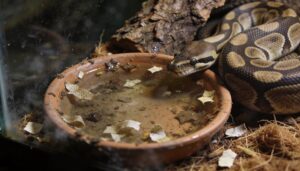
A water dish that gets dirty fast is often telling you it’s too small for the job. When the bowl can’t handle normal drinking, soaking, and everyday mess, keeping clean water in the enclosure gets harder than it should be.
Here are the signs to watch for before a too-small dish turns into a hygiene problem.
Water Becomes Soiled Soon After Refilling
Fresh water that looks dirty within hours is a red flag. In a too-small water bowl, feeding spill contamination concentrates fast; change the water and follow a weekly cleaning routine, maintaining water dish cleanliness to avoid bacterial growth before stale odor and cloudiness start.
| Cause | Result |
|---|---|
| Biofilm formation | Clouding |
| Detergent residue | Film |
| Surface area effect | Dust |
| Heat accelerated growth | Fouling |
Snake Tracks Substrate Into The Dish Constantly
Usually, constant debris in the water bowl means size and placement are working against you.
- Rim Contact Transfer
- Substrate Particle Retention
- Material Debris Release
- Feeding Proximity Influence
- Shedding Moisture Transfer, substrate moisture, bacterial growth, scale rot prevention through bowl placement, maintaining water dish cleanliness to avoid bacterial growth on the cool side, keeps bedding out and surfaces easier to inspect.
Small Bowls Foul Faster With Waste and Debris
A tiny water bowl turns dirty fast. Low volume raises the Evaporation Rate, concentrates waste, and speeds bacterial growth.
Material Porosity and rough Surface Texture increase Waste Retention and Biofilm Accumulation.
For maintaining water dish cleanliness to avoid bacterial growth, follow cleaning and water type recommendations: change the water, use dechlorinated water, and choose smooth, nonporous materials for safer hydration.
Tight Corners Are Harder to Scrub Thoroughly
Think of corners as germ pockets: a cramped water bowl traps soil that your sponge can’t reach.
- Hidden Crevices
- Corner Debris Build-up
- Algae Accumulation
- Biofilm Formation
Poor Cleaning Tool Access makes cleaning and water type recommendations essential, maintaining water dish cleanliness to avoid bacterial growth, prevent bacterial growth, and strengthen your maintenance routine during weekly scrubbing after every rinse, thoroughly.
Frequent Contamination Makes Hygiene Harder to Maintain
A small water bowl turns routine care into cleanup triage. Frequent fouling lowers disinfectant efficacy, especially with high surface porosity.
Use this cleaning protocol for bacterial contamination prevention, maintaining water dish cleanliness to avoid bacterial growth and prevent bacterial growth, while preventing water spills and algae growth in enclosures daily.
| Issue | Fix |
|---|---|
| Biofilm buildup | Scrub, dry |
| Cross‑contamination risk | Separate tools |
The Bowl Tips or Restricts Movement
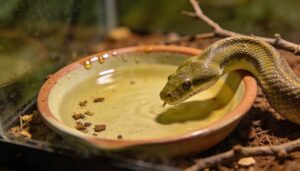
If the dish slides, rocks, or gets in your snake’s way, you’re usually looking at a sizing problem. A good water bowl should stay put and still leave your snake room to drink, soak, and move normally.
The signs below will help you tell when the dish is too light, too narrow, or just too small for the space.
Snake Shifts The Bowl While Trying to Drink
Because Snake Pressure increases when your snake drinks, an undersized water bowl often slides instead of staying put. Poor Bowl Positioning, low Substrate Friction, and weak Bowl Edge Design force awkward neck reaching, especially in small reptiles.
Prioritize Rim Smoothness, a stable surface, and water temperature regulation; use the skin pinch test as a hydration indicator if drinking looks strained persistently.
Dish Flips When The Snake Tries to Soak
If your corn snake enters the water bowl and it flips, the dish is too easy to overturn during soaking behaviour. In your enclosure or tank setup, a flipping bowl prevents full-body soaking and adds avoidable stress daily.
A Weighted base, Non-slip bottom, Matte finish, and Curved side design matter, but only with Stable substrate placement on a stable surface.
Narrow or Lightweight Bowls Lack Stability
Even without flipping, a narrow water bowl stays unstable because low Friction Coefficient, Edge Texturing, and a high Center of Gravity reduce grip on a stable surface.
Weighted Base Design helps, while Thermal Warping makes plastics worse, affecting humidity management in reptile enclosures, preventing water spills and algae growth in enclosures, and maintaining water dish cleanliness to avoid bacterial growth.
Bowl is Too Small to Stay Secure on Substrate
Worse, a tiny water bowl shifts on loose substrate, wobbling in the enclosure and disrupting captive snake care.
- Check Substrate Compatibility first
- Watch Base Shape Design closely
- Note Edge Lip Profile movement
- Bowl Anchoring beats a Non-slip Base
- Use skin pinch test as hydration indicator, preventing water spills and algae growth in enclosures when bowls rock, sink, tip, or drag.
Replacing It With a Wider, Heavier Dish Solves The Issue
Switching to a wider, heavier water bowl usually fixes wobbling fast. Choose ceramic or stainless steel for Material Safety, Odor Control, Thermal Inertia, Cost Effectiveness, and Aesthetic Integration within the enclosure.
It stays put, facilitates soaking, and helps humidity control methods.
Maintain water dish cleanliness to avoid bacterial growth, and use the skin-pinch test as a hydration indicator regularly.
Frequently Asked Questions (FAQs)
How big does a snakes water dish need to be?
Choose a non-porous, heavy dish your snake can fully coil and soak in: about 1–2 inches deep for hatchlings, 2–4 for adults, with surface area balance, temperature control, visibility monitoring, and cleanliness for reptile health.
A heavy tip-resistant bowl reduces spills and keeps the dish stable.
How do I know if my snakes tank is too small?
Check Enclosure Dimensions, Substrate Depth, Temperature Gradient, Lighting Coverage, Ventilation Adequity, reptile enclosure humidity, wrinkled skin, retained shed, and a skin pinch test as hydration indicator.
Maintaining water dish cleanliness to avoid bacterial growth matters.
How do I know if I’m underfeeding my snake?
Watch for Weight Loss, Decreased Appetite, Frequent Shedding, Lethargic Behavior, and a belly on Stomach Palpation; also assess wrinkled skin, retained shed, skin elasticity test, skin pinch test as hydration indicator, and reptile enclosure humidity.
Where should the water dish be placed?
Use a cool-side location with flat substrate placement, near a travel path, with ventilation clearance and away from heat and sunlight, so the enclosure’s thermal gradient, humidity, water quality, spill-control, and algae growth stay stable.
Which bowl materials are safest for snakes?
Like steady river stones, safest bowls are non-porous ceramics, stainless steel for durability, sealed stone bowls, BPA‑free plastic, or food‑grade silicone—smooth, stable, easy to sanitize, and for maintaining water dish cleanliness while limiting bacterial growth.
How often should snake water be changed?
Change snake water daily, or at least twice a week if clean; warm temperature influences bacterial growth, so humidity management, seasonal adjustments, water testing, and dechlorinated water or distilled water helps maintain cleanliness safely.
Maintaining a proper thermal gradient requirement is essential for overall snake health.
Can excessive soaking signal a health problem?
Picture soggy bark: persistent soaking behaviour can signal dehydration signs, shedding complications, lethargy signs, respiratory infection, or scale rot risk.
Skin maceration raises infection risk, so maintain water dish cleanliness; warm water speeds bacterial growth.
Should the water bowl sit near heat?
Keep the bowl away from heat.
Maintain Heat source distance and a Cool drinking zone for Temperature stability, limiting Heat transfer from an undertank heater or direct sunlight; good Thermal zoning aids temperature regulation in enclosures and protects water quality.
Conclusion
Imagine being handed a thimble to drink from all day, every day. Your snake faces this reality with a too small water dish. Don’t let signs your snake water dish is too small become a recurring nightmare.
Upgrade to a spacious bowl that lets your pet drink, soak, and thrive. A simple swap can transform hydration and health. Make the change today and give your snake the gift of easy access to water.