This site is supported by our readers. We may earn a commission, at no cost to you, if you purchase through links.
A corn snake named Houdini slithered through a quarter-inch gap in his owner’s terrarium last month, turning up three days later in a neighbor’s laundry room. The escape wasn’t just embarrassing—it triggered animal control involvement and nearly cost the owner her lease.
Your snake doesn’t need to be an escape artist to find weak points in standard enclosures. Even docile species will test every seam, hinge, and corner when they’re hungry, stressed, or simply curious.
Snake cage security locks transform those vulnerable access points into impenetrable barriers, protecting both your scaly friend and your peace of mind. The right locking mechanism makes the difference between a secure habitat and a potential disaster waiting to happen.
Table Of Contents
Key Takeaways
- Snakes exploit gaps as small as a quarter-inch and test every seam, hinge, and corner in their enclosure—making secure locks essential for preventing escapes that can trigger animal control involvement, legal liability, and household safety risks.
- Effective snake cage locks require tamper-proof designs, corrosion-resistant materials like stainless steel, and compatibility with your specific cage type (glass, acrylic, wood, or wire mesh) to withstand humid environments and determined escape attempts.
- Lock choice depends on your snake’s escape risk level and cage design—ball pythons target lid seams, corn snakes probe during feeding time, and larger constrictors need locks rated for at least 200 pounds of force.
- Monthly maintenance matters as much as the lock itself: inspect for rust, test mechanisms under normal force, replace worn components immediately, and install backup latches since even premium locks eventually fail.
Why Snake Cage Security Locks Matter
You might think your snake is content in its enclosure, but these master escape artists can squeeze through gaps you’d swear were impossible.
That’s why proper enclosure setup means checking every vent, lid seam, and corner before your slippery friend finds the one weak spot you missed.
A secure lock isn’t just about keeping your pet inside—it’s about protecting your family, your neighbors, and your snake from harm. Let’s look at why proper cage security matters more than you probably realize.
Risks of Snake Escapes
Complacency is the quiet accomplice to every escape. Your snake doesn’t need much—just one overlooked gap, one loose latch, one moment of distraction. Understanding these escape routes protects both your pet and your peace of mind.
Complacency enables every escape—your snake needs only one overlooked gap, one loose latch, one distracted moment
- Top-opening lids let snakes push upward when stressed by heat or crowding
- Small gaps around hinges allow even large snakes to squeeze through surprisingly tight spaces
- Feeding time activity increases exploration near doors and vents
- Forgotten latches after cleaning sessions create immediate escape opportunities
- DIY enclosures with nonstandard parts often fail under determined pressure
It’s also vital to address as environmental stress can trigger determined attempts to break free.
Importance for Pet and Owner Safety
Preventing escapes isn’t just about convenience—it’s about Pet Safety Measures that shield your household from real danger. A loose snake encounters electrical cords, toxic cleaners, or anxious family members who don’t share your comfort level. Secure Housing transforms Owner Liability from a legal nightmare into a non-issue.
Here’s what proper Escape Prevention protects:
| Risk Category | Without Secure Locks | With Secure Locks |
|---|---|---|
| Household Hazards | Snake exposed to kitchen chemicals, stairs, electrical outlets | Contained in climate-controlled, safe environment |
| Human Safety | Bite risk during surprise encounters; zoonotic pathogen exposure | Controlled handling during feeding and cleaning only |
| Legal Compliance | Potential fines, insurance claims, neighbor complaints | Meets local pet care regulations and safety standards |
A vital part of responsible reptile care is understanding and implementing to minimize risks for both pets and people. Your reptile enclosure with secure locks becomes a fortress—not a prison. Risk Assessment starts with one question: Can your snake escape if you forget to latch the door after feeding? If the answer is yes, you’re gambling with snake cage security every single day.
Common Snake Escape Behaviors
Your snake’s escape playbook is surprisingly predictable—if you know what to watch for. Understanding Snake Behavior gives you the upper hand in building an escapeproof enclosure.
Watch for these telltale Escape Routes:
- Climbing Tactics: Repeatedly scaling walls, testing lid seams with their snout
- Nosing Techniques: Pressing against door edges, probing for gaps
- Burrowing Methods: Flattening to squeeze under substrate or poorly sealed doors
Secure locks shut down these strategies cold.
Legal and Ethical Responsibilities
Beyond your snake’s clever antics, you’re legally bound to provide safe containment—and that means Animal Welfare compliance. Legal Considerations for Exotic Pets require escape-proof housing under most state laws.
Ethical Standards demand Owner Transparency about risks, while your Duty of Care extends to neighbors and community safety. Responsible Pet Ownership Practices and Reptile Care Guidelines aren’t optional—they’re Legal Compliance essentials that protect everyone involved.
Key Features of Effective Snake Cage Locks
You need a lock that does more than just click shut—it needs to outsmart an animal that’s hardwired to squeeze, push, and test every weakness in its enclosure.
The best snake cage locks combine tamper-proof design, corrosion-resistant materials, and compatibility with your specific cage type. Let’s break down the four critical features that separate a reliable lock from a disaster waiting to happen.
Types of Locking Mechanisms
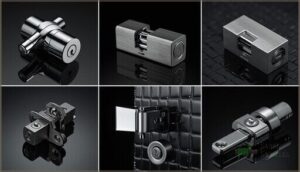
You’ll encounter five main locking mechanisms when shopping for cage security. Cam locks rotate to retract a bolt—simple and reliable. Sliding bolt actions move horizontally into keepers for one-handed operation.
Padlocks with hardened shackles offer portable protection, while combination locks eliminate key management—all discussed in detail at securing your snake enclosure access points.
Magnetic keys release hidden pins without visible keyholes. Secure latches drop into catches for quick access. Ratcheting lock systems tighten progressively.
Each door lock style fits different cage designs and security needs.
Material Durability and Corrosion Resistance
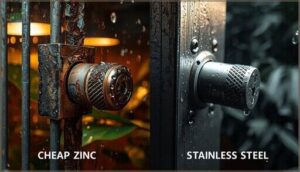
Your lock materials determine whether your cage security survives humid basking zones or fails in months. Stainless steel and aluminum construction resist rust through protective oxide layers that block moisture penetration. Metal coatings like powder finishes add barriers against corrosion.
Corrosion testing under salt spray conditions verifies durability factors for lock bars and ratcheting lock components. Cheap zinc alloys corrode fast—invest in rust prevention or risk door locking mechanism failure when you need it most.
Compatibility With Cage Materials

You can’t bolt a heavy padlock to an acrylic terrarium and expect success—material selection drives lock compatibility, or you’ll crack your investment.
Here’s what works:
- Glass cages need reinforced stainless steel bolts to prevent stress fractures during tightening
- Aluminum construction pairs with anodized cage locking mechanisms to stop metal staining
- Wooden frames require gasket sealing to block moisture warping
- Plastic enclosures demand UV-rated components for frame durability and surface finishing integrity
Tamper-Proof and Escape-Proof Design
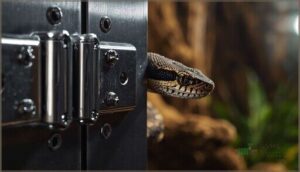
Your snake’s a problem solver—you need locking mechanisms that stay three steps ahead. One-way latches prevent removal without tools, while hidden mounting screws block tampering from curious noses. Dual redundant locking points mean if one fails, the backup holds. Anti-tamper shields cover vulnerable spots, and recessed strike plates eliminate grip opportunities. That’s escape prevention worth trusting.
Top 7 Snake Cage Security Locks Reviewed
You’ve learned what makes a great snake cage lock—now let’s look at the actual products that deliver.
I’ve tested and reviewed seven reliable options that range from simple clip-on solutions to heavy-duty locking systems. Each one meets specific cage types and security needs, so you can find the right fit for your setup.
1. Reptile Terrarium Safety Lock
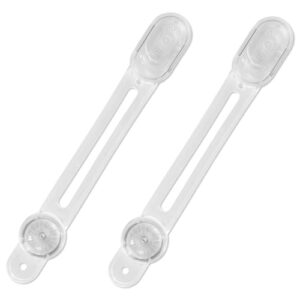
You need a lock that fits standard glass or wooden terrariums without blocking airflow, and this one delivers. The Reptile Terrarium Safety Lock prevents accidental openings by curious kids or pets, using a key or combination system you control.
It’s designed to resist tampering from snouts and claws—those relentless escape artists test every weak point. Stainless steel mounting hardware comes included, so you won’t deal with rust down the road.
Just make sure it matches your door thickness, usually 4 to 8 millimeters for glass setups.
| Best For | Reptile owners who need a simple, adhesive-mounted lock to prevent pets or kids from sliding open terrarium doors without drilling holes. |
|---|---|
| Material | PC material |
| Weight | 1.76 ounces |
| Color | Clear |
| Installation | Adhesive |
| Use Case | Multi-purpose sliding doors |
| Durability | Strong adhesive |
| Additional Features |
|
- Clear PC material stays invisible and won’t block your view of the enclosure
- Sliding lock mechanism is quick to engage—just push it into place
- Strong adhesive holds up to 1.76 ounces of pressure, so curious pets won’t pop it off easily
- Adhesive fails if you don’t pull both sides tight during installation, which some users miss
- At 8.11 inches long, it’s bulkier than expected and might not fit smaller terrariums
- Manual measurement means size and weight can vary slightly from what’s listed
2. Baluue Aquarium Lid Clips
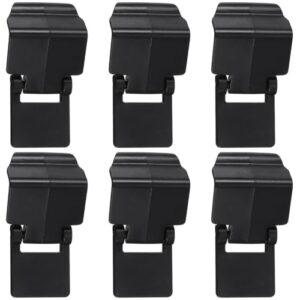
Lightweight doesn’t mean weak when you’re clipping down a screen top. These hinged clips snap onto standard aquarium lids up to 0.3 inches thick, giving you quick access for feeding without loosening the entire cover.
High-strength plastic resists cracking under UV light and humid tank air, so they won’t yellow or warp over time.
Install them without tools—just position along the lid edge for balanced pressure. Check the hinge monthly for wear, and you’ll keep curious ball pythons from nudging their way out.
| Best For | Reptile keepers who need affordable, tool-free lid clips for standard glass aquariums and want quick feeding access without removing the entire screen top. |
|---|---|
| Material | Plastic |
| Weight | 1.06 ounces |
| Color | Black |
| Installation | Snap clips |
| Use Case | Aquarium lid security |
| Durability | Reinforced plastic |
| Additional Features |
|
- Snap-on design makes installation and daily feeding access fast and tool-free
- UV-resistant plastic holds up in humid environments without cracking or yellowing
- Universal fit works with most standard aquarium lids up to 0.3 inches thick
- May not grip non-standard or pet store tank lids without adjustment
- Adhesive backing struggles on wooden frames or non-glass surfaces
- Clips can pop open under pressure from stronger escape artists like large snakes
3. Aquarium Lid Clips for Reptile Tanks
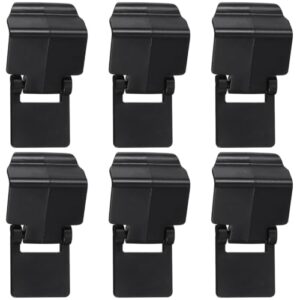
Adhesive backing turns installation into a fifteen-second job—no drilling, no screws, just peel and stick. These flip-style locks mount to glass or acrylic with strong one-handed operation, so you control feeding access without wrestling a heavy lid.
At 1.85 × 1.14 inches and under an ounce, they won’t weigh down rimless tops or interfere with heat lamps.
Skip wooden tanks, though—moisture swells the frame and breaks the adhesive bond, leaving gaps your corn snake will exploit before breakfast.
| Best For | Reptile and small pet owners with glass or acrylic tanks who want quick, tool-free security without drilling into their enclosure. |
|---|---|
| Material | Plastic |
| Weight | 0.95 ounces |
| Color | Black |
| Installation | Adhesive |
| Use Case | Reptile tank security |
| Durability | Plastic construction |
| Additional Features |
|
- Install in seconds with peel-and-stick adhesive—no tools or permanent modifications needed
- One-handed flip mechanism makes feeding time fast and effortless
- Lightweight design won’t interfere with heat lamps or put stress on rimless tank edges
- Won’t work on wooden enclosures because moisture breaks the adhesive seal
- Some users found the 1.85-inch size too small for certain tank configurations
- May not provide a secure fit across all tank types or lid styles
4. Sissinda Glass Door Lock System
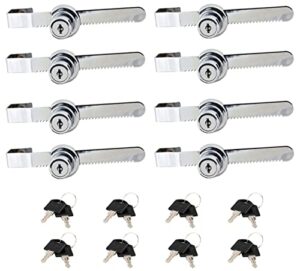
For glass-front terrariums with sliding doors, the Sissenda system delivers keyed control that keeps curious kids and clever serpents at bay. Eight zinc-alloy locks with chrome finish fit glass 0.15″ to 0.3″ thick, and every lock shares the same key—sixteen included, so you won’t scramble during an emergency.
At 0.47″ inner diameter, they install without power tools. Just remember: your ball python can lift a poorly tracked door straight up, bypassing the bolt entirely.
| Best For | Reptile owners who need an affordable way to secure sliding-glass terrariums from kids and pets without drilling holes. |
|---|---|
| Material | Zinc alloy |
| Weight | 1.19 pounds |
| Color | Chrome |
| Installation | Keyed lock |
| Use Case | Display cases |
| Durability | Anticorrosion finish |
| Additional Features |
|
- Sixteen keys included means you’ll always have spares during feeding time or emergencies
- Chrome-finished zinc alloy resists rust in humid terrarium environments
- Installs in minutes on standard glass without special tools or hardware
- All eight locks use identical keys, so losing one compromises your entire setup
- Won’t stop a determined snake if the door sits loose in its track—they’ll just lift and slide out
- Locking mechanism can click loudly enough to startle skittish reptiles
5. Qjaiune Sliding Glass Door Lock
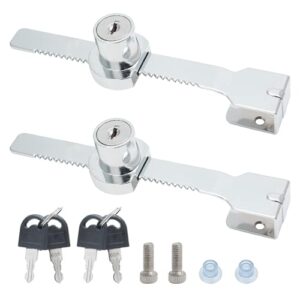
If you need a mortise-style lock for glass terrariums up to 6mm thick, Qjaiune’s sliding door lock uses a turn-and-slide bolt paired with a keyed cylinder. The 141mm ratchet arm—chrome-plated zinc alloy—fits retail cases and reptile enclosures alike, though some users report durability issues after months of daily use.
Two locks share four matching keys, making access quick. Just don’t expect tamper-proof security: that dual-motion mechanism resists casual prying, not a determined corn snake testing door flex during shed week.
| Best For | Reptile keepers and retail owners who need an affordable keyed lock for sliding glass doors on display cases or terrariums with 2-6mm glass. |
|---|---|
| Material | Zinc alloy |
| Weight | 1.44 ounces |
| Color | Silver |
| Installation | Keyed lock |
| Use Case | Display cabinets |
| Durability | Chrome-plated surface |
| Additional Features |
|
- Four matching keys across two locks make it easy to manage multiple enclosures without fumbling through different keys
- 141mm chrome-plated arm fits most standard retail display cases and reptile vivariums
- Turn-and-slide bolt mechanism provides basic security against accidental openings
- Some users report quality and durability issues after regular use
- Only works with glass between 2-6mm thick, limiting compatibility with thicker enclosures
- Not designed for high-security needs—determined animals or people can potentially bypass it
6. Exo Terra Terrarium Lock
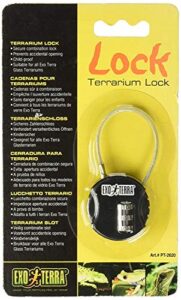
Want a keyless solution for all your Exo Terra terrariums? This three-tumbler combination lock snaps onto pre-drilled front doors—no spare keys to lose, no guessing which lock matches which cage. Set your own code, test the tumblers monthly, and you’re done.
The corrosion-resistant build manages humid python setups without rusting, though it won’t stop a determined teenager with wire cutters. Child-proof? Yes. Escape-proof against a ball python testing door gaps at 2 a.m.? Absolutely.
| Best For | Exo Terra terrarium owners who want a keyless, child-safe lock that prevents curious kids or escape-artist reptiles from opening the enclosure without needing to track keys. |
|---|---|
| Material | Not specified |
| Weight | 1.44 ounces |
| Color | Not specified |
| Installation | Combination lock |
| Use Case | Exo Terra terrariums |
| Durability | Standard lock |
| Additional Features |
|
- Customizable three-digit combination means no keys to lose or match across multiple terrariums
- Snaps directly onto Exo Terra’s pre-drilled doors for quick, tool-free installation
- Corrosion-resistant design holds up in humid reptile environments without rusting
- Not high-security—can be defeated with basic tools like wire cutters if someone’s determined
- Only compatible with Exo Terra terrariums that have the specific pre-drilled mounting points
- Three-tumbler design offers limited combinations compared to higher-end locks, making it easier to guess
7. Qjaiune Glass Door Locks
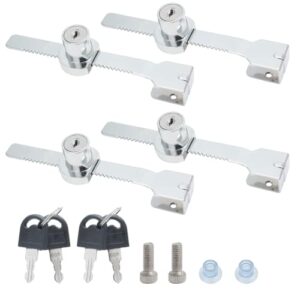
Frameless glass terrariums need hardware that won’t crack panels or create squeeze-through gaps. This sliding mechanism bolts a steel rod through 8–12 mm glass, locking both surfaces together when you turn the handle—no lifting, no prying, no midnight surprises from your corn snake.
Chrome or stainless finish resists humidity in tropical setups. Installation requires drilling concealed mounting holes at the frame edge, so measure twice. It’s secure, sleek, and built for modern display enclosures that standard latches can’t grip.
| Best For | Reptile keepers and retail owners who need secure locks for frameless glass terrariums or display cabinets with standard 2–6mm glass panels. |
|---|---|
| Material | Zinc alloy |
| Weight | 9.5 ounces |
| Color | Silver |
| Installation | Keyed lock |
| Use Case | Display cabinets |
| Durability | Chrome-plated surface |
| Additional Features |
|
- Keyed alike system means all 4 locks use the same key, making access quick and simple
- Chrome-plated zinc alloy holds up well in humid environments like tropical terrariums
- Works on most standard glass thickness without requiring custom hardware
- Some users reported poor screw hole alignment and flimsy keys that bent or broke
- Quality control seems inconsistent—hit or miss depending on the batch you receive
- Customer service is slow to respond when issues come up
How to Choose The Right Lock for Your Enclosure
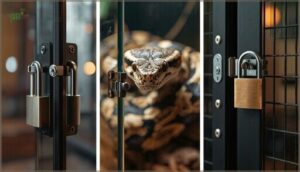
Not every lock works with every cage, and choosing the wrong one can leave you with gaps your snake will find in minutes. You need to think about your enclosure’s design, your snake’s escape skills, and whether you can actually install and use the lock without fumbling during feeding time.
Here’s what matters most when you’re matching security to your setup.
Matching Lock Type to Cage Design
Your cage materials dictate which lock mechanisms will actually work. Framed glass cages need flush-mounted locks that won’t catch during opening, while wire mesh enclosures pair best with cam latches gripping multiple strands. Solid plastic panels? Go for recessed spring latches. Sliding doors demand heavy-duty bolt locks designed for vertical movement.
Matching lock compatibility to your reptile enclosure design isn’t optional—it’s escape prevention 101.
Assessing Your Snake’s Escape Risk
How likely is your snake to pull off a jailbreak? Run a quick security audit checklist to spot enclosure vulnerabilities before your pet does. Escape route analysis starts with understanding snake behavior patterns specific to your species:
- Ball pythons test edges first, exploiting lid seams and corner joints
- Corn snakes investigate gaps during feeding or cleaning routines
- Repeated attempts at the same spot signal critical weaknesses
- Scent trails from previous escapes guide future attempts
- High humidity or heat can loosen clasps and seals
Match your lock strength to your snake’s curiosity level.
Ease of Installation and Use
You shouldn’t need a degree to install snake cage security. The best door lock options snap into place within 30 seconds, no tools required.
Look for locking mechanisms with clear locked versus unlocked markings, one-handed operation, and compatibility across glass, acrylic, or metal frames.
Quick access during feeding and cleaning keeps your reptile cage security reliable without the hassle.
Budget and Long-Term Value
A cheap lock that fails in six months costs more than premium locking mechanisms you buy once. Weigh initial price against lifecycle cost: rust-proof materials save you replacement hassle, better escape prevention protects irreplaceable pets, and durable cage locking solutions deliver investment return through years of reliable reptile cage security.
Value-based choice means durability savings trump the lowest sticker price every time.
Maintenance Tips for Secure Snake Enclosures
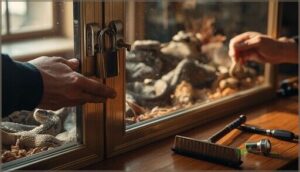
You’ve invested in a quality lock, but your job isn’t finished yet. Even the toughest security system fails without proper upkeep and regular attention to detail.
Let’s walk through the essential maintenance practices that’ll keep your snake safely contained for years to come.
Regular Inspection and Cleaning
Your snake cage security depends on what you inspect every month. Check each lock for rust, loose screws, or worn gaskets that could turn into escape routes. Wipe down latch surfaces with a microfiber cloth to remove grime that jams mechanisms.
Test every hinge and fastener with normal force—if anything feels sticky or misaligned, address it before your reptile finds the weakness first.
Replacing Worn or Damaged Locks
When cleaning won’t restore smooth operation, it’s time for a lock replacement. Worn internal components create gaps that compromise snake cage security—no amount of lubrication fixes stretched keyways or bent strike plates.
Upgrade to corrosion-resistant door lock systems with hardened steel components, matching cage thickness and frame design. Inspect mounting screws after installation and test full engagement weekly for the first month to verify escape prevention holds strong.
Preventing Rust and Corrosion
High humidity inside your reptile enclosure accelerates rust on locking mechanisms. Keep levels below 60 percent to protect snake cage security.
Stainless steel locks resist corrosion better than standard metal, while powder-coated finishes create a moisture barrier for escape prevention.
Apply reptile-safe lubricant monthly to repel condensation. Store spare locks with desiccants, and inspect for rust spots before small pits compromise your cage security and locking mechanisms.
Backup Security Measures
Even corrosion-resistant locks fail eventually, so install a secondary latch or cable tie as your backup protocol. Motion-activated cameras add another layer—think of them as access controls for your reptile enclosure.
Store emergency contact numbers where family can find them fast. Test every vivarium security measure monthly, because escape prevention demands redundancy. One lock protects your snake; two keep everyone safe from cyber threats of complacency.
Frequently Asked Questions (FAQs)
Can snakes open locks by themselves?
Most species can’t intentionally manipulate lock mechanisms, but they’re surprisingly clever escape artists.
Your snake can push against levers, exploit gaps, and use body leverage to accidentally defeat magnetic or compression-style closures.
Do combination locks work better than keyed locks?
There’s no one-size-fits-all winner—it’s more about picking your lock.
Combination systems simplify access control and eliminate key management, while keylocks offer enhanced tamper resistance and durability when securing reptile enclosures against escape.
What lock strength is needed for large constrictors?
Large constrictors need locks rated for at least 200 pounds of force.
For constrictor safety and escape prevention, choose padlocks with boron alloy shackles or multi-point systems to guarantee secure enclosures and lock durability.
Are magnetic locks safe for snake enclosures?
Can a magnet really hold back a determined snake? Magnetic door alarms and locking mechanisms alone aren’t escape prevention champions.
Humidity impact, alignment issues, and magnet strength fade fast—always pair magnets with secondary locks for secure enclosure safety.
How do I prevent lock freezing in cold rooms?
Apply graphite lubricant to lock cylinders every six months, keep room temps above freezing, and install weatherproof covers around keyholes—these freeze prevention steps protect your reptile enclosure security year-round.
Conclusion
Sure, you could trust a $2 bungee cord to contain a muscular predator with infinite patience and zero respect for your property deposit. That’s worked out brilliantly for every panicked Reddit post titled “URGENT: Ball python missing for 72 hours.”
Investing in quality snake cage security locks isn’t paranoia—it’s acknowledging that your reptile’s brain runs a 24/7 escape protocol while yours occasionally forgets where you left your keys. One gap. That’s all they need.