This site is supported by our readers. We may earn a commission, at no cost to you, if you purchase through links.
A classroom snake enclosure does more than hold a reptile—it shapes how safely and confidently students engage with a living creature. A well-designed setup keeps curious hands protected, maintains steady heat and humidity, and ensures your snake can’t slip through unnoticed seams.
Too many teachers learn the hard way that a loose lid or poorly placed vent is all it takes for a vanished pet and a panicked class.
Choosing the right snake enclosure for classrooms means thinking like both a scientist and a safety officer, balancing access, durability, and control in one practical habitat.
Table Of Contents
- Key Takeaways
- Essential Features of Classroom Snake Enclosures
- Choosing The Right Size and Setup
- Maintenance and Care in Classroom Settings
- Top Snake Enclosure Products for Classrooms
- Frequently Asked Questions (FAQs)
- What is the best snake breed for a classroom?
- Is 40 degrees too cold for snakes?
- Do snakes prefer small enclosures?
- How often should classroom snakes be handled?
- What lighting schedule works best for classroom snakes?
- Are there recommended cleaning products safe for students?
- How can teachers minimize stress during student observation?
- What safety rules should students follow around the enclosure?
- Conclusion
Key Takeaways
- Safe classroom snake enclosures need secure locks, durable materials, proper airflow, and clear visibility to protect students and reptiles.
- Front-opening doors and escape-proof features make handling, feeding, and cleaning safer and more controlled in a classroom setting.
- Choosing the right size enclosure—at least as long as the snake’s length with half-length width—supports healthy movement and behavior.
- Consistent maintenance, including daily spot cleaning and careful humidity and temperature monitoring, keeps the habitat stable and low-stress for everyone.
Essential Features of Classroom Snake Enclosures
You don’t just need a “cool tank” for a classroom snake—you need an enclosure that quietly keeps everyone safe and comfortable. The right basic features make daily care predictable for you, gentle for the snake, and low-risk for curious students.
For practical tips on layout, airflow, and safety locks, check out this guide on designing a classroom-friendly snake enclosure.
In the next section, you’ll see how secure locks, durable materials, good airflow, and clear visibility all come together in specific enclosure designs you can actually use.
Secure Locks and Escape Prevention
You can’t overstate how important secure locks are for snake safety in classrooms. Every enclosure should have escape‑proofing built into its locking mechanisms, secure lids, and front‑opening doors. Even ventilation security matters—snakes explore every gap. Features like wire locks and grommets can add another layer of escape prevention, especially for smaller snakes.
- Keyed display locks
- Metal screen‑top clips
- Reinforced door seams
- Tight cable ports
- Escape‑proof ventilation system
Durable Materials for Daily Use
You’ve handled locks; now you need materials that stand up to real classroom life. Look for reptile enclosures with strong Impact Resistance and Moisture Proofing, like high-quality PVC or HDPE plastic panels that won’t swell, rot, or shatter.
Smooth, non‑porous walls boost Cleaning Tolerance, while UV Stability and long Hardware Longevity mean your classroom pets stay secure in a durable construction that still looks new. PVC’s humidity and durability advantages also help maintain stable conditions and simplify long-term enclosure maintenance in a busy classroom.
Front-Opening Doors for Easy Access
Once you’ve chosen sturdy materials, you need front-opening doors that make every interaction safer and calmer. In a busy classroom, front-opening doors keep Door Security and Classroom Safety high, letting you use secure locks and an escape-proof design while still giving you real Access Convenience for Easy Feeding and low-stress Snake Handling in your reptile enclosure and snake terrariums.
- Front doors that swing open at chest height so you don’t reach down from above
- Dual doors you can open one side at a time to limit escape paths
- Keyed or push-button locks students can’t casually flip open
- Deep-set door tracks that remove tiny gaps snakes could slip through
- Openings you can crack just enough for tongs, water bowls, or a handling hook
Proper Ventilation and Airflow
With those doors secured, you turn to proper ventilation and airflow—your next key to a thriving snake home. Cross ventilation pulls fresh air across the enclosure, using low intake vents on the cool side and high exhaust on the warm side for natural temperature gradients.
Smart vent placement, around 6 to 12 square inches total, balances airflow management, humidity control, and thermoregulation so your snake stays healthy without wild swings.
Visibility and Safety for Students
Visibility matters. Clear Viewing Panels on Secure Enclosures let students safely observe classroom snakes without crowding the tank. For added safety and comfort, you’ll want:
For tips on choosing durable glass panels that keep warmth in while offering crystal-clear views, see this guide to corn snake terrariums.
- Front-opening doors that reduce escape risk during feeding
- Good Classroom Placement away from traffic zones
- Posted Safety Protocols for Student Supervision near each escapeproof design or screen top
Choosing The Right Size and Setup
Finding the right snake enclosure starts with matching its size and setup to your species’ needs. You want enough room for natural movement, plus stable heat and humidity that make care easier day to day.
Here’s how to choose a setup that keeps both your students and your snake comfortable.
Size Requirements for Common Classroom Snakes
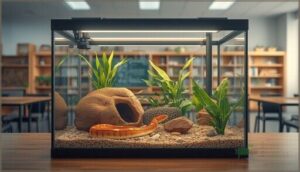
You don’t start with the prettiest snake terrariums—you start with the right terrarium size. For common classroom snakes, aim for reptile enclosure Habitat Dimensions that match clear Space Requirements: adult corn snakes, ball pythons, California kingsnakes, and similar classroom snakes usually need around 4 feet of length, with enough Enclosure Depth for secure hides and species specificity in your snake care plans.
Floor Space Vs. Snake Length Guidelines
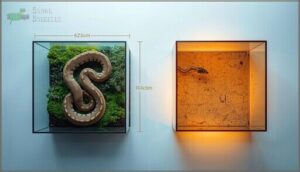
With Snake Length Ratios, you’re really just turning snake care into simple Floor Space Calculations that protect movement and comfort in your classroom reptile enclosure. You match Enclosure Size to expected adult length—most Welfare Standards say at least snake-length in enclosure length and half-length in width—because cramped snake terrariums restrict Snake Movement Patterns and quietly chip away at long-term health.
- Aim for enclosure size at least equal to full snake length along one side.
- Make width at least half the snake’s length so turning and coiling stay natural.
- Treat 0.7 × length by 0.5 × length as a bare-minimum footprint, not a goal.
- Whenever you can, bump terrarium size to 1.5–2 × snake length for real exercise.
- Remember: extra floor space beats extra height for most classroom snakes.
Bioactive Vs. Traditional Enclosures
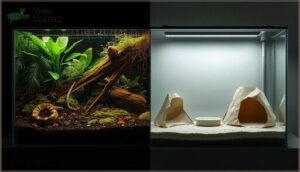
You can think of this choice as “ecosystem in a box” versus “simple, wipe‑clean reptile enclosure.”
A bioactive terrarium leans into Ecosystem Balance, using deep substrates, plants, and Microfauna Roles to manage waste, Humidity Control, and Snake Enrichment—at higher Bioactive Costs up front.
Traditional snake terrariums stay cheaper and simpler, but put more of the snake care work back on you.
Placement and Environmental Considerations
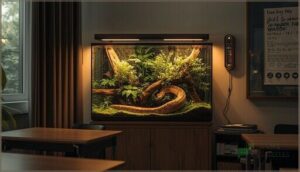
You create stability by choosing Low Traffic Areas away from door drafts and noisy halls for your reptile enclosure. Avoid direct sunlight or cold Window Placement, and keep Heating Sources balanced for steady temperature gradients.
Use consistent Lighting Schedules for a calm rhythm, while solid Noise Reduction and healthy humidity control support long‑term, low‑stress snake care.
Maintenance and Care in Classroom Settings
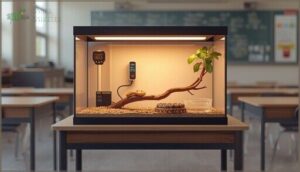
Keeping a classroom snake healthy starts with simple, consistent maintenance. You’ll need to balance cleanliness, humidity, and temperature while keeping the setup easy to manage around students.
Below are practical enclosure options that make daily care safer and more efficient.
Easy Cleaning and Spot Checks
You’ll keep your reptile enclosure truly easy to clean by treating Daily Sanitizing and Spot Cleaning like brushing your teeth—quick, automatic, and non‑negotiable.
You remove feces, urates, shed skin, and uneaten food before they dry, using simple Cleaning Tools that fit your Enclosure Design.
That tight Waste Management routine keeps snake terrariums safer for kids and calmer for you, without disturbing humidity control or temperature gradients.
Humidity and Temperature Monitoring
You’ve handled quick cleanups; now you’re watching the “weather report” inside the tank. Climate Monitoring starts with accurate Thermometer Calibration, using at least two digital probes to check Temperature Gradients for proper thermal regulation and a safe temperature gradient.
With thoughtful Sensor Placement and steady Humidity Control, you get reliable humidity management instead of guessing day to day.
Substrate Selection and Replacement
Once you’ve dialed in humidity control, you’re ready to match Substrate Types and Bedding Materials to your Cleaning Schedules and comfort level.
For snake terrariums in classrooms, you might use paper for easy Waste Management checks, aspen or coconut for moderate reptile husbandry needs, or deeper mulch over a substrate heater, then replace or refresh on a set calendar.
Managing Waste With Bioactive Setups
With solid humidity control in place, bioactive enclosures turn Waste Management into an efficient cycle. In a bioactive terrarium, Cleanup Crews—like isopods and springtails—act as living Bioactive Filters, breaking waste into nutrients.
Balanced Microbe Balance and properly drained substrate layers prevent odor buildup, helping your classroom snake terrarium stay healthy between substrate heater cycles.
Top Snake Enclosure Products for Classrooms
If you’re ready to choose an enclosure, a few classroom-friendly models stand out for their safety and simplicity. Each one balances easy access, secure design, and lasting durability.
Here’s a quick look at some of the best options teachers trust most.
1. Exo Terra Glass Reptile Terrarium Kit
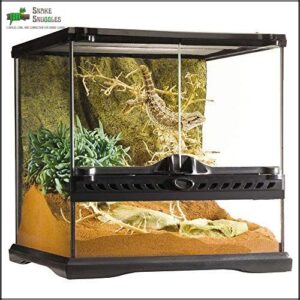
If you want a terrarium that looks professional but works effortlessly in a classroom, the Exo Terra Glass Reptile Terrarium Kit is a strong start. The dual front-opening doors and secure lock make feeding and cleaning safe with students nearby.
Its patented front-ventilation keeps air fresh, while the raised bottom fits a substrate heater for stable warmth. You’ll appreciate the waterproof base, easy cable routing, and clear glass sides—ideal for visibility during lessons without risking an unexpected escape.
| Best For | Teachers or reptile enthusiasts who want a durable, secure, and easy-to-maintain terrarium for small reptiles or amphibians. |
|---|---|
| Material | Glass |
| Dimensions | 12 x 12 x 12 inches |
| Weight | 13.2 pounds |
| Top Ventilation | Full screen top |
| Door Access | Dual front-opening doors |
| Escape Prevention | Dual door lock |
| Additional Features |
|
- Dual front doors make feeding and cleaning simple and safe.
- Front ventilation and full screen top ensure great airflow and light access.
- Raised base allows for under-tank heating without hassle.
- Can lose humidity quickly without extra humidification.
- Foam background isn’t ideal for all species or long-term durability.
- Heavy and awkward to move once set up.
2. Exo Terra Glass Terrarium Tank
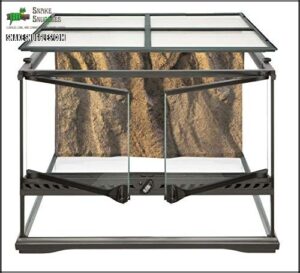
You get a very classroom‑friendly balance of access and security with the Exo Terra Glass Terrarium Tank. Dual front doors open separately, so you can spot clean, adjust a hide, or offer a mouse without fully exposing the snake or inviting student hands into the habitat.
The full screen top accommodates UVB and heat lamps, while the raised bottom lets you safely use an under‑tank heater. For a smaller terrestrial snake, the 18 x 18 x 12‑inch footprint works well as a starter classroom enclosure.
| Best For | Teachers or beginner reptile keepers who want a secure, easy‑access terrarium for small terrestrial reptiles or amphibians. |
|---|---|
| Material | Glass |
| Dimensions | 18 x 18 x 12 inches |
| Weight | 27.5 pounds |
| Top Ventilation | Full screen top |
| Door Access | Front opening doors |
| Escape Prevention | Locking system |
| Additional Features |
|
- Front doors make feeding and cleaning simple without stressing the animal.
- Full screen top allows excellent light and heat penetration.
- Sturdy glass design with space for naturalistic setups or heaters.
- Can be tricky to clean below the doors.
- Metal screen lid isn’t ideal for high humidity species.
- Some reports of noisy or loose locks and shipping damage.
3. Exo Terra Glass Terrarium Kit
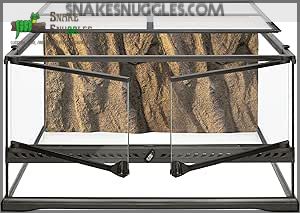
A true classroom favorite, this kit arrives nearly ready to use. You get a full glass terrarium with front‑opening doors, a rock‑style background, and décor that helps you build a natural habitat quickly.
The waterproof base, locking doors, and mesh top balance safety with ventilation, while built‑in inlets keep cords tidy.
Choose the rainforest or desert version depending on your snake’s needs—each includes substrate, plants, and gauges for humidity and temperature monitoring so students can track care in real time.
| Best For | Teachers, reptile owners, or hobbyists who want a ready-to-use, spacious terrarium with easy access and clear viewing for reptiles or amphibians. |
|---|---|
| Material | Glass |
| Dimensions | 24 x 18 x 12 inches |
| Weight | 30.09 pounds |
| Top Ventilation | Mesh top |
| Door Access | Front opening doors |
| Escape Prevention | Secure front doors |
| Additional Features |
|
- Front-opening doors make feeding and cleaning simple.
- Roomy floor space allows pets to explore and live naturally.
- High airflow and humidity control with the mesh top.
- Glass construction can break if handled roughly.
- Some units may arrive damaged during shipping.
- Costs more than basic terrarium options.
4. Repti Zoo Glass Terrarium Tank
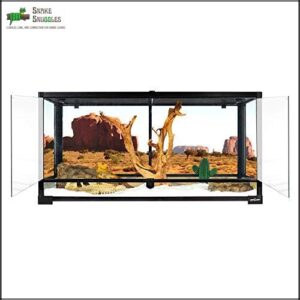
Repti Zoo’s glass terrarium tank gives you the kind of practical control you need in a busy classroom. You get dual front hinge doors that open separately, so you can spot clean or feed from one side while the other stays closed, keeping curious snakes—and students—where they belong.
The raised, waterproof bottom lets you safely use under‑tank heaters and moist substrates, and the mesh top with wire inlets makes it easy to run lights and probes without leaving gaps for escapes.
| Best For | Teachers, hobbyists, and reptile keepers who need a secure, easy‑maintain glass terrarium for snakes, lizards, or tortoises. |
|---|---|
| Material | Glass |
| Dimensions | 35.98 x 17.99 x 17.99 inches |
| Weight | 51.9 pounds |
| Top Ventilation | Screen ventilation |
| Door Access | Double hinge front doors |
| Escape Prevention | Door lock mechanism |
| Additional Features |
|
- Dual hinge doors make feeding and cleaning simple while preventing escapes.
- Raised, waterproof bottom supports heaters and varied habitats.
- Good airflow and light access for UVB and heat lamps.
- Screen sides can lower humidity in tropical setups.
- Doors may rattle without extra securing.
- Lock might not hold up with strong, escape‑prone reptiles.
5. Carolina Custom Cages Tall Deep Glass Terrarium
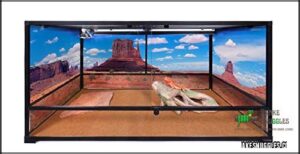
Looking for a “showpiece” classroom enclosure that still works on a counter? The Carolina Custom Cages Tall Deep glass terrarium gives you that taller, display‑style look while staying practical to manage.
At 48 x 24 x 24 inches, it offers enough floor space for many common classroom snakes, plus room to climb, burrow, and explore.
The all‑glass build, deep waterproof base, locking sliding doors, and full steel mesh top make it especially safe and predictable in a room full of students.
| Best For | Teachers or hobbyists who want a sleek, secure, and spacious reptile display that fits neatly on a counter or table. |
|---|---|
| Material | Tempered and Non-Tempered Glass |
| Dimensions | 48 x 24 x 24 inches |
| Weight | 73 pounds |
| Top Ventilation | Full steel screen mesh top |
| Door Access | Sliding front doors |
| Escape Prevention | Key-lock security |
| Additional Features |
|
- Sturdy all-glass design with a waterproof base that’s easy to clean and maintain.
- Secure sliding doors with key-lock and steel mesh top for safety and airflow.
- Excellent visibility and space for climbing, burrowing, or creating a bioactive habitat.
- Heavy and can be awkward to move without help.
- Lock needs careful installation to function properly.
- Suction cups or mounted fixtures may not adhere well to glass surfaces.
Frequently Asked Questions (FAQs)
What is the best snake breed for a classroom?
A calm corn snake often fits classrooms best—it’s gentle, active enough for observation, and hardy in typical room conditions.
Unlike ball pythons, corn snakes eat reliably, tolerate mild care slips, and rarely refuse handling.
Is 40 degrees too cold for snakes?
Yes—40 degrees Fahrenheit is far too cold for typical pet snakes.
At that temperature, digestion can stop, the immune system weakens, and the risk of respiratory infection, tissue damage, or even death rises quickly with continued exposure.
Do snakes prefer small enclosures?
Snakes don’t truly “prefer” small enclosures, but they do feel safer in tight, well-hidden spaces when they’re young or stressed.
As adults, they benefit from larger, cluttered habitats that let them stretch, explore, and thermoregulate properly.
How often should classroom snakes be handled?
You’ll want a calm middle ground: plan for 1–3 short handling sessions per week, about 10–15 minutes each, with at least a few “no-handling” rest days.
Skip handling on feeding days, for 48–72 hours after meals, and during cloudy-eyed shedding.
What lighting schedule works best for classroom snakes?
You’ll get the best results with a simple 12‑hour light, 12‑hour dark cycle on a timer, such as 8 a.m.–8 p.m., then complete darkness.
Use non‑light heat sources at night and avoid red “night” bulbs entirely.
Are there recommended cleaning products safe for students?
Safe classroom disinfectants include hypochlorous acid sprays like CleanSmart, hydrogen peroxide cleaners such as Seventh Generation, and mild chlorhexidine-based reptile products.
They sanitize without harsh fumes, making them suitable around children and sensitive reptiles.
How can teachers minimize stress during student observation?
You minimize stress by treating observation like a quiet lab moment: keep voices low, avoid tapping or crowding the glass, and use a viewing line so students stay several feet back.
Schedule short, small‑group sessions, give the snake multiple hides and visual barriers, skip handling within 48 hours of feeding, and pause immediately if you see tight coiling, rapid tongue flicks, hissing, or a striking posture.
What safety rules should students follow around the enclosure?
Students follow five non‑negotiables: keep hands off the doors and mesh, stay at least two feet back, use quiet voices, never feed or poke inside, and wash hands with soap for 20 seconds afterward.
Conclusion
Imagine your classroom as a small ecosystem where every choice either calms curiosity or fuels chaos. When you choose snake enclosures for classrooms that lock securely, open from the front, and stay easy to clean, you protect both students and animals. Clear glass and reliable ventilation invite observation without risk.
Consistent heat and safe placement prevent surprise emergencies. In the end, a thoughtful habitat becomes quiet classroom management—running in the background while learning becomes the main focus.
- https://petsintheclassroom.org/pets-in-the-classroom-suggests-shed-your-skin-with-a-snake-in-the-classroom/
- https://reptifiles.com/corn-snake-care-guide/corn-snake-temperatures-humidity/
- https://www.zenhabitats.com/blogs/reptile-care-sheets-resources/reptile-safe-disinfectant-cleaners
- https://www.reptile-cage-plans.com/emails/classroomsnake.html
- https://usark.org/