This site is supported by our readers. We may earn a commission, at no cost to you, if you purchase through links.

Most travel problems with snakes start before the car moves. A loose latch, a bad vent, an enclosure that looked roomy online—those mistakes turn a routine drive into a stress test for you and your animal.
Frequent travel demands more than a small box with air holes. Your snake still needs secure walls, a workable thermal gradient, species-appropriate humidity levels, and enough room to stretch without rubbing every turn.
That’s why snake enclosures for frequent travelers have to balance safety, weight, and climate control at the same time. Get those details right, and the miles become manageable instead of risky.
Table Of Contents
- Choose The Right Travel Enclosure
- Escape-Proof Features That Matter
- Climate Control on The Go
- Travel Day Setup and Care
- Top 9 Snake Enclosures for Travelers
- 1. Exo Terra Mini Wide Glass Terrarium
- 2. Carolina Custom Deep Glass Terrarium
- 3. Zoo Med Naturalistic Medium Terrarium
- 4. REPTIZOO Mini Reptile Glass Terrarium
- 5. Exo Terra Glass Terrarium Kit
- 6. REPTI ZOO Large Glass Terrarium
- 7. Zilla Tropical Reptile Habitat Kit
- 8. Tetra Turtle Aquarium Kit
- 9. Unipaws Black Stackable Reptile Terrarium
- Frequently Asked Questions (FAQs)
- Conclusion
Choose The Right Travel Enclosure
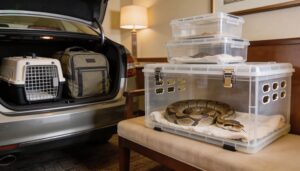
The right travel enclosure makes every trip safer, simpler, and a lot less stressful for your snake. You’ll want something that fits your species, holds up on the road, and doesn’t eat up all your space in the car or hotel.
If you’re hauling a humidity-loving species, this guide to snake terrariums for tropical snakes helps narrow down secure, road-friendly options.
Here are the enclosure options worth looking at before you pack up and go.
Matching Enclosure Size to Snake Species
Because fit drives safety, base your snake terrarium on Adaptation of enclosure size to snake species and species-specific enclosure requirements. Research shows that enclosure size matters for preventing stress-related health issues.
- Species Length Guidelines
- Body Width Clearance
- Enclosure Volume Calculation
- Thermal Gradient Allocation
- Growth Rate Planning
Choosing appropriate enclosure size for growing snakes defines portable reptile enclosure design. A four-foot snake should stretch straight along one axis, not buckle in transit.
Temporary Carrier Vs. Primary Terrarium
Once size is sorted, use a temporary carrier for hours or days, not full-time housing. Primary terrariums win on temperature gradient management, and ventilation and humidity management in reptile carriers.
Think Cost Comparison, Cleaning Frequency, Regulatory Compliance, Weight Limits, and User Convenience.
Good portable reptile enclosure design still needs secure locking mechanisms for animal carriers and escapeproof design during transit. Consider using a drainage layer system to maintain proper humidity.
Hard-sided Vs. Collapsible Enclosure Options
With your carrier type settled, choose between rigid walls and folding panels.
- Hard-sided units offer better Structural Integrity, Transport Stability, secure locking mechanisms, and stronger escapeproof design.
- Collapsible models save room, but Assembly Time, Maintenance Frequency, and hinge wear matter.
- Pick durable materials, a reliable ventilation system, and proven Material Longevity; even a lightweight transport box must always stay rigid.
Lightweight Materials for Frequent Travel
Once rigid walls make sense, weight becomes the next pressure point.
Polycarbonate shells and PVC cut bulk fast, while Aluminum framing and Carbon fiber frames keep a portable reptile habitat strong. Ripstop nylon works for panels and covers. Honeycomb cores stiffen a lightweight transport box without weight.
These lightweight container materials for reptile transport are durable materials for pet carriers.
Space-saving Setups for Cars and Hotels
Because travel space disappears fast, plan around your route and room.
- Foldable Rack System for Under-Seat Storage during car travel logistics.
- Modular Divider Panels plus secure locking doors keep a portable reptile habitat stable.
- Ceiling-Mounted Hooks and a Compact Door Organizer help meet hotel pet policy with lightweight containers for reptile transport. It also slides behind a hotel closet door.
Escape-Proof Features That Matter
When you travel with a snake, small weak points matter more than fancy features. A solid carrier should close cleanly, lock firmly, and leave no gaps around doors, vents, or seams.
The enclosures below are worth a closer look because they make those basics easier to trust on the road.
Secure Locking Doors and Latches
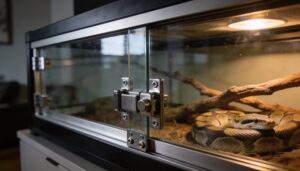
Think a latch is enough?
For snakes, secure locking doors need reinforced latches, Reinforced Strike Plates, Tamper-Resistant Screws, and Anti-pick Design, especially on lockable sliding doors.
Keep Lock Alignment Tolerance within 2 mm, follow Lock Lubrication Practices, and run lock testing procedures weekly.
Even with double entry locks elsewhere, this door should deadbolt cleanly, latch flush, and stay shut under pressure.
Double-entry Systems for Added Security
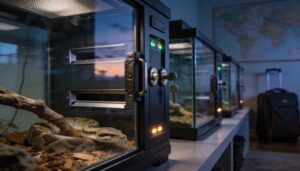
Because one latch can fail, double-entry systems use Redundant Access Points with Independent Lock Mechanisms, Dual Key Control, and Visual Entry Indicators. Offset Entry Ports reduce disturbance while double-entry locks back up lockable sliding doors and reinforced latches.
In escapeproof designs, each entry works alone, so if one side takes a hit, your snake still stays contained and secure inside.
Eliminating Gaps Around Doors and Vents
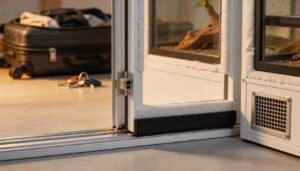
Small gaps beat fancy locks every time. Prioritize Door Sweep Installation, Weatherstripping Materials, Foam Sealant Application, and Adjustable Thresholds, so door bottoms and jambs stay tight, with lock alignment within 2 mm, preserving seal integrity.
Around vents, use Vent Mesh Reinforcement, sealed edges, and correct vent screen mesh size for escape route mitigation.
Recheck weekly; shifting hardware opens trouble fast.
Safe Ventilation Without Escape Risks
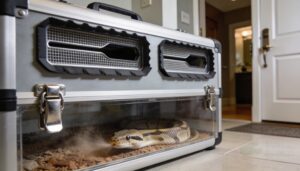
Use Mesh Size Optimization: keep vent screen mesh size below head width, add Dual Vent Pathways, Lip-Protected Vents, Airflow Directionality, and Seal-Integrated Vents. These Ventilation and escape prevention strategies improve airflow management, support Ventilation and humidity management in reptile carriers, and complement secure locking mechanisms for animal carriers without creating stressful drafts inside.
Durable Seals, Hinges, and Frames
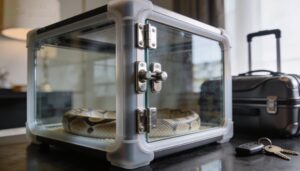
Your enclosure is only as strong as its weakest seam. Prioritize Seal Material Selection and Compression Seal Design with silicone seals that stay flexible across seasons.
A travel enclosure fails at its weakest seam, so choose flexible silicone seals that hold through every season
- Match Hinge Load Capacity to door weight.
- Choose Modular Frame Construction with reinforced framing and strong Frame Corrosion Resistance.
- Favor material durability, hardware corrosion resistance, and double-entry locks on frequent travel days and flights.
Routine Lock and Seal Inspections
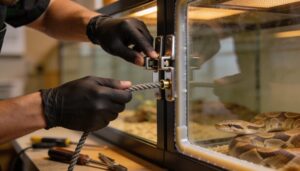
Strong hardware still fails if you stop checking it.
Build inspection schedules around Lock Tolerance Checks, Seal Compression Tests, Cable Pull Resistance, Magnetic Alignment Verification, and Hinge Pin Smoothness. Test double-entry locks weekly and before every trip, confirm silicone seals form a 2 millimeter gasket, and treat inspection and upkeep of enclosure seals as a maintenance protocol, not a guess.
Climate Control on The Go
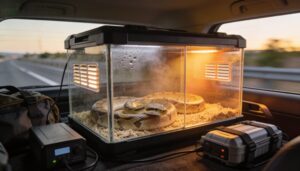
When you travel with a snake, climate control stops being a nice extra and becomes part of basic safety.
The right enclosure should help you hold steady temperatures, manage humidity, and keep fresh air moving without creating new risks. Keep those three jobs in mind as you look through the travel-friendly enclosure options below.
Maintaining Safe Travel Temperatures
On the road, temperature swings can turn risky fast. Start with Ambient Temperature Checks, then use a digital thermometer and portable thermostat for tight temperature regulation.
Battery-Powered Thermostats, heat mat integration, Thermal Buffer Layers, and careful Thermal Mass Placement help smooth spikes. Insulated Travel Bags add thermal insulation, keeping the warm side near 75–85 F, without dangerous hot spots, safely.
Managing Humidity for Different Snake Species
Once temperature is steady, managing humidity requirements becomes the next pressure point.
Match species humidity ranges to your snake: ball pythons 60–70 percent, corn snakes 50–60, rosy boas 30–40. Build humidity zones with a light misting schedule, careful humidity sensor placement, and seasonal humidity adjustments.
That’s species-specific husbandry, humidity regulation, and temperature and humidity control in snake terrariums on trips.
Using Digital Thermometers and Hygrometers
Once humidity targets are set, use a digital thermometer and hygrometer as your temperature monitoring devices.
Sensor Placement matters: mount them at head height, away from vents and heat.
Follow Calibration Procedures every 6–12 months, stay on top of Battery Management, enable Alarm Settings, and use Data Logging to tighten humidity control and temperature and humidity management in travel enclosures.
Safe Placement of Heat Packs and Cool Packs
Because packs can help or harm fast, treat placement like lockwork, not guesswork:
- Barrier Placement and Leak Inspection first.
- Heat Zone Positioning keeps heat packs off walls, vents, and hides; use portable heating solutions for reptiles.
- Cool Pack Isolation plus Pack Securing enables temperature control, temperature monitoring devices, and temperature and humidity management in travel enclosures for steadier, safer travel conditions.
Preventing Overheating in Vehicles and Lodging
Because cars turn brutally fast, Pre-cool Vehicle for 10 to 15 minutes, then use Window Shade Usage, Parking Shade Strategies, and Insulation Lining to protect temperature control.
In hotels, verify room conditions with temperature sensors or a digital thermometer, and use Hotel Room Fans carefully.
Good temperature and heat management for snake transport also means checks, not hopeful ventilation management.
Ventilation Strategies for Stable Airflow
Because stale air turns a secure carrier risky, treat ventilation management as airflow management. In a ventilated travel crate, use Diffuser Placement Optimization, maintain Positive Pressure Balance and an Intake Exhaust Ratio, and inspect ventilation holes.
Follow a Filter Maintenance Schedule, prioritize Low-Noise Fan Selection, and apply ventilation and airflow considerations for travel tubs to prevent drafts and dead zones.
Travel Day Setup and Care
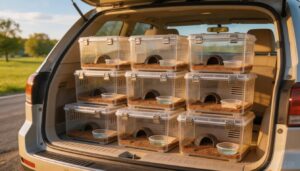
Travel day is where a good setup proves its worth. You need an enclosure that keeps your snake secure, settled, and easy to manage from the first mile to the final stop.
options below are the ones most likely to make that job easier.
Pre-trip Feeding and Hydration Timing
Travel prep is a window: timing matters. Follow feeding protocols prior to moving snakes with Meal size guidelines, Light snack timing, and a fasting period—Pre-travel fasting, or pretravel fasting, no large meals for 48 hours.
Keep a Hydration schedule, watch timing food and water before travel, and use Water bowl placement for water provision and spill prevention in portable enclosures.
Best Substrate for Short-term Travel
Think of substrate as your snake’s seatbelt. In a travel enclosure, choose Dust-free liners, Moisture-wicking pads, or Disposable paper bedding for clean footing and easy replacement.
Impact-resistant tiles suit rigid carriers; Non-toxic inert sand works only with careful substrate moisture management.
Good substrate hygiene matters, and smart substrate selection for shortterm housing keeps the substrate stable, dry, and low-risk overnight.
Adding Hides to Reduce Stress
- Hide Placement offers Thermal Zoning and stress reduction across warm and cool ends.
- Size Compatibility lets your snake coil inside secure hide spots, with its back touching a wall.
- Material Selection favors an opaque reptile hide or ventilated hide.
- Keep a simple Cleaning Routine for travel stress management, between trips only.
Securing The Enclosure During Transport
Once the hide is set, lock the carrier like it might roll downhill tomorrow.
| Action | Why | Check |
|---|---|---|
| Ratchet strap anchoring | Secure tie-down points | travel container stability |
| Anti-slip mat placement | Foam corner protectors | Vibration dampening pads |
| secure locking mechanisms for animal carriers | snapfit closure | secure lid methods to prevent snake escapes |
| escape prevention for mobile reptile containers | hard braking | no shift |
Monitoring Behavior During Long Trips
With the carrier strapped down, your job shifts to monitoring snake health during transport. Watch Respiratory Rate, Eye Opacity, Body Tension, and Movement Frequency for Stress Signals.
Pair temperature monitoring and humidity monitoring with simple stress reduction techniques: keep the travel enclosure dark, quiet, and steady.
A calm snake settles; a restless one is telling you something if you listen.
Post-travel Acclimation and Enclosure Reset
Once the miles stop, start Posttravel care and acclimation with a calm Temperature Reset and Humidity Reset. Do Enclosure Inspection, Health Screening, and Substrate Replacement first.
Resume your Cleaning routine, using smart Substrate selection for short‑term housing. Rebuild the Temperature gradient, then restore Temperature and humidity control in snake terrariums before returning your snake to its permanent setup at home.
Top 9 Snake Enclosures for Travelers
Some travel enclosures make life easier, and some create problems you don’t need. The options below focus on security, airflow, and practical handling for real trips, not just shelf appeal.
Use this list to find a setup that fits your snake, your vehicle, and how often you’re on the move.
1. Exo Terra Mini Wide Glass Terrarium
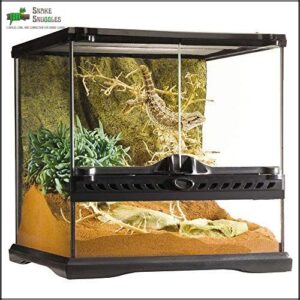
Need a travel terrarium that doesn’t feel flimsy? The Exo Terra Mini Wide gives you a compact 12 x 12 x 12‑inch footprint, tempered glass panels, and front‑opening dual doors with a twist lock.
That setup makes feeding, spot cleaning, and quick checks much less stressful. The raised waterproof base manages light moisture and holds a heat mat underneath.
Just remember its narrow door gaps and modest height: it’s best for small snakes and short, controlled travel setups overall.
| Best For | Keepers who want a sturdy, compact terrarium for small reptiles, amphibians, or invertebrates, especially for short, controlled travel or easy-access indoor setups. |
|---|---|
| Dimensions | 12 x 12 x 12 in |
| Weight | 13.23 lb |
| Material | Tempered glass |
| Access | Dual front doors |
| Use Setting | Indoor |
| Suitable For | Small reptiles and amphibians |
| Additional Features |
|
- Tempered glass build feels sturdy and more secure than many flimsy plastic travel enclosures.
- Front-opening dual doors with a twist lock make feeding, spot cleaning, and quick handling easier and less stressful.
- Raised waterproof base supports light moisture and allows use of a heat mat underneath.
- Narrow door gaps may let very small feeder insects escape.
- The 12 x 12 x 12-inch size is too limited for larger animals or species that need more climbing height.
- Its glass construction makes it heavier and less convenient to move than lighter travel carriers.
2. Carolina Custom Deep Glass Terrarium
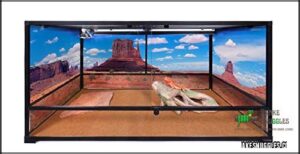
A solid step up in travel-ready space, the Carolina Custom Deep Glass Terrarium gives you a 36 x 24 x 18-inch layout that suits many ground-dwelling snakes better than tall, narrow tanks.
Tempered glass, a rigid frame, hinged front doors, and a key lock add real control during temporary stays. The waterproof base manages spills and damp setups without fuss.
It’s heavier than plastic options, but for hotel stops or extended trips, that extra stability can be worth it.
| Best For | Reptile keepers who want a large, secure glass enclosure for ground-dwelling species, bearded dragons, or bio-active setups and do not mind the added weight. |
|---|---|
| Dimensions | 48 x 24 x 24 in |
| Weight | 73 lb |
| Material | Glass and steel mesh |
| Access | Sliding front doors |
| Use Setting | Indoor |
| Suitable For | Large reptiles and amphibians |
| Additional Features |
|
- Large interior with a 6.3-inch deep waterproof base gives plenty of room for burrowing species, planted setups, and multiple heat or UVB fixtures.
- Clear glass walls, a full-width steel mesh top, and locking sliding front doors provide strong visibility, ventilation, and security.
- Solid packaging and a straightforward overall design help protect the enclosure during delivery and make setup fairly manageable.
- At about 73 lb, it is heavy and may take two people to move or position safely.
- The small suction-cup door handles can be unreliable and may need replacement.
- Assembly instructions may lack detail, and some users report the lock or overall stability needs fine-tuning during setup.
3. Zoo Med Naturalistic Medium Terrarium
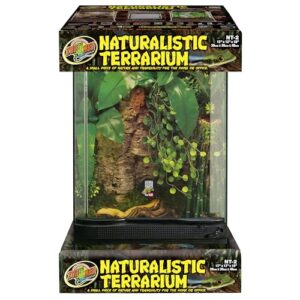
If you want a compact glass terrarium for short trips, Zoo Med’s Naturalistic Medium Terrarium keeps things simple and visible. The 12 x 12 x 18-inch NT-2 has a full-front glass door, front vents, and a stainless-steel screen top that maintains airflow and UV-friendly lighting. It works best for small to medium snakes during temporary stays, not long hauls.
Buy the separate lock, watch humidity loss through the top, and inspect edges and glue before trusting it on the road.
| Best For | People who want a compact, easy-to-view glass terrarium for small reptiles, amphibians, or invertebrates, especially for temporary setups or short trips. |
|---|---|
| Dimensions | 12 x 12 x 18 in |
| Weight | 2-3 lb |
| Material | Glass and stainless steel |
| Access | Front glass door |
| Use Setting | Indoor or covered outdoor |
| Suitable For | Medium reptiles and insects |
| Additional Features |
|
- Full-front glass door makes feeding, cleaning, and rearranging the habitat much easier.
- Stainless-steel screen top supports airflow and better UVA/UVB transmission for lighting.
- Clear glass sides give an unobstructed view and work well with common Zoo Med accessories.
- Lock is sold separately, so it is not fully secure right out of the box.
- Screen top can let humidity escape, which may be a problem for species that need higher moisture.
- Some users report rough edges, glue issues, and unclear assembly instructions.
4. REPTIZOO Mini Reptile Glass Terrarium
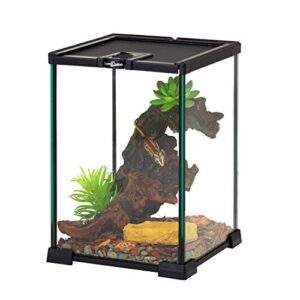
Among compact travel tanks, the REPTIZOO Mini Reptile Glass Terrarium earns its place by keeping access, airflow, and cleanup straightforward. Its 8.3 x 8.3 x 11.8‑inch footprint fits hotel rooms and short car trips, while the front door, locking metal screen top, and feeding port make routine checks less stressful.
The watertight base helps with damp setups and spill control.
Still, inspect the glass and lid before use, especially if you run overhead heat, because cracking has been reported.
| Best For | Small reptile, amphibian, or arthropod keepers who want a compact, ready-to-use glass terrarium that is easy to clean, easy to access, and practical for short trips or small-space setups. |
|---|---|
| Dimensions | 8 x 8 x 12 in |
| Weight | 6.61 lb |
| Material | Glass and metal |
| Access | Sliding door and ports |
| Use Setting | Indoor |
| Suitable For | Small reptiles and arthropods |
| Additional Features |
|
- Pre-assembled design with a front sliding door and feeding ports makes daily care simple.
- Metal screen top provides solid ventilation and supports overhead heat setups when used carefully.
- Watertight base works well for humid enclosures and helps contain spills during transport or cleaning.
- Some users report cracked glass or lid issues, especially when using overhead heat.
- The mesh top may allow very small insects, like gnats, to get inside.
- It is not officially rated for fish, and long-term water use may affect durability.
5. Exo Terra Glass Terrarium Kit
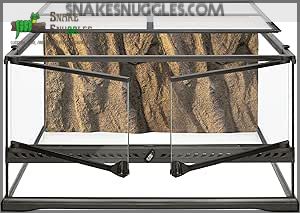
Here’s the tradeoff: the Exo Terra Glass Terrarium Kit gives you polished access and airflow, but it travels best when you treat it like glass, not luggage.
Front-opening double doors and a built-in latch lock make feeding and quick checks easy. The raised bottom works with under‑tank heat pads, and the foam background hides cables neatly.
Still, at roughly 30 pounds, it’s heavy for frequent moves, and you’ll need to buy lighting, substrate, and décor separately for a complete setup.
| Best For | Keepers who want a polished, front-access terrarium for low-profile reptiles or amphibians and do not mind the extra weight or buying setup accessories separately. |
|---|---|
| Dimensions | 24 x 18 x 12 in |
| Weight | 30.12 lb |
| Material | Tempered glass and mesh |
| Access | Front double doors |
| Use Setting | Indoor |
| Suitable For | Low-profile reptiles and frogs |
| Additional Features |
|
- Front-opening double doors make feeding, cleaning, and quick health checks much easier.
- Raised bottom works well with under-tank heating pads, and the background helps hide cords and tubing.
- Mesh top and ventilation design give you a nice balance of airflow and humidity control.
- At around 30 lb, it is fairly heavy and not ideal if you plan to move it often.
- The short height is limiting for species that need more climbing space.
- Lighting, substrate, and décor are not included, so the full setup costs more.
6. REPTI ZOO Large Glass Terrarium
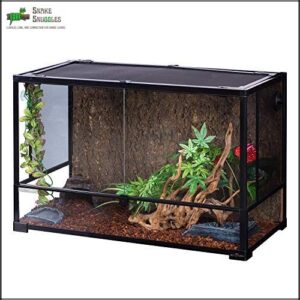
Need room without losing control? The REPTI ZOO Large Glass Terrarium gives you a full 36 x 18 x 18‑inch footprint, front-opening double doors, and a lock that helps prevent careless escapes.
Tempered glass keeps visibility high, while the raised base works with heat mats during hotel stays or temporary setups. Vent windows and the screen top help route cords and improve airflow, but check the top frame closely.
Small gaps can challenge juvenile snakes and nervous keepers alike.
| Best For | Keepers who want a roomy, front-opening 36 x 18 x 18 terrarium for reptiles or small tortoises, with good visibility and easier access for feeding, cleaning, and temporary heat-mat setups. |
|---|---|
| Dimensions | 36 x 18 x 18 in |
| Weight | 52 lb |
| Material | Tempered glass and screen |
| Access | Double front doors |
| Use Setting | Indoor |
| Suitable For | Snakes, lizards, tortoises |
| Additional Features |
|
- Spacious 67-gallon enclosure with a versatile 36 x 18 x 18-inch footprint for a wide range of reptiles and small tortoises.
- Front-opening double doors make feeding, cleaning, and handling easier while helping reduce escape risk.
- Tempered glass, a waterproof base, and cord-friendly vent windows make it flexible for heating, lighting, and different enclosure styles.
- Small gaps around the top frame may be a problem for juvenile snakes or other small escape artists.
- Full glass sides and screened panels can make humidity control and airflow balancing trickier in some setups.
- The top frame may feel less sturdy, and some buyers have reported broken doors or missing hardware.
7. Zilla Tropical Reptile Habitat Kit
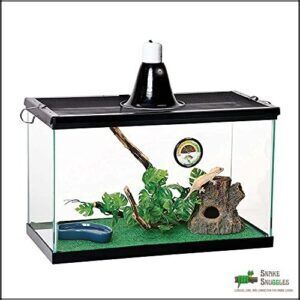
Compact kits can save your trip when you need a quick, controlled setup. The Zilla Tropical Reptile Habitat Kit pairs a 10‑gallon glass terrarium with a screen cover, dome fixture, blue daytime bulb, heat mat, liner, and combo gauge, so you aren’t hunting parts in a hotel room.
It suits small snakes best, not travelers. Check the lid clips before every drive, and put the heat mat on external control.
The kit is affordable, but accessories may need upgrading.
| Best For | First-time reptile keepers or casual exotic pet owners who want an affordable all-in-one starter kit for small tropical reptiles, baby lizards, or hermit crabs. |
|---|---|
| Dimensions | 23.75 x 14.5 x 17.75 in |
| Weight | 19.5 lb |
| Material | Glass and plastic cover |
| Access | Removable top cover |
| Use Setting | Indoor |
| Suitable For | Small tropical reptiles |
| Additional Features |
|
- Includes the basics in one package: glass terrarium, screen cover, dome light, bulb, heat mat, liner, and humidity/temperature gauge.
- Good starter size for small tropical reptiles and other small exotic pets, with ventilation from the screen top.
- Low-maintenance liner and included gauge make routine cleaning and environmental checks easier.
- The removable screen top is less convenient than a sliding or front-opening design, and lid clips may not stay secure.
- The included Day Blue bulb and some small accessories may need replacement or reinforcement sooner than expected.
- The heat mat has no built-in power control, so many owners will want an external controller for safer temperature management.
8. Tetra Turtle Aquarium Kit
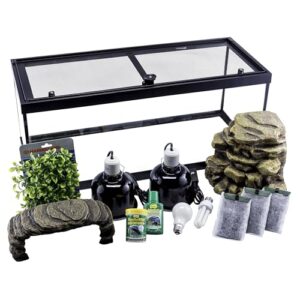
If the Zilla kit feels bare-bones, the Tetra Turtle Aquarium Kit swings the other way. You get a 20-gallon glass tank, locking screen top, basking platform, decorative three-stage ReptoFilter, and two 5.5-inch dome lamps for heat and UVB.
That makes setup simple, but not snake-smart out of the box. The rock filter steals nearly a third of the space, and the wet layout suits aquatic species, not most snakes.
Use it only as a temporary, closely supervised hold during travel.
| Best For | Beginners setting up an aquatic turtle, frog, or newt habitat, not snake owners unless they need a very short-term, closely supervised holding setup. |
|---|---|
| Dimensions | 30 x 12 x 12 in |
| Weight | 41.4 lb |
| Material | Glass with screen top |
| Access | Screen top access |
| Use Setting | Indoor |
| Suitable For | Aquatic turtles and amphibians |
| Additional Features |
|
- Complete starter kit with tank, screen top, basking platform, filter, and heat/UVB lamps, so setup is quick.
- Integrated lighting and basking area make it beginner-friendly for aquatic reptiles and amphibians.
- Decorative three-stage filter helps keep water clearer while giving the tank a more natural look.
- The large rock filter takes up a lot of room, which cuts into usable swimming space.
- The wet, aquatic layout is a poor fit for most snakes and not practical as a real snake enclosure.
- Filter reliability, lamp burnout, and the need for extras like a heater or thermometer can add frustration.
9. Unipaws Black Stackable Reptile Terrarium

A better fit for regular road trips is the Unipaws Black Stackable Reptile Terrarium. It gives medium to large terrestrial snakes solid floor space, and the sliding glass doors use a custom lock plus silicone seal bars to reduce escape risk.
Rotating side cable ports keep heat, UVB, and probe wires organized, which matters in cramped cars or hotel rooms.
Just mind the drawbacks: it’s heavy after assembly, the wood frame dislikes high humidity, and instructions test your patience.
| Best For | Medium-to-large terrestrial reptile owners who want a roomy, secure enclosure that also works well in multi-tank setups and can handle occasional travel better than humid or aquatic environments. |
|---|---|
| Dimensions | 47.24 x 23.62 x 22.83 in |
| Weight | 57.32 lb |
| Material | Engineered wood and glass |
| Access | Sliding glass doors |
| Use Setting | Indoor |
| Suitable For | Medium-to-large terrestrial reptiles |
| Additional Features |
|
- Spacious 110-gallon footprint gives adult bearded dragons, large lizards, and other medium-to-large terrestrial reptiles plenty of floor space.
- Sliding glass doors with a custom lock and silicone seal bars help prevent escapes and keep feeder insects contained.
- Rotating side cable ports make it easier to route heat, UVB, and probe wires neatly while keeping the enclosure more sealed.
- The enclosure is heavy once assembled, so moving it is difficult without taking it apart.
- Engineered wood is not a good match for high-humidity or aquatic setups because it can absorb moisture.
- Assembly can be frustrating for first-time builders, especially when installing the sliding glass doors.
Frequently Asked Questions (FAQs)
What do you do with reptiles when you go on vacation?
Plan care before you leave: use a trusted reptile sitter, boarding facility, or reliable friend with feeding and temperature instructions.
Most reptiles do best with minimal handling, stable heat, secure housing, and daily scheduled check-ins.
Are there airline regulations for flying with snakes?
Yes—but the catch is strict variation.
Most airlines ban cabin transport, requiring approved hard-sided containers, health certificates, and sometimes cargo handling, permits, or quarantine. Rules change by carrier, route, species, and temperature conditions, too.
Which snake species travel best long distances?
Hardier species usually handle long trips best: indigo snakes, some pythons, and olive sea snakes are known for sustained movement.
Even so, temperament, temperature stability, and secure containment matter more than mileage when you travel.
How do you clean enclosures between trips?
Strip out substrate and debris first.
Wash surfaces and accessories with warm, mildly soapy water, rinse well, then apply a reptile-safe disinfectant for full contact time.
Dry everything completely, ventilate, and replace any cracked items.
Can two snakes share one travel enclosure?
Usually, no. Most snakes travel best alone because shared space raises stress, competition, and bite risk.
Garter snakes are a rare exception, but only in roomy setups with multiple hides, climate needs, and separation ready.
What documents do you need crossing state lines?
Carry a valid photo ID, REAL ID license or passport, plus vehicle registration and proof of insurance.
If you’re transporting a snake, bring any required health certificate, permit, rental papers, and address documents if relocating.
Conclusion
Like a well-planned road trip, a safe journey with your snake requires the right gear and a solid plan. With these 9 snake enclosures for frequent travelers and their safety setup tips, you’re equipped to hit the road with confidence.
Your snake’s comfort and security depend on it. Choose wisely, pack smart, and enjoy the miles ahead with your slithery companion by your side, thanks to reliable snake enclosures for frequent travelers.