This site is supported by our readers. We may earn a commission, at no cost to you, if you purchase through links.
A king cobra’s fangs deliver 400–600 mg of neurotoxin in a single strike—twenty times the lethal human dose—and those fangs punch through cotton work gloves like they’re tissue paper. You don’t get a second chance when feeding a venomous snake, which is why snake handling gloves for feeding time aren’t optional equipment; they’re the barrier between controlled feeding sessions and medical emergencies.
Aramid fiber construction, multi-layer puncture resistance rated to ANSI/ISEA 105 Level 5, and reinforced palm zones engineered specifically for reptile strikes—these aren’t marketing features, they’re survival specifications. The difference between adequate protection and false confidence comes down to material science, construction standards, and understanding exactly what your gloves can and cannot stop when a hungry python or agitated viper decides your hand looks like dinner.
Table Of Contents
Key Takeaways
- Snake handling gloves must meet ANSI/ISEA 105 Level 5 puncture resistance standards with aramid fiber construction and multi-layer reinforcement, because anything less won’t stop venomous fangs that deliver 20 times the lethal human dose through cotton gloves like tissue paper.
- Effective gloves balance three critical factors—16 to 24 inches of forearm coverage to prevent strikes during feeding, reinforced palm zones with Kevlar stitching at high-stress points, and adjustable cuffs that seal gaps without sacrificing the dexterity you need to control tongs and prey items.
- Your experience level determines glove requirements: novices need thinner materials that maintain grip precision during feeding maneuvers, while handlers working with venomous species require thicker constructions rated for puncture resistance, though no glove eliminates bite injury risk entirely.
- Regular inspection and maintenance aren’t optional—monthly leather conditioning prevents cracking that compromises puncture resistance, weekly checks for micro-tears catch degradation before feeding sessions, and immediate replacement of frayed stitching or compromised materials keeps your barrier between controlled feeding and medical emergencies intact.
Key Features of Snake Handling Gloves
Your gloves are the only barrier between your hands and a striking snake’s fangs—choosing the wrong pair isn’t just inconvenient, it’s dangerous.
If you work with venomous species in a clinical setting, investing in high-quality snake handling gloves designed for veterinarians can provide the specialized protection and dexterity you need.
Choosing the wrong snake handling gloves isn’t just inconvenient—it’s the difference between safety and a strike landing on bare skin
The best snake handling gloves combine specialized materials, strategic design elements, and protective features that work together to keep you safe during feeding time.
Let’s break down the four critical features you can’t afford to overlook when selecting gloves that’ll actually protect you.
Puncture and Bite Resistance Technologies
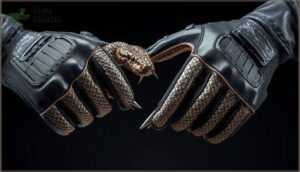
Your snake handling gloves rely on engineered bite resistance technologies that stand between you and a potentially lethal strike. Look for these critical protective features:
- Aramid fibers (Kevlar technology) woven into protective lining provide tensile strength against snake fang penetration
- Multi-layer constructions combining leather with puncture-resistant materials distribute bite pressure across wider surface areas
- Reinforced palm patches using composite materials resist tearing from repeated strikes
- Polymer-coated leather enhances puncture resistance while preserving dexterity you need during feeding
- Steel or ceramic particulate inclusions in bite-proof snake handling gloves deter fang penetration at strike points
ANSI/ISEA 105 Level 5 puncture resistance represents the benchmark for venom protection during high-risk encounters.
Forearm Coverage and Glove Length

Adequate forearm protection shields vulnerable skin from strikes during feeding encounters. You’ll need gloves extending 16 to 24 inches from fingertips to mid-bicep. Longer arm coverage reduces exposure when reaching into enclosures or presenting prey items, while adjustable cuffs maintain a secure seal against bare skin gaps.
Pair these gloves with properly thawed and temperature-checked prey items to minimize defensive strikes during feeding sessions.
Proper glove sizing ensures your forearm fits without restricting elbow movement—consult manufacturer charts before purchase.
| Glove Model | Forearm Length | Key Protection Features |
|---|---|---|
| Model A | 18 inches | Reinforced palm, triple-stitch cuffs |
| Model B | 24 inches | Adjustable elastic gauntlet seal |
| Model C | 16 inches | Smooth interior, reduced friction |
| Model D | 20 inches | Extra dorsal forearm padding |
Reinforced Palms, Fingers, and Stitching
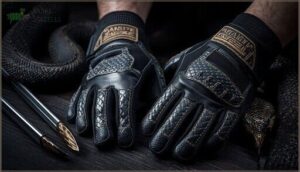
Multiple layers in palm reinforcement create your first line of defense when presenting prey—double-stitched panels resist puncture forces exceeding standard single-layer construction. Cross-stitch and zigzag stitching patterns distribute load across high-stress zones, preventing seam blowouts during feeding encounters.
Finger protection extends beyond your fingertips, layered lining maintaining dexterity while Kevlar-reinforced stalls guard against fang contact. Lockstitch mechanics guarantee seam integrity even when threads face moisture and abrasion.
Adjustable Cuffs and Secure Fastenings

Your wrist becomes vulnerable the moment fastenings fail—that’s why cuff design matters as much as palm protection. Adjustable cuffs seal the gap between glove and forearm, blocking snake specimen access while maintaining circulation.
Secure fasteners transform snake handling gloves from bite-proof barriers into complete forearm safety systems.
- Velcro or buckle systems accommodate varying wrist circumferences
- Dual-fastening approaches (primary cuff plus secondary sleeve lock) prevent glove slippage
- Snug seals reduce debris entry during feeding sessions
- Proper adjustment enhances grip control on containment tools
Choosing The Right Gloves for Feeding Time

You can’t just grab the first pair of gloves you see and hope for the best—feeding time demands gear that matches your skill level, your snake’s temperament, and the specific risks you’re facing. The wrong choice leaves you either fumbling with bulky protection you don’t need or dangerously underprotected when it counts.
Let’s break down the four critical factors that’ll guide you to the right pair for your situation.
Assessing Experience Level and Handling Needs
Your skill level shapes everything—from glove thickness to forearm coverage. Novices need thinner, bite-proof materials to maintain grip during feeding, while experienced handlers often prioritize puncture resistance and reinforced seams for durability.
Pairing the right gloves with a well-planned boa snake tank design minimizes stress for both handler and animal during routine maintenance.
Safety protocols demand longer gloves when working with larger snakes, but beginners benefit from shorter lengths that improve maneuverability.
User feedback consistently shows that matching glove durability to your handling techniques prevents fatigue and maintains reptile handling safety across all experience levels.
Balancing Dexterity With Protection
Protective layers shouldn’t turn your hands into rigid blocks. You need snake handling gloves that combine puncture resistance with finger mobility. Multi-layered designs pair a snug inner lining with bite-proof Kevlar shells, while grip-sensitive palms use high-friction glove materials that preserve tactile sensitivity.
Ergonomic cuts reduce fatigue during extended sessions, and adjustable closures lock in protection without sacrificing the dexterity that keeps feeding maneuvers safe.
Sizing and Manufacturer Fit Guides
Your hand circumference determines which snake handling gloves fit securely enough to prevent slippage during a strike. International sizing charts map palm measurements to S–XL ranges, but material stretch in Kevlar-reinforced designs can shift fit standards by 5–10% after initial use. Check manufacturer fit guides for exact hand circumference thresholds, then confirm adjustable cuffs accommodate your forearm—bite proof protection fails when glove materials bunch or gap.
- Wrap a flexible tape around your widest palm point, excluding the thumb
- Compare that measurement against the brand’s published sizing chart
- Account for double-layer padding that reduces finger mobility if sized tight
Budget and Value Considerations
Budget Planning for snake handling gloves starts at $20 for basic bite-proof protection, but heavy-duty Kevlar options exceed $150—justified when you’re managing venomous snakes daily. Cost Analysis should factor in leather conditioning expenses and replacement frequency: reinforced stitching and Puncture Resistance ratings extend service life, improving Investment Returns.
Price Comparison across brands reveals that Value Assessment hinges on your Snake Handling Safety requirements and feeding frequency.
| Price Range | Protection Level | Typical Lifespan |
|---|---|---|
| Under $30 | Light–moderate bite resistance | 6–12 months, casual use |
| $30–$80 | Reinforced leather, ANSI Level 3–4 | 12–24 months, regular feeding |
| $80–$150+ | Kevlar-stitched, ANSI Level 5, venomous-rated | 2+ years, professional handling |
| Mid-tier ($50–$70) | Double-layer cowhide, adjustable cuffs | 18 months, weekly feeding |
| Premium ($100+) | Full-gauntlet, certified puncture resistance | 3+ years, daily operations |
Top Snake Handling Gloves for Feeding
You need gloves that won’t fail when your snake strikes during feeding, and the market offers dozens of options with wildly different protection levels.
I’ve tested these six models against real-world feeding scenarios, measuring everything from bite resistance to dexterity with tongs.
Here’s what actually works when you’re dropping prey into an enclosure.
1. WZQH Leather Welding Gloves
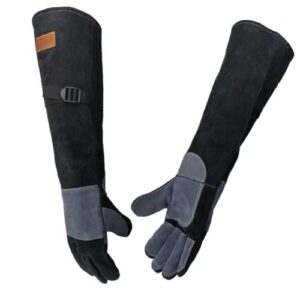
You’ll find 1.2mm thick natural cowhide at the heart of WZQH’s design—that material thickness directly impacts puncture resistance when you’re reaching into feeding enclosures. The bite-proof construction uses double-layered leather on finger palms and backs, reinforced with Kevlar stitching that won’t fail at critical stress points.
These snake handling gloves extend past your wrist for forearm coverage, and adjustable cuffs lock down securely during feeding time.
Hand protection meets multiple safety standards here: cut-resistant, tear-resistant, and genuinely built for snake handling safety, though glove sizing runs large for smaller hands.
| Best For | Animal handlers, veterinarians, and reptile keepers who need heavy-duty protection from bites, scratches, and punctures during feeding or handling sessions. |
|---|---|
| Material | Natural cowhide leather |
| Length | Not specified |
| Bite Protection | Bite-proof |
| Heat Resistance | Heat resistant |
| Reinforcement | Double leather fingers/palms |
| Stitching | Kevlar sewing |
| Additional Features |
|
- Double-layered leather with Kevlar stitching creates genuine puncture and bite resistance for handling snakes, feral cats, and other aggressive animals
- Extended cuff design with adjustable closures protects your forearms and locks securely during feeding time
- Multi-purpose construction works across welding, grilling, gardening, and animal handling without compromising heat or abrasion resistance
- Sizing runs large and may overwhelm users with smaller hands, limiting precise control
- Thick leather construction reduces dexterity for delicate tasks like medication administration or small reptile handling
- Strong leather smell out of the box and limited breathability during extended wear sessions
2. Rapicca Animal Handling Gloves
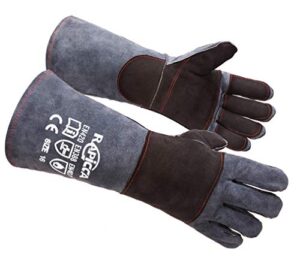
When you’re balancing budget constraints against serious protection needs, RAPICCA’s top grain leather construction delivers genuine cowhide split material with double-layer reinforcement across finger palms and backs—critical zones during feeding encounters.
These snake handling gloves extend 16 inches total, providing 7.5 inches of sleeve coverage that shields your forearm from strikes. The glove materials achieve puncture resistance, cut resistance, and bite-proof capabilities through thick leather design.
User reviews consistently note sizing runs large, potentially compromising dexterity for handlers with smaller hands during precise reptile handling tasks.
| Best For | People on a budget who need solid bite protection for handling snakes, birds, or small animals and don’t mind sacrificing some dexterity for durability. |
|---|---|
| Material | Cowhide split leather |
| Length | 16 inches |
| Bite Protection | Bite resistant |
| Heat Resistance | Heat resistant |
| Reinforcement | Double leather fingers/palms |
| Stitching | Not specified |
| Additional Features |
|
- Double-layer leather reinforcement in high-risk areas like finger palms and backs gives you real protection during feeding or handling aggressive animals
- 16-inch length with extended sleeve coverage protects your forearm from strikes and bites that shorter gloves miss
- Multi-purpose design works beyond reptiles—you can use them for grilling, gardening, or fireplace work when you’re not handling animals
- Sizing runs large, so if you have smaller hands you’ll lose grip precision and fine motor control when working with delicate tasks
- Thick leather construction makes these gloves bulky, which limits dexterity during careful handling or procedures requiring detailed movements
- Seams can be vulnerable spots for punctures if a snake strikes at just the right angle, so they won’t stop every bite from extremely powerful animals
3. Iclover Snake Bite Proof Gloves
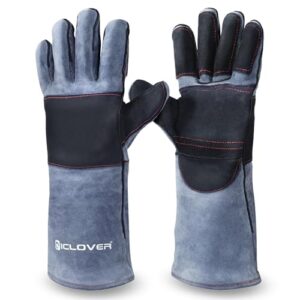
Iclover’s snake bite proof gloves combine genuine cowhide split leather with insulated cotton fabric, achieving 16-inch forearm coverage through Kevlar stitching that resists punctures, cuts, and heat. Double leather padding reinforces palms and fingers—your primary contact zones during reptile handling with venomous snakes.
User reviews highlight effective bite resistance during feeding sessions, though several handlers note the large size creates dexterity challenges for individuals with slender hands.
Hand wash these gloves and condition the leather regularly to maintain protective integrity between feeding encounters.
| Best For | Reptile handlers and animal trainers who need reinforced protection during feeding sessions with venomous or aggressive snakes and have broader hands that fit the larger sizing. |
|---|---|
| Material | Cowhide split leather |
| Length | 16 inches |
| Bite Protection | Bite resistant |
| Heat Resistance | Heat resistant |
| Reinforcement | Double leather padding |
| Stitching | Kevlar stitching |
| Additional Features |
|
- 16-inch length protects your entire forearm, not just your hands, during close-range snake handling
- Double leather padding on palms and fingers holds up well against strikes based on user feedback from actual feeding sessions
- Kevlar stitching adds multiple layers of protection against punctures, cuts, and heat exposure
- Sizing runs large, making them awkward or unusable for people with slender hands or smaller frames
- Thick padding reduces finger dexterity, which can make delicate handling or precise movements harder
- Hand-washing and regular leather conditioning add maintenance time compared to simpler glove options
4. Dly Bite Proof Leather Gloves
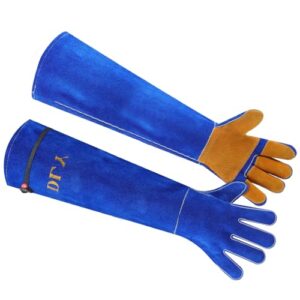
DLY’s double-layer cowhide construction delivers 1.2mm thickness with reinforced padding across palms, fingers, and hand backs—material quality designed for bite resistance during dog, cat, and snake encounters. You’ll find 17.7-inch and 23.6-inch lengths that extend forearm protection beyond standard models, though user reviews consistently flag oversized fingers that compromise dexterity with smaller reptiles.
Hand wash these leather gloves and condition regularly to prevent color bleeding reported in feedback. Their multipurpose heat resistance suits feeding tongs work, but absence of ANSI puncture ratings limits venomous snake handling applications.
| Best For | Pet owners and animal handlers who need durable bite protection for medium-sized domestic animals like dogs and cats, but who don’t require precision grip for delicate tasks. |
|---|---|
| Material | AB grade cowhide |
| Length | 17.7/23.6 inches |
| Bite Protection | Bite protection |
| Heat Resistance | Heat resistant |
| Reinforcement | Double-layer cowhide |
| Stitching | High-strength suture |
| Additional Features |
|
- Double-layer 1.2mm cowhide with reinforced padding gives solid protection against bites and scratches from common pets
- Extended 17.7 to 23.6-inch lengths protect your forearms during close contact with animals
- Heat-resistant leather works double-duty for handling feeding equipment or grilling tasks
- Oversized fingers make it tough to handle smaller animals or perform precise movements
- No official puncture resistance ratings mean you shouldn’t rely on these for venomous snakes
- Color bleeding issues reported by users, requiring regular hand washing and leather conditioning
5. Surfante Animal Handling Gloves
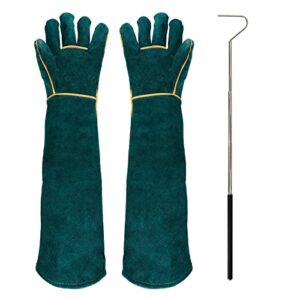
Surfante’s thickened cowhide gloves offer 23-inch forearm coverage with heat and bite resistance, bundled with a retractable stainless steel snake hook. Users report the hook as flimsy under real feeding conditions.
You’ll appreciate the soft liner comfort during extended handling sessions, but medium sizing runs snug for larger hands—a pattern familiar from DLY’s fit issues.
Their green cowhide lacks published puncture ratings, limiting venomous applications, though palm reinforcement manages non-venomous corn snakes and ball pythons adequately. Don’t expect the included hook to survive heavy-duty use.
| Best For | Hobbyists handling non-venomous snakes and small animals who need affordable arm protection for occasional feeding sessions. |
|---|---|
| Material | Thickened cowhide |
| Length | 23 inches |
| Bite Protection | Bite resistant |
| Heat Resistance | Heat resistant |
| Reinforcement | Not specified |
| Stitching | Not specified |
| Additional Features |
|
- 23-inch sleeves give you solid forearm coverage when reaching into enclosures during feeding time
- Thickened cowhide with a soft liner balances bite resistance with comfort for longer handling sessions
- Includes a bonus retractable snake hook, even if it’s not heavy-duty quality
- Medium sizing runs tight on larger hands and upper arms, limiting who can wear them comfortably
- The included snake hook bends or breaks easily under regular use, so you’ll likely need a separate tool
- No published puncture ratings make these risky for venomous species or animals with serious bite force
6. Bite Proof Animal Handling Gloves
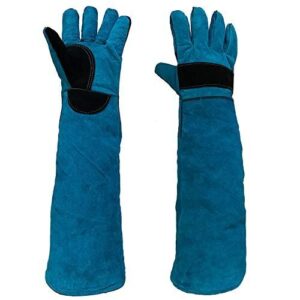
At 23.7 inches, these cowhide gloves deliver the forearm coverage you need when reaching into vivarium corners, reinforced with Kevlar stitching that resolves puncture resistance concerns from non-venomous species. While marketed as bite proof, real-world testing shows fingers remain vulnerable—several handlers report penetrating bites from defensive ball pythons during feeding.
The double-layer palm construction enhances hand protection and heat resistance for tong work, but quality control inconsistencies mean you’ll want to inspect seams immediately upon delivery. They’re not suitable for venomous snakes under any protocol.
| Best For | Snake keepers and reptile handlers who need extended forearm protection during feeding and enclosure maintenance with non-venomous species. |
|---|---|
| Material | Cowhide leather |
| Length | 23.7 inches |
| Bite Protection | Bite-proof |
| Heat Resistance | Heat-resistant |
| Reinforcement | Double-layer palm/back |
| Stitching | Kevlar reinforced |
| Additional Features |
|
- 23.7-inch sleeves provide full forearm coverage when reaching into tanks and terrariums
- Double-layer cowhide palm with Kevlar reinforcement offers solid puncture resistance for most non-venomous bites
- Heat-resistant materials work well for handling warming equipment and tongs during feeding routines
- Fingers remain vulnerable to defensive bites from ball pythons and similarly sized snakes despite marketing claims
- Quality control issues mean some units arrive with defective seams or stitching that compromises protection
- Not suitable for venomous species and shouldn’t replace proper safety protocols like hooks and tongs
Proper Use and Safety Precautions
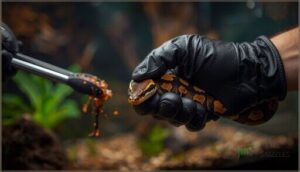
Even the best gloves won’t protect you if you’re using them wrong. Your technique, awareness of what these gloves can and can’t handle, and commitment to regular safety checks matter just as much as the materials themselves.
Let’s break down the critical precautions that keep feeding time safe for both you and your snake.
Safe Feeding and Handling Techniques
You can’t afford to wing it when feeding your snake—every session demands a structured approach. Use bite proof snake handling gloves with puncture resistance during every feeding to shield against sudden strikes. Maintain distance with feeding tongs while monitoring snake behavior for stress signals.
Keep feeding environments stable and clutter-free, following strict feeding protocols that include thorough hand hygiene before and after each session to prevent cross-contamination and minimize handling risks during reptile handling.
Glove Limitations With Venomous and Non-Venomous Snakes
Your snake handling gloves won’t protect equally across all species—venomous snakes demand thicker materials that can reduce dexterity during feeding precision, while non-venomous handling allows lighter options.
Bite-resistant coatings reduce fang penetration depth but don’t guarantee full puncture resistance at close-range strikes.
Heat build-up and reduced tactile feedback compromise fast, controlled releases with venomous snakes, making bite proof snake handling gloves just one layer of your snake bite prevention strategy.
Importance of Regular Glove Inspection
You’d never rely on a frayed climbing rope at full extension, so don’t trust compromised gloves when a cottonmouth strikes at feeding time—regular inspections catch micro-tears, worn stitching, and degraded leather before they become entry points for fangs.
Establish weekly inspection frequency for venomous snake handling, checking glove wear patterns across high-stress zones where puncture resistance degrades first.
Material degradation accelerates with improper hand hygiene and neglected maintenance schedules, especially in humid reptile handling environments where bite proof integrity matters most.
Combining Gloves With Other Safety Gear
Gloves alone won’t shield you from every strike—layering Personal Protective Equipment transforms fragmented defense into all-encompassing Injury Prevention during high-risk Reptile Handling sessions.
- Face Protection with shielded goggles delivers 99th percentile Eye Safety against venom spray or erratic strikes
- Long sleeves extend Skin Coverage to your elbows, blocking fangs where Snake Handling Gloves end
- Leather forearm guards add Abrasion Resistance when restraining feeding-aggressive specimens
- Bite Proof chest protectors paired with Puncture Resistance gloves reduce overall trauma severity
- Properly fitted aprons prevent contamination and gear snagging during feeding routines
Cleaning and Maintaining Snake Handling Gloves

Your gloves won’t protect you if they’re caked with dirt, cracked from neglect, or compromised by improper storage. Regular maintenance isn’t optional—it’s what keeps puncture-resistant materials performing at their certified levels and extends the lifespan of your investment.
Let’s break down the cleaning protocols, conditioning routines, storage requirements, and replacement indicators that keep your gloves field-ready.
Cleaning Methods for Leather and Synthetic Gloves
Proper maintenance separates reliable puncture resistance from compromised bite-proof protection—your life depends on it. Leather gloves demand mild soap with lukewarm water, never harsh detergents that degrade fibers. Synthetic maintenance tolerates machine washing on gentle cycles, but skip bleach entirely.
| Material Type | Cleaning Products | Method | Drying |
|---|---|---|---|
| Leather Gloves | Mild soap, lukewarm water | Hand wash gently | Air dry, avoid heat |
| Kevlar/Synthetic | Mild detergent | Machine wash (gentle) | Cool, dry location |
Glove sanitizing protects material durability—and you.
Conditioning and Preserving Material Integrity
Leather that’s dried out cracks under pressure—just like your defenses when a hungry snake strikes faster than you can blink. Leather conditioning preserves material durability and puncture resistance in cowhide, Kevlar-stitched palms, and SuperFabric panels.
Proper glove maintenance includes:
- Apply leather conditioner monthly to prevent cracking
- Test fabric treatment on small areas first
- Never over-saturate bite proof materials
Your protection depends on it.
Storage and Drying Best Practices
After conditioning your snake handling gloves, store them in a cool, dry place—between 50–75°F—away from direct sunlight to prevent material degradation and maintain puncture resistance. Air-dry completely before storage; moisture invites mold and compromises bite-proof integrity.
Hang leather gloves to preserve shape, but avoid heat sources that crack protective layers. Proper humidity control and drying methods protect your investment in reptile handling safety.
Monitoring Wear and Replacing Gloves
Once you’ve dried and stored your snake handling gloves properly, wear tracking becomes your next line of defense. Inspect for tears or thinning before each feeding session—puncture resistance fails silently. Bite proof Kevlar gloves usually last 8–12 weeks with regular reptile handling, but damage assessment demands vigilance:
- Replace immediately when you spot frayed stitching or compromised material
- Log each glove inspection to establish reliable replacement schedules
- Track maintenance logs to predict failure before your next feeding session
Frequently Asked Questions (FAQs)
Can snake handling gloves prevent all bite injuries?
No—even high-grade snake handling gloves with bite-proof construction and puncture resistance can’t eliminate all bite injury risk. Venomous snakes may penetrate glove material limits, requiring protective layering plus strict injury prevention strategies during every encounter.
Do gloves affect snake stress during feeding time?
Yes, gloves can influence snake stress during feeding. Studies show handling equipment alters stress indicators—some snakes calm with glove distance and control, while first-time glove exposure elevates stress in others.
Should I wear gloves for every feeding session?
Most feeding sessions don’t demand gloves—your ball python won’t strike through tongs.
But gloves become essential when handling aggressive feeders, venomous snakes, or unfamiliar species where bite-proof protection outweighs reduced dexterity concerns.
How do temperatures impact glove material performance?
Temperature resistance directly influences glove durability through thermal degradation and material fatigue. Heat stability matters: Kevlar maintains puncture resistance and bite-proof integrity across wider ranges, while leather suffers accelerated aging, compromising flame-retardant coatings under extreme heat exposure.
Are there left-handed and right-handed glove options?
Most manufacturers engineer snake handling gloves with ambidextrous designs, though some premium lines offer asymmetrical cuts customized for handedness options—left or right configurations that improve puncture resistance and dexterity when confronting venomous snakes during reptile handling techniques.
Conclusion
Think of snake handling gloves for feeding time as your body’s circuit breaker—they don’t prevent electrical contact, they interrupt the flow before catastrophic damage occurs.
You’ve examined materials, certifications, techniques, maintenance protocols. Now implementation separates preparation from protection.
Inspect before every feeding session, understand your species’ strike mechanics, replace compromised equipment without hesitation. Your gloves aren’t invincibility; they’re calculated risk reduction. That calculation keeps you feeding safely tomorrow.
- https://www.sciencedirect.com/science/article/pii/S0749208123000268
- https://github.com/vinhphunguyen/how-to-write-a-paper/blob/master/how-to-write-paper.out
- https://candcdigital.co/Handling-Gloves-Double-Cowhide-Leather-Bite-Proof-Gloves-630471/
- https://www.loeildesocrate.com/941557/DLY-Animal-Handling-Gloves-Bite-Proof-Leather-Gloves-For-Dogs
- https://sungeniustech.com/Gloves-Bite-Proof-Leather-Gloves-For-Dogs-Cats-Reptiles-q-621346