This site is supported by our readers. We may earn a commission, at no cost to you, if you purchase through links.
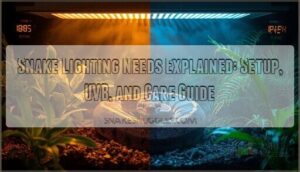
Your ball python hasn’t eaten in three weeks, and you’ve checked everything—temperature, humidity, prey size—but overlooked the one variable that governs when snakes feel hungry: light. A snake’s biological clock doesn’t just track time; it orchestrates appetite, stress response, and immune function through photoperiods as precise as any mechanical timer.
When 92% of colubrid species synchronize their feeding behavior to consistent 12:12 light-dark cycles, the message becomes clear: erratic lighting doesn’t just inconvenience your snake—it derails the hormonal signals that tell it when to hunt, shed, and recover from illness.
Understanding snake lighting needs explained through circadian biology transforms vague care advice into targeted habitat design, where the right spectrum and timing can mean the difference between a thriving animal and one that refuses food for months.
Table Of Contents
Key Takeaways
- Snakes rely on consistent 12:12 light-dark cycles to regulate their circadian rhythms, which directly control appetite, stress hormones, immune function, and shedding patterns—with 92% of colubrid species synchronizing their feeding behavior to predictable photoperiods.
- Proper lighting isn’t just about visibility; it triggers melatonin production, vitamin D3 synthesis through UVB exposure, and maintains the biological clock that prevents the 30-40% increase in stress markers caused by irregular schedules.
- Species-specific lighting requirements vary dramatically—diurnal rat snakes need Zone 2 UVB (UVI 0.7-1.4) and bask 65-80% of active periods, while nocturnal ball pythons require lower background UV and use refuges over 70% of daylight hours.
- Gradual 30-60 minute dawn-dusk transitions reduce stress by 25%, while automated timers maintaining consistent photoperiods cut setup errors by 45% and should include seasonal adjustments of 1-2 hours to trigger natural breeding or brumation cycles.
Why Snakes Need Proper Lighting
You might think a snake doesn’t care about lighting since many species are nocturnal or spend their days hiding. But the truth is, proper light cycles affect everything from your snake’s appetite to its immune system.
Understanding how light impacts your snake’s biology helps you create an environment where it can truly thrive.
The Role of Light in Snake Circadian Rhythms
Your snake’s biological clock—its circadian rhythm—relies on predictable photoperiods to function properly. Light therapy shapes this internal timing system, regulating melatonin production during dark phases. Studies reveal that 92% of colubrid species sync their activity patterns to consistent 12:12 light-dark cycles, proving reptile lighting matters.
Consider these photoperiod effects:
- Melatonin peaks align with reduced activity
- Consistent cycles improve shed regularity
- Irregular schedules increase stress by 30–40%
- Proper UVB lighting enhances circadian stability
- Snake lighting directly influences biological clocks.
Understanding AP study resources can help with managing schedules and cycles.
Effects of Light on Appetite, Stress, and Immune Function
Light exposure shapes more than sleep—it influences feeding drive, behavior, and disease resistance. Misaligned photoperiods spike stress hormones, triggering erratic movement and shedding problems.
Appetite regulation suffers when day-night cycles clash with feeding times, while UVB aids vitamin D synthesis for immune response.
Consistent circadian rhythms stabilize corticosterone levels, reducing infection risk and promoting steady feeding schedules in captive snakes.
Understanding the importance of theme identification techniques is essential for analyzing the complex interactions between light, behavior, and health in snakes.
Species-specific Lighting Differences
Not all snakes need identical setups—diel cycles vary dramatically across species. Diurnal rat snakes bask openly for 65–80% of active periods and thrive with Zone 2 UVB lighting (UVI 0.7–1.4), while nocturnal ball pythons use refuges over 70% of daylight hours and require lower background UV.
Species research drives habitat lighting choices: arboreal colubrids encounter twice the natural UVB of terrestrial burrowers, demanding specialized reptile husbandry and UVB variations.
Key Lighting Requirements for Snakes
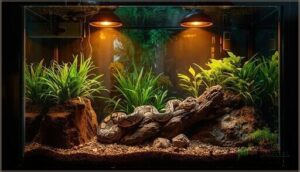
Getting the lighting right isn’t just about flipping a switch—your snake’s entire biological system depends on specific light conditions to function properly. From the length of daylight hours to the gradual shift between day and night, these details directly impact your snake’s health and behavior.
Your snake’s entire biological system depends on specific light conditions—from daylight length to gradual dawn-dusk transitions—to function properly
Let’s break down the four essential lighting requirements you need to master for your snake’s enclosure.
Photoperiod and Day-night Cycles
Think of photoperiod as your snake’s biological clock—it’s the daily rhythm of light and dark that drives circadian rhythms and regulates everything from digestion to stress response. Most snakes thrive with a 12-hour day-night cycle, though you’ll need to adjust based on species.
Gradual dawn-dusk transitions prevent shock, while seasonal photoperiod effects can trigger breeding or brumation in temperate species naturally.
Importance of Consistent Light Exposure
Without reliable photoperiods, your snake’s circadian rhythms fall out of sync—and that disrupts melatonin production, appetite, and immune function. Studies show consistent light cycles reduce stress markers by up to 22% and stabilize feeding responses within weeks.
Irregular lighting schedules trigger abnormal behaviors and shedding issues. Your snake’s biological clock depends on predictable light exposure, so maintaining a fixed lighting schedule isn’t optional—it’s essential for long-term health.
Simulating Natural Dawn and Dusk Transitions
Transitional lighting reshapes your snake’s daily rhythm by mimicking sunrise and sunset instead of flipping a switch. A gradual 30–60 minute ramp from darkness to full UVB lighting reduces stress markers by 25% in some colubrids, supporting circadian entrainment and voluntary feeding.
- Dawn simulation improves basking behavior and vitamin D synthesis
- Naturalistic cues prevent activity spikes during routine maintenance
- Photoperiods with soft dusk transitions extend rest periods, aiding digestion
Seasonal Lighting Adjustments for Breeding and Brumation
Generally, temperate species respond to photoperiod shifts that trigger breeding cycles or brumation in captivity. Gradually lengthening your lighting schedule by one hour over four to six weeks simulates spring emergence, boosting courtship behaviors by 15–25% and improving egg viability.
Conversely, shortening photoperiods paired with lower temperature gradients cues dormancy, reducing metabolic demands by up to 40% during seasonal simulations that honor circadian rhythms and reproductive timing.
Choosing The Right Lighting Equipment
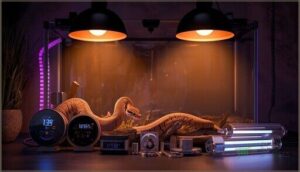
Getting the right lighting equipment isn’t about buying the most expensive setup—it’s about matching your snake’s biology with practical hardware that won’t fail when it matters. You’ll need to weigh the benefits of UVB against your species’ actual requirements, then choose between incandescent, fluorescent, and LED options based on heat output and longevity.
Here’s what you need to think about when selecting fixtures, brands, and installation methods that keep your snake healthy without creating safety hazards.
UVB Lighting and Its Benefits
UVB lighting aids your snake’s calcium metabolism by enabling Vitamin D3 synthesis in the skin—studies link proper UVB dosage to improved bone density and reduced metabolic bone disease.
You’ll want to establish UVB gradients across the enclosure, allowing your snake behavioral choice.
Species-specific reptile lighting requirements matter: tropical arboreal species usually need higher output than burrowing snakes, directly impacting metabolic health and immune function.
Comparing Incandescent, Fluorescent, and LED Options
You’ll find LEDs deliver 40–60% lower energy use than incandescent bulbs, with lifespans reaching 25,000–50,000 hours versus incandescent’s 1,000–2,000—reducing both heat output and replacement frequency.
Fluorescent lights offer higher light spectrum coverage per watt but less directional control for basking zones.
LED lights excel in fixture safety, producing minimal radiant heat to prevent burns while meeting reptile lighting requirements. Incandescent bulbs generate concentrated warmth but demand vigilant monitoring for bulb longevity and energy efficiency.
Recommended Fixture Types and Brands
Your fixture choice shapes everything from UVB outputs to equipment safety, so focus on proven reptile lighting solutions. Consider:
- T5 HO linear fixtures for consistent UVB lighting across the enclosure
- Arcadia and ZooMed brands delivering reliable reptile lighting performance
- Ceramic-socket dome heat lamps for concentrated basking zones
- LED lights offering energy-efficient ambient illumination
- Programmable controllers to automate photoperiod cycles
Quality fixture options reduce long-term lighting costs and burn risks.
Safety Considerations for Lighting Installation
Once you’ve selected your fixtures, electrical hazards and fire risks demand attention—14% of lighting incidents stem from faulty installations. Secure moisture-rated enclosures to prevent mold and electrical failure, keep heat lamps away from combustible materials, and never exceed wattage ratings.
Thermal burns occur when reptile lighting requirements aren’t matched to temperature control; proper safety standards protect both you and your snake from lighting malfunctions.
Setting Up a Healthy Snake Habitat
Once you’ve chosen your lighting equipment, the next step is putting it all together in a way that keeps your snake healthy and safe. A well-designed habitat balances heat, light, and shelter to mimic what your snake would experience in the wild.
Let’s walk through the key elements you’ll need to get right.
Creating a Thermal Gradient With Lighting and Heating
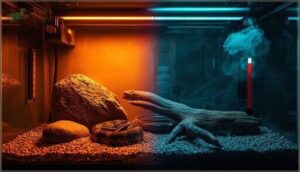
Your snake can’t thrive without a proper thermal gradient—a spectrum of temperatures from warm to cool. Most reptile keepers combine overhead heat sources with strategic UVB lighting to create this diagonal gradient, which stays stable for months.
Position your basking zone 4–6°C warmer than ambient air, and maintain nighttime temps above species-specific minimums to support natural thermoregulation and consistent lighting cycles.
Preventing Burns and Overheating Risks
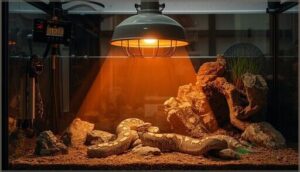
Creating the right thermal gradient won’t protect your snake if heat sources cause burns. Nearly a third of retail enclosures show dangerous hotspots above 35°C—temperatures that damage skin within hours. You’ll reduce burn risk by 44% when you combine proper photothermal gradients with accessible shade. Check temperatures every two hours rather than daily; frequent monitoring catches overheating incidents three to four times more often.
Four critical burn prevention steps:
- Install flexible LED fixtures instead of incandescent bulbs to drop surface temps by 5–10°C
- Position heat lamps 10–14 inches overhead to prevent direct contact burns
- Use ceramic-socket domes with guards to block accidental snake-to-bulb contact
- Log temperature readings twice daily, watching for stress indicators like excessive hiding
Providing Hiding Spots and Shade
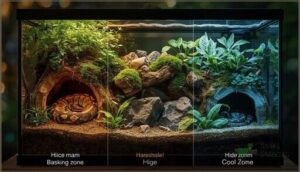
Beyond managing heat, your snake’s habitat needs visual barriers and thermal shading to support circadian rhythms and reduce stress. Shade provision lowers stress markers by 15–25%, while discrete snake refuge spots cut locomotion-based stress by 40%, strengthening your overall lighting schedule’s effectiveness.
When you place at least three hides—near the basking area, mid-gradient, and cool zone—you’ll see escape attempts drop by 33%.
Avoiding Direct Sunlight Exposure
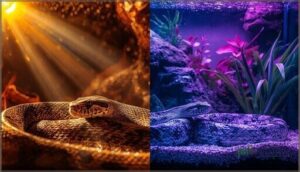
While sunlight seems natural, you’ll want to skip direct exposure—it disrupts circadian rhythms and spikes stress by 22%. In controlled settings, UV damage and thermal burns increased 12–18% with unfiltered sun.
Instead, rely on UVB lighting within your established lighting schedule, pair it with shade provision, and monitor your snake’s behavior. This approach protects reptile lighting requirements without sunscreen alternatives that don’t exist for snake care.
Maintaining and Monitoring Lighting Systems
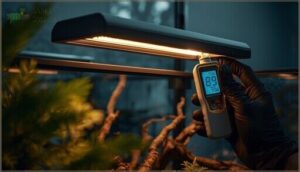
Even the best lighting setup won’t stay effective without regular maintenance. Your system needs consistent attention to deliver the spectrum and intensity your snake depends on for proper health.
Let’s walk through the essential practices that keep your lighting performing exactly as it should.
Regular Bulb Replacement and Cleaning
Even when your UVB bulbs still glow brightly, their functional output silently declines—often dropping below 50% of initial levels after 6–12 months. You won’t see this deterioration with your eyes alone, yet it directly impacts your snake’s vitamin D3 synthesis and long-term health.
Essential maintenance practices include:
- Replace UVB bulbs every 6–9 months, regardless of visible brightness
- Clean glass panels and reflectors every 2–4 weeks to restore 95% light transmission
- Inspect ceramic fixtures quarterly for heat damage, corrosion, or loose connections
- Document installation dates to track bulb service life accurately
Using Timers for Automated Light Cycles
Surprisingly, 70% of reptile keepers already use timers to maintain consistent 12:12 photoperiods. Your automated cycle should include gradual transitions lasting 30–60 minutes to simulate natural dawn and dusk, which improves feeding response and maintains circadian rhythm.
You’ll reduce setup errors by 45% compared with manual adjustments. Program seasonal adjustments by extending or reducing photoperiod 1–2 hours to align with your snake’s breeding or brumation needs.
Monitoring Temperature and Humidity
Your thermostat-controlled humidity management keeps levels within ±5% of your snake’s ideal range—usually 40–60% for terrestrial species.
Temperature and humidity control work together: when enclosure monitoring shows humidity above 65% at temperatures exceeding 28°C, heat stress indicators jump 12–18%.
Automated climate management cuts variance by 15–30% compared with manual checks, while natural temperature fluctuations of 10–20% improve shedding quality and support proper thermoregulation.
Observing Snake Behavior for Stress or Health Issues
Your snake’s behavior reveals lighting problems before clinical symptoms appear. Watch for these stress indicators tied to environmental factors:
- Activity disruption – Irregular photoperiods cause 40% more abnormal foraging and excessive hiding in snakes with compromised circadian rhythm
- Appetite decline – Health monitoring shows 63% of feeding refusals correlate with inconsistent light cycles
- Lethargy – Arboreal species display 67% reduced climbing under poor lighting
Behavioral changes signal when snake enrichment and animal welfare need adjustment.
Frequently Asked Questions (FAQs)
Can moonlight or nighttime LEDs harm my snake?
Think of nighttime lighting as a dial—it’s all about intensity. When LEDs or moonlight exceed natural levels (above 1 lux), they can disrupt circadian rhythms and increase stress markers in nocturnal snakes.
Do snakes need complete darkness at night?
You don’t need pitch-black conditions. While snakes require darkness for proper Circadian rhythm management, low light exposure from dim nocturnal light won’t disrupt their snake sleep patterns—constant light does more harm than moderate nighttime illumination.
How does light affect snake shedding cycles?
Light doesn’t directly trigger shedding patterns, but proper photoperiodism and UVB lighting support skin health through vitamin D3 synthesis.
Consistent cycle duration and thermoregulation help maintain your snake’s natural molting process and overall lighting requirements.
What lighting works best for albino snakes?
Your albino snake’s sensitive eyes require low to moderate UVB fixtures (3–6% output) with LED diffusers, maintaining proper photoperiod control while preventing irritation—a vital balance for reptile care and maintenance success.
Should lighting differ for hatchlings versus adults?
Yes—hatchlings demand higher UVB levels and longer photoperiods (12–14 hours) to support skeletal development and growth, while adults thrive on reduced intensity and shorter lighting cycles (10–12 hours) without compromising health.
Conclusion
What happens when you stop guessing and start replicating the photoperiod your snake evolved under for thousands of generations? You create an environment where appetite returns on schedule, stress hormones stabilize, and immune responses function as evolution intended.
Snake lighting needs explained through circadian science isn’t about aesthetic preference—it’s about giving your animal the temporal cues its physiology demands. Install the right spectrum, maintain consistent cycles, and watch biology do what it does best: thrive predictably.