This site is supported by our readers. We may earn a commission, at no cost to you, if you purchase through links.
Your tropical vivarium substrate just turned into a soggy swamp, again. It’s dripping from the sides, smells like a basement, and somehow still reads 40% humidity on your gauge. That’s the paradox of humid setups: you need materials that hold serious moisture without becoming a microbial petri dish or suffocating your reptile’s feet.
The difference between thriving and merely surviving often comes down to substrate choice, trust me. Coconut fiber holds ten times its weight in water while staying breathable, sphagnum moss regulates moisture like a living thermostat, and the right bark chips create pockets of humidity without waterlogging.
Choosing substrate options for humid environments isn’t about picking the prettiest product—it’s about matching retention capacity, drainage architecture, and mold resistance to your species’ exact needs.
Table Of Contents
- Key Takeaways
- Best Substrate Materials for Humid Environments
- Key Features of Humidity-Retentive Substrates
- Substrate Safety and Health Considerations
- Top Substrate Products for Humid Setups
- BNOSDM Reptile Terrarium Substrate Bedding
- 1. Exo Terra Plantation Soil
- 2. Zoo Med Creature Soil
- 3. Hamiledyi Reptile Vermiculite Bedding
- 4. Zoo Med Reptile Soil
- 5. Zoo Med Aspen Snake Bedding
- 6. ReptiChip Coconut Reptile Substrate Bedding
- 7. Kritter’s Natural Coconut Husk Bedding
- 8. Coconut Husk Growing Media
- Maintenance Tips for Humid Substrates
- Frequently Asked Questions (FAQs)
- What substrate reduces humidity?
- What is the best flooring for high humidity?
- What is the best material for high humidity walls?
- What materials are resistant to humidity?
- How often should I completely replace substrate?
- Can I mix different substrates together safely?
- What depth works best for burrowing species?
- Do substrates affect enclosure temperature control methods?
- Which substrates work in dual layer drainage setups?
- Conclusion
Key Takeaways
- Coconut fiber, sphagnum moss, and cypress mulch deliver superior moisture retention (holding 10-20 times their weight in water) while maintaining airflow through their fibrous structure, preventing the waterlogged conditions that trigger mold growth and respiratory issues.
- Effective humid substrates require balancing three core features—absorption capacity, drainage architecture through particle size variation, and antimicrobial properties—with substrate depth of 5-15 cm depending on whether your species burrows or simply needs surface humidity.
- Complete substrate replacement every 4-12 months combined with daily spot cleaning prevents the bacterial buildup that thrives in moisture, while mixing materials like peat (1 part) with compost (2 parts) and perlite (1 part) creates custom blends matching specific humidity requirements.
- Species-specific needs trump generic recommendations—tropical geckos demand 5-10 cm of moisture-holding substrate maintaining 70-90% humidity, while semi-arid species require under 3 cm to avoid respiratory stress, making substrate selection inseparable from understanding your animal’s native habitat conditions.
Best Substrate Materials for Humid Environments
Choosing the right substrate for a humid enclosure isn’t just about keeping things damp—it’s about creating a stable, safe environment your reptile or amphibian can actually thrive in. Some materials hold moisture like a champ while resisting mold, while others fall apart or turn into a bacterial nightmare within weeks.
Regular substrate replacement and enclosure cleaning prevents buildup of waste and bacteria that thrive in moist conditions.
Let’s break down the top substrate options that’ll keep your humidity levels locked in without compromising safety or maintenance.
Coconut Fiber and Coco Husk Chips
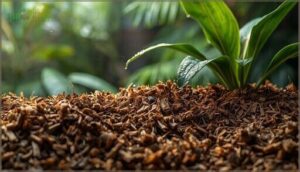
Coconut fiber and coco husk chips work beautifully in humid environments, holding up to ten times their weight in water while maintaining substrate aeration through a loose, fibrous structure. You’ll appreciate their near-neutral pH and low salt content, which keep things safe for tropical species.
These renewable materials resist quick breakdown, release moisture gradually, and support bioactive setups without compacting roots. For more details on benefits and uses, explore this guide on coco husk chips applications.
Sphagnum Moss and Long-Fibered Moss

Sphagnum moss and long fibered sphagnum moss deliver outstanding moisture retention, absorbing up to twenty times their dry weight in water to maintain steady humidity between waterings. The extended fiber structure creates airy channels that prevent compaction while slowly releasing stored moisture.
Consider these advantages:
- Gradual water release reduces wet spots and root rot risks
- Natural pathogen barrier when used as a top layer
- Pairs easily with bioactive setups and orchid media
- Stores moisture longer than milled forms
Additionally, the material has been used for centuries because of its.
Peat Moss and Soil Blends
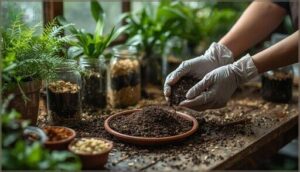
Peat moss base blends offer serious moisture retention—holding water for days in warm, humid conditions—plus an acidic pH that many tropical plants love. Mix roughly 1 part peat to 2 parts aged compost, then add 1 part perlite for drainage without sacrificing humidity control. Pre-wet your peat because it initially resists wetting—trust me. This combo fosters bioactive soil systems and reptile substrate customization beautifully.
| Blend Component | Ratio | Primary Benefit |
|---|---|---|
| Peat moss | 1 part | High moisture retention |
| Aged compost | 2 parts | Nutrient cycling support |
| Perlite or vermiculiculite | 1 part | Improved drainage |
| Coconut coir (optional) | Replaces peat | Sustainable alternative |
| Coarse sand or bark | 10-20% | Enhanced aeration |
Cypress Mulch and Fir Bark
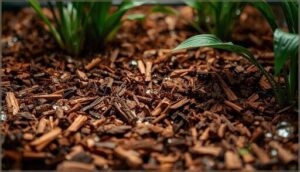
If you’re after that authentic forest floor look with serious moisture retention, cypress mulch and fir bark deliver. Cypress mulch benefits include natural decay resistance and pleasant scent, while fir bark uses focus on chunky texture for humidity control.
Layer your reptile substrate 5–10 cm deep for tropical species—this mulch depth guideline keeps humidity stable. Both options nail bark aesthetics in forest floor designs without compacting.
Bark Chips and Forest-Floor Mixes
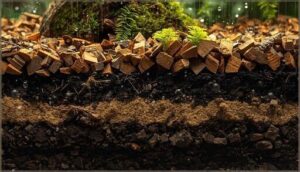
Blending coarse bark chip varieties with decomposed forest litter gives you unbeatable forest floor aesthetics and mulch moisture retention in one scoop. This substrate selection fosters bioactive forest floors, creating humid microhabitats where springtails thrive.
- Mix 70% bark with 30% fine organic matter for ecosystem balance
- Choose hardwood or fir blends based on moisture retention needs
- Layer 5–8 cm deep for humidity control without compaction
- Replace surface chips monthly to prevent mold in bioactive soil
Key Features of Humidity-Retentive Substrates
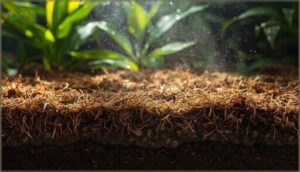
Not all substrates handle humidity the same way, and the ones that do it well share a few important traits. You need materials that lock in moisture without turning into a swampy mess, support your animal’s natural behaviors, and resist the mold that loves damp environments.
The best humid substrates lock in moisture, support natural behaviors, and resist mold—all without turning into a swamp
Let’s break down the four features that separate the good options from the ones that’ll give you headaches.
Moisture Retention Capabilities
You need substrates with fine, absorbent particles—they hold up to 40 percent more water than coarse mixes, giving you rock-solid moisture retention and humidity control.
Pick species from the safe plants for snake terrarium list to avoid toxins while maximizing that moisture-holding power.
Coconut fiber and sphagnum moss excel here, creating porous matrices that trap water through capillary action, slow evaporation rates, and keep your reptile substrate stable even when ambient humidity swings wildly.
Support for Digging and Burrowing
Loose, moisture-rich substrates let your digging reptiles engineer stable tunnel systems without constant collapse. Choose coco fiber, peat blends, or soil mixes at 5 to 15 centimeters deep—they support burrowing behavior by balancing friability for excavation with enough structure to hold burrow walls intact. Substrate selection drives burrow safety and tunnel engineering success:
- Fine particles compact gently under forelimbs, reducing collapse risk during active digging behavior.
- Moderate moisture creates stable tunnel walls without waterlogging deeper substrate layers.
- Bioactive-friendly bases host microfauna that prevent waste buildup in hidden chambers.
Compatibility With Bioactive Setups
Bioactive substrate transforms your humid enclosure into a self-regulating ecosystem that cleans itself. Choose coconut fiber blends, sphagnum moss layers, or forest-floor mixes rich in leaf litter—they host thriving springtail and isopod populations that devour waste while maintaining humidity control and nutrient cycling.
These microfauna support detritivore management by colonizing moisture-retentive microhabitats, creating sustainable bioactive terrariums that balance ecosystem health with minimal keeper intervention.
Odor and Mold Resistance
Your substrate’s odor control and mold prevention capabilities matter just as much as moisture retention in humid setups. Look for antimicrobial-treated materials like cypress mulch or fir bark—they resist microbial management challenges while maintaining humidity balance.
Regular substrate sanitization through spot cleaning keeps bioactive enclosures fresh, preventing moldy pockets where dampness pools. Trust me, substrate maintenance beats replacing entire setups when humidity control goes sideways.
Substrate Safety and Health Considerations
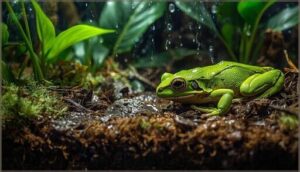
You can’t build a thriving humid enclosure if the substrate itself puts your reptile at risk. Safety isn’t just about avoiding obvious toxins—it’s about preventing impaction, controlling mold, and matching substrate to species.
Let’s walk through the critical health considerations that separate a safe setup from a costly mistake.
Avoiding Toxic or Unsafe Materials
Your reptile substrate choice can make or break humidity control, but watch out for chemical risks that creep into damp setups. Skip formaldehyde-rich panels, PVC flooring that off-gases chlorine compounds, and biocidal-treated woods—they release toxins in moisture.
Choose safe substrates like coconut fiber without added chemicals, moss free from heavy metals, and low-VOC sealants. Trust me, preventing moldy disasters starts with toxin-free materials.
Minimizing Impaction and Dust Risks
You want humidity control without choking your pet or triggering gut blockages, so pick coarser particles in high traffic zones and layer fine material over a chunky base.
Wet substrates before handling to prevent airborne dust, store them in sealed containers, and boost airflow near bedding to sweep particles away—moisture retention matters, but stable airflow protects reptile health.
Monitoring for Mold and Bacteria
Clean substrate won’t stay clean forever—trust me, moisture retention plus stagnant air equals moldy trouble. Check for musty odors every few days, look for white or dark patches, and use a hygrometer at substrate level to keep humidity between sixty and eighty percent.
Air quality suffers when bacterial growth spikes, so swap out damp clumps weekly and boost ventilation to prevent microbial testing from revealing nasty surprises.
Species-Specific Substrate Needs
Once you’ve nailed mold control, remember that your moisture retention strategy has to match your animal’s biology. Tropical geckos demand five to ten centimeters of coconut fiber for stable humidity control, while semi-arid skinks need under three centimeters to avoid respiratory stress.
- Burrowing species require loose, deep substrates that hold humidity pockets without compacting
- Arboreal reptiles prefer firmer blends that support climbing and reduce substrate ingestion risks
- Rainforest natives thrive with leaf litter mixes that emulate forest-floor moisture gradients
Top Substrate Products for Humid Setups

You’ve nailed the basics of substrate safety and compatibility, so now it’s time to talk real products that’ll actually hold humidity without turning into a swamp.
I’ve tested these options across tropical terrariums, amphibian setups, and high-humidity reptile enclosures, and they consistently deliver moisture retention without the mold nightmares.
Here’s what works when you need substrates that can handle 70 to 90 percent humidity day after day.
BNOSDM Reptile Terrarium Substrate Bedding
Think of BNOSDM Reptile Terrarium Substrate Bedding as your go-to forest floor replica—soft, crumbly, and safe. It retains moisture without turning into a swamp, accommodates digging behaviors beautifully, and works seamlessly in bioactive systems. The loose coconut fiber blend holds humidity steady while enabling natural burrowing, and you won’t find harsh additives that irritate sensitive skin.
| Feature | Performance |
|---|---|
| Moisture retention | Absorbs and releases gradually |
| Substrate depth flexibility | Works shallow or deep (5-10 cm) |
| Burrowing support | Stays fluffy, won’t collapse |
| Bioactive compatibility | Accommodates springtails, isopods |
| Safety profile | No dyes, minimal dust |
1. Exo Terra Plantation Soil
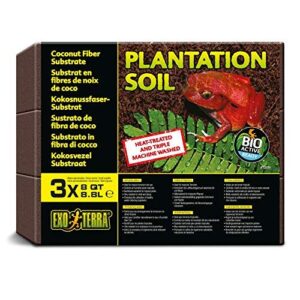
Exo Terra Plantation Soil delivers triple-washed coconut husk fiber that expands into soft, springy bedding—perfect for tropical setups that demand 70 to 90 percent humidity. You’ll get consistent moisture retention without the salt contamination that plagues cheaper coir blocks, plus it’s heat-treated to knock out bacteria before you even open the brick.
Lay down 2 to 4 inches, mist as needed, and watch it stabilize nighttime humidity without constant intervention. It’s safe for frogs, salamanders, and burrowers, resists mold beautifully, and plays nicely with live plants or bioactive crews.
| Best For | Keepers of tropical frogs, salamanders, and burrowing reptiles who need reliable humidity without the hassle of constant misting. |
|---|---|
| Material Type | Coconut fiber |
| Humidity Retention | High |
| Natural/Organic | Yes |
| Odor Control | Yes |
| Burrowing Support | Yes |
| Plant Compatible | Yes |
| Additional Features |
|
- Triple-washed formula eliminates salt buildup that can harm sensitive species
- Expands into soft, springy bedding that holds moisture for days while resisting mold
- Works as both substrate and planting soil for bioactive setups with live plants
- Requires 10–15 minutes of soaking and manual breaking to reach usable consistency
- Takes several hours to dry out if you over-saturate it during setup
- Strong earthy smell out of the package that lingers for the first day or two
2. Zoo Med Creature Soil
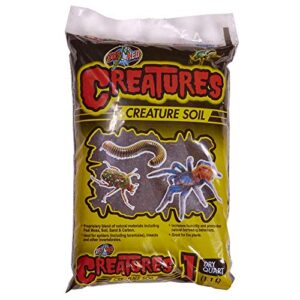
Zoo Med Creature Soil blends peat moss, soil, sand, and carbon into a loose, earthy base that holds moisture beautifully for tarantulas, scorpions, and salamanders. You’ll find it maintains stable burrow walls without collapsing, encourages natural digging, and keeps humidity in check with just occasional light misting.
The 1-quart bag suits small enclosures or trial setups, though larger tanks need multiple bricks. It’s free of synthetic additives, plays well with live plants, and resists odor when you spot-clean regularly—just watch for occasional leaf debris.
| Best For | Keepers of moisture-loving invertebrates like tarantulas, millipedes, and salamanders who want a natural substrate that supports burrowing and maintains humidity without constant adjustments. |
|---|---|
| Material Type | Coconut husk fiber |
| Humidity Retention | High |
| Natural/Organic | Yes |
| Odor Control | Minimal |
| Burrowing Support | Yes |
| Plant Compatible | Yes |
| Additional Features |
|
- Holds moisture consistently and forms stable burrow walls that won’t collapse on your pets
- Natural blend with no synthetic chemicals works great for bioactive setups and live plants
- Controls odor well when you keep up with basic spot cleaning
- 1-quart size only covers small enclosures—larger tanks need several bags, which adds up fast
- You might find random twigs, leaves, or wood bits mixed in that you’ll need to pick out
- Price feels steep for the amount you get compared to other substrate options
3. Hamiledyi Reptile Vermiculite Bedding
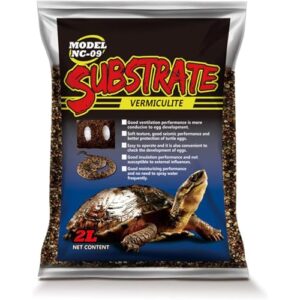
Hamiledyi’s vermiculite bedding absorbs moisture like a sponge, holding several times its weight in water to keep your tropical snakes, lizards, and tortoise eggs at a steady 70 to 90 percent humidity. The natural brown mineral gives you soft, fine particles that support gentle burrowing and hatching without compaction, plus it’s non-toxic and odorless right out of the 2-liter bag.
Just keep it evenly moist, not waterlogged, and mix it with coarser substrates for better drainage if you’re running a bioactive setup.
| Best For | Reptile keepers who need reliable substrate for hatching eggs or maintaining high humidity for tropical species like snakes, lizards, and tortoises. |
|---|---|
| Material Type | Peat moss blend |
| Humidity Retention | High |
| Natural/Organic | Yes |
| Odor Control | Minimal |
| Burrowing Support | Yes |
| Plant Compatible | Yes |
| Additional Features |
|
- Absorbs and holds moisture exceptionally well to keep humidity between 70-90%
- Non-toxic, odorless natural mineral that’s safe for eggs and sensitive reptiles
- Soft texture allows easy burrowing without compacting around delicate eggs
- Overpriced for the 2-liter quantity you actually get
- Bags often arrive half full, leaving customers feeling shortchanged
- Fine pebble-like texture doesn’t work for everyone and may need mixing with coarser materials for drainage
4. Zoo Med Reptile Soil
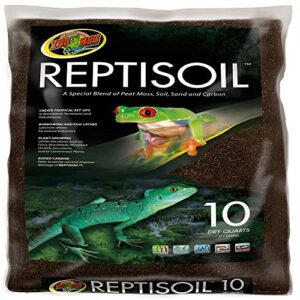
You want a substrate that manages tropical humidity without turning into a swamp? Zoo Med ReptiSoil blends peat moss, organic soil, sand, and coconut carbon into a loose, burrowing-friendly mix that holds moisture at 70 to 90 percent without waterlogging your tank.
It comes in 10-quart and 24-quart bags, accommodates live plants like ferns and bromeliads, and keeps odors down while your cleanup crew cycles nutrients.
Just mist regularly, monitor for uneven drying, and you’ll maintain stable humidity for tropical lizards, amphibians, and box turtles.
| Best For | Keepers of tropical reptiles, amphibians, or box turtles who want a substrate that holds humidity well, supports live plants, and allows natural burrowing behavior. |
|---|---|
| Material Type | Vermiculite |
| Humidity Retention | High |
| Natural/Organic | Yes |
| Odor Control | Odorless |
| Burrowing Support | Limited |
| Plant Compatible | No |
| Additional Features |
|
- Maintains 70–90% humidity without waterlogging, perfect for tropical setups
- Contains coconut carbon that reduces odors and supports beneficial bacteria
- Works great with live plants like ferns and bromeliads in bioactive terrariums
- Some batches contain large woodchips, splinters, or sharp objects that can injure animals
- Can be dusty on its own—best mixed with other substrates
- Pricier than many competing substrate options
5. Zoo Med Aspen Snake Bedding
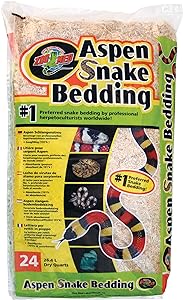
Aspen shavings look natural and burrow well, but they’re built for dry habitats, not the wet warmth tropical species demand. This Zoo Med bedding absorbs moisture fast—great for spot cleaning—yet it won’t dry properly after soaking, forcing you to remove wet clumps every few days.
You’ll see mold creep in around 70 percent humidity, and that 99.9 percent dust-free promise doesn’t fix the core issue: aspen simply can’t hold stable moisture without breaking down. Save it for ball pythons and temperate snakes that prefer drier setups.
| Best For | Ball pythons, corn snakes, and other dry-habitat reptiles that like to burrow but don’t need high humidity. |
|---|---|
| Material Type | Coconut carbon blend |
| Humidity Retention | High |
| Natural/Organic | Yes |
| Odor Control | Yes |
| Burrowing Support | Yes |
| Plant Compatible | Yes |
| Additional Features |
|
- Natural look and texture that encourages burrowing and nesting behavior
- Absorbs moisture quickly for easy spot cleaning of spills
- No toxic oils or strong odors, safe for snakes and small animals
- Won’t dry properly after soaking, forcing you to toss wet clumps regularly
- Starts molding around 70% humidity, making it useless for tropical species
- Needs complete replacement every month or so to stay sanitary
6. ReptiChip Coconut Reptile Substrate Bedding
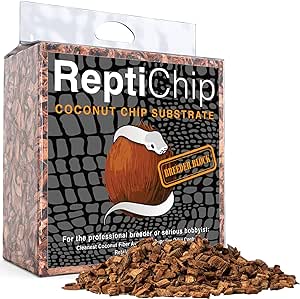
ReptiChip expands from a 72-quart brick into 10 pounds of pure coconut husk chips—no fillers, no dyes, just clean organic bedding that locks in humidity for ball pythons, geckos, and tropical species.
You’ll notice the difference right away: moisture spreads evenly through the chips, holding 70 to 90 percent humidity without turning soggy, and the natural odor absorption keeps enclosures fresher between cleanings.
Layer 1 to 3 inches deep for burrowing, re-wet as needed, and replace soiled spots promptly to prevent mold in high-moisture setups.
| Best For | Reptile owners with tropical species like ball pythons, geckos, and amphibians who need a substrate that holds high humidity without getting waterlogged. |
|---|---|
| Material Type | Aspen shavings |
| Humidity Retention | Low |
| Natural/Organic | Yes |
| Odor Control | Odorless |
| Burrowing Support | Yes |
| Plant Compatible | Limited |
| Additional Features |
|
- Expands from a compact 72-quart brick to 10 pounds of bedding, making storage and shipping easy
- Maintains 70 to 90 percent humidity evenly throughout the enclosure without becoming soggy
- Natural odor absorption keeps the habitat fresher between cleanings
- Higher price point compared to other reptile substrates
- Can produce dust when breaking apart the compressed block
- Requires prompt spot cleaning to prevent mold in high-moisture environments
7. Kritter’s Natural Coconut Husk Bedding
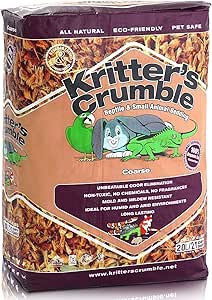
Kritter’s Natural Coconut Husk Bedding delivers 21 quarts of biodegradable coir that absorbs more than four times its weight in liquid, making it a reliable choice for humid enclosures housing amphibians, tropical reptiles, or small animals.
You’ll appreciate the low-dust formula and absence of added oils or fragrances, which minimizes respiratory irritation while trapping odors naturally.
Spread it 1 to 2 inches deep, spot-clean waste regularly, and monitor for mold in saturated zones—trust me, proper ventilation keeps this substrate working beautifully without compaction.
| Best For | Reptile and amphibian owners who need a natural, high-absorbency substrate that maintains humidity while controlling odors in tropical or humid enclosures. |
|---|---|
| Material Type | Coconut chips |
| Humidity Retention | High |
| Natural/Organic | Yes |
| Odor Control | Yes |
| Burrowing Support | Limited |
| Plant Compatible | No |
| Additional Features |
|
- Holds over four times its weight in liquid and naturally traps odors without synthetic fragrances
- 100% biodegradable coconut fiber can be composted or used as garden fertilizer after use
- Low-dust formula reduces respiratory irritation for both pets and owners
- Can be pricier than traditional bedding options like aspen or paper-based substrates
- May arrive dusty despite low-dust claims, requiring rinsing before use
- Packaging sometimes opens during shipping, creating a mess upon delivery
8. Coconut Husk Growing Media
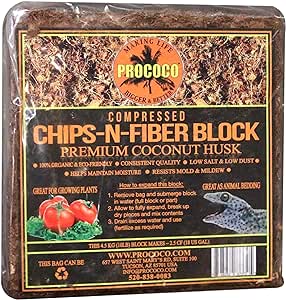
BVYY’s coconut husk growing media expands to 75 quarts from a compact brick, blending chips with fiber for stable moisture zones that won’t waterlog your setup. The coir pith holds water evenly while husk pieces resist compaction, letting air reach roots or burrow walls without soggy pockets.
You’ll want to rinse the material first to drop salt levels, then dry it partially before spreading 5 to 10 cm deep in tropical enclosures—regular spot checks keep mold at bay and humidity humming around 70 to 90 percent.
| Best For | Reptile keepers who need a moisture-holding substrate for tropical species like ball pythons or crested geckos, plus gardeners looking for an organic soil amendment that aerates beds without breaking down too fast. |
|---|---|
| Material Type | Coconut husk fiber |
| Humidity Retention | High |
| Natural/Organic | Yes |
| Odor Control | Yes |
| Burrowing Support | Limited |
| Plant Compatible | Yes |
| Additional Features |
|
- Expands from a compact 9.9-pound brick into 75 quarts, giving you a lot of coverage without storing bulky bags
- Fiber-and-chip blend keeps structure intact so it doesn’t turn into muck, letting animals burrow while roots still get airflow
- Holds water evenly across the material, making it easier to maintain steady humidity without constant misting
- Arrives damp and takes a few days to dry out if you want to store leftovers instead of using it all at once
- Needs a rinse before use to wash out salt residue that can irritate sensitive reptiles or stunt seedlings
- Dries faster than you’d expect in low-humidity rooms, so you’ll be checking moisture levels every couple of days
Maintenance Tips for Humid Substrates
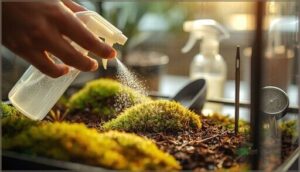
Keeping humid substrates healthy isn’t rocket science, but it does take consistent attention to a few key habits. You’ll want to stay on top of cleaning routines, watch for early signs of mold or funky smells, and adjust moisture levels as conditions shift.
Let’s walk through the practical steps that’ll keep your setup fresh, balanced, and working the way it should.
Routine Spot Cleaning and Replacement
You’ll want to tackle daily cleaning tips by scooping out waste and soiled reptile substrate every 24 hours—trust me, this prevents odor control methods from failing.
Replace the top 2 to 5 centimeters every 2 to 4 weeks in high humidity setups, swapping out any section that loses moisture retention or smells funky despite substrate sanitizing efforts.
Preventing Mold and Odor Buildup
Keep your humidity control game tight by keeping relative humidity below 60 percent—mold spores can’t party in those conditions.
Mix activated charcoal or coconut husk into your reptile substrate for natural odor control and fungal mitigation.
Dry wet spots within 24 to 48 hours, add perlite for better airflow, and swap out damp sections fast to stop substrate sanitization problems before they start.
Monitoring and Adjusting Humidity Levels
Grab a digital hygrometer and position it away from heat vents for accurate humidity trends—calibrate monthly against a reference device.
Check levels twice daily during setup, adjusting moisture control by 2 to 5 percent increments using substrate dampness and device output together.
Track daily readings in a log so you’ll spot moisture retention patterns before stress signs appear in your animals.
Enhancing Drainage and Airflow
Proper Drainage Systems paired with Airflow Management will keep substrate selection working for the long haul. Install these moisture control essentials:
- Position vent panels on opposite walls to create cross Ventilation Design through the entire footprint.
- Layer 1.5 to 3 inches of reptile substrate above drainage channels to prevent standing water.
- Use coarse bark chips on top for moisture retention without sealing airflow.
- Place openings high to exhaust warm, humid air naturally.
- Check for corner stagnation weekly and adjust Humidity Regulation accordingly.
Frequently Asked Questions (FAQs)
What substrate reduces humidity?
Ironically, the substrates marketed for “moisture control” often trap more water than they release.
Fir bark and bark chips actually reduce humidity by improving airflow between grains, preventing those sneaky moisture pockets from forming.
What is the best flooring for high humidity?
Waterproof flooring materials like luxury vinyl planks, porcelain tile, and sealed concrete handle high humidity best.
Moisture resistant options such as rigid core LVT stay stable in humid basements, preventing warping and mold growth.
What is the best material for high humidity walls?
Porcelain tile and glass surfaces are your best bet for moisture-resistant wall coverage, trust me.
Pair them with nonorganic substrates like cement board, add vapor barriers, and you’ll shut down mold control worries fast.
What materials are resistant to humidity?
You’d think moisture would damage everything, but concrete sealants, stainless steel, porcelain ceramic, PVC plastics, and glass materials laugh in humidity’s face—they don’t warp, rust, or support mold growth whatsoever.
How often should I completely replace substrate?
Replace substrate completely every six to twelve months in average humid setups, or every four to eight months in heavily used areas, to maintain ideal humidity control and prevent mold growth.
Can I mix different substrates together safely?
Yes, you can mix substrates if they share similar pH and texture ranges—coconut fiber blends well with bark for moisture retention and airflow, but always test small batches first.
What depth works best for burrowing species?
Like a mouse mapping escape routes in the field, your pet needs substrate depth that matches its digging behavior—start with 10 to 20 centimeters, ensuring soil moisture maintains tunnel stability without collapse.
Do substrates affect enclosure temperature control methods?
Substrate depth and thermal conductivity shape heat transfer from your heating elements. Moist substrates retain warmth longer, smoothing temperature gradients, while dry materials lose heat faster, demanding careful moisture management for stable environmental control.
Which substrates work in dual layer drainage setups?
You’ll want coconut fiber, sphagnum moss, or peat blends above drainage materials like expanded clay—these create that capillary break, keeping moisture balanced without waterlogging while your substrate depth hits 2 to 3 inches minimum.
Conclusion
Substrate options for humid environments work like a well-designed sponge system—absorbing what you need, releasing what you don’t, all while staying structurally sound. Your vivarium’s long-term success hinges on materials that balance moisture retention with airflow, support natural behaviors without harboring pathogens, and match your species’ biological requirements.
Get the foundation right once, monitor consistently, and you’ll spend less time troubleshooting and more time watching your animals thrive in conditions that actually mimic their native habitat.