This site is supported by our readers. We may earn a commission, at no cost to you, if you purchase through links.

Your ball python’s heating pad just hit 110°F while you were at work, and you came home to a severely stressed snake huddled in the water bowl. This scenario plays out more often than you’d think, because unregulated heat sources don’t know when to stop.
Ectothermic animals like snakes can’t produce their own body heat, so they depend entirely on their environment to maintain the metabolic processes that keep them alive—digestion, immune function, even basic movement. A thermostat setup for reptile enclosure isn’t optional equipment; it’s the difference between a thriving animal and one fighting constant thermal stress.
The right controller paired with proper probe placement creates the stable thermal gradient your snake needs to thermoregulate naturally, cycling your heat source on and off to prevent dangerous temperature spikes while maintaining the precise basking and cool zones that support ideal health.
Table Of Contents
- Key Takeaways
- What is a Reptile Thermostat and Why You Need One
- Choosing The Right Thermostat for Your Snake
- Step-by-Step Thermostat Installation Guide
- Configuring Temperature Settings for Your Snake Species
- Maintaining and Troubleshooting Your Thermostat System
- Frequently Asked Questions (FAQs)
- Conclusion
Key Takeaways
- Unregulated heat sources can cause fatal temperature spikes, thermal burns, and systemic stress in snakes because ectothermic animals depend entirely on environmental temperature to regulate digestion, immunity, and basic metabolic function.
- Proper thermostat installation requires positioning the probe at snake level in the warm zone (not touching the heat source directly), verifying wattage compatibility with your heating element, and programming species-specific basking temperatures alongside cooler retreat zones to create essential thermal gradients.
- Digital proportional thermostats deliver tighter temperature control than basic on/off models, preventing the dangerous swings that compromise snake health while also improving energy efficiency through gradual power adjustments.
- Monthly calibration checks using backup thermometers are non-negotiable for catching sensor drift before it becomes life-threatening, with replacement needed when readings consistently deviate beyond ±2°F or when the unit shows persistent power failures and short cycling.
What is a Reptile Thermostat and Why You Need One
A reptile thermostat is the control center that keeps your snake’s heating equipment at safe, stable temperatures instead of running at full blast constantly. Without one, your heat mat, bulb, or ceramic heater will overheat the enclosure, creating dangerous hot spots that can burn your snake or cause fatal overheating.
A quality reptile temperature controller lets you dial in precise basking zones and cooler areas, mimicking the natural temperature gradients snakes rely on for digestion and thermoregulation.
A reptile thermostat prevents your snake’s heating equipment from running at dangerous full blast and creating fatal hot spots
Let’s break down how these devices work, why unregulated heating is so risky, and what proper temperature management actually means for your snake’s health.
How Thermostats Regulate Enclosure Temperature
A reptile thermostat senses your enclosure’s temperature and automatically activates or deactivates your heat source to maintain your target range. Here’s how this essential temperature control system creates thermal balance in your reptile enclosures:
- The waterproof probe monitors heat distribution at basking level
- Modern units cycle heating on and off to prevent dangerous spikes
- Proportional models adjust power gradually for smoother climate control
- Digital displays show real-time enclosure climate readings
- Alarm features alert you when temperature gradients drift outside safe limits
Thermostats designed for electrical enclosures also provide temperature control benefits in preventing overheating and component failures.
The Dangers of Unregulated Heating
Without thermostat control, you’re risking fire hazards from overheating elements, carbon monoxide buildup in poorly ventilated spaces, and electrical shock from damaged cords.
Temperature swings create thermal stress that disrupts your snake’s digestion and immune function, while temperature fluctuations prevent proper temperature regulation.
Air pollution from unregulated devices compounds these dangers, directly threatening reptile health through respiratory distress and systemic failure.
Understanding the risks of neglected heater maintenance can further emphasize the importance of proper temperature control for reptile enclosures.
Understanding Thermal Gradients for Snake Health
A proper thermal gradient gives your snake the power to thermoregulate naturally, moving between warm basking zones (85–90°F for most tropical species) and cooler refuges (75–82°F). This temperature control promotes digestion, immunity, and overall snake health and wellness.
Too narrow a gradient forces your pet to stay at one temperature, disrupting reptile wellness. Heat sources paired with a reptile thermostat maintain stable thermal gradients critical for snake behavior and thermoregulation.
Choosing The Right Thermostat for Your Snake
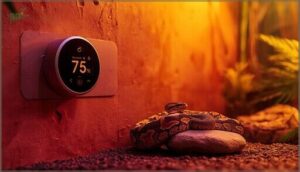
Not all thermostats are built the same, and picking the wrong one can leave your snake stuck in temperatures that are too hot, too cold, or dangerously inconsistent.
Pairing a quality thermostat with a reliable reptile thermometer helps you dial in the exact conditions your snake needs to stay healthy.
You need to understand the different types available, match the device to your heating setup, and know which features actually matter for keeping your snake safe. Here’s what you should consider when choosing a thermostat for your enclosure.
On/Off Vs. Proportional Vs. Pulse Thermostats
Your thermostat selection guide starts with understanding three main temperature control methods, each offering different precision control and heater compatibility. OnOff thermostats cycle power completely, while pulse proportional thermostats adjust duty cycles for greater stability differences.
- OnOff thermostats: simplest, least expensive, larger temperature swings
- Dimming models: smoother changes, better energy efficiency
- Pulse proportional thermostats: tightest control, highest cost comparison
- Stability differences: proportional beats on/off for consistent basking temps
- Energy efficiency: dimming and pulse modes reduce unnecessary power consumption
Matching Thermostat Capacity to Heat Source Wattage
Your heat source wattage directly determines which thermostat you’ll need—this is critical for safety margins and reliable temperature control. If you’re running a 60-watt heat mat, choose a thermostat rated at least 20–30 percent above that load to handle surge protection during startup.
Proper wattage matching prevents contact wear, reduces fire risk, and ensures your thermostat installation delivers stable temperature management for your snake’s entire life.
Essential Features to Look For
Safety features come first when shopping for thermostat installation gear—you’ll want overheat protection that automatically cuts power if temperatures spike beyond safe limits.
Look for alarm systems with LED indicators and customizable high-low thresholds to monitor temperature gradients around your heat sources.
Digital thermostats with accurate probe placement, dual-sensor capability, and ground fault protection deliver the reliability your snake’s thermal regulation depends on.
Digital Vs. Analog Thermostat Options
You’ll face a choice between digital systems and analog systems when shopping for thermostat installation gear. Digital thermostats deliver temperature precision within half a degree, programmable day-night cycles, and smart features like remote monitoring—vital for maintaining temperature control in ectothermic environments.
Analog units cost less but sacrifice thermostat accuracy, drifting several degrees over time. For reliable energy efficiency and exact thermal gradients, digital controls win every time.
Step-by-Step Thermostat Installation Guide
Now that you’ve selected the right thermostat for your snake’s needs, it’s time to get everything installed and running properly.
The installation process isn’t complicated, but each step matters—positioning that probe incorrectly or skipping calibration can mean the difference between a healthy snake and a trip to the exotic vet. Let’s walk through the setup from start to finish, covering the equipment you’ll need and exactly how to configure your system for reliable temperature control.
Gathering Your Equipment and Tools
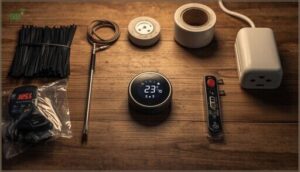
Before you start installing anything, you’ll want to gather the right gear for safe temperature control in your reptile enclosures. Here’s what you need:
- A digital thermostat controller rated for your heat source wattage
- A digital thermometer with thermostat probe for monitoring
- Your chosen heat mat or lamp designed for reptiles
- Cable ties or electrical tape for cable management
- A surge protector with built-in safety features
Positioning The Temperature Probe Correctly

Where you place your thermostat probe can make or break your temperature control. Position it at the warm end of the enclosure, a few centimeters above substrate, so it reflects the actual basking temperature your snake experiences—not the heat source itself.
Secure it with nonabrasive clips to prevent displacement, then verify readings with a backup digital thermometer. This sensor calibration ensures accurate enclosure monitoring and a stable temperature gradient.
Connecting Your Heat Source to The Thermostat
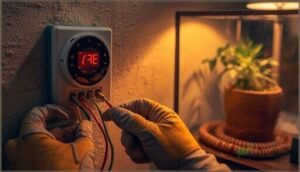
Once your probe is positioned correctly, you’ll wire the heat source to your thermostat’s heating terminal—this connection is the backbone of temperature control. Turn off power first, then follow these electrical safety steps:
- Match wire colors to terminal labels (W or W1 for heat output, C for common return if required)
- Verify your thermostat’s wattage rating exceeds your heat source capacity
- Secure all connections with terminal screws, eliminating loose strands that cause arcing
Test the system before introducing your snake.
Setting Day and Night Temperature Parameters

With your system wired safely, you’ll program thermostat settings to create healthy heat cycles your snake needs. Set your daytime target 6 to 10 degrees higher than night—this mimics natural thermal gradients and prevents harmful temperature fluctuations.
Most midsize species need basking zones around 88 to 95°F during the day, dropping to 78 to 85°F at night, establishing proper temperature control across your reptile enclosures.
Configuring Temperature Settings for Your Snake Species
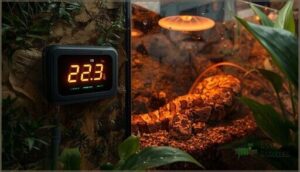
Getting your thermostat installed is only half the battle—now you need to dial in the exact temperatures your snake species requires to thrive.
Different snakes have wildly different temperature needs, from cool-loving garter snakes to heat-seeking ball pythons, and programming the wrong settings can compromise their health.
Here’s how to configure your thermostat settings to match your snake’s specific requirements.
Determining Basking and Cool Side Temperatures
Precision matters when you’re establishing temperature gradients in reptile enclosures. Your snake needs a basking spot that hits species-specific targets—usually 90–92°F for ball pythons or corn snakes—while the cool side rests in the mid-70s.
Use an infrared temperature gun for thermal monitoring of basking spot control, checking the actual surface under your heat source. This ambient temperature balance lets your scaly friend thermoregulate naturally.
Programming Day and Night Temperature Drops
After setting your basking and cool zones, you’ll want to program day night cycles that mimic natural temperature gradients. Drop nighttime settings 5–10°F gradually—not instantly—to prevent thermal shock to your snake’s thermal regulation system.
Here’s how to configure your thermostat settings:
- Schedule the temperature drop over several hours at dusk
- Use proportional or pulse thermostats for smoother temperature control
- Set a safe nighttime minimum to avoid respiratory issues
- Verify temperature fluctuations with a backup thermometer
Adjusting Settings for Seasonal Cycling
Beyond daily drops, your snake benefits from seasonal temperature cycling that mirrors wild patterns. Lower your summer basking zone 5–10°F in winter months, then gradually restore it over 7–14 days during spring transitions. This thermal regulation strategy promotes healthy shedding, appetite, and breeding cycles.
| Season | Basking Side | Cool Side | Photoperiod Adjustments |
|---|---|---|---|
| Summer | 88–92°F | 75–78°F | 12–14 hours light |
| Fall | 85–88°F | 74–76°F | 10–12 hours light |
| Winter | 82–85°F | 72–75°F | 10 hours light |
| Spring | 86–90°F | 74–77°F | 12–14 hours light |
| Year-Round | Adjust substrate moisture | Monitor with backup sensor | Humidity control: +5–10% in winter |
Pair temperature cycling with photoperiod adjustments and humidity control to create thermal gradients that reflect your snake’s natural habitat. Heat cycling strategies prevent stress while encouraging natural behaviors throughout the year.
Maintaining and Troubleshooting Your Thermostat System
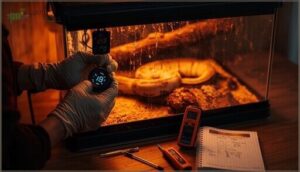
Your thermostat won’t stay accurate forever, and knowing how to maintain it properly can mean the difference between a healthy snake and a dangerous temperature swing.
Regular checks and a few backup tools will help you catch problems before they threaten your animal. Here’s what you need to stay on top of your system and fix issues when they pop up.
Monthly Calibration Checks and Maintenance
You can’t just set your thermostat and forget it—monthly calibration checks keep your snake safe from dangerous temperature drift.
Use a secondary thermometer to verify readings at the basking site, cool side, and ambient air stay within ±2°F of your thermostat probe.
Document every check in a log, noting actual temperatures against set points.
This maintenance scheduling catches sensor verification issues before they threaten your animal’s health.
Using Backup Thermometers for Accuracy Verification
Redundant temperature monitoring protects your snake when primary sensors fail or drift. Place a high-quality digital thermometer near your thermostat probe—not touching it—and verify readings match within ±1°F during accuracy testing.
- Test both devices in an ice bath (32°F) and record any offset for probe placement corrections
- Keep calibration certificates for backup units to guarantee temperature verification standards
- Replace any thermometer showing consistent deviation beyond acceptable limits during temperature monitoring checks
Common Problems and Solutions
Temperature fluctuations often stem from probe placement—probes under heat mats overestimate enclosure temps, causing undercorrection. If your thermostat reads 25°C but an infrared thermometer shows 31°C at the same spot, reposition your probe at snake level, away from direct heat.
Check for dead outlets, tripped breakers, or worn cords showing cracked insulation. Regular thermostat calibration every 30 days maintains accuracy within ±1.5°C, preventing electrical safety issues and heat source problems.
When to Replace Your Thermostat
Most digital thermostats for reptile enclosures last 10 to 12 years, but sensor drift can reduce accuracy by 15 to 30 percent over time.
You’ll notice replacement signs like persistent power failures, readings that differ from backup thermometers by 2 to 5 degrees, or short cycling that strains your heating system. Upgrading restores reliable temperature control and prevents dangerous fluctuations that compromise your snake’s health.
Frequently Asked Questions (FAQs)
Can I use one thermostat for multiple enclosures?
Here’s the thing: sharing a thermostat across multiple reptile enclosures creates serious safety risks.
Heat distribution becomes uneven, temperature control suffers, and you can’t maintain proper thermal gradients independently—always use one thermostat per enclosure.
What humidity levels are safe around thermostat components?
Keep your thermostat in areas where relative humidity stays between 30 and 60 percent—above 70 percent invites condensation on terminals, while levels under 30 percent may trigger static discharge affecting electronic circuits.
How often should thermostat batteries be replaced?
Most battery-powered units experience power fatigue after roughly 12 months of steady use, though backlit displays drain faster.
Replace batteries annually, keeping spares handy to maintain uninterrupted temperature regulation in your reptile enclosures.
Are wireless thermostats reliable for larger reptile rooms?
Yes, wireless thermostats work well for large reptile rooms when you maintain strong Wi-Fi coverage and place multiple probes strategically.
They enable remote monitoring and centralized temperature control across numerous enclosures simultaneously.
Conclusion
Getting your thermostat setup for reptile enclosure wrong doesn’t just create discomfort—it can literally mean the difference between life and death for your snake.
You’ve now got the knowledge to install, configure, and maintain the temperature control system your animal depends on every single day. Double-check those probe placements, verify your settings with backup thermometers, and remember that consistent monitoring beats expensive equipment every time.
Your snake’s metabolism is counting on you.