
This site is supported by our readers. We may earn a commission, at no cost to you, if you purchase through links.

Grab a snake hook that’s too short, and you’re working inside strike range—exactly where hundreds of handlers end up bitten every year. Too long, and you’ve lost the precision needed to guide a 6-foot python without stressing it out or, worse, dropping it mid-transfer.
The sweet spot? It’s not some one-size-fits-all number on the packaging. Hook length depends on your snake’s size, temperament, and body type—a jittery rattlesnake demands different reach than a docile corn snake. Getting this wrong doesn’t just put you at risk; it compromises your animal’s well-being every time you handle it.
Here’s how to match the right tool to your specific snake, plus the top-rated hooks that won’t fail when it matters most.
Table Of Contents
- Key Takeaways
- How Snake Hook Length Affects Safety
- Choosing The Right Snake Hook Length
- Key Features to Look for in Snake Hooks
- Top Snake Handling Tools for Every Owner
- Tips for Safe and Effective Snake Hook Use
- Frequently Asked Questions (FAQs)
- How to choose a snake hook?
- How long should a snake stick be?
- Can a snake fit in a 4 inch hole?
- How long are snake hooks?
- Can I use one hook for multiple snake species?
- How does terrain affect snake hook length choice?
- Are collapsible hooks as safe as fixed-length models?
- What hook length works best for snake relocation?
- Conclusion
Key Takeaways
- Hook length isn’t negotiable—too short puts you in strike range (where hundreds get bitten yearly), while too long kills the precision needed to safely guide and support your snake’s body weight during transfers.
- Match your hook to the snake’s actual size and temperament, not generic charts: small snakes under 3 feet need 9-12 inches, medium species (3-6 feet) require 18-24 inches, and large snakes over 6 feet demand 30-36 inches minimum to keep you outside their strike zone.
- Material matters for reliability—stainless steel resists corrosion and holds up under heavy pythons, while aluminum cuts weight by two-thirds for extended handling sessions, but both need proper grip design to prevent fatigue and slippage.
- Proper technique trumps expensive gear: slide the hook under mid-body with slow, deliberate movements, distribute weight across both hands to prevent spine stress, and back off immediately if the snake shows defensive postures like coiling or head-raising.
How Snake Hook Length Affects Safety
The length of your snake hook isn’t just about convenience—it’s the difference between a controlled handling session and a trip to the ER. Too short, and you’re in strike range; too long, and you lose the precision needed to support your snake’s body properly.
Since proper hook length helps you maintain distance while still supporting your snake’s weight, pairing it with a well-maintained tank setup ensures your snake stays calm and comfortable during handling.
Snake hook length determines whether you maintain safe distance or invite a defensive strike
Let’s break down exactly how hook length impacts your safety and your snake’s well-being.
Maintaining Safe Distance From Snakes
When you’re out hiking or working with snakes, distance guidelines aren’t just suggestions—they’re your safety buffer. A proper snake handling hook puts 24 to 60 inches between you and defensive fangs, but here’s the catch: that reach only works if you use it correctly.
Snake safety tips for maintaining control:
- Keep six feet minimum from wild snakes; boost that to eight or ten feet for venomous species
- Match your hook length to the snake’s size—undersized tools force you dangerously close
- Watch for defensive postures like coiling or head-raising that demand extra distance
- Support the body evenly during handling to prevent sudden strikes from poor weight distribution
Understanding snake behavior transforms your snake handling techniques from guesswork into calculated moves. Outdoor precautions start with recognizing that every species has a strike range—usually one-third to half their body length. Your snake handling hook becomes your measured barrier, letting you control the encounter without crowding the animal into a defensive strike. Venomous snake handling demands even more respect; that’s why professionals rely on hooks sized 1.5 to 2 times the snake’s length, creating a buffer zone that accounts for unexpected lunges or quick repositioning. Maintaining is essential to minimize the risk of snakebites and guarantee both your safety and the animal’s.
Risks of Using Incorrect Hook Length
Grab the wrong hook—too short or laughably long—and handling errors stack up fast. Hook safety risks multiply when incorrect length drags the snake closer, reducing your snake bite prevention buffer and making control nearly impossible.
Bent hooks from mismatched leverage, sudden strikes from crowded approach space, and hundreds injured annually trying DIY captures with poorly sized tools prove one thing: snake handling safety starts with proper snake hook size guide measurements, not guesswork.
Matching Hook Length to Snake Temperament
Temperament assessment drives your snake hook size guide just as much as body length. A hot-tempered king cobra demands 40+ inches of breathing room, while your docile ball python? You’ll manage fine with 26 inches and steady handling techniques.
- Defensively temperamental snakes benefit from longer hooks for more distance
- Calm snakes can be managed with mid-length hooks for precision
- Highly nervous individuals may require adjustable telescopic options
- Snakes with heavy coils respond better to hooks that reach the mid-body for support
- Slow-moving snakes often allow shorter hooks that still keep safe clearance
Snake behavior trumps size charts—always. Read the room before you lift.
Choosing The Right Snake Hook Length
Getting the hook length right isn’t guesswork—it’s about matching your tool to your snake’s actual size, weight, and body build.
A 2-foot corn snake needs a completely different setup than a 6-foot boa, and using the wrong length puts both of you at risk. Here’s how to measure up and pick the perfect hook for your specific animal.
Measuring Your Snake for Proper Hook Size
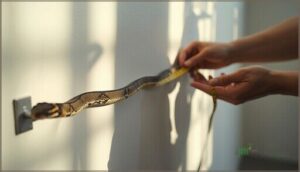
Before you dive into any snake hook size guide, you need accurate snake length measurement—so grab a soft measuring tape and guide your animal along a flat wall from snout to tail tip.
For girth assessment, wrap the tape around the widest body segment. These numbers drive your hook size selection and secure your snake handling safety when you lift.
Recommended Lengths by Snake Size (Small, Medium, Large)
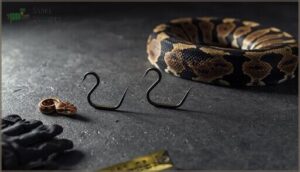
Small snakes (under 3 feet) need hooks around 9 to 12 inches—that’s your corn snake or ball python comfort zone.
Pairing the right hook size with gentle handling techniques for stressed snakes keeps your smaller species calm and secure during routine care.
Medium snakes (3–6 feet) demand 18 to 24 inches for proper Snake Handling Safety and control.
Large snakes (6+ feet) require 30 to 36 inches minimum, keeping you out of striking range and reducing tail-whipping risk during Species Handling sessions.
Considering Snake Body Type and Weight

Body Type Classification and Weight Distribution matter more than you think—a slender 5-foot racer behaves differently than a thick-bodied boa at the same length.
Stocky pythons exceeding 5 kilograms need longer Snake Handling Hook leverage (30+ inches) to distribute pressure safely, while lightweight corn snakes under 1 kilogram work fine with shorter tools, transforming your Snake Handling Techniques and Snake Handling Equipment choices dramatically.
Key Features to Look for in Snake Hooks

Length matters, sure—but the right hook tool does more than just keep you at arm’s reach from fangs.
You need a tool that won’t bend under a 15-pound retic, won’t slip when you’re sweating through a hot relocation, and won’t fatigue your wrist after three back-to-back calls.
Here’s what separates gear that works from gear that fails when it counts.
Material Durability (Stainless Steel, Aluminum)
Your snake handling hook’s material determines whether it’ll hold up during a tense encounter or fail you mid-lift. Here’s what matters for long-term reliability:
- Stainless steel resists corrosion through a self-regenerating chromium oxide layer—vital for snake handling equipment exposed to moisture and cleaning cycles
- Aluminum weighs roughly one-third as much, cutting metal fatigue during extended sessions
- Surface finish quality affects grip security and cleaning ease on your snake handling gear
Material strength isn’t negotiable when a defensive snake tests your hook’s limits.
Hook Width and Design for Different Species
Wider hooks—7 to 10 mm—grip hefty pythons and boids without tearing jaw tissue, while slender colubrids need under 5 mm to avoid crowding delicate mouths. Matching hook width to snake jaw anatomy prevents slippage during lifts and reduces bite risk when you’re working with defensive viperids or moisture-slick aquatic species.
| Species Type | Recommended Width | Design Feature |
|---|---|---|
| Small Colubrids | Under 5 mm | Thin profile, minimal displacement |
| Medium Species | 5–7 mm | Moderate gape, reliable engagement |
| Large Boids/Pythons | 7–10 mm | Wide curve, expansive jaw accommodation |
| Arboreal Snakes | 5–7 mm (curved) | Gentle bend, anti-slip for curved jaws |
| Aquatic Species | 7–9 mm (smooth) | Wider curve, moisture-grip stability |
Stainless steel hooks maintain width integrity in humid enclosures, while aluminum stays ultralight for extended handling sessions—your snake handling equipment choice directly impacts control when a temperamental snake tests your gear mid-transfer.
Understanding how hook point length variations influence hook performance can also inform the selection of the safest tools for both users and animals.
Comfort Grip and Ergonomic Handles
Grip materials and handle shapes matter when you’re lifting a defensive cobra for the eighth time this week. Rubberized coatings on ergonomic design grips boost grip friction by roughly 25 percent in sweaty conditions, while cushioning systems with polyurethane pads distribute palm pressure evenly—reducing fatigue during extended sessions.
Stainless steel snake handling equipment with contoured, shock absorption-ready grips keeps your wrist relaxed and your snake handling techniques safe.
Adjustable and Telescopic Options
Telescopic designs let you dial-in the perfect reach—18 to 48 inches—without hauling five different snake handling hooks into the field.
Adjustable lengths with twist-locking collars or lever-style locking systems keep extension mechanisms rock-solid during capture, while stainless steel or ultralight aluminum tube materials resist corrosion.
A quality collapsible snake hook folds down for easy storage, making your snake handling equipment and gear far more portable.
Top Snake Handling Tools for Every Owner
You’ve got your hook sizing figured out—now let’s talk about the actual tools that’ll keep you safe and make handling easier.
I’ve rounded up six solid options that range from emergency first-aid to reference books you’ll actually use. Here’s what every serious snake owner (or nervous beginner) should consider adding to their kit.
1. Coghlan Snake Bite Kit
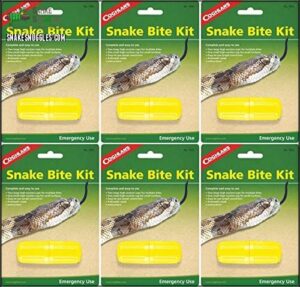
Quick heads-up: the Coghlan Snake Bite Kit isn’t a handling tool—it’s first aid gear for after you’ve been bitten. You’ll find suction cups, a lymph constrictor, and an antiseptic stick inside this ultralight (0.01-ounce) emergency kit.
But here’s the catch: medical experts don’t recommend suction-based snakebite treatment anymore—it can cause tissue damage and won’t remove meaningful venom. If you’re bitten, skip the kit, immobilize the limb, and get to a hospital fast for real antivenom.
| Best For | Hikers who want a lightweight emergency kit to carry “just in case,” though getting to a hospital quickly is the actual best practice for snake bites. |
|---|---|
| Primary Material | Plastic/Rubber |
| Length | Not specified |
| Weight | 0.01 oz |
| Intended Use | Snake bite treatment |
| Durability | Low (cracks easily) |
| Handle Type | None/handheld |
| Additional Features |
|
- Weighs practically nothing (0.01 ounces), so it won’t add bulk to your pack
- Comes with an antiseptic stick for cleaning wounds
- Includes multiple tools like suction cups and a constrictor band in one compact kit
- Medical experts advise against using suction for snake bites—it doesn’t remove venom and can damage tissue
- Suction cups reportedly crack easily, making them unreliable when you’d actually need them
- Not FDA-regulated, and the methods it uses (suction, tourniquets) are outdated and potentially harmful
2. Extra Heavy Duty Snake Stick

Now let’s talk about a tool that actually prevents bites—the Extra Heavy Duty Snake Stick. Available in seven lengths (25″ to 96″), this tong-style tool uses aircraft aluminum jaws and stainless steel tubing to safely grab and relocate even big-bodied rattlesnakes and copperheads.
The reinforced cable, polished finish, and extra-strength handle mean you won’t fumble mid-catch. One heads-up: the jaw opening may be too wide for slender snakes under 18 inches.
| Best For | Property owners and wildlife professionals who need a reliable, long-reach tool for safely relocating medium to large venomous snakes without getting dangerously close. |
|---|---|
| Primary Material | Stainless Steel/Aluminum |
| Length | 25″-96″ (7 sizes) |
| Weight | Not specified |
| Intended Use | Snake catching/relocation |
| Durability | Extra heavy duty |
| Handle Type | Aircraft aluminum |
| Additional Features |
|
- Seven length options (25″ to 96″) let you choose the right distance for your comfort level and typical snake encounters
- Aircraft aluminum and stainless steel construction means it won’t corrode or bend during heavy use with larger snakes
- Reinforced cable and polished finish give you a smooth, secure grip even when handling aggressive rattlesnakes or copperheads
- The jaw opening is too wide to effectively grab slender snakes under 18 inches long
- Longer models (72″) can feel heavy and awkward when maneuvering in tight spaces like sheds or crawl spaces
- Initial positioning under the snake takes practice—the rigid stick doesn’t always slide easily beneath coiled or moving animals
3. Stainless Steel Alligator Forceps Tool
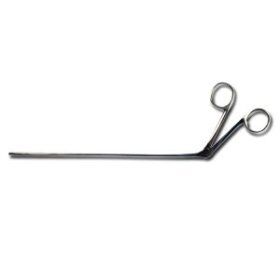
For tiny specimens—hatchlings, juveniles under 14 inches, or slender arboreal species—stainless steel alligator forceps (14″ long, 11″ reach) let you control head and neck without traumatizing fragile vertebrae. The serrated 3/4″ jaws grip securely, and the 3.5″ angled handle gives you precision in tight terrarium corners.
They’re autoclavable, rust-resistant, and open just 3/8 inch—perfect for micro-management. One catch: don’t use excessive force or you’ll snap the jaw mechanism. Rinse and dry after every session to prevent pitting.
| Best For | Reptile keepers working with hatchlings, juveniles under 14 inches, or slender arboreal species that need gentle, precise handling in tight spaces. |
|---|---|
| Primary Material | Stainless Steel |
| Length | 14″ |
| Weight | Not specified |
| Intended Use | General retrieval/gripping |
| Durability | Medical grade |
| Handle Type | Angled handle |
| Additional Features |
|
- 14-inch length with 11-inch reach gives you control in deep terrariums without getting too close
- Serrated jaws grip securely on delicate necks without slipping or causing injury
- Autoclavable stainless steel resists rust and stays sanitary between uses
- Jaws only open 3/8 inch, so they won’t work for thicker or adult reptiles
- Mechanism can break if you apply too much pressure during handling
- Requires rinsing and drying after each use to prevent corrosion and pitting
4. New Encyclopedia of Snakes Book

But tools alone won’t prevent bites—you need field knowledge. Chris Mattison’s New Encyclopedia of Snakes (272 pages, Princeton, 2007) arms you with taxonomy and behavior, and venom-delivery mechanics through 200+ color photos.
You’ll recognize defensive postures, habitat cues, and body-type variations before you lift a single specimen. It’s not a care manual, but it is the field-tested reference that separates guesswork from confident identification—especially when a coiled snake’s temperament dictates your hook choice.
| Best For | Snake enthusiasts, herpetologists, and field researchers who need a well-illustrated reference to understand snake taxonomy, biology, and behavior patterns for safer handling and accurate identification. |
|---|---|
| Primary Material | Paper |
| Length | 272 pages |
| Weight | Not specified |
| Intended Use | Educational reference |
| Durability | Standard book |
| Handle Type | N/A |
| Additional Features |
|
- Over 200 color photographs help you recognize defensive postures, habitat cues, and body variations in the field
- Covers comprehensive snake biology and classification with easy-to-read fact boxes on specialized topics
- Suitable for all knowledge levels, from beginners to experienced enthusiasts looking for a solid reference guide
- Advanced herpetologists may find some content too introductory or basic for specialized research
- Not a practical care guide for snake keeping—focuses on biology and classification rather than husbandry
- Some readers find the text dense or wordy despite the heavy use of visual illustrations
5. DocSeward Snake Hook Tool
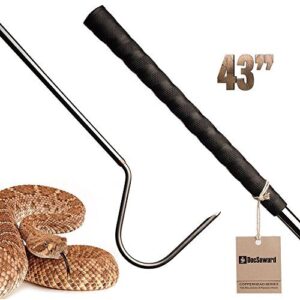
The DocSeward Copperhead Series balances serious field use with everyday reliability—its 43-inch stainless shaft and copper ferrule deliver predictable tip control when you’re guiding a defensive rat snake or repositioning a young boa.
The textured rubber grip won’t slip in mud or rain, and the hook geometry lets you catch and support without jabbing vertebrae. You’ll pay more than budget aluminum models, but the corrosion-resistant build and U.S. manufacturing translate into years of fatigue-free handling across species.
| Best For | Herpers, snake keepers, and outdoor enthusiasts who need a reliable tool for safely catching and relocating snakes in yards, woods, or other outdoor settings. |
|---|---|
| Primary Material | Stainless Steel/Copper |
| Length | 43″ |
| Weight | Not specified |
| Intended Use | Snake handling/control |
| Durability | Premium/long-term |
| Handle Type | Rubber grip |
| Additional Features |
|
- Balanced 43-inch design with copper ferrule and stainless steel hook provides excellent tip control and durability
- Textured rubber grip ensures secure handling even in wet or muddy conditions
- Thoughtful hook geometry allows safe handling without risking injury to snakes’ vertebrae
- Higher price point compared to budget aluminum alternatives on the market
- Requires proper technique to avoid user error when handling snakes
- May not be suitable for very large or particularly aggressive snake species
6. Snake Handling Hook Tool
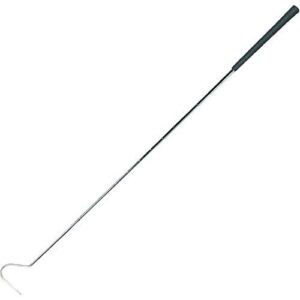
If you need one hook to handle everything from milk snakes to six-foot racers, this 44½-inch model hits the sweet spot—stainless construction with chrome plating resists corrosion season after season, and the rubber grip keeps your hand locked even when you’re sweating through gloves.
At 15.8 ounces it won’t fatigue your forearm during long field days. Yes, the golf-club shaft can dent if you drop it onto rocks, but careful handlers will appreciate the reach and balance for years.
| Best For | Herpetologists and outdoor enthusiasts who need a reliable, safe-distance tool for relocating and handling snakes up to six feet long. |
|---|---|
| Primary Material | Steel/Stainless Steel |
| Length | 44.5″ |
| Weight | 15.8 oz |
| Intended Use | Snake handling/relocation |
| Durability | Moderate |
| Handle Type | Non-slip rubber grip |
| Additional Features |
|
- 44½-inch length keeps you at a safe distance while maintaining good control and balance
- Stainless steel hook with chrome plating resists rust and holds up across multiple seasons
- Lightweight at 15.8 ounces, so your arm won’t get tired during extended field work
- Golf-club shaft can dent if dropped on rocks or handled roughly
- May be overpriced given its simple construction
- Not built for heavy-duty professional use where durability is critical
Tips for Safe and Effective Snake Hook Use
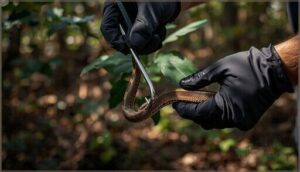
Having the right hook is only half the battle—you need to know how to use it without stressing the snake or putting yourself at risk.
Proper technique keeps both handler and animal safe, while regular maintenance ensures your tool performs when it matters most. Here’s what you need to master before your next handling session.
Proper Approaching and Lifting Techniques
Slow down—rushing triggers defensive strikes. Slide your snake handling hook under the mid-body with a smooth, deliberate motion, keeping your back straight and feet shoulder-width apart. Lift with your legs, not your spine, maintaining body alignment throughout.
These approach methods and lifting techniques form the foundation of safe handling with snake handling equipment and gear. Monitor the snake’s posture constantly, and back off if you spot stress signals!
Supporting The Snake’s Body Safely
Think of your hand as a cradle, not a clamp—distribute the snake’s weight across both palms to prevent spine stress and avoid concentrated pressure points. Keep continuous contact and body alignment intact.
- Support the entire midsection with one hand while guiding near the head
- Avoid dangling sections that create kinks or sagging behind the head
- Use transfer techniques that lower the snake gently, maintaining even weight distribution
- Keep movements slow to prevent sudden buckling or reflex twisting
Master these snake handling techniques and you’ll drastically reduce injury risk!
Cleaning and Maintaining Your Snake Hook
Your snake handling tools last longer when you treat them right—wipe hooks with mild soap after every use, then sanitize with reptile-safe disinfectant. Dry completely to prevent rust on stainless steel surfaces and store on a dedicated rack away from moisture.
Inspect weekly for burrs or bends; file smooth or replace if alignment’s compromised. These storage best practices and inspection checklist steps keep your herpetology equipment safe and ready.
Recognizing When Professional Help is Needed
If you’re facing a venomous snake or daily functioning drops because you’re overwhelmed, back off! When self-harm thoughts creep in—oops, wrong script, but same urgency—call wildlife control immediately.
Persistent symptoms like multiple failed capture attempts or ineffective coping with aggressive species demand professional animal handling and safety protocols. Snake handling and safety aren’t worth risking a bite.
Frequently Asked Questions (FAQs)
How to choose a snake hook?
Picking the right tool is like choosing armor—your handler experience, the snake’s temperament, and budget considerations all matter.
Venomous species demand longer, sturdier hooks; transport needs collapsible designs for snake handling safety.
How long should a snake stick be?
You’ll want 24–30 inches for small snakes, 40–48 inches for medium species, and 50–60 inches for large or aggressive ones—maintaining about 1–5 meters of safe distance reduces bite risk substantially.
Can a snake fit in a 4 inch hole?
Depends on the snake species and body width—narrow-bodied snakes like garter snakes can squeeze through, but thick constrictors won’t.
Four inches allows most small-to-medium species passage if they flatten their bodies properly.
How long are snake hooks?
Most snake hooks span 24 to 60 inches—short hooks give you tight-space control, long hooks keep defensive biters farther away, and telescopic models adjust from roughly 22 to 46 inches for adaptable handling.
Can I use one hook for multiple snake species?
Yes—but hook versatility demands careful risk assessment and species identification.
Handler experience matters most: one 24-inch hook accommodates small colubrids to medium pythons if you adjust snake handling techniques.
Species specificity trumps convenience when safety’s on the line.
How does terrain affect snake hook length choice?
Right tool for the right terrain—muddy marsh or rocky ledge, ground conditions dictate your snake hook length.
Longer hooks (36–52 inches) keep you stable on slopes; shorter ones (24–34 inches) offer control on flat, firm surfaces.
Are collapsible hooks as safe as fixed-length models?
Collapsible snake hooks introduce mechanism failure and state misjudgment risks—oops, wrong extension mid-lift means control loss.
Fixed-length models offer predictable distance every time, eliminating reduced reach surprises during defensive encounters.
What hook length works best for snake relocation?
You’ll need 50 to 60 inches for outdoor relocation terrain—enough reach to keep your balance and cut snake stress without leaning. In confined spaces, drop to 30 or 40 inches to avoid snagging.
Conclusion
Picking what length snake hook do I need is like choosing the right wrench—grab the wrong size, and you’re fighting the job instead of finishing it. Measure your snake’s length, factor in its temperament, and prioritize reach over convenience.
A venomous species? Go longer. Docile ball python? Standard works fine. Match the tool to the animal, not your budget, and you’ll handle every transfer with confidence—no second-guessing, no close calls.