This site is supported by our readers. We may earn a commission, at no cost to you, if you purchase through links.
Not all snakes swallow rodents whole or wrestle with prey larger than their heads. A surprising number of snake species have carved out an entirely different dietary niche—one that revolves around creatures most of us try to swat away.
These insectivorous snakes have evolved specialized hunting techniques and body structures perfectly suited for capturing beetles, crickets, caterpillars, and other invertebrates. From the slender rough green snake lurking in shrubs to the tiny flowerpot snake making its way through garden soil, these reptiles play an often-overlooked role in keeping insect populations in check.
Understanding which snakes rely on insects reveals a fascinating side of snake ecology that challenges our typical image of these predators.
Table Of Contents
- Key Takeaways
- Which Snakes Eat Insects?
- Common Insect-Eating Snake Species
- Insect Consumption in Juvenile Snakes
- Types of Insects Eaten by Snakes
- How Snakes Hunt and Eat Insects
- Ecological Importance of Insect-Eating Snakes
- Considerations for Keeping Insectivorous Snakes as Pets
- Frequently Asked Questions (FAQs)
- Conclusion
Key Takeaways
- Many snake species specialize in eating insects like crickets, beetles, and caterpillars rather than rodents, with species like garter snakes, rough green snakes, and flowerpot snakes relying primarily on invertebrate prey throughout their lives.
- Juvenile snakes of typically rodent-eating species (like corn snakes and rat snakes) often start life consuming insects before switching to larger vertebrate prey as they mature and their jaw size increases.
- Insect-eating snakes provide essential ecosystem services by naturally controlling pest populations in gardens and habitats, preventing insect outbreaks without chemical interventions while maintaining biodiversity.
- Keeping insectivorous snakes as pets requires multiple small feedings per week (3-5 insects), calcium supplementation since insects alone don’t meet nutritional needs, and enclosures with proper substrate depth and native plants to support live prey.
Which Snakes Eat Insects?
Not all snakes rely on mice and rats to survive. Some species have evolved to thrive on insects, making them specialized hunters of crickets, beetles, and other small invertebrates.
For those feeding insect-eating snakes, maintaining a safe distance when offering prey helps prevent stress and accidental bites during their feeding response.
Let’s explore what makes a snake insectivorous and why certain species prefer this unique diet.
Definition of Insectivorous Snakes
An insectivorous snake is one that relies primarily on insects and other invertebrates as its staple prey, both in the wild and captivity. These reptiles have carved out a unique ecological niche through dietary specialization and feeding adaptations shaped by snake evolution.
Key traits of insectivorous snakes include:
- Consistent consumption of crickets, beetles, caterpillars, and similar invertebrates rather than vertebrate prey
- Specialized hunting behaviors adapted to locating and capturing fast-moving, small prey
- Digestive systems suited to processing protein-rich insect bodies and soft chitin
- Smaller average prey size relative to their body length compared to other snake species
Like other snake species, many insectivorous snakes play a central role in their ecosystems, similar to the way help control prey populations in regions such as the Great Basin.
Differences Between Carnivorous and Insectivorous Diets
You might think all snakes eat meat, so they’re all carnivores—and you’d be technically right! But here’s where it gets interesting: insectivorous snakes represent a specialized subset with distinct dietary adaptations.
| Feature | Insectivorous Snakes | Typical Carnivores |
|---|---|---|
| Primary Prey | Crickets, beetles, caterpillars | Mice, rats, birds, amphibians |
| Digestive Systems | Specialized enzymes for chitin breakdown | Proteases optimized for vertebrate tissue |
| Feeding Strategies | Rapid strikes, multiple small meals weekly | Constriction or venom, less frequent feeding |
| Nutrient Profiles | High chitin, requires calcium supplementation | Complete amino acids from muscle and organs |
The energy requirements differ substantially between these dietary specializations. Insectivorous animals process smaller prey items that demand less hunting energy, while standard carnivores invest more effort subduing larger vertebrates.
This dietary specialization shapes everything from jaw structure to metabolic rates in your snake’s body! To better understand their roles, explore how distinguish these types of predators.
Why Some Snakes Prefer Insects
So what drives certain snakes toward insects instead of mice or frogs? Prey availability shapes feeding behavior more than you’d expect.
In insect-rich meadows and gardens, small-bodied species evolved slender frames and lightning-fast strikes perfectly suited for catching crickets and beetles. This dietary adaptation isn’t random—it’s a survival strategy where body size, habitat, and abundant invertebrates align beautifully.
Insect-eating snakes evolved slender bodies and lightning strikes not by chance, but as a precise survival strategy matching their prey-rich habitats
Common Insect-Eating Snake Species
Not all snakes hunt the same way or eat the same things. Some species have evolved to specialize in catching and eating insects, making them uniquely adapted to a life of bug hunting.
Let’s look at the most common insect-eating snakes you’re likely to encounter.
Garter Snakes
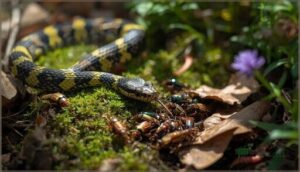
Garter snakes are among North America’s most adaptable insect hunters, thriving in diverse garter snake habitat from gardens to wetlands. Their snake foraging strategies blend opportunism with seasonal shifts—you’ll find them switching between crickets and earthworms based on what’s crawling nearby.
Their diet adapts throughout the year, and establishing an adult snake feeding routine helps replicate these natural cycles in captivity.
- They readily consume crickets, beetles, and grubs found in garden environments
- Young garter snakes show strong feeding responses to live crickets and mealworms
- Warmer months bring increased insect prey selection as availability peaks
- These adaptable reptiles maintain insect-heavy diets while supporting wildlife ecology balance
Rough Green Snakes
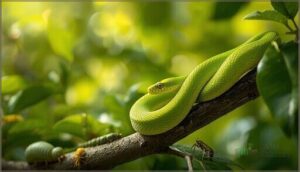
Rough green snakes are nature’s leaf mimics, using their bright green coloration as camouflage while hunting among branches. You’ll spot these slender reptiles ambushing soft-bodied insects like caterpillars and aphids in their foliage-rich habitat.
Their feeding habits focus on easily captured prey—crickets, katydids, and scale insects dominate their diet. Young snakes prefer tiny leafhoppers, while adults accept a broader insect menu.
Flowerpot Snakes
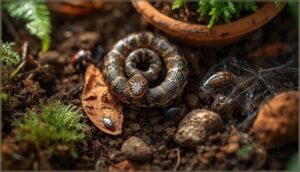
Flowerpot snakes are tiny globe-trotters with a serious appetite for household insects. Their slender bodies let them chase crickets and beetles through garden debris with surprising speed.
In natural flowerpot snake habitat, they exploit whatever six-legged prey crosses their path:
- Crickets and small beetles dominate terrarium feeding strategies
- Ants and short-winged beetles fuel entomophagous appetites outdoors
- Soft-bodied insects become preferred targets during warm seasons
- Small spiders supplement the reptile diet when insects disappear
- Plant litter invertebrates offer easy hunting opportunities
These snake behavior patterns make insect prey selection straightforward—if it’s small and moves, they’ll strike.
Smooth Green Snakes
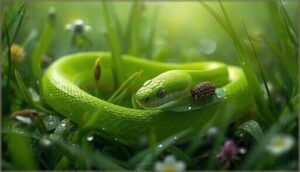
Smooth green snakes blend perfectly into meadow grasses, their lime-colored bodies camouflaged while they hunt. These gentle reptiles focus their feeding habits almost exclusively on soft-bodied insects—think caterpillars, spiders, and crickets plucked from vegetation.
Their habitat preferences favor moist areas where insect prey thrives year-round. Understanding smooth green snake care means recognizing their specialized snake diet needs and conservation status as threatened species.
Insect Consumption in Juvenile Snakes

Young snakes often have different dietary needs than their adult counterparts, and insects play a surprisingly important role in their early development.
Many species that eventually graduate to larger prey start their lives munching on crickets, beetles, and other small invertebrates. Let’s look at how juvenile snakes use insects as their first meals and when they make the switch to bigger food.
Young Corn Snakes and Insect Diets
Young corn snakes sometimes accept insects like crickets or mealworms during their earliest weeks, especially when pinky mice aren’t readily available. This insect feeding phase is usually brief—a transitional stage before they shift to rodents.
Here’s what shapes their early dietary shifts:
- Prey size matching: Insects fit tiny mouths before pinkies become manageable
- Growth rates: Consistent insect meals support initial development temporarily
- Prey selection: Juveniles prefer soft-bodied options that digest easily
- Snake nutrition: Insects alone lack complete reptile nutrition requirements
- Dietary shifts: Most switch to mice within weeks for better snake feeding habits
Young Rat Snakes as Insectivores
Like their corn snake cousins, juvenile rat snakes regularly snack on crickets and soft-bodied insects before switching to vertebrate meals. Their quick strikes and slender build make them efficient hunters of tiny prey during those critical early weeks.
| Insect Prey Capture Trait | How It Aids Growth Patterns |
|---|---|
| Quick head strikes | Catches fast-moving crickets effectively |
| Low-light foraging | Spots beetle larvae in leaf litter |
| Frequent feeding bouts | Sustains rapid juvenile growth spurts |
| Tail vibrations | Distracts grasshoppers before strike |
| Short hunting distances | Reduces predator exposure while feeding |
This insectivore adaptation helps young rat snakes survive when rodent prey is scarce. Beetle larvae and caterpillars supplement their diet, providing essential amino acids that aid tissue development. You’ll notice these juvenile foraging habits shift as the snakes grow—insect populations become less appealing once larger prey becomes manageable. This dietary flexibility showcases fascinating reptile biology and explains why snake feeding habits evolve so dramatically during early life stages.
Dietary Shifts as Snakes Mature
As snakes mature, their prey size evolution follows a predictable path—juveniles devour crickets and beetles, while adults tackle rodents and amphibians.
This maturation diet shift reflects changing energy intake needs and nutritional adaptations tied to snake growth patterns. You’ll see reptile biology favoring smaller, frequent insect meals early on, then shifting to larger vertebrate prey as species adaptation and animal nutrition demands evolve with body size.
Types of Insects Eaten by Snakes
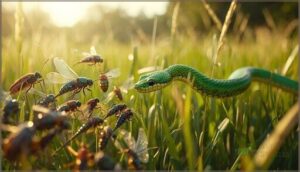
If you’ve ever watched a green snake stalk through tall grass, you know they’re after something small and fast.
The menu for insect-eating snakes is surprisingly varied—it’s not just ants and flies. Let’s look at the main types of insects and invertebrates that keep these slender hunters well-fed.
Crickets and Grasshoppers
Crickets and grasshoppers are staple prey for insectivorous snakes in both wild habitats and snake enclosures. These insects deliver solid insect nutrition—protein, moisture, and fats that fuel smaller species.
You’ll notice snakes use precise feeding techniques and prey selection, targeting insects sized to fit their mouths comfortably. Gut-loading crickets or adding dietary supplements like calcium enhances animal nutrition, helping maintain ecosystem balance and snake behavior in captivity.
Beetles and Caterpillars
Beyond grasshoppers, beetles and caterpillars round out insect diversity in snake diets. Beetles bring sturdy elytra that some snakes crack open, while caterpillars offer softer tissue rich in nutrients. You’ll find these prey items shape snake behavior—diurnal hunters patrol leaf litter for beetles, and caterpillar diet peaks align with snake foraging patterns, reinforcing ecological balance across reptile ecology.
Why beetles and caterpillars matter for snake prey and ecosystem balance:
- Beetles provide essential protein when other insects vanish, stabilizing snake diet and nutrition through seasonal shifts
- Caterpillars fuel juvenile growth spurts with soft bodies that young snakes digest easily during critical development
- Beetle defense mechanisms teach snakes to hone hunting techniques, sharpening survival skills across generations
- Seasonal caterpillar abundance triggers breeding cycles in insectivorous species, syncing reproduction with food availability
- Predation pressure from snakes regulates beetle and caterpillar populations, preventing plant defoliation and preserving habitat health
Spiders and Other Invertebrates
Spiders and other arachnid diversity expand the menu for insectivorous snakes, showcasing arachnid diversity in reptile ecology. You’ll notice snake species use refined insectivore strategies to navigate spider silk and capture these eight-legged prey.
Invertebrate interactions like these ripple through ecosystem engineering—when snakes regulate spider populations, they indirectly shape insect communities, strengthening ecosystem balance and conservation across habitats where reptile ecology meets subtle food webs.
How Snakes Hunt and Eat Insects
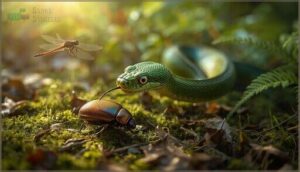
Catching insects isn’t quite the same as ambushing a mouse. Insect-eating snakes rely on specialized senses and quick reflexes to track down prey that’s small, fast, and sometimes airborne.
Let’s look at how these snakes locate their meals, what techniques they use to capture them, and why size matters in choosing their next snack.
Sensory Adaptations for Locating Insects
You might wonder how a reptile finds something as tiny as a cricket in dense grass. Snakes rely on olfactory signals to track airborne chemical cues over several meters, guiding them toward insect-rich zones.
Vibrational cues from wingbeats or caterpillar movement travel through soil, detected by sensitive scales. Thermal tracking reveals sun-warmed spots where beetles gather, while visual detection catches motion against foliage. Tactile sensing confirms contact before the final strike.
Hunting Techniques and Prey Capture
Once a snake pinpoints an insect, predator-prey dynamics unfold rapidly through specialized snake hunting techniques that shape food web dynamics. These insect-animal interactions reveal notable adaptability.
- Ambush tactics position snakes in sunny clearings, relying on stillness before explosive strikes timed to insect activity peaks.
- Surface foraging lets snakes intercept prey on leaves, using tongue flicks and visual cues.
- Opportunistic feeding targets trapped or hovering insects with quick jaw snaps.
- Leaf pouncing and night hunting expand capture success across habitats and hours.
Size and Prey Selection Limitations
Gape width constraints dictate what you’ll see snakes actually swallow—their jaw flexibility has limits. Prey size limits mean small snakes target crickets and beetles, while feeding mechanics prevent them from tackling anything wider than their head.
These dietary adaptations shape predator-prey dynamics across snake species and characteristics. As juveniles grow, shifting insect-animal interactions reveal how reptile behavior adjusts to expanding jaw dimensions.
Ecological Importance of Insect-Eating Snakes

Insect-eating snakes aren’t just fascinating hunters—they’re working behind the scenes to keep entire ecosystems in check.
These slender predators play a bigger role in your backyard and local habitats than you might realize.
Let’s look at three key ways these snakes shape the world around them.
Regulation of Insect Populations
You might think insect populations are unaffected by snakes, but these reptiles regulate pest numbers with surprising efficiency. Through predator-prey interactions, insectivorous snake species contribute to biological regulation and ecosystem management.
Their impact on population dynamics includes:
- Targeting breeding adults to reduce insect fecundity
- Consuming larvae during insect migration phases
- Preventing pest outbreaks through sustained feeding pressure
- Offering natural pest control in gardens and agricultural edges
- Maintaining insects below damaging threshold levels
This ecological service promotes ecosystem balance without chemical interventions.
Role in Ecosystem Balance
Beyond simple population control, insectivorous snakes deliver essential ecosystem services that ripple across entire food webs. They support biodiversity conservation by maintaining habitat quality—predation pressure prevents prey species from overgrazing vegetation, which preserves plant diversity for pollinators and other wildlife.
Their influence on nutrient cycling and population dynamics creates stability, making ecosystems more resilient against disturbances while promoting long-term biodiversity support.
Impact on Local Habitats
You’ll find insect-eating snakes shaping local biodiversity in ways that often go unnoticed. Their presence in gardens, wetlands, and forest edges creates measurable shifts in habitat ecology.
These interactions can be observed in various environments, including:
- Habitat fragmentation in urban areas isolates populations, reducing genetic diversity and ecological stability
- Green corridors boost insect population diversity, supporting healthier snake communities
- Riparian zones link aquatic and terrestrial food webs through predation on emerging insects
- Garden ecosystems benefit from natural pest control on beetles and caterpillars
- Microhabitat features determine year-round insect availability for snakes
These interactions maintain ecosystem balance through biodiversity conservation at remarkably small scales.
Considerations for Keeping Insectivorous Snakes as Pets
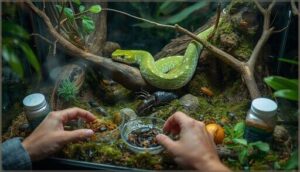
Keeping an insect-eating snake as a pet isn’t quite like caring for a ball python or corn snake that thrives on mice.
These slender hunters need a steady supply of live insects, careful attention to their nutritional balance, and enclosures that mimic their natural environments. Let’s walk through what you’ll need to take into account before bringing one of these specialized reptiles home.
Dietary Needs and Feeding Practices
Keeping insect-eating snakes healthy means getting their feeding strategies right from day one. You’ll need to offer multiple small meals per week—think three to five crickets or grasshoppers rather than one big feast.
This meal frequency mirrors how they’d hunt in the wild, maintaining digestive health while ensuring proper nutrient balance through prey variety like beetles and caterpillars.
Nutritional Requirements and Supplementation
Protein intake from diverse insects—crickets, beetles, caterpillars—forms the nutritional backbone, but calcium needs often aren’t met through prey alone. You’ll want to supplement strategically to maintain digestive health and prevent deficiencies.
- Dust prey with calcium carbonate weekly to support bone growth
- Add vitamin D3 supplements monthly for proper calcium absorption
- Rotate multivitamin powders to cover trace minerals insects lack
Nutrient balance determines long-term wellness in captive insectivorous snakes.
Habitat Setup for Insect-Eating Species
Your snake’s enclosure needs more than heat lamps and hides. Microclimate design matters—layer substrate 2 to 3 inches deep with leaf litter for burrowing insects, then arrange native plants in clusters to create foraging zones.
Substrate selection impacts prey availability directly. Enclosure lighting should mimic natural cycles while humidity control and proper plant arrangement maintain the moisture-loving invertebrates your snake naturally hunts.
Frequently Asked Questions (FAQs)
Do snakes eat bugs?
Yes, bugs become bite-sized meals for certain snakes. Several species systematically snack on insects—especially smaller snakes and juveniles.
Garter snakes and rough green snakes routinely forage on crickets, grasshoppers, and beetles, demonstrating important bug predator roles in wild snake diets.
Do snakes eat crickets?
Many small snakes readily munch on crickets, especially garter snakes and rough green snakes.
These insectivorous species treat crickets as a protein-rich staple, both in wild diets and pet care routines when you’re feeding captive herpetology specimens.
Do snakes eat ants?
While ants don’t top the menu for most insectivore diet analysis studies, blind snakes and tiny fossorial species do hunt them.
Their snake digestive adaptations handle ant colony dynamics, though beetles and crickets remain preferred predator prey.
Do snakes eat animals?
All snakes are carnivores that hunt animal prey—from tiny insects to large mammals.
Their predator behavior and carnivore diets rely entirely on consuming other creatures for snake nutrition, never plants or vegetation.
What do snakes eat?
Snakes are carnivores that eat meat-based prey selection based on their size and feeding habits.
Large species consume deer or goats, while smaller snakes target frogs, insects, and invertebrates for proper carnivore needs and animal nutrition and diet.
Do rat snakes eat insects?
Young rat snakes occasionally snack on crickets and beetles during early growth stages, but adults rarely bother with insects.
They’ll switch to mice, rats, and birds once they’re big enough to handle meatier prey.
What type of snakes eat insects?
Like telegraph operators once tapped out messages, garter snakes tap into insect prey—alongside rough green snakes, flowerpot snakes, and smooth green snakes, all specialized insectivore species thriving on crickets, beetles, and caterpillars.
Do any snakes eat crickets?
Several species readily snack on crickets in the wild and captivity.
Garter snakes and rough green snakes actively hunt these protein-rich insects, while juveniles of many species rely on crickets during early development.
Do snakes eat cockroaches?
Cockroaches make excellent roach prey for smaller insect-eating snakes, especially in captive diets.
Dubia roaches pack solid cockroach nutrition, though you’ll want pesticide-free options to keep insect digestion safe and healthy.
What snakes eat grasshoppers?
Garter snakes, rough green snakes, smooth green snakes, and flowerpot snakes regularly hunt grasshoppers as part of their natural diet, especially during warmer months when these insects are abundant in fields and meadows.
Conclusion
The next time you spot a slender snake gliding through your garden, consider what it might be hunting. Understanding what snakes eat, specifically insect-eating snakes, reveals a hidden world where these reptiles serve as nature’s pest control, quietly managing populations of crickets, beetles, and caterpillars.
From specialized adults to hungry juveniles shifting diets, insect-eating snakes remind us that predators come in all sizes—and that even the smallest hunters play outsized roles in keeping ecosystems balanced.
- https://biomedicalsciences.unimelb.edu.au/departments/department-of-biochemistry-and-pharmacology/engage/avru/blog/sneaky-snake-facts-2-how-often-do-snakes-eat
- https://calpolynews.calpoly.edu/news_releases/2021/june/rattlesnakes-may-like-climate-change-cal-poly
- https://academic.oup.com/biolinnean/article/114/2/446/2415937