This site is supported by our readers. We may earn a commission, at no cost to you, if you purchase through links.

Your snake turned its nose up at dinner again. You switched prey types, adjusted your timing, even tried different tongs. Nothing worked.
Food refusal is one of the most common concerns snake keepers bring to a reptile vet, and most of the time, the prey itself isn’t the problem. Temperature gradients, humidity fluctuations, enclosure stress, and prey presentation all play a far bigger role than most care guides acknowledge. Improving snake appetite means auditing the full setup, not the food alone, and the fixes are often simpler than you’d expect.
Table Of Contents
- Key Takeaways
- Optimize Enclosure Conditions to Improve Snake Appetite
- Prepare and Present Prey to Encourage Feeding
- Match Feeding Frequency to Species, Age, and Seasonal Appetite
- Monitor Weight, Hydration, and Digestion During Food Refusal
- Know When Appetite Loss Requires a Reptile Veterinarian
- Frequently Asked Questions (FAQs)
- How can a snake regain a healthy appetite?
- What can I do to regain my appetite?
- How do snakes adjust their diet?
- How does the snake diet work?
- Is a snake diet healthy?
- What should a snake eat?
- How do you increase a snake’s appetite?
- How to help a snake that won’t eat?
- How can I encourage my snake to eat?
- How do you feed a hungry snake?
- Conclusion
Key Takeaways
- Your snake’s environment — temperature gradients, humidity, and secure hides — drives appetite far more than prey choice alone, so audit the enclosure before changing what you feed.
- Prey preparation details matter enormously: thaw overnight, warm to 98–104°F, introduce scent 15–20 minutes early, and mimic live movement with slow, intermittent tong work.
- Feeding frequency isn’t one-size-fits-all — match intervals to your snake’s age and species, and don’t panic when winter naturally stretches gaps by 25–50%.
- Persistent refusal paired with weight loss, abnormal posture, or visible lesions isn’t a husbandry puzzle — it’s a vet visit, and waiting for systemic decline makes outcomes worse.
Optimize Enclosure Conditions to Improve Snake Appetite
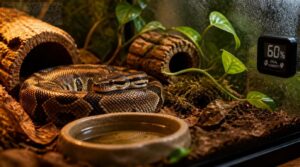
Your snake’s appetite starts with its environment. Before you tweak feeding schedules or prep prey differently, the enclosure itself needs to be right. Here’s what to check first.
Getting those basics dialed in is the foundation of everything else covered in this guide to feeding a picky snake.
Temperature and Humidity
Appetite runs on warmth. Set your basking spot to 28-32°C and the cool side to 24-26°C. A proper temperature gradient unlocks digestion; thermal gradient optimization is what’s really driving consistent appetite.
Adding a thermostat to every heater and a digital hygrometer lets her move between zones as she likes, and this guide to building naturalistic terrariums shows how to lay it all out.
Once your heat is dialed in, a bioactive vivarium setup for snakes helps hold steady humidity and temperatures, so your snake stays comfortable and keeps eating well.
If you’re still dialing in your setup, our guide to setting up a boa enclosure walks through balancing heat, substrate, and humidity step by step.
Add humidity control systems, a thermostat and hygrometer, and monitor temperature and humidity nightly. Swings beyond ±2°C or ±5% RH stress your snake and shut feeding down fast.
Hides, Hygiene, and Routine
Once your temperature gradient is dialed in, hiding spots are next. A hide on each side lets your snake thermoregulate without stress. Too tight or too loose and they won’t settle.
For a deeper look at optimizing hide placement alongside substrate moisture and enclosure layout, experienced keeper enclosure setup guides walk through how every element works together.
Good enclosure hygiene means spot-cleaning daily, deep-cleaning sparingly. Constant disruption breaks feeding routine fast. Keep décor stable before meals and let familiarity drive appetite.
Prepare and Present Prey to Encourage Feeding
How you prepare and present prey matters more than most keepers realize. Getting the details right means the difference between a snake that eats confidently and one that turns its nose up every feeding day. Here’s what to focus on.
Prey Size and Type

Getting prey size and type right is one of the fastest ways to turn a reluctant feeder around. Offer appropriately sized prey that matches roughly 10% of your snake’s body weight. Rodents suit most colubrids and pythons, while amphibians work better for some viperids. Frozen vs live prey matters too, since fresh-killed often triggers faster strikes. Stocking up on frozen feeder mice and rats means you’ll always have the right size on hand for a consistent, stress-free feeding routine.
If your snake still seems off after switching prey size or type, tracking subtle behavioral cues can help—a guide on recognizing stress-related feeding issues in snakes walks through what to watch for before problems escalate.
Safe Thawing and Warming

Once you’ve nailed prey size, thawing frozen prey properly is your next win. Sloppy prep destroys scent.
- Thaw sealed in the fridge overnight
- Warm sealed in warm water, avoiding temperature gradients
- Check the center is warm before offering
- Never refreeze partially thawed prey
Warming prey to room temperature boosts acceptance. Enhanced scent fades quickly, so offer it right away.
Scent and Movement Cues

Before presenting prey, introduce the scent 15-20 minutes early. Enhancing prey scent ahead of time syncs olfactory cues with your snake’s hunting drive, and it’s far more effective. Warming prey to room temperature adds thermal appeal for desert species.
Once your snake strikes, following proper garter snake feeding guidelines ensures you allow the full 15–20 minutes needed for unhurried, stress-free consumption.
Mimicking live prey movement matters. Slow, intermittent motion over 10-30 seconds beats one quick wiggle. Providing familiar prey keeps scent consistent.
Match Feeding Frequency to Species, Age, and Seasonal Appetite

Resist feeding on a rigid calendar. Species-specific care starts with recognizing that a ball python and a corn snake don’t share the same metabolic clock, and your feeding schedule needs to reflect that difference.
Hatchlings need meals every 5-7 days to fuel rapid growth. Subadults comfortably stretch to 7-14 days. Most adults land at 14-21 day intervals, with prey size matching around 1-2% of body weight. Juveniles need closer to 2-4%, so don’t cut corners during those critical growth phases.
Seasons shift things, too. Seasonal appetite modulation is real: cooler months slow digestion and naturally extend intervals by 25-50%. A feeding frequency adjustment in winter isn’t failure; it’s your snake’s biology doing exactly what it should. Lean into it.
Winter feeding gaps aren’t failure—they’re your snake’s biology working exactly as it should
Monitor Weight, Hydration, and Digestion During Food Refusal

When your snake stops eating, consistent weight tracking becomes your clearest signal. Weigh on the same scale, at the same time of day, every week. Trends across multiple sessions reveal far more than any single reading, and they’re the backbone of smart weight management during refusal.
Don’t overlook hydration status monitoring. Slow urate output and drier feces both signal reduced water intake, and dehydration genuinely slows digestion. Arid conditions can quietly suppress voluntary drinking, so double-check your humidity levels.
Digestion timing matters just as much. If your snake hasn’t eliminated since its last meal, it’s not ready for another. Lethargy plus refusal points to systemic stress. Stable weight with normal elimination? That’s far less urgent.
Know When Appetite Loss Requires a Reptile Veterinarian

Some appetite loss is normal. But persistent food refusal crosses a line you can’t ignore.
If your snake’s weight and body condition are declining despite good husbandry, that’s your cue to call a reptile vet. Anorexia and appetite loss stretching well beyond your species’ usual fasting window, especially in juveniles, needs diagnostics, not just patience. Watch for open-mouth breathing, visible lesions, or abnormal posture. These signs paired with low appetite can point to infection, parasitic infections and diarrhea, or even metabolic bone disease.
Vet consultation for anorexia usually includes bloodwork and radiographs to rule out obstruction, organ dysfunction, or hormonal disorders. Repeated refusals over a short window? That’s the stronger signal. Don’t wait for systemic decline to push you into action.
Frequently Asked Questions (FAQs)
How can a snake regain a healthy appetite?
Fix the enclosure first. Dial in temperature gradients, warm prey to the right body temperature, and cut handling stress before every feeding. Persistent shedding issues or weight loss signal something deeper than routine appetite suppression.
What can I do to regain my appetite?
Stay well hydrated, eat smaller frequent meals, and choose easy-to-digest options like warm broth or plain rice. Don’t skip meals, even if portions are tiny. Manage stress actively through light exercise or slow, deep breathing.
How do snakes adjust their diet?
One size never fits all. Feeding frequency drops naturally with age, prey size must stay within their midbody width, and species always shapes the overall feeding schedule. Nail those three things and your snake thrives.
How does the snake diet work?
Snakes eat whole prey, usually rodents, insects, or amphibians. Prey size should match the snake’s widest body point for safe swallowing. Feeding frequency naturally shifts with age, from weekly for juveniles to biweekly for adults.
Is a snake diet healthy?
A healthy snake diet mirrors natural prey in size, type, and nutrition. Offer appropriately sized, frozen-thawed meals at the right temperature, and make sure hydration stays consistent. That helps smooth digestion and a steady appetite.
What should a snake eat?
You are what you eat, and so is your snake. Feed frozen-thawed whole rodents sized to match its mid-body girth. Warm prey thoroughly before offering, and always adjust feeding frequency based on age and size.
How do you increase a snake’s appetite?
Warm your prey properly, fine-tune humidity, and keep handling minimal near feeding time. A secure hide and stable thermal gradient often make all the difference.
How to help a snake that won’t eat?
Think Sherlock Holmes: always trace the root cause first.
Fix temperature gradients, warm prey to 98-104°F, match prey size, provide hiding spot provision, reduce handling, and watch for illness signs.
Feeding refusal often signals stress.
How can I encourage my snake to eat?
Start by warming prey to 98-104°F before the offering. Place it near a secure hiding spot to minimize stress. Match prey size carefully first, and then use scent transfer if your snake still won’t strike.
How do you feed a hungry snake?
Heat prey to 98-104°F, wiggle it gently with tongs, and feed your snake in a calm, quiet area away from distractions. Getting prey size right and reducing stress beforehand makes the whole feeding schedule click.
Conclusion
Think of your snake like a finely tuned instrument. Every single knob matters, and every detail compounds. Improving snake appetite starts with the environment, not the prey. Get your temperature gradient dialed in, offer secure hides, maintain a consistent routine, and nail your prey presentation. Small calibrations add up faster than you’d think. A snake that feels truly safe and comfortable will eat. Audit your full setup, stay patient, and trust what you’ve built here.