This site is supported by our readers. We may earn a commission, at no cost to you, if you purchase through links.

When your snake stops eating in late autumn and retreats to the coolest corner of its enclosure, it’s not sick—it’s responding to an ancient biological imperative. Understanding snake brumation means recognizing this dormant state as a necessary survival mechanism, not a medical emergency.
Unlike true hibernation in mammals, brumation allows reptiles to dramatically slow their metabolism while maintaining occasional responsiveness to their environment. Your snake’s heart rate may drop by 60%, its breathing becomes nearly imperceptible, and it can remain motionless for weeks.
Yet this profound physiological shift requires careful management on your part. The difference between a healthy brumation and a dangerous situation often comes down to pre-winter preparation, environmental control, and knowing which behavioral signs signal normalcy versus distress.
Table Of Contents
Key Takeaways
- Brumation is a reptile-specific dormancy that slows snake metabolism by up to 70%, reduces heart rate by 40-60%, and can last 6-20 weeks depending on species and environmental conditions—it’s a survival adaptation, not illness.
- Successful brumation requires pre-winter health screening (catching issues in 5-9% of snakes), controlled temperatures of 4-10°C, humidity between 60-90%, and careful monitoring to prevent dehydration or premature arousal.
- Temperature drops, shortened photoperiods, and humidity levels trigger brumation onset, while understanding these environmental cues helps you distinguish normal dormancy behaviors from health problems requiring intervention.
- Post-brumation recovery demands a 3-14 day adjustment period before feeding resumes, with initial prey items at 10-25% body mass and hydration access being critical for metabolic reactivation and digestive function.
What is Snake Brumation?
If you’ve kept snakes for any length of time, you’ve probably noticed them slow down when the temperature drops. This isn’t laziness—it’s brumation, a reptile’s version of winter dormancy that’s critical for their survival in cooler climates.
Understanding what brumation actually involves and how it differs from true hibernation will help you recognize when your snake enters this state and what physiological changes you should expect.
Defining Brumation Vs. Hibernation
You might hear people use “hibernation” and “brumation” interchangeably, but they’re not the same thing. Hibernation describes dormancy in warm-blooded mammals, while brumation refers specifically to reptile hibernation—an ectotherm adaptation driven by ambient temperatures rather than internal metabolic shutdown.
During the snake brumation process, your snake’s body temperature drops with environmental cooling, triggering unique thermoregulation strategies and dormancy patterns that differ fundamentally from mammalian hibernation comparison.
Understanding research output guidelines is essential for studying such complex biological processes.
Key Physiological Changes During Brumation
During snake brumation, your snake’s body undergoes a dramatic metabolic slowdown—up to 70% reduction—while hormonal shifts trigger energy conservation. Heart rate drops by 40-60%, and respiratory adaptations cut ventilation by half. Neural suppression dims sensory responsiveness, creating a deep quiescence that differs from sleep. This reptile physiology isn’t shutdown; it’s strategic efficiency.
Snake brumation slows metabolism by 70%, halves breathing and heart rate, and dims awareness—it’s strategic efficiency, not shutdown
The brumation process maintains just enough activity for survival while conserving precious resources. Understanding the literature review process is essential for researching complex biological phenomena like brumation.
Typical Brumation Duration in Snakes
Once you understand brumation physiology, you’ll want to know how long this dormancy period actually lasts. In the wild, temperate species generally brumate for 10–20 weeks, though captive programs often target 6–12 weeks for safety. Desert and tropical snakes may need just 4–8 weeks.
Duration depends on temperature, photoperiod, and species-specific cold adaptation strategies—your snake’s energy conservation timeline varies considerably.
Why Do Snakes Brumate?
You might wonder why snakes go through brumation at all, especially if they’re safe in captivity. The answer lies in millions of years of evolution—snakes didn’t develop this behavior by accident.
Understanding the “why” behind brumation helps you recognize when your snake needs this dormant period and what benefits it brings to their long-term health.
Energy Conservation Strategies
When your snake enters the brumation process, its metabolic rate plummets by up to 50%, delivering daily energy savings exceeding 40% compared to active-season demands. This dramatic cold adaptation allows energy conservation in snakes through dormancy periods lasting 6–12 weeks.
Seasonal snake metabolism changes are triggered by cooling temperatures and shorter daylight, signaling the body to conserve energy.
Fat reserves become the primary fuel, making pre-brumation body condition essential for successful snake metabolism management during this exceptional energy conservation strategy.
Survival Mechanism in Cold Climates
When temperatures drop below 10–15°C, your snake’s cold-blooded physiology can’t maintain essential functions without brumation. This winter survival strategy facilitates climate tolerance through thermal regulation—tracking ambient conditions to minimize energetic conservation demands.
By entering the brumation process, your snake achieves winter dormancy that sidesteps the lethal risks of freezing or starvation. Cold adaptation transforms a potentially fatal season into a manageable period of energy conservation.
Success hinges on getting the temperature gradient right and monitoring your snake throughout, so check out this ball python brumation guide before you start the process.
Reproductive and Ecological Benefits
Reproductive cycles hinge on the brumation period. You’ll notice that many temperate species mate shortly after emergence, when warmer temperatures and abundant prey align with peak energy conservation.
This synchrony strengthens population dynamics—females returning to communal dens year after year enhances mating strategies.
Meanwhile, reduced metabolic demands during dormancy free up resources, supporting ecological interactions and the broader ecological role of snakes within their ecosystems.
Environmental Factors Affecting Brumation

Your snake’s environment doesn’t just influence brumation—it’s the primary trigger that flips the biological switch. Temperature, light, and humidity work together to signal when it’s time to slow down and when it’s safe to emerge.
Understanding how these factors interact will help you create conditions that support healthy brumation, whether your snake is in a naturalistic vivarium or a controlled indoor setup.
Temperature and Light Cycle Influence
As external heat triggers drop, your snake’s entire world shifts—temperature and light exposure become the master switches controlling brumation depth. Here’s what you need to know about thermal cues and photoperiod effects:
- Temperature gradients between 4–10°C (39–50°F) slash metabolic rate by 60–70%, critical for energy conservation in cold-blooded reptiles
- Reducing daily light by 2–4 hours extends the snake brumation period by roughly 14–22 days
- Shorter photoperiods delay spring arousal by 8–12 weeks in many species
- Natural daylight increase triggers emergence usually 4–6 weeks post-equinox
- Cooler-adapted species enter deeper dormancy at higher frequencies
Understanding these environmental controls helps you safely guide your snake through its natural cycle.
Humidity and Hydration Needs
Moisture acts like a silent guardian during your snake’s dormancy—keeping humidity between 60–90% cuts dehydration risk dramatically.
You’ll want to maintain 70–75% RH using hygrometers and moisture-retentive substrate, since poor water balance disrupts reptile physiology and behavior.
Monitor plasma markers and provide shallow water access throughout the snake brumation period to support hydration strategies and energy conservation without forcing activity.
Natural Vs. Artificial Brumation Sites
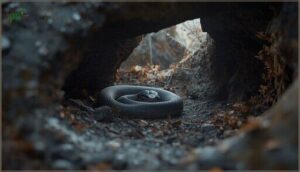
Where your snake spends the brumation process shapes survival—wild populations favor soil burrows (72%) over rock crevices for stable temperature control and humidity management.
You’ll need to replicate those hibernacula conditions in captivity: artificial brumation environments with 15–30 cm substrate choices, 60–85% humidity, and 4–9°C setpoints mirror natural snake habitats and shelters. Proper site selection ensures reptile winter survival without premature arousal.
Preparing and Managing Brumation in Snakes
Successfully guiding a snake through brumation isn’t just about lowering the temperature and waiting for spring. You’ll need to assess your snake’s health beforehand, create a stable environment that mimics natural conditions, and monitor carefully throughout the dormant period.
Let’s walk through the essential steps to guarantee your snake enters, endures, and emerges from brumation safely.
Health Checks and Pre-Brumation Care
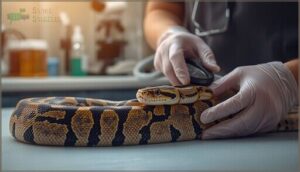
Before your snake enters brumation, you’ll want to schedule a thorough veterinary checkup—pre-brumation protocols reveal subtle issues in 5–9% of individuals that could derail the process.
Parasite screening catches activity-related parasites in up to 28% of cases, while nutritional assessment and hydration status checks reduce post-arousal complications by 10–18%.
This veterinary guidance ensures your snake’s health throughout the brumation strategies for snakes you’re implementing.
Safe Enclosure Setup and Monitoring
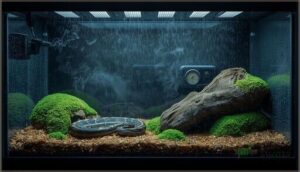
Once your snake’s health checks out, you’ll need an enclosure that won’t betray the brumation process. Thermal regulation demands a stable 4–10°C window—imagine temperature swings as wake-up calls your snake doesn’t need.
Humidity control between 40–70% guards against dehydration, while substrate selection (think coco coir or sphagnum blends) offers moisture retention without mold risk.
Ventilation systems prevent condensation buildup, and daily monitoring during week one catches problems before they compromise snake health.
Post-Brumation Recovery and Feeding
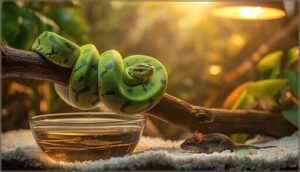
After brumation, your snake enters a delicate gut-down period—usually 3–14 days before feeding resumes. Start with prey items around 10–25% of body mass to reduce regurgitation risk.
Hydration drives recovery time; dehydrated individuals delay feeding and struggle with digestion.
Watch for basking behavior and gradual activity increase, signs that metabolism is rebooting and your snake’s ready to eat again.
Species Differences and Behavioral Signs
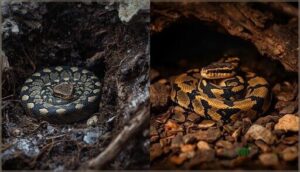
Not all snakes approach brumation the same way—species from different climates and habitats show distinct patterns in timing, depth, and duration of dormancy. Recognizing these differences helps you anticipate what’s normal for your snake and avoid mistaking natural brumation cues for illness.
Let’s look at which species commonly brumate, what behaviors signal the process, and how to tell when your snake is entering or briefly rousing from this dormant state.
Common Brumating Snake Species
Temperate species lead the charge when winter sets in. Garter snakes (Thamnophis sirtalis) drop their metabolism by 50–70% at 4–10°C, while pythons in cooler regions settle near 2–8°C.
Grass snakes brumate for 60–120 days across Europe, and vipers hunker down for 90–150 days in northern zones.
Cold-blooded survival hinges on species variation—each snake’s brumation process reflects its habitat and climate demands.
Typical Brumation Behaviors
Once you understand which species follow distinct cold adaptation strategies, you’ll recognize the behaviors themselves. Your snake’s winter dormancy unfolds through predictable brumation patterns:
- Prolonged stillness lasting weeks to months with minimal movement
- Metabolic slowdown reducing core function by 40–60%
- Shallow breathing with irregular intervals between breaths
- Periodic arousals triggered by internal rhythms, then back to torpor
These snake physiology shifts define the brumation process in cold-blooded reptiles.
Recognizing Brumation Onset and Arousal Episodes
Observation skills help you detect the brumation process before it fully takes hold. Watch for appetite suppression, shelter-seeking, and declining responsiveness—these snake behavior cues signal onset within days. Temperature fluctuations trigger arousal signs: brief movements, tail flicking, or irregular breathing when ambient temperatures spike 2–6 °C.
Humidity control and monitoring prevent dehydration during these brumation strategies for snakes.
| Brumation Triggers | Arousal Signs |
|---|---|
| Photoperiod shortening | Tail flicking |
| Temps drop to 8–14 °C | Gular pumping |
| Humidity 40–70% | Nasal flaring |
| Metabolic shifts begin | Heart rate spikes |
Frequently Asked Questions (FAQs)
Can captive snakes skip brumation safely?
Like skipping a seasonal tune-up, brumation bypass remains possible for some captive snakes. Studies show 92% survival when veterinary protocols are followed, though skipping pre-brumation health checks increases complications threefold.
How does brumation affect snake lifespan?
Brumation can extend snake lifespan by reducing annual energy expenditure up to 40%, lowering oxidative stress, and conserving metabolic resources.
Proper duration and hydration management during this dormancy period support long-term survival and health outcomes.
Do all wild snakes brumate every year?
Not every wild snake enters winter dormancy each year. About 60–80% of temperate populations brumate annually, while tropical species often skip dormancy cycles entirely when winters remain warm enough for survival.
What triggers early emergence from brumation?
Temperature fluctuations above 12–18°C, increased light exposure, and humidity shifts can prompt early emergence from brumation. Abrupt warming triggers arousal in 25–40% of cold-blooded snakes, disrupting their winter dormancy cycle.
Should juvenile snakes brumate their first winter?
You should let healthy juveniles brumate that first winter—it’s a natural energy conservation strategy tied to their biology.
Field data confirms young snakes handle brumation duration well, supporting normal growth patterns and winter survival.
Conclusion
Picture your snake emerging from its winter retreat, eyes clear and body responsive—the reward of understanding the snake brumation period through proper preparation. You’ve monitored temperatures, ensured hydration access, and recognized normal dormancy signs.
This knowledge transforms brumation from a worrisome mystery into a manageable biological event. When spring arrives and your snake begins feeding again, you’ll know you’ve successfully guided it through one of nature’s most extraordinary survival adaptations.