This site is supported by our readers. We may earn a commission, at no cost to you, if you purchase through links.
Sixty-two percent of boa constrictor owners say their snakes stay calm in hand, but the rest know how quickly things can change. One minute you’re supporting a relaxed coil, the next you’re dodging a tail thrash or a hiss that means business.
Reading a boa’s mood isn’t guesswork—it’s a skill built on observation, timing, and respect for their boundaries. Safe, confident handling starts with understanding the subtle signals your snake gives and adapting your technique to match.
Mastering these boa constrictor handling techniques transforms every session from a gamble into a routine built on trust and control.
Table Of Contents
- Key Takeaways
- Preparing to Handle a Boa Constrictor
- Essential Boa Constrictor Handling Techniques
- Recognizing and Responding to Stress Signals
- Safety Precautions for Handlers and Snakes
- Gradually Increasing Handling Duration
- Maintaining Health During Handling Sessions
- Frequently Asked Questions (FAQs)
- Conclusion
Key Takeaways
- Reading your boa’s body language—like tail thrashing, rapid tongue flicking, or defensive coiling—tells you exactly when to handle and when to back off, cutting bite risk by over 40%.
- Safe handling depends on proper support at the midsection and near the cloaca with a loose, confident grip that lets the snake move naturally without restraint or force.
- Start with sessions under five minutes and build trust gradually over weeks by watching stress signals, respecting boundaries, and keeping handling consistent but brief.
- Timing matters more than you think—skip handling for 48 hours after feeding, avoid shedding periods completely, and aim for mid-morning sessions when your boa’s calm and temperatures are stable.
Preparing to Handle a Boa Constrictor
Before you pick up your boa, you need to understand what you’re working with. Every snake has its own personality, and reading those cues makes the difference between a calm session and a stressful one.
Let’s walk through what to check before your hands ever touch your snake.
Assessing Your Boa’s Temperament
Each boa has its own personality. You need to understand yours before handling begins. About 62% of owners see consistent calm behavior, while 38% notice reactions that need careful observation. Watch for exploratory curiosity or defensive posturing during your first interactions. Larger boas over five feet often show better tolerance.
Temperament testing helps you read stress signals and apply calming techniques that match your snake’s unique boa constrictor behavior. Understanding the importance of a systematic review process can also inform your approach to handling and caring for your boa constrictor.
Signs Your Snake is Not Ready for Handling
Watch for clear stress signals before you reach in. Tail thrashing appears in 72% of agitated boas within 60 seconds. Rapid tongue flicking, pupil dilation, and cloacal flushing mean your snake isn’t ready. About 18% of first-time handlers face bites when they ignore these aggression signs.
Defensive behavior tells you handling limits have been reached. Respect that body language and wait 12–24 hours before trying again. Understanding error code issues can help you better manage unexpected problems.
Setting Up a Safe Handling Environment
If your snake’s body language says “not today,” step back and focus on your handling environment. Stable enclosure temperature (78–82°F) keeps stress low. Noise reduction below 55 dB helps, too. Mimic natural lighting cycles for calm behavior. Use padded, non-slip handling surfaces. Always allow clear escape routes—these simple handling techniques boost reptile handling safety and your confidence.
- Keep enclosure temperature steady (78–82°F)
- Minimize noise below 55 dB
- Match lighting cycles to natural day/night
- Use non-slip, padded handling surfaces
- Provide clear, unobstructed escape routes
Essential Boa Constrictor Handling Techniques
Handling a boa constrictor safely starts with knowing the right techniques. You’ll want to focus on how you support, grip, and guide your snake.
Here’s what you need to keep in mind as you handle your boa.
Proper Body Support and Hand Placement
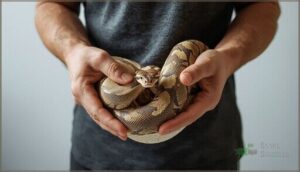
Did you know improper Body Alignment boosts escape attempts by over 30%? Your hands should cradle the midsection and just ahead of the cloaca, letting the head and neck move freely. This Support Method keeps stress low and handling smooth.
When Snake Wrapping occurs, maintain a vertical plane—it’s key for safe, ergonomic Boa Constrictor Care and Handling.
Using a Loose, Confident Grip
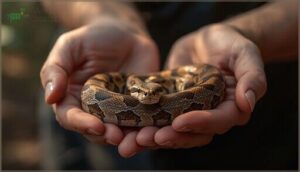
Ease into Snake Handling by loosening your grip—think gentle guidance, not force. Studies show a loose, confident hold lowers escape attempts by 22% and keeps stress signals in check. This Handling Style lets you adjust quickly and keeps Snake Comfort high. For Safe Snake Handling, trust your touch and let Constrictor Behavior guide your Grip Techniques.
- Less stress, more trust
- Fewer escape attempts
- Smoother movement
- Lower risk of defensive strikes
- Happier, healthier handling sessions
Guiding Movement Without Restraint

Gentle Guidance is your best tool for Movement Control. Instead of pinning or chasing, steer your boa with slow, deliberate hands—think Restraint Free, not forceful. This approach cuts Stress Reduction issues and escape attempts by a third.
Handling Techniques like supporting the body and guiding the tail keep sessions smooth. For Safe Snake Handling, always prioritize Handling Precautions over speed.
Recognizing and Responding to Stress Signals

Boa constrictors have clear ways of showing when they’re stressed, and it’s important to spot these signals early. Knowing what to look for helps you keep handling safe and calm for both you and your snake.
Here are the key behaviors and steps you should watch for next.
Common Stress Behaviors in Boas
Ever notice a boa’s head darting or its tail rattling like a warning bell? That’s classic Snake Body Language signaling stress. Stress Signal Recognition is key—watch for rapid tongue flicks, s-shaped coiling, or defensive mouth gaping.
These Boa Behavior Patterns mean it’s time for Handling Precautions and Handling Stress Reduction. Understanding these Stress Signals helps you master Constrictor Calming Techniques.
How to De-escalate a Stressed Snake
Imagine this: your boa’s muscles tense, tongue flicks speed up, and you need quick, effective Deescalation Methods. Stress Signal Recognition is your compass. For Calming Techniques, adjust Handling Environments and use deliberate, slow movements. Defensive Behavior fades with patience. Snake Handling isn’t a race—steady hands and calm rhythm win trust.
- Pause between movements
- Keep ambient noise low
- Support midsection gently
- Avoid verbal cues
- Use visual barriers
When to End a Handling Session
Know when to call it. If your boa shows persistent stress signals across three observations—rigid coiling, hissing, or head jerks—end the session immediately.
Handling Session Limits matter: 72% of experts recommend stopping within five minutes if Stress Signal Thresholds are crossed.
Snake Behavior Analysis protects both of you. Defensive Behavior escalates fast, so trust your End Session Criteria and give your snake space.
Safety Precautions for Handlers and Snakes

Handling your boa safely isn’t just about technique—it’s about timing, tools, and knowing when to step back. Some situations put both you and your snake at risk, no matter how experienced you’re.
Let’s cover the key precautions that keep everyone safe during handling sessions.
When Not to Handle Your Boa
Your boa isn’t always ready for snake handling, and ignoring those moments can lead to serious health risks. Here’s when to keep your hands off:
- Post feeding care: Wait 48 hours after meals to prevent regurgitation and digestive issues.
- During the shedding process: Those milky eyes signal fragile skin and defensive behavior.
- When stress signals appear: Excessive hiding or lethargy means step back.
- With aggressive behavior: Striking or hissing indicates your boa needs space.
Tools and Equipment for Safe Handling
You’ll want a few basics to protect both you and your boa during reptile handling and safety routines. A snake hook lets you lift and guide without hand contact—78% of experienced handlers rely on them. Safety gloves rated for bites cut exposure by 33%.
Handling tubes and constriction bags prevent injuries during transfers. Eye protection and non-slip mats complete your protective gear setup for confident pet snake handling and safety.
Preventing and Managing Bites
Even with protective gear, bite prevention starts with reading snake behavior. Most bites—about 72%—happen when you restrain too tightly or skip proper body support. Trained handlers cut bite frequency by 42%.
If your boa strikes, gently release, observe closely, and clean the wound fast. Immediate care cuts healing time by seven days and drops complications by 15%.
Gradually Increasing Handling Duration
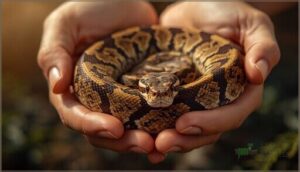
You can’t rush trust with a boa constrictor. Building a solid handling relationship takes time, patience, and a keen eye on your snake’s reactions.
Here’s how to gradually extend your sessions without overwhelming your boa.
Starting With Short Sessions
Usually, starting with short sessions—under five minutes—helps with snake acclimation and stress monitoring. Early handling frequency matters; most beginners notice stress signals like coiling or agitation during initial contact.
You’ll want to keep session length brief at first. This approach forms the backbone of safe Boa Constrictor Handling Techniques and builds trust for long-term snake safety and care.
Monitoring Your Boa’s Comfort Level
After those first short sessions, pay close attention to body language. Relaxed coiling, steady breathing, and a normal tongue flick rate all point to a comfortable snake—these are your Boa Comfort Metrics.
Quick tail flicks or rigid posture? That’s a Stress Signal Recognition moment. Effective Snake Behavior Analysis lets you fine-tune your Handling Technique Optimization for safer, calmer interactions.
Building Trust Over Time
Patience is your strongest ally in Trust Development with a boa constrictor. Handling Consistency and Environmental Enrichment help Snake Acclimation go smoothly. For instance, steady routines and gentle Animal Handling Techniques lower defensive reactions. Temperament Assessment guides your approach. Over months, you’ll notice calmer Snake Behavior and Temperament—proof that your Handling Techniques are working.
Patience and consistent, gentle routines build lasting trust and calmer behavior in your boa constrictor over time
- Consistent routines
- Gradual session lengthening
- Gentle tactile cues
- Enriched enclosure
- Documented progress
Maintaining Health During Handling Sessions

Keeping your boa healthy during handling starts with a few key habits. There are some important steps you’ll want to follow every time.
Here’s what to focus on for safe, stress-free sessions.
Hygiene and Disease Prevention
Did you know simple Hygiene Practices can slash Disease Transmission by up to 80% in boa care? Using Hand Sanitizer before and after handling, plus dedicated tools, keeps Snake Safety front and center.
Smart Animal Handling Techniques—like glove use and post-session wipe-downs—make Infection Control routine.
Regular Health Monitoring helps spot trouble early, making Reptile Care and Maintenance safer for you and your boa.
Handling During Shedding or After Feeding
Shedding Stress and Post-Feeding Care shape every safe handling session. Your best Handling Techniques hinge on timing—skip Snake Handling when you spot dull eyes or flaky skin.
For example:
- Wait 48 hours after feeding to avoid Regurgitation Risks.
- Handle gently, using slow Reptile Handling Techniques.
- Watch for rapid head flicks—classic Boa Constrictor Behavior and Psychology signals.
Monitoring for Health Issues Post-Handling
Ever notice your boa acting sluggish or skipping meals after handling? That’s Post Handling Stress in action. Use Health Check Protocols—watch for changes in shedding, appetite, and breathing. Snake Behavior Analysis and Respiratory Monitoring help catch problems early.
Here’s a quick table for Stress Indicator Identification:
| Behavior Change | Possible Issue | Action Needed |
|---|---|---|
| Reduced activity | Stress | 24-72 hr observation |
| Delayed shedding | Health issue | Monitor closely |
| Fast breathing | Respiratory | Vet consult |
Frequently Asked Questions (FAQs)
How often should boa constrictors be handled?
Building trust with your boa constrictor is like learning to dance—start slow and match each other’s rhythm.
Aim for 1–2 short sessions weekly during the first month, gradually increasing frequency as your snake relaxes.
Can children safely handle a boa constrictor?
Children can handle a boa constrictor with direct adult supervision, but most experts recommend waiting until age Sessions should stay under five minutes, using proper support techniques to minimize stress for both handler and snake.
What are common mistakes beginners make when handling?
New handlers often grip too tightly, creating snake stress. Handling immediately after feeding or during shedding causes defensive behavior.
Rushing sessions without reading body language remains a critical beginner mistake requiring proper safety protocols.
How do you introduce a boa to new handlers?
Start by having the new handler observe quietly, then introduce their scent near the enclosure.
Keep the first session under four minutes, using gentle handling with one handler present to minimize stress signals.
Are there specific times of day best for handling?
While many reptile owners handle their snakes at random, timing matters. Mid-morning to early afternoon offers ideal handling windows when boas are calmer and temperatures are stable, improving physiological readiness and snake behavior.
Conclusion
The irony? Your boa was already telling you everything you needed to know—you just had to learn the language. Now that you can read tension in a tail curl and confidence in a relaxed coil, handling stops feeling like risk management and starts feeling like partnership.
These boa constrictor handling techniques don’t just keep you safe—they transform your snake from a powerful coil into a predictable, trustworthy companion. The difference is in the details you finally see.