This site is supported by our readers. We may earn a commission, at no cost to you, if you purchase through links.

Reptiles can’t shiver to warm up. Drop the temperature too low, and your bearded dragon’s digestion slows, its appetite fades, and its immune system starts losing ground. That’s why belly heat matters more than most keepers realize.
A quality heat mat mimics sun-warmed rock, delivering steady thermal gradients your reptile needs to thermoregulate properly. But not every pad on the market earns that trust. Some lack self-regulation, some skimp on safety certifications, and cheap adhesive can peel away within months.
Below, you’ll find five heating pads that meet real safety standards, plus the sizing math and installation rules that keep your terrarium running safely.
Table Of Contents
- Key Takeaways
- Top 5 Reptile Heating Pads for Terrariums
- Choosing The Right Heat Pad Size
- Thermostats and Essential Safety Features
- Safe Heat Pad Installation and Use
- Frequently Asked Questions (FAQs)
- How to heat a reptile terrarium?
- Can you use a reptile heat mat for plants?
- How to keep a reptile enclosure warm at night?
- Can heating pads be used with screen-bottom tanks?
- Do heating pads work with bioactive substrate setups?
- How long do reptile heating pads typically last?
- Are heating pads safe to use with hatchlings?
- Can multiple heating pads be used in one terrarium?
- Do heating pads work for all reptile species?
- Can I use a heating pad without a thermostat?
- Conclusion
Key Takeaways
- A heat mat alone can’t regulate temperature, so you need an external thermostat with a safety cutoff to prevent burns and overheating.
- Cover only one-quarter to one-third of your terrarium’s floor space, and match wattage to tank size using roughly 2-4 watts per gallon.
- Always mount the pad outside the enclosure on solid glass, never on mesh floors or under thick insulating substrate like coconut fiber.
- Look for UL, ETL, or MET certification, since these marks confirm real lab testing rather than just a manufacturer’s claim of safety.
Top 5 Reptile Heating Pads for Terrariums
Not every heat mat on the market meets the safety standards your reptile needs. You want reliable wattage options, solid certifications, and construction that holds up over time. Here are five models worth your consideration.
Beyond wattage and certifications, pairing your mat with a reliable thermostat makes all the difference, and this guide to choosing the right heat mat for small terrariums walks through sizing and placement so your setup avoids hot spots.
1. Exo Terra Reptile Heat Mat
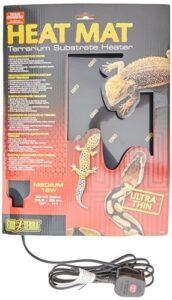
Four wattage options make Exo Terra’s Heat Mat one of the most flexible picks on this list, running 4W, 8W, 16W, and 25W to match tanks from ten to forty-plus gallons.
Built for permanent glass mounting, this mat forms a solid adhesive bond you shouldn’t disturb once applied. Peeling it off risks tearing the heating elements underneath, so measure your placement carefully before committing.
You’ll mount it outside the enclosure, under one end, to establish a proper thermal gradient. Rubber spacers help with airflow and even heat distribution across the glass surface.
Coverage should stay around one-third of the floor, keeping the opposite end cooler for natural thermoregulation. Pair it with an Exo Terra thermostat for precise control, since the mat alone won’t regulate temperature. Marketed for tropical, temperate, and desert setups, it’s a dependable base layer for belly heat.
| Best For | This heat mat is best for reptile owners with smaller enclosures, like leopard geckos, ball pythons, or box turtles in 10-gallon tanks, who need gentle, consistent belly heat. |
|---|---|
| Heating Material | Silicone |
| Adhesive Backing | Yes |
| Built-in Thermostat | No |
| Mounting Location | Exterior glass |
| Wattage Range | 4-25W |
| Tank Size Range | 10-40+ gal |
| Additional Features |
|
- Provides steady, even warmth suited to smaller reptiles and amphibians
- Silicone build with adhesive backing keeps it securely in place under the tank
- Works with glass, plastic, or wood enclosures for flexible setup options
- Requires an external thermostat, since it doesn’t regulate temperature on its own
- Adhesive bond weakens if removed and reapplied, risking damage to the mat
- Thin silicone material can tear easily if handled roughly
2. iPower Reptile Heat Mat
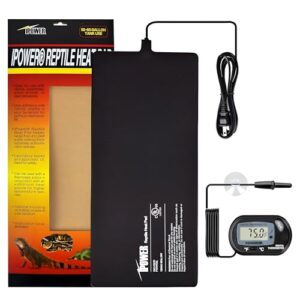
Where the Exo Terra relies purely on adhesive strength, iPower’s mat brings PTC heating material into play, self-regulating output as it warms. You get four sizes: 4W for 5-gallon quarantine tanks up to 24W for 50-gallon setups. The thin film heats up fast, reaching operating temperature in under ten minutes.
Room temperature runs will push surface heat to roughly 80–90°F without any controller attached, which sounds convenient until you consider what that means for thermoregulation.
The 3M adhesive backing bonds well to glass, though textured plastic surfaces sometimes weaken that hold over time. A dial controller ships with the unit, but don’t treat it as your only safeguard. That knob isn’t a substitute for a proper thermostat, and skipping one risks thermal burns in species that need tight gradient control.
| Best For | Reptile, amphibian, and small animal keepers who want fast, consistent under-tank heating for terrariums up to 50 gallons, plus hobbyists using it for plant germination or home brewing. |
|---|---|
| Heating Material | PTC film |
| Adhesive Backing | 3M adhesive |
| Built-in Thermostat | No |
| Mounting Location | Exterior glass |
| Wattage Range | 4-24W |
| Tank Size Range | 5-50 gal |
| Additional Features |
|
- PTC heating material reaches operating temperature in under ten minutes and self-regulates output
- Strong 3M adhesive backing bonds securely to glass surfaces
- Waterproof, moisture-resistant design makes cleaning easy without needing to remove the mat
- No integrated thermostat, so the included dial controller isn’t a reliable safeguard against overheating
- Adhesive hold can weaken over time on textured plastic surfaces
- Risk of thermal burns for species needing tight temperature gradients if used without a proper thermostat
3. Repti Zoo Reptile Heat Mat Thermostat

That dial controller on the iPower gets you close, but Repti Zoo builds the thermostat right into the mat itself. You set an exact target between 68°F and 122°F on the digital display, switching between Fahrenheit and Celsius with one button. No dial guessing, no wide swings past your target.
That kind of precision matters most when you’re fine-tuning a warm side to match species-specific needs, like the temperature ranges outlined in this king snake care sheet and enclosure guide.
Dual temperature protection backs up that control with a 122°F smart chip cutoff, guarding against runaway heat if the controller glitches. The carbon film spreads warmth evenly across the pad’s surface, avoiding the hot spots that plague cheaper designs.
At 23 watts, the 8×12 inch model suits 30-40 gallon terrariums well. Adhesive backing holds it in place, though some owners report inconsistent stick quality. Worth testing that bond before you rely on it long term.
| Best For | Reptile owners who want precise, hands-off temperature control for 10-40 gallon glass terrariums without babysitting a separate dial controller. |
|---|---|
| Heating Material | Carbon film |
| Adhesive Backing | Yes |
| Built-in Thermostat | Yes |
| Mounting Location | Exterior glass |
| Wattage Range | 23W |
| Tank Size Range | 30-40 gal |
| Additional Features |
|
- Built-in digital thermostat lets you set an exact target temperature (68°F-122°F) in Fahrenheit or Celsius with one-button switching
- Dual protection system with a 122°F smart chip cutoff guards against runaway heat if the controller malfunctions
- Carbon film heating material spreads warmth evenly across the pad, reducing hot spots common in cheaper mats
- Adhesive backing quality is inconsistent, with some units arriving with weak or missing adhesive
- Some users report the mat struggles to reach or hold the set temperature accurately
- Customer support can be slow or unresponsive when units fail, and some have stopped working within a month
4. Zoo Med Reptile Undertank Heater
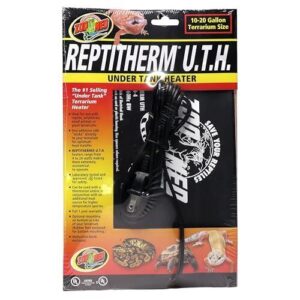
Repti Zoo builds control into the mat. Zoo Med skips it entirely, betting on a nichrome heating element bonded permanently to your terrarium’s exterior glass. Simple, stable, but you’ll need a separate thermostat to keep temperatures in check.
Four sizes cover the range: 4 watts for small enclosures up to 24 watts for sixty-gallon tanks. Rubber feet ship included, lifting the terrarium slightly so air circulates underneath and heat doesn’t pool against the glass.
UL-approved construction backs the safety case, and the unit runs continuously without spiking your electric bill. For temperate species needing steady belly heat, that reliability matters more than fancy digital displays.
The 8-watt model measures 6 by 8 inches, weighs just 0.2 kg, and includes adhesive backing for glass mounting. Made in the USA, built for the long haul.
| Best For | reptile owners who want a simple, no-frills undertank heater for species like leopard geckos, ball pythons, and bearded dragons that need steady belly heat. |
|---|---|
| Heating Material | Nichrome element |
| Adhesive Backing | Yes |
| Built-in Thermostat | No |
| Mounting Location | Exterior glass |
| Wattage Range | 4-24W |
| Tank Size Range | Small-60 gal |
| Additional Features |
|
- Reliable, consistent heat output backed by long-term durability reports from users
- UL-approved nichrome heating element offers a solid safety foundation
- Compact 6" x 8" size with adhesive backing makes glass mounting straightforward
- No built-in thermostat, so a separate one is required to prevent overheating
- Surface temperatures can climb to 120°F if left unregulated, creating a burn risk
- Adhesive may not hold well on cold glass, uneven surfaces, or bottomless stands
5. iPower Reptile Heat Pad
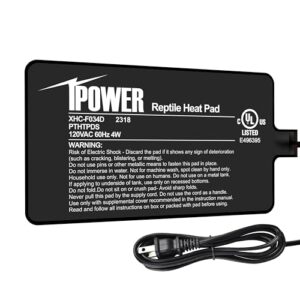
Small setups need small solutions, and iPower’s pad fits enclosures under five gallons without overpowering them. At 4 watts, it uses a PTC heating film with 3M adhesive backing, staying flat against glass without warping. Surface temps hover around 80°F at room temperature, enough for gentle belly heat on geckos or small snakes.
Waterproof construction controls spills and routine cleaning, a real plus in humid setups. But there’s no built-in thermostat, so you’ll need one to prevent overheating. Budget for it before checkout, not after.
The adhesive holds well early on but sometimes loosens within seven months. Plan on periodic checks and eventual re-mounting. For UL-listed reliability in a compact, energy-efficient pad, it’s a solid pick for small reptile keepers.
| Best For | Owners of small 1-5 gallon terrariums who need gentle, consistent bottom heat for reptiles, amphibians, or small animals. |
|---|---|
| Heating Material | PTC film |
| Adhesive Backing | 3M adhesive |
| Built-in Thermostat | No |
| Mounting Location | Exterior glass |
| Wattage Range | 4W |
| Tank Size Range | 1-5 gal |
| Additional Features |
|
- Waterproof design allows safe scrubbing and easy cleaning, even in humid setups
- Slim PTC heating film with 3M adhesive stays flat against glass without warping
- Energy-efficient at just 4 watts, ideal for small enclosures without overpowering them
- No built-in thermostat, so an external temperature controller is required
- Adhesive can loosen over time, sometimes within seven months, requiring re-mounting
- Risk of overheating if placed directly on insulating surfaces without elevation feet
Choosing The Right Heat Pad Size
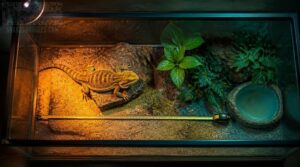
Picking the right heat pad size isn’t guesswork—it comes down to real measurements and math. Get the sizing wrong, and you risk burns, cold spots, or a reptile that can’t regulate its body temperature properly. Here’s exactly what to check before you buy.
Measure Terrarium Floor Space
Grab a tape measure before you grab a heat pad. Measure the inner length and width at the base, then multiply for total floor area in square inches.
Include shelves or dividers in that number. Irregular shapes? Split the floor into rectangles and add them up. Keep the tape flat, don’t compress substrate, or your numbers will lie to you. If you’re unsure your enclosure is sized right in the first place, a terrarium size calculator can help confirm dimensions before you plan heating placement.
Cover One-Quarter to One-Third
One-quarter of the floor is your starting point, not a hard rule. This footprint concentrates warmth over a resting zone, supporting a cleaner thermal gradient without overheating the enclosure.
Push past 50 percent coverage, and you disrupt reptile thermoregulation entirely. Stretching toward one-third works for larger species needing more basking room, but never exceed it.
Slide the pad to fine-tune the warm zone as habits change.
Match Wattage to Tank Size
Wattage isn’t a guessing game, it’s math. A 2 to 4 watts per gallon ratio keeps floor area ratio in check: 10-gallon tanks need 8-16 watts, 20-gallon tanks need 16-24 watts.
Tiny 12×12 enclosures run fine on 5 to 10 watts. Match heat pad sizing to your tank chart, then verify with a thermostat.
Create a Thermal Gradient
A single heat pad means nothing without a gradient. Reptile thermoregulation depends on choice: warm and cool zones your pet moves between.
Place the mat under one side only, never centered.
- Warm zone: 85-95°F
- Cool zone: 70-75°F
- Desert warm zone: 95-110°F
- Verify with two thermometers
This thermal gradient setup helps natural temperature control, letting undertank heating work with your reptile’s instincts, not against them.
Check Species Temperature Needs
Not every species wants the same warmth. Your gecko’s preferred temperature range differs sharply from a ball python’s or a bearded dragon’s.
| Species Type | Daytime Range | Nighttime Cooling |
|---|---|---|
| Tropical | Up to 34°C | 18-24°C |
| Desert | 28-37°C | 18-24°C |
Check species needs before buying a heat mat, and remember seasonal brumation shifts these targets too. Match your thermostat settings accordingly.
Thermostats and Essential Safety Features
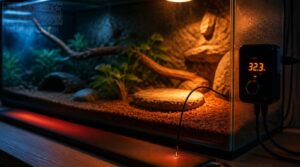
A heat pad alone won’t keep your reptile safe—you need the right safeguards backing it up. Thermostats, sensors, and certifications work together to prevent burns, fires, and dangerous temperature swings. Here’s what to check before you plug anything in.
External Thermostat Control
A thermostat is your heat mat’s brain. External units keep temperature control separate from the heater, cycling power to hold your set point, often 70-100°F.
Look for:
- Safety cutoff features preventing overheating
- Adjustable set points for species needs
- Audible or blinking temperature alarm systems
- Simple controller mounting outside the enclosure
- Reliable set point calibration at setup
Correct Temperature Probe Placement
A thermostat only works as well as its probe placement. Set the probe on the warm side, in direct surface contact with the pad, away from edges to dodge heat sink errors. Keep it inside the thermostat’s sensing zone, secure the cable so it can’t shift, and inspect it monthly for cracks or wear.
Overheat Protection and Thermal Cutoffs
Good probe placement means nothing if the pad itself can’t protect against failure. Look for a built-in thermal cutoff that trips within 1-5 seconds of exceeding safe limits. Resettable switches re-engage after cooling, while one-time fuses offer a permanent fail-safe.
Pair this with overcurrent protection, and you’ve got a heat mat built to fail safely, not catastrophically.
UL, ETL, or MET Certification
A resettable fuse only matters if the pad passed real testing first. Look for a UL listed terrarium warmer, ETL certified heat mat, or MET certified safety mark before buying.
These marks confirm accredited lab testing, factory surveillance, and correct labeling, not just a manufacturer’s promise. A UL MET certified pad meets recognized electrical safety standards, verified through periodic re-certification.
Waterproof, Flame-Resistant Construction
Spills happen, so a waterproof design matters. Look for a vinyl or PVC outer layer with heat sealed edges and silicone encapsulation over circuits.
Flame-resistant materials matter just as much. Flame retardant plastics, conformal coated traces, and thermal cutoffs give layered thermal protection.
Together, these features support reliable terrarium temperature control while keeping moisture management and electrical isolation intact, even during routine cleaning.
Safe Heat Pad Installation and Use
Buying the right pad solves only half the problem. How you install and manage it determines whether your reptile stays safe or gets burned. These five steps cover the setup details that matter most.
Mount Outside The Terrarium
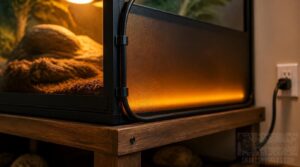
Placement matters as much as wattage. Mount your under tank heater outside the terrarium, on the bottom or back panel, never inside where animals contact it directly.
This keeps adhesive backing bonded to glass, not substrate, protecting against moisture intrusion. Route cords straight to the wall, avoiding pinch points.
A stable platform underneath ensures consistent contact, and any thermostat compatible heat mat stays easy to clean or replace.
Raise Tank for Airflow
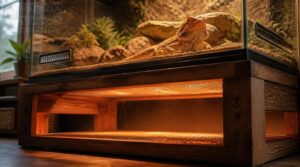
Since heat rises, give it somewhere to go. Raise your enclosure 2 to 4 inches on a non-magnetic stand to let convection work beneath the tank.
Add a fine mesh, spaced a quarter to half inch under the pad, so air circulates instead of stagnating. Pair this with vents at opposite ends for genuine cross ventilation and steady temperature regulation.
Avoid Thick Insulating Substrates
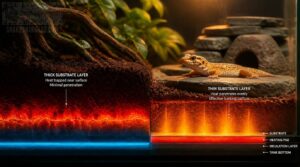
Deep coconut fiber and soil sound cozy, but they choke heat transfer efficiency. Thick substrate insulation traps warmth at the surface, leaving your pad hot and your reptile cold.
Cozy substrates like coconut fiber choke heat transfer, trapping warmth at the surface while your reptile stays cold
Stick with a thin substrate layer or near bare floor heating. Low thermal conductivity materials disrupt your terrarium’s thermal gradient before it even forms.
Monitor Surface Temperatures Regularly
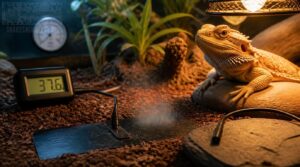
Trust, but verify: a hot pad doesn’t guarantee a warm reptile. Use a digital thermometer with a flat surface probe, checking readings twice daily.
- Confirm probe placement accuracy at pad contact zones
- Track consistency across morning and evening checks
- Log any hotspots or cold spots you find
- Compare pad readings against ambient air for a full thermal picture
Pair With Overhead Heating
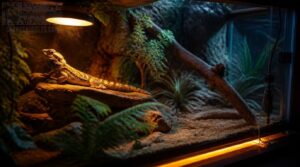
A heat mat alone can’t warm the air, only the floor. That’s why belly heat needs an ambient partner.
Pair your pad with an adjustable overhead source, positioned opposite the mat for thermal balance zones. Run dual thermostat control: one probe on the pad, one for air. This gradient optimization mimics natural day-night cycles while protecting your reptile enclosure setup.
Frequently Asked Questions (FAQs)
How to heat a reptile terrarium?
Combine an under-tank heat mat on a calibrated thermostat with an overhead basking bulb. This pairing delivers steady belly heat plus a true thermal gradient, letting your reptile regulate body temperature the way nature intended.
Can you use a reptile heat mat for plants?
Yes. Gardeners use a heat mat for soil temperature control, boosting seedling germination and root zone warming. Pair it with a thermostat and a protective layer between mat and tray to prevent scorched roots.
How to keep a reptile enclosure warm at night?
Pair a thermostat-controlled heat pad with overhead warmth for nighttime temperature zones. Use a dark zone thermometer at belly level, keep substrate thin for heat transfer, and never rely on ambient room air alone.
Can heating pads be used with screen-bottom tanks?
Mesh floors won’t hold a heat mat’s warmth. Mount it on a solid side panel using its adhesive backing instead, preserving airflow and preventing moisture buildup while creating a reliable directional thermal gradient for your terrarium.
Do heating pads work with bioactive substrate setups?
Like Goldilocks searching for "just right," deep bioactive soil often runs too insulating. It traps warmth near the glass, blocking substrate insulation effects and stressing microfauna and root health below the surface.
How long do reptile heating pads typically last?
With proper care, expect a normal lifespan of 2 to 5 years. Adhesive degradation often starts after 12 to 24 months, cutting efficiency. Thermostats reduce component wear; check warranty coverage (usually 1 to 2 years) before buying.
Are heating pads safe to use with hatchlings?
Yes, with precautions. Keep surface temps at 90-100°F, use an external thermostat for regulation, add a thin substrate layer over the pad, and monitor daily. Skip direct contact and thick bedding to prevent burns.
Can multiple heating pads be used in one terrarium?
Want two warm zones instead of one? Run multiple pads, each on its own thermostat, with combined wattage matched to tank size, and total coverage under one-third of the floor for safe thermal gradient balance.
Do heating pads work for all reptile species?
Not quite. Species compatibility varies widely: terrestrial and warm-climate reptiles benefit most, while arboreal limitations reduce effectiveness, aquatic effectiveness stays minimal, and desert species needs favor basking spots over constant pad contact for thermal gradient control.
Can I use a heating pad without a thermostat?
An unwatched flame still burns the hand that lit it. Technically you can run a heat mat alone, but without a thermostat, you’re gambling on hot spots, burns, and dehydration your reptile can’t escape.
Conclusion
A sun-warmed rock doesn’t just heat a body, it steadies a whole system. The right reptile heating pads for terrariums do the same job, quietly and consistently, day after day.
Match the wattage, verify the certification, and place the thermostat probe correctly. These aren’t optional extras. They’re the difference between a reptile that thrives and one that merely survives.
Get the setup right once, and your terrarium runs itself, safely, for many years to come.