This site is supported by our readers. We may earn a commission, at no cost to you, if you purchase through links.

most forgiving reptiles rank among the most forgiving reptiles a keeper can own—until the enclosure gets it wrong.
A setup that’s too small, too dry, or missing a proper temperature gradient doesn’t just cause discomfort; it suppresses immune function, disrupts shedding cycles, and shortens a snake that could otherwise live 20-plus years.
Most keepers don’t fail their king snakes out of neglect. They fail them out of incomplete information.
Getting the enclosure right from day one changes everything: a snake that eats reliably, sheds clean, and moves through its space with confidence instead of stress.
Table Of Contents
- Key Takeaways
- King Snake Enclosure Size and Design
- Heating and Lighting for Kingsnakes
- Humidity, Substrate, and Décor
- Top 5 King Snake Enclosure Products
- Frequently Asked Questions (FAQs)
- What kingsnake subspecies are best for beginners?
- How often should I replace substrate materials?
- Can multiple kingsnakes live together safely?
- What size mice for different aged kingsnakes?
- How long after purchase before handling snake?
- How long can king snakes live in captivity?
- What should I feed my king snake?
- How often should I handle my snake?
- When and how do king snakes breed?
- Do king snakes need a quarantine period?
- Conclusion
Key Takeaways
- A proper temperature gradient — warm side at 88–92°F, cool side at 72–75°F — isn’t just comfort; it’s what keeps your kingsnake’s immune system, digestion, and shedding cycles working the way they should.
- Kingsnakes will escape any enclosure that isn’t actively secured, so cam-lock latches, edge gasket seals, and reinforced corners aren’t optional extras — they’re the baseline.
- Humidity held between 40–60%, substrate deep enough to burrow (4–8 inches depending on age), and two hides placed on opposite ends of the enclosure are the three habitat details most keepers get wrong first.
- Never house two kingsnakes together — they’re ophiophagous, meaning they eat other snakes, and cohabitation will eventually end in one of them being a meal.
King Snake Enclosure Size and Design
Getting the enclosure right is the foundation of good kingsnake care. Size, material, and security all matter more than most new keepers expect.
A well-chosen enclosure reduces stress and supports natural movement, and this kingsnake habitat setup and diet guide walks you through exactly what to look for.
Here’s what to look for before you buy.
Minimum Enclosure Dimensions for Hatchlings and Adults
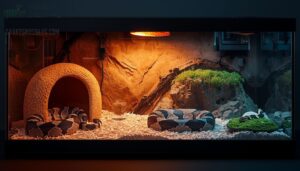
Hatchlings need at least a 20-gallon tank — roughly 30 inches long — to move and thermoregulate without stress. Adults require a minimum 4x2x2 (48x24x24) front-opening enclosure, prioritizing floor area minimum and horizontal length-width ratio over height.
Volume scaling guidelines are simple: bigger snakes need longer runs, not taller tanks. Plan for growth space early so you’re not scrambling to upgrade mid-year.
Medium‑sized reptiles benefit from a larger enclosure, as noted in the medium reptile tank size.
Best Enclosure Materials: Glass, Acrylic, and Wood
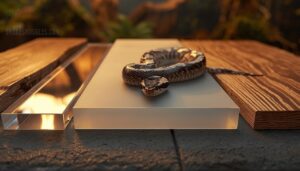
Once you’ve sorted out enclosure size, material choice shapes everything else — heat conductivity, moisture sealing, and long-term durability included.
- Glass offers crystal-clear visibility and scratch resistance, though it loses heat faster than other options.
- Acrylic is lighter and shatter-resistant but yellows under UV and scratches easily.
- Wood wins on insulation and customization flexibility, ideal for bioactive terrarium builds.
Escape-proof Lids, Locks, and Secure Latches
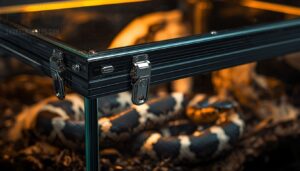
Kingsnakes are escape artists — full stop.
Cam-lock mechanisms and spring-loaded latches give you two independent failure points before a determined snake finds daylight. Edge gasket seals add friction along the entire perimeter, while reinforced corner bracing prevents torque from climbing attempts. Tamper-resistant pins stop accidental release during maintenance. Front-opening enclosures make access easier without compromising that all-important secure closure overhead.
Proper Enclosure Placement and Ventilation
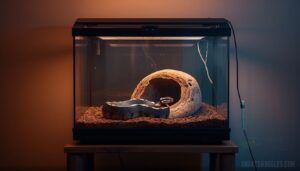
Once the lid locks down, placement decides whether your temperature gradient actually holds. Keep at least six inches of wall clearance on all sides for cross ventilation, and raise the enclosure slightly off the floor for airflow monitoring underneath.
Avoid heating vents and drafts — draft prevention matters more than most keepers expect. A mesh top facilitates ventilation in terrarium setups without trapping stale air around your kingsnake.
One Snake Per Enclosure for Safety
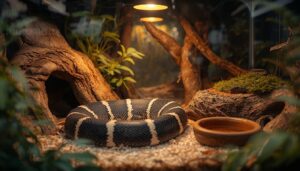
Never house two kingsnakes together — territorial aggression and ophiophagy (they eat other snakes) make cohabitation genuinely dangerous.
Kingsnakes eat other snakes — cohabitation isn’t a risk, it’s a guarantee
Separate enclosures also give you precise feeding control, cleaner parasite management, and real disease prevention by eliminating cross-contamination.
Stress reduction improves dramatically when each snake owns its own space.
Sound kingsnake enclosure design and size planning starts here, and it makes every handling your kingsnake interaction safer from day one.
Heating and Lighting for Kingsnakes
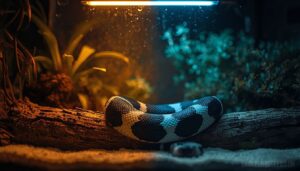
Getting the heat and light right is honestly where most keepers make or break their setup. Kingsnakes need a proper temperature gradient, UVB exposure, and a reliable day/night cycle to stay healthy long-term.
Here’s what you need to know about each piece of the puzzle.
Creating a Safe Temperature Gradient
Think of your enclosure like a spectrum — warm on one end, cool on the other. Place your heat source on the warm side only, positioning it so the basking zone reaches 88–92°F.
Thermostat calibration keeps output steady within ±2°F.
Add safety sensors for gradient monitoring, and verify stability daily at first.
Pair these sensors with a solid husbandry foundation—California kingsnake habitat and temperature guides can help you set the right baselines before your first daily check.
Good Kingsnake enclosure design and size make this easier to manage.
Warm Side and Cool Side Temperature Targets
Your warm side basking area should hit 86–90°F (30–32°C), while the cool side stays around 72–75°F (22–24°C). That spread gives you a proper temperature gradient — enough separation for the snake to thermoregulate accurately.
Probe positioning matters: place your thermostat probe directly on the warm surface, not mid-air.
Watch for seasonal drift compensation needs, and make setpoint adjustments when room temperatures shift.
Nighttime Temperature Drop Guidelines
Once the lights go out, your temperature gradient shouldn’t collapse — it should ease down gradually. A safe nighttime drop runs 5–10°F below daytime highs, supporting healthy digestion without stressing the snake.
- Use a thermostat with Night Light Timing to automate the Nighttime Ramp Rate
- Apply Insulation Strategies by positioning enclosures away from drafts and cold windows
- Practice Temperature Logging to confirm overnight minimums stay within range
UVB Lighting Benefits and Recommended Output
UVB lighting for kingsnakes isn’t optional — it directly drives Vitamin D3 Synthesis in the skin, which promotes Metabolic Bone Health. Without it, calcium metabolism breaks down.
For UVB benefits for snakes, use a 5.0 T5 HO bulb targeting UVI 2.0–3.0 via proper Lamp Distance Calibration: 9–12 inches through mesh.
UVB Gradient Design lets your snake self-regulate exposure naturally.
Photoperiod and Day/night Scheduling
Your kingsnake’s body clock runs on light. A consistent 12-hour on/12-hour off lighting schedule facilitates Circadian Rhythm Sync, regulating activity, digestion, and rest.
Use Light Timer Programming to automate this — no guesswork.
Apply Seasonal Light Adjustments across the year, shifting timing with local sunrise and sunset.
Photoperiod Monitoring Tools like digital timers confirm accuracy.
Avoid Night Interruption Strategies; unexpected light during darkness disrupts the cycle entirely.
Thermostat Use for Heat Mats and Fixtures
A timer keeps the lights honest — a thermostat keeps the heat safe. Without one, your heat mat runs unchecked.
Place the probe 4–6 inches above substrate, away from basking hotspots, for accurate Probe Placement.
Match wattage carefully for proper Power Matching.
Temperature Logging for two weeks after setup, and enable Safety Alarms.
Thermostat Calibration prevents dangerous swings.
Humidity, Substrate, and Décor
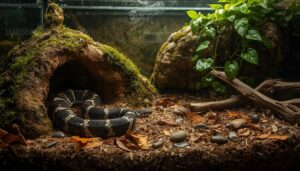
Getting the humidity, substrate, and décor right is what separates a snake that merely survives from one that genuinely thrives.
Each element — from the dirt under their belly to the hide they retreat into — plays a specific role in your kingsnake’s daily comfort and long-term health. Here’s what you need to set up each one correctly.
Ideal Humidity Levels and Monitoring Tools
Keeping humidity between 40–60% is non-negotiable for healthy sheds and clear respiratory function. A digital probe hygrometer placed at head height — not above the water bowl — gives you accurate microclimate sensor readings across both zones.
- Target average humidity of 40–60% consistently
- Use wireless humidity alerts for real-time phone notifications
- Set humidity alarm settings below 30% and above 70%
- Position hygrometer placement away from heat sources
- Link a mister control or humidistat for automated humidity management in terrariums
Best Substrate Options for Kingsnakes
Once humidity is dialed in, what’s beneath your snake matters just as much.
Coconut coir and aspen shavings are both solid substrate options for kingsnakes — coir manages substrate humidity retention well, while aspen stays dry and breathable. Cypress mulch splits the difference nicely. Paper bedding works for quick cleanup days.
Skip reptile carpet; kingsnakes need to burrow, and flat surfaces don’t cut it.
Substrate Depth for Burrowing and Comfort
Depth matters more than most keepers expect. Hatchlings need four to six inches; adults need six to eight. Here’s what proper substrate depth does:
- Creates vertical depth zones that support microhabitat layering for thermoregulation
- Allows burrow channel design that stabilizes substrate moisture balance
- Buffers temperature fluctuations through temperature buffering depth
Fluff the substrate regularly — compacted layers collapse burrows fast.
Hide Placement for Security and Shedding Support
Two hides are better than one — that’s the Dual Hide Strategy every keeper should follow. Place one warm humid hide on the basking side and an opposite side hide on the cool end, giving your kingsnake real choice.
Anchor both hides with Secure Anchor Points so they don’t shift. A draft-free hide lined with damp sphagnum moss transforms into a humid hideout that actively promotes shedding health.
Climbing Branches, Foliage, and Enrichment Items
Adding climbing branches, foliage, and enrichment items turns a bare enclosure into a living environment your king snake will actually use. Focus on these four essentials:
- Branch Diameter Selection — Choose 1–2 inch hardwood branches for stable perching.
- Foliage Height Layers — Arrange artificial or live plants at varied heights for shade and cover.
- Enrichment Texture Mix — Combine cork and branching, vine tangles, and rough bark for grip variety.
- Rotational Enrichment Schedule — Swap items every 2–4 weeks to maintain novelty.
Secure attachment methods keep everything stable. In bioactive setups, environmental enrichment like leaf litter and cork rounds out the habitat naturally.
Water Bowl Placement and Hydration Hygiene
Your kingsnake’s hydration depends on smart bowl placement and consistent hygiene. Use a stainless steel or ceramic bowl — Bowl Material Choice matters because non-porous surfaces resist bacteria. Position it near hides on the cool side, away from the basking spot.
| Factor | Best Practice |
|---|---|
| Placement Near Hides | Cool side, stable surface |
| Water Temperature Control | Room temperature only |
| Anti-Spill Design | Wide-base, shallow bowl |
| Cleaning Frequency | Daily wash, twice-daily refill |
Always provide fresh water bowl access.
Cleaning Routine and Mold Prevention
Mold doesn’t announce itself — it quietly takes over damp corners before you notice the smell. Spot clean daily, pulling waste and wet substrate immediately.
Deep clean every 3–4 months, scrubbing hides with a residue-free disinfectant and letting everything fully dry before reassembly.
Good airflow drying techniques and humidity control between 40–60% are your best defense against early mold growth.
Top 5 King Snake Enclosure Products
Now that you know what a kingsnake needs, the next step is finding gear that actually delivers. These five products cover the essentials — enclosure, heat, light, substrate, and shelter — without overcomplicating your setup.
Pay special attention to your thermostat and thermometer picks, since nailing that 32–34°C basking zone and 22–24°C cool side is the difference between a thriving snake and constant health issues — our kingsnake natural habitat and care guide breaks down exactly why that gradient matters.
Here’s what’s worth your money.
1. Repti Zoo Glass Terrarium
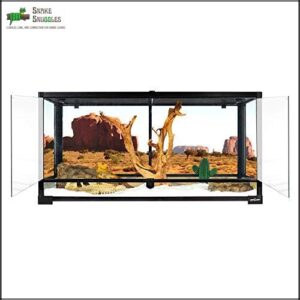
The Repti Zoo Glass Terrarium (model RK0119) is a solid pick for kingsnakes at any life stage. Its 36" × 18" × 18" footprint meets minimum space requirements, and the mesh side panels let UVB and infrared light pass through cleanly.
Front-opening double doors make feeding straightforward without disturbing the whole setup.
The waterproof base holds substrate heaters, and the lockable lid prevents escapes — something kingsnakes will absolutely attempt.
At $184.97, it’s a practical, durable option that checks most setup boxes.
| Best For | Reptile keepers who want a versatile, mid-sized enclosure that works for everything from kingsnakes and ball pythons to bearded dragons and tortoises. |
|---|---|
| Primary Use | Reptile Enclosure |
| Species Compatibility | Snakes, lizards, tortoises |
| Material | Tempered glass & mesh |
| Ease of Cleaning | Removable panels |
| Eco / Safety | Waterproof base |
| Price Range | $184.97 |
| Additional Features |
|
- The 36" × 18" × 18" size gives most juvenile and adult reptiles plenty of room to move, and the mesh sides let UVB and infrared light do their job properly.
- Front-opening double doors make feeding and spot-cleaning easy without turning the whole tank into a project.
- The waterproof base handles both desert and rainforest setups, so you’re not locked into one type of habitat.
- The mesh side panels make holding high humidity a real challenge — moisture escapes fast, which is rough for tropical species.
- Some buyers have reported cracked glass on arrival and missing hardware like the channel lock, so inspect everything right when it shows up.
- Assembly instructions are English-only, and a few gaps in the build may need tape or sealant to keep escape-artist animals from finding a way out.
2. iPower Reptile Heat Mat Thermostat
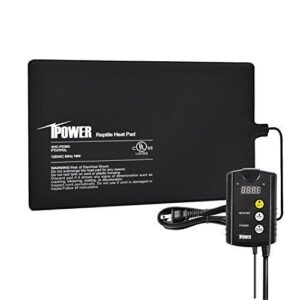
Heat without control is just a hazard.
The iPower Reptile Heat Mat pairs a PTC heating film with a digital thermostat that lets you dial in temperatures between 40°F and 108°F — precise enough to hold your warm side at 85–90°F without guessing.
The probe slides under the substrate for accurate readings, and the LED display makes monitoring easy.
For kingsnakes, the L-size (8"×12", 16W) covers the warm zone cleanly.
One-year warranty included.
| Best For | Reptile keepers, plant growers, and hobbyists who need reliable, precise low-wattage heating for small enclosures or grow setups. |
|---|---|
| Primary Use | Substrate Heating |
| Species Compatibility | Reptiles, amphibians |
| Material | PTC heating film |
| Ease of Cleaning | Wipe-down surface |
| Eco / Safety | Grounded 3-prong plug |
| Price Range | Varies by size |
| Additional Features |
|
- Digital thermostat gives you real control — set it, check the LED, and know your temps are dialed in between 40°F and 108°F.
- PTC heating film is energy-efficient, so you’re not running up your electric bill just to keep a snake warm.
- 3M adhesive backing sticks right to glass or acrylic — no extra hardware, no fuss.
- Temperature can swing ± 4°F, so probe placement really matters — sloppy positioning means unreliable readings.
- The adhesive loses grip after repositioning, and some users report it doesn’t hold well long-term.
- Smaller sizes (S and M) heat up slowly, and even the L-size may not cut it for larger enclosures or species needing consistently high temps.
3. MyComfyPets UVA UVB Light Bulb
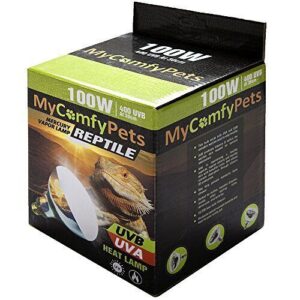
Once heat is sorted, lighting comes next. The MyComfyPets UVA UVB Light Bulb covers both in a single 100W mercury-vapor unit — no separate ballast needed.
It emits UVA to support natural activity and UVB to help your kingsnake synthesize vitamin D3, which means better calcium absorption and healthier bones.
Placement matters: UVB intensity drops with distance, so position it to hit the warm side consistently. Replace it every 6–12 months, since UV output fades before the bulb visibly dims.
| Best For | Reptile and bird owners who want an all-in-one heat and UV solution without dealing with a separate ballast setup. |
|---|---|
| Primary Use | UVA/UVB Lighting |
| Species Compatibility | Reptiles, turtles, birds |
| Material | Mercury-vapor bulb |
| Ease of Cleaning | N/A (replace bulb) |
| Eco / Safety | UVC blocked |
| Price Range | Mid-range |
| Additional Features |
|
- Combines heat, UVA, and UVB in one bulb — less clutter, fewer fixtures to manage.
- Supports vitamin D3 synthesis, which helps prevent metabolic bone disease in reptiles and birds.
- Long rated lifespan of around 10,000 hours and a self-ballasted design makes it easy to use straight out of the box.
- Some users report weaker-than-expected UV output, which can be a real problem for species with higher UVB needs.
- A few bulbs failed within a month — well short of the advertised lifespan.
- Not always the best fit for bearded dragons or similar species that do better with a dedicated strip-style UVB fixture.
4. ReptiChip Coconut Terrarium Substrate
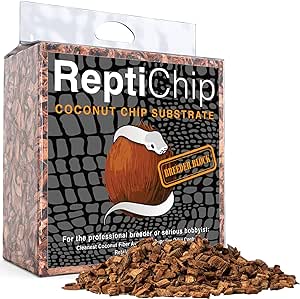
Good substrate does more than fill the bottom of an enclosure — it shapes humidity, facilitates burrowing, and keeps odors manageable.
ReptiChip’s compressed coconut husk brick expands to roughly three or four times its original size once hydrated, giving you a soft, chip-textured bedding that retains moisture for days.
It’s dust-free, 100% organic, and manages spot-cleaning well.
For kingsnakes needing 40–60% ambient humidity, ReptiChip hits that range without constant misting.
One brick covers most standard setups.
| Best For | Reptile and amphibian keepers who want a low-maintenance, humidity-stable substrate for species like ball pythons, bearded dragons, or turtles. |
|---|---|
| Primary Use | Reptile Substrate |
| Species Compatibility | Reptiles, amphibians |
| Material | Coconut husk chips |
| Ease of Cleaning | Spot-clean every 3–7 days |
| Eco / Safety | 100% organic, sustainably sourced |
| Price Range | Mid-range |
| Additional Features |
|
- Holds moisture for days, so you’re not constantly misting to keep humidity where it needs to be.
- Naturally absorbs odors, which makes a real difference if you’re running multiple tanks.
- Expands 3–4× from one compact brick, so it’s easy to store and covers most standard setups.
- Costs more upfront than basic coconut or aspen substrates.
- The chunky texture isn’t ideal for species that like to burrow deep.
- Freshly opened bags can kick up some dust, so crack it open somewhere ventilated.
5. Zilla Reptile Rock Hideout
Substrate covers the floor — but your kingsnake also needs a solid place to hide and decompress. The Zilla Reptile Rock Hideout does that job well.
Its non-porous plastic exterior resists bacteria and wipes clean with warm, soapy water in minutes.
The realistic stone texture blends into most setups, and the low-profile design (roughly 9 × 6.5 × 3.5 inches) fits standard terrariums without crowding.
Place it on the warm side for a combined basking-and-hide spot — your snake will use it constantly.
| Best For | Reptile owners who want a simple, easy-to-clean hide that doubles as a basking spot for small-to-medium-sized snakes, lizards, or turtles. |
|---|---|
| Primary Use | Hide & Basking Decor |
| Species Compatibility | Reptiles, amphibians, fish |
| Material | Rigid plastic |
| Ease of Cleaning | Warm soapy water |
| Eco / Safety | Non-porous, no sharp edges |
| Price Range | Budget-friendly |
| Additional Features |
|
- Non-porous plastic won’t soak up bacteria, so a quick scrub with warm soapy water keeps it fresh.
- The realistic rock look blends naturally into most terrarium setups without looking out of place.
- Works in both dry and aquatic enclosures since the material doesn’t absorb water.
- The interior is on the smaller side, so larger or fast-growing reptiles will outgrow it quickly.
- It can float in water tanks until it’s fully submerged or weighed down.
- Some users have noticed a chemical smell out of the box — give it a good wash before putting it in the enclosure.
Frequently Asked Questions (FAQs)
What kingsnake subspecies are best for beginners?
Not all kingsnakes are created equal for beginners.
The California, Desert, Mexican Black, Florida, and Sonoran kingsnakes stand out — calm, hardy, and forgiving of the small mistakes every new keeper makes.
How often should I replace substrate materials?
Replace substrate every 1–3 months in a bioactive setup, or sooner if you spot mold or persistent odors. After illness or introducing a new snake, swap it out immediately.
Can multiple kingsnakes live together safely?
No. Kingsnakes are ophiophagous — they eat other snakes — so housing them together is genuinely dangerous.
Keep each one in its own enclosure to prevent cannibalism, feeding competition, and stress-related health problems.
What size mice for different aged kingsnakes?
Start hatchlings on pinky mice, move to fuzzies, then hoppers as they grow.
Match prey width to the snake’s thickest body point.
Adults usually take small to jumbo adult mice depending on girth.
How long after purchase before handling snake?
Think of it like moving to a new city — you need a few days to settle in. Wait 24 to 72 hours before handling your new kingsnake, letting it adjust first.
How long can king snakes live in captivity?
With good care, king snakes generally live 15 to 20 years in captivity — and some individuals have reached 30 years or more. Consistent temperatures, proper feeding, and low stress make the biggest difference.
What should I feed my king snake?
Feed your king snake frozen-thawed mice or rats sized to roughly 10% of its body weight. Hatchlings start on pinky mice; adults handle larger prey. Thaw completely before offering.
How often should I handle my snake?
Handle your kingsnake 1–2 times per week, keeping sessions to 10–20 minutes. Always wait 48 hours after feeding, and skip handling entirely during shedding — your snake will thank you for it.
It’s also wise to hold off after illness or a recent move, since even routine tools like snake hooks can add stress if timing’s off — see how snake hooks can stress out snakes for tips on gentler handling.
When and how do king snakes breed?
Kingsnakes breed in spring after brumation. Males follow female pheromone trails, court briefly, then copulate. Females lay 2–20 leathery eggs, which hatch in 60–75 days at 82–90°F without parental care.
Do king snakes need a quarantine period?
Yes — quarantine is non-negotiable.
Isolate every new king snake for 60 to 90 days in a separate room with dedicated gear, monitoring feeding, weight, and fecal health before introducing it to your collection.
Conclusion
Picture a king snake moving through its enclosure without hesitation—hitting every hide, soaking in the warm end, shedding in one clean pull. That’s not luck.
That’s a setup built on precise temperatures, correct humidity, and enough space to actually live.
Every detail in this king snake care sheet enclosure guide exists to make that image real.
Get the environment right, and the snake takes care of the rest.