This site is supported by our readers. We may earn a commission, at no cost to you, if you purchase through links.
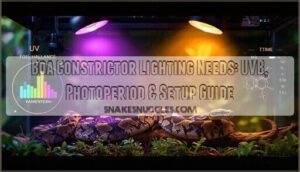
Your boa constrictor’s lighting setup does more than light the enclosure—it orchestrates metabolic processes you can’t see. Studies tracking calcium absorption in captive boas reveal a 14-22% difference between specimens exposed to appropriate UVB wavelengths and those kept under basic heat lamps alone. That gap translates to measurable changes in bone density, immune function, and reproductive success.
Yet lighting remains one of the most misunderstood aspects of boa husbandry, with conflicting advice about photoperiods, UVB necessity, and equipment choices. Understanding boa constrictor lighting needs requires separating outdated practices from evidence-based protocols that support long-term health.
Table Of Contents
Key Takeaways
- Boa constrictors require consistent 12–14 hour photoperiods to maintain circadian rhythms, with gradual seasonal adjustments preventing metabolic stress and supporting reproductive health.
- UVB lighting, while optional for survival, produces measurable improvements including 14–22% higher calcium absorption, stronger immune function, and enhanced vitamin D3 synthesis compared to heat-only setups.
- T5 HO linear fixtures positioned 12–18 inches above basking areas deliver optimal Ferguson Zone 2 conditions, but bulbs require replacement every 6–12 months regardless of visible brightness to maintain therapeutic UVB output.
- Disrupted photoperiods exceeding two hours of variation for more than two weeks trigger elevated cortisol levels, weakened immunity, and behavioral changes including appetite loss and irregular activity patterns.
Photoperiod Requirements for Boa Constrictors
Getting the photoperiod right for your boa constrictor isn’t complicated, but it does require some attention to detail. Think of it as mimicking the natural rhythm of day and night that these snakes would experience in their native habitats.
Let’s walk through the essential timing requirements, seasonal shifts, and what happens when things go off track.
Recommended Day and Night Cycles
Your boa constrictor thrives on predictable light cycles that mirror its natural circadian rhythms. Provide 12–14 hours of daylight during active seasons, paired with 10–12 hours of darkness to support healthy snake behavior. This consistent photoperiod regulates feeding, activity, and rest patterns.
While UVB lighting enhances metabolic function when positioned over the basking area, the day-night rhythm itself remains fundamental to your snake’s long-term wellbeing. Understanding research guidelines is essential for creating an ideal environment.
Seasonal Adjustments to Lighting Duration
Gradual seasonal shifts in photoperiod help your boa mirror natural cycles. During spring and summer simulations, extend daylight hours from a baseline 12:12 to 13–14 hours over 6–8 weeks. In autumn, reduce to 11–12 hours.
These stepped photoperiod changes support reproductive cues and activity patterns without triggering stress. Abrupt lighting cycles disrupt metabolism, so shift slowly to align with your snake’s physiological rhythms.
Understanding AP study resources can help you create a more structured approach to caring for your boa.
Impact of Disrupted Photoperiods on Health
When your boa’s circadian rhythm is disrupted, the health consequences accumulate quickly. Deviations exceeding two hours for more than two weeks trigger measurable stress responses—elevated cortisol, weakened immune markers, and altered hormone regulation.
Disrupting your boa’s circadian rhythm for over two weeks triggers elevated cortisol, weakened immunity, and hormonal imbalance
You’ll notice behavioral changes: reduced appetite, inconsistent activity patterns, even delayed breeding cues.
Irregular photoperiods undermine both metabolic stability and UVB benefits, compromising your snake’s long-term health and wellness.
Do Boa Constrictors Need UVB Lighting?
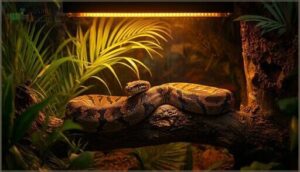
You’ve probably heard conflicting advice about whether your boa needs UVB lighting. The truth is, while boas can survive without it, UVB offers real health benefits that can improve your snake’s quality of life.
Let’s look at what the research tells us about UVB requirements, how boas are categorized regarding light needs, and whether you should consider adding it to your setup.
Ferguson Zone 2 Classification Explained
Ferguson Zone 2 categorizes your boa as a partial-sun species, meaning it requires moderate UVB exposure—usually a 12–14 hour photoperiod—to support healthy circadian rhythms. This classification aligns with tropical species that thrive on lighting consistency and stable ambient temperatures.
By creating a gradient with proper UVB bulbs and reptile lighting, you’ll mimic natural conditions essential for boa constrictor care without causing stress.
Benefits of UVB Exposure for Boas
Providing proper UVB lighting delivers measurable health improvements that strengthen your boa constrictor’s foundation for long-term wellness. When you integrate appropriate UVB bulbs into your reptile health routine, you’re supporting multiple interconnected systems:
- Vitamin D3 and Calcium Metabolism – UVB exposure facilitates natural synthesis, increasing plasma 25-hydroxyvitamin D3 levels substantially and improving intestinal calcium absorption for stronger bone density.
- Immune Function – Adequate UVB strengthens disease resistance, reducing respiratory infections and chronic conditions.
- Circadian Rhythms – UVB regulates melatonin cycles, promoting natural activity patterns, feeding responses, and alertness in your boa constrictor.
Is UVB Essential or Optional?
Should you consider UVB lighting mandatory for your boa constrictor? The answer remains contextual—while captive boas survive without it, UVB benefits vitamin D synthesis, calcium levels, and immune function. Studies show 14–22% higher calcium absorption markers in specimens with UVB exposure.
Most veterinary guidelines classify UVB lighting as optional yet beneficial, particularly supporting health impacts in growing neonates and optimizing long-term wellness through proper lighting cycles.
Choosing The Right Lighting Equipment
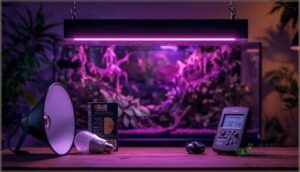
Once you’ve decided to provide UVB for your boa constrictor, selecting the right equipment becomes your next step. The bulb type and fixture you choose will directly affect the quality of UVB your snake receives.
Let’s look at what works best for achieving that Ferguson Zone 2 environment your boa needs.
Selecting Suitable UVB Bulbs and Fixtures
When you’re selecting a UVB bulb for your boa, you’ll want T5 HO linear fixtures—they deliver consistent reptile lighting across larger enclosures without creating risky hotspots. Compact fluorescent options work too, though their UVB intensity drops faster.
Check bulb durability ratings; most maintain functional output for 6–12 months. Always verify your fixture options include proper safety margins and energy efficiency to protect your snake’s long-term health.
Proper Placement and Distance of Lights
You’ll need to mount your UVB bulb 12–18 inches above the basking area to meet reptile lighting requirements without overheating your boa. Vertical mounting at this height creates a proper thermogradient—warm basking spot, cooler retreats.
Lighting angles should cover mid-enclosure zones while avoiding eye glare. Adjust distance every 3–6 months as your snake grows, ensuring consistent UVB exposure across basking heights.
Setting Up and Maintaining Lighting Systems
Once you’ve chosen your lighting equipment, the real work begins with proper setup and ongoing maintenance. Even the best UVB bulb won’t benefit your boa if it’s not positioned correctly or replaced on schedule.
Let’s walk through the essential steps to keep your lighting system working effectively throughout your snake’s life.
Replacing UVB Bulbs and Maintenance Schedules
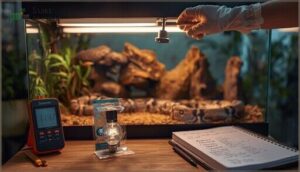
Even a UVB bulb that looks bright may stop producing the ultraviolet wavelengths your boa needs. You’ll want to establish clear maintenance schedules to protect your snake’s health:
- Replace compact fluorescent UVB bulbs every 12 months
- Change linear tube fixtures every 6–12 months based on manufacturer specs
- Check fixture efficiency monthly with visual inspection
- Test UVB output quarterly using a Solarmeter
- Document replacement dates to track lighting cycles and bulb replacement intervals
Using Smart Power Strips for Lighting Control
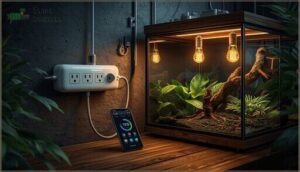
Manual switches can fail, leaving your boa in darkness for days or overexposing it to harmful UVB lighting. Smart lighting with automated timers eliminates that risk—devices like the Kasa Smart Power Strip offer remote control, surge protection, and energy monitoring to keep your terrarium lighting consistent.
You’ll maintain precise photoperiods, catch bulb failures early, and safeguard your reptile lighting system against electrical surges that damage expensive UVB fixtures.
Preventing Overexposure and Nighttime Lighting
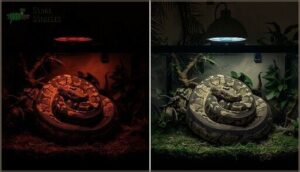
Timers protect against overexposure, but lighting safety extends beyond automation. Your boa’s nocturnal habits demand complete darkness at night—red-spectrum bulbs or ceramic heaters maintain nighttime temperatures without disrupting sleep cycles. Watch for overexposure risks like reduced basking or excessive hiding, which signal improper UVB intensity.
Follow these basking guidelines to fine-tune your reptile lighting system:
- Position UVB bulbs 20–30 cm above basking spots
- Replace UVB lighting every 6–12 months regardless of visible output
- Eliminate all visible light during dark phases
- Monitor behavior changes indicating lighting stress
Lighting’s Role in Boa Constrictor Health
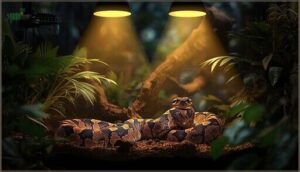
Lighting isn’t just about visibility—it directly shapes your boa’s daily rhythms and long-term health. When you get the photoperiod right, you’ll see changes in how your snake feeds, behaves, and even breeds.
Let’s look at the specific ways lighting influences these essential aspects of boa constrictor care.
Effects on Behavior, Feeding, and Breeding
Lighting shapes behavioral patterns in profound ways—stable photoperiods promote natural feeding cycles and reduce stress, while inconsistent schedules can trigger erratic appetite or defensive posturing.
When you’re planning breeding success, seasonal adjustments to daylight duration often influence reproductive readiness in your boa constrictor.
UVB lighting meets reptile lighting needs through improved calcium metabolism, contributing to overall snake health and wellness when paired with proper environmental enrichment and boa constrictor care protocols.
When to Consult a Veterinarian
Persistent lethargy, appetite loss, or abnormal shedding patterns signal when you should consult a veterinarian for medical guidance on snake behavior. Emergency signs such as respiratory distress or skeletal abnormalities warrant immediate veterinary care.
Regular health checks integrate lighting assessment with broader boa constrictor care protocols, ensuring reptile care aligns with herpetology standards and promotes animal health and wellness through proactive snake health and wellness monitoring.
Frequently Asked Questions (FAQs)
Can LED lights replace UVB for boas?
LED lights maintain photoperiod cycles and aid thermoregulation, but they don’t emit UVB.
You’ll need UVB supplements or dietary vitamin D3 if you skip UVB bulbs—LED alone won’t support calcium metabolism adequately.
Do baby boas need different lighting schedules?
One keeper noticed her hatchling boas became more active after extending daylight to 12–14 hours.
Baby Boa Care differs slightly: juvenile health improves when neonate environments provide longer photoperiods during early snake development, supporting consistent feeding and growth in young Boa Constrictors.
How bright should daytime lighting be overall?
Your boa’s terrarium lighting should deliver 500–1000 lux across the habitat, with basking zones reaching 1000–1500 lux directly under UVB bulbs, then tapering to 300–500 lux at cooler ends.
Will窗户 sunlight harm my boas eyes?
Window-filtered sunlight rarely harms your boa’s eyes—most glass blocks UVB—but intense, direct glare can stress your snake.
Provide shaded retreats and monitor for squinting or hiding to guarantee eye protection and comfort.
Should lighting mimic natural equatorial day length?
You don’t need to replicate strict equatorial day length fluctuations. A stable 12:12 or 13:11 photoperiod maintains healthy circadian rhythms, appetite, and basking patterns without the stress that sudden seasonal lighting shifts can trigger.
Conclusion
Picture your boa basking beneath carefully calibrated light—UVB wavelengths penetrating scale and skin, triggering vitamin D3 synthesis that strengthens bone and fortifies immune response. This isn’t optional enrichment.
Properly addressing boa constrictor lighting needs creates the physiological foundation for decades of health. Your equipment choices, photoperiod consistency, and maintenance discipline directly determine whether your specimen merely survives or genuinely thrives.
The evidence doesn’t lie—your lighting protocol matters more than you’ve been told.