This site is supported by our readers. We may earn a commission, at no cost to you, if you purchase through links.
Your snake’s enclosure isn’t just a box—it’s the difference between a thriving reptile and one that barely survives. Glass tanks fog up and lose heat, while cheap plastic warps under the constant warmth your cold-blooded pet needs to digest food properly. PVC holds temperature like a dream but costs more upfront, and wood looks natural until moisture turns it into a breeding ground for bacteria.
Each material brings real trade-offs that affect your snake’s health, your cleaning routine, and how much you’ll spend on heating bills. The right choice depends on your specific species, your climate, and whether you’re keeping a ball python or a corn snake that needs completely different humidity levels.
Table Of Contents
Key Takeaways
- Glass tanks offer unmatched visibility for monitoring your snake’s health but lose heat quickly and require extra effort to maintain proper temperatures, while PVC enclosures excel at heat retention and reduce energy costs despite higher upfront prices.
- Your enclosure size must scale with your snake’s growth—when your pet’s length exceeds two-thirds of the tank’s diagonal measurement, it’s time to upgrade to prevent stress and restricted movement.
- Security features like compression seals, two-point latches, and escape-proof lids aren’t optional extras—they’re essential safeguards that prevent even determined snakes from finding their way out of the enclosure.
- Daily waste removal combined with weekly deep cleaning and monthly substrate replacement prevents mold growth and bacterial issues, especially in waterproof PVC or sealed glass designs that protect against moisture damage.
Glass Vs. Plastic Vs. PVC Snake Enclosures
Choosing the right enclosure material affects everything from temperature control to how often you’ll need to clean. Each material—glass, acrylic, PVC, and wood—brings different strengths to your setup, whether you prioritize visibility, insulation, or customization options.
Here’s how the most common materials stack up for snake keeping.
Tempered Glass Tanks: Visibility and Durability
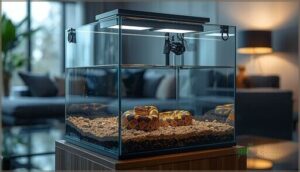
Glass terrariums bring your snake into focus like nothing else. Tempered glass provides crystal-clear snake viewing and outstanding tank visibility, letting you monitor behavior and health effortlessly.
Here’s how glass strength stacks up in reptile tanks:
| Feature | Performance |
|---|---|
| Optical clarity | High visibility for snake enclosures |
| Impact resistance | Lower than polycarbonate; shattering risk |
| Weight | Heavy, stable base |
| Cleaning ease | Straightforward scrubbing |
Secure latches complete the enclosure safety equation, though durability tests reveal vulnerability to strong impacts. You’ll appreciate the viewing experience, even with the extra weight during setup.
The importance of methodological rigor is essential for scientific study summaries, as seen in post retrieval auditing techniques.
Acrylic Enclosures: Lightweight and Insulation Benefits

When portability matters, acrylic panels deliver. These lightweight designs cut transport weight dramatically while providing excellent thermal benefits through enhanced insulation types. You’ll maintain stable temperatures more easily than with tempered glass, though material durability requires gentler handling to avoid scratches.
| Feature | Performance |
|---|---|
| Weight | 50% lighter than glass |
| Insulation | Enhanced heat retention |
| Scratch resistance | Requires careful cleaning |
| Light transmission | High clarity for viewing |
PVC Enclosures: Heat Retention and Customization
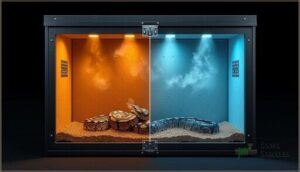
If heat retention tops your priority list, PVC materials excel at thermal management. These reptile enclosures lock warmth inside more effectively than glass or acrylic, letting you create reliable heat gradients without constant monitoring. Custom designs with escape-proof lids offer individualized ventilation placement, and the insulation benefits mean your heating system works less to maintain ideal temperatures for your snake.
| Feature | Advantage |
|---|---|
| Heat retention | Highest thermal efficiency |
| Customization | Individualized ventilation and access |
| Insulation | Reduced energy costs |
| Durability | Resists cracking and warping |
Wood-Based Enclosures: Natural Aesthetics and Stability
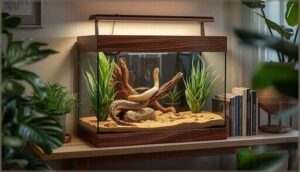
Solid cores with water-repellent coatings bring natural textures into your reptile enclosure design without compromising stability. Wood grain and wooden accents create authentic snake habitat creation that mimics your pet’s natural environment, while aesthetic designs blend seamlessly into home décor. These animal enclosures combine visual appeal with structural integrity.
| Feature | Benefit | Consideration |
|---|---|---|
| Natural textures | Aesthetic appeal | Requires sealing |
| Solid cores | Enhanced stability | Heavier weight |
| Wood enclosures | Blends with décor | Moisture monitoring |
Top 4 Snake Enclosures for Pet Owners
Now that you understand the differences between materials, let’s look at four enclosures that consistently earn high marks from snake owners.
Each option brings something different to the table, whether you’re setting up your first habitat or upgrading to accommodate a growing snake. These picks balance quality construction with practical features that make daily care easier.
1. Phailozoo Reptile Tank Enclosure
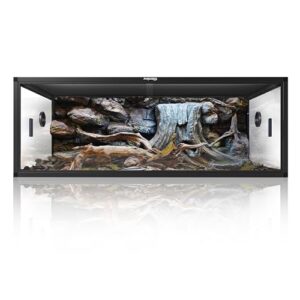
When you’re building a snake habitat creation plan around front-opening convenience, the Phailozoo Reptile Tank Enclosure delivers on glass terrariums’ core promise. This reptile terrarium measures roughly 36 by 18 by 18 inches, offering your colubrid or small python room to explore while maintaining enclosure security through reinforced frames.
Tank assembly takes minimal effort, and the 3/16-inch tempered glass promotes reptile health by retaining humidity effectively. You’ll appreciate how this reptile enclosure design balances visibility with snake behavior needs, creating functional habitat design that simplifies daily monitoring without compromising structural integrity.
| Best For | Snake keepers who want a mid-sized glass terrarium with front-opening doors for easy access and cleaning, especially those housing colubrids or small to medium pythons. |
|---|---|
| Material | Tempered glass, aluminum, acrylic, PVC |
| Dimensions | 48.03 x 24.02 x 18.03 inches |
| Capacity | 85 gallon |
| Door Type | Front opening doors |
| Ventilation | Top screen |
| Color | Ultimate black |
| Additional Features |
|
- Front-opening doors make daily maintenance and handling much easier than top-entry tanks
- Tempered glass construction holds humidity well and lasts 5–10 years with proper care
- Reinforced aluminum frame resists corrosion in humid setups and supports a variety of heating equipment
- Glass retains condensation more than other materials, which can require extra ventilation management
- Smaller 36x18x18 inch footprint may not work for larger or more active snake species
- Replacement seals and gaskets needed over time to prevent humidity loss around doors
2. Reptile Terrarium With Storage Cabinet
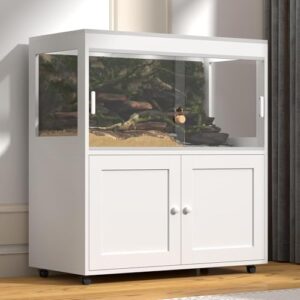
If you’re working with limited floor space, the Annzoe Reptile Terrarium With Storage Cabinet offers a smart compromise. This snake enclosure measures 37.8 by 18.9 by 41.2 inches and features a cabinet design that tucks your feeding supplies and thermometers out of sight.
The acrylic construction keeps weight manageable at 49.9 pounds, while the metal mesh top accommodates terrarium lighting without sacrificing ventilation.
You’ll find the sliding glass doors convenient for daily access, though you should verify enclosure security with additional latches for escape-prone species.
| Best For | Reptile owners with limited floor space who need integrated storage for supplies and accessories alongside a functional enclosure for small to medium snakes or lizards. |
|---|---|
| Material | Engineered wood, acrylic |
| Dimensions | 37.8 x 18.9 x 41.2 inches |
| Capacity | N/A |
| Door Type | Sliding glass doors |
| Ventilation | Metal mesh top |
| Color | White |
| Additional Features |
|
- Built-in storage cabinet keeps feeding supplies, thermometers, and accessories organized and out of sight
- Lightweight acrylic construction at 49.9 pounds makes relocation easier than glass alternatives
- Metal mesh top provides excellent ventilation while accommodating heat lamps and other terrarium lighting
- Sliding doors may require additional latches to prevent escapes with determined or strong snakes
- No substrate lip means bedding material can spill out when opening the doors
- Some users report concerns about material sturdiness and long-term durability
3. Repti Zoo Large Terrarium Habitat
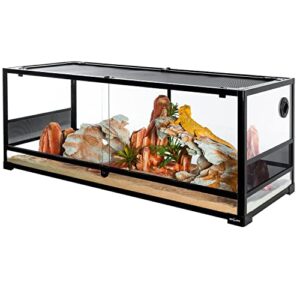
The Repti Zoo Large Terrarium Habitat spans 48 by 18 by 18 inches, giving mid-sized snakes room for essential enrichment without overwhelming your living space.
This reptile terrarium features tempered glass panels that resist impact while you monitor your pet’s behavior, and the front sliding doors simplify habitat maintenance during feeding or cleaning.
Side ventilation balances humidity control with airflow, though you’ll want to check the tracks occasionally for substrate buildup.
At $262.99, this snake enclosure delivers solid reptile health support for species requiring spacious tank upgrades.
| Best For | Snake owners needing a spacious, mid-sized enclosure with easy access doors and solid ventilation for bearded dragons, corn snakes, or ball pythons. |
|---|---|
| Material | Tempered glass |
| Dimensions | 48 x 18 x 18 inches |
| Capacity | N/A |
| Door Type | Front sliding door |
| Ventilation | Side ventilation |
| Color | Black |
| Additional Features |
|
- Tempered glass construction resists impacts and holds up under daily use while giving you clear visibility of your pet’s activity
- Front sliding doors make feeding and cleaning straightforward without wrestling with a top-opening lid
- Built-in side ventilation keeps airflow steady and helps you manage humidity levels for tropical or desert species
- At $262.99, the price sits higher than basic glass tanks with similar dimensions
- Door tracks can collect substrate and debris over time, so you’ll need to clean them out every few weeks
- Assembly instructions for the glass panels can feel unclear, and some users recommend having a second person help with setup
4. Reptile Growth Snake Enclosure Tank
The Reptile Growth Snake Enclosure Tank measures 16 by 10 by 8 inches in clear polycarbonate, perfect for hatchlings or small species like juvenile corn snakes. This snake enclosure features magnetic closures and cross ventilation that promotes reptile health through balanced airflow, though some keepers reinforce the magnets for added pet safety.
The stackable design simplifies snake care and housing when you’re managing multiple animals, and the one-piece construction eliminates assembly hassles. At 2 kilograms, it’s lighter than comparable PVC enclosures, making tank maintenance and habitat checks straightforward for monitoring snake behavior during feeding or shedding cycles.
| Best For | Beginner reptile keepers and hobbyists raising small snakes, lizards, or invertebrates who need a lightweight, stackable setup for hatchlings or juveniles. |
|---|---|
| Material | Plastic (PC) |
| Dimensions | 16 x 10 x 8 inches |
| Capacity | N/A |
| Door Type | Sliding top |
| Ventilation | Cross ventilation |
| Color | Transparent |
| Additional Features |
|
- One-piece design with magnetic closure means no assembly hassle and quick access for feeding or cleaning
- Stackable format saves shelf space when you’re housing multiple animals or managing a small breeding project
- Lightweight polycarbonate construction makes it easier to move and handle than glass tanks of similar size
- Magnets may not hold securely enough for stronger or escape-prone reptiles, requiring reinforcement
- Scratch-prone material and reduced viewing clarity can make it harder to observe your pet’s behavior clearly
- Ventilation holes are reportedly prone to stress cracks over time, potentially compromising durability
Essential Features for Snake Enclosure Success
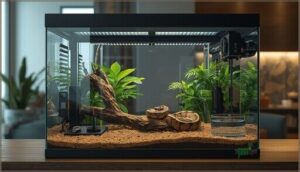
Choosing the right enclosure isn’t just about picking a tank—it’s about creating a safe, functional environment where your snake can thrive. The features you prioritize will directly impact everything from escape prevention to maintaining proper temperatures and humidity.
Let’s break down the essential elements every quality snake enclosure should have.
Secure Locking Mechanisms to Prevent Escapes
Think of a snake enclosure’s locking system as the last line of defense between your pet and the living room. Secure doors with tamper resistance keep even determined escape artists contained, while safety features like magnetic hasps and slide bolt latches deliver peace of mind.
A secure locking system is your snake’s final barrier against escape, ensuring peace of mind and protection for your pet
For complete snake safety and escape prevention, look for these essentials:
- Compression seals that eliminate gaps around door frames
- Two-point secure latches distributing force evenly across panels
- Stainless steel hardware resisting corrosion in humid environments
- Escapeproof lids with recessed components preventing snag hazards
Monthly integrity checks verify your enclosure size matches your snake’s strength as it grows.
Ventilation Systems for Humidity Control
Balanced airflow management is crucial for maintaining the health and well-being of both tropical and desert snake species. It ensures that tropical snakes do not live in overly damp conditions, while desert species are protected from dehydration. Fan-assisted ventilation designs, equipped with adjustable exhaust vents, play a vital role in regulating proper ventilation and humidity levels, typically maintained between 50–70%. These systems are further enhanced by humidity sensors and escape-proof lids, which include washable intake screens to ensure consistent air quality.
| Ventilation Feature | Humidity Control Benefit |
|---|---|
| Positive pressure fans | Uniform moisture regulation without wall condensation |
| Adjustable exhaust vents | Removes excess humid air while maintaining temperature gradients |
| Washable intake screens | Prevents dust while supporting consistent temperature control |
Heating Options: Under-Tank Vs. Ceramic Emitters
Once you’ve dialed in ventilation, the right heat source becomes your next priority. Undertank heat pads deliver localized warmth through the substrate, creating a stable heat gradient for ground-dwelling species. Ceramic infrared heat emitters work differently—they radiate ambient temperature throughout the enclosure without light.
Both require thermostat control to prevent overheating, but your choice depends on whether your snake basks on surfaces or needs consistent air warmth.
UVB Lighting Requirements by Species
Your heat setup sets the stage, but lighting completes the picture. Species variability determines whether your snake benefits from UVB light—diurnal colubrids like corn snakes thrive with moderate UVB intensity and 10-hour photoperiod cycles, while nocturnal pythons need minimal exposure.
Consider these factors:
- Reptile spectrums matched to your species’ natural habitat
- Proper distance between bulb and basking zone
- T5 or mercury vapor lighting technologies for consistent output
- Regular bulb replacement every 6-12 months
Pairing UVB with temperature gradients promotes reptile health and wellness across your snake enclosure.
Size Guidelines Based on Snake Length
Lighting fuels health, but space determines comfort. A juvenile constrictor at 12 inches needs an 18-inch enclosure minimum, while subadults measuring 2–3 feet require 24–36 inches. Once your snake reaches 3–4 feet, upgrade to 36–48 inches; adults over 4 feet demand 48–72 inches.
Match enclosure size to growth stages and species needs. Vertical space equal to length accommodates climbing behaviors in arboreal reptile enclosures.
Maintaining and Upgrading Your Snake Habitat
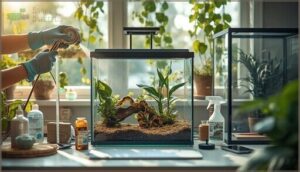
Keeping your snake’s enclosure in top condition isn’t a one-time setup—it’s an ongoing commitment that evolves as your pet grows. Regular maintenance keeps your snake healthy, while strategic upgrades guarantee their habitat continues to meet their changing needs.
Here’s what you need to know about daily care routines, monitoring essential conditions, recognizing when it’s time for a bigger space, and creating an enriching environment your snake will thrive in.
Cleaning Schedules and Waterproof Design Benefits
Think of your snake enclosure as a living space that needs consistent care—daily cleaning of waste and shed residue prevents mold, while deeper weekly maintenance keeps everything fresh. Waterproof coatings on PVC enclosures and tempered glass protect against wood swelling, and sealed seams help maintain humidity control.
Here’s your essential sanitation tips routine:
- Clean daily waste immediately
- Deep-clean weekly removable components
- Disinfect monthly with reptile-safe products
- Replace substrate every thirty days
- Track maintenance in a cleaning log
Waterproof design in reptile enclosures isn’t just convenient—it’s vital for preventing moisture damage that compromises your snake’s environment.
Monitoring Temperature and Humidity Levels
Accurate environmental monitoring begins with digital thermometers and humidity sensors placed at snake head height—this ensures real readings, not guesswork. Install probes in both the warm and cool climate zones of your thermal gradients, positioning humidity sensors away from water dishes to prevent splash-induced errors. Record temperature and humidity levels every four to six hours to identify patterns and adjust your setup before issues arise.
| Measurement Zone | Tool Placement | Target Reading Frequency |
|---|---|---|
| Basking area | Probe thermometer near heat source | Every 4–6 hours |
| Cool retreat | Secondary temperature probe | Every 4–6 hours |
| Mid-enclosure ambient | Humidity sensors away from water | Every 4–6 hours |
| Substrate surface | Optional moisture probe | Daily check |
Temperature control relies on continuous data. Use a thermostat with data-logging capability and set alerts for readings outside your species-specific ranges. Calibrate sensors after any enclosure modifications, and back up your humidity and temperature logs weekly to track long-term trends and ensure climate zones remain stable.
When to Upgrade Enclosure Size
Your snake’s body language tells you everything—when its length exceeds two-thirds of the enclosure’s diagonal, it’s time to plan your upgrade. Most pet snakes hit 50–100% of adult size within 12–24 months, so checking space requirements every six months during rapid growth prevents cramped conditions and promotes healthy reptile care.
- Watch for visible curling or restricted movement throughout the day
- Notice increased climbing attempts or avoidance of familiar hides
- Measure enclosure diagonals against current snake length regularly
- Plan expansions offering 1.5–2 times your snake’s linear dimensions
- Review snake growth rates at 6–12 month intervals during early development
Adding Enrichment: Branches, Rocks, and Hides
Environmental mimicry transforms your snake enclosure from basic housing into stimulating reptile enclosures. Branch placement requires secure anchoring to prevent collapse—diameter should accommodate your snake’s body width for safe climbing structures. Rock selection focuses on flat basking surfaces that aid shedding, while hide designs must offer complete coverage at both warm and cool zones.
Regular inspection of animal habitat creation elements ensures your snake habitat design remains safe and functional throughout your pet’s life.
| Enrichment Element | Primary Function | Placement Guideline |
|---|---|---|
| Natural Branches | Vertical exploration pathways | Anchor securely; match snake girth |
| Flat Rocks | Basking spots and shedding aids | Position under heat source |
| Multiple Hides | Thermal regulation and security | One per temperature gradient zone |
Frequently Asked Questions (FAQs)
Can multiple snakes share one enclosure safely?
Shared reptile enclosures present serious co-housing risks. Most snake species display territorial snake behavior and aggression over resources, making snake compatibility challenging.
Species-appropriate animal enclosures with multiple hides reduce stress but don’t eliminate fundamental snake socialization issues.
How do I transport my snakes enclosure?
You’ll want to secure latches and fasten the enclosure with straps during transport.
Remove loose substrate, maintain stable humidity control, and keep your snake in a breathable travel container with appropriate temperature insulation throughout the journey.
What substrate works best for different species?
Your snake species drives substrate choice. Ball pythons need moisture-retentive cypress mulch for humidity control, while corn snakes thrive on reptile carpet. Desert kings require sandy options.
Research your species’ natural habitat for proper terrarium design and reptile care.
Do baby snakes need smaller starter enclosures?
You’ve probably heard the “bigger is always better” myth—but hatchling housing actually works best in compact spaces.
Neonate care thrives with small enclosures maintaining thermal gradients, ensuring growth monitoring and pet safety without temperature chaos.
How can I reduce enclosure noise and vibrations?
Place your snake enclosure on a vibration damping mat or rubberized feet to cut floor vibrations by up to 60%.
Add acoustic foam to exterior surfaces and use low-noise fans for effective noise reduction.
Conclusion
Think of your snake’s enclosure as its entire world—temperature, humidity, and security all hinge on what type of enclosure is best for pet snakes. Glass offers visibility but demands extra heating. PVC locks in warmth with minimal effort. Wood provides natural beauty until moisture becomes your enemy.
Your choice determines whether your snake simply exists or genuinely thrives. Match the material to your species’ needs, your budget, and your commitment to long-term maintenance success.