This site is supported by our readers. We may earn a commission, at no cost to you, if you purchase through links.
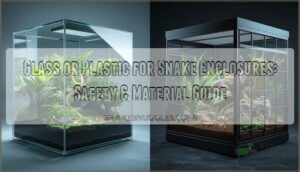
Your snake’s enclosure isn’t just a container—it’s a precision microhabitat where thermal gradients, humidity ranges, and structural integrity determine whether your animal thrives or merely survives.
Glass terrariums, fabricated from silica composites that resist scratching and tolerate aggressive disinfectants, behave fundamentally differently from acrylic or polycarbonate plastic alternatives that weigh less but demand UV-protective coatings and gentler sanitation protocols.
Each material responds distinctly to heating elements, moisture retention demands, and the mechanical stress imposed by locks, climbing apparatus, and the reptile itself.
The decision between glass and plastic enclosures hinges on species-specific environmental parameters, your maintenance capacity, and whether you prioritize optical clarity over portability, durability over customization flexibility, or long-term structural stability over initial cost.
Table Of Contents
Key Takeaways
- Glass terrariums deliver superior scratch resistance, optical clarity, and 15–20+ year lifespans while tolerating aggressive disinfectants, but their 60–75 pound weight demands reinforced placement and two-person handling compared to plastic’s 20–40 pound portability advantage.
- Plastic enclosures retain heat 15–20% longer than glass through superior insulation properties, yet their susceptibility to UV degradation, micro-scratching, and material fatigue typically necessitates replacement within 5–10 years despite lower initial costs.
- Species-specific environmental parameters dictate material selection: tropical pythons requiring 80–90% humidity thrive in sealed glass configurations with precise ventilation, while desert species benefit from glass’s moisture control or properly rated plastics that prevent odor absorption.
- Structural integrity and accessory compatibility differ fundamentally between materials—glass accepts suction-mounted enrichment and silicone-sealed fixtures, whereas plastic demands drilled anchor points and specialized adhesives, with both requiring weekly inspections of latches, seals, and corners to prevent escape attempts and respiratory compromise.
Glass Vs Plastic: Key Differences for Snake Enclosures
When you’re choosing between glass and plastic for your snake’s home, you need to understand how these materials differ in composition, durability, and practical use. Each option presents distinct trade-offs in weight, visual presentation, and longevity that directly impact your husbandry success and investment returns over time.
The following comparisons will help you evaluate which material properties align with your specific snake species, available space, and maintenance capabilities.
Material Composition and Durability
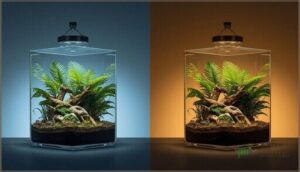
Glass terrariums, fabricated from silica sand, soda ash, and limestone, resist scratching and maintain structural integrity through tempered configurations that reduce breakage risk during handling. Acrylic and polycarbonate plastic terrariums, while lighter, exhibit greater susceptibility to micro-scratches, yellowing, and UV degradation, despite offering comparable impact resistance when properly stabilized through chemical additives and UV-protective coatings. The choice of material also involves considering the importance of scientific study validation to guarantee the safety and well-being of the snakes.
| Material Strength | Glass Terrariums | Plastic Terrariums |
|---|---|---|
| Scratch Resistance | Exceptional rigidity | Prone to micro-scratches |
| Impact Durability | Tempered options available | High with polycarbonate |
| Chemical Resistance | Tolerates disinfectants | Requires gentler agents |
| UV Stability | No degradation | Needs stabilization |
| Frame Materials | Aluminum, steel compatibility | PVC paneling integration |
Weight, Portability, and Placement
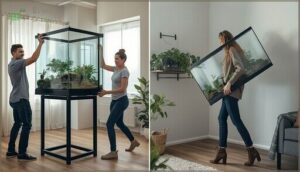
Portability issues emerge when comparing reptile enclosure selection. A 20-gallon glass terrarium, weighing 60–75 pounds empty, demands two-person handling or dollies. In contrast, plastic terrariums, weighing 20–40 pounds, allow single-person transport, facilitating space optimization and frequent repositioning for cleaning or display adjustments.
| Factor | Glass Terrariums | Plastic Terrariums |
|---|---|---|
| Empty Weight | 60–75 lbs (20-gal) | 20–40 lbs (20-gal) |
| Handling Requirement | Two-person lift | Single-person capable |
| Placement Strategies | Floor-based, reinforced braces | Shelving, wall-adjacent flexibility |
| Enclosure Stability | Enhanced floor grip, lower tipping risk | Requires secure mounting for safety |
Weight distribution affects enclosure stability. Glass provides enhanced floor grip through thermal mass but restricts placement strategies in tight doorways. Lighter snake enclosures permit adaptable room configurations yet require anchoring to prevent accidental tipping during routine husbandry tasks.
Visual Clarity and Aesthetics
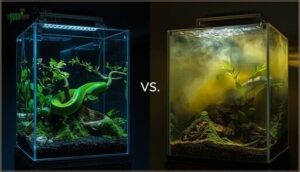
Beyond practicality, your viewing experience determines how effectively you’ll monitor health and behavior. Glass terrariums deliver near-perfect transparency, preserving natural color rendering under UV lighting without yellowing, while plastic variants exhibit gloss loss over time, imparting slight color casts that distort basking-area hues and compromise long-term aesthetic design clarity.
| Feature | Glass Terrariums | Plastic Terrariums |
|---|---|---|
| Light Transmission | Unfiltered visible spectrum | Additive-dependent filtration |
| Visual Depth | Reflective surfaces magnify perceived space | Edge visibility reduces spatial perception |
| Color Rendering | True-to-life pigmentation | Potential cast from formulation |
| Display Options | Frameless designs, external backgrounds | Internal inserts required |
Lifespan and Long-Term Value
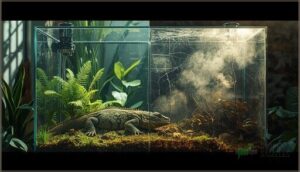
Your initial investment matters far less than replacement frequency over 15-year ownership periods. Glass terrariums, maintaining structural integrity through high-humidity cycles without warping, usually deliver 15–20+ years of service when sealed correctly, whereas plastic terrariums, susceptible to UV degradation and material fatigue, often require reinforcement within 5–10 years, escalating long-term costs despite lower entry prices.
| Factor | Glass Terrariums | Plastic Terrariums |
|---|---|---|
| Expected Lifespan | 15–20+ years | 5–10 years |
| Material Durability | Minimal abrasion, scratch-resistant | Surface wear, cloudiness develops |
| Replacement Factors | Rare under typical use | UV exposure, microfractures |
| Heat Retention | Standard thermal properties | 20% longer warmth retention |
| Enclosure Maintenance | Tolerates aggressive disinfectants | Requires gentler cleaning protocols |
Environmental Control: Temperature and Humidity
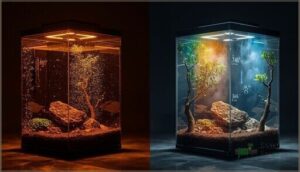
Your snake’s health hinges on precise environmental control, where the enclosure material directly influences thermal gradients, moisture retention, and respiratory gas exchange. Glass and plastic respond differently to heating elements, ambient conditions, and species-specific demands, creating distinct microclimates that can support or undermine physiological homeostasis. Choosing between glass and plastic terrariums means weighing insulation properties against ventilation needs, since each material creates unique challenges for maintaining stable basking zones and humidity levels.
Enclosure material shapes your snake’s thermal gradients and humidity, creating microclimates that either support or undermine its health
The following factors determine which material aligns with your snake’s thermoregulatory behavior, humidity requirements, and long-term welfare.
Heat Retention and Distribution
You’ll notice that insulation value, R-factor ratings embedded in wall panels determine how effectively your enclosure resists heat conduction to ambient air. PVC retains thermal energy 15–20% longer than uninsulated glass configurations, creating stable temperature gradients that minimize thermal cycling stress. Thoughtful choices in safe and enriching snake decor also reduce maintenance burdens by preventing humidity buildup and bacterial colonization in high-retention materials.
Thermal mass, substrate depth combined with heated hides, buffers rapid fluctuations, ensuring heat retention aids ideal temperature regulation without constant thermostat intervention.
Humidity Regulation Capabilities
Moisture management distinguishes materials through permeability, seal integrity, and evaporation rates that define your success with tropical versus arid-adapted species. Glass configurations, fitted with gaskets minimizing air exchange at seams, sustain 50–70% relative humidity for pythons requiring consistent moisture. Plastic panels, particularly those incorporating adjustable vent channels, demand strategic substrate selection and thermal mass considerations to stabilize humidity regulation during daily thermal cycling. For arboreal species needing vertical space and controlled airflow, specialized snake enclosures for arboreal snakes integrate front-opening access with ventilation patterns that prevent stagnant moisture pockets near climbing branches.
- Glass retains humidity through low-permeability surfaces and tight-fitting lids that reduce uncontrolled moisture escape.
- Plastic vents accelerate evaporation rates, requiring humidifiers or moisture-retaining substrates for tropical species.
- Sealed joints in glass minimize air exchange, stabilizing terrarium maintenance routines for humidity-dependent snakes.
- Thermal and humidity management interact; heat sources near substrates create localized microclimates affecting overall moisture distribution.
- Calibrated hygrometers verify humidity control effectiveness, ensuring species-specific targets align with enclosure material properties.
Ventilation and Airflow Considerations
Adequate air exchange is essential to prevent respiratory compromise and pathogen proliferation. However, ventilation design must carefully balance fresh airflow with humidity control to avoid issues like dehydration or condensation.
To achieve this, incorporate permanent ventilation grids that provide 2–5% of the floor area as breathing spaces. Position intake vents low and exhaust vents high to align with thermal gradients, ensuring efficient air movement. Pair this setup with a beginner-friendly reptile thermometer to continuously track temperature gradients and confirm your ventilation strategy is maintaining stable conditions.
Cross-ventilation through strategically placed slits further enhances airflow patterns, supporting species-specific ventilation requirements while avoiding stressful drafts. Pairing these airflow strategies with accurate digital thermometers and humidity gauges ensures you’re meeting your reptile’s exact environmental needs without guesswork.
Suitability for Different Snake Species
Your snake’s native climate dictates every material decision you’ll make, since tropical pythons demanding 80–90% humidity retention thrive in sealed glass setups with precise ventilation grids, while desert-dwelling species require low-moisture transmission materials like nonporous glass or properly rated plastics that prevent odor absorption and enable dry, well-ventilated airflow patterns.
Critical species-specific enclosure materials considerations include:
- Arboreal needs demand vertical terrarium design with secure latching mechanisms that prevent escape while maintaining species research-backed ventilation protocols
- Large constrictors require reinforced joints and heat-resistant materials that won’t warp under sustained thermal gradients necessary for proper reptile care
- Tropical requirements necessitate humidity-stable snake habitat materials that support consistent microclimates without compromising snake health through condensation or pathogen proliferation
Desert adaptation benefits from glass surfaces offering optimal moisture control, whereas certain plastics may compromise long-term enclosure materials performance if substrate interactions aren’t carefully managed during routine maintenance protocols.
Maintenance, Cleaning, and Safety Factors
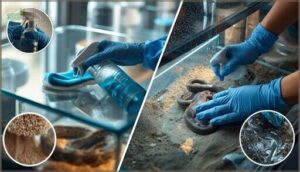
Maintaining your snake’s enclosure isn’t just about aesthetics—it’s a fundamental component of disease prevention, structural integrity, and long-term safety for both you and your animal. Glass and plastic materials respond differently to disinfectants, physical stress, and routine handling, which directly impacts how you’ll approach daily care, emergency repairs, and hazard mitigation.
The following sections break down the practical maintenance realities you’ll face with each material type, from surface sanitization protocols to structural failure points that demand your attention.
Ease of Cleaning and Disinfection
When evaluating the ease of cleaning between enclosure materials, glass terrariums offer distinct advantages. They tolerate more aggressive disinfectants, such as isopropyl alcohol and diluted bleach, without clouding or crazing. In contrast, plastic terrariums require gentler sanitation methods to maintain optical clarity and structural integrity.
Cleaning schedules must consider material-specific hygiene standards. Glass, with its non-porous surface, resists staining and odor absorption, simplifying maintenance. Plastic, however, poses challenges: scratches create microhabitats that compromise disinfection efficacy, necessitating more frequent attention to ventilation systems and seam integrity.
| Criteria | Glass Terrariums | Plastic Terrariums |
|---|---|---|
| Disinfectant Compatibility | Tolerates alkaline cleaners, alcohol, bleach solutions | Requires pH-neutral agents to prevent crazing |
| Stain/Odor Resistance | Non-porous; minimal absorption of secretions | Scratches harbor bacteria; odor retention risk |
| Sanitation Frequency | Standard protocols; scratches require polishing | Increased frequency if micro-cracks develop |
Repairing Cracks or Damage
Structural failures in reptile enclosures demand immediate damage assessment, as compromised panels undermine thermal gradients and humidity stability essential for snake health. Your repair protocol depends on material composition and crack severity, with DIY snake enclosures requiring vigilant leak detection to prevent environmental dysregulation.
- Apply epoxy for structural cracks in glass terrariums, reserving silicone for flexible seal restoration at panel joints where movement occurs
- Use acrylic cement on cracked acrylic panels, avoiding solvent-based methods that induce crazing and compromise enclosure materials and design integrity
- Address corner failures through reinforcement or complete panel replacement, as progressive deterioration compromises snake enclosure design safety
- Verify temperature and humidity seals post-repair, ensuring no drafts compromise microclimate parameters critical for species-specific husbandry
Safety of Edges, Joints, and Seals
Beyond repairing visible damage, you must evaluate edge protection and seal durability before placing your snake inside any reptile enclosure. Glass terrariums depend on food-grade silicone seals that maintain elasticity across temperature fluctuations, while plastic terrariums require reinforced corner joints with polycarbonate bonding to prevent cracking under handling stress.
| Feature | Glass Terrariums | Plastic Terrariums |
|---|---|---|
| Edge Protection | Round-edged panels with protective trim | Thermoplastic corner guards |
| Joint Integrity | Silicone seals at panel junctions | Reinforced polycarbonate bonding |
| Seal Durability | Food-grade, temperature-resistant silicone | High-grade thermoplastic gaskets |
| Material Toxicity | Non-toxic cured sealants | UV-stable, non-degrading polymers |
Routine pressure tests verify watertight seals under typical humidity conditions, preventing mold growth that compromises snake enclosure design and your animal’s respiratory health.
Preventing Escapes and Injuries
After confirming seal integrity, you’ll need hardware latches with dual-action locks to prevent unaided openings, particularly when vertical gaps exceeding 1 cm allow small snakes to exploit structural weaknesses in both glass and plastic terrariums. Weekly inspections of hinges, ventilation ducts, and corners eliminate unnoticed vulnerabilities that compromise snake enclosure security and increase the risk of injury from sharp décor edges.
Critical snake-proofing measures for secure lids and enclosure design:
- Check ventilation safety by sealing air leaks that create drafts, dislodging hides and triggering escape attempts
- Install reinforced corners with hardware latches to stop determined snakes from breaching weakened seams
- Remove hazardous décor with loose hardware near your snake’s reach, preventing lacerations during routine movement
- Maintain smooth, non-slip substrates that minimize climbing attempts near enclosure edges where gaps form
- Perform routine inspections focused on reptile care and maintenance, catching structural failures before your animal exploits them
Customization and Accessory Compatibility
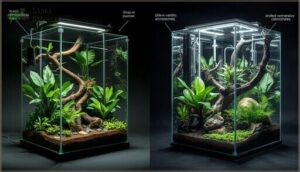
Accessory integration determines whether your enclosure functions as a basic container or a thriving microhabitat. Material choice directly influences mounting options, thermal compatibility, and modification flexibility.
Glass and plastic differ fundamentally in how they accept heating elements, lighting fixtures, substrate containment systems, and enrichment features. Understanding these compatibility factors ensures you won’t encounter insurmountable obstacles when installing essential equipment or creating species-appropriate environmental complexity.
Installing Heating and Lighting Elements
You’ll need to position heat sources—ceramic emitters, radiant panels, or under-tank heaters—to establish a thermogradient control system, ensuring your snake moves freely between thermal gradients while temperature monitoring devices track both zones with calibrated precision.
Lighting systems must deliver species-appropriate photoperiods using full-spectrum bulbs with UVB when indicated, paired with electrical safety protocols including GFCI outlets, drip loops, and shielded fixtures to prevent moisture ingress or direct contact burns.
Adding Hides, Substrate, and Decorations
After securing heating and lighting elements, you’ll configure interior components—hides, substrate, and decorations—to support snake behavior and physiological function while maintaining enclosure integrity. Proper hide placement at thermal zones, substrate depth of 2–6 inches depending on burrowing tendencies, and anchored decor safety measures prevent injuries.
Consider these substrate and decoration selection priorities for terrarium design and construction:
- Position hides at hot and cool ends to enable thermoregulatory choices
- Select moisture-retentive substrates (coconut fiber) for tropical species or sand-soil blends for desert dwellers
- Anchor branches and cork rounds securely to prevent displacement during activity
- Inspect decorations for sharp edges or protruding fasteners before installation
- Choose inert, washable materials that resist chemical leaching and humidity damage
Enrichment ideas should reflect species-specific needs—arboreal snakes require vertical complexity while terrestrial species benefit from ground-level refuges—ensuring your reptile enclosures mirror natural microhabitats and reduce stress-related behaviors through thoughtful snake enclosure options.
Modifying for Enclosure Enrichment
Enrichment strategies for reptile enclosures demand structured planning, rotating substrates and decorations every 2–4 weeks to sustain sensory stimulation without compromising enclosure design and materials.
Your habitat design should layer environmental complexity—vertical branches for climbing species, subsurface tunnels for burrowers—while monitoring snake behavior through activity logs that quantify time spent exploring versus hidden, ensuring environmental enrichment for reptiles achieves measurable stress reduction across terrarium design and construction phases.
| Enrichment Category | Glass Enclosure Modifications | Plastic Enclosure Modifications |
|---|---|---|
| Climbing structures | Suction-mounted branches, silicone-sealed ledges | Drilled anchor points, integrated mounting channels |
| Substrate complexity | Layered depths (2–6 in), mixed textures | Moisture barriers beneath organic substrates |
| Sensory elements | Textured backgrounds, UV-transmissive panels | Opaque panels with tactile surface treatments |
| Thermal microhabitats | Under-tank heaters with glass thermal conductivity | Radiant heat panels utilizing PVC insulation |
| Rotating decor | Removable magnetic hides, modular platforms | Snap-fit accessories, interchangeable panel inserts |
Display Options for Home or Office
Aesthetic placement transforms reptile enclosures from functional animal housing into focal points, provided you align enclosure design and materials with your room integration strategy, balancing visual obstruction against lighting design that accentuates scale patterns without thermal interference.
Your display safety protocol should address:
- Glass terrariums: Position near natural light sources with frameless edges minimizing visual obstruction, ensuring structural bracing withstands the 80–150 lb weight of populated enclosures.
- Plastic terrariums: Mount on stable platforms matching your decor color palette, utilizing LED accent strips for lighting design without heat accumulation.
- Sightline optimization: Arrange at eye level (42–48 in) where unobstructed viewing angles don’t compromise room integration or create glare zones during peak daylight hours.
- Accessibility maintenance: Preserve 18–24 in clearance around all enclosure sides for cleaning protocols, equipment checks, and emergency interventions without furniture rearrangement.
Top Products for Glass and Plastic Snake Enclosures
When you’ve weighed material properties, environmental control, and safety considerations, the next step is identifying enclosures that translate those priorities into functional products.
The following selections represent configurations that address species-specific requirements while incorporating the structural advantages discussed throughout this guide.
Each product demonstrates distinct applications of glass or plastic design principles, offering you vetted options that align with evidence-based husbandry standards.
1. Carolina Custom Glass Terrarium Cage
The Carolina Custom Glass Terrarium Cage, engineered with tempered glass panels ranging from 3 to 6 mm in thickness, demonstrates exceptional construction for snake habitats requiring durable reptile housing. Its 48 x 24 x 24-inch dimensions accommodate adult bearded dragons and similar-sized reptiles within glass terrariums that maintain structural integrity under daily husbandry demands. Silicone-based seals prevent humidity loss in controlled snake care environments.
Cage security features include sliding doors with key-lock mechanisms, though installation precision directly affects operational reliability. The full steel mesh top ensures adequate ventilation for reptile enclosures without compromising containment protocols essential to terrarium design standards.
| Best For | Reptile owners who need a spacious, well-ventilated enclosure for adult bearded dragons or similar-sized reptiles, especially those planning bioactive setups with plants and substrate depth. |
|---|---|
| Primary Material | Tempered Glass |
| Weight | 73 Pounds |
| Color | Clear |
| Reptile Compatibility | Bearded Dragons |
| Ease of Cleaning | Easy to clean |
| Assembly Required | Yes |
| Additional Features |
|
- Large 48 x 24 x 24-inch size gives reptiles plenty of room to move, climb, and burrow naturally
- Steel mesh top provides excellent airflow while the waterproof base tray contains spills and makes cleanup easier
- Tempered glass construction and silicone seals help maintain proper humidity levels for reptile health
- Some buyers report the glass can be thin and break easily, raising durability concerns
- Sliding doors may stick or not glide smoothly, and the lock mechanism sometimes requires fiddling to work correctly
- Mixed feedback on overall build quality means you might need to inspect carefully on arrival and handle with extra care during setup
2. Exo Terra Reptile Cave
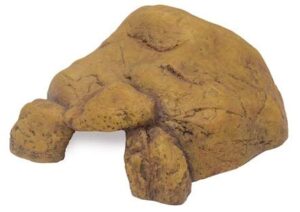
The Exo Terra Reptile Cave, constructed from food-grade resin measuring 10.9 x 11.8 x 4.5 inches, provides essential reptile hides within glass terrariums and plastic reptile enclosures, supporting natural snake behavior through concealment during thermoregulation cycles.
Its non-porous surface, critical for terrarium decor hygiene in controlled reptile housing, tolerates reptile-safe disinfectants without degradation, though sharp corners may require pre-placement modification.
You’ll find this hide materials option suitable for adult ball pythons when integrated into snake care protocols emphasizing humidity control and species-specific microclimate zones within properly ventilated reptile enclosures.
| Best For | Owners of small to medium reptiles like ball pythons who need a secure, easy-to-clean hide that creates a humid microclimate and reduces stress. |
|---|---|
| Primary Material | Food-grade Resin |
| Weight | 2.93 pounds |
| Color | Blacks & Grays |
| Reptile Compatibility | Ball Pythons |
| Ease of Cleaning | Moderate |
| Assembly Required | No |
| Additional Features |
|
- Made from food-grade resin that’s easy to clean with reptile-safe disinfectants and won’t trap bacteria in cracks or seams
- Creates a cooler, more humid spot inside the enclosure, helping reptiles feel secure and maintain healthy sleeping and eating habits
- Realistic pebble design looks natural in terrariums and stays stable without tipping over
- Some customers report the cave feels smaller than expected and may not fit very large reptiles comfortably
- Durability concerns from mixed user feedback, with occasional reports of sharp corners or exposed fibers that need smoothing before use
- Doesn’t provide insulation on its own, so you’ll still need to manage your enclosure’s temperature and humidity separately
3. Zoo Med Excavator Burrowing Substrate
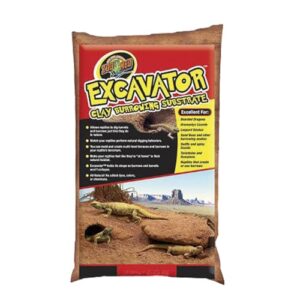
The Zoo Med Excavator Burrowing Substrate, a clay-based sand composite weighing 10 pounds, is priced at $13.99. It allows for substrate depth customization, catering to fossorial species that require digging environments. However, it necessitates five to seven days of complete drying before introducing snakes to prevent humidity control complications.
Its moldable texture supports burrowing behavior in species-appropriate reptile enclosures, enabling the formation of structural burrows when moistened. Nonetheless, snake safety considerations require monitoring for ingestion risks during substrate selection.
This material seamlessly integrates into glass and plastic terrariums, facilitating species-specific humidity management protocols. It enhances reptile health by providing enrichment opportunities and supports snake care practices that emphasize naturalistic microhabitat construction.
| Best For | Reptile owners with burrowing species like leopard geckos, bearded dragons, or sand boas who want to create natural tunnels and multi-level habitats. |
|---|---|
| Primary Material | Natural Sand |
| Weight | 10 pounds |
| Color | Natural |
| Reptile Compatibility | Leopard Geckos |
| Ease of Cleaning | Difficult to remove |
| Assembly Required | No |
| Additional Features |
|
- Holds its shape when moistened so you can build stable tunnels and burrows that won’t cave in
- All natural with no dyes or chemicals, making it safer for reptiles
- Encourages natural digging behaviors and lets you create realistic desert environments
- Takes up to a week to fully dry before you can safely add your reptile
- Difficult to remove and clean compared to simpler substrates
- May crack or develop fissures as it dries, requiring repairs or maintenance
4. Repti Zoo Digital Thermometer Hygrometer
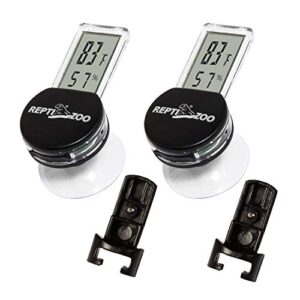
Accurate environmental monitoring, achieved through devices like the Repti Zoo Digital Thermometer Hygrometer, operates with ±2–C temperature precision and ±5% relative humidity accuracy across 20–90% RH ranges, ensuring you maintain appropriate thermal gradients and humidity management for snake health.
Sensor placement away from direct heat sources prevents skewed readings, while battery life spanning six to twelve months enables consistent reptile care protocols.
Digital displays offer simultaneous temperature regulation and humidity control data, though hygrometer calibration checks following battery replacement remain essential to verify measurement reliability in both glass and plastic enclosures.
| Best For | Snake keepers who need reliable temperature and humidity tracking in their terrariums without spending a fortune on complicated monitoring systems. |
|---|---|
| Primary Material | Glass/Plastic |
| Weight | 2.08 ounces |
| Color | Pack-2 |
| Reptile Compatibility | Various Reptiles |
| Ease of Cleaning | Easy maintenance |
| Assembly Required | Minimal |
| Additional Features |
|
- Reads both temperature and humidity at the same time on a clear LED screen, so you don’t have to check multiple devices
- Easy to set up with suction cups or adhesive mounts, and the probe cord is long enough to place sensors where you actually need them
- Battery lasts 6–12 months under normal use, which means fewer interruptions to your snake’s habitat
- Suction cups can lose grip on certain surfaces, especially in humid enclosures, so you might need to reattach them occasionally
- Needs recalibration after you swap batteries to keep readings accurate, which adds an extra maintenance step
- Not fully waterproof, so you have to be careful with water bowls or misting systems near the main unit
Frequently Asked Questions (FAQs)
Can I mix glass and plastic in one enclosure?
Can mixing compromise structural integrity? You can combine glass and plastic in hybrid construction, though interface design demands specialized adhesives and uniform load distribution to prevent differential expansion, seal stress, and potential leaks at material boundaries.
Which material is safer for venomous snake species?
Glass terrariums offer enhanced enclosure security and escape prevention for venomous snake species. Their non-porous surfaces resist material toxicity risks, while tempered construction maintains structural integrity under stress. Sealed joints minimize snake behavior-related breach attempts.
Compared with plastic alternatives, glass terrariums are superior in reptile care applications. Plastic enclosures are prone to scratching, chemical degradation, and hardware failure, making them less reliable for housing venomous snakes.
How does enclosure material affect snake feeding response?
Material effects on feeding behavior stem from visual disturbances, thermal cues, and surface properties. Glass’s reflective glare may reduce appetite stimulation, while matte plastic finishes minimize stress, preserving consistent snake vision and feeding response through improved enclosure materials and reptile health considerations.
Are there eco-friendly alternatives to glass and plastic?
Yes, bamboo fiber composites, recycled aluminum framing, cross-laminated timber panels, and bio-based polyethylene blends offer sustainable materials with lower environmental impact.
Though moisture resistance and industrial composting access determine their practical viability in reptile enclosures.
Conclusion
Think of your enclosure selection as the foundation of a physiological contract: you’re committing to replicate microclimatic conditions that permit normal thermoregulation, ecdysis, and behavioral expression.
Whether you use glass or plastic for snake enclosures, your choice must align with your species’ humidity thresholds, your capacity for preventive maintenance, and the structural demands imposed by heating apparatus.
Suboptimal housing doesn’t announce failures loudly—it erodes health incrementally, silently, irreversibly.
- https://waynehighlands.com/category/natural-world/
- https://www.linkedin.com/posts/bohdanlukianets_tasks-study-research-activity-7373377539521667072-UTEi
- https://www.sciencedirect.com/science/article/pii/S2949916X23000464
- https://www.scribd.com/document/683678057/Academic-Research-Manual-V1-1-April-2016
- https://pmc.ncbi.nlm.nih.gov/articles/instance/9553038/bin/pone.0275964.s005.docx