This site is supported by our readers. We may earn a commission, at no cost to you, if you purchase through links.

A snake that refuses food for months on end isn’t always sick—sometimes it’s simply following a survival blueprint refined over millions of years. Brumation, the reptilian analog to mammalian hibernation, drops metabolic activity by up to 70% and slows heart rates by 40-60%, fundamentally altering how your snake processes energy and nutrients.
Feeding during this dormancy period creates a dangerous mismatch: digestive enzymes can’t break down prey at 55°F the way they do at 85°F, and undigested meals trapped in a cold gut become breeding grounds for bacteria.
Managing brumation feeding adjustments for snakes requires you to recognize when to withhold food entirely, how to time the final pre-dormancy meal for complete gut clearance, and which post-brumation protocols prevent regurgitation when appetite returns.
Table Of Contents
Key Takeaways
- Brumation reduces snake metabolism by up to 70% and heart rate by 40-60%, making feeding during dormancy dangerous because digestive enzymes can’t function at low temperatures—undigested food becomes a breeding ground for bacteria and can cause fatal gut rot or impaction.
- Stop feeding your snake 1–2 weeks before brumation begins to ensure complete gut clearance, and wait 7–14 days after emergence before reintroducing food, starting with prey 25-30% smaller than pre-dormancy meals to prevent regurgitation in 12-18% of cases.
- Pre-brumation veterinary screening catches health issues in 5-9% of snakes that could prove fatal during dormancy, including parasite loads found in up to 28% of individuals and organ dysfunction detectable through bloodwork and physical examination.
- Temperate species like ball pythons and corn snakes undergo natural brumation cycles spanning weeks to months, while tropical species experience only brief cool-season torpor—understanding your snake’s native physiology determines appropriate dormancy protocols and temperature adjustments.
What is Brumation in Snakes?
Brumation is a reptile-specific dormancy period that fundamentally alters your snake’s physiological state—reducing metabolic activity by up to 70% and slowing heart rate by 40-60%. Unlike mammalian hibernation, brumation maintains minimal responsiveness to environmental stimuli while conserving energy through hormonal and neural suppression.
Understanding what brumation entails, how it affects your snake’s body, and which species undergo this process will help you make informed decisions about your animal’s seasonal care.
Definition and Key Differences From Hibernation
Brumation is your snake’s cold-weather dormancy—a metabolic shift driven by dropping temperatures rather than a hardwired annual cycle.
Unlike hibernation, which triggers deep, prolonged torpor states in mammals, snake brumation involves shallower energy conservation with intermittent arousals. During brumation, snakes may still emerge periodically to drink water or bask, but weakened immune function can leave them vulnerable to infections like mouth rot that requires veterinary diagnosis.
Your snake stays partially responsive during this reptile physiology adaptation, waking if disturbed—a critical distinction that shapes how you’ll manage feeding and care through winter months. Different species have unique winter metabolisms, so check out this winter snake feeding schedule to match your approach to your pet’s specific needs.
Physiological Changes During Brumation
When your snake enters dormancy, you’ll observe a metabolic shift that cuts energy expenditure by up to 70%. Respiratory adaptations halve breathing rates, hormonal changes suppress feeding signals entirely, and neural suppression dims sensory responsiveness without eliminating it.
This reptile physiology overhaul prioritizes energy conservation through synchronized organ slowdown; heart rate declines 40-60%, digestive enzyme production ceases, and core temperature tracks ambient conditions rather than maintaining metabolic heat generation during snake brumation.
Understanding the importance of methodological rigor is essential in scientific studies of such physiological changes.
Species That Undergo Brumation
Temperate-region colubrids and pythons—ball pythons, corn snakes, pine snakes—exhibit natural dormancy cycles aligned with winter months, spanning several weeks to multiple months depending on ambient cold climate conditions. Tropical species don’t undergo true reptile hibernation; they experience briefer cool-season torpor instead. If you’re considering non-native species, grass snakes as pets require similar seasonal adjustments but adapt well to moderate temperature drops without extensive brumation periods.
Understanding species variation in brumation patterns helps you predict dormancy cycles and adjust snake care protocols based on your animal’s native reptile physiology and documented reptile behavior in both wild and captive populations. Researchers can find more information on species-specific terminology using language search tools.
Preparing Snakes for Brumation
You can’t rush a snake into brumation—successful dormancy depends entirely on what you do in the weeks before temperatures drop.
Pre-brumation preparation catches health issues that become dangerous once metabolism slows, and it ensures your snake enters this vulnerable period with adequate reserves and zero digestive burden.
The process centers on three critical interventions that separate safe brumation from metabolic disaster. Before attempting brumation, review comprehensive snake meal timing advice to ensure your animal has properly digested all food and entered the correct metabolic state.
Health Screening and Veterinary Checks

Before your snake enters brumation, schedule a thorough veterinary exam—this critical step catches subtle health issues in 5-9% of individuals that could otherwise prove fatal during dormancy. A vet can also help you understand how brumation mimics your snake’s natural seasonal rhythms, so you’ll know exactly what to expect during the dormancy period.
Your reptile veterinarian will conduct a thorough physical assessment, palpate for abnormalities, perform bloodwork to evaluate organ function and hydration status, and inspect the oral cavity for lesions or dental disease that compromise survival.
Parasite and Nutritional Assessment

Diagnostic clarity separates successful brumation from preventable tragedy. Parasite load screening identifies intestinal nematodes in up to 28% of pre-dormancy snakes, while nutritional assessment reveals energy reserves and digestive health through body condition scoring, serum albumin levels, and recent feeding history.
You’ll need fecal flotation tests to detect coccidia and roundworms; blood panels confirm immune function and nutrient density before your reptile enters metabolic shutdown.
Gradual Environmental Adjustments

Abrupt shifts in temperature control stress even sturdy specimens—you need temperature ramping over 2–4 weeks, dropping ambient conditions by 2–3°F daily toward species-specific brumation ranges.
Simultaneously, stabilize humidity management to prevent dysecdysis, decrease light cycles progressively to mimic photoperiod decline, and adjust substrate management for secure confinement.
Space optimization maintains thermoregulation strategies while reducing metabolic demand throughout the brumation period.
Feeding Practices Before Brumation

You need to stop feeding your snake well before brumation begins—this isn’t optional, it’s survival protocol. A snake entering dormancy with undigested food faces gut rot, impaction, and potentially fatal complications as metabolic processes grind to a halt.
Stop feeding your snake well before brumation begins—undigested food during dormancy can cause fatal gut rot and impaction
The following practices guarantee your snake’s digestive tract is completely clear before temperatures drop.
Timing Last Meals for Safe Digestion
You’ll need to schedule your snake’s final meal 1–2 weeks before brumation begins—longer fasting periods for large prey, shorter (3–7 days) for small items. Feeding too close to brumation disrupts gut clearance, raising regurgitation risk and compromising snake nutrition.
This pre-brumation care ensures complete digestion before temperature drops slow metabolism. Monitor your individual’s appetite trends and adjust digestion timing accordingly.
Importance of Gut Clearance
Clearing your snake’s gastrointestinal tract before brumation protects against regurgitation, bloat, and microbial overgrowth—risks that spike when digestion halts at low temperatures.
Prebrumation prep demands gut motility assessment through palpation, weight tracking, and stool consistency checks; incomplete clearance protocols delay post-brumation feeding and trigger anorexia in 5–9% of cases, making digestive slowdown verification essential for reptile health and safe snake care.
Monitoring Appetite Changes
Appetite shifts in pre-brumation snakes follow predictable patterns—you’ll catch subtle feeding cycles winding down weeks before temperatures drop. Track these three metrics to safeguard digestive health and nutrient stores as metabolic rates decline:
- Prey refusals spanning 14–21 days signal normal brumation-driven appetite suppression rather than digestive issues.
- Body condition scoring trends distinguish fasting tolerance from concerning weight loss.
- Feeding attempt logs prevent regurgitation risks by documenting when appetite truly ceases.
Feeding Adjustments During Brumation
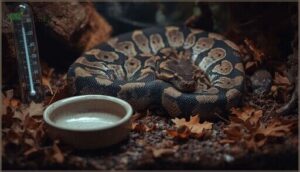
During brumation, your snake’s metabolic machinery operates at a fraction of its normal capacity—feeding becomes not just unnecessary but genuinely dangerous. The temperature-dependent digestive system can’t process prey items when ambient conditions drop below critical thresholds, creating a cascade of potential complications.
Understanding the physiological basis for withholding food, recognizing your snake’s natural behavioral cues, and avoiding well-intentioned but harmful interventions will protect your animal through this vulnerable period.
Risks of Feeding at Low Temperatures
Feeding during brumation invites disaster—your snake’s chilled digestive system can’t process prey, triggering bacterial overgrowth and potentially fatal impactions. Low temperatures collapse metabolic function; gastric emptying rates plummet, immune suppression permits pathogenic proliferation, and undigested meals stagnate in the gut. Temperature control becomes paramount—even slight deviations below ideal thermal gradients transform routine feeding into a gastrointestinal crisis requiring emergency veterinary intervention.
| Temperature Range | Digestive Capacity | Primary Feeding Risks |
|---|---|---|
| Below 50°F | Virtually zero | Gut rot, aspiration, impaction |
| 50-65°F | Severely compromised | Regurgitation, bacterial growth |
| 65-75°F | Minimal function | Prolonged digestion, infection |
Recognizing Natural Appetite Suppression
Understanding when your snake naturally stops eating prevents unnecessary alarm. Appetite signals fade over 4–12 weeks as cooling temperatures and shortened photoperiods trigger hormonal shifts—metabolic downregulation dampens hunger patterns without indicating illness. Watch for gradual prey refusal, not sudden rejection:
- Declining strike enthusiasm precedes complete feeding cessation
- Brumation-driven appetite suppression correlates directly with ambient temperature drops
- Digestive inactivity mirrors environmental cues, not health compromise
- Species-specific variability affects dietary adjustments duration considerably
Avoiding Common Feeding Mistakes
Once you’ve mastered appetite suppression, it’s crucial to sidestep common Feeding Errors that can compromise Reptile Health and Wellness. Avoid offering food during Brumation unless natural arousal occurs; forcing meals can trigger Digestive Issues due to temperature-dependent enzyme failure. Post-Brumation Care requires patience—wait 2–3 weeks before resuming Snake Nutrition, starting with undersized prey. Rehydration Tips include gradual water access, as excessive hydration can dilute digestive capacity. Effective Snake Care and Maintenance hinges on monitoring stool consistency post-feeding.
| Mistake | Consequence | Correction |
|---|---|---|
| Feeding during dormancy | Digestive enzyme failure; rotting prey | Withhold food until natural arousal |
| Immediate post-brumation feeding | Regurgitation; metabolic shock | Delay 2–3 weeks; offer small prey |
| Excessive rehydration | Enzyme dilution; poor digestion | Gradual water access over 3–5 days |
| Large prey resumption | Digestive overload; refusal | Start 30–40% smaller than pre-brumation size |
Post-Brumation Feeding Guidelines

Your snake’s emergence from brumation marks a delicate shift that demands precision—rushing refeeding triggers regurgitation in 12-18% of cases, while excessive delay compromises weight restoration and breeding readiness.
The post-dormancy digestive system requires 7-14 days to restore enzyme production and peristaltic function; premature feeding overwhelms this recovering capacity.
You’ll navigate three critical phases: identifying physiological readiness markers, implementing graduated prey protocols, and detecting early signs of maldigestion before complications escalate.
When to Resume Feeding
Generally, you’ll restart feeding schedules once ambient temperatures stabilize above species-specific thresholds—often 1 to 2 weeks post brumation for most kept snakes. Appetite return unfolds gradually; your snake may accept smaller prey items before standard portions, signaling digestive recovery.
If feeding refusal persists beyond 4 to 6 weeks despite adequate temperature thresholds and activity indicators, veterinary consultation becomes essential for safeguarding post brumation health.
Gradual Reintroduction of Food
Begin with prey 25–30% smaller than pre-brumation meals—digestive recovery demands conservative portions to prevent regurgitation or impaction. Pre-killed prey reduces injury risk during this vulnerable phase.
Space feedings every 7–14 days initially; your snake’s strike response and body condition signal readiness for standard intervals.
Document each feeding event—weight stability within 2–5% weekly confirms effective post-brumation care and digestive function restoration.
Monitoring for Digestive Issues
Vigilance during refeeding prevents the 10–15% of cases where digestive health falters post-brumation. Track these indicators:
- Regurgitation patterns—more than one episode within 48 hours demands veterinary care and immediate feeding suspension
- Stool consistency shifts—absent or abnormal feces signal impaired gut motility requiring nutritional intervention
- Abdominal distention—palpable firmness suggests impacted bowels warranting diagnostic imaging
- Weight trajectory—losses exceeding 10% baseline indicate reptile nutrition deficits needing feeding strategies revision
Document observations to distinguish normal recovery from reptile health risks requiring professional support.
Troubleshooting Feeding Problems

Even when you follow every protocol, your snake may refuse food or show signs something isn’t right after emerging from brumation. These complications—ranging from persistent anorexia to metabolic disturbances—demand swift identification and targeted intervention.
Here’s what to watch for, when professional help becomes non-negotiable, and how to recalibrate care based on your snake’s individual recovery trajectory.
Signs of Post-Brumation Complications
Post brumation stress reveals itself through persistent lethargy beyond the expected 3-14 day adjustment window—your snake should regain mobility, not languish.
Watch for reptile dehydration markers: sunken eyes, tacky mucous membranes persisting despite hydration efforts.
Snake malnutrition manifests as continued weight loss even with resumed appetite, while digestive issues appear through abnormal stool consistency, respiratory wheezing, or feeding refusal past the typical refeeding window—all potential indicators of brumation syndrome requiring intervention.
When to Consult a Reptile Veterinarian
Contact your reptile veterinarian immediately if your snake exhibits sudden collapse, inability to move, or prolonged lethargy exceeding typical dormancy patterns—emergency care prevents brumation complications from escalating.
Dehydration markers like sunken eyes or non-rebounding skin, unexplained weight loss, abnormal mucus, regurgitation, or bloating all warrant veterinary guidance; post-brumation support demands professional assessment when recovery deviates from expected timelines, ensuring ideal animal health and reptile care outcomes.
Adjusting Care Based on Snake Response
You’ll enhance snake care during brumation by responding to individualized behavioral feedback—tracking body condition scores, respiration stability, and feeding cues reveals whether your temperature adjustments support proper digestion or trigger stress.
Monitor these environmental cues and health indicators:
- Activity level shifts correlating with temperature gradient changes during the brumation period
- Weight trends assessed through body condition scoring before and after care adjustments
- Appetite patterns distinguishing natural suppression from metabolic distress requiring reptile care intervention
- Stress signals like excessive curling or pacing indicating needed refinements in snake care during brumation
Frequently Asked Questions (FAQs)
Can dehydration occur during extended brumation periods?
Yes—dehydration risks escalate during prolonged brumation as cutaneous and respiratory water loss persists despite metabolic slowdown.
Species variability, ambient humidity, and brumation duration jointly determine your snake’s fluid balance vulnerability.
How does brumation affect breeding success rates?
Brumation synchronizes breeding readiness by pausing gonad development—testicular mass and oocyte maturation surge post-arousal in temperate species.
Environmental cues like temperature and photoperiod after dormancy dictate mating onset; body condition directly influences clutch size and fertilization success.
Do baby snakes require different brumation protocols?
Juvenile snakes require modified brumation protocols, including shorter durations (4-8 weeks versus 12-16 for adults) and elevated minimum temperatures (52-58°F).
Intensified hydration monitoring is essential during Snake Development phases, as Growth Rates and Juvenile Health directly influence post-arousal recovery in Baby Snake Care and Snake Breeding programs.
Should water remain available throughout the brumation cycle?
You’ll want to keep a shallow water dish accessible—reptile hydration remains critical even when metabolism slows. Humidity control aids skin hydration and reduces dehydration risks during the brumation cycle.
Conclusion
Your snake’s empty food bowl during winter months mirrors the seasonal rhythms that have sustained reptiles across millennia—a biological safeguard, not a crisis. Mastering brumation feeding adjustments for snakes means accepting that withholding prey protects digestive integrity when metabolic rates can’t support breakdown.
The precision you apply to pre-dormancy gut clearance and post-brumation refeeding schedules directly determines whether your animal emerges healthy or compromised. Dormancy demands restraint, and your intervention timing separates thriving animals from preventable complications.
- https://www.britannica.com/science/brumation
- https://sigmaearth.com/the-process-of-brumation-in-reptiles
- https://besjournals.onlinelibrary.wiley.com/doi/10.1111/1365-2656.13997
- https://www.sciencedirect.com/science/article/abs/pii/S0016648021000514
- https://www.reptiles.swelluk.com/help-guides/what-is-reptile-brumation-and-how-can-i-prepare-for-it