This site is supported by our readers. We may earn a commission, at no cost to you, if you purchase through links.

Search "how do snakes nurse their young" and you’ll find plenty of confused speculation, but here’s the settled science: they don’t. No snake species, from ball pythons to timber rattlesnakes, has ever evolved mammary glands. Zero. Nada.
That absence isn’t a gap in nature’s design, it’s a deliberate trade-off. Snakes pour their energy into yolk production instead of lactation, packing everything a developing embryo needs into a single nutrient-dense package before birth even happens.
So how do baby snakes eat during those first vulnerable days? The answer involves yolk reserves, instinctive hunting, and a survival strategy that skips parenting entirely, and it’s more fascinating than any nursing myth could be.
Table Of Contents
- Key Takeaways
- Do Snakes Nurse Their Young? No
- How Do Baby Snakes Get Nutrition?
- Egg-Laying Vs Live-Bearing Snake Nutrition
- Do Snakes Care for Their Young?
- How Baby Snakes Survive Without Nursing
- Frequently Asked Questions (FAQs)
- How do snakes feed their babies?
- How does a snake take care of its young?
- Do mother snakes take care of their babies?
- How long does a baby snake stay with its mother?
- Do baby snakes drink milk from their mother?
- Do snakes nurse their babies?
- Do snakes care for their offspring?
- Do rattlesnakes nurse their young?
- Are snakes nurturing parents?
- How do snakes detect vibrations in the environment?
- Conclusion
Key Takeaways
- Snakes never evolved mammary glands, so nursing simply isn’t part of their biology—not even venom or shed skin serve as substitutes for milk.
- Baby snakes rely on leftover yolk reserves for the first 1 to 7 days after birth, then switch to hunting live prey sized to match their own small bodies.
- Whether a species lays eggs or gives birth to live young, nutrition comes from yolk or placenta-like transfer, never from nursing.
- Parental care varies widely, from pythons brooding eggs for weeks and rattlesnakes guarding newborns for 7 to 10 days, to most species abandoning their young within hours of birth.
Do Snakes Nurse Their Young? No
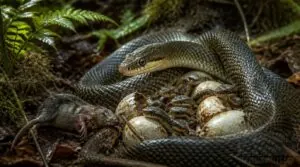
If you’ve ever pictured a mother snake curled up nursing her babies, it’s time to set that image straight. Snakes are built entirely differently than mammals, and nursing simply isn’t part of their biology. Here’s exactly why that idea doesn’t hold up.
Instead of nursing, snake mothers rely on behaviors like guarding or coiling around their eggs, as this detailed breakdown of why snakes can’t nurse their young explains.
Snakes Lack Mammary Glands
Search "snake milk" and you’ll find nothing, because it doesn’t exist. Mammary gland absence is total across every lineage, from pythons to vipers. Snakes don’t nurse their young, period.
This isn’t a gap in reptile lactation research. It’s an evolutionary trade-off: energy reallocation toward eggs and yolk dependency instead of nursing, maternal care built on efficiency, not milk. Instead, hatchlings rely on yolk provides early nutrition to sustain them until they begin hunting on their own.
Snake Skin Produces No Milk
No mammary glands means no milk-producing tissue anywhere on a snake’s body, skin included. What you’re seeing is keratin shed composition, dead protective layers, not nourishment.
Snake skin exists for waterproof skin function and friction reduction, with oil secretion maintaining that barrier. This skin barrier evolution favors survival, not feeding offspring. Reptile lactation simply never developed.
Venom is Not Milk
Here’s a myth worth killing off: venom isn’t some reptilian substitute for milk. It’s a protein-rich secretion built for immobilizing prey and defense, targeting nerves or blood vessels, not feeding hatchlings.
Snakes don’t nurse their young, full stop. No mammary glands, no maternal care through venom.
Baby snakes rely on yolk reserves instead, a true nutritional adaptation shaped by evolutionary feeding strategy.
How Do Baby Snakes Get Nutrition?
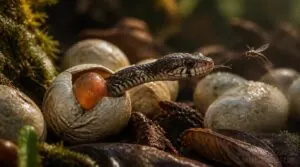
So if nursing’s off the table, how do baby snakes actually eat? The answer starts before birth and carries through those first vulnerable days outside the egg. Here’s the timeline, from yolk to first hunt.
Yolk Fuels Embryonic Growth
Before a single meal happens, yolk lipid metabolism does the heavy lifting. Fatty acid oxidation converts stored lipids into usable energy, while proteins supply amino acids for tissue growth.
The yolk sac membrane breaks down these nutrients and shuttles them to the embryo, maintaining energy balance whether you’re looking at oviparous or viviparous reproduction.
Remaining Yolk After Birth
Even after hatching, that yolk isn’t finished working. Postbirth yolk utilization continues for 1 to 7 days, tucked near the abdomen:
- Triglycerides fuel early metabolism
- Proteins repair fresh tissue
- Calcium builds skeletal strength
- Carbohydrates power movement
- Fats sustain thermoregulation
Yolk absorption rate depends on temperature and nesting conditions, keeping neonatal energy reserves steady until real prey enters the picture.
Choosing a well-insulated nest site, as detailed in this guide to snake habitat conditions across South America, can make all the difference for hatchling survival.
First Whole-Prey Meals
Once yolk reserves run low, hunger kicks in fast. Baby snakes strike live prey using heat sensing and ambush tactics, killing with minimal handling. First meals supply 5 to 20% of body weight, feeding every 2 to 5 days.
| Meal Trait | Detail | Purpose |
|---|---|---|
| Prey type | Lizards, mice, frogs | Matches gape |
| Handling | Quick strike | Reduces stress |
| Frequency | 2-5 days | Digestion pace |
Since snakes don’t nurse their young, this shift marks true offspring independence.
Hatchling-Sized Food
Two grams. That’s roughly what a hatchling’s first meal weighs, since prey must match its gape exactly.
- Newborn mice, tiny lizards, small frogs
- Prey diameter near the hatchling’s own body width
- Oversized meals risk choking, not nutrition
- Portions grow gradually over weeks
Prey size limits keep first meals safe as yolk depletion drives feeding frequency, since snakes don’t nurse their young. No mammary glands, no reptile lactation, no snake milk.
Egg-Laying Vs Live-Bearing Snake Nutrition
Not all snakes feed their young the same way before birth even happens. Whether a species lays eggs or gives birth to live young changes how nutrients reach the embryo. Here’s how these two strategies actually work.
Nutrition Inside Snake Eggs
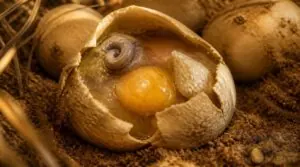
Crack open a snake egg and you won’t find milk, you’ll find a self-contained pantry. Yolk lipid profile and protein allocation eggs fuel organogenesis, while eggshell nutrients supply calcium.
| Component | Provides | Peaks When |
|---|---|---|
| Yolk | Fats, protein | Mid-incubation |
| Albumen | Water, amino acids | Early growth |
| Shell | Calcium, phosphorus | Late incubation |
Incubation temperature impact shapes how fast hatchling energy reserves build.
Internal Embryo Development
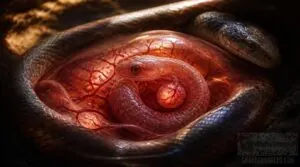
Live-bearing snakes skip the shell entirely. Inside the mother, embryos progress through blastocoel formation, trophoblast development, and organ-building stages like neural tube formation, with heart development starting around week five.
| Stage | Key Event |
|---|---|
| Cleavage | Blastula forms |
| Implantation | Trophoblast attaches |
| Organogenesis | Neural tube, heart |
| Growth | Limb buds appear |
| Late gestation | Placental blood flow peaks |
This is viviparity, not yolk-only development.
Placenta-Like Nutrient Transfer
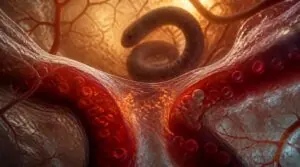
A true placenta in a snake? It happens. Boa constrictors and green anacondas rely on a syncytiotrophoblast barrier, where nutrient transporters, diffusion, and endocytosis move nutrients across two bloodstreams.
| Mechanism | Function |
|---|---|
| Diffusion | Small solutes |
| Transporters | Selective uptake |
| Endocytosis | Large molecules |
| Bloodstream exchange | Continuous supply |
Placental reproduction in reptiles rivals yolk sac nutrition, reflecting real parental investment beyond viviparity’s basics.
Neither Strategy Involves Nursing
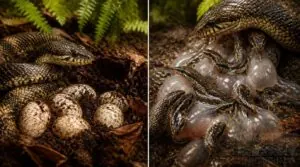
Whether eggs or live birth, the outcome’s the same: no reptile lactation, ever. Yolk nutrition or placental transfer replaces snake milk entirely.
| Strategy | Nutrient Source | Maternal Care |
|---|---|---|
| Oviparous | Yolk | Brief guarding |
| Viviparous | Placenta-like | Minimal |
| Both | No milk | No nursing |
This energy budget shift favors reproduction over maternal care, an evolutionary feeding strategy built for dispersal, not dependency.
Do Snakes Care for Their Young?
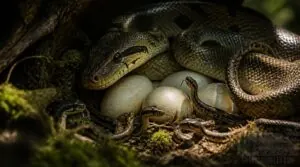
Skipping the nursing question doesn’t mean every snake mother skips out entirely. Parental care in snakes ranges from weeks of dedicated guarding to none at all, depending on the species. Here’s how that spectrum actually plays out.
Python Egg Brooding
Coiled tight around her clutch, a female python becomes a living thermostat. This maternal coiling raises nest temperature and locks in humidity for weeks.
- Muscular shivering generates heat
- Coils trap moisture near eggs
- Body position shields against swings in humidity
Egg viability hinges on this steady microclimate, proving snake maternal care rivals any nursing mammal’s dedication.
Rattlesnake Neonate Guarding
Once her python cousins hatch out, rattlesnakes take a different approach: rattlesnakes briefly protect newborns, guarding for just 7-10 days until the first shed.
| Behavior | Duration | Purpose |
|---|---|---|
| Maternal Vigilance | 7-10 days | Predator Deterrence Tactics |
| Thermal Brood Management | Daily cycles | Neonate Group Togetherness |
| Shelter Site Selection | Ongoing | Reduces mortality risk |
No reptile lactation occurs, just neonatal care through presence.
Communal Nest Protection
Some pythons take brood attendance further, guarding unrelated neonates alongside their own clutch. These communal setups rely on nest shielding structures like leaf litter and hollow cavities, cutting predator visibility by up to 40%.
Adults share alarm duties too, tail-flicking and vocalizing when danger nears. This shared vigilance stabilizes nest temperatures and reinforces predator deterrence, all without a single drop of milk involved.
Most Snakes Leave Quickly
Why do most newborn snakes vanish within hours? Immediate abandonment is the norm, not the exception. Since snakes don’t nurse their young, staying put offers no benefit.
- Rapid dispersal timing: hours after birth
- Neonate escape speed: rapid, tight waves
- Post-birth habitat choice: leaf litter, debris
- Predator evasion tactics: camouflage, sudden bursts
These self-sufficient hatchlings begin early foraging fast, no maternal care required.
How Baby Snakes Survive Without Nursing
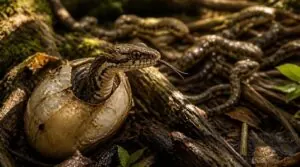
No mother snake is coming back to teach hunting skills or offer protection. A hatchling’s survival toolkit is built in, ready to use the moment it leaves the egg or its mother’s body. Here’s what that toolkit includes.
Immediate Hunting Instincts
Instant independence sounds harsh, but it works. Baby snakes hunt from day one, using thermal prey detection, forked tongue tracking, and visual motion sensitivity together. No practice runs needed.
No practice runs needed: baby snakes hunt from the moment they’re born, guided by instinct alone
| Sense | Function |
|---|---|
| Heat pits | Locate warm prey |
| Tongue | Track scent trails |
| Eyes | Detect motion |
| Patience | Time the ambush |
| Instinct | Guide strike precision |
Functional Fangs and Venom
Strike first, ask questions never. Venomous neonates hatch with hollow fang injection systems already wired to venom glands, delivering hypodermic-style doses that rival adult potency per milligram.
Venom enzymes break down tissue instantly, jumpstarting digestion before the first bite even lands. The fang replacement cycle starts early too, ensuring baby snakes never hunt with dull tools.
Early Offspring Dispersal
Home is wherever the next meal hides. Within days of hatching, baby snakes disperse from the nest, some traveling mere meters, others crossing kilometers, guided by prey scent and temperature. Habitat selection favors cover with rodents or lizards nearby.
This isn’t neglect. With no reptile lactation and no maternal care to speak of, offspring independence starts immediately, and scattering reduces predator concentration around any single hatchling.
Independent Survival Strategy
Millions of years of evolution built a self-sufficient blueprint: yolk sac nutrition, then immediate hunting.
- Sensory reflex development for tracking prey
- Predator evasion tactics like freezing or fleeing
- Thermal regulation through basking and burrowing
With offspring independence baked in from egg incubation onward, foraging readiness isn’t learned, it’s inherited, explaining why offspring survival rates hover between 10-25% yet still sustain thriving populations.
Frequently Asked Questions (FAQs)
How do snakes feed their babies?
No mother’s milk here. Hatchlings draw on yolk sac reserves for their first days, then switch to whole prey sized to their small bodies, hunting independently from birth with zero maternal care involved.
How does a snake take care of its young?
Care varies widely: most snakes offer none, but pythons guard their clutches through egg incubation, coiling tight for weeks. Rattlesnakes protect neonates briefly, days only, then baby snakes disperse, fully self-sufficient from birth onward, no maternal care needed.
Do mother snakes take care of their babies?
Rarely, and briefly. Most abandon eggs or newborns outright, but pythons brood eggs for warmth, rattlesnakes guard neonates days, and communal nesters share egg-watching duties, weighing predator defense against filial cannibalism risk under scarcity.
How long does a baby snake stay with its mother?
Don’t expect a long slither down memory lane. Parental guarding duration is short: rattlesnakes briefly protect newborns for days, pythons brood eggs through incubation, but most baby snakes turn self-sufficient almost immediately, with maternal care variation ending well before the first shed.
For a deeper look at which species defy the “hatch and go” norm, this guide on whether baby snakes stay with their mother breaks down the exceptions in detail.
Do baby snakes drink milk from their mother?
No. Snakes have no mammary glands, so mammalian lactation simply isn’t possible. Hatchlings rely on leftover yolk, then whole prey, for nutrition, surviving independently from birth without a single drop of milk from mom.
Do snakes nurse their babies?
No, snakes nurse their young never. As reptiles, they lack mammary glands entirely, so maternal care skips milk altogether. Instead, baby snakes rely on yolk reserves, then hunt independently, since snake biology simply never evolved lactation.
Do snakes care for their offspring?
A python coiled tight around her clutch, still as stone, versus a hatchling slithering off alone within hours: parental behavior spans that whole spectrum. Most offer brief maternal egg attendance, then leave baby snakes fully self-sufficient.
Do rattlesnakes nurse their young?
No, rattlesnakes don’t nurse. Mothers guard neonates for 7-10 days, then independent hunting begins. Yolk sustains them briefly; venom potency matches adults immediately. No milk, no lactation, just brief protection before dispersal and self-sufficient survival.
Are snakes nurturing parents?
Don’t expect a doting mother. Reptile parental investment runs thin, favoring offspring independence over nurturing behavior. Most abandon eggs or neonates fast, though egg guarding, neonate protection, and communal nesting do occur in select species like pythons.
How do snakes detect vibrations in the environment?
Your lower jaw does the real work here, picking up ground vibration detection through bone conduction to the inner ear. Skin and scales relay substrate signals too, giving prey detection and predator avoidance a seismic edge no ears could match.
Conclusion
Picture a relay race where the baton is packed with every ounce of fuel the runner will ever need before the race even begins. That’s snake reproduction in short.
So when someone asks how do snakes nurse their young, the honest answer is they never pass a baton of milk at all. Yolk does the early work, then instinct takes over fast. No mammary glands, no missed steps. Just a hatchling, ready to hunt, alone.