This site is supported by our readers. We may earn a commission, at no cost to you, if you purchase through links.

You lift the water bowl to change it, and there it is—an unmistakable dark coil floating in what was supposed to be clean drinking water. If your snake has turned its water bowl into a personal toilet, you’re not alone. This behavior frustrates countless snake owners, and it’s not just messy—it creates real health risks when your pet soaks in contaminated water.
The good news? Your snake isn’t doing this to spite you. There are specific biological and environmental reasons behind this bathroom choice, from the way warm water triggers their digestive system to how enclosure design shapes their toilet habits. Once you understand what’s driving this behavior, you can make simple adjustments that give your snake better options and keep that water bowl clean.
Table Of Contents
Key Takeaways
- Snakes poop in their water bowls primarily because warm water stimulates digestion, the bowl sits in their preferred elimination zone, or it’s the only spot offering privacy and security in a poorly designed enclosure.
- Contaminated water creates real health risks including bacterial infections, parasites like Cryptosporidium, and chronic stress from dehydration when snakes avoid drinking from their own waste.
- Moving the water bowl to the cooler side of the enclosure and providing proper humid hides with sphagnum moss gives your snake better toilet options and naturally redirects this behavior.
- Healthy snake droppings contain three parts—dark tubular feces, chalky white urates, and clear liquid urine—and any deviation in color, consistency, or frequency signals potential dehydration or illness requiring veterinary attention.
Why Do Snakes Poop in Their Water Bowl?
If you’ve ever walked over to find your snake’s water bowl looking like a crime scene, you’re not alone. This happens to a lot of snake owners, and honestly, it’s not random behavior.
Your snake has a few specific reasons for choosing that bowl as their bathroom spot, and understanding them can help you manage the mess.
Warm Water Stimulates Digestion
Snakes often gravitate toward their water bowls after a meal because the warmth of the water actually helps kickstart their digestion—it’s like a cozy heating pad for their metabolism. Since snakes can’t generate their own body heat, they rely on environmental warmth to power the digestion process.
Snakes seek warm water after eating because the heat jumpstarts their digestion like a metabolic heating pad
If your water bowl sits on the warm side of the enclosure, don’t be surprised when it doubles as a toilet post-dinner.
Preferred “Litter Box” Locations
Beyond warmth, your snake likely picks the same spot every time—yes, they’re creatures of habit in relation to toilet behavior. Many keepers notice their pet choosing one specific corner or hide as a designated “litter box,” and if your water bowl happens to sit in that favored zone, you’ve got your answer.
Here’s what drives these defecation patterns:
- Snake habitat design matters: Enclosure layout heavily influences where your snake chooses to eliminate—move features around, and the toilet spot often shifts too.
- Consistency is key: Once a preferred defecation area forms, snakes return to it predictably for months unless you rearrange their enclosure.
- Water bowls become focal points: Large soaking dishes are frequently reported as elimination sites, especially when snakes can fully enter them.
- Microclimate preferences: Snakes often select areas with suitable humidity and substrate texture for both resting and defecation.
- They avoid their mess: After pooping, snakes usually vacate that spot until you clean it—they don’t want to lounge in their waste either.
Understanding these defecation patterns helps you work with your snake’s natural toilet behavior rather than against it, making snake care and maintenance much simpler.
Seeking Privacy and Security
Just like you’d prefer a quiet bathroom over a public space, your snake’s privacy needs drive where they choose to defecate. That water bowl tucked against the wall? It functions as a makeshift hide—offering the secure elimination spot your pet craves.
This instinct stems from wild survival—minimizing scent trails that could attract predators, including some of the world’s most venomous snakes that rely on scent tracking to locate prey.
When snake hiding behavior kicks in, any structure providing cover becomes attractive for vulnerable moments. If your enclosure security relies on too few proper hides, snake behavior shifts toward using the snake in water bowl setup as environmental enrichment and a private toilet corner.
It’s animal hygiene meets instinct, showing why thoughtful snake care and maintenance starts with understanding their need for concealed spaces during defecation. Understanding digestion basics is essential for providing the right environment.
Is Pooping in The Water Bowl a Problem?
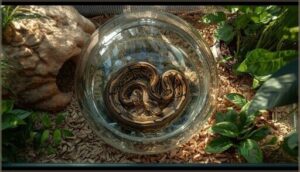
If your snake keeps pooping in the water bowl, you might be wondering if it’s actually a problem. There are a few things to check for your pet’s health and comfort.
Let’s look at what you should keep an eye on in your enclosure setup.
Hygiene and Health Risks
When your snake turns its water bowl into a toilet, fecal contamination isn’t just unpleasant—it creates real health hazards. Decomposing snake poop releases ammonia that irritates skin and eyes, while waterborne pathogens like Cryptosporidium thrive in dirty water.
These zoonotic risks matter for both reptile health and your family’s safety, so biosecurity measures and strict animal hygiene become essential parts of defecation management and proper hydration protocols. Proper water quality checks are vital to prevent such issues.
Impact on Snake Well-being
Your snake’s mental state takes a hit when it’s forced to drink from its own makeshift bathroom, creating stress that ripples through everything from shedding cycles to immune function. This constant exposure to waste creates behavioral issues that compromise reptile health in ways you mightn’t immediately notice.
Key wellbeing effects include:
- Chronic stress factors triggering dehydration as snakes avoid contaminated water
- Increased health risks from bacterial exposure during routine hydration
- Environmental impact on natural defecation patterns and overall animal health
How Enclosure Setup Influences This Behavior
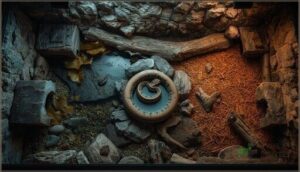
The way you set up your snake’s enclosure can play a big role in where it decides to do its business. Certain features and placements make some spots more tempting than others.
Here’s how a few common choices can influence this quirky bathroom habit.
Water Bowl Placement and Temperature Gradients
Where you position that water bowl matters more than you might think. If it’s sitting right over your under-tank heater, you’ve accidentally created the warmest, most humid spot in the whole enclosure—exactly where your snake wants to hang out after a meal. That cozy microclimate becomes the perfect toilet zone.
Here’s how thermal gradient and bowl placement work together:
| Bowl Location | What Happens |
|---|---|
| On the warm side | Creates unintended hot spot; snake lingers there during digestion and poops |
| Over heater | Water heats up; becomes preferred thermal zone for post-meal elimination |
| Cool side placement | Maintains proper gradient; snake uses warm side for digestion instead |
| Mid-range zone | May still attract defecation if humidity and temperature align perfectly |
| Away from heat source | Preserves clear warm-to-cool options; reduces bowl as elimination target |
Temperature monitoring is your best friend here. Grab an infrared thermometer and check the surface temps around that bowl—you’re aiming for about 88–92°F on the warm end and 78–82°F on the cool side for most pythons. If the area around the water reads hotter than your basking spot, that’s your culprit.
Microclimate management sounds fancy, but it just means understanding how features like water bowls create their own little zones. Evaporation cools the air slightly while boosting humidity control, making that spot feel different from the rest of the enclosure. For snake care and proper hydration, you want the bowl accessible but not competing with your heat source. Move it toward the cooler half, and suddenly your snake has clear thermal gradients to choose from—warm for digesting, cool for chilling, and water for drinking without the mixed signals.
When the temperature gradient is dialed in correctly, your snake can thermoregulate naturally instead of camping out in the one spot that accidentally combines warmth, moisture, and security.
Lack of Alternative Safe Spots
If your enclosure only has one hide box placement, that water bowl becomes the fallback shelter. Snakes need at least two alternative hides—one on each end of the thermal gradient—to meet their security needs without compromising comfort. Poor enclosure design forces your snake to choose between temperature and safety, so it improvises. That bowl suddenly fulfills double duty: hydration station and private bathroom.
Smart reptile care means giving your pet real options. When snake behavior and psychology align with proper snake shelter in a thoughtfully planned enclosure, those messy snake droppings move elsewhere.
Humidity and Hides
Humidity levels play a bigger role in toilet habits than you’d think. When ambient moisture runs too low, that water bowl becomes the only humid microclimate available—a makeshift snake refuge your pet will absolutely use for defecation.
Smart moisture management fixes this:
- Install dedicated humid hides with moist sphagnum moss in narrow-entrance containers
- Position hides across thermal gradients so security meets temperature preferences
- Monitor humidity at ground level where your snake actually lives, not cage-top readings
- Design hide interiors with smooth surfaces and limited airflow to retain moisture
Proper hide design gives your snake real choices. When reptile enclosure management balances security, temperature, and humidity through thoughtful setup, snake behavior and psychology shift—droppings migrate to appropriate spots. This targeted approach beats raising whole-cage humidity, which risks respiratory issues.
Clean animal health and hygiene start with meeting your pet’s environmental needs through evidence-based reptile care, not guesswork.
What Does Healthy Snake Poop Look Like?
Before you can tell if something’s off, you need to know what normal looks like. A healthy snake dropping has three distinct parts that show up together, and understanding each one helps you spot trouble early.
Let’s break down what you should expect to see in your snake’s enclosure.
Normal Feces, Urates, and Urine
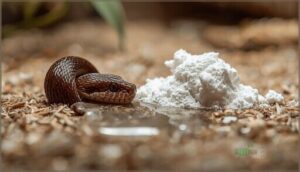
Think of snake poo like a three-part package: dark, tubular feces from digested prey; chalky white urates (their version of solid urine for water conservation); and a small amount of clear liquid urine.
Healthy droppings show all three components together, usually once a week to every few weeks. The feces should be firm but moist, while fresh urates have that toothpaste-like consistency before drying to a crumbly powder.
Signs of Dehydration or Illness
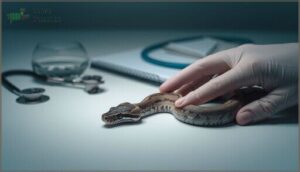
Your snake’s droppings can be an early warning system for dehydration and illness if you know what to watch for. Here’s what should catch your attention during health monitoring:
- Sunken eyes with a hollow appearance – a reliable sign of dehydration in reptiles
- Wrinkled, inelastic skin that tents when pinched instead of snapping back
- Hard, dry urates (yellow or orange instead of soft white)
- Difficult shedding with retained skin or eyecaps
- Lethargy paired with runny feces – potential infection red flags
When to Worry About Color or Consistency
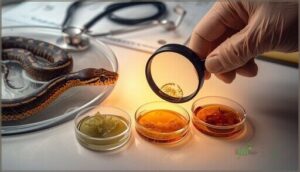
While physical signs like sunken eyes tell part of the story, the color and texture of your snake’s waste often reveal what’s happening inside their digestive system. Here’s when abnormal droppings warrant concern:
| What You See | Possible Cause | Action Needed |
|---|---|---|
| Green feces | Bacterial infection or poor reptile nutrition and digestion | Fecal analysis by vet within 48 hours |
| Bloody stool texture | Internal bleeding or severe inflammation | Emergency veterinary visit |
| Yellow/orange urates | Dehydration affecting urine colors | Increase humidity and water immediately |
| Runny, pasty snake poop | Parasites or digestive upset | Monitor poop frequency; vet if persists |
| Unusually long intervals | Impaction or metabolic issue | Check temperatures and consult vet |
When reptile health is compromised, these visual cues in their waste are often your first alert.
How to Prevent Water Bowl Pooping
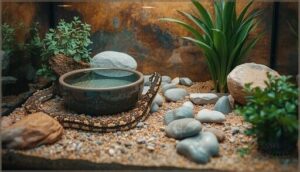
Now that you know what’s normal and what’s not, let’s talk about how to actually stop this messy habit. A few simple tweaks to your snake’s setup can make a real difference.
Here are the strategies that work best in my clinic.
Moving The Water Bowl
One of the easiest fixes? Try relocating your water bowl away from the warm side of your enclosure. When water temperature rises near heat sources, it can trigger snake poop episodes and boost humidity unevenly. Here’s what matters for bowl placement:
- Position the bowl on the cooler end to discourage extended soaking
- Move it away from your snake’s favorite hiding spot
- Place it where you can easily spot-clean and refresh water daily
- Keep it stable and level to prevent tipping during entry
- Avoid tight corner placement—central locations distribute humidity better
This simple enclosure design tweak helps with humidity control and reduces water bowl contamination while supporting better reptile care and maintenance overall.
Providing Private and Humid Hides
Beyond relocating your water bowl, you’ll want to give your snake better toilet options. Set up a snug hide box design on the warm side—think just big enough for a tight coil—filled with damp sphagnum moss to create a humid microclimate.
Snakes gravitate toward these private refuges for shedding and elimination, naturally steering them away from soaking spots and keeping humidity levels right where you need them.
Cleaning and Maintenance Tips
Once you’ve given your snake better options, stick to a solid cleaning schedule. Scoop out snake poop daily and wash that water bowl with hot soapy water, then disinfect it using F10SC or diluted chlorhexidine—let it sit for ten minutes before rinsing thoroughly.
Always wash your hands afterward to protect your own health, and keep those disinfection methods consistent to maintain excellent enclosure hygiene and reptile health.
Frequently Asked Questions (FAQs)
How often do healthy snakes normally poop?
Most healthy adult snakes defecate once per meal cycle, usually every one to three weeks. Juveniles poop more frequently due to faster metabolisms and eating schedules, while species variance affects individual digestion timing.
Can substrate type affect pooping location choices?
Substrate texture, absorbency levels, and humidity control absolutely shape where your snake chooses to poop. Loose mulch or cypress encourages burrowing and creates microclimates, while bare newspaper offers less comfort, potentially driving snakes toward their water bowl instead.
Do different snake species have different pooping habits?
Yes, snake species definitely show pooping frequency and habitat influence differences. Larger breeds like pythons poop less often than smaller colubrids.
Species variation in metabolism, snake size, and natural environments all shape these reptile health patterns.
Should I remove my snake immediately after pooping?
Think of defecation like shedding—your pet snake needs uninterrupted time.
Post defecation handling should wait until your snake settles down, reducing immediate removal effects and supporting welfare balanced management for ideal reptile health and snake stress reduction.
Conclusion
Like solving any mystery, understanding why your snake is pooping in the water bowl comes down to reading the clues—temperature, placement, and privacy all play a role. You’re not dealing with a defiant pet; you’re working with natural instincts.
Move that bowl away from heat sources, add proper hides, and maintain a solid cleaning routine. These straightforward adjustments will keep your snake healthier and save you from those unpleasant morning discoveries.