This site is supported by our readers. We may earn a commission, at no cost to you, if you purchase through links.
Snakes hide. It’s what they do, tucked into logs and burrows to avoid predators long before humans kept them in glass tanks. But when your snake is hiding constantly, refusing meals, and barely moving when you do coax it out, normal behavior has likely crossed into something else.
Digestion, shedding, and simple caution all explain short hiding spells. Illness explains the ones that don’t end, especially when paired with weight loss, labored breathing, or a body that won’t hold its usual curve.
Knowing the difference protects your snake from a problem left too long to fix, and it starts with reading these signs correctly.
Table Of Contents
- Key Takeaways
- Why is My Snake Hiding Constantly?
- Sick Snake Warning Signs
- Health Problems That Cause Hiding
- Check Your Snake’s Enclosure
- When to Call a Reptile Vet
- Frequently Asked Questions (FAQs)
- Why is my snake hiding all the time?
- How to tell if a snake is unwell?
- How long will a snake stay in hiding?
- How do I get my snake out of hiding?
- Can multiple snakes share the same hiding spot?
- Do certain snake species hide more than others?
- How long can a healthy snake hide continuously?
- Will adding more hides reduce hiding behavior?
- Can overfeeding cause a snake to hide excessively?
- How long can a snake safely hide?
- Conclusion
Key Takeaways
- Short-term hiding tied to digestion, shedding, or a new enclosure is normal, but hiding beyond a week combined with weight loss, lethargy, or refusal to eat signals illness requiring veterinary attention.
- Emergency warning signs—open-mouth breathing, wheezing or bubbling sounds, sunken eyes with sticky saliva, or reddish ventral discoloration—mean you should call a reptile vet immediately rather than wait.
- Husbandry problems like incorrect temperature gradients, mismatched humidity, damp substrate, or poorly designed hides are common root causes of excessive hiding and should be checked before assuming illness.
- Serious health conditions driving constant hiding include respiratory infections, mites, scale rot, mouth rot, and egg binding in females, each with distinct physical signs worth learning to recognize early.
Why is My Snake Hiding Constantly?

Hiding is one of the most misread behaviors in pet snakes, and not every disappearing act means trouble. Some causes are perfectly normal, tied to instinct, digestion, or a new environment settling in, while others point to something you need to address quickly. Here’s how to tell the difference between the two.
For example, it’s common for snakes to retreat after eating or while shedding, as explained in this guide to normal snake hiding behaviors and routines.
Normal Hiding Vs. Excessive Hiding
A retreat isn’t a red flag by itself. Hide duration patterns vary by species, temperament, and thermal gradient use, with brief emergences still expected.
Watch for these environmental cues:
- Hiding only during daylight (normal for nocturnal species)
- Occasional movement between hides
- Hiding tied to shedding cycles
- Brief, purposeful hiding after feeding
- Hiding accompanied by lethargic, withdrawn behavior (concerning)
Stress and New Enclosures
A recent move is a common trigger: enclosure change stress disrupts your snake’s sense of familiarity, and it may hide or bury itself until it relearns escape routes and hide locations.
Give it a genuine settling period—days, not hours—before assuming something’s wrong. Avoid extra handling during this stretch, and keep enclosure sanitation consistent so unfamiliar smells don’t compound the adjustment.
Poor enclosure design can increase stress-related behaviors in captive animals, making proper setup essential for reducing anxiety. Proper enclosure design plays a key role in minimizing stress and supporting natural behaviors in snakes.
Feeding and Digestion Hiding
Meal timing plays a huge role here: after eating, your snake redirects energy toward digestion, so reduced activity is normal, not a red flag.
- Staying hidden for days
- Little interest in food
- Seeming lethargic or less active
- Avoiding movement near the meal
Warmth speeds this process. Too-cool temps slow digestion, risking dehydration if fasting drags on—watch for that shift.
Hiding With Illness Signs
Digestive hiding resolves on its own, but when it doesn’t, watch closely. Hide preference shifts toward warmer spots, reduced tongue flicking, and fixed posture hiding all signal something deeper.
Add water avoidance or a snake that’s simply lethargic and less active beyond normal digestion time, and you’re likely looking at illness-driven behavioral changes, not routine environmental stress.
Sick Snake Warning Signs
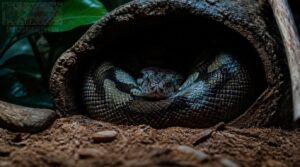
Not every hiding snake is sick, but certain signs tell you it’s time to look closer and take the behavior seriously. Your snake’s body and behavior offer real clues once you know what to check for. Here are the warning signs worth watching for.
Lethargy or Weak Movement
A healthy snake resists handling with firm muscle tone; a sick one may lie limp, too weak to coil up tightly or contract its body normally. Watch for dragging movements, poor righting reflexes, or a snake that stays buried rather than exploring.
If your snake also refuses food during this sluggish phase, check that you’re offering properly warmed meals, since thawing frozen rodents the right way can make feeding time far more enticing.
Causes range from low tank temperatures to dehydration or neurologic disease—weakness lasting more than 48 hours warrants veterinary evaluation.
Appetite Loss or Fasting
Occasionally a snake refuses food for weeks with no obvious cause, and that’s not always cause for panic. Loss of appetite stems from breeding cycles, shedding, or cooler temps suppressing hunger signaling. Short fasts rarely harm healthy adults, but prolonged refusal risks nutritional deficiency and weight loss in snakes.
If your pet shows little to no interest in food alongside lethargy, seek veterinary input.
Weight Loss and Dehydration
A single low reading on the scale rarely means much on its own, but a steady downward trend does.
Watch for muscle wasting along the spine, sunken eyes, and dry, sticky saliva—classic dehydrated signs. Track weight weekly, check skin turgor, and offer moist prey; little to no interest in food often compounds fluid loss fast.
Abnormal Posture or Balance
Head tilts, tail dragging, or a snake that can’t hold a smooth curve all point to neurologic trouble, not just clumsiness. Watch for uneven movement waves, stiffness during climbing, or slipping on stable surfaces. A snake that used to coil up tightly but now hides or bury themselves after wobbly crawling needs a veterinary examination soon.
Unusual Aggression or Withdrawal
A calm snake that suddenly hisses, strikes, or refuses to come out isn’t being difficult—it’s telling you something hurts.
When a calm snake suddenly hisses or strikes, it isn’t being difficult—something hurts
- Sudden temperament shift from tolerant to defensive
- Striking at tongs or hands during feeding
- Freezing deep in hides instead of investigating
- Handling discomfort response replacing normal curiosity
- Hiding, then snapping if disturbed
This pairing of pain-related aggression and withdrawal signals stress-induced illness in snakes, warranting a veterinary examination.
Health Problems That Cause Hiding
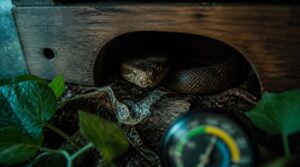
Sometimes constant hiding isn’t behavioral at all, it’s your snake’s way of coping with a hidden medical issue. Certain conditions push snakes to withdraw and stay tucked away far more than usual, often before you notice any other symptoms.
Here are the five health problems most likely behind that behavior, and what to look for with each one.
Respiratory Infection Symptoms
Respiratory infections rank among the most serious reasons a snake hides and refuses food. Caused by bacterial or viral pneumonia, they produce wheezing or clicking sounds, open-mouth breathing, and nasal or ocular discharge. Watch for your snake trying to blow bubbles from its mouth and nose—a hallmark sign.
Lethargy with anorexia and dry, sticky saliva often follow, signaling it’s time to call your vet immediately.
Mites and Parasite Signs
Mites bring a quieter kind of misery than pneumonia, but they’ll still send your snake into hiding around the clock.
Look for little red or black specks near the eyes and jaw, or dark dots scattering across the enclosure after you flip on the lights. This mite infestation irritates skin, disrupts shedding, and fuels the parasite stress behavior driving that constant retreat.
Scale Rot or Blisters
Where your snake’s belly meets damp substrate too long, scale rot takes hold, showing up as brownish or greenish-black ventral discoloration.
- Fluid-filled blisters progressing to pus
- Skin inflammation and puffy swelling
- Tissue necrosis with scale loss
- Damp, dirty substrate as the root cause
- Retained patches of dry, peeling skin
Left untreated, blisters burst and invite infection—another reason your snake stays curled up, avoiding contact with its sore underside.
Mouth Rot Warning Signs
Open its mouth gently and check for yellow or gray patches, stringy saliva, or crusty discharge along the gumline—early stomatitis signs.
Left untreated, mild inflammation progresses to jaw swelling, pus, and loose teeth. A snake hiding with excess drooling or an uneven jaw needs veterinary attention promptly, since infection can spread beyond the mouth into deeper tissue and even the bloodstream.
Egg Binding in Females
A gravid female hiding constantly, straining with no egg produced, may signal egg binding—a reproductive tract blockage requiring urgent care.
Watch for abdominal distension, a "penguin-like" stance, or cloacal prolapse. Causes include calcium deficiency syndrome and ovarian follicular stasis. Untreated, it risks egg yolk peritonitis or paralysis.
Dehydration symptoms worsen outcomes fast—call your reptile vet immediately.
Check Your Snake’s Enclosure
Before you assume the worst, take a hard look at the setup your snake lives in every day.
Illness often traces back to husbandry, not disease, and small enclosure mistakes can push a healthy snake into constant hiding.
Walk through these five checkpoints to see where things might be going wrong.
Warm and Cool Temperatures

Temperature is often the root cause when a snake won’t stop hiding. Your enclosure needs a thermal gradient: warm basking surface heat on one end, a true cool side retreat on the other.
- Verify both zones with probes, not guesswork
- Watch for sunken eyes or dry saliva (dehydration signs)
- Avoid sudden night drops
- Use thermostat control for stability
Humidity for Your Species

A desert species like a ball python needs far less moisture than a tropical tree boa, so match humidity to native habitat, not a generic chart. Use a reliable hygrometer at both hides to confirm real readings.
Low humidity causes dysecdysis, incomplete sheds, and retained eye caps. Too much moisture invites skin irritation. A clean water dish adds gentle ambient moisture too.
Clean, Dry Substrate
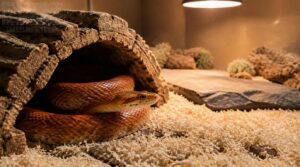
Dry substrate is a foundation for reptile health, not a cosmetic choice — damp bedding invites bacteria, fungus, and irritated scales.
Watch for:
- Musty or sour odors
- Clumping under normal handling
- Slimy residue on surfaces
- Persistent wet patches
Good airflow through loose substrate speeds drying and curbs odor. Snakes may still hide or bury themselves, but dry conditions protect skin and support proper shedding.
Secure, Cozy Hides

A hide isn’t just a box — it’s a stress valve. Entry gap design matters most: a narrow opening keeps your snake from staring straight into open space the moment it enters.
Snug body fit, an overhang roof, and stable, non-tipping placement round things out. Add visual shielding on three sides, and hiding stops being constant — it becomes restorative, the way good reptile care should work.
Low-Stress Handling Routine
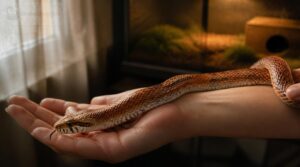
Handling itself can trigger stress-induced illness if done carelessly, so timing and technique matter as much as enclosure setup.
- Quiet handling in low-noise spaces
- Gentle body support along the full length
- Consistent timing, never near feeding
- Minimal restraint, no head pressure
- Stop if breathing quickens
A calm environment and early detection of resistance signals prevent problems a reptile veterinarian would otherwise need to treat professionally.
When to Call a Reptile Vet

Some symptoms cross the line from "monitor at home" to "get to a vet now," and knowing that line matters. A few red flags in particular signal an emergency rather than a husbandry fix. Here’s what should send you straight to a reptile vet, no waiting period involved.
Open-Mouth Breathing
A snake breathing with an open mouth is never resting quietly — it’s a red flag for respiratory distress. Nasal blockage from mucus, mouth inflammation, or infection forces this compensatory pattern, drying oral tissue and worsening irritation.
Unlike normal behavior, this signals real respiratory problems in snakes. Proper humidity control and husbandry help prevent triggers, but persistent open-mouth breathing means one thing: call your reptile vet immediately.
Bubbles, Wheezing, or Clicking
Bubbling from the nose or mouth, a wheezing whistle, or audible clicking on inhalation all point to fluid or mucus in the airway — not normal breath sounds.
- Bubbles: fluid buildup, often pneumonia
- Wheezing: narrowed airways, turbulent airflow
- Clicking: mucus obstruction during inspiration
- Coarse rattling: possible bronchial inflammation
Any of these warrants a same-week vet visit, sooner if breathing looks labored.
Sunken Eyes or Sticky Saliva
A tighter, hollowed look around the eyes signals dehydration, especially paired with dull, tacky saliva at the mouth corners.
| Sign | Likely Cause |
|---|---|
| Sunken eyes | Dehydration |
| Sticky saliva | Dry mouth tissue |
| Hazy eye | Poor shedding |
| Thick mucus | Respiratory issue |
| Reluctant feeding | Oral discomfort |
Check hydration by gently pressing skin — slow rebound means trouble. See a vet promptly.
Red Belly Scale Discoloration
Ventral scale discoloration often starts subtle: a pink or reddish hue creeping across the underside of their body. This signals scale rot, usually from damp substrate and excess humidity.
Watch for swellings along the lower half or texture changes — early infection signs worth catching fast. Left untreated, secondary infection sets in, sometimes alongside mites. Don’t wait for blistering to call your vet.
What to Bring Along
Once you’ve spotted red belly or breathing trouble, don’t scramble. Grab a secure, ventilated transport container lined with paper towels, your printed symptom checklist, husbandry notes, and your reptile vet’s contact info.
Bring gloves and photos documenting progression. Home care has limits — professional treatment catches what you can’t. Watch for pain cues like restlessness or guarding. Early detection saves lives.
Frequently Asked Questions (FAQs)
Why is my snake hiding all the time?
Picture a ball python that vanishes under its hide for three straight days, refusing mice and barely shifting position.
That’s often just normal security-seeking behavior, tied to shedding, digestion, or temperature—but paired with weight loss or lethargy, it signals real illness.
How to tell if a snake is unwell?
Watch for behavior changes, poor body condition, and feeding refusal.
Physical symptoms like open-mouth breathing, mouth inflammation, mite-related skin infection, or shedding problems all signal illness.
Early detection matters—catching these environmental and physical cues quickly improves treatment success a lot.
How long will a snake stay in hiding?
Hide-and-seek has its limits: a few days after feeding or during shedding is normal, but hiding beyond a week without eating, moving, or basking often signals illness requiring prompt evaluation.
How do I get my snake out of hiding?
Correct temperature and humidity first, then try gentle coaxing with warm water soaks or offering food near the hide’s entrance. Avoid excessive handling. If withdrawal persists despite proper husbandry, visit your local vet to rule out illness.
Can multiple snakes share the same hiding spot?
Can two snakes really tuck into one hide peacefully? Rarely. Most pet species are solitary, so hide size compatibility matters most—cramped spaces breed access competition, stress-induced illness, and disease transmission, making separate hides the safer husbandry choice.
Do certain snake species hide more than others?
Yes. Ball pythons and other shy, ground-dwelling species naturally hide more than curious climbers like corn snakes. Juveniles, desert species, and those using rocky crevices show higher baseline hiding as a normal survival strategy, not necessarily illness.
How long can a healthy snake hide continuously?
Think of your snake’s hide as a security blanket: normal hiding duration runs 2-3 days post-feeding or up to two weeks during shedding and enclosure adjustment. Beyond that, watch for stress-induced illness signs before assuming it’s harmless withdrawal.
Will adding more hides reduce hiding behavior?
Sometimes, if hide placement covers both warm and cool zones with proper hide size suitability. If illness or stress-induced hiding is driving it, though, extra hides won’t help—veterinary care becomes necessary regardless of enclosure layout changes.
Can overfeeding cause a snake to hide excessively?
Absolutely — overloading digestion with oversized or too-frequent meals slows recovery, increasing regurgitation risk. That digestive strain reduces activity, driving prolonged hiding until you correct portion size and feeding frequency, allowing proper digestive recovery time between meals.
How long can a snake safely hide?
Two to three days post-feeding, or 1-2 weeks pre-shed, falls within normal hiding time. Beyond that without eating, drinking, or defecating, you’re seeing excessive hiding signs that warrant closer monitoring and, if prolonged, veterinary evaluation.
Conclusion
A snake curled in its hide and one gasping for breath can look identical at first glance, and that coincidence is exactly why guessing gets snakes killed.
Reading a snake hiding constantly sick pattern means checking temperature, appetite, posture, and breath sounds together, not in isolation.
Hides protect healthy snakes; they also mask dying ones.
Trust the full picture, not one quiet afternoon.
When symptoms stack up, don’t wait.
Call your vet, and let your snake’s body tell the truth.