This site is supported by our readers. We may earn a commission, at no cost to you, if you purchase through links.

Your snake’s heating setup might be working against you. Heat lamps create a perpetual twilight in reptile enclosures, confusing natural day-night cycles while racking up electricity bills and posing fire risks near wooden vivariums.
Ceramic heat emitters offer a compelling alternative—delivering consistent infrared warmth without the glow, but they come with their own installation quirks and upfront costs. The ceramic heat emitter vs heat lamp debate isn’t about picking a clear winner; it’s about matching your heating method to your snake’s biology, your enclosure’s design, and your tolerance for safety risks.
Understanding how each technology converts electricity into usable heat, where they excel, and where they fall short will help you create a thermal environment that keeps your reptile healthy without turning your setup into a hazard zone.
Table Of Contents
- Key Takeaways
- What is a Ceramic Heat Emitter?
- What is a Heat Lamp?
- Key Differences Between Ceramic Heat Emitters and Heat Lamps
- Energy Efficiency: Which Uses Less Electricity?
- Safety Comparison: Fire Risks and Precautions
- Best Uses for Reptile Enclosures
- Installation and Compatibility Considerations
- Can You Leave a Ceramic Heat Emitter on 24/7?
- Maintenance Requirements for Each Heating Option
- Which Heating Option is Right for Your Snake?
- Frequently Asked Questions (FAQs)
- Conclusion
Key Takeaways
- Ceramic heat emitters deliver consistent infrared warmth without visible light, making them ideal for maintaining your snake’s natural day-night cycles and providing 24/7 heating, while heat lamps produce both heat and disruptive glow that can interfere with nocturnal species’ sleep patterns.
- Though ceramic heat emitters cost more upfront ($15-$25 vs $6-$25 for heat lamps), they consume less electricity (25-100 watts vs 100-250 watts), last significantly longer (10,000-20,000 hours vs 1,000-4,000 hours), and deliver superior long-term value through reduced energy bills and replacement costs.
- Heat lamps pose serious fire hazards with surface temperatures exceeding 400°F that can ignite bedding or wooden enclosures within minutes, while ceramic heat emitters offer safer operation through gradual heat release, no exposed filaments, and better performance in enclosed spaces.
- Your final choice between these heating options depends entirely on your specific snake’s biology—tropical species needing constant overnight warmth (75-92°F) benefit most from ceramic heat emitters, while diurnal species requiring intense daytime basking spots may need heat lamps for concentrated thermal control.
For deeper guidance on keeping your snake warm after dark without disrupting their sleep, nighttime heating solutions for snakes break down the best setups for nocturnal species.
What is a Ceramic Heat Emitter?
A ceramic heat emitter is a specialized heating device that converts electrical energy into infrared radiation without producing any visible light.
This makes them ideal for reptiles that need warmth around the clock, especially when comparing ball python heat source options for consistent overnight temperatures.
Unlike traditional heat lamps, it uses a ceramic element that withstands extremely high temperatures and repeated heating cycles. To understand how this heating option works for your reptile, you’ll want to know three key aspects of its design and function.
How Ceramic Heat Emitters Work
When you plug in a ceramic heat emitter, electrical current flows through a nichrome wire coil inside the ceramic element. This internal heat source converts nearly 100 percent of that energy into heat through resistance.
The ceramic shell absorbs the heat and releases it outward as infrared emission, using thermal stability to withstand repeated cycles. Heat transfer happens through radiation and natural convection, warming your snake’s enclosure steadily.
For more details on their differences and appropriate applications, you can learn about the heat gradient options for reptiles.
Infrared Radiation Without Visible Light
Ceramic heat emitters produce infrared radiation in wavelengths from 700 nanometers to several micrometers—completely invisible to you and your snake. Unlike a heat lamp that glows, a CHE delivers pure radiant heat through thermal imaging-grade infrared heating. You won’t see light, but you’ll measure the heat transfer with any thermometer. This invisible radiation safety feature keeps your reptile’s day-night cycle natural while infrared wavelengths penetrate enclosure materials efficiently.
For a deeper understanding of how CHEs function, review the properties of infrared radiation and their role in thermal heating.
- Infrared radiation sits beyond visible light in the electromagnetic spectrum
- CHEs emit infrared wavelengths without disrupting your snake’s sleep patterns
- Heat transfer occurs through radiant heat instead of visible illumination
- Thermal imaging devices detect the infrared heating from ceramic emitters
- Infrared filters aren’t needed because there’s zero visible light pollution
Ceramic Construction and Durability
Beyond its invisible heat, your ceramic heat emitter’s real strength lies in the material itself. The ceramic element withstands temperatures up to 1,000°F without cracking, resists thermal shock from rapid temperature changes, and tolerates enclosure humidity that would corrode metal heating elements. That’s why these ceramic emitters deliver outstanding longevity factors—often 10,000+ hours of continuous operation.
| Property | Ceramic Heat Emitter | Typical Metal Heater |
|---|---|---|
| Max Temperature | 1,000°F sustained | 600-800°F before warping |
| Thermal Shock Resistance | Minimal microcracking | Prone to stress fractures |
| Humidity Tolerance | Resists corrosion fully | Oxidizes over time |
| Lifespan | 10,000+ hours | 3,000-5,000 hours |
This material strength means you won’t replace your heating elements nearly as often, saving money and reducing enclosure disruptions for your snake.
What is a Heat Lamp?
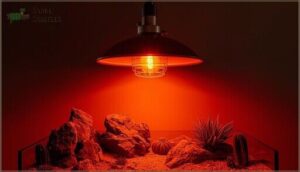
Heat lamps are a traditional heating solution that produce both warmth and visible light by converting electrical energy into infrared radiation.
Choosing the right setup matters, so reviewing a beginner’s guide to heat lamp safety and placement can help you dial in wattage and positioning before anything goes wrong.
Unlike ceramic heat emitters, these devices emit a noticeable glow while they operate, which can affect your reptile’s day-night cycle. Understanding the different types and how they work will help you decide if a heat lamp fits your specific setup.
Types of Heat Lamps (Infrared and Quartz)
Heat lamps come in two main varieties that use different heating elements to deliver radiant heat. Infrared heating models rely on tungsten filaments to produce infrared radiation alongside visible light, warming your snake’s enclosure quickly.
Quartz elements inside tubular heat lamps heat up within seconds, offering intense radiant heating through their transparent quartz glass. Each type affects heat lamp safety differently based on surface temperatures and heat distribution patterns.
How Heat Lamps Produce Heat and Light
When you plug in a heat lamp, electrical current flows through a tungsten filament that heats to extreme temperatures, releasing thermal energy as infrared radiation and visible light.
This radiant heating process converts wattage into a light spectrum that warms surfaces directly through infrared emission. The heat transfer happens instantly, creating focused warmth without relying on air circulation to distribute heat.
Common Heat Lamp Applications
You’ll find heat lamps in more places than you might expect, each application taking advantage of their infrared radiation and instant warmth.
The following are some examples of their use:
- Animal enclosures maintain basking spots for reptiles using 40 to 250-watt lamps positioned overhead
- Food warming stations in restaurants keep prepared dishes at safe serving temperatures
- Bathroom heating provides targeted comfort without lighting the entire space
- Industrial drying accelerates curing of coatings and inks with precise heat control
Key Differences Between Ceramic Heat Emitters and Heat Lamps
Now that you understand how each heating option works, you need to know what sets them apart in practical terms.
If you’re setting up nighttime heating, heat lamps designed for nocturnal reptiles offer targeted warmth without disrupting your pet’s natural sleep cycle.
The differences between ceramic heat emitters and heat lamps go beyond just their construction—they affect how you’ll heat your reptile’s enclosure, your energy bills, and your overall setup. Let’s break down the main distinctions that matter most for reptile keepers.
Heat Distribution and Coverage Area
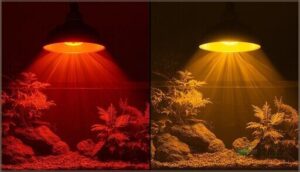
When you position a ceramic heat emitter, you’ll notice it creates a broad, circular heat pattern beneath it, warming surfaces through radiant energy. Heat lamps produce similar coverage but also emit visible light.
Both options generate thermal zones within your enclosure, though the coverage radius depends on wattage and reflector design. Ceramic heat emitters excel at surface heating through focused infrared radiation, while heat lamps scatter heat more broadly across the coverage area.
Wattage and Power Consumption Comparison
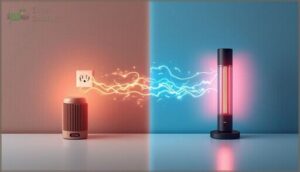
Your ceramic heat emitter usually draws 25 to 100 watts, while infrared heat lamps demand 100 to 250 watts for similar heat output.
A 60-watt ceramic emitter running continuously consumes 1.44 kWh daily, compared to a 150-watt heat lamp using 1.8 kWh in just 12 hours. This power consumption difference creates substantial energy costs over time, making wattage control essential for power savings and efficiency ratings optimization.
Energy Efficiency: Which Uses Less Electricity?
When you’re choosing between a ceramic heat emitter and a heat lamp, electricity costs matter more than you might think.
Ceramic heat emitters usually use less wattage to produce the same amount of heat, which translates to lower monthly energy bills. Understanding the real cost differences requires looking at upfront price, daily power consumption, and how often you’ll need replacements.
Long-Term Cost Savings With Ceramic Heat Emitters
Over time, your wallet will thank you for choosing a ceramic heat emitter. Energy efficiency translates directly to lower monthly bills, since ceramics convert more electricity into usable infrared heat with less waste.
The lifespan of these units often doubles that of heat lamps, cutting replacement costs substantially. When you factor in maintenance costs and thermal efficiency, the long-term cost analysis clearly favors ceramic options.
Initial Purchase Price Vs. Operating Costs
When comparing initial purchase price to operating costs, your budget planning should look beyond the sticker shock. Heat lamps start at $6 to $25, while ceramic heat emitters run $15 to $25, but that’s just the beginning of your cost analysis.
- Heat lamps draw 40–150 watts versus ceramics’ 25–100 watts
- Monthly energy savings add up with lower wattage
- Lifetime costs favor ceramics despite higher upfront price
- Price comparison must include fixtures and accessories
Lifespan and Replacement Frequency
Understanding Heat Emitter Durability shapes your long-term Maintenance Requirements. Ceramic Heat Emitter longevity reaches 1,000 to 2,000 burn hours, with Replacement Costs justified every 12 to 24 months.
Heat Lamp bulbs match that 1,000 to 2,500-hour range but degrade faster under constant cycling. Burn Hour Tracking helps you predict Element Failure Rates before your snake’s temperatures drop.
This Heating Element Comparison reveals Ceramic Longevity wins through stable output over time.
Safety Comparison: Fire Risks and Precautions
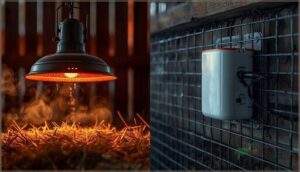
When you’re choosing between a ceramic heat emitter and a heat lamp, safety should be at the top of your list. Heat lamps have earned a reputation as fire hazards in chicken coops and reptile rooms, while ceramic heat emitters offer a different safety profile worth understanding.
Let’s break down the specific fire risks and ventilation needs you’ll face with each heating option.
Fire Hazards Associated With Heat Lamps
Heat lamps carry serious fire hazards that you need to understand before installing one in your reptile enclosure. Standard incandescent bulbs reach surface temperatures exceeding 400°F, and when positioned too close to bedding or wooden enclosures, they can ignite materials within minutes. Even with proper clearance, radiant heat accumulates over time and causes smoldering.
Heat lamps pose serious fire risks, reaching over 400°F and igniting bedding or wood within minutes if positioned improperly
Improper wattage selection amplifies these fire hazards. If you use a 150-watt bulb in a fixture rated for 100 watts, the socket overheats and can melt plastic components or ignite surrounding materials. Extension cords rated below the lamp’s amperage create additional electrical safety risks through overheated insulation.
| Risk Factor | Common Scenario | Prevention Method |
|---|---|---|
| Surface Temperature | Bulb touches bedding or wood | Maintain 12-inch minimum clearance |
| Electrical Overload | Multiple lamps on one outlet | Use dedicated circuit with thermostat |
| Mounting Failure | Fixture falls onto substrate | Secure with metal clamps, inspect weekly |
| Cord Damage | Fraying near high-heat zones | Replace damaged cords immediately |
| Combustible Proximity | Paper, cloth, or shavings nearby | Remove all flammable materials from area |
Thermal monitoring becomes critical with heat lamps. Without a thermostat, temperatures fluctuate wildly—your snake might experience dangerously high heat during the day while the enclosure cools excessively at night. Installing a quality temperature controller with automatic shutoff prevents both burns and fire hazards.
Never rely on visual checks alone for fire prevention. Wooden enclosures absorb heat gradually, reaching ignition temperature after weeks of exposure without showing obvious warning signs. Combustible materials like cardboard hides or cloth backgrounds pose particular danger because they smolder before flames appear.
Water exposure creates another layer of risk. If you mist your enclosure or a water bowl tips near the lamp’s electrical connections, you’re facing potential short circuits that spark fires. Keep all electrical components elevated and protected from moisture.
The combination of high surface temperatures, electrical demands, and proximity to combustible materials makes heat lamps the leading cause of reptile enclosure fires. You’ll find that ceramic heat emitters address many of these safety concerns through different design principles.
Ceramic Heat Emitters in Enclosed Spaces
Ceramic heat emitters excel in enclosed spaces because they don’t produce visible light or consume oxygen during operation. You can safely run a ceramic heat emitter inside your sealed reptile enclosure without worrying about carbon buildup or pressure changes that affect thermal management. The infrared radiation heats surfaces directly rather than igniting materials, making these energy efficient heating solutions for reptiles considerably safer than traditional bulbs.
| Safety Feature | Ceramic Heat Emitter Advantage | Risk Reduction |
|---|---|---|
| Surface Design | No exposed filament to shatter | Eliminates glass hazard in enclosure |
| Heat Retention | Gradual cool-down prevents burns | Protects curious reptiles from contact injuries |
| Oxygen Use | Zero combustion or air consumption | Safe for sealed terrariums and small spaces |
| Light Output | Complete darkness for nocturnal species | Maintains natural sleep cycles without stress |
| Mounting Security | Ceramic construction resists impact | Reduces breakage from vibration or accidental contact |
Your enclosure design benefits from ceramic heat emitters because they won’t dry out humidity-sensitive species as aggressively as heat lamps. The focused infrared radiation creates stable thermal gradients without the air currents that disturb substrate or scatter heat unevenly across space heating zones. These safety features matter most when you’re maintaining consistent temperatures overnight. Unlike heat lamps that cool rapidly when switched off, ceramic emitters retain warmth and release it gradually, preventing dangerous temperature swings that stress reptiles. You’ll find this thermal management approach particularly valuable for tropical species requiring steady warmth without constant power cycling.
Ventilation Requirements for Each Option
While ceramic heat emitters work safely in sealed environments, you still need proper airflow management to prevent heat-related fumes and maintain thermal balance. Your reptile enclosure requires passive vents positioned away from the heater surface, exchanging stale air with fresh outdoor air several times hourly.
Heat lamps demand stronger ventilation systems because they increase both temperature and humidity levels simultaneously.
| Heating Type | Minimum Air Exchange | Ventilation Design |
|---|---|---|
| Ceramic Heat Emitter | 3-4 changes per hour | Passive vents with cross-flow placement |
| Heat Lamp | 5-6 changes per hour | Active exhaust fans with intake control |
Best Uses for Reptile Enclosures

When you’re setting up a reptile enclosure, choosing the right heat source makes all the difference for your pet’s health and comfort. Ceramic heat emitters and heat lamps each shine in different situations, depending on your reptile’s specific needs and habits.
Let’s look at where ceramic heat emitters usually work best in reptile care.
Nighttime Heating Without Disrupting Sleep Cycles
Many reptiles need warmth after dark, but visible light can disrupt their natural cycles. Ceramic heat emitters solve this problem by delivering infrared radiation without any glow, supporting restful sleep environments through gentle heat delivery.
Here’s how to create ideal nighttime thermal comfort zones:
- Position your heat source overhead, away from direct sleeping areas
- Use a thermostat for precise sleep temperature control
- Aim for steady warmth rather than hot spots
- Choose low-wattage nighttime heat sources for consistent output
- Monitor basking zones to prevent overheating during rest periods
Maintaining Consistent Temperature for Tropical Species
Stability matters when you’re recreating rainforest conditions—tropical species need temperatures between 75 and 81°F with minimal daily fluctuation. A ceramic heat emitter paired with a reliable thermostat gives you precise climate control, maintaining steady warmth without the light interference that disrupts natural behaviors.
| Temperature Monitoring Element | Recommended Placement | Purpose |
|---|---|---|
| Digital thermometer probe | Basking zone | Verifies peak heat gradient accuracy |
| Secondary temperature gauge | Cool end of enclosure | Confirms thermal heating distribution |
| Thermostatic controller | Between power and heat source | Automates reptile thermoregulation adjustments |
| Ambient room sensor | Outside enclosure design | Tracks external climate control factors |
| Backup power supply | Electrical circuit | Maintains reptile care during outages |
Check your readings daily—consistent temperature control prevents stress and promotes healthy tropical species year-round.
Proper Positioning to Prevent Overheating
When you mount your ceramic heat emitter or heat lamp, heater placement directly affects safety features and prevents overheating. Follow these distance guidelines to maintain proper temperature control:
- Position the emitter 8 to 12 inches above your basking surface to prevent burns
- Angle your heat source toward the basking zone without directing heat into your snake’s eyes
- Install a thermostat to monitor thermal conditions and prevent excessive heat buildup
- Mount on noncombustible surfaces with adequate clearance for airflow
- Check emitter angles regularly to guarantee consistent heat distribution across the enclosure
Safety margins matter—proper positioning protects your reptile from stress and injury.
Installation and Compatibility Considerations
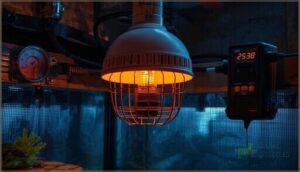
Before you install a ceramic heat emitter, you need to make sure it’ll work safely with your existing equipment.
The wrong setup can damage your fixture, create fire hazards, or leave your snake without proper heating. Here’s what you need to know about compatibility, electrical requirements, and safe installation practices.
Using Ceramic Heat Emitters in Dome Lamps
You can install a ceramic heat emitter in a standard dome lamp, but dome lamp safety depends on proper rating. The fixture must handle the emitter’s wattage and resist high temperatures generated by the ceramic element.
Ceramic heat emitters screw into regular sockets, making ceramic installation straightforward for reptile heating. However, make sure your dome lamp is ceramic-rated—standard plastic fixtures will melt from the intense infrared radiation these ceramic heat emitters produce.
Wattage Rating and Electrical Requirements
Before you buy a ceramic heat emitter or heat lamp, check your enclosure’s electrical capacity. Most reptile heating devices run on 120-volt circuits and draw 60 to 250 watts depending on size.
Your fixture must match the wattage rating—exceeding it risks overheating wiring and tripping breakers. Power consumption varies, so higher wattage means greater electricity use but faster heating.
Clearance and Spacing Guidelines
Proper spacing isn’t optional—it’s the difference between safe heating and a house fire. You need at least 2 inches of clearance around your ceramic heat emitter and 4 inches above it to prevent overheating.
Heat lamps require similar safety margins, plus extra ventilation systems in enclosed spaces. Never let substrate, climbing branches, or enclosure walls enter these heat zones, and always verify your clearance area matches manufacturer guidelines for your heating solution.
Can You Leave a Ceramic Heat Emitter on 24/7?

One of the biggest advantages of ceramic heat emitters is their ability to run continuously without the safety concerns that come with traditional heat lamps. You can leave them on around the clock, but doing so safely requires the right setup and monitoring.
Let’s look at what makes 24/7 operation possible and the precautions you’ll need to take.
Continuous Heating Capabilities
You can leave your ceramic heat emitter running around the clock without worry. These heating solutions deliver steady radiant heating through infrared energy while remaining dark, so your snake’s sleep cycles stay undisturbed.
Here’s why continuous operation works:
- Ceramic heat emitters maintain consistent heat patterns over 20,000+ hours
- They provide better energy efficiency compared to heat lamps
- Their thermal regulation enables stable temperatures for proper energy savings
This heating solution offers reliable temperature control day and night.
Temperature Control and Thermostat Use
Ceramic heat emitters require thermostat controllers for effective temperature regulation and control. Digital controllers monitor thermal conditions through sensor accuracy, usually within 0.1 to 0.5 degrees Celsius. Position your sensor near the basking zone to track temperature gradients accurately, then verify readings with a secondary thermometer during thermostat calibration.
| Control Feature | Purpose |
|---|---|
| Temperature profiling | Establishes day/night heat cycling patterns for natural rhythms |
| Thermal monitoring | Prevents overheating through continuous sensor readings |
| Programmable schedules | Automates temperature control for consistent enclosure conditions |
Safety Features and Overheating Prevention
When you run your ceramic heat emitter continuously, built-in thermal protection circuits prevent fire hazards by shutting off power when temperatures exceed safe thresholds.
Look for units with UL or CE safety certifications that include overheat alarms and auto-reset features.
Proper ventilation design around the fixture dissipates excess heat, while ceramic surfaces maintain lower touch temperatures than heat lamps to reduce burn risks during routine maintenance.
Maintenance Requirements for Each Heating Option

Keeping your heating equipment in good working order isn’t just about extending its lifespan—it’s about keeping your reptile safe.
Heat lamps and ceramic heat emitters have different maintenance needs that directly affect how often you’ll need to check, clean, or replace them. Here’s what you need to know about caring for each option.
Cleaning and Inspection Schedules
Think of maintenance like routine vet visits—small efforts today prevent big problems tomorrow. Your ceramic heat emitter and heat lamp both need regular attention to stay safe and effective. Daily checks catch issues early, while weekly cleaning removes dust that reduces heat output.
Don’t skip ventilation maintenance or electrical audits—these safety inspections protect your snake and prevent fire hazards. Here’s your complete schedule:
- Daily checks: Visually inspect heating equipment for cracks, discoloration, or unusual odors around the ceramic heat emitter or heat lamp
- Weekly cleaning: Wipe surfaces with a damp microfiber cloth to remove dust and maintain proper heat distribution
- Monthly ventilation maintenance: Clean intake vents and check wiring for fraying or loose connections
- Quarterly electrical audits: Test thermostats, temperature sensors, and circuit protection on all heating equipment
- Semiannual safety inspections: Review mounting hardware, clearances, and overall system performance to confirm safety features function properly
Bulb Replacement Frequency
Eventually, you’ll need to swap out your heating equipment, and the timeline varies dramatically between ceramic heat emitters and heat lamps. Understanding replacement schedules helps you budget for maintenance costs and keep your snake safe from equipment failure.
| Heating Type | Typical Lifespan | Replacement Frequency | Heat Output Over Time | Key Durability Factor |
|---|---|---|---|---|
| Ceramic Heat Emitter | 10,000–20,000 hours | 1–2 years (continuous use) | Gradual decline (70–80% retained) | Ceramic construction withstands thermal cycling |
| Heat Lamp | 1,000–4,000 hours | 6–12 months | Rapid decline with visible dimming | Filament stress from on/off cycles |
Ceramic heat emitters outlast heat lamps by a significant margin, reducing your long-term maintenance costs despite higher upfront prices. Heat lamps require more frequent replacements, especially when you’re running them 24/7 or cycling them on and off throughout the day.
Energy efficiency and emitter durability directly impact your replacement schedules. Ceramic heat emitters maintain consistent heat output longer, while heat lamps show noticeable dimming as they age. Don’t wait until complete failure—replace equipment when you notice reduced performance to prevent temperature drops that stress your snake.
Safety features like thermostats extend both options’ lifespans by preventing overheating cycles. Track your replacement dates in a maintenance log, noting hours of operation and any performance changes. This record helps you anticipate failures before they happen, keeping your enclosure stable and your snake comfortable.
Signs of Wear and When to Replace
Spotting trouble early prevents dangerous failures in your heating equipment. Watch for these wear indicators that signal it’s time to replace your ceramic emitters or heat lamps:
- Cracks or chips on the ceramic surface indicate thermal stress and imminent failure
- Dimming output measured with a thermometer shows reduced thermal efficiency below rated temperatures
- Uneven heat patterns across your enclosure suggest internal damage requiring immediate replacement
- Buzzing sounds during operation point to mounting wear or electrical safety concerns
- Flickering or soot on heat lamp glass reveals filament degradation and fire risk
Replace ceramic heat emitters after 6,000–10,000 hours and heat lamps after 1,500–3,000 hours, even without visible damage. Don’t wait for complete failure—proactive heating equipment maintenance keeps your snake safe and your enclosure stable.
Which Heating Option is Right for Your Snake?

Choosing between a ceramic heat emitter and a heat lamp depends on your snake’s specific needs and your setup. Different species require different temperature ranges, and your enclosure size affects how heat spreads throughout the space.
Let’s look at the key factors that will help you make the right choice for your situation.
Proper quarantine tank setup supports daily health checks and makes preventative treatments easier to manage safely.
Species-Specific Temperature Needs
Your snake’s thermal comfort depends entirely on its species’ thermoregulation needs. Most snakes thrive with thermal gradients between 75–90°F, but specifics vary.
Here’s a quick comparison:
| Species Type | Basking Zone | Cool Zone |
|---|---|---|
| Tropical (Ball Python) | 88–92°F | 78–80°F |
| Temperate (Corn Snake) | 85–88°F | 75–78°F |
Both ceramic heat emitters and heat lamps can deliver these ranges, though ceramic options maintain ambient warmth overnight without disrupting natural heat cycling or disturbing your snake’s rest.
Enclosure Size and Heat Distribution
Your enclosure’s size directly impacts heat transfer efficiency and temperature gradients. Larger spaces require higher wattage or multiple heat sources to maintain thermal comfort and wellness across the entire area.
Ceramic heat emitter vs heat lamp comparison shows ceramics excel in smaller enclosures with limited airflow management needs, while heat lamps cover broader areas. Enclosure design affects thermal mass retention, influencing which radiant heating systems work best for consistent heat distribution.
Budget and Long-Term Value Analysis
Your budget planning should weigh upfront costs against long-term investment returns. Ceramic heat emitter vs heat lamp comparison reveals ceramics cost more initially but deliver better energy savings through energy efficiency in heating—often paying back within two years.
Financial projections show ceramics reduce replacement frequency and electricity consumption, making them the smarter choice for cost analysis despite higher purchase prices. Energy conservation translates directly into heating solutions comparison favoring ceramics for sustained energy efficiency analysis.
Frequently Asked Questions (FAQs)
Is a ceramic heat emitter better than a heat lamp?
Neither heating solution wins universally—your choice depends on your reptile’s needs.
Ceramic heat emitters excel at nighttime warmth without light disruption, while heat lamps offer broader coverage and daytime illumination for diurnal species.
Can ceramic heat emitters be used outdoors?
You can use ceramic heat emitters outdoors with proper weather resistance measures.
Install them in protective, ventilated enclosures to prevent moisture damage, maintain safe clearances, and always use GFCI-protected circuits for outdoor climate control safety.
Do heat lamps affect humidity levels differently?
Heat lamps raise enclosure temperatures and lower relative humidity by increasing evaporation rates.
Ceramic heat emitters produce similar effects, though focused radiant beams from infrared lamps often dry surfaces faster, requiring strategic moisture management and airflow optimization.
Which option works better for basking spots?
For most basking spots, infrared heat lamps deliver faster, more concentrated thermal control that targets specific basking areas precisely.
Ceramic heat emitters work when broader warmth matters more than intense spot heating.
Are there dimmable ceramic heat emitter models?
Yes, you’ll find dimmable ceramic heat emitters equipped with adjustable wattage controls or compatible with external dimmers, letting you fine-tune infrared range and emitter efficiency for precise reptile enclosure heating without compromising safety considerations.
How do both options perform in cold climates?
When winter’s bite threatens your reptile’s warmth, thermal efficiency becomes critical.
Ceramic heat emitters excel in cold climate heating, maintaining steady temperatures without light disruption, while heat lamps offer localized warmth but require careful frost protection positioning.
Conclusion
The irony? After comparing ceramic heat emitter vs heat lamp options in exhaustive detail, your final choice still depends on the one factor you can’t standardize—your specific snake.
A ball python’s nighttime warmth needs differ drastically from a corn snake’s basking requirements. Your enclosure’s ventilation, your budget constraints, and your willingness to monitor thermostats all shape which heating method becomes your safest, most cost-effective solution.
The equipment matters less than matching it to your reptile’s biology.