This site is supported by our readers. We may earn a commission, at no cost to you, if you purchase through links.

Your ball python’s wheezing started subtly—a faint rasp during feeding that you almost missed. Within days, the respiratory infection had taken hold, turning a preventable issue into an emergency vet visit and weeks of medication.
Most snake keepers don’t realize that stagnant air is one of the leading causes of respiratory disease in captive reptiles, yet it’s completely avoidable with proper airflow snake habitat design.
The difference between a thriving snake and a chronically ill one often comes down to how air moves through the enclosure. Understanding ventilation isn’t just about punching holes in a glass tank—it requires balancing airflow strength, humidity retention, and temperature stability to match your snake’s specific needs.
Table Of Contents
- Key Takeaways
- Why Proper Airflow Matters in Snake Habitats
- Key Elements of Effective Snake Enclosure Ventilation
- Choosing The Right Ventilation System
- Balancing Airflow and Humidity Levels
- Optimizing Enclosure Design for Airflow
- Maintenance Tips for Healthy Airflow
- Frequently Asked Questions (FAQs)
- What are the common reptile enclosure mistakes?
- How often should I mist my snakes’ cage?
- How to keep humidity down in a snake enclosure?
- How often should I replace ventilation mesh screens?
- Can ceiling fans improve airflow in large enclosures?
- What airflow rate is ideal for arboreal snakes?
- Do baby snakes need different ventilation than adults?
- How does seasonal weather affect ventilation system performance?
- Conclusion
Key Takeaways
- Poor ventilation creates stagnant air pockets that breed respiratory infections in snakes, but proper cross-ventilation with intake vents positioned low on the cool side and exhaust vents high on the warm side prevents these life-threatening conditions.
- Effective airflow requires balancing 2-5 air exchanges per hour based on species needs while maintaining stable humidity levels and temperature gradients, which you monitor using strategically placed hygrometers and thermometers at both basking and cool zones.
- Mechanical ventilation systems with inline fans give you precision control over airflow and humidity, while passive systems using mesh-covered vents offer energy-efficient alternatives that work well when sized at 20-40 square centimeters per 40-gallon enclosure.
- Regular maintenance—including monthly vent inspections, weekly humidity and temperature logging, and cleaning mesh screens every 2-3 years—prevents the gradual decline in air quality that leads to chronic respiratory problems and stress behaviors.
Why Proper Airflow Matters in Snake Habitats
When you set up a snake enclosure, airflow mightn’t seem like the most exciting part of the job, but it’s one of the most critical factors for keeping your snake healthy. Poor ventilation creates a perfect storm for respiratory infections and stress-related behaviors that can spiral into serious health problems.
Understanding how different factors work together when choosing a terrarium helps you create an environment where proper ventilation becomes part of a complete health strategy.
Let’s look at the two main reasons why getting your airflow right matters so much for your snake’s well-being.
Preventing Respiratory Issues
Poor air quality can spell disaster for your snake’s respiratory health. Without proper ventilation, dust, bacteria, and airborne particles accumulate, irritating delicate airways and triggering wheezy breathing or open-mouth distress.
A well-designed ventilation system ensures cross-ventilation, sweeping away stagnant pockets where mold and irritants thrive. Position vent openings to promote circulation without creating harsh drafts directly on your snake.
Regular cleaning of substrate and surfaces minimizes dust buildup, while mesh screening filters particles before they reach your pet. Monitor breathing patterns closely—rapid or labored respiration signals trouble.
When you maintain clean, flowing air, you’re actively safeguarding your snake’s respiratory health and long-term well-being.
Supporting Snake Health and Behavior
Beyond preventing respiratory issues, proper airflow shapes your snake’s daily routines and overall health. A well-designed ventilation system maintains thermal balance, letting your pet move between basking and cool zones without sudden temperature shocks that disrupt digestion or trigger defensive postures.
Air quality influences snake behavior more than many keepers realize. Stale, humid pockets breed irritability and skittish reactions, while fresh circulation encourages confident exploration and regular feeding patterns. Health monitoring becomes easier when your habitat optimization includes consistent airflow—stable humidity levels support smooth sheds, and even temperature control reduces stress markers you’d otherwise miss. You can further support your reptile’s wellbeing by following to fine-tune both environment and diet.
When ventilation works quietly in the background, your snake thrives naturally.
Key Elements of Effective Snake Enclosure Ventilation

Getting the ventilation right in your snake’s enclosure isn’t just about poking a few holes and calling it done. You need to think through where air enters and exits, how it affects temperature zones, and whether your setup keeps your snake safely contained.
Let’s break down the three core elements that make ventilation both effective and secure.
Placement and Size of Vents
Getting your vent location and sizing right will dramatically improve air quality for your slithery friends.
Place intake vents low on the cooler end and exhaust vents high on the warmer side to support natural air circulation.
This setup mimics how air moves in nature and helps prevent stagnant pockets that can harbor bacteria or excess moisture—proper ventilation planning makes all the difference in maintaining a stable, breathable environment.
For a 40-gallon enclosure, aim for 20 to 40 square centimeters of total vent area, using multiple smaller openings rather than one large slot. Cover vents with fine mesh materials to prevent escapes while maintaining proper ventilation.
Calculating the ideal vent size takes cues from ventilation system sizing best practices.
Maintaining Temperature Gradients
Your ventilation setup will only succeed if it preserves the thermal gradient your snake needs for proper thermoregulation. Aim for a hot-side range of 88 to 92 degrees Fahrenheit and a cool end 10 to 15 degrees lower to support temperature regulation for snakes.
Position intake vents on the cooler side to avoid disrupting heat sources, and use gentle air circulation to maintain thermal balance without creating drafts.
Ensuring Security and Escape Prevention
When you install vents in your snake enclosure, cover openings with fine mesh—no larger than 2 millimeters—to prevent escapes while allowing air exchange. Secure vent covers with tamper-resistant screws and position them away from potential handholds.
This ventilation safety approach balances airflow with escape prevention measures, creating a secure enclosure design that protects your snake without compromising the healthy environment your slithery friend needs.
Choosing The Right Ventilation System

You’ve got three main paths for ventilation: mechanical systems, passive airflow, or DIY setups you can build yourself. Each approach has its own strengths depending on your budget, enclosure design, and how much control you need over humidity and temperature.
Let’s break down what works best for different situations so you can pick the right fit for your snake’s home.
Mechanical Vs. Passive Ventilation
When you’re choosing between mechanical and passive ventilation systems for your snake’s enclosure, think of it as picking between automation and simplicity. Mechanical ventilation uses powered fans to deliver consistent airflow control and precise air quality regardless of climate considerations, while passive ventilation relies on natural convection through strategically placed vents.
Mechanical setups give you adjustable fan options and scheduled ventilation modes, whereas passive systems offer energy efficiency with variable air exchange.
Most keepers find hybrid approaches balance both benefits effectively for maintaining proper ventilation and stable humidity levels.
DIY Solutions for Snake Enclosures
You don’t need expensive equipment to create a functional ventilation system for your snake enclosure. DIY materials like PVC pipes and hardware mesh screens deliver solid airflow optimization when positioned thoughtfully.
Repurposed window units or whole-house fans offer budget-friendly custom builds that maintain proper ventilation and air quality. These ventilation hacks let you tailor humidity levels to your snake’s specific needs without breaking the bank.
Using Inline Fans and Mesh Screens
Inline fans paired with fine mesh screens give you precision control over your ventilation system while keeping your slithery friends safely contained. These compact units pull fresh air through protective barriers, maintaining air quality without the drafts that disrupt temperature gradients.
- Position your fan at the intake side to draw air through 0.8 to 1.2 millimeter mesh screens
- Choose stainless steel or powder-coated aluminum materials to resist rust in humid enclosures
- Mount with rubber grommets for fan noise reduction and vibration dampening
- Clean screens monthly to minimize airflow resistance from dust buildup
- Monitor humidity levels near your snake’s preferred zone to fine-tune ventilation system design
This setup lets you adjust airflow precisely, preventing the excess dryness or dampness that stress reptiles. Short, straight ducting runs maintain efficiency, while regular fan maintenance tips like checking connections and lubricating moving parts keep your ventilation systems running reliably for years.
Balancing Airflow and Humidity Levels
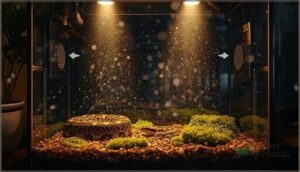
Getting airflow right means walking a tightrope between keeping your snake’s enclosure well-ventilated and maintaining the humidity levels your species needs. Too much airflow dries things out fast, while too little traps moisture and invites respiratory problems.
Balancing airflow in snake enclosures means walking a tightrope between ventilation and humidity—too much dries everything out, too little traps moisture and triggers respiratory problems
Let’s look at the practical tools and adjustments that’ll help you strike that balance.
Monitoring With Hygrometers and Humidistats
You can’t manage what you don’t measure, so reliable humidity sensors become your first line of defense. Digital hygrometers display relative humidity from 0 to 100 percent and often track temperature simultaneously, giving you the context needed for proper ventilation control.
Humidistats take this further by automatically switching humidifiers or dehumidifiers when thresholds are crossed, ensuring consistent humidity control and management without constant manual adjustments.
Adjusting Ventilation for Species Needs
A tropical ball python breathes very differently from a desert kingsnake, and your ventilation system must honor that difference. Species-specific research reveals that high-humidity species thrive with 2–3 air exchanges per hour, while arid-zone snakes need 4–5 exchanges to prevent dampness.
Adjusting vent openings and fan speeds lets you fine-tune airflow optimization, preserving the temperature gradient while maintaining species-specific humidity levels that support respiratory health through proper ventilation and habitat customization.
Preventing Excess Dryness or Dampness
Airflow management walks a tightrope between desiccation and fungal blooms. You’ll prevent excess dryness by placing hygrometers at head height and near the basking site, then dialing back air exchanges when readings drop below 30 percent for arid species or 60 percent for tropical ones.
Moisture balance collapses when ventilation systems overdry substrates, so monitor humidity levels daily and adjust vent openings to maintain your temperature gradient without sacrificing proper ventilation.
Optimizing Enclosure Design for Airflow
Getting the airflow right starts with how you build the enclosure itself. The materials you choose, where you position your vents, and how you customize the setup all work together to create that steady, gentle circulation your snake needs.
Let’s walk through the design choices that make ventilation both effective and easy to maintain.
Selecting Materials for Insulation and Ventilation
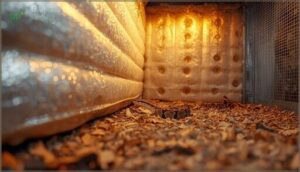
You’ll find that building enclosures with the right insulation types transforms how well your ventilation system controls temperature gradients and humidity levels.
Fiberglass batts deliver solid thermal mass at R-3 to R-3.5 per inch, while polyiso foam boards excel in moisture control with minimal thickness.
These ventilation materials work together, creating airflow dynamics that support proper ventilation without compromising your snake’s environmental stability.
Strategic Placement of Intake and Exhaust Vents
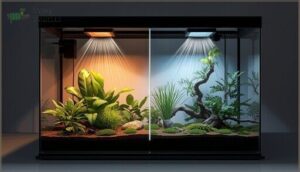
With good insulation now locked in, you’re ready to position your intake and exhaust vents for ideal airflow patterns. Place intakes low on the cooler side to draw fresh air across the substrate, and position exhausts high on the warm end where rising air naturally escapes.
This simple cross-ventilation setup pairs well with other low-tech humidity control methods for reptile enclosures, letting you fine-tune moisture without relying on powered equipment.
This enclosure layout creates steady air exchange rates without disrupting temperature gradients or humidity levels, keeping your ventilation system gentle yet effective.
Customizing Enclosures for Airflow Efficiency
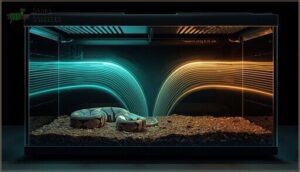
Once you’ve mapped intake and exhaust placement, fine-tune vent design to shape airflow patterns within your snake enclosure. Angled internal baffles guide air through a gentle T-shaped path, preventing dead zones and short circuits.
Choose enclosure materials with smooth finishes to reduce friction, and leave 1.5 cm clearance around vents so air flows freely. These tweaks help your ventilation system maintain stable temperature gradients and humidity levels.
Maintenance Tips for Healthy Airflow

Setting up proper airflow is just the beginning—keeping it working well requires consistent attention. Your snake’s health depends on clean vents, stable conditions, and catching small problems before they become big ones.
Let’s walk through the essential maintenance steps that’ll keep your enclosure running smoothly.
Cleaning and Inspecting Vents Regularly
Think of your ventilation system as the lungs of your snake enclosure—if they’re clogged, your pet can’t breathe properly. Consistent vent maintenance prevents airflow checks from revealing problems down the road.
You’ll want to clean vents every three to six months using a vacuum with a brush attachment for dust removal. Check both intake and exhaust points for substrate buildup or debris, then wipe grilles with a damp microfiber cloth.
Monitoring Temperature and Humidity Consistently
Accurate climate control relies on strategic sensor placement and continuous data review. Your ventilation system works best when you track both temperature and humidity at multiple points, ensuring your thermal gradient remains stable across day-night cycles.
To maintain healthy airflow rates and humidity control, focus on these monitoring essentials:
- Place temperature sensors at basking and cool zones to confirm gradient stability
- Position humidity gauges near hides, away from direct heat sources
- Log readings every 5 to 15 minutes using digital tools
- Set alerts for deviations beyond 2 degrees Fahrenheit
- Review weekly trends to adjust ventilation systems proactively
Troubleshooting Common Airflow Problems
When ventilation system failures appear, systematic diagnostics prevent respiratory issues and stress-related problems in your collection. Start with air leak detection by inspecting duct connections and sealing gaps with appropriate tape.
If humidity levels spike unexpectedly, you’re facing humidity control issues that demand immediate airflow optimization techniques.
Check fan bearings for grinding noises, verify thermal gradient management with dual thermometers, and confirm ventilation systems deliver consistent speeds using a simple anemometer.
Frequently Asked Questions (FAQs)
What are the common reptile enclosure mistakes?
Most keepers overlook Inadequate Lighting, Poor Substrate, Insufficient Hiding spots, and Incorrect Heating. Overcrowding ranks high too.
Critically, ignoring ventilation systems causes humidity level imbalances, triggering respiratory issues and stress-related problems in your snake enclosure.
How often should I mist my snakes’ cage?
Instead of spraying on autopilot, let misting frequency follow your snake’s species needs and humidity levels.
Most enclosures need one to three sessions weekly, adjusted by ventilation system performance and moisture management observations.
How to keep humidity down in a snake enclosure?
Increase ventilation by adding more vents or upgrading to mechanical airflow systems.
Position intake vents low and exhaust high to draw moisture out, while monitoring humidity levels with digital hygrometers placed in both zones.
How often should I replace ventilation mesh screens?
Inspect your ventilation system monthly and replace mesh screens every two to three years in typical setups.
For humid or dusty snake enclosures, annual screen replacement maintains ideal airflow optimization and enclosure hygiene.
Can ceiling fans improve airflow in large enclosures?
Yes, ceiling fans can supplement ventilation systems in large enclosures by improving airflow distribution and reducing stagnant air pockets.
Strategic fan placement strategies help maintain temperature gradients and humidity levels when combined with proper intake and exhaust vents.
What airflow rate is ideal for arboreal snakes?
Arboreal species thrive with gentle ventilation systems that achieve roughly one air exchange per hour, preserving humidity levels between 50 and 70 percent while supporting thermal gradients without creating drafts.
Do baby snakes need different ventilation than adults?
Absolutely—hatchling ventilation needs are distinct from adults. Neonate airflow must remain gentle to avoid drafts that stress smaller lungs while supporting juvenile respiratory health, humidity levels, and shedding without excessive cooling in your baby snake care setup.
How does seasonal weather affect ventilation system performance?
Seasonal airflow shifts when outdoor temperature gradients alter air density and drawing rates. This means your ventilation system may pull less fresh air in winter, while summer heat waves boost fan speeds and lower ventilation efficiency.
Conclusion
An ounce of prevention is worth a pound of cure—nowhere is this truer than in reptile husbandry. Establishing proper airflow in a snake habitat from day one eliminates the costly, stressful cycle of treating preventable respiratory infections.
Pairing good ventilation with secure housing—like the ball python cage setup tips covering clip-style latches and airflow—means you’re building health and safety into the enclosure from the start.
You’ve learned the technical framework: vent placement, humidity balance, and species-specific adjustments. Now apply it. Your snake’s immune system depends on air quality you control.
Check those vents weekly, monitor your readings daily, and watch your animal thrive instead of merely survive.