This site is supported by our readers. We may earn a commission, at no cost to you, if you purchase through links.

A climbing branch isn’t optional furniture for most snake species—it’s behavioral infrastructure. Arboreal and semi-arboreal snakes rely on elevated perches for thermoregulation, security, and exercise, but the wrong wood choice can release toxic compounds directly into their respiratory systems.
Cedar and pine might look rustic, but their volatile oils cause chronic inflammation in snake lungs. The safe alternative—hardwood branches like oak, maple, or ash—requires proper preparation to eliminate parasites, bacteria, and surface contaminants.
You can’t just drag a stick in from the backyard and call it enrichment. Selecting, sterilizing, and installing natural branches for snake enclosures follows a specific protocol that balances safety with the climbing complexity your snake actually needs.
Table Of Contents
- Key Takeaways
- Choosing Safe Natural Branches for Snakes
- Preparing Branches for Snake Enclosures
- Installing Branches in Snake Habitats
- Maintenance and Safety Tips for Branch Decor
- Top 6 Branch Decor Products for Snake Enclosures
- Frequently Asked Questions (FAQs)
- What branches are safe for snakes?
- How to make branches safe for reptiles?
- Can I use tree branches in my vivarium?
- How often should branches be rotated or rearranged?
- Can branches from my backyard be used safely?
- Whats the best branch thickness for baby snakes?
- How long do natural branches typically last?
- Conclusion
Key Takeaways
- Cedar and pine are dangerous for snakes because they release volatile oils that cause chronic lung inflammation, so stick with hardwoods like oak, maple, birch, or ash that won’t poison your pet’s respiratory system.
- Proper branch prep isn’t optional—scrub with hot water, disinfect with 3% hydrogen peroxide, air-dry to 6–12% moisture content, and sand down splinters while keeping the rough bark that gives your snake grip.
- Branch diameter matters more than most keepers realize: aim for 1.5 to 3 inches thick (2.5 to 4.5 cm) and install at 45 to 75 degrees from vertical so your snake can climb confidently without slipping or falling.
- Weekly visual checks and quarterly deep inspections catch cracks, mold, and wear before they become health hazards—replace any branch showing 15% surface wear or soft spots wider than 1 cm.
Choosing Safe Natural Branches for Snakes
Not every branch you find outside is safe to bring into your snake’s enclosure — the wood type matters more than most people expect. Some species are naturally durable and snake-friendly, while others can quietly cause harm.
Before bringing any branch indoors, check for common snake habitat health risks like mold, parasites, or chemical residue that aren’t always visible.
Here’s what to look for before you ever pick up a branch.
Recommended Hardwood Species (Oak, Maple, Birch, Ash)
Four hardwood species stand out for reptile enclosure design: oak, maple, birch, and ash.
Oak’s wood density and branch strength — with a Janka hardness around 1,290 — make it a top pick. Maple’s tight grain reduces splinter risk, birch stays smooth for easy cleaning, and ash balances strength with lighter weight.
All four support natural snake climbing behavior beautifully. To learn more about their characteristics and applications, see this overview of hardwood tree properties and uses.
Unsafe Woods to Avoid (Cedar, Pine, Treated Wood)
Not every natural branch belongs in your snake habitat. Cedar and pine top the “never use” list — cedar releases volatile oils and tannins that irritate respiratory tracts and skin, while pine’s resin poses similar toxic wood effects.
Treated wood dangers are real too, since chemical preservatives leach directly into enclosures. Stick to reptile-safe, natural materials to keep your snake healthy.
Ideal Branch Diameter and Texture
Once you’ve ruled out toxic woods, size and surface matter more than most keepers realize. For snake climbing, aim for branches between 2.5 and 4.5 cm in diameter — wide enough to grip, narrow enough to wrap around.
Look for these features in safe climbing branches:
- Rough bark on hardwood branches like oak or maple for reliable branch grip
- Natural wood grain with shallow ridges that support belly movement
- Diameter variance across your reptile habitat to encourage varied climbing routes
- Texture types that avoid deep gouges, which trap bacteria and risk injury
Following is important to verify climbing branches are stable and safe for your snake.
Selecting Branches Free of Mold and Parasites
Size and texture get you halfway there — but a branch that looks good can still carry hidden problems. Before anything goes into your snake habitat, check for white powdery patches, soft spots, or tiny bore holes.
Shake the branch over a pale surface; frass or fine dust signals pests. These mold detection and parasite control steps keep your natural materials genuinely reptile safe.
Preparing Branches for Snake Enclosures
Found a great branch? Don’t throw it straight into the enclosure. Before your snake ever touches it, you’ll want to clean, dry, and inspect it properly — each step matters more than you’d think. Here’s exactly how to prepare it the right way.
Cleaning and Disinfecting Natural Branches
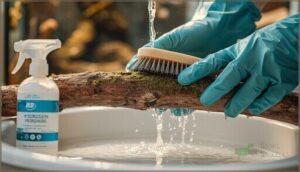
Think of this step as your snake’s first line of defense. Before any branch enters the enclosure, scrub it with warm water and a stiff brush to clear dirt, then disinfect with 3% hydrogen peroxide for effective wood disinfection and natural sterilization. Rinse completely — soap residue threatens reptile health and safety.
Branch sanitizing done right is non-negotiable for habitat enrichment and long-term reptile care and maintenance.
Drying and Curing Methods
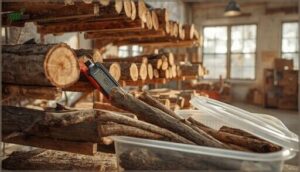
Patience is the real secret to wood preservation here. After branch sanitization, let natural branches air-dry on elevated racks in a well-ventilated space — target 6–12% moisture content using a meter.
For the curing process, seal branches in a food-grade container and burp it daily for one week. Moisture control this thorough keeps your reptile habitat safe and maintains consistent thermoregulation.
Inspecting for Damage and Pests
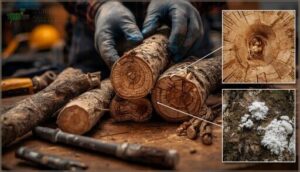
Before any branch enters your snake habitat, a quick but thorough inspection can prevent serious health risks.
- Damage Signs: Press firmly along the bark — soft, spongy spots signal wood rot or fungal issues.
- Pest Control Methods: Check crevices for frass pellets or mud tubes indicating termites.
- Branch Sanitization: Reject any natural branches showing dark oozing spots or white fuzzy mold growth.
Making Branches Safe for Climbing
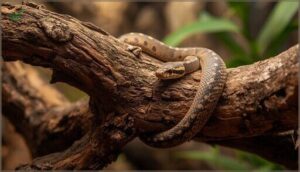
Even a well-cleaned branch can cause injury if it’s not physically ready for climbing. Lightly sand any jagged splinters while keeping the rough bark intact — that natural texture is exactly what gives your snake grip on climbing surfaces.
For most medium-sized snakes, branches between 1.5 and 3 inches thick hit the sweet spot for branch stability and weight limits. Reptile-safe, solid, splinter-free — that’s the standard for safe climbing branches.
Installing Branches in Snake Habitats
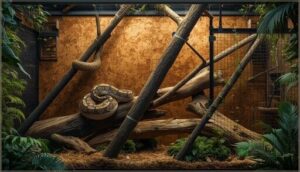
Once the branches are cleaned and ready, it’s time to put them to work inside the enclosure. How you position and secure them makes a bigger difference than most people expect.
Here’s what you need to know to get the setup right.
Securing Branches for Stability
A wobbly branch can send your snake tumbling, so stability testing techniques matter before your pet takes its first climb. You want natural branches locked in place, not spinning or shifting when weight hits them.
- Use counterweight brace structures between branches to prevent tipping and distribute load evenly across the reptile habitat
- Place branches with 60 percent overlapping contact areas to increase grip and minimize wobble during snake climbing
- Secure with reptile-safe fasteners only when natural friction fails, protecting bark integrity while ensuring climbing opportunities remain safe
Optimal Branch Angles and Placement
Angle matters more than you’d think—45 to 75 degrees from vertical gives your snake safe climbing branches with maximum grip and minimal drop risk. Branch Angle Optimization facilitates natural Snake Movement Patterns while improving Climbing Surface Texture contact. Position tips slightly downward to build confidence during descent.
Branches angled 45 to 75 degrees from vertical give snakes maximum grip and confidence during climbs
Vary angles across your reptile habitat design to optimize Vertical Space Utilization and create multiple climbing opportunities in your naturalistic environment.
Creating Climbing and Hiding Opportunities
Your Climbing Structures should fork and overlap to create Hideaway Designs at multiple heights—snakes love choices. Branch Placement that forms crevices and overpasses delivers Habitat Enrichment by mimicking forest canopies where your snake would hunt and rest. This setup boosts Snake Exercise while reducing stress.
Layer natural branches horizontally and diagonally across your reptile habitat to encourage snake climbing at all levels.
Ensuring Proper Weight Support
All that climbing structure means nothing if your hardwood branches buckle under load. Test each natural branch for Weight Capacity by pressing firmly before installation—it should support at least two to three times your snake’s weight as a Safety Factor.
Secure ends with hardware rated above the expected load, and check weekly for cracks or sagging that signal weakening Structural Integrity.
Maintenance and Safety Tips for Branch Decor
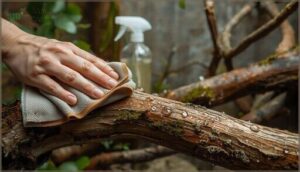
Once your branches are in place, the real work begins. Keeping them clean and safe isn’t complicated, but it does require a consistent routine to prevent health issues and habitat hazards.
Here’s what you need to monitor to keep your snake’s climbing setup in top condition.
Regular Cleaning and Inspection Schedule
Weekly cleaning schedules keep your snake habitat free of dust and pathogens that threaten reptile health and safety. Reptile care demands consistency—daily visual sweeps and proper sanitation methods protect your animal’s well-being.
Inspect all branch decor every three days for cracks or loose mounts, and conduct a full structural check monthly. Maintenance logs tracking dates, conditions, and actions guarantee nothing slips through the cracks.
Preventing Bacterial and Fungal Growth
Moisture resistance is your defense against microbial invasions in snake habitats. Keep relative humidity below 70 percent to slow fungal control threats, and orient branches with edges angled upward so water doesn’t pool after cleaning.
- Scrub branches with hot water and dish soap for microbe removal.
- Boil for 20 minutes to inactivate surface bacteria.
- Soak in 1:10 bleach solution for bacterial prevention, then rinse.
- Air dry 72 hours before reinstalling for proper humidity management.
- Bake at 90°C for 30 minutes to finish branch sanitization.
Monitoring for Wear and Replacing Branches
Branch inspection should happen quarterly to catch early wear detection before problems escalate. Check for bark shedding, splits over 2 cm, or soft spots wider than 1 cm on safe climbing branches.
Replace natural branches showing 15 percent surface wear in your snake habitat, and keep maintenance logs with photos to track progression.
Test stability by applying gentle pressure at midspan—no wobble means your climbing branches remain secure in the reptile habitat.
Maintaining Humidity and Temperature Balance
Proper climate balance inside your reptile habitat depends on consistent thermoregulation and temperature control across all zones. Install digital hygrometers at multiple heights to track microclimate management, and use ventilation systems to prevent condensation while maintaining 40 to 60 percent humidity.
- Position temperature probes at head height in both basking and cool zones
- Use thermostats with high and low limits to prevent burns
- Place humidity sensors away from water dishes for accurate readings
- Add damp moss pockets to create humidity gradients
- Log climate data over 72 hours to identify drift patterns
Top 6 Branch Decor Products for Snake Enclosures
You don’t always need to source branches yourself—several ready-to-use products can save you time while keeping your snake safe.
The options below include natural wood pieces and flexible artificial vines, each designed for reptile habitats.
Here’s what’s available and what makes each one worth considering.
1. Exo Terra Forest Branch Decor
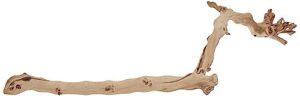
If you’re looking for a ready-to-use option, the Exo Terra Forest Branch (PT3077A1) delivers natural grapevine wood that’s been heat treated to eliminate pathogens and splinters.
This 25-inch branch provides a sturdy three-dimensional climbing surface suitable for arboreal snakes, with a textured grip that mimics aged tropical hardwood.
It works in both rainforest and desert setups, weighing 1.5 pounds and blending naturally with existing decor.
Each piece varies slightly in shape, so you’ll get unique climbing angles every time.
| Best For | Reptile owners who want a natural, heat-treated climbing branch that works in both rainforest and desert terrariums without extra prep work. |
|---|---|
| Material Type | Natural Wood |
| Primary Use | Climbing & Decoration |
| Target Animals | Arboreal Reptiles & Amphibians |
| Flexibility | Rigid |
| Cleaning Ease | Easy to Clean |
| Installation | Place & Secure |
| Additional Features |
|
- Heat treated to remove pathogens and sharp splinters, so it’s safe right out of the box
- Sturdy 3D design gives reptiles multiple climbing angles and textures to grip
- Works in different habitat types and blends naturally with other decor
- Each branch varies in shape and color, so you won’t get the exact piece shown in photos
- Some pieces may have rough edges that need filing down before use
- At 25 inches, it might be too large for smaller tanks or cages
2. Flexible Reptile Habitat Vines Decor
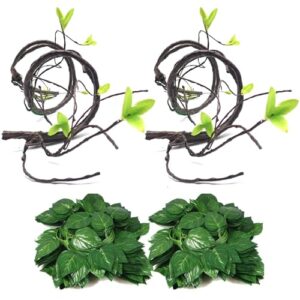
When you need climbing routes that adapt to any enclosure layout, the Flexible Reptile Habitat Vines Decor uses bendable PU material to create custom networks from 12 to 96 inches. The textured bark surface provides a solid grip for slithering snakes, while removable leaves simplify cleaning.
You can mount these vines with suction cups or brackets in glass or acrylic tanks. Just wash them first—some units release green dye initially. They’re safe if chewed and hold up to routine disinfection for 6 to 12 months.
| Best For | Reptile owners who need adjustable climbing structures for arboreal pets like chameleons, geckos, and tree frogs in terrariums of varying sizes. |
|---|---|
| Material Type | PU & Silk |
| Primary Use | Habitat Enrichment |
| Target Animals | Lizards, Chameleons, Snakes |
| Flexibility | Bendable & Twistable |
| Cleaning Ease | Easy to Clean |
| Installation | Style & Fit |
| Additional Features |
|
- Bendable design lets you customize the layout to fit any tank shape or climbing preference
- Textured surface gives reptiles secure grip while climbing or resting
- Easy to clean and maintain with regular washing or disinfection
- Releases green dye initially and needs thorough washing before first use
- Leaves can arrive crumpled from shipping and may need reshaping
- Smaller size might not work well for larger enclosures or bigger reptiles
3. Sequoia Flexible Jungle Vines Decor
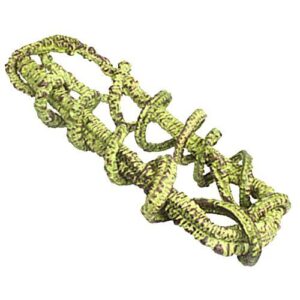
The Sequoia Flexible Jungle Vines Decor bends into spirals, bridges, or elevated perches across terrarium heights from 12 to 96 inches. Its textured surface mimics natural bark, giving your snake’s claws secure traction during climbs.
You’ll anchor it to cage lids or existing branches without invasive hardware, and the pet-friendly material resists chewing and moisture without warping.
Wipe it weekly with reptile-safe cleaners—it dries fast. Check every 3 to 6 months for fraying or weak spots, then swap out worn sections to keep climbing routes safe.
| Best For | Reptile and amphibian owners who want to add vertical climbing space and a natural jungle vibe to terrariums between 12 and 96 inches tall. |
|---|---|
| Material Type | Synthetic Vine |
| Primary Use | Jungle Decor |
| Target Animals | Lizards, Frogs, Snakes |
| Flexibility | Flexible |
| Cleaning Ease | Requires Maintenance |
| Installation | Place & Arrange |
| Additional Features |
|
- Flexible design lets you shape it into bridges, spirals, or perches that fit any tank layout
- Textured bark-like surface gives lizards and snakes solid grip while climbing
- Easy to clean with reptile-safe wipes and dries quickly without getting moldy
- Not ideal for every pet type or habitat setup, so check compatibility first
- Needs regular cleaning to stop bacteria or mold from building up
- Works best when combined with other decor items rather than as a standalone piece
4. Eonmir Reptile Habitat Vines Decor
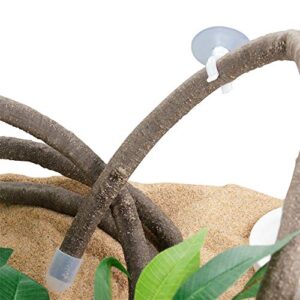
Eonmir’s 8-foot vines twist into three-dimensional climbing networks when anchored with the included suction cups. The PU-and-metal core bends without snapping, allowing you to shape horizontal rest stops or vertical routes across enclosures up to 60 gallons.
The textured green surface provides a reliable grip for scales, and cleaning is easy with a quick wipe using reptile-safe soap. Inspect joints every 3 to 6 months, as sharp bends can weaken the core over time. Replace sections before they fail to ensure safety and longevity.
| Best For | Owners of arboreal reptiles like chameleons, tree frogs, and geckos who want to create a naturalistic climbing environment in medium-sized enclosures. |
|---|---|
| Material Type | PU & Metal |
| Primary Use | 3D Habitat Creation |
| Target Animals | Arboreal Reptiles & Amphibians |
| Flexibility | Bendable & Twistable |
| Cleaning Ease | Easy to Clean |
| Installation | 6 Suction Cups Included |
| Additional Features |
|
- 8-foot length lets you build complex climbing paths and layer vines at different heights
- Bendable metal core holds shapes without constant readjusting
- Easy to clean with a damp cloth and reptile-safe cleaner
- Suction cups struggle on mesh or screened surfaces
- Sharp bends can weaken the core over time and require monitoring
- Not strong enough for heavy reptiles like large snakes or adult iguanas
5. Pranovo Flexible Reptile Climbing Vine
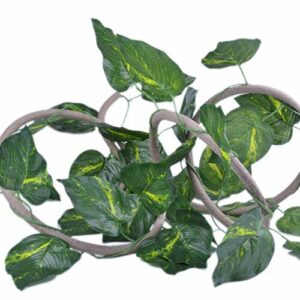
Pranovo ships a 12-inch vine with a bendable core that locks into arches, loops, or zigzags without collapsing under a snake’s weight. The rough-textured coating mimics natural bark, giving your animal a secure foothold during climbs.
Mount it with standard hardware—no specialized tools needed—and wipe it down with reptile-safe disinfectant after cage cleanings. Check for exposed core or fraying every few weeks, especially at sharp bends.
The vine works best for arboreal species under 500 grams that appreciate layered vertical routes.
| Best For | Owners of small to medium arboreal reptiles (under 500 grams) like geckos, anoles, or young snakes who want a customizable climbing structure that holds its shape. |
|---|---|
| Material Type | Plastic & Wire |
| Primary Use | Climbing Structure |
| Target Animals | Geckos, Lizards, Snakes |
| Flexibility | Bendable & Shapable |
| Cleaning Ease | Easy to Clean |
| Installation | Suction Cups Included |
| Additional Features |
|
- Bendable wire core lets you create arches, loops, or zigzags that stay in place without sagging
- Rough bark-like texture gives reptiles secure grip during climbs
- Easy to mount with standard hardware and simple to wipe clean with reptile-safe disinfectant
- Suction cups may fall off or be missing entirely in some shipments
- Wire frame can pose a strangling risk if the coating frays or comes apart
- Not sturdy enough for larger or heavier reptiles—best for animals under 500 grams
6. Natural Driftwood Aquarium Decor
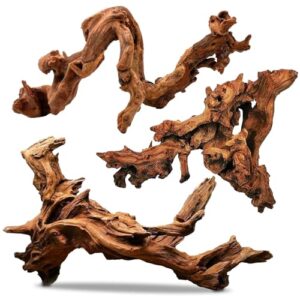
Natural Driftwood Aquarium Decor brings authentic hardwood texture into snake enclosures at $19.79 for three pieces ranging 7–11 inches. Mopani wood arrives dense and stable, offering irregular branches that create natural resting ledges without wobbling under weight.
Boil each piece for 60 minutes to kill surface microbes and reduce tannin release, then air-dry 24–72 hours before installation. Position wider bases flat to prevent tipping, and angle branches upward to encourage climbing. Wipe surfaces weekly and replace every 1–3 years as wear develops.
| Best For | Snake keepers who want natural climbing structures that double as visual interest without the hassle of constantly repositioning lightweight decor. |
|---|---|
| Material Type | Natural Mopani Wood |
| Primary Use | Aquatic & Terrarium Decor |
| Target Animals | Fish & Reptiles |
| Flexibility | Rigid |
| Cleaning Ease | Requires Pretreatment |
| Installation | Sink & Weight |
| Additional Features |
|
- Dense Mopani wood stays put once positioned, giving snakes stable climbing spots that won’t shift or tip
- Three pieces for under $20 means you can set up multiple levels or mix branch angles without breaking the bank
- Natural irregularities create hiding gaps and texture variety that plastic branches just can’t match
- Hour-long boiling process plus multi-day drying means you’re waiting almost a week before setup
- Tannins will tint your water brown even after prep, so expect extra water changes early on
- Size and shape are random, so you might get pieces that don’t fit your layout as well as you’d hoped
Frequently Asked Questions (FAQs)
What branches are safe for snakes?
Safe branches for snakes include hardwoods like oak, maple, birch, and ash. Avoid cedar and pine, which release toxic oils. Choose rough-textured bark and diameters between 5 to 4 inches for a secure grip.
How to make branches safe for reptiles?
Start by scrubbing branches with hot water to remove dirt and pesticides. Then soak them in a reptile-safe disinfectant, dry completely, and sand down sharp edges before installation.
Can I use tree branches in my vivarium?
You can use tree branches in your vivarium, but only after proper selection and preparation. Hardwoods like oak and maple work well, while cedar and pine contain harmful oils that can irritate your snake.
How often should branches be rotated or rearranged?
Rearrange branches every 4 to 6 weeks to maintain habitat complexity and prevent repetitive movement patterns.
During active shedding seasons or high humidity periods, reassess placement every 2 to 4 weeks to accommodate your snake’s changing needs.
Can branches from my backyard be used safely?
Yes, but only hardwood species like oak, maple, birch, and ash. Avoid cedar, pine, and treated wood that release harmful fumes. Clean thoroughly with hydrogen peroxide before use.
Whats the best branch thickness for baby snakes?
For baby snakes, aim for branches with a base diameter of 1 to 2 inches. This thickness lets tiny claws grip comfortably without slipping, while textured bark adds friction they need.
How long do natural branches typically last?
Natural branches last 1 to 3 years in typical indoor setups, though properly cured hardwoods can reach 3 to 5 years with consistent maintenance and humidity control below 60 percent.
Conclusion
A store-bought vine takes five minutes to unbox. Natural branches for snake enclosures demand inspection, sterilization, and structural testing—but that effort translates into behavioral complexity no plastic perch replicates.
Your snake doesn’t distinguish between “convenient” and “correct.” It registers texture, diameter, stability, and scent. When you anchor properly cured hardwood at the right angle, you’re not decorating—you’re building the three-dimensional environment arboreal instincts require.
Skip the shortcuts. The preparation matters.