This site is supported by our readers. We may earn a commission, at no cost to you, if you purchase through links.
Your desert snake’s substrate isn’t just bedding—it’s the foundation of its entire microhabitat, influencing everything from thermoregulation efficiency to stress hormone levels. A 2019 study on captive Sonoran Desert sidewinders revealed that improper substrate depth reduced burrowing behavior by 73%, triggering chronic stress responses that compromised immune function within weeks.
Yet many keepers still default to whatever’s marketed for “desert reptiles” without understanding species-specific needs. The right substrate accommodates natural fossorial behaviors, maintains appropriate humidity gradients (usually 20-40% for true desert species), and prevents health complications ranging from dermatitis to impaction.
Choosing among the dozens of commercial options requires balancing particle size, thermal conductivity, dust content, and long-term sustainability—factors that vary dramatically between a sand boa and a glossy snake.
Table Of Contents
- Key Takeaways
- Key Factors in Choosing Desert Snake Substrate
- Comparing Substrate Materials for Desert Snakes
- Top 5 Substrates for Desert Snake Enclosures
- Maintenance and Safety Tips for Substrate Use
- Frequently Asked Questions (FAQs)
- What is the best substrate for desert reptiles?
- What should I put at the bottom of my snakes cage?
- What substrate is best for African house snakes?
- What kind of substrate is best for snakes?
- Can I mix different substrate types together?
- How do I transition my snake to new substrate?
- What substrate works best for hatchling desert snakes?
- Do desert snakes need a moist hide box?
- How often should I mist desert snake substrate?
- Conclusion
Key Takeaways
- Substrate depth of 4–6 inches is critical for desert snakes because it enables natural burrowing behavior and creates the thermal gradients (90–95°F at surface, cooler below) necessary for proper thermoregulation, with inadequate depth triggering chronic stress that compromises immune function.
- Species-specific substrate selection matters more than marketing labels—while reptile-safe sand, aspen shavings, and cypress mulch each support burrowing and humidity control differently, you must avoid cedar, pine, and walnut substrates entirely due to toxic aromatic oils and phenolic compounds that cause respiratory distress and skin irritation.
- Coconut fiber and cypress mulch outperform traditional options for most desert snake setups because they balance moisture retention (preventing the sub-30% humidity that causes shedding problems) with odor control and biodegradability, though each requires proper hydration before use to function effectively.
- Regular substrate maintenance through daily spot-cleaning, biweekly surface refreshing, and full replacement every 6–12 months prevents ammonia buildup and compaction while preserving the substrate’s ability to support thermoregulation and burrow stability.
Key Factors in Choosing Desert Snake Substrate
Getting the substrate right for a desert snake isn’t just about aesthetics—it directly shapes your snake’s health, stress levels, and natural behavior. There are a handful of factors worth understanding before you settle on a material, from how deep to layer it to how well it facilitates thermoregulation and burrowing.
Before you buy anything, it helps to review factors that affect snake terrarium selection so you’re matching substrate to your specific setup and species needs.
Here’s what you need to know before we get into the specific options.
Species-Specific Substrate Depth Requirements
Desert-dwelling snakes aren’t one-size-fits-all regarding substrate depth. Most species require 4 to 6 inches to support natural burrowing behavior and access meaningful thermal gradients beneath the surface. Fossorial and semi-fossorial snakes often need even more.
Getting species-specific needs right from the start prevents chronic stress — because inadequate substrate depth doesn’t just inconvenience your snake; it genuinely compromises their health.
Importance of Thermoregulation and Humidity Control
Substrate depth does more than give your snake room to move — it’s the engine behind thermal balance and humidity control.
For desert-dwelling snakes, a proper gradient runs from 90–95°F at the basking surface down to cooler subsurface zones, letting thermoregulation happen naturally.
Humidity levels below 30% risk respiratory irritation and shedding trouble, so substrate depth isn’t cosmetic — it’s environmental control made physical.
Supporting Natural Burrowing Behaviors
Beyond temperature regulation, your substrate must support natural digging behavior — because a desert snake denied its instinct to burrow is a stressed snake.
Proper Burrow Design starts with substrate depth of 6–8 inches, giving desert-dwelling snakes room for tunnel stability and thermal retreat. Substrate moisture held at 60–70% encourages consistent natural digging behavior, while fine-granule reptile substrate selection transforms your enclosure into genuine snake habitat through meaningful Burrowing Enrichment.
Impact on Snake Health and Stress Levels
A snake that can’t burrow is already under stress — and that stress hits harder than most keepers realize. The wrong substrate doesn’t just affect comfort; it actively undermines reptile health by elevating corticosterone levels, suppressing immune function, and disrupting thermoregulation.
The wrong substrate doesn’t just compromise comfort—it actively undermines your snake’s immune function, stress hormones, and ability to regulate body temperature
Watch for these health indicators:
- Abnormal shedding tied to poor humidity control
- Reduced appetite signaling burrowing behavior frustration
- Glass surfing reflecting substrate depth inadequacy
- Respiratory irritation from substrate toxicity
Comparing Substrate Materials for Desert Snakes
Not all substrates work the same way for desert snakes, and picking the wrong one can throw off your entire enclosure setup. Each material behaves differently regarding heat retention, burrowing potential, and safety.
Species like rosy boas and Kenyan sand boas need substrates that support their natural digging instincts, which you can learn more about in our guide to different species of boas.
Here’s how the most common options stack up.
Reptile-Safe Sand: Pros and Cons
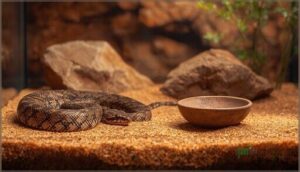
Sand might seem like the obvious choice for desert-dwelling snakes, but not all sand is created equal. Reptile substrate labeled “reptile-safe” prioritizes dust control and fine grain size, supporting natural burrowing behavior without compromising respiratory health.
That said, feeding safety demands attention—always use a separate bowl or tongs, since even quality reptile-safe sand poses ingestion risks. Proper substrate depth remains essential for humidity control and thermoregulation.
Keepers should remain aware of impaction risk factors in sand substrates to make informed decisions about reptile health.
Aspen Shavings for Arid Environments
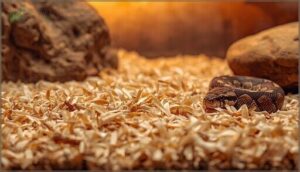
Aspen shavings hit a sweet spot for arid setups—kiln-dried, hypoallergenic, and free from the phenolic compounds that make cedar and pine risky choices.
For desert-dwelling snakes, this reptile substrate facilitates burrowing behavior at depths of 1–3 inches, preserving thermal gradients without trapping excess moisture.
Its absorbent, loose structure aids humidity control naturally, keeping conditions stable without constant intervention.
Cypress Mulch and Its Suitability
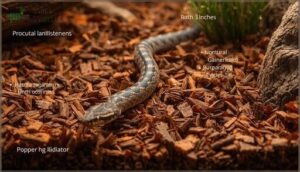
Cypress mulch occupies an interesting middle ground as a desert substrate—its natural mulch composition offers mild humidity control and moderate burrowing support at 2–4 inches depth, helping desert-dwelling snakes access thermal gradients.
The cypress benefits include slow decomposition and natural antifungal properties. That said, its moisture-retaining tendencies can work against you in arid reptile substrate setups if ventilation isn’t carefully managed.
Bioactive Substrate Options for Desert Habitats
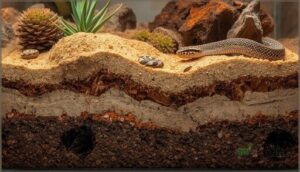
Bioactive substrates take desert husbandry to another level entirely. By incorporating isopods and springtails into your arid habitat, you’re establishing genuine microfauna management—organisms that break down waste, control mold, and maintain ecological balance without constant intervention.
Paired with drought-tolerant plants, these naturalistic setups mirror desert ecosystems surprisingly well, supporting natural burrowing behavior while offering eco-friendly reptile bedding options that benefit your desert-dwelling snake’s long-term health.
Terra Sahara is specifically formulated for desert reptiles and is highlighted in desert habitat substrate choices.
Substrates to Avoid for Desert Snakes
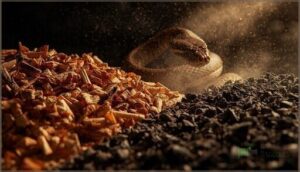
Some substrates do far more harm than good. Cedar toxicity is a real threat—aromatic oils from cedar shavings irritate airways and stress desert-dwelling snakes over time. Pine irritation follows the same logic, with phenolic compounds triggering skin and respiratory issues.
Walnut risks include abrasive scale damage and poor humidity control. Sand impaction and silica hazards round out the list, making reptile substrate selection genuinely critical.
Top 5 Substrates for Desert Snake Enclosures
Now that you understand what separates a good desert substrate from a poor one, it’s time to look at specific products worth your money.
Each of the five options below was chosen for how well it meets the real needs of desert-dwelling snakes — depth, particle safety, and thermal performance. Here’s what made the cut.
1. Zilla Coconut Husk Reptile Bedding
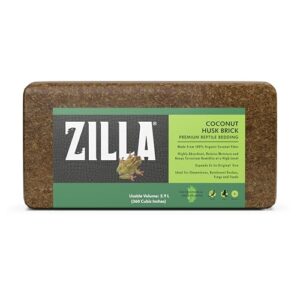
Zilla Coconut Husk Reptile Bedding earns its place on this list partly because it pulls double duty — managing humidity while supporting natural burrowing instincts your desert snake can’t suppress.
Sourced from 100% organic coconut fiber out of Sri Lanka, it expands up to five times its compressed size when hydrated, giving you surprisingly generous coverage from a compact 1.3-pound brick.
The soft, non-abrasive texture reduces skin irritation risk, and its biodegradable composition makes disposal refreshingly guilt-free.
| Best For | Tropical reptile keepers — especially those raising chameleons, rainforest geckos, frogs, or toads — who need a substrate that handles humidity and supports natural burrowing behavior. |
|---|---|
| Material | Coconut fiber |
| Humidity Control | Highly absorbent |
| Weight | 1.3 pounds |
| Habitat Type | Tropical |
| Natural Behavior | Burrowing & egg laying |
| Brand | Zilla |
| Additional Features |
|
- Expands up to 5x its compressed size, so one small brick goes a long way
- Organic coconut fiber is soft on skin and fully biodegradable, making it easy on your conscience at cleanup time
- Works great for egg incubation and can be mixed with other substrates to dial in the perfect habitat
- The initial smell after hydrating can be pretty strong — give it time to air out
- Rehydrating and breaking up clumps is a bit of a messy process
- Not a great fit for every animal — jumping spiders, for example, won’t do well with this one
2. Zilla Reptile Terrarium Bedding
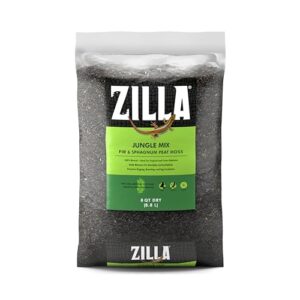
If the coconut husk approach feels too tropical for your setup, the Jungle Mix takes a different direction — blending aged Douglas fir bark with sphagnum peat moss into an 8-quart, earthy-scented substrate that reads more “forest floor meets arid canyon.”
It’s 100% natural, dye-free, and designed to hold moisture without waterlogging your enclosure. At 1–2 inches deep, it gives your snake enough surface for shallow burrowing and nesting while keeping humidity stable between misting sessions.
| Best For | Reptile owners setting up tropical or forest-style terrariums for frogs, snakes, rainforest geckos, and toads who want a natural-looking substrate that supports digging, nesting, and healthy humidity. |
|---|---|
| Material | Fir bark & peat moss |
| Humidity Control | Highly absorbent |
| Weight | 5.8 pounds |
| Habitat Type | Tropical & forest |
| Natural Behavior | Digging & nesting |
| Brand | Zilla |
| Additional Features |
|
- Made from 100% organic aged Douglas fir bark and sphagnum peat moss — no dyes, no additives, just a natural forest-floor feel.
- Great at holding moisture between misting sessions, helping you maintain the humidity levels tropical and forest reptiles need.
- Encourages natural behaviors like burrowing, nesting, and egg incubation, which is a big win for both the animal’s wellbeing and bioactive setups.
- Can dry out surprisingly fast — sometimes within 24 to 30 hours — so you’ll need to stay on top of misting if your enclosure runs warm.
- The larger, sharper bark pieces may not be safe for salamanders and can cause minor splinters if you’re not careful handling it.
- May need to be mixed with another substrate to hit the right moisture balance, which adds a little extra effort and cost.
3. Riare Coconut Fiber Reptile Substrate
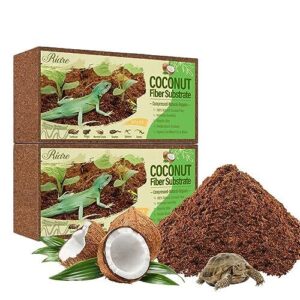
Where the Jungle Mix leans into forest-floor character, Riare takes a cleaner, more minimalist approach. This compressed coconut fiber brick expands when soaked, producing a fluffy, breathable bedding that holds humidity steadily without turning your enclosure into a swamp.
At roughly 2.73 pounds, it punches above its weight — supporting natural burrowing depth for desert species, absorbing odors efficiently, and breaking down slowly enough to stay workable between cleanings. It’s biodegradable, too, so disposal doesn’t have to mean waste.
| Best For | Reptile, amphibian, and invertebrate owners who want a natural, humidity-friendly substrate that works well for burrowing species like frogs, snakes, and hermit crabs. |
|---|---|
| Material | Coconut fiber |
| Humidity Control | Retains humidity well |
| Weight | 2.73 pounds |
| Habitat Type | Tropical |
| Natural Behavior | Natural digging |
| Brand | Riare |
| Additional Features |
|
- Expands from a compact brick into fluffy, breathable bedding that holds moisture without waterlogging the enclosure
- Absorbs odors well and breaks down slowly, so it stays usable between cleanings
- Biodegradable and compostable — you can repurpose it as plant fertilizer instead of tossing it
- Needs to be soaked and expanded before use, which adds a step to setup
- Can get messy if you’re not careful during handling or spot cleaning
- May not be practical for very large enclosures, and some buyers have reported damaged packaging on arrival
4. Fluker’s Cypress Reptile Bedding
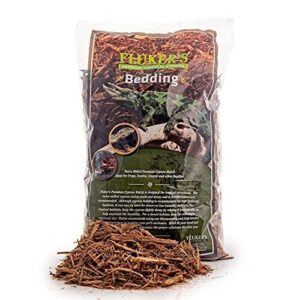
If Riare is the clean-cut minimalist, Fluker’s Cypress Bedding is the field-tested workhorse. Twice-milled from 100% natural cypress, this 1.76-pound substrate resists mold and decay — a genuine advantage in humid setups where moisture often turns bedding into a petri dish.
It absorbs odors naturally, spot-cleans easily, and layers well with other substrates to improve moisture retention.
For burrowing desert species, though, you’ll want to mist it first — it arrives dry and needs a little help reaching ideal humidity.
| Best For | Reptile owners who need a reliable, natural substrate that works across both tropical and desert setups without turning into a moldy mess. |
|---|---|
| Material | Cypress mulch |
| Humidity Control | Maintains humidity levels |
| Weight | 1.76 pounds |
| Habitat Type | Tropical & desert |
| Natural Behavior | Comfortable environment |
| Brand | Fluker’s |
| Additional Features |
|
- Twice-milled cypress holds moisture well and resists mold, making it a solid pick for humid terrariums
- Naturally cuts down on odors and is easy to spot-clean, so maintenance stays quick and simple
- Mixes well with other substrates to boost moisture retention and keep dust levels low
- Arrives dry, so you’ll need to mist it before it’s ready for humidity-dependent species
- Mites have been reported by some users, which is worth knowing if you keep sensitive reptiles
- Not ideal as a standalone substrate for heavy burrowers who need a lot of depth and structure
5. ReptiChip Coconut Reptile Substrate Bedding
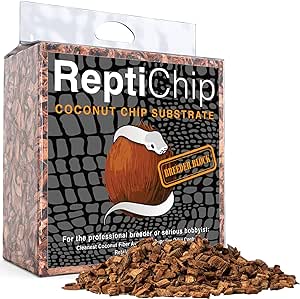
Where Fluker’s brings durability, ReptiChip brings sheer versatility. This 72-quart compressed coconut chip brick expands to a full 10 pounds of bedding once hydrated — one block covering multiple enclosures without breaking your budget.
It’s 100% organic, dust-free, and genuinely effective at retaining humidity without waterlogging the substrate. For ball pythons and desert-adapted species prone to shedding issues, that moisture stability matters.
It resists odors naturally and composts cleanly afterward, making it as practical for your snake as it’s for the planet.
| Best For | Reptile and amphibian owners who want an organic, humidity-stable substrate that works well for ball pythons, snakes, turtles, and geckos without constantly replacing bedding. |
|---|---|
| Material | Coconut chips |
| Humidity Control | High humidity retention |
| Weight | 10 pounds (hydrated) |
| Habitat Type | Tropical |
| Natural Behavior | Natural environment |
| Brand | Not specified |
| Additional Features |
|
- Expands from one compact brick into 10 lbs of bedding, so it stretches a long way for the price
- Naturally absorbs odors and holds moisture evenly — great for species that need consistent humidity
- 100% organic and eco-friendly, so you can compost it guilt-free when it’s time for a change
- Costs more upfront than a lot of other substrate options on the market
- Breaking apart the block can kick up some dust, which isn’t ideal for sensitive animals
- Needs regular spot cleaning to keep mold and odors from sneaking up on you
Maintenance and Safety Tips for Substrate Use
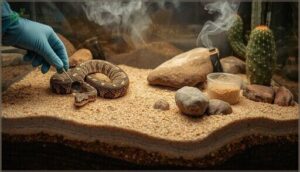
Getting substrate care right is just as important as picking the right material in the first place. A few consistent habits can mean the difference between a thriving snake and one that’s quietly struggling.
Here’s what you need to know to keep things clean, safe, and sustainable.
Proper Cleaning and Replacement Schedules
Think of your enclosure as a living system — and like any living system, it needs consistent care to thrive. A solid substrate maintenance and safety routine follows three core Cleaning Cycles:
- Daily spot-cleaning for Waste Management and odor control
- Biweekly Substrate Refresh to restore surface depth and substrate absorbency
- Full Replacement Timing every 6–12 months to prevent compaction
Don’t skip Humidity Checks between cycles — ammonia accumulates fast.
Monitoring Depth, Humidity, and Temperature
Beyond simple observation, precise monitoring of substrate depth, humidity control, and thermal gradient is what separates a thriving desert-dwelling snake from a stressed one. Place humidity sensors at multiple enclosure heights, verify burrow stability weekly, and log temperature gradients across warm and cool zones.
Even a 10°F temperature fluctuation can trigger behavioral stress — so depth control and consistent thermoregulation checks aren’t optional; they’re essential.
Preventing Health Issues From Substrate Choices
Substrate toxicity, respiratory risks, and digestive issues don’t announce themselves—they creep in quietly when materials with aromatic oils, sharp particles, or excessive dust compromise reptile health over time. Coarse, consistent-particle substrates dramatically reduce impaction prevention concerns, while maintaining proper substrate depth ensures humidity control and thermoregulation align with your snake’s species-specific needs. Skin irritation follows non-abrasive failures, so choose wisely.
Eco-Friendly Disposal and Sustainability Practices
When you replace substrate every few weeks, choosing biodegradable options like coconut fiber or cypress mulch lets you compost spent material instead of adding to landfills—diverting waste while enriching garden soil.
Sustainable packaging from manufacturers using post-consumer recycled content upholds circular economy principles, and selecting dust-free materials protects both your snake’s respiratory health and reduces airborne particulates during disposal.
Frequently Asked Questions (FAQs)
What is the best substrate for desert reptiles?
Like footprints in sand revealing a traveler’s path, substrate choices shape desert-dwelling snakes’ daily rhythms. Thermoregulation, humidity control, and burrowing materials all depend on selecting desert soil that sustains reptile health through proper substrate depth and thermal gradients.
What should I put at the bottom of my snakes cage?
For desert species, you’ll want a cage flooring that facilitates burrowing and thermoregulation—usually 4 to 6 inches of reptile-safe sand, aspen shavings, or cypress mulch, depending on your snake’s habitat requirements.
What substrate is best for African house snakes?
For African house snakes, you’ll want 2–4 inches of coconut fiber or cypress mulch. Both substrates support burrowing, maintain humidity gradients for thermoregulation, guarantee substrate safety, and meet species-specific needs beyond those of typical desert-dwelling snakes.
What kind of substrate is best for snakes?
The best substrate for snakes depends on species-specific needs. Burrowing depth, thermal gradients, and humidity control determine whether coconut fiber, cypress mulch, aspen, or sand promotes naturalistic snake behavior most effectively.
Can I mix different substrate types together?
Yes—mixing substrates is feasible when textures and drainage align. A 60:40 fine-to-coarse ratio maintains burrow stability, balances moisture control, and accommodates species-specific needs through layering techniques that replicate desert-dwelling snakes’ natural thermoregulation zones.
How do I transition my snake to new substrate?
Shifting to a new substrate requires gradual acclimation over one to two weeks. You’ll layer fresh material over the existing substrate in small increments, monitor stress indicators like feeding refusal, and maintain species-specific substrate depth throughout.
What substrate works best for hatchling desert snakes?
Like a tender seedling needing just the right soil depth, hatchling desert-dwelling snakes thrive with 2 to 4 inches of coconut fiber or cypress mulch. This provides enough for shallow burrowing needs, thermoregulation, and humidity control without impeding visibility or substrate safety.
Do desert snakes need a moist hide box?
While not essential for all desert-dwelling snakes, a moisture hide benefits shedding assistance by creating localized humidity gradients.
Monitor species-specific needs—desert kingsnakes often shed successfully with moisture hide placement, whereas others thrive without one.
How often should I mist desert snake substrate?
Mist desert-dwelling snakes only when enclosure humidity drops below 40 percent for 24 hours—usually every two to five days—targeting corner spot dampening to prevent over-misting risks while supporting thermoregulation and species-specific moisture levels.
Conclusion
Don’t let your setup fall flat—getting substrate options right transforms captivity from mere containment into genuine habitat replication.
The data confirms what field observations suggest: species-appropriate depth, particle size, and humidity retention aren’t luxuries but prerequisites for normal physiology.
Whether you’re housing a Kenyan sand boa or a long-nosed snake, substrate choice directly determines whether your animal burrows, thermoregulates effectively, and thrives long-term.