This site is supported by our readers. We may earn a commission, at no cost to you, if you purchase through links.
Most first-time boa owners start with a glass tank.
Six months later, they’re frustrated with humidity swings, escapes, and a setup that costs twice what a proper rack would have.
Boa constrictor racks solve problems beginners don’t know they have yet—stable temps, consistent humidity, and a snake that actually feels secure instead of exposed.
A rack isn’t a shortcut.
It’s the smarter starting point.
Choosing the right boa constrictor rack for first-time boa owners comes down to a few non-negotiable features—and knowing which systems grow with your animal instead of against it.
Table Of Contents
- Key Takeaways
- Are Racks Right for Beginners?
- Must-Have Features in Boa Racks
- Best Boa Racks Compared
- Sizing a Rack for Growth
- Setup Costs and First-Time Mistakes
- Frequently Asked Questions (FAQs)
- What is the best pet boa for beginners?
- How cold is too cold for a boa?
- Do boas need light at night?
- How often should boa rack tubs be cleaned?
- Can racks accommodate multiple boas safely together?
- Do racks work well in smaller living spaces?
- How do boas behave when kept in racks?
- Are rack systems safe for handling shy boas?
- Conclusion
Key Takeaways
- Rack systems give your boa stable temps and consistent humidity from day one — glass tanks just can’t keep up.
- Tub size has to match your boa’s current length, and you’ll need to swap up as it grows — get that wrong, and you’re looking at stress, poor muscle tone, and bad sheds.
- Your thermostat isn’t optional gear — it’s the only thing stopping your rack from cooking your snake, so match the type to your heat source and always verify with a second thermometer.
- Boas live 20–30 years, so buy a rack with room to expand now, or you’ll end up paying twice when your snake outgrows a system that had no upgrade path.
Are Racks Right for Beginners?

Rack systems aren’t the obvious first choice for every new boa owner, and that’s worth talking about before you spend a dollar. There are real trade-offs depending on your setup, your snake’s size, and how you like to work.
If you’re still weighing whether a boa is even the right fit, brushing up on boa constrictor basics and care requirements first will save you from making a housing decision before you’re ready.
Here’s what you need to know before deciding.
Rack Systems Vs Front-opening Enclosures
Rack systems store boas in pull-out tubs — clean, efficient, practical for space utilization. Racks cut noise levels from handling and simplify daily routines.
Front-opening enclosures use fixed boxes with front doors, giving better access to decor, thermal gradient setup, and lighting options. Front-openers win on display aesthetics and owner interaction, but they cost more space per animal.
Following the recommended enclosure dimensions(https://www.thebiodude.com/blogs/snake-caresheets/boa-constrictor-care-guide-and-bioactive-terrarium-maintenance) ensures healthy growth.
Pros for First-time Boa Owners
For beginners, boas check a lot of boxes fast. Their calm temperament makes daily handling less stressful.
Simple daily care — temperature checks, fresh water, scheduled feedings — stays predictable once your enclosure setup and size guidelines are dialed in.
Forgiving husbandry means small mistakes rarely spiral. Add predictable growth and a long-term commitment you can plan around, and racks make that routine even easier to maintain.
Common Beginner Drawbacks
That ease has a flip side. Racks punish sloppy monitoring.
Probe placement errors let hot spots hit 105°F while your thermostat reads normal. Humidity sensor drift goes unnoticed until your boa has a bad shed.
Stagnant air build-up invites scale rot and respiratory infections fast. Skip quarantine — even briefly — and mite infestation risks spread to every tub overnight.
Which Boa Sizes Do Best in Racks
Not every boa is a rack candidate — size decides that.
- Hatchlings under 2 feet: 6-quart starter tubs, fine for 6–12 months
- Juveniles 2–3.5 feet: 28-quart tubs, ideal Juvenile Boa fit
- Subadult Boa Capacity: 28–41-quart tubs up to 4 feet
- Adult Male Limits: V-180 tubs handle males under 6 feet comfortably
Dwarf Boa Compatibility extends longer — dwarf males rarely exceed 5 feet. Female Boa Constraints hit earlier; females outgrow racks by 6 feet.
When a Rack is The Wrong Choice
A rack stops working the moment your boa outgrows it. Limited Movement Space leads directly to Obesity Risk — a boa that can’t stretch properly loses muscle tone fast.
Stagnant Air Issues build when Ventilation Importance gets ignored, making Humidity Management for Boas harder to control. Add Inadequate Handling Access and Upgrade Constraints, and first-time keepers hit walls before they’re ready.
Must-Have Features in Boa Racks

Not every rack is built with boas in mind, and the wrong one will cost you more than money. Before you spend anything, there are six features worth checking on every model you consider.
Here’s what actually matters.
Tub Size for Juvenile, Sub-adult, and Adult Boas
Tub size changes as your boa grows — and getting it wrong stalls development. 24×14-inch juvenile tub footprint works for boas under 2 feet.
Subadult volume guidelines point to 28–32 quarts. Adults need enclosure sizes of at least 6×3 feet.
Growth-driven tub swaps matter. Tub shape ergonomics affect thermoregulation too — flat, wide tubs beat tall, narrow ones every time.
Secure Locking and Escape Prevention
Boas are stronger than they look — and they’ll test every weak point in your enclosure.
Keyed Access Control and Mechanical Door Locks are non-negotiables, not upgrades. Check Gap Seal Integrity along every seam. Run Escape Route Testing after each feeding. Latch Reinforcement matters because one loose clip is all it takes.
Enclosure security and escape prevention start with design, not luck.
Ventilation Design and Airflow Balance
Airflow isn’t optional — it’s what separates a healthy enclosure from a mold trap.
Get these five right:
- Opening placement — position vents on opposing sides for true cross-ventilation
- Duct geometry — avoid sharp bends; straight paths reduce pressure loss
- Pressure control — 15–20% side-surface coverage keeps air moving without drafts
- Air measurement — check humidity daily; target 60–70%
- Noise mitigation — proper airflow balance eliminates stagnant zones quietly
Heat Compatibility and Thermostat Use
Your thermostat is the only thing standing between your boa and a dangerously overheated tub.
Thermostat Type Matching matters: use on/off models with heat mats, dimming thermostats with ceramic emitters.
Probe Placement Strategies keep readings accurate — a loose probe drifts.
Electrical Load Matching prevents failures.
Add Safety Backup Features like high-temp shutoff.
Always verify Temperature Range Control with a separate thermometer.
Humidity Retention Without Stagnant Air
Humidity needs a balance — 60–70% normally, up to 80% during sheds. Stagnant air causes scale rot fast. Active Air Circulation through proper enclosure ventilation prevents damp pockets from forming.
Humidity Sensors Placement near mid-tub level for accurate readings. Moisture Absorbing Materials like cypress mulch help regulate Controlled Vapor Exchange.
Microclimate Zoning keeps warm-side humidity stable without soaking the cool end.
Durable Materials, Casters, and Cleaning Ease
Once humidity’s dialed in, the rack itself needs to hold up. Look for a Stainless Steel Frame — it won’t rust in warm, damp rooms. A Powder-Coated Finish resists chipping through repeated cleaning. Polyurethane Casters roll smoothly under full loads. Continuous Tub Design means fewer hiding spots for waste.
Top features worth checking:
- Stainless steel or powder-coated frames from Cages By Design or Proline Cages
- Low-Maintenance Surfaces you can wipe down fast
- Polyurethane Casters rated above your rack’s total load
- Boaphile Plastics tubs with smooth interiors
- Easy access to spot clean waste daily and deep clean enclosure every 4–6 weeks
Best Boa Racks Compared

Not every rack works the same way, and the right pick depends on how many boas you have now — and how many you’re planning for. These options cover everything from a simple single-boa setup to a full six-level system built for long-term growth.
Here’s what’s worth your attention.
Best Starter Rack for One Boa
For a single boa just starting out, a compact footprint rack with adjustable shelves hits the sweet spot. It keeps your enclosure setup and size guidelines manageable without overwhelming your space.
Budget friendly options in this range support proper thermal gradient and minimum habitat size requirements, plus quiet operation matters more than you’d think at 2 a.m.
One tub. One boa. Done right.
Best Multi-level Rack for Future Expansion
One boa becomes three faster than you’d expect. A modular add-on design accommodates that growth without replacing everything.
Look for racks built around vertical space utilization — two or three tiers using the same posts and connectors. Expandable heating zones and future-proof wiring keep thermal gradient maintenance consistent across levels.
Load capacity planning matters here. Rack height to your ceiling before you buy.
Best Rack for Larger Female Boas
Large female boas can hit 60 lbs. That weight demands reinforced lids and sturdy branches rated for real load.
Your rack needs tub dimensions matching her body length closely — around 30 x 40 inches — with humidity vents balanced to hold a 60–70% humidity range without stagnating.
A clear temperature gradient, warm side to cool, keeps digestion steady.
Enclosure size guidelines matter more here than anywhere else.
Best Value Rack Package
A value rack package bundles what you actually need — frame, tubs, and heat — so your Boa Constrictor habitat setup doesn’t stall waiting on separate orders. Cost-effective tubbing without cutting corners means:
- Bundled Accessories included from day one
- Easy Assembly with no guesswork
- Modular Expansion as your collection grows
Thermostat compatibility, proper heat source placement, and solid Warranty Coverage make these packages worth prioritizing.
Best Premium Complete Rack System
The ProLine Complete Rack System doesn’t cut corners. A welded Stainless Steel Frame manages daily humidity without rust. The Integrated Heating Cable delivers consistent belly heat to 92°F across all levels — pair it with a Thermostat and a Heat light emitter for precise control.
| Feature | Spec |
|---|---|
| Frame Height | 55 inches |
| Modular Tub Configuration | 6 or 8 V-180 tubs |
| Quick-Release Lids | Reinforced snap closure |
| Lifetime Warranty | Included standard |
Built for serious Enclosure design and enrichment for boas, this system manages both Temperature and humidity requirements for boas long-term — a reliable item on any Supply checklist for boa constrictor keeping.
What Each Package Usually Includes
Most packages fall into three tiers. Rack-only gives you the Base Frame and casters — nothing else. Rack-and-tubs adds matched tubs and Tub Locking Pins. Complete packages bundle everything: Heating Cable, Guide Stops, and Thermostat Probe placement support.
Your Pet Boa Constrictor Supply Checklist still needs Thermometers, a Humidity gauge, and a Heat light emitter or Undertank heater added separately.
Sizing a Rack for Growth
Boas don’t stay small for long, and your rack choice needs to keep up with that reality. The right system today should still make sense in two, five, even ten years from now.
Here’s what to know before you commit to a size.
Hatchling and Juvenile Rack Needs
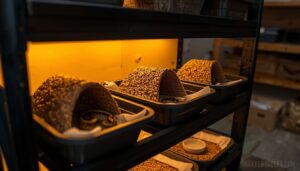
Start hatchlings in 6-quart tubs — roughly 14 by 10 by 6 inches. That tight fit reduces stress and aids escape prevention.
Use two secure hides, one per thermal gradient zone. Paper towels work as substrate options.
Place your water dish placement opposite the heat.
Track weight in a growth monitoring log.
Feeding schedule integration and juvenile light cycle consistency matter from day one.
When to Upgrade From Smaller Tubs

Don’t wait until your boa looks cramped to act. Growth Rate Indicators tell you when a move is overdue: when body length hits the tub’s length, that’s your Body Length Threshold.
Watch Weight Gain Milestones, Shedding Frequency Changes, and Behavioral Stress Signs like restless pacing.
A 4×2×2 ft enclosure fits boas between 2–5 ft. After that, upgrade.
Adult Length and Body Mass Considerations

Adult boas don’t just get longer — they get heavy. Length Weight Ratio and Mass Distribution both matter when sizing a rack. A female can hit 60 lbs, placing serious Structural Load Capacity demands on any tub or shelf.
- Average adult size: 6–8 ft, 20–33 lbs
- Up to 6 feet long by year two
- Growth rate expectations for adult boas slow after year three
- Space Allocation needs full-stretch floor room
- Growth Projection and proper enclosure planning spans 20+ years
Dwarf Boas Vs Standard Boas

Dwarf boas and standard boas share the same care basics — temperature and heating requirements, substrate selection and maintenance, enclosure design — but growth rate differences change everything rack-related.
Dwarf boas average 3.5–5.5 feet. Standard females push 6–8 feet with significant weight variability.
That gap affects tub sizing, feeding frequency, and long-term upgrade planning. Know which type you have before buying.
Planning for a 20-plus-year Commitment

Boa constrictors live up to 30 years. That’s not a pet — that’s a long-term commitment rivaling some mortgages.
A boa constrictor is not just a pet — it is a thirty-year commitment that outlasts most mortgages
Your long-term budget needs to cover rack upgrades, a veterinary care plan, and a solid maintenance schedule from day one.
Future-proofing upgrades now saves money later. Build your maintenance and sanitation protocols early.
Long-term pet ownership demands planned enclosure design, not reactive fixes.
Signs Your Boa Has Outgrown Its Rack

Your boa’s telling you it needs more room — you just have to know what to watch for. Constant pacing behavior, hide box pressure against the walls, and heat gradient issues are the clearest signs. Add feeding reluctance or weight gain stagnation, and the message is obvious.
Adult size brings stricter enclosure design, heating, and humidity requirements. Upgrade before the problems stack up.
Setup Costs and First-Time Mistakes

Getting your first boa rack setup right comes down to knowing where the real costs hide — and what mistakes trip up almost every beginner. A few key decisions up front can save you serious money and a lot of frustration down the road.
Here’s what you need to know before you spend a single dollar.
Rack-only Vs Complete Package Pricing
The price gap between rack-only and complete packages isn’t random — it reflects exactly what’s included.
- Rack-only = lowest upfront cost, but you still need tubs, thermostat, and heat cable
- Complete package = higher sticker price, but component inclusion eliminates separate purchases
- Budget flexibility matters if you’re building in stages
- Hidden fees hit hardest when freight shipping applies
- Long-term value favors bundles for first-time buyers
Heating, Tubs, and Monitoring Add-ons
Add-ons decide whether your setup actually works. A proportional thermostat keeps heat steady — pair it with an under tank heating pad or heat mat, and always check heat mat safety ratings against your tub material.
Tub lip design affects both escape risk and humidity.
Place your digital hygrometer inside the tub, not outside. Secondary thermometers catch sensor drift early.
Battery backup alerts protect your animals overnight.
Freight Shipping and Delivery Planning
Racks ship freight — not parcel.
Carrier selection matters here.
Confirm delivery windows before the truck leaves the warehouse.
Transit planning prevents missed appointments.
Get your shipment documentation right: wrong location details cause holds.
Claims management is harder than it sounds — inspect the crate immediately on arrival, photograph any damage, and report within five days.
Don’t sign a clean receipt if something looks off.
Incorrect Tub Size Selection
Misreading dimensions is one of the most common first-time mistakes. A tub labeled 20 gallons sounds generous — until wall thickness impact eats into usable floor space.
Inadequate floor space leads to overcrowded thermoregulation and body type mismatch for heavier females.
For proper enclosure sizing, target 75 gallons minimum for adults. Check interior length and width, not just the label.
Poor Heat and Humidity Management
Heat and humidity failures cause more first-time losses than any equipment mistake. Condensation Hotspots form when Temperature Gradient Collapse flattens your warm-to-cool range.
Nighttime temps dropping below 75°F trigger Inconsistent Nighttime Heat and slows thermoregulation. Excessive Drying kills humidity fast.
Keep 60–70% daily, raise to 80% during humidity management during shedding cycles. Fix both, or Mold Growth Triggers take hold.
Buying a Rack Without Upgrade Room
A rack with no upgrade room is a short-term fix with long-term costs. Space Constraints catch up fast — babies can triple in size within a year. Budget Limitations feel real now, but Limited Tub Options and Future Growth Risks mean buying two systems instead of one.
Plan for two secure hides, proper undercage heater placement, humidity control methods, and substrate selection and maintenance from day one.
Frequently Asked Questions (FAQs)
What is the best pet boa for beginners?
Boa imperator tops the list. It’s got a docile temperament, hardy health, and manageable size of 6–8 feet. Average lifespan hits 20–30 years — longterm pet ownership doesn’t get more serious than that.
How cold is too cold for a boa?
Drop below 75°F on the cool side and you’re flirting with cold stress. Below 68°F at night, thermoregulation shuts down. The ideal range keeps nights above 75°F — no exceptions.
Do boas need light at night?
No. Boas don’t need light at night. Darkness maintains their circadian rhythm. Use a ceramic emitter for heat without light. A timer takes care of the rest automatically.
How often should boa rack tubs be cleaned?
Spot clean daily. Change water every one to two days. Do a weekly deep clean on tubs. Replace substrate monthly. Quarantine animals need cleaning after every mess, no exceptions.
Can racks accommodate multiple boas safely together?
No. Each tub fits one boa. Co-housing stress, feeding competition, territorial aggression, and disease transmission make shared spaces dangerous. Individual climate zones break down fast. Keep every boa separate.
Do racks work well in smaller living spaces?
Yes. Racks stack vertically, so one footprint holds multiple tubs. That’s real space efficiency.
Keep temperatures at 86–90°F on the warm side, 75–80°F on the cool side, humidity 60–70%, and your room layout stays manageable.
How do boas behave when kept in racks?
Think of a a boa in a rack like a person in a studio apartment — less roaming, but calmer.
Hiding preference increases, activity levels drop, and thermoregulation patterns stay consistent when heat is right.
Are rack systems safe for handling shy boas?
Rack systems can work well for shy boas. Enclosed tubs act as visual barriers, reducing stress naturally.
Use gentle handling techniques, keep the environment quiet, and always maintain stable temperature and humidity.
Conclusion
A good rack is like a foundation—get it right once, and everything built on top of it holds. The wrong setup costs you twice: money now, problems later.
Choosing the right boa constrictor racks for first time boa owners means picking a system that fits your snake today and accommodates where it’s heading tomorrow.
stable heat, solid locks, proper sizing—none of it’s complicated. It just has to be done right from the start.