This site is supported by our readers. We may earn a commission, at no cost to you, if you purchase through links.

Snakes don’t cough. They can’t signal when something feels wrong. When a respiratory infection takes hold, the only clues come from changes so subtle most owners chalk them up to normal behavior.
That’s where things get dangerous. Respiratory infections rank among the most common reasons snakes end up in an exotic vet’s office, and they move fast when missed. A wheeze today can become pneumonia within days.
Learning to spot the signs of respiratory issues early gives you a real window to act before a manageable problem becomes a crisis.
Table Of Contents
- Key Takeaways
- Early Respiratory Signs in Snakes
- Visible Mucus and Mouth Symptoms
- Behavioral Signs of Breathing Trouble
- Severe Signs Requiring Emergency Care
- When to Call a Reptile Vet
- Frequently Asked Questions (FAQs)
- How to treat a respiratory virus?
- What are the symptoms of a lower respiratory tract infection?
- What are the treatment options for respiratory diseases?
- What causes upper respiratory infections?
- How long can a respiratory infection last?
- What are three symptoms that might indicate a respiratory problem?
- What are respiratory symptoms?
- How do I know if I have a respiratory disease?
- What causes respiratory symptoms?
- How do you know if you have respiratory distress?
- Conclusion
Key Takeaways
- Early warning signs like wheezing, clicking, sneezing, repeated gaping, or a head held high usually mean an infection has already taken hold and can progress to pneumonia within days.
- Visible mucus — bubbles at the nostrils, mouth discharge, stringy saliva, or open-mouth breathing — is one of the clearest confirmations of respiratory trouble, with blood-tinged mucus requiring emergency care.
- Behavioral changes such as refusing meals, unusual lethargy, restlessness, constant heat-seeking, or abandoning favorite hides often signal breathing trouble before a snake looks visibly sick.
- Severe signs like full-body labored breathing, constant gaping, rapid breathing (over 20 breaths per minute at rest), stretched neck posture, or weakness demand immediate exotic vet care, and documenting symptoms with photos and videos speeds diagnosis.
Early Respiratory Signs in Snakes
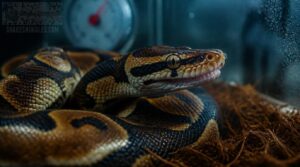
Snakes can’t tell you when something feels wrong, so early breathing changes are your first real clue. Knowing what to watch for puts you ahead of a problem that can escalate quickly. These five signs are where a respiratory issue usually begins.
Understanding what causes snake respiratory infections helps you connect the early warning signs to the underlying problem faster.
Frequent Wheezing Sounds
A snake that wheezes regularly is telling you something is wrong with its lung function. Snakes have only one working lung, so their respiratory system has little room to compensate. Mucus accumulates and stays, producing noisy breathing as air pushes past the blockage. Common culprits include gram-negative bacterial infections like Pseudomonas and Klebsiella, which are the most frequent cause of respiratory disease in snakes.
If you hear wheezing, don’t wait. Persistent breathing difficulties mean an infection has likely already taken hold.
Clicking While Breathing
Wheezing isn’t the only sign of respiratory illness. Clicking develops when mucus pools in the airway and shifts with each breath, making an audible rattle. Partial narrowing from inflammation can also change airflow without blocking it completely.
Four causes of clicking:
- Mucus buildup in the trachea
- Airway narrowing from inflammation
- Debris lodged in the passage
- Irregular airflow near the mouth
Sneezing or Forceful Puffing
Beyond clicking, sneezing or forceful puffing points to airway obstruction. Your snake pushes air out to clear mucus or debris stuck in the nares. Respiratory illness often triggers this pattern long before wheezing becomes obvious.
| Cause | Sign | Action |
|---|---|---|
| Foreign debris | Sneezing | Change substrate |
| Mucus buildup | Forceful puffing | Vet visit |
| Dusty air | Wheezing | Improve ventilation |
| Early infection | Repeated puffing | Monitor closely |
Repeated Yawning or Gaping
After forceful puffing, watch for repeated yawning or gaping. This open-mouth breathing signals dyspnea. Your snake can’t move air well.
Three reasons gaping occurs:
- Oxygen demand increases, triggering more airway-opening attempts
- Airway irritation disrupts normal airflow patterns
- Labored breathing forces the glottis to open repeatedly
Clustered gaping means breathlessness is worsening. Act fast.
Head Held Unusually High
When breathing gets hard, your snake may raise its head high and keep it there. This posture helps mucus drain and improves airflow. Labored breathing drives the position.
Recognizing this alongside other warning signs is easier when you know what healthy snake breathing actually looks like.
A "stargazing" head tilt points deeper trouble. It may signal nervous system disease. Watch for nasal flaring or cyanosis. If the head stays up, call your exotic vet.
Visible Mucus and Mouth Symptoms
Mucus tells a story your snake cannot. When the respiratory tract becomes irritated or infected, the body responds with discharge you can often see. Here are five visible mucus and mouth symptoms you can check for at home.
Bubbles Around The Nostrils
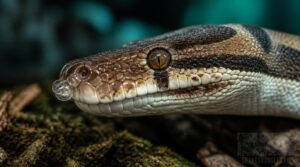
Bubbles at the nostrils are one of the clearest warning signs of a respiratory infection in snakes. This excess mucus forms when the airways fight bacteria, viruses, or irritants like smoke and cedar bedding. Watch for:
- Clear or cloudy fluid forming with each breath
- Bubbles that pop during inhalation
- Wet, stringy discharge blocking the nostrils
If you see bubbles, don’t wait. Early treatment protects lung function and prevents dyspnea from worsening.
Mouth Mucus or Discharge
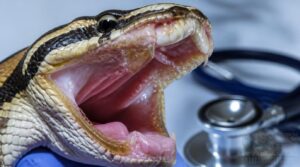
Noticing mucus inside your snake’s mouth matters. Discharge here often signals a respiratory infection or mouth rot. Look for these changes:
| What You See | What It Means | What To Do |
|---|---|---|
| Clear froth | Early infection | Schedule a vet visit |
| Yellow cheesy material | Stomatitis | Seek care promptly |
| Blood-tinged mucus | Severe ulceration | Emergency attention |
Report these symptoms to your healthcare provider quickly.
Excess Stringy Saliva
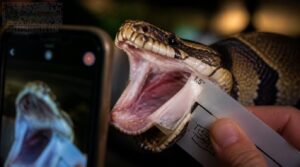
Stringy saliva is never a normal resting state. In a healthy snake the mouth looks clean and dry. When you see ropes of sticky mucus, suspect a respiratory infection or stomatitis.
Gently open the mouth with a soft card edge. Check before feeding, since eating naturally increases saliva.
Low humidity dries membranes and worsens production. Photograph what you see and call your vet.
Wet or Blocked Nostrils
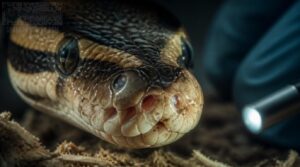
A snake’s nostrils should be clean and dry. Wet nostrils mean mucus is building up inside the nasal passages. Blocked nostrils point to thick sputum, inflammation, or trapped substrate dust. Dusty bedding and low humidity irritate the airway and slow drainage.
Check both nostrils daily with good lighting. If one stays wet or plugged for more than a day, call your exotic vet promptly.
Open-Mouth Breathing

A snake that breathes with its mouth open is showing respiratory distress. This is dyspnea. Normal breathing happens through the nostrils. Mouth breathing means the airway is blocked by mucus, swelling, or inflammation.
If you’re seeing this along with wheezing or excess mucus, this guide to handling a snake with a respiratory infection walks you through the next steps.
Open-mouth breathing often appears with wheezing and other pulmonary symptoms. It signals the body can’t get enough air. This is an emergency sign. Call your exotic vet right away.
Behavioral Signs of Breathing Trouble

A snake that cannot breathe well will often change how it behaves long before it looks sick. These changes are easy to miss because they can seem like normal mood swings or picky eating. Watch for these five behavioral warning signs in your snake’s daily routine.
Refusing Regular Meals
When your snake refuses meals, respiratory symptoms are often the hidden cause. Inflamed airways make swallowing painful. The food bolus also compresses the trachea, triggering dyspnea or apnea mid-feeding. Your snake learns to fear eating.
A snake that stops eating may not be picky — it may be too breathless to swallow
Watch for these warning patterns:
- Refusing prey it normally eats
- Striking then abandoning food
- Weight loss over two weeks
- Wheezing during feeding attempts
- Nasal bubbles with meal refusal
Anorexia beyond three to four weeks in adults, or one to two weeks in juveniles, needs an exotic vet. Never force-feed. Tracheal trauma can cause serious injury. Offer smaller, pre-killed prey once symptoms clear, and allow two to four weeks for recovery.
Unusual Lethargy
Like appetite loss, lethargy is easy to miss. Snakes rest often. But a sick snake barely reacts to handling and shows weak muscle tone. Its body diverts energy to fight infection while damaged lungs struggle for oxygen.
Watch for these patterns:
- Delayed righting when flipped
- Weak grip during handling
- Limp body posture
- Flattened, prolonged basking
- No tongue flicking
Profound lethargy with wheezing or dyspnea suggests pneumonia. Seek an exotic vet immediately.
Restlessness Inside The Enclosure
Restlessness sits at the other end of the energy scale. A calm snake that suddenly paces its enclosure walls or pushes at the glass is telling you something. This behavior often signals internal distress from respiratory disease. Snakes struggling to breathe move because stillness feels suffocating.
Watch for these restless patterns:
- Constant pacing along walls
- Repeated glass surfing
- Climbing corners at night
- Inability to settle anywhere
Restlessness with wheezing, nasal flaring, or discharge from nostrils points to breathing trouble. Open-mouth breathing makes the concern urgent. However, if pacing began right after a new heater or lamp was installed, check your temperatures first. Poor thermal gradients cause similar stress. Rule that out, then call your exotic vet.
Constantly Seeking Extra Heat
Heat-seeking is subtler than pacing but just as telling. Snakes can’t run a fever the way you do. Instead, they raise body temperature by basking longer. A snake stuck to its heat source all day may be fighting infection.
Watch for these patterns:
| Behavior | Normal | Concerning |
|---|---|---|
| Basking | Short periods | All day, every day |
| Movement | Shuttles warm to cool | Never leaves warmth |
| Timing | After meals | With wheezing |
| Other signs | None | Nasal flaring |
Prolonged basking with open-mouth breathing or a fast breathing rate signals respiratory distress. Check your enclosure temperatures first. Cold enclosures cause similar behavior. If temperatures are correct and heat-seeking persists, call your exotic vet.
Avoiding Favorite Hiding Places
When a snake stops using its favorite hide, pay attention. Confined spaces make breathing harder. A snake with respiratory illness seeks open areas to ease its breathing, much like a person with shortness of breath sitting upright at night.
If your snake abandons its usual shelter, especially with mucus or wheezing, call your exotic vet promptly.
Severe Signs Requiring Emergency Care
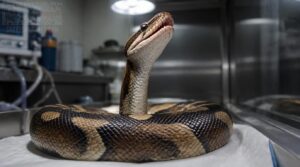
Some respiratory signs in snakes go past the warning stage and become emergencies. When breathing turns into a full-body effort, your snake is losing the fight for air. Learn these five severe signs now so you can act fast if you ever see them.
Labored Full-Body Breathing
Have you ever seen a snake breathe with its whole body? That’s labored full-body breathing, and it’s a serious sign.
Normal breathing is quiet and nearly invisible. When a snake’s torso muscles heave with each breath, its airways are narrowed or its lungs are compromised. This is dyspnea. Wheezing often accompanies it.
Don’t wait and watch. Seek emergency veterinary care immediately.
Constant Open-Mouth Gaping
Holding the mouth open nonstop is a red flag. A healthy snake breathes with a closed mouth. Constant gaping means its airway is swollen, blocked, or failing to deliver enough air.
Causes include infection, aspirated material, or poor temperature control. Shortness of breath follows. Oxygen levels drop fast.
This is an emergency. Get veterinary help immediately. Waiting can be fatal.
Loud or Rapid Breathing
Loud breathing means trouble. A healthy snake breathes quietly. Rapid breathing, called tachypnea, often signals infection like pneumonia or nidovirus. A resting breathing rate above 20 breaths per minute suggests respiratory distress. You may hear wheezing, clicking, or gurgling sounds.
Snakes use rib muscles, not a diaphragm, so mucus makes each breath noisy. This dyspnea needs urgent veterinary care. Don’t wait.
Stretched Neck Posture
Stretched neck posture can be Dyspnea in action. Snakes raise and extend their neck forward and up to improve airflow and reduce lung compression.
In lizards this Body position often comes with visible breathing effort and gaping. If you see Cyanosis, constant open-mouth breathing away from heat, or worsening respiratory effort, contact an exotics vet urgently.
Weakness or Poor Coordination
Weakness or poor coordination can mean dyspnea has shifted from the lungs to the whole body. You may see a heavy, drifting head and trouble righting yourself when your snake is flipped. This can reflect respiratory distress, lethargy, or neurologic involvement from infection.
- Can’t hold position 2. Slips when lifted 3. Tremors 4. Too weak to recover.
Call an exotics vet urgently.
When to Call a Reptile Vet
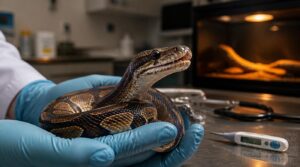
If your snake shows signs of respiratory trouble, you shouldn’t wait. When home checks and basic care don’t quickly help, call an exotic reptile vet. Bring clear updates on appetite, behavior, and temperature so they can act fast.
Contacting an Exotic Veterinarian
When should you call an exotic veterinarian? Asap if breathing sounds change, worsen, or start quickly. Your healthcare provider needs your onset time, species, and enclosure details. Use patient preparation for transport: minimal restraint, stable warmth, ventilated container. Send symptom tracking photos or a short breathing video, especially nostrils and mouth discharge.
| What to send | What it helps |
|---|---|
| Onset time | Severity trend |
| Enclosure humidity | Differential clues |
| Short breathing video | Mechanics timing |
| Nostrils/mouth photos | Discharge patterns |
Reporting Appetite and Behavior Changes
If your snake eats less or skips meals, report it. Note refusals during scheduled feeding and whether it takes a few bites then stops.
Track fatigue or unusual lethargy, and any restlessness that looks like discomfort. Watch for hiding changes, especially avoiding favorite spots.
Also log repeated heat-seeking, since it can signal altered temperature preference, weight loss, fatigue, or fever.
Checking Enclosure Temperatures
Check temperatures after you log appetite changes. Put probes at substrate level where your snake rests, not on glass. Set the warm probe on the heat surface and the cool probe in the shade.
Run daily spot checks, and weekly infrared scans. Use min-max thermometers. Measure 88–92°F warm, 74–80°F cool for ball pythons, and keep a working gradient for thermoregulation.
Photographing Mucus or Discharge
Photos give your vet hard evidence. Use a stable side profile view so nostrils and mouth show clearly. Keep the camera parallel to the head. Fill the frame with the subject.
Light the area to cut glare on wet surfaces. Take several frames across a few minutes. Record the time of each photo. Note whether discharge appears before and after head movement. This tracks progression.
Frequently Asked Questions (FAQs)
How to treat a respiratory virus?
Treating a respiratory virus starts with rest and supportive care. Antivirals rarely work in reptiles. Keep your snake warm and hydrated, make sure it’s drinking plenty of fluids, and let your vet manage secondary infections with antibiotics.
What are the symptoms of a lower respiratory tract infection?
Lower respiratory tract infections usually cause productive cough with mucus, shortness of breath, fever, chills, wheezing, chest tightness, and rapid breathing. You may feel fatigue, body aches, and lose appetite. Uncomplicated cases last 1–3 weeks; pneumonia 2–
What are the treatment options for respiratory diseases?
For respiratory disease, your vet may use antibiotics, oxygen therapy, nebulizers, corticosteroids, plus supportive heat, hydration, daily soaks, and airway cleaning. Antifungals like itraconazole or ivermectin are used when needed. Pulmonary rehabilitation may support recovery.
What causes upper respiratory infections?
Upper respiratory infections in snakes usually start from poor husbandry: wrong temperature or humidity, dirty enclosures, and weak ventilation that builds environmental irritants. Stress, new animals, and heat failures also weaken immunity, letting bacterial pathogens, viruses, and fungi cause infection.
How long can a respiratory infection last?
Respiratory infections in snakes can last 2–3 weeks for mild cases with prompt care, 3–4+ weeks for typical bacterial courses, and 6–10 weeks in severe infections. Viral illness can run up to 10 weeks, sometimes longer.
What are three symptoms that might indicate a respiratory problem?
Three clear warning signs are wheezing, rapid breathing, and nasal discharge. Each points to narrowed airways or trapped mucus. Watch for them together, and don’t wait before calling your reptile vet.
What are respiratory symptoms?
Respiratory symptoms are signs your snake’s breathing is compromised. Watch for wheezing, nasal discharge, labored breathing, mouth mucus, and open-mouth gaping. Like chest tightness or a cough in humans, these signals mean airways are irritated.
How do I know if I have a respiratory disease?
You can’t diagnose yourself. Watch for shortness of breath, wheezing, chest pain, coughing up blood, or nasal discharge lasting more than a week. See a doctor promptly for testing.
What causes respiratory symptoms?
Have you ever wondered what makes breathing go wrong? Infection is the most common cause. Bacteria like Pseudomonas and Klebsiella invade lungs. Viruses, fungi, and parasites also trigger respiratory disease in snakes.
How do you know if you have respiratory distress?
You can spot respiratory distress in snakes through wheezing, labored breathing, nasal discharge, and open-mouth gaping. Watch for weakness, restlessness, or a stretched neck. These signs mean your snake needs a reptile vet promptly.
Conclusion
Silent suffering is the snake’s reality, so your watchfulness becomes its voice. The signs of respiratory issues rarely announce themselves loudly. They whisper through wheezes, bubbles, and lost appetites. Trust what you observe. Act on small changes rather than waiting for dramatic ones.
A snake that eats well, breathes quietly, and rests calmly is thriving. When something shifts, your quick response can mean the difference between a simple recovery and a losing battle.