This site is supported by our readers. We may earn a commission, at no cost to you, if you purchase through links.

The idea of vegetarian snakes sounds appealing to some pet owners who prefer not to handle frozen mice or live prey. You might hope that certain snake species can adapt to plant-based diets, or you’ve encountered claims online suggesting it’s possible.
The reality breaks this fantasy completely. No snake species can survive on plants because their bodies evolved over millions of years as obligate carnivores. Their digestive systems lack the enzymes to break down cellulose, and their nutritional requirements depend entirely on animal tissue.
Attempting to feed a snake a vegetarian diet doesn’t just fail—it causes severe malnutrition, organ damage, and eventual death. Understanding why snakes can’t be vegetarians protects these animals from harmful feeding practices and helps you make informed decisions about reptile ownership.
Table Of Contents
- Key Takeaways
- What Does “Vegetarian Snake” Mean?
- Natural Diets of Snake Species
- Why Snakes Cannot Be Vegetarians
- Risks of Attempting Vegetarian Diets for Snakes
- Alternatives for Vegetarian Pet Owners
- Frequently Asked Questions (FAQs)
- Which snake doesn’t eat meat?
- Do any snakes not eat meat?
- What reptiles are vegetarian?
- Are pythons vegetarian?
- What are vegetarian snakes?
- Are there snakes that don’t eat meat?
- Is there a pet snake that doesn’t eat mice?
- Are there any vegetarian reptiles?
- Can corn snakes be vegetarian?
- Are garden snakes vegetarian?
- Conclusion
Key Takeaways
- All snakes are obligate carnivores whose digestive systems evolved exclusively to process animal tissue and lack the enzymes needed to break down plant cellulose.
- Attempting to feed snakes a vegetarian diet causes severe malnutrition, organ damage, and death because they cannot extract essential nutrients like heme iron, vitamin B12, and taurine from plant sources.
- The concept of vegetarian snakes stems from cultural myths and animal ethics discussions, but no snake species exists that can survive on plant-based diets due to millions of years of evolutionary adaptation for carnivory.
- Pet owners seeking vegetarian-friendly reptiles should choose herbivorous species like green iguanas, tortoises, or uromastyx lizards rather than attempting to alter a snake’s biologically fixed dietary requirements.
What Does “Vegetarian Snake” Mean?
The term “vegetarian snake” might sound like a contradiction, but it’s a phrase that comes up more often than you’d think.
While no snake species is truly herbivorous, understanding proper feeding tools and environments is essential—here’s a complete guide to snake feeding equipment that covers safe handling practices.
Some people wonder if snakes can survive without eating meat, while others have heard rumors about plant-eating serpents. Let’s clear up what this term actually means and why the concept doesn’t align with snake biology.
Defining Vegetarianism in Reptiles
When you talk about vegetarianism in snakes, you’re entering a conversation riddled with confusion. True vegetarian snakes don’t exist because reptile nutrition hinges on evolved dietary needs. Here’s what you need to understand:
- Herbivorous snakes would require plant-based alternatives as their primary food source
- Snake anatomy is built for carnivory, not processing plant material
- Vegetarianism in snakes contradicts the fundamental herbivore vs carnivore distinction
Animal ethics meets biological reality here. While some reptiles thrive on strictly plant-based diets, snakes don’t fit into the category of vegetarian reptiles in herpetology.
Common Myths and Misconceptions
You’ll hear claims that vegetarian snakes thrive on plant-based diets, but these feeding fallacies ignore snake nutrition fundamentals. One persistent diet myth suggests plant matter provides adequate animal protein, yet snakes lack the digestive enzymes for cellulose breakdown.
Another misconception claims vegetarianism in snakes improves health, disregarding the carnivorous nature of snakes. These myths compromise reptile welfare by promoting nutritionally deficient practices.
Origins of The Vegetarian Snake Idea
The notion of vegetarian snakes draws from several cultural threads. Early animal ethics discussions sparked speculation about nonviolent diets for carnivorous animals. Folklore influence and mythic lore wove tales of harmony between predator and plant. Media portrayals in speculative fiction depicted snakes choosing vegetables as symbolic representations of peaceful coexistence. These cultural significance markers ignore the carnivorous nature of snakes and actual snake dietary habits.
The idea of vegetarian snakes is further explored in various contexts, including:
- Animal ethics movements questioned whether carnivorous animals could adopt plant-based diets
- Mythic associations linked snake diet and nutrition to spiritual transformation narratives
- Online communities amplified vegetarian snake scenarios through memes and fiction
- Popular stories used plant-eating serpents as symbolic gestures against cruelty
- Folk beliefs conflated peaceful ideals with biological impossibilities for obligate carnivores
Natural Diets of Snake Species
All snakes are obligate carnivores, meaning their bodies are built to hunt and consume animal prey exclusively.
Smaller species often target prey like crickets and beetles, while larger snakes typically hunt rodents, birds, and even other reptiles.
Different species have developed specialized hunting strategies and prey preferences based on their size, habitat, and evolutionary history. Understanding these natural feeding behaviors reveals why the concept of a vegetarian snake contradicts everything we’re aware of about serpent biology.
Carnivorous Feeding Behaviors

You won’t find snakes grazing on plants—their carnivorous nature demands meat. These carnivorous reptiles deploy complex hunting tactics, from ambush strikes to active pursuit, capturing prey with impressive efficiency.
Their digestive adaptations process animal tissue rapidly, extracting proteins and fats that meet strict nutrient requirements. Every feeding strategy reflects evolutionary fine-tuning for a carnivorous diet, making prey capture the foundation of snake dietary habits.
Species-Specific Prey Preferences

Each snake species targets specific prey types based on dietary adaptations and habitat. As obligate carnivores, these predators evolved specialized hunting strategies that match their prey selection needs.
- Desert rattlesnakes favor rodents and lizards through heat-sensitive pit detection
- Oophagous snakes like the African egg-eater consume only birds’ eggs
- Aquatic species target fish and amphibians using underwater ambush tactics
- Arboreal snakes select birds and tree-dwelling prey with constriction methods
- King snakes demonstrate ophiophagy, consuming other snake species regularly
These feeding behaviors reflect millions of years of predator prey refinement in carnivorous diet patterns.
Accidental Ingestion of Plant Matter

While hunting prey, you might observe your snake swallowing bits of substrate or vegetation. These incidents introduce plant matter into digestive systems evolved strictly for carnivorous processing.
Plant toxicity and ingestion risks arise when fibrous material causes gut obstruction or digestive issues. Unlike herbivores with specialized enzymes, snakes can’t extract nutrients from plant-based diet components.
Emergency care becomes necessary if plant material triggers impaction or distress.
Why Snakes Cannot Be Vegetarians

Snakes aren’t equipped to live on plants, and that’s not just a preference—it’s biology. Their bodies evolved over millions of years to process meat exclusively, from their teeth down to their gut bacteria.
Snakes evolved over millions of years as obligate carnivores—their biology demands meat, not preference
Let’s examine three critical reasons why vegetarian diets fail for snakes and always will.
Snake Digestive System Limitations
You might wonder why snakes can’t just switch to salad, but their digestive tract tells a different story. Snake physiology is built exclusively for carnivores, not plant matter:
- Their gut remodeling cycles surge after meat meals, with enzyme production targeting animal proteins and fats
- Nutrient absorption depends on specialized transporters that extract amino acids, not cellulose
- Metabolic costs of digestion only pay off with dense animal tissue
Obligate carnivores lack the biological toolkit for vegetarianism.
Comparative studies reveal that adaptive gut regulation patterns are tightly linked to a snake’s carnivorous feeding habits.
Evolutionary Adaptations for Meat-Eating
Over millions of years, evolutionary adaptations locked snakes into obligate carnivores with no turning back. Their venom evolution and heat-sensing organs honed predator-prey dynamics, while digestive systems refined meat digestion through specialized enzymes.
Feeding strategies, from constriction to strike mechanics, showcase genetic commitment to carnivorous survival. These adaptations make alternative snake diets biologically impossible, cementing nutrient absorption pathways exclusively for animal tissue.
Essential Nutrients From Animal Prey
You can’t bypass biology in the case of obligate carnivores. Animal-based foods deliver heme iron with higher bioavailability for oxygen transport, plus vitamin B12 for nervous system health.
Protein sources from prey provide zinc and taurine benefits supporting enzyme function and vision. These mineral balance requirements and vitamin needs prove why carnivores’ digestive systems demand meat. The nutritional needs of snakes leave no room for plant-based alternatives.
Risks of Attempting Vegetarian Diets for Snakes
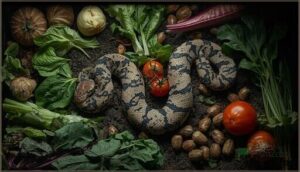
Forcing a snake onto a vegetarian diet isn’t just ineffective—it’s dangerous.
The consequences range from severe malnutrition to organ failure and death.
Here’s what happens when snakes don’t get the animal-based nutrition their bodies require.
Health Consequences and Malnutrition
Depriving your snake of animal-based foods triggers severe malnutrition effects that cascade through their entire system. Nutrient deficiencies emerge rapidly because snake digestive systems can’t extract nutritional requirements from plant matter.
Vitamin A deficiency causes irreversible vision loss, while calcium shortfalls lead to bone deformities. Organ damage accumulates as starvation risks escalate, with the liver and kidneys failing under prolonged dietary disorders that contradict the nutritional needs of snakes.
Scientific Evidence and Case Studies
Clinical trials and case reports document what happens when snake species encounter plant material. Digestive analysis reveals gut transit failures, while nutrient profiles show protein deficits that crash within weeks.
Feeding behaviors shift as carnivorous reptiles reject non-meat items, and dietary specialization makes vegetarian reptiles impossible. Every documented attempt confirms snakes can’t process plant-based diets without severe metabolic collapse.
Animal Welfare Concerns
Beyond the science, forcing plant material on obligate carnivores violates basic animal rights. Welfare Monitoring systems track behavioral cues like reduced appetite and stress signals, yet captive care sometimes ignores them.
Snake Stress Factors multiply when you deny natural diets. Ethical Treatment demands honoring what evolution built into these predators.
- Chronic malnutrition weakens immune function and shortens lifespan
- Behavioral changes signal distress that welfare protocols should catch
- Captive snakes depend entirely on your nutritional choices
- Vegetarian reptiles exist, but snakes aren’t among them
Alternatives for Vegetarian Pet Owners

If you’re committed to vegetarian ethics but drawn to reptile ownership, you don’t need to compromise your values.
Several reptile species thrive on plant-based or omnivorous diets without requiring meat-based feeding.
The following options offer ethical alternatives that align with vegetarian principles while meeting proper nutritional standards.
Herbivorous and Omnivorous Reptile Options
If you can’t stomach feeding whole prey, you’re not stuck with fish tanks. Green iguanas, Greek tortoises, and uromastyx lizards thrive on plant-based diets rich in leafy greens and vegetables.
Bearded dragons and box turtles accept omnivore feeding routines mixing insects with plants. These herbivores and omnivores provide ethical alternatives while meeting your values around reptile nutrition and herbivore care without compromise.
Ethical Feeding Practices for Snake Owners
Even if you own a snake, you can still honor your values. Use humane sourcing by choosing pre-killed frozen-thawed prey from reputable suppliers.
Rotate prey types for balanced snake nutrition and adjust feeding frequency to maintain healthy body condition. Monitor your snake’s weight monthly and practice ethical handling with calm movements.
These captive snake diets respect both your snake’s dietary needs and your ethical standards.
Consulting Reptile Nutrition Experts
When you’re unsure about your snake’s dietary needs, expert guidance from board-certified veterinarians or registered reptile nutrition specialists can save its life.
These professionals assess your animal’s species consultation requirements, perform thorough diet assessment, and create nutrition planning customized to your snake. They use scientific tools to monitor reptile wellness and provide species-specific care, ensuring your pet thrives on appropriate captive snake diets.
Frequently Asked Questions (FAQs)
Which snake doesn’t eat meat?
No snake species naturally follows a vegetarian diet. All snakes are obligate carnivores requiring animal protein for survival.
Even the African egg-eating snake consumes eggs, which are animal-based, not plant matter.
Do any snakes not eat meat?
No carnivore characteristics allow exceptions to snake diets in the wild.
All snake species rely entirely on animal based diets—whether rodents, birds, fish, or eggs—to meet their strict reptile nutrition and meat eating habits requirements.
What reptiles are vegetarian?
Green iguanas, uromastyx lizards, and certain tortoise species like sulcatas are strictly herbivorous reptiles.
These herbivore species thrive on plant matter including leafy greens, vegetables, and hay—offering vegetarian options for eco-friendly pets.
Are pythons vegetarian?
No, pythons are obligate carnivores that require whole animal prey for survival.
Their digestive anatomy and reptile biology evolved specifically for processing animal proteins and fats, making vegetarian diets impossible and dangerous for these snake species.
What are vegetarian snakes?
You’ll hear tales of herbivores slithering through grass, but “vegetarian snakes” is a myth. All serpents are obligate carnivores requiring animal protein.
Even egg-eating snake species consume animal products, not plant-based diets.
Are there snakes that don’t eat meat?
No snake species thrives on plants alone. All snakes are obligate carnivores with digestive systems designed for meat eating habits and animal based diets, lacking the carnivore adaptations herbivores need for processing vegetation.
Is there a pet snake that doesn’t eat mice?
You can find non-rodent prey alternatives for pet snakes. Some species thrive on fish, eggs, or insects, but remember, all pet snakes still require animal-based nutrition to survive.
Are there any vegetarian reptiles?
Yes, several herbivorous species thrive on plant-based diets. Green iguanas, uromastyx lizards, and many tortoises are true herbivores.
These reptiles possess specialized digestive systems that efficiently process plant matter and extract essential nutrients.
Can corn snakes be vegetarian?
No, corn snakes can’t be vegetarian. They’re obligate carnivores evolved to digest whole prey like mice and rats. Their digestive systems lack the enzymes needed to process plant-based diets effectively.
Are garden snakes vegetarian?
No, garden snakes aren’t vegetarian. Like all snake species, they require animal protein sources to survive.
These reptiles hunt small prey including insects, amphibians, and fish, fulfilling their carnivore requirements through wildlife ecology’s natural design.
Conclusion
Breaking free from the vegetarian snake myth isn’t just about correcting misinformation—it’s about respecting millions of years of evolution. Your snake’s survival depends entirely on animal prey because its body possesses zero capacity to process plants.
Attempting vegetarian diets guarantees suffering and death. If handling prey conflicts with your values, choose herbivorous reptiles like iguanas or tortoises instead. Your ethical concerns matter, but they can’t rewrite biology.