This site is supported by our readers. We may earn a commission, at no cost to you, if you purchase through links.

Snakes outsell puppies at some exotic pet expos—a fact that surprises most people until they meet a calm corn snake draped across someone’s arm like it owns the place. That comfort isn’t accidental.
The most popular pet snakes today are captive-bred animals that have been handled across dozens of generations, producing temperaments that make dog owners do a double-take.
Still, "easy pet" and "no-effort pet" aren’t the same thing. Getting the heat gradient right, matching prey size to body girth, and knowing which species fits your lifestyle all determine whether your snake thrives for 20‑plus years—or struggles through its first shed.
Table Of Contents
- Key Takeaways
- Best Popular Pet Snakes
- Beginner-Friendly Snake Qualities
- Pet Snake Care Basics
- Feeding Popular Pet Snakes
- Choosing Your SnakeSnuggles Companion
- Frequently Asked Questions (FAQs)
- What is the most popular snake pet?
- What snakes does Petco sell?
- How often should I take my snake to the vet?
- What are common signs of illness in pet snakes?
- How much does it cost to own a snake?
- Can snakes recognize their owners or show affection?
- What permits or licenses are required for ownership?
- Can pet snakes recognize their owners over time?
- Do snakes need UV lighting in their enclosure?
- How often should you clean a snakes tank?
- Conclusion
Key Takeaways
- Corn snakes and ball pythons are the most beginner-friendly choices because they stay calm during handling, eat frozen‑thawed mice, and can live 15–30 years with straightforward care.
- Getting the heat gradient right — a warm side around 88–90°F and a cool side at 75–80°F — is the single most important thing you can do for your snake’s health.
- Captive‑bred snakes are almost always the better buy: they arrive parasite‑free, come with health documentation, and have temperaments shaped by generations of calm handling.
- Before bringing any snake home, spend ten minutes checking your local laws — permit requirements vary widely by city and species, and skipping that step can cause real problems.
Best Popular Pet Snakes
Picking your first pet snake doesn’t have to feel overwhelming. There are a handful of species that genuinely make the whole experience easier, from feeding to handling. Here are five that beginners consistently get along with.
Most of these species also share similar habitat needs, so brushing up on beginner snake substrate options before you bring one home can save you a lot of guesswork.
Corn Snake

The corn snake is about as close to a perfect starter snake as you’ll find. Distinctive stripe runs from the back of the eye to the jaw corner.
Adults usually reach 4 to 6 feet, slender and smooth-scaled, with striking orange and red blotches outlined in black.
In captivity, they thrive on frozen-thawed mice, need a simple enclosure with a warm side around 90°F, and handle daily interaction without stress.
Many live 15 to 20 years.
Ball Python

If corn snakes are the reliable all-rounder, ball pythons (Python regius) are the laid-back crowd-pleasers.
Known for their docile temperament, they rarely bite and curl into their signature stress ball posture when nervous.
Adults reach 3 to 4 feet, live 20 to 30 years, and come in stunning morph diversity—hundreds of color variations exist.
Western Hognose Snake

If ball pythons are the easygoing giants, the western hognose snake is the entertainer of beginner setups.
Adults stay compact at 2 to 3 feet, making them easy to house.
Native to the sandy grasslands of central North America, they use their upturned snout to burrow through loose soil.
When startled, they flatten, hiss, and even play dead.
Milk Snake

Milk snakes are another great pick for beginners. Their bold red, black, and white bands make them genuinely striking — no two patterns look quite the same.
Adults reach 3 to 4 feet, stay manageable, and eat pre-frozen mice every 7 to 14 days.
They’re docile and easy-going, mostly active at night, and rarely cause problems in a standard terrarium setup.
Rosy Boa

If you want a small, easy-going pet snake, the rosy boa is hard to beat. Adults stay between 20 and 36 inches.
Their color variations range from tan and gray to rose-striped patterns. They’re docile by nature, slow-moving, and rarely bite.
Burrowing behavior and nocturnal habits make them fascinating to watch. With proper socialization early on, they stay calm for life.
Beginner-Friendly Snake Qualities

Not every snake makes a good first pet — some need demanding care that can overwhelm even experienced keepers. The good news is that a few key qualities separate beginner-friendly species from the rest. Here’s what to look for before you bring one home.
Calm Temperament
Temperament is everything when you’re just starting out. A beginner-friendly snake should stay relaxed in your hands — not coil defensively or strike at shadows.
Corn snakes and ball pythons are gold-standard picks here. They respond well to regular, calm handling, rarely escalating to biting.
The western hognose snake puts on a dramatic show, but it’s mostly theater — harmless and manageable.
Manageable Adult Size
Size matters more than you’d think. A snake that outgrows its space creates problems for both of you.
That’s why beginner size picks stay compact — corn snakes reach 4–6 feet, ball pythons 3–5 feet, milk snakes 3.5–5 feet, and western hognose snakes reach a tidy 2–3 feet. These space-saving species fit standard enclosures without demanding a dedicated room.
Simple Feeding Needs
Feeding a beginner snake is refreshingly straightforward. Most popular picks — corn snakes, ball pythons, and milk snakes — share the same basic rodent diet for snakes, making dietary needs simple to manage.
- Prey size selection: match prey width to the snake’s widest body point
- Frozen-thawed food: thaw completely, warm to body temperature before offering
- Meal spacing tips: feed every 7–14 days; juveniles eat more often
- Post-feeding care: skip handling for 24–48 hours after meals
Hardy Health
One of the biggest perks of beginner snakes is how resilient they actually are. Corn snakes and ball pythons have a reputation for hardy health — meaning small care mistakes won’t immediately spiral into a crisis.
Watch for steady weight, quiet breathing, and complete shed skins as reliable health indicators. Stable temperatures and a clean enclosure go a long way toward keeping your snake thriving.
Captive-Bred Availability
When you buy a captive-bred snake, you’re starting off on the right foot.
Corn snakes, ball pythons, and Kenyan sand boas all have large captive populations, so finding a healthy hatchling is straightforward.
Reputable breeder networks run genetic health checks and follow legal compliance standards — meaning your snake arrives documented, parasite-free, and ready to settle in.
Pet Snake Care Basics
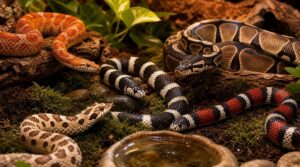
Getting the setup right is honestly half the battle for keeping a snake healthy and stress-free. Before you bring one home, it helps to know exactly what your enclosure needs to cover. Here are the five basics that every new snake owner should have in place.
Secure Enclosure Size
Getting the enclosure size right is the foundation of good snake care. Your snake needs room to move, hide, and thermoregulate — not just exist. Here’s what to keep in mind:
- Corn snakes do well in a 40-gallon long tank as adults
- Ball pythons need at least 40–60 gallons with a 36-inch minimum length
- Latch security systems matter — snakes are escape artists
- Leave clearance space of 2–3 inches around the snake
A size-appropriate enclosure keeps stress low and activity natural.
Heat Gradient
Once your enclosure size is sorted, heat becomes your next priority. Snakes can’t regulate their own body temperature — they rely on their environment to do it for them. That’s where a proper temperature gradient comes in.
Think of it as a warm side and a cool side. Your basking temperature should sit around 88–90°F, while the cool end stays closer to 75–80°F. A ceramic heat emitter or heat lamp works well for creating that range without disrupting your snake’s sleep cycle. Juveniles need a slightly steeper gradient to support faster metabolism and growth.
Place thermometers at both ends — never guess. Consistent monitoring keeps your snake healthy and actively thermoregulating the way nature intended.
Humidity Requirements
Temperature sets the stage, but humidity ties it all together.
Corn snakes do well at 40–50%, ball pythons prefer 50–60%, and western hognose snakes like it drier at 30–40%.
A digital hygrometer takes the guesswork out.
Add a humid hide during shedding season — it’s a small step that prevents stuck shed and retained eye caps.
Clean Water Bowl
Once you’ve got humidity sorted, water is your next simple win. A nonporous bowl — ceramic, stainless steel, or BPA-free plastic — keeps bacteria from sneaking in. Change the water every 24 hours, use room-temperature tap water, and let it sit a minute so chlorine dissipates.
- Place the bowl on the warm side
- Keep it away from hides so your snake can reach both comfortably
- Rinse with hot water between changes to prevent mineral scale
- Sanitize weekly with a reptile-safe disinfectant
- Replace bowls every one to two years as micro-scratches harbor microbes
Salmonellosis is a real risk when water stays dirty, so don’t skip cleaning days.
Hides and Enrichment
Hiding spots aren’t just comfort — they’re essential for your snake’s sense of security. Cork bark and textured hides mimic natural crevices well.
Place one on the warm side, one on the cool side. Rotate them weekly to spark exploration.
Add climbing branches or tunnels for behavioral enrichment.
Avoid hides near heat sources, and always check for cracks.
Feeding Popular Pet Snakes

What your snake eats matters just as much as where it lives. Most popular pet snakes have pretty straightforward diets, but there are a few important differences worth knowing before you bring one home. Here’s a breakdown of the main feeding types and some practical tips to keep your snake healthy and on track.
Frozen-Thawed Rodents
Most snake keepers swear by frozen-thawed rodents — and for good reason. They’re safe, convenient, and nutritionally complete. Before offering a frozen mouse, thaw it in a sealed bag under cool running water. Never leave prey sitting out for hours. Once warm and pliable, it’s ready.
- Match prey size to your snake’s girth
- Feed juveniles every 7–10 days; adults every 10–14
- Discard uneaten prey within two hours
- Label frozen stock with dates to track freshness
Egg-Eating Species
Not every pet snake eats rodents. Egg-eating snakes (Dasypeltis spp.) survive entirely on fresh avian eggs — quail, finch, or canary.
Their flexible skulls let them swallow eggs whole, while strong neck muscles crack the shell from inside. The yolk digests efficiently, and shell fragments pass harmlessly.
Feed fresh eggs only; never frozen. Prey handling is minimal, making their care surprisingly straightforward.
Insect-Eating Snakes
A handful of popular pet snakes skip rodents entirely and thrive on insects alone. The rough green snake is the most common example — small, gentle, and perfectly happy hunting crickets, beetles, and caterpillars. These snakes use camouflage and quick strikes to catch prey, with fine, sharp teeth built for gripping small invertebrates.
- Feed every several days, adjusting for digestion time
- Juveniles start on smaller insects, graduating to larger prey
- Activity and appetite drop naturally during cooler months
- Offer prey that fits comfortably within their bite range
- Fresh live insects outperform pre-killed options for engagement
Their care level stays low, making them a surprisingly approachable choice.
Fish and Worm Diets
Not every pet snake is built for a diet of frozen mice.
Garter snakes and water snakes thrive on fish and worms, making them genuinely different to care for. Garter snakes accept earthworms, fish, and insects. Worms deliver 60–70% protein plus iron and zinc.
Rinse frozen bloodworms before feeding — residue affects water quality in semiaquatic enclosures.
Feeding Schedule Tips
Feeding your snake isn’t complicated, but timing matters. Hatchlings need meals every 5–7 days, juveniles every 7–10 days, and adults usually every 14–21 days.
Always offer frozen-thawed rodents sized to match your snake’s widest point.
Skip feeding during shedding, and weigh your snake monthly to catch changes early.
Choosing Your SnakeSnuggles Companion

Picking the right snake is more than just going with whichever one looks coolest at the pet store. There are a few practical things worth thinking through before you commit to a 20-year relationship with a reptile. Here’s what to keep in mind as you make your choice.
Match Experience Level
Picking the right snake starts with being honest about your experience. Beginners do best with a corn snake or ball python — both are forgiving, calm, and easy to read.
As your confidence grows, you can move up. Handling safety and setup complexity both increase with experienced species, so treat it like a progression pathway: walk before you run.
Consider Lifespan
Once you’ve matched your experience level, think about time. A ball python can live 20 to 30 years. Corn snakes often reach 15 to 20. That’s a long-term commitment — not a phase.
A ball python can outlive a decade of life decisions — owning one is a commitment, not a phase
- Lifespan varies by species and care quality
- Rosy boas can reach 20 to 30 years
- Stress and poor temps shorten life noticeably
- Regular health monitoring catches aging signs early
Check Local Laws
Before you bring a snake home, check your local laws. Some cities ban certain species outright or require permits for reptiles classified as restricted wildlife. Rules vary widely — your neighbor’s corn snake might be fine while yours triggers a permit review.
Look up your municipal code online and search "reptile" or "snake." It takes ten minutes and saves real headaches.
Plan Veterinary Care
Once your local laws are squared away, find a reptile-experienced vet before you need one. Not every clinic treats snakes well.
Wellness exams once or twice a year catch early problems — weight loss, skin issues, irregular shedding — before they snowball. Keep health records at home, and always have an emergency clinic’s number ready.
Avoid Advanced Species
Even if a snake catches your eye, resist more challenging species until you’ve built real experience.
Stick with beginner-friendly snakes — corn snakes, ball pythons, rosy boas — that have established care guides, calm temperament, manageable adult size, and simple rodent feeding needs.
Choose captive-bred individuals from reputable breeders who provide health documentation, reducing genetic risks and specialized care risks from the start.
Frequently Asked Questions (FAQs)
What is the most popular snake pet?
Ball pythons top the list. Their calm nature and compact size make them a favorite for beginners. Corn snakes follow closely, loved for easy handling and simple care.
What snakes does Petco sell?
Petco usually stocks corn snakes, ball pythons, milk snakes, and western hognose snakes. Prices range from around $50 to several hundred dollars, depending on the morph and your location.
How often should I take my snake to the vet?
Aim for at least one annual vet visit for your snake, even when it looks healthy. Some vets suggest twice yearly for early disease detection. New snakes need an initial checkup right away.
What are common signs of illness in pet snakes?
Snakes hide illness well. Watch for appetite loss, labored or open-mouth breathing, incomplete sheds, mouth swelling, and dull skin suggesting dehydration. Any of these signals means it’s time for a vet visit.
How much does it cost to own a snake?
Owning a snake is surprisingly affordable. Initial setup costs — enclosure, heat lamp, and hides — usually run €100–€ Then feeder rodents average just €5–€15 monthly. Budget wisely, and you’re set.
Can snakes recognize their owners or show affection?
Yes — but not the way a dog does. Snakes use scent-based recognition to identify you, and with consistent handling, many grow noticeably calmer around familiar people over time.
What permits or licenses are required for ownership?
Before bringing a snake home, check local permits first. Rules vary by city, state, and species. Always choose captive-bred over wild-caught — it’s legal, ethical, and safer for everyone.
Can pet snakes recognize their owners over time?
Your snake won’t write you a love letter, but it absolutely knows you’re there. Scent recognition drives this — your Jacobson’s organ-reading companion links your smell to safety over time.
Do snakes need UV lighting in their enclosure?
Most pet snakes don’t need UV lighting to stay healthy. Heat and temperature regulation matter far more. A proper basking spot and heat lamp do the heavy lifting — UVB is optional for most species.
How often should you clean a snakes tank?
Think of your snake’s enclosure like a kitchen — it needs daily upkeep, not just occasional scrubbing. Spot clean every day, do a full substrate swap monthly, and deep clean everything every four to six weeks.
Conclusion
People call snakes cold and unfeeling—yet popular pet snakes form routines, recognize their keepers, and outlive most dogs.
That says something worth sitting with.
Pick a species that matches your experience, nail the heat gradient, and feed on a consistent schedule.
Everything else follows from those three things.
You don’t need to become an expert overnight.
You just need to start with the right snake and respect what it actually needs.