This site is supported by our readers. We may earn a commission, at no cost to you, if you purchase through links.
Reptiles are masters of concealment. By the time a bearded dragon stops eating or a ball python coils in an unusual spot, the hidden illness may already be days or weeks old.
This biological tendency to mask clinical signs makes reptile disease diagnosis genuinely challenging. A temperature gradient that’s slightly off, a UVB bulb past its effective lifespan, or inconsistent sanitation can quietly drive metabolic or infectious disease before you notice anything wrong.
Knowing what to watch for, and what to do next, can be the difference between a straightforward recovery and a critical emergency.
Table Of Contents
- Key Takeaways
- Recognize Reptile Illness Warning Signs
- Match Symptoms to Common Reptile Diseases
- How Veterinarians Diagnose Reptile Diseases
- What to Do When Symptoms Appear
- Prevent Reptile Disease and Zoonotic Spread
- Frequently Asked Questions (FAQs)
- What are some common infectious diseases in reptiles?
- What to do when your pet lizard dies?
- What are some common diseases and their symptoms in animals?
- Is MBD curable in reptiles?
- Are bacterial diseases common in reptiles?
- How do you know if a reptile has an infection?
- How is systemic mycosis diagnosed in reptiles?
- How do you know if a reptile has metabolic bone disease?
- What should I do if my reptile has an infection?
- How do I know if my reptile has MBD?
- Conclusion
Key Takeaways
- Reptiles instinctively suppress signs of illness until disease is well advanced, so you need to track subtle behavioral shifts—like extended basking or reduced touch response—rather than waiting for obvious symptoms.
- Most reptile illnesses trace back to fixable husbandry mistakes, including worn UVB bulbs, inaccurate temperature gradients, and poor sanitation, meaning consistent habitat maintenance is your strongest preventive tool.
- Different disease types—bacterial, fungal, viral, protozoal, and parasitic—require distinct diagnostics and treatments, so getting a confirmed cause before attempting any remedy is essential to avoid masking symptoms or worsening the condition.
- The moment you suspect illness, isolate the animal, document symptoms with dated photos, review enclosure conditions, and contact a reptile-specialized vet without delay—early action is what separates a manageable case from a critical emergency.
Recognize Reptile Illness Warning Signs

Unlike mammals, reptiles suppress clinical signs until illness is well progressed, which means you need to watch for subtle shifts early.
Familiarizing yourself with reptile behavioral health indicators can help you catch those early warning signs before they escalate.
Reptiles hide illness until it’s critical—only early, subtle observation catches what they conceal
Reduced activity or basking is one of the first indicators. A reptile that’s normally alert but suddenly lethargic, or one basking far longer than usual, may be compensating for systemic illness. Lethargy assessment should include whether the animal reacts to touch, not just whether it’s moving.
Appetite changes are significant. Anorexia compounds quickly into dehydration and metabolic instability, especially in species with narrow thermal requirements.
Watch for behavioral shifts like straining near the vent, gaping, or open-mouth breathing. These can reflect gastrointestinal, reproductive, or respiratory distress. Oral lesions, periocular swelling, and retained shed are findings that warrant veterinary evaluation.
Match Symptoms to Common Reptile Diseases
Recognizing that something’s wrong is only the first step—matching symptoms to a cause is where diagnosis begins. Reptile diseases fall into a few broad categories, each with distinct clinical patterns. The sections below cover the most common disease groups your pet is likely to encounter.
Nutritional and Metabolic Disorders
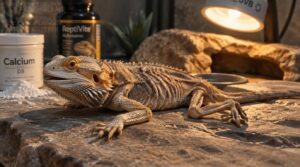
Expect nutritional disorders to develop gradually. Metabolic bone disease occurs when calcium deficiency pairs with insufficient vitamin D3 supplementation, disrupting bone mineralization and weakening skeletal integrity over time.
Without adequate UVB, your reptile can’t absorb dietary calcium effectively, triggering secondary nutritional hyperparathyroidism as the body pulls calcium from its own bones. Watch for soft jaws, limb tremors, or pathological fractures.
Bacterial and Fungal Infections
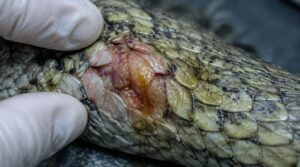
Metabolic stress weakens your reptile’s skin barrier, opening the door to bacterial and fungal invasion. Abscess formation and drainage signal bacterial penetration, while ulcerative dermatitis usually points to fungal damage. Both conditions can look identical on exam.
Accurate diagnosis matters here, since reptile skin infection treatment options differ significantly depending on whether bacteria or fungi are the underlying culprit.
Watch for:
- Soft, discolored, or oozing scales
- Draining lesions that won’t resolve
- Swelling or heat at skin sites
- Symptoms worsening despite habitat corrections
Viral and Protozoal Diseases
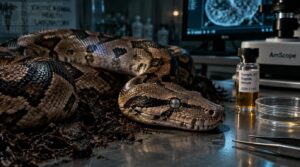
When you’ve ruled out bacterial or fungal involvement, viral and protozoal diseases deserve immediate consideration. Inclusion Body Disease produces neurological deficits and regurgitation in boids. Cryptosporidiosis causes chronic weight loss, while Entamoeba invadens can invade intestinal tissue and spread systemically.
| Disease | Key Signs |
|---|---|
| Inclusion Body Disease | Neurological signs, regurgitation |
| Cryptosporidiosis | Weight loss, chronic regurgitation |
| Entamoeba invadens | Bloody stool, systemic spread |
Use fecal tests for protozoal suspects and PCR for viral confirmation.
Parasites and Skin Disorders
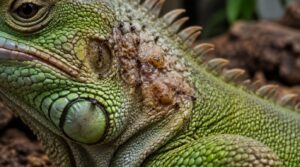
When skin parasites take hold, you’ll often notice focal discoloration, surface crusting, or mites visibly moving near scale edges and joints. Heavy mite loads drive self-trauma, which rapidly worsens existing lesions.
Our reptile breeding care tips cover quarantine routines and health checks that keep parasites from spreading through your collection.
Blister disease and ulcerative dermatitis usually follow bacterial invasion of compromised skin, while fungal infections produce irregular, discolored patches. Confirm the cause with skin scrapings rather than appearance alone.
How Veterinarians Diagnose Reptile Diseases
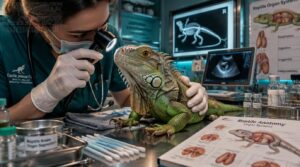
When your reptile shows signs of illness, a veterinarian’s diagnostic process covers more ground than a simple physical check. They’ll review your animal’s full history and husbandry setup before moving to hands-on examination and imaging. Two key steps guide that process.
History and Husbandry Review
Before a vet examines your reptile, they’ll reconstruct its environment on paper. Reptile husbandry history tells them whether illness stems from a long-standing setup flaw or a recent change.
They’ll ask about reptile temperature control, reptile UVB lighting age and placement, reptile humidity levels, and reptile sanitation practices. Diet, supplements, and any new animals or substrates round out the picture.
Physical Exams and Imaging
Picture a vet’s hands moving methodically along a lizard’s coelom, pressing gently for masses, swelling, or pain. That palpation guides everything.
The physical exam localizes the problem first, then imaging follows. Radiographs assess bone density and organ size. Ultrasound reveals soft-tissue detail when X-rays fall short. Results rarely confirm a single disease, so vets pair imaging with targeted sampling.
What to Do When Symptoms Appear

Reptiles hide illness well, so acting quickly matters once you notice symptoms. What you do in the first hours can directly affect your animal’s outcome. These five steps will guide you through an immediate, structured response.
Isolate The Reptile
Act before the diagnosis. The moment you suspect illness, isolate the reptile to prevent pathogen spread to healthy animals.
- Move to a non-porous, easy-to-disinfect enclosure immediately
- Dedicate separate tools to break transmission chains
- Maintain correct temperatures to avoid environmental stressors
- Start symptom monitoring with dated photos and notes
Strong quarantine protocols protect your whole collection while you await veterinary evaluation.
Check Husbandry Conditions
While your reptile rests in isolation, review its enclosure systematically. Check that temperature gradient accuracy falls within species-specific ranges, then confirm humidity levels using a reliable hygrometer. Inspect UVB lighting age and photoperiod timing.
Assess enclosure sanitation and substrate condition, and evaluate recent diet quality including supplementation handling. Suboptimal husbandry frequently underlies illness and is essential context for any veterinary consultation.
Replacing worn or soiled material with reptile substrate bedding options suited to your species can eliminate a common hidden stressor before your vet visit.
Document Symptoms Promptly
Memory fails when stress is high. Start a dated log the moment you notice anything off, recording exact onset time, behavior changes, and feeding response.
Photograph lesions daily with a size reference to track lesion progression accurately. Note discharge color and texture each time.
Early detection depends on systematic symptom observation, giving any veterinary consultation a concrete clinical picture.
Contact A Reptile Veterinarian
Once your symptom log is ready, contact a reptile veterinarian immediately. Search for board-certified exotics or herpetology-focused practitioners, since they apply reptile-specific diagnostic pathways rather than generic protocols. Call ahead with your species, husbandry setup, and symptom timeline.
Early detection loses its value if veterinary consultation is delayed, so book the soonest available appointment.
Avoid Unprescribed Treatments
While you’re waiting for that appointment, resist reaching for unprescribed treatments. Before veterinary consultation, over-the-counter products can mask signs, interfere with diagnostic testing, or cause toxicity. Common risks include:
- Steroids temporarily hiding active infection
- Broad-spectrum antimicrobials driving resistant bacterial strains
- Topical solvents toxic to reptile skin
Avoiding these protects diagnostic accuracy and reduces zoonotic potential during infection control.
Prevent Reptile Disease and Zoonotic Spread

Prevention builds on the habits you’ve already started, and it mainly comes down to consistent habitat hygiene and smart infection control.
Remove feces and soiled substrate frequently, before pathogens accumulate in bedding. Use disinfectants at the correct dilution and allow full contact time; a rushed wipe-down won’t reliably kill bacteria or fungi.
Zoonotic transmission moves through feces, shed skin, and contaminated surfaces. Wash hands with soap and water after every contact, since alcohol gels are less reliable on visibly soiled hands. Keep high-risk individuals, especially children and immunocompromised people, away from direct handling.
New animals need dedicated quarantine spaces with separate tools before joining your main collection. Stress and poor thermal gradients drive immune system weakness, so stable husbandry is your strongest defense.
Frequently Asked Questions (FAQs)
What are some common infectious diseases in reptiles?
Bacterial infections, fungal infections, respiratory infections, viral diseases, and parasitic infestation are the most common serious health threats. Bacteria like Aeromonas cause septicemia, while internal parasites drive chronic weight loss and diarrhea in captive reptiles.
What to do when your pet lizard dies?
Remove your lizard from the enclosure immediately and seal the body in a container for potential testing. Don’t clean anything just yet. A veterinary necropsy can identify the cause and help protect your other animals.
What are some common diseases and their symptoms in animals?
Reptiles develop metabolic bone disease, respiratory infections, infectious stomatitis, septicemic cutaneous ulcerative disease, and internal parasites, each presenting distinct symptoms like tremors, wheezing, oral ulcers, skin lesions, and weight loss.
Is MBD curable in reptiles?
Yes, often. Early metabolic bone disease responds well to corrected calcium, vitamin D3, and UVB. Severe, chronic cases with skeletal deformity may only partially recover.
Are bacterial diseases common in reptiles?
They’re among the most frequent reptile health problems. Opportunistic pathogens like Aeromonas and Pseudomonas thrive when husbandry lapses, causing skin infections, septicemia, and respiratory disease.
How do you know if a reptile has an infection?
Like a cracked shell hiding rot just beneath the surface, infection rarely announces itself with a single clear sign. Watch for discharge observation, lesion progression, swelling, or declining condition. Multiple signs suggest septicemia or abscess.
How is systemic mycosis diagnosed in reptiles?
Diagnosing systemic mycosis requires histopathological examination of biopsy tissue showing granulomatous lesions with fungal hyphae. PCR confirms the species quickly and accurately. Culture is slower and often less reliable, but imaging helps locate internal lesions.
Deep fungal respiratory infections can be treated with antifungals such as amphotericin B or voriconazole, and learning about reptile mycotic infection treatment can help guide appropriate clinical decisions.
How do you know if a reptile has metabolic bone disease?
Metabolic bone disease is one of the most prevalent nutritional disorders in captive reptiles. Main signs include soft, rubbery bones, swollen joints and lethargy, and bone fractures and deformities caused by chronic reptile calcium deficiency.
What should I do if my reptile has an infection?
Isolate your reptile immediately, then contact a reptile vet. Early detection matters; bacterial infections can escalate to septicemia fast. Avoid unprescribed antibiotic treatment entirely.
How do I know if my reptile has MBD?
Watch for soft, pliable jaw tissue, bowed limbs, or tremors. These signal metabolic bone disease, often driven by calcium deficiency and poor UVB exposure. Dietary correction and reptile nutrition review are your first critical steps.
Because reptiles mask symptoms until they’re seriously unwell, it helps to know the common reptile illness symptoms and treatment options before a small change in behavior becomes an emergency.
Conclusion
Studies suggest that over 70% of reptile illnesses are linked to correctable husbandry errors, which means most cases are actually preventable. Reptile disease diagnosis becomes far more effective when you already know your animal’s baselines and catch deviations early.
Document what you observe, correct what you can control, and involve a qualified veterinarian before the situation worsens. Your reptile can’t signal distress the way a dog or cat does. That responsibility falls entirely on you.