This site is supported by our readers. We may earn a commission, at no cost to you, if you purchase through links.

That hatchling curled in your hands today could still be with you in your 40s. Ball pythons routinely live 20 to 30 years in captivity, and some keepers report snakes pushing past 40. That’s not a passing hobby. That’s closer to raising a pet that outlasts your car, your job, maybe even your zip code.
Caring for a ball python means thinking in decades, not months. Feeding schedules, enclosure setup, temperature control, all of it needs to hold steady year after year. Get the fundamentals right early, and you’ll spend the next few decades with a calm, healthy snake instead of troubleshooting problems that never had to start.
Table Of Contents
- Key Takeaways
- Plan for Your Ball Python’s Lifelong Care
- Set Up a Safe Ball Python Enclosure
- Maintain Proper Temperature, Humidity, and Lighting
- Feed and Hydrate Your Ball Python
- Handle, Clean, and Monitor Health
- Frequently Asked Questions (FAQs)
- Is a ball python easy to care for?
- Do ball pythons like to be held?
- How to tell if a ball python is happy?
- Is owning a ball python hard?
- How difficult is it to care for a ball python?
- Can ball pythons live together in one tank?
- How often do ball pythons need veterinary checkups?
- What lighting schedule works best for ball pythons?
- How do you introduce new decorations safely?
- Can you use live plants in ball python habitats?
- Conclusion
Key Takeaways
- Ball pythons live 20 to 30 years on average, so you’re committing to decades of care, not just a passing hobby.
- Your snake needs a warm-to-cool temperature gradient (88-92°F down to 78-82°F) plus 50-60% humidity (70-80% during shedding) to stay healthy.
- Feed frozen-thawed prey sized to your snake’s widest point, on a schedule based on age (every 5-7 days for hatchlings, stretching to 4-6 weeks for large adults).
- Ball pythons are solitary animals that should always live alone, since housing them together risks stress, disease, and even cannibalism.
Plan for Your Ball Python’s Lifelong Care

Bringing home a ball python means signing up for the next 20 to 40 years, not just the next few. Before you buy a single supply, you need a clear picture of what this snake will need from you as it grows and settles in. Here’s what to expect on the road ahead.
If kids will be part of the picture, teaching them safe handling techniques for ball pythons early on helps build good habits that last for decades.
Lifespan and Long-Term Commitment
A ball python can outlive a marriage. Most live 20 to 30 years in captivity, and some healthy adults reach 40 or more.
A ball python can outlive a marriage, often living 20 to 30 years, sometimes 40 or more
That’s decades of feeding, cleaning, and vet visits, so before you bring one home, plan for the long haul. Steady care, stable temperatures, and annual wellness exams matter far more than any single feeding. In much the same way as the central contribution rule, successful ball python care depends on staying focused on consistent, long-term habits.
Adult Size and Growth
Size varies by sex: females reach 3 to 5 feet and 1.5 to 2.5 kg, males stay smaller. Growth follows a timeline:
- Hatchlings: 10-17 inches
- Year one: adds 1.5-2.5 feet
- Year two: 3-4 feet
- Year four-five: full adult size
Feeding consistency, warm temperatures, and stable humidity drive healthy growth. Watch body condition, not just length, for true health.
Temperament and Handling Expectations
Growth charts only tell half the story. Temperament varies widely, from bold explorers to shy retreaters. Start with short daily sessions, five to ten minutes, building trust gradually.
| Trait | Bold Snakes | Shy Snakes |
|---|---|---|
| Handling | Explores freely | Prefers hides |
Support the whole body, avoid grabbing the tail. Consistency tames even defensive individuals over time.
Natural Behavior and Stress Signals
Trust builds once you can read your snake’s body language. A tight defensive ball signals fear, while a relaxed coil with head tucked means calm.
Watch for tongue flicking (curiosity), hissing (stress), or restless pacing (anxiety). These cues guide you toward gentler handling and better enrichment choices.
Solitary Housing Requirements
Unlike some reptiles, ball pythons don’t crave company, and housing two together does more harm than good.
Cohabitation risks include territorial stress, disease transmission, and even cannibalism.
Each snake needs its own enclosure sized correctly, with its own hiding spots, thermal gradient, and humidity control.
Solitary housing keeps stress indicators low and lets you enrich each snake’s space individually.
Once you’ve confirmed the temperature gradient with a digital thermometer, check out this guide to choosing boa constrictor racks for multi-snake households to make individual enrichment easier to manage.
Set Up a Safe Ball Python Enclosure
Your ball python’s enclosure is its whole world, so getting it right matters. A safe setup comes down to a few key choices: the right size, the right lid, the right bedding, and the right hiding spots. Here’s what you need to know to build a space your snake can actually thrive in.
Before you settle on a tank, walk through this guide to measuring ball python enclosure size needs so your setup fits your snake, not just your shelf.
Enclosure Size by Life Stage
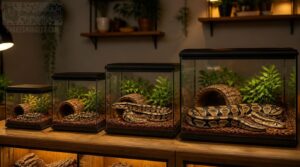
Your snake’s home should grow with its body. Hatchlings need just 10 to 20 gallons, juveniles 20 to 40, subadults 40 to 55.
Adults usually settle into 55 to 75 gallon habitats, while larger females may need 75 to 125 gallons for full-length comfort. Getting enclosure size right at each stage keeps your ball python secure and stress-free.
Secure Lids and Escape Prevention

Because ball pythons are surprisingly strong, a wobbly lid is an invitation to escape. Use a hinged lid with secure latch clasps rated to hold under pressure, sealing gaps under 5mm.
- Spring latches add steady pressure
- Seals block gaps over 3mm
- Magnetic catches secure light lids
- Clear panels allow visual confirmation
- Weight limits matter for lid integrity
Safe Substrate and Bedding Options
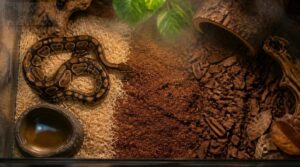
What you put on the enclosure floor matters more than most new owners realize. Stick to dust-free substrates like aspen, coconut husk, cypress mulch, or plain paper towels. Aspen absorbs moisture well but check it often. Coconut husk holds humidity nicely. Cypress mulch buffers moisture while staying loose. Avoid cedar, pine, and fine sand, they irritate airways and risk impaction.
Warm and Cool Hide Placement
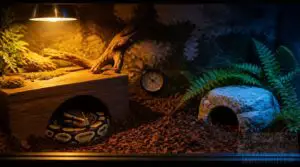
Two hide boxes, two jobs. Place the warm hide near your heat source and the cool hide at the opposite end, both within your temperature gradient.
If you’re updating the setup, these safe snake enclosure enrichment ideas help keep both hides secure and stress-free.
- Match hide size to your snake’s length
- Use smooth, chew-safe materials
- Check entrances stay unobstructed
- Watch which hide gets used most
Frequent warm-hide use signals healthy thermal regulation.
Branches, Cover, and Enrichment
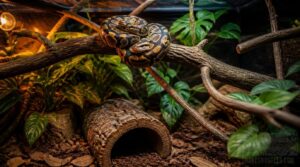
A bored ball python is a stressed ball python. Add climbing branches thick enough to hold full body weight, plus cork bark or half-logs for cover.
Rotate simple enrichment items weekly, never blocking hides or heat zones. Nontoxic plants and textured substrate encourage natural movement.
Inspect branches monthly for mold or cracks, and anchor everything securely.
Maintain Proper Temperature, Humidity, and Lighting

Your ball python can’t regulate its own body heat, so the enclosure has to do that job for it. Getting the temperature, humidity, and lighting right isn’t just about comfort, it’s about keeping your snake healthy. Here’s exactly what your setup needs to get the balance right.
Warm-to-Cool Temperature Gradient
Since ball pythons can’t generate their own body heat, your enclosure needs a clear warm-to-cool gradient, roughly 88-92°F basking down to 78-82°F on the cool end. This lets your snake thermoregulate naturally.
- Place thermometers on both ends
- Check temps twice daily
- Watch for hot spots
- Note substrate heat retention
- Adjust if drift exceeds 2°F
Thermostat-Controlled Heating Options
Getting the gradient right means nothing without a thermostat controlling the heat source. Never plug an Under-Tank Heat Mat, Deep Heat Projector, or Exo Terra Infrared Basking Spot Lamp straight into an outlet.
Match the thermostat to your heat emitter type, and keep a backup heating option ready for outages or thermostat failure.
Thermometer and Hygrometer Placement
A thermostat controls heat output, but you still need eyes on the actual numbers.
Mount one thermometer near the warm hide, one at the cool side, positioned mid-height for accurate airflow reading.
Keep sensors off glass and away from heat mats to avoid false high readings.
Check calibration quarterly against a known reference for reliable gradient verification.
Daily Humidity and Shedding Levels
With your thermometers set, check your hygrometer daily too. Keep humidity at 50-60%, rising to 70-80% during shedding. Low readings cause stuck shed around the eyes. A humidity hide with damp moss helps. If shed sticks anyway, offer a 15-20 minute soak. Track shedding cycles, adults shed every 4-6 weeks.
Light Cycles and Optional UVB
Beyond warmth, your snake needs light structure too. Run a 12-hour light/dark cycle on a timer, and keep nights fully dark.
UVB stays optional. If used, place a lamp 12-18 inches up for 5-10 minutes.
- Use a timer for consistency
- Replace UVB bulbs every 6-12 months
- Avoid overexposure
- Keep basking light separate from heat source
Feed and Hydrate Your Ball Python

Feeding is where a lot of new owners get nervous, and that’s understandable. Get the size, schedule, and method right, and your snake will thank you with steady growth and a calm temperament. Here’s exactly what you need to know, from picking the right prey to handling a snake that just won’t eat.
Prey Size and Rodent Selection
Prey width matching is the golden rule: pick rodents about equal to your snake’s widest point. Start hatchlings on pinky or fuzzy mice, then progress gradually to rat pups.
Always choose frozen-thawed prey, warmed to room temperature. Inspect fur for bald patches and check for freezer burn before feeding, uniform sizing keeps digestion steady and prevents regurgitation.
Age-Based Feeding Schedules
Your snake’s age tells you how often to feed it. Hatchlings eat every 5-7 days, juveniles every 7-10 days, and adults every 10-14 days. Heavier adults over 1500 grams may stretch to 4-6 weeks.
Sticking to appropriately sized frozen-thawed rodents at each stage keeps your snake healthy, and this ball python feeding schedule guide breaks down prey size by age and weight.
That lean, athletic build reflects a diet dialed in over time, so check out this bullsnake feeding schedule guide to fine-tune portions as your snake grows.
For hands-on feeding tips, including how to safely use forceps with appropriately-sized prey, check out this corn snake feeding schedule guide.
Match portions to 10-15% of body weight. Seasonal fasting is normal, so don’t panic if appetite dips during shed cycles or cooler months.
Safe Frozen-Thawed Feeding Protocol
Thawing safely matters as much as feeding itself. Use a sealed bag in the fridge overnight, or warm water for 30-60 minutes. Never microwave.
Check temperature with a thermometer, aiming for 98-100°F. Use blunt feeding tongs, never bare hands. If your snake refuses, wait 48-72 hours before retrying.
Fresh Water and Safe Soaking
Water matters as much as food. Keep a water dish large enough for soaking, placed away from heat to stay stable. Refresh it daily, check for cloudiness.
- Clean bowls prevent bacteria
- Room temperature water reduces stress
- Soaks stay under 15 minutes
- Hygrometer tracks humidity balance
- Sunken eyes signal dehydration
Skip soaps, monitor skin elasticity weekly for true hydration.
Picky Eating and Winter Slowdowns
Refusing food isn’t always a red flag. Hormonal fasting triggers cause adult males to skip meals for months, while females hit "the wall" near 800-1000 grams. Winter feeding refusal ties to daylight changes too.
Don’t force it. Offer weekly, check prey size preferences, and reduce handling stress. Appetite returns once conditions shift.
Handle, Clean, and Monitor Health
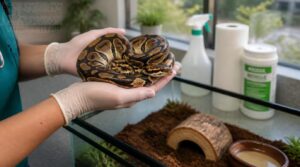
Once feeding is on track, the next job is keeping your snake healthy day to day. That means knowing how to handle it safely, spotting trouble early, and sticking to a cleaning routine that keeps its home fresh. Here’s what you need to watch for and do on a regular basis.
Safe Handling and Taming Techniques
Once trust builds, gentle handling becomes second nature for both of you.
- Support the body, never the tail
- Let it step onto your palm freely
- Keep sessions short, 5–10 minutes
- Watch for coiling or hissing, both stress signs
- Release slowly, hand steady, lid secured after
Avoid handling for 24–48 hours post-feeding to prevent defensive strikes.
Shedding Support and Retained Shed
Blue, glassy eyes signal shedding is near. Bump humidity to 65-70% and add a humid hide with damp moss on the warm side.
Dull, wrinkly skin or patches left on the head and tail mean stuck shed. Soak your snake 20-30 minutes in lukewarm water, then wipe gently with a damp cloth.
Always check eye caps after shedding.
Daily and Monthly Cleaning Routine
Once shedding wraps up, keep the routine going. Spot clean waste and uneaten prey daily, wipe the water dish, and check hiding spots for grime.
- A dirty enclosure invites illness
- Clean housing means a calmer, healthier snake
- Neglect here shortens a life that should span decades
Do a monthly deep clean: disinfect the enclosure, swap substrate, and dry everything before your snake returns.
Healthy Signs and Illness Symptoms
Once your enclosure stays clean, learn what a healthy snake actually looks like so illness stands out fast.
Clear eyes, smooth scales, and steady breathing are normal. Watch for wheezing, mucus, or gaping, signs of respiratory infection. Check for scale rot, mouth rot, retained shed, mite specks, tight coiling, or weight loss. These are your red flags, catch them early.
Reptile Vet Visits and Emergencies
Book that first exam soon after adoption, then keep annual checkups on the calendar, twice yearly if you want closer monitoring. Vets check weight, do fecal tests for parasite prevention, and X-ray if something feels off.
Watch for sudden changes, wheezing, or mouth rot. Bring a fresh fecal sample and travel tank. Have an emergency plan ready before you need one.
Frequently Asked Questions (FAQs)
Is a ball python easy to care for?
Some ball pythons live 30+ years, so this isn’t a casual pet. Yes, they’re beginner-friendly once you nail temperature, humidity, and feeding basics. Daily upkeep is quick, but consistency matters more than effort.
Do ball pythons like to be held?
Yes, but on their own terms. They’ll settle into calm, supported handling for short stretches, showing curiosity rather than seeking it out. Watch for tension or curling, those are stress signals telling you it’s time to stop.
How to tell if a ball python is happy?
Like a calm river, not a storm, contentment flows quietly. Look for loose, relaxed coils, steady tongue flicking, smooth exploration, firm but gentle grip during handling, and consistent appetite, all signs your snake feels safe.
Is owning a ball python hard?
Not really, but it does demand routine. A weekly feeding schedule, stable temperatures, and humidity checks make it a manageable beginner reptile pet. The real learning curve is consistency, not complexity.
How difficult is it to care for a ball python?
Honestly, it’s manageable for most beginners. You’ll settle into a weekly feeding schedule, check temperatures daily, and hold humidity near 50-60%. Handling stays light, a few short sessions weekly, once your snake feels secure enough to relax.
Can ball pythons live together in one tank?
Two roommates sharing one den sounds cozy, until one stops eating. Ball pythons are solitary by nature, and cohabitation invites aggression, stress, and feeding competition. Give each snake its own enclosure to stay safe and healthy long-term.
How often do ball pythons need veterinary checkups?
Healthy adults need annual vet visits for physical exams and parasite screening. Juveniles benefit from checkups every 3-4 months. Seek emergency care immediately for respiratory infections, appetite loss, or breathing trouble, don’t wait and hope it resolves.
What lighting schedule works best for ball pythons?
Give your snake a steady 12-hour light/dark cycle with a warm daytime basking spot and full nighttime darkness. UVB is optional but helps with vitamin D3 synthesis. Consistency matters more than intensity for healthy thermoregulation and rest.
How do you introduce new decorations safely?
One item, one placement, one observation period. Add smooth, securely anchored decor to the enclosure, then watch closely for days. Check substrate for moisture pockets, and clean everything with reptile-safe products first.
Can you use live plants in ball python habitats?
Yes, live plants work well in a bioactive substrate setup. Pick non-toxic, humidity-tolerant species, quarantine them two weeks first, and pot and anchor firmly. Check often for mold, pests, and toxicity risks near hiding spots.
Conclusion
One keeper adopted a hatchling in her twenties and watched it outlive two apartments, a marriage, and three jobs, still thriving at 28. That’s the reality of caring for a ball python.
The snake doesn’t change much year to year. Your consistency does the work: steady temperatures, clean water, calm handling. Master these basics now, and you won’t be solving problems later. You’ll simply be living, quietly and reliably, alongside a creature that trusted you from the start.