This site is supported by our readers. We may earn a commission, at no cost to you, if you purchase through links.
A ball python rarely bites out of the blue—there’s always a reason, even if it’s hidden from sight. One moment your snake is calm, the next it’s tense, coiling tighter, and suddenly you’re dodging a quick strike.
For keepers who crave control and safety, understanding ball python bite prevention techniques isn’t just about avoiding a nip; it’s about reading the subtle language of your pet and building trust from the ground up. With a steady hand and the right approach, you can turn those tense encounters into smooth, confident handling sessions that keep both you and your snake at ease.
Table Of Contents
- Key Takeaways
- Why Ball Pythons Bite
- Recognizing Warning Signs Before a Bite
- Safe Handling Techniques for Ball Pythons
- Reducing Biting Risk During Feeding
- Creating a Low-Stress Environment
- When to Avoid Handling Your Ball Python
- Frequently Asked Questions (FAQs)
- What are the four preventive measures of snake bite?
- Will my ball python bite me if I pick it up?
- Can ball python bites transmit diseases to humans?
- How do you treat a ball python bite?
- Do ball pythons bite more at night?
- Are some ball python morphs more aggressive?
- How often should ball pythons be handled weekly?
- Conclusion
Key Takeaways
- Reading your ball python’s body language—like tight coiling, sudden hissing, or stopped tongue flicks—let you spot stress and avoid bites before they happen.
- Washing your hands thoroughly and removing food scents before handling helps your snake see you as safe, not prey.
- Supporting your snake’s whole body, approaching from the side, and using hooks for defensive individuals makes handling sessions calm and bite-free.
- Setting up a low-stress enclosure with proper hides, steady temperatures, and minimal vibrations keeps your ball python relaxed and less likely to strike.
Why Ball Pythons Bite
Ball pythons rarely bite without a reason, but they always have one. Understanding what sets them off helps you stay calm, safe, and in control.
For practical tips on avoiding bites and keeping your snake at ease, check out this guide to ball python teeth and handling safety.
Next, you’ll see specific enclosure choices that reduce stress and make biting even less likely.
Common Triggers for Biting
Even with a usually mellow ball python, bites often start with Scent Transfer from prey, sudden Territory Intrusion into a hide, or Shedding Sensitivity when the skin feels tight.
Layer in Vibration Stress, abrupt Lighting Changes, and other stress triggers, and you’ll see warning Body Language before teeth.
Solid Handling Techniques and Trust Building keep aggression low and in control.
Remember to support the snake’s body evenly for safety.
Defensive Vs. Feeding Responses
Once you understand those triggers, you also need to tell Defensive Behavior from Feeding Bites. Watch Bite Duration and Body Language first: fast, release-and-run snaps with no Constriction Behavior mean defense, while long holds with coiling mean feeding.
Neck Position, Strike Target, and Tongue Flick speed round out your checklist for safe Ball Python Handling and Bite Prevention at home.
Age and Temperament Factors
Once you can read feeding versus defensive snaps, you should watch age and temperament in your Ball Python.
Juvenile Nervousness often means sharper Biting Behavior and tighter Body Language, while Adult Calmness usually brings slower movements and fewer strikes.
Personality Variation and Stress Sensitivity shape Aggression and guide your Handling Techniques along the Habituation Timeline.
- Gentle
- Consistent
- Respectful
- Sessions matter
Recognizing Warning Signs Before a Bite
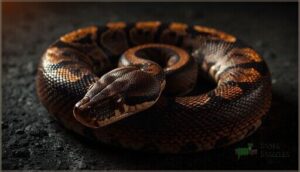
Before a ball python actually bites, it almost always tells you it’s uncomfortable in its own way.
Learning to read that body language helps you step in early, stay calm, and stay in control.
A hook also helps reinforce calm, predictable handling habits that make reading your snake’s signals much easier over time.
In a moment, you’ll see the main warning signs to watch for so you can respond wisely.
Body Language and Defensive Postures
Your ball python’s body is always talking — you just need to learn the language. Watch for muscle rigidity, defensive curling, and tail signaling as early red flags.
| Signal | What It Means |
|---|---|
| Head orientation forward | Tracking, possibly defensive |
| Tongue flicking stops suddenly | Freeze response, strike risk |
| Tight balling behavior | Overwhelmed, wants no contact |
Trust these cues for smarter snake handling.
Hissing, Coiling, and Other Cues
Noticing subtle shifts in Body Language helps you read your Ball Python before Biting Behavior starts. Watch for these warning signals:
- Rising Hiss Volume as clear Vocal Cues.
- Increasing Coil Tightness and Tail Shielding during defensive coiling.
- S‑Coil Formation with the head aimed at you.
- Faster Breathing Rate paired with tense posture, meaning it’s time to pause your Handling Techniques.
Recognizing a rising hissing warning can alert you before a strike.
Signs of Stress or Illness
Stress leaves a trail in snake behavior if you slow down and look.
Appetite Changes, weight fluctuations, or sudden skin shedding issues often pair with lethargic behavior and sharper defensive behavior.
Listen for new respiratory sounds or harsher vocal cues, and watch body language shift toward tighter coils or aggression; these patterns usually mean illness or chronic stress in pythons.
Safe Handling Techniques for Ball Pythons
Safe handling is one of the simplest ways to keep both you and your ball python calm and bite‑free.
A few small habits in how you prepare, approach, and pick up your snake can make a huge difference in how safe and relaxed things feel.
Let’s walk through some specific handling techniques you can start using right away.
Washing Hands and Removing Food Scents

Think of your hands as either prey or neutral to your snake.
Hand washing basics for Ball Python Care and Reptile Handling and Safety means lukewarm water with Fragrance‑free soap for 20 seconds, scrubbing under nails.
After feeding, Post‑feeding cleanup and Sanitizer application erase prey scent; this Hygiene risk reduction helps Snake Bite Prevention, Handling Techniques, and calm Defensive Behavior.
Approaching From The Side, Not Above
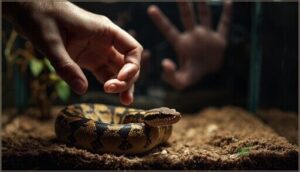
Ever notice your snake when you slide gently from the side?
That Side vision advantage and Heat‑pit alignment help it read you as not a predator, so an Enclosure entry technique with low Head positioning, confidence, and movement speed becomes handling techniques and snake handling techniques for Ball Python Care and handling, reptile handling and safety, reducing defensive behavior.
Supporting The Body, Avoiding The Head
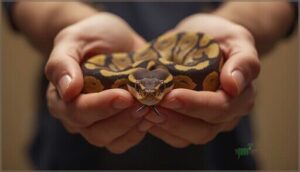
Solid support is your best bite shield. Aim for Full Body Support, using both hands to cradle the snake and keep your hands behind head.
Use Gentle Pressure, never squeezing, and allow slow Controlled Movement. These Handling Techniques in Ball Python Care and Handling, plus Hand Protection, turn Reptile Handling and Snake Bite Prevention and Treatment into Body Language reading.
Using Hooks or Tools for Defensive Snakes
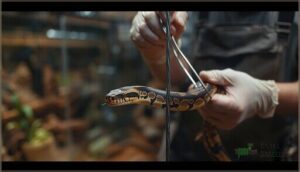
A hook isn’t just a tool — it’s a communication device. Hook Training Signals work by giving your snake a gentle mid-body tap before any handling, so it switches out of feeding mode. Here’s what makes hook handling effective:
- Hook Selection Criteria: Choose a 1.5–3 ft lightweight aluminum hook with smooth, rounded ends
- Telescoping Hook Benefits: Adjust length instantly for close work or extra distance with defensive individuals
- Hook vs Tongs: Hooks distribute weight evenly; tongs risk bruising ribs
- Protective Shield Use: Pair a clear acrylic shield with your hook when handling highly defensive snakes
- Handling Techniques: Slide the hook gently under the mid-body, never near the head, and move slowly
Reducing Biting Risk During Feeding
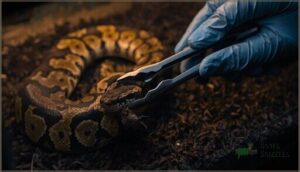
Feeding time is when many ball pythons are most keyed in and most likely to make mistakes with their aim. A little planning here goes a long way toward keeping your hands and your snake out of trouble.
Next, you’ll see some simple feeding habits that greatly cut down the risk of bites.
Using Tongs or Tweezers for Prey
Using feeding tongs is one of the smartest reptile care habits you can build. Tool length matters — a 12‑ to 24‑inch option keeps your hand well outside your ball python’s strike zone.
Grip control is just as important; hemostat-style tongs clamp prey firmly so it doesn’t slip mid‑strike. Gentle prey movement, not frantic waving, is what triggers a clean, confident feeding response.
Feeding in a Separate Enclosure
Tongs already lower Feeding Bites, but a separate feeding Snake Enclosure changes Snake Handling and Safety for Pet Snake Ownership and Reptile Care.
- Enclosure Size: match tub to snake; oversized tubs raise stress.
- Substrate Choice: paper towels or tubs limit ingestion risk.
- Temperature Gradient: preheated 88–92°F helps prevent regurgitation.
- Feeding Schedule: steady routines calm nervous feeders.
Avoiding Handling Before and After Meals
Even with tongs in hand, meal-adjacent handling is where most feeding bites happen. Skip handling 24–48 hours before meals to keep your ball python calm and focused.
After eating, give it 48–72 hours of digestive downtime — no exceptions. This post-meal rest protects against regurgitation and resets handling biting behavior.
Smart feeding schedule timing makes pet snake handling predictably safe.
Creating a Low-Stress Environment

A calm snake is a safe snake, and that calm starts with its enclosure.
The way you set up your ball python’s home can make all the difference in how relaxed and secure it feels day to day.
Here are the key factors to focus on.
Proper Enclosure Setup and Hides
Want your pet snake to feel safe and in control?
Focus on Hide Placement Strategy—set up at least three hides along the thermal gradient, each tucked against walls with proper Substrate Depth.
Visual Barrier Design, Environmental Enrichment, and Clutter Pathways break up open space, matching natural Reptile and Snake Behavior.
Thoughtful Reptile Husbandry means less stress, fewer bites, better Snake Care.
Maintaining Ideal Temperature and Humidity
Getting your warm side gradient right — 88 to 92°F on the warm end, 75 to 80°F for cool side regulation — gives your ball python room to self‑regulate without stress.
Pair that with solid humidity measurement: aim for 55 to 60 percent daily, adjusting your misting schedule during shed. Good substrate moisture through coconut husk promotes reptile health and wellness naturally.
Minimizing Loud Noises and Vibrations
Reducing vibration in your snake’s room starts with Isolation Pads or Resilient Mounts under appliances, so your ball python isn’t startled by tremors. Damping Materials on surfaces and Structural Decoupling help too.
Quiet Barriers, like heavy walls, create calm zones.
This Environmental Enrichment lets you spot subtle Body Language and Reptile Behavior, lowering biting behavior risk.
When to Avoid Handling Your Ball Python

Even a calm, well-adjusted ball python has days when handling is the wrong call. Knowing when to step back is just as important as knowing how to pick it up safely.
A few key situations signal it’s time to leave your snake alone.
During Shedding or Illness
Think of handling your ball python during the shedding process or illness like poking a bear—stress hormones surge, vision impairment sets in, and defensive biting becomes far more likely.
Handling your ball python during shedding or illness triggers stress and vision issues, making defensive bites much more likely
Respiratory infection signs, mite infestation risks, and incomplete shed management all demand extra care.
For best reptile health and safety, pause handling and focus on gentle pet snake care until your snake recovers.
If Warning Signs Are Present
Spotting a coiled neck, sharp hiss, or warning strike? That’s your cue to pause handling—don’t ignore these clear signs of defensive biting.
Use Immediate Response Steps: calmly set your snake down, speak softly (Calm Voice Technique), dim the lights (Light Adjustment), and give your pet an Observation Period. Snake Hook Usage keeps hands safe, while careful attention to Body Language and Vocal Cues ensures responsible pet snake care.
Frequently Asked Questions (FAQs)
What are the four preventive measures of snake bite?
Four preventive measures for snake bite include Habitat Management to reduce hiding spots, Protective Footwear for personal safety, Environmental Awareness to spot snakes before contact, and Household Safeguards like sealing gaps—each essential for responsible pet ownership and snake care.
Will my ball python bite me if I pick it up?
Most of the time, no. A calm, well-handled ball python rarely bites unprovoked. Your approach, hand scent control, and pre-feeding timing matter far more than the snake’s mood alone.
Can ball python bites transmit diseases to humans?
Yes, ball python bites can transmit zoonotic diseases like Salmonella risk or other bacterial infections.
Wound contamination is possible, so watch for infection signs.
Snake bite symptoms and first aid include cleaning bites, monitoring, and seeking antibiotic treatment if needed.
How do you treat a ball python bite?
Rinse the bite with warm water, scrub with antibacterial soap, dab antiseptic, and cover it.
Watch for infection signs daily, and see a doctor for antibiotic therapy or tetanus consideration if needed.
Do ball pythons bite more at night?
Ball pythons don’t bite more at night by temperament, but their Nocturnal Sensory and Nighttime Feeding Trigger make Defensive Biting and Biting Behavior likelier after dark, especially if Evening Handling Timing or Light Cycle Disruption isn’t managed carefully.
Are some ball python morphs more aggressive?
Morph temperament myths are surprisingly common in the ball python hobby.
The truth is, no morph carries a genetic aggression link.
Individual history, husbandry, and handling shape behavior far more than pattern or color ever will.
How often should ball pythons be handled weekly?
Handling Frequency Guidelines suggest interacting with your ball python 1–3 times weekly, adjusting for age and digestion timing.
Weekly Routine Planning, paired with Stress Monitoring, ensures safe, positive pet care and management—especially for responsible animal handling and care.
Conclusion
Imagine a keeper who once got tagged every week—until she started washing her hands, watching for tight coils, and giving her snake time to settle before each session.
Within a month, handling felt easy.
That shift didn’t happen by chance; it happened because she learned the language her snake was already speaking.
Applying consistent ball python bite prevention techniques isn’t about being fearless—it’s about being informed. Know the signs, respect the signals, and trust builds itself.
- https://www.snakesforpets.com/how-to-tame-an-aggressive-ball-python/
- https://www.proherper.com/en/knowledge/blog/ball-python-handling
- https://www.fhappliances.com/ball-python-care/
- https://www.wilbanksreptiles.com/blogs/mastering-ball-pythons-expert-insights-for-ultimate-care/what-do-i-do-if-my-ball-python-bites
- https://www.healthline.com/health/ball-python-bite