
This site is supported by our readers. We may earn a commission, at no cost to you, if you purchase through links.
Your ball python can survive weeks without food, but dehydration will kill it in days. Water isn’t just about quenching thirst—it’s the foundation of every critical physiological process, from smooth muscle contractions during digestion to the cellular mechanics that allow clean, complete sheds.
Yet many keepers focus obsessively on temperature gradients and humidity percentages while treating the water bowl as an afterthought. The reality? Ball python water requirements demand the same precision you’d apply to any other husbandry parameter.
From bowl selection and placement to daily maintenance protocols, understanding how your snake uses water—and recognizing when something’s wrong—can mean the difference between a thriving reptile and a veterinary emergency.
Table Of Contents
- Key Takeaways
- Why Water Matters for Ball Pythons
- Choosing The Right Water Bowl
- Daily Water Maintenance Practices
- Safe Water Depth for Ball Pythons
- Monitoring Your Ball Python’s Hydration
- Water’s Impact on Enclosure Humidity
- Troubleshooting Common Water Problems
- Frequently Asked Questions (FAQs)
- Is tap water okay for ball pythons?
- Do ball pythons like to be sprayed with water?
- How often do ball pythons actually drink water?
- What if my ball python soaks excessively?
- Do hatchlings need smaller or shallower water dishes?
- Should water temperature match enclosure ambient temperature?
- Can ball pythons drink tap water safely?
- How often do ball pythons actually drink?
- Do ball pythons need water at night only?
- Should I mist my ball pythons enclosure?
- Conclusion
Key Takeaways
- Water is as critical as temperature regulation for ball pythons because dehydration kills within days while starvation takes weeks, yet many keepers treat the water bowl as an afterthought instead of a precision husbandry parameter.
- Daily water maintenance prevents bacterial infections and ensures proper hydration—replace water daily with dechlorinated sources, scrub bowls weekly with reptile-safe disinfectant, and monitor for contamination twice daily regardless of appearance.
- Proper water depth and bowl selection directly impact snake safety and health—juveniles need 1-2 cm depths in 4-inch diameter dishes while adults require 2 cm depths in 5-6 inch bowls, always using non-porous materials like stainless steel or ceramic positioned on bare substrate.
- Physical indicators like wrinkled skin, sunken eyes, incomplete sheds, and abnormal urates signal dehydration requiring immediate intervention, while excessive soaking points to enclosure humidity problems, mites, or underlying health issues demanding veterinary assessment.
Why Water Matters for Ball Pythons
Water isn’t just a nice addition to your ball python’s enclosure—it’s essential for keeping your snake alive and healthy. Without proper hydration, your python can’t regulate body temperature, digest meals, or complete successful sheds.
That’s why maintaining the right temperature gradient in your ball python’s habitat works hand-in-hand with hydration to support these critical processes.
Water is essential for your ball python’s survival, enabling temperature regulation, digestion, and successful shedding
Let’s look at exactly why water plays such a critical role in your snake’s daily functions.
Hydration and Physiological Functions
Water isn’t just something your ball python drinks—it’s the foundation of every biological process keeping them alive. Proper hydration maintains fluid balance throughout their body, enabling critical functions you can’t see but must maintain.
- Cellular health depends on adequate water to transport nutrients and remove metabolic waste
- Metabolic rate relies on sufficient hydration for enzyme activity and chemical reactions
- Thermoregulation requires proper fluid levels to manage body temperature effectively
- Osmotic regulation maintains electrolyte concentrations between intracellular and extracellular compartments
- Humidity level in the enclosure works with your water dish to support reptile health and ball python care
Just as in reptiles, are essential for maintaining health at every stage of life.
Water’s Role in Shedding and Digestion
Beyond maintaining cells and temperature, hydration directly powers two make-or-break processes: shedding and digestion. When shedding begins, adequate hydration levels keep skin pliable so it peels away in complete sheets instead of stubborn patches. Meanwhile, your water dish bolsters digestive health—moisture softens prey in the stomach, aids nutrient uptake through intestinal walls, and prevents constipation during waste elimination.
| Process | How Water Helps Your Ball Python |
|---|---|
| Shedding Process | Keeps old skin moist and flexible for clean removal |
| Digestive Health | Moistens food and activates enzymes for breakdown |
| Water Absorption | Dissolves minerals for uptake through the gut lining |
| Nutrient Uptake | Transports proteins and fats across intestinal walls |
| Waste Elimination | Softens stool and flushes toxins through the kidneys |
During shedding cycles, humidity levels spike and water intake increases—your python may soak for hours to loosen translucent scales. Post-feeding, digestive systems demand extra hydration as gastric acids break down rodents. Without consistent access to fresh water, both processes stall, risking retained shed and impaction. That’s why reptile health experts emphasize daily water changes alongside proper enclosure humidity. For a broader look at how hydration bolsters essential functions, review the latest findings on water and gut health.
Choosing The Right Water Bowl
The water bowl you choose isn’t just a container—it’s a cornerstone of your ball python’s health and comfort. Your decision needs to account for size, material safety, and where you position it in the habitat.
Let’s break down the three essential factors that’ll help you select the right dish for your snake.
Bowl Size and Depth Guidelines
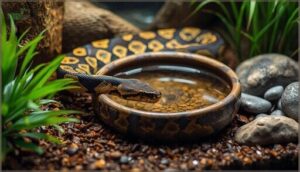
Selecting the right water dish starts with balancing Ball Python hydration needs and snake safety. For juveniles, choose bowls 4 inches in diameter with a bowl depth of 1.5–2.5 inches to prevent drowning while supporting shedding. Adults benefit from 5–6 inch diameter dishes at similar depths.
For a detailed breakdown of material options and stability features, check out this complete guide to ball python water bowl sizing.
Proper water volume maintains enclosure humidity without compromising habitat design or turning your reptile enclosure into a waterlogged risk zone.
Safe Materials for Water Dishes
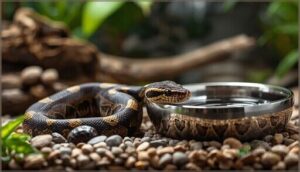
Once you’ve nailed the right dimensions, material safety becomes your next priority. Stainless steel and food-grade ceramics resist bacterial growth and simplify dish sanitization, protecting water purity in your reptile enclosure. Avoid porous plastics that scratch easily—those grooves harbor pathogens and compromise enclosure hygiene.
Durable, non-toxic materials support ball python care and maintenance while keeping your pet snake healthy through consistent humidity and hydration.
Placement in The Enclosure
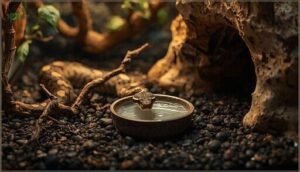
Strategic enclosure layout determines whether your ball python can access fresh water without stress or injury. Position the water dish on bare substrate—never elevated—about 2 to 3 inches from climbing décor to prevent spills. Keep the bowl near a hide while maintaining at least 4 inches of clearance, balancing hide proximity with easy access across your habitat size.
- Place toward the warm side to encourage post-feeding soaks and maintain ideal humidity
- Avoid positioning directly over heat mats, which accelerate bacterial growth in standing water
- Verify multiple approach angles so your snake won’t squeeze through tight gaps when thirsty
- Consider vertical orientation: low-profile dishes work best for juveniles in smaller reptile enclosures
- Keep clear of corners where waste accumulates, simplifying your daily water bowl placement maintenance
Daily Water Maintenance Practices
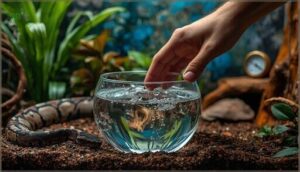
Your ball python’s water bowl isn’t a set-it-and-forget-it fixture. Daily attention to water quality and cleanliness protects your snake from bacterial infections and keeps them properly hydrated.
Let’s walk through the three essential maintenance practices you’ll need to build into your daily routine.
Refilling and Changing Procedures
Replace your ball python’s water dish daily—even if it looks clean—to prevent bacterial buildup. Use lukewarm, dechlorinated water to reduce stress and support proper hydration schedules.
Check the dish twice daily for feces or substrate contamination, which demands immediate replacement regardless of your refilling frequency.
Fill to 2–3 cm depth, supporting habitat design and setup that maintains your temperature gradient and humidity without creating excess moisture.
| Task | Frequency | Key Action |
|---|---|---|
| Water refill tips | Daily | Replace with fresh water |
| Water quality checks | Twice daily | Inspect for contamination |
| Dish stability | During refills | Verify no tipping occurs |
Cleaning Frequency and Techniques
Weekly deep cleaning keeps your ball python’s water dish free from harmful bacteria and mineral deposits. Scrub the bowl with reptile-safe disinfectant or diluted bleach solution (1:32 ratio), then rinse thoroughly to eliminate chemical residues.
Between these full sanitizing sessions, perform daily hot-water rinses to maintain water quality and support proper hygiene practices.
Replace cracked bowls immediately—they harbor microbes that compromise your snake’s health and enclosure humidity balance.
Using Filtered or Dechlorinated Water
Chlorine in tap water can irritate your ball python’s mucous membranes and discourage drinking. Remove it by boiling water for 10 minutes, adding commercial dechlorinating drops, or using activated carbon filters.
Filtered water advantages include reduced metal exposure and cleaner reptile care outcomes.
Test water quality monthly with pH strips, and monitor your water dish for cloudiness—clean water maintains stable humidity and better pet care overall.
Safe Water Depth for Ball Pythons
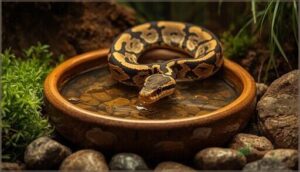
Water depth might seem like a small detail, but getting it wrong can stress your ball python or create safety risks. The goal is to provide enough water for drinking and occasional soaking without making your snake vulnerable.
Here’s how to set the right depth based on your python’s age and size.
Preventing Drowning and Overfilling
Your ball python’s water bowl poses drowning risks if set too deep. Use a shallow dish—1 to 2 centimeters maximum—so your snake can soak without submerging its mouth.
Choose a heavy, stable bowl with a wide, low profile to prevent tipping and overfilling your terrarium.
Position it on smooth substrate away from heat sources and enclosure decorations to maintain proper humidity while ensuring water safety tips protect snake behavior.
Best Practices for Juveniles Vs. Adults
Juvenile ball pythons need shallower bowls—about 1 centimeter deep—to prevent stress during soaking, while adults tolerate 2-centimeter depths for comfortable shed cycles.
Position your juvenile’s bowl near the warm end to encourage daily snake hydration tied to their faster feeding schedule.
Adults benefit from heavier, non-slip dishes that support longer soak sessions without disrupting humidity control or temperature gradients essential for age-specific care.
Monitoring Your Ball Python’s Hydration
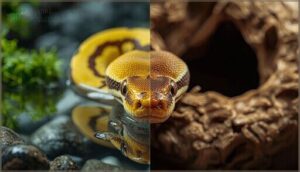
Keeping your ball python properly hydrated isn’t guesswork—there are specific physical signs that tell you whether your snake is drinking enough. Learning to read these indicators will help you catch dehydration early, before it becomes a serious health problem.
Here’s what to watch for in a well-hydrated snake versus one that needs immediate attention.
Signs of Proper Water Intake
You’ll recognize proper hydration levels in your ball python through several clear health indicators. Consistent drinking patterns—short, regular visits to the water bowl—signal good reptile health.
Smooth, pliable skin and clear eyes confirm that adequate water quality is supporting snake behavior.
Normal urination with pale urates and well-formed droppings demonstrate that your pet snake ownership approach maintains ideal reptile nutrition and wellness.
Recognizing Dehydration Symptoms
When proper hydration falters, your ball python will show specific dehydration signs that require immediate attention for reptile health and wellness:
- Wrinkled, inelastic skin that doesn’t bounce back when gently pinched
- Sunken eyes with dented or cloudy eye caps indicating eye problems
- Incomplete sheds with stuck skin patches—classic skin issues from low moisture
- Lethargy and weakness reflecting behavioral changes in snake health
- Yellow-orange urates signaling serious health risks in pet snake ownership
Water Intake and Possible Health Issues
Beyond the outward signs of dehydration, abnormal drinking patterns reveal deeper health monitoring concerns. When your ball python suddenly stops drinking or begins soaking for hours, fluid balance disruptions often point to parasites, respiratory infections, or kidney dysfunction—common dehydration risks in reptile care.
Water quality directly affects snake hydration and animal health and welfare, so tracking intake protects reptile health and wellness.
Water’s Impact on Enclosure Humidity
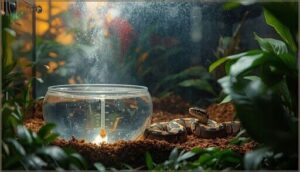
Water doesn’t just keep your ball python hydrated—it directly affects the humidity inside the enclosure. Maintaining that 40% to 60% range isn’t always straightforward, and your water bowl plays a bigger role than you might think.
Here’s how to manage humidity levels and adjust water access when your snake needs it most.
Maintaining Optimal Humidity Ranges
Your Ball Python Habitat thrives when humidity sits between 40 and 60 percent—this range promotes healthy shedding and respiratory function. Use a digital hygrometer on both warm and cool sides for accurate Humidity Control. Adjust levels gradually, shifting only 5 to 10 percent per day to avoid stress.
Balance moisture with Airflow Management through gentle Ventilation Systems, ensuring your Temperature Gradient remains stable while managing humidity.
How Water Bowls Influence Moisture Levels
Through evaporation from the water surface, your bowl elevates enclosure humidity by roughly 3 to 6 percentage points under dry conditions. Wide, shallow dishes boost evaporation rates and moisture distribution compared to narrow containers.
Bowl placement near the warm side accelerates evaporation, improving humidity control. Refill daily to maintain steady moisture in your Ball Python habitat, supporting consistent airflow and preventing fluctuations.
Adjusting Water Access During Shedding
During shedding, your Ball Python needs increased humidity control to keep skin moisture ideal. Position the water bowl near the humid hide and raise ambient levels to 55–60% by misting lightly.
Provide slightly deeper water—about 2–3 centimeters—so your snake can soak if needed. Monitor water temperature to stay near room warmth, supporting shedding hydration without chilling your reptile during this vulnerable stage.
Troubleshooting Common Water Problems

Even with the best setup, you’ll occasionally run into water-related issues with your ball python. Some snakes refuse to drink, water bowls get contaminated faster than expected, or you might notice signs that something’s off with your snake’s hydration.
Knowing how to identify and fix these problems quickly will keep your ball python healthy and prevent minor issues from becoming serious health concerns.
Refusal to Drink or Soak
Sometimes your ball python just won’t drink—and that’s when you need to look deeper. Refusal signs include an untouched bowl, dry mouth membranes, or avoiding the water entirely, each pointing to stress factors like low humidity, poor bowl placement, or underlying reptile health issues.
- Temperature imbalances can suppress natural drinking cues and soaking habits
- Enclosure disturbances from handling or noise increase dehydration risks over time
- Illness or discomfort may quietly reduce your snake’s interest in hydration
Check your care sheet parameters first, then consult a vet if refusal persists.
Water Contamination and Bacterial Risks
Your ball python’s water bowl can become a breeding ground for aquatic pathogens like E. coli, Salmonella, and Pseudomonas—bacteria that multiply rapidly in warm, humid habitat conditions. Bowl sanitizing with dilute bleach (1:32 ratio) or 70% isopropyl alcohol stops microbe control failures that risk reptile health. Choose stainless steel or ceramic over porous plastic to reduce bacterial growth between cleanings.
| Contamination Source | Pathogen Type | Prevention Strategy |
|---|---|---|
| Fecal matter | E. coli, Salmonella | Daily water purification and substrate checks |
| Warm stagnant water | Pseudomonas, Aeromonas | Frequent bowl changes, cool placement |
| Scratched surfaces | Biofilm bacteria | Replace damaged bowls immediately |
When to Seek Veterinary Advice
Your ball python’s refusal to drink signals deeper trouble when paired with lethargy or weight loss—veterinary care becomes non-negotiable at that point.
Schedule emergency reptile health checks if you notice labored breathing, persistent regurgitation beyond 24 hours, or unusual discharge from the mouth or cloaca. These vet visit signs demand immediate professional veterinary tips, as delayed animal welfare intervention can worsen snake behavior complications rapidly.
Frequently Asked Questions (FAQs)
Is tap water okay for ball pythons?
Your municipal supply is usually safe for your ball python’s drinking and soaking needs. If chlorine levels run high, let tap water sit overnight or use a simple dechlorination method for peace of mind.
Do ball pythons like to be sprayed with water?
Your ball python doesn’t need routine water spray. Misting benefits humidity control during shedding, but heavy spraying risks substrate saturation and mold. Snake hydration comes from their water dish, not terrarium setup spray sessions.
How often do ball pythons actually drink water?
Your ball python will likely drink every few days to a week, though hatchlings may sip more often.
Watch for drinking frequency shifts—they signal changes in temperature, humidity levels, or early dehydration signs.
What if my ball python soaks excessively?
If your snake spends hours in its water bowl, check enclosure humidity—levels above 60% often trigger excessive soaking.
Inspect for mites, dehydration signs, or shedding issues, and consult a reptile veterinarian if the behavior persists.
Do hatchlings need smaller or shallower water dishes?
Think of a shallow bowl as a safety net—hatchlings need dishes holding just 1 to 2 inches of water.
Shallow water depth safety prevents drowning while ensuring proper hatchling hydration and easy snake water access for drinking.
Should water temperature match enclosure ambient temperature?
Your water dish should sit within your enclosure’s ambient temperature range—usually 78 to 86°F—to support proper thermal balance and hydration without creating heat stress or metabolic disruption during temperature gradients.
Can ball pythons drink tap water safely?
Your faucet’s gift isn’t poison—if your local tap water is potable and free from extreme contaminants, it’s safe for ball pythons.
Dechlorination methods reduce chlorine exposure that may irritate your snake.
How often do ball pythons actually drink?
Most healthy individuals drink every few days to a week, though juveniles may sip more often.
Enclosure temperature, humidity, and recent shedding all influence your snake’s fluid balance and hydration needs.
Do ball pythons need water at night only?
No—ball pythons don’t need water exclusively at night. Your snake requires 24/7 access to fresh water for proper hydration, supporting nighttime activity, preventing dehydration risks, and maintaining healthy shedding cycles.
Should I mist my ball pythons enclosure?
You don’t need to mist regularly if your enclosure climate maintains 40-60% humidity through proper substrate and a water bowl.
Only mist during shedding cycles when humidity management requires temporary adjustment for ideal skin release.
Conclusion
Don’t let your husbandry efforts go down the drain by neglecting what flows directly into your snake’s survival. Ball python water requirements aren’t negotiable—they’re as critical as thermal regulation or prey size.
Clean bowls, fresh water, daily monitoring, and quick responses to dehydration signs form the non-negotiable foundation of responsible keeping. Master these protocols, and you’re not just preventing problems—you’re building the framework for a thriving, long-lived reptile.
- https://image.petmd.com/files/2024-12/1730300-24-10-PMD-BallPythonCareSheetPrint.pdf?VersionId=Fv06m3ReK50k_ySRUP.LbxXxGfkoQWD8?utm_source=petmd.com&utm_campaign=caresheet&utm_medium=PDF
- https://en.wikipedia.org/wiki/Ball_python
- https://amccorona.com/wp-content/uploads/2020/05/ARAV_trifold_ball_pythonv2_2.pdf
- https://digitalcommons.unl.edu/cgi/viewcontent.cgi?article=1268&context=envstudtheses
- https://reptifiles.com/ball-python-care-guide/ball-python-diseases-health/dehydrated-ball-python/