This site is supported by our readers. We may earn a commission, at no cost to you, if you purchase through links.

A ball python can outlive your car, your phone, and possibly your next three haircuts. With a captive lifespan of 20 to 30 years, this snake isn’t a passing hobby, it’s a long-term commitment. Most new owners focus on the wrong details: fancy morphs, cute hides, whether the tank "looks right." Meanwhile, the animal quietly suffers from wrong humidity, poor feeding schedules, or handling that spikes its stress hormones.
Good ball python pet care tips start with understanding the animal’s biology, not just its cage decor. Get the fundamentals right, from thermal gradients to shed cycles, and you’ll build a foundation your snake can thrive on for decades.
Table Of Contents
- Key Takeaways
- Essential Ball Python Care Tips
- Setting Up The Ideal Enclosure
- Feeding Your Ball Python Safely
- Handling and Bonding Tips
- Maintaining Long-Term Ball Python Health
- Frequently Asked Questions (FAQs)
- Are ball pythons easy to take care of?
- How do I tell if my ball python is happy?
- What not to do with a ball python?
- Do ball pythons enjoy being pet?
- Are ball python snakes harmful?
- Are ball python snakes aggressive?
- Are ball pythons the most powerful snake?
- Is a ball python snake friendly?
- Do ball pythons make good pets?
- Can I have a ball python as a pet?
- Conclusion
Key Takeaways
- Ball pythons live 20 to 30 years, so their care depends on maintaining a stable thermal gradient (88–92°F warm side, 76–80°F cool side) and humidity between 50–60%, rising to 70–75% during shedding.
- Feed pre-killed, properly thawed rodents sized 1.5–2.5 times your snake’s head width, adjusting frequency from weekly for juveniles to every 1–2 weeks for adults.
- Handle your snake with slow, supportive movements and consistent routines to reduce stress, since ball pythons tolerate rather than seek out physical interaction.
- Watch for warning signs like labored breathing, retained shed, or persistent feeding refusal, as these often signal health issues requiring prompt veterinary attention.
Essential Ball Python Care Tips
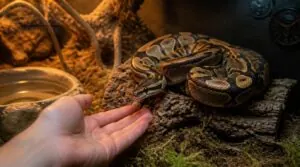
Ball pythons make wonderful pets, but understanding who they are makes all the difference in how you care for them. Before setting up an enclosure or planning feeding schedules, you need a clear picture of their behavior, growth patterns, and genetic diversity. Here’s what every owner should know first.
This complete ball python care guide breaks down morph genetics and temperament cues that shape how confidently a new owner can handle their snake.
Temperament and Behavior
Rarely does a snake earn a reputation as gentle as the Ball Python. As a nocturnal species, yours will stay quiet by day, seeking hides through thigmotaxis, then stir at dusk.
Stress response signs include hissing or curling defensively, though most calm quickly. Handling-induced anxiety fades with short, consistent sessions.
Each individual develops its own personality—some bold ambush hunters, others shy explorers.
Lifespan and Growth
That calm temperament sticks around for the long haul—captive ball pythons often live 20 to 30 years with steady husbandry. Consistent temperature, humidity, and proper nutrition directly shape both lifespan and healthy growth.
Even with that longevity, individual personality varies, so it’s worth reading up on which snake breeds are the most docile before choosing a scaly companion.
Growth is quickest in the first 18 months, slowing as they near 3 to 4 feet. Sexual maturity arrives around 2 to 3 years. Researchers often use longitudinal research methods to study these long-term developmental changes.
Morphs and Color Variations
Long before growth slows, genetics are already at work shaping your snake’s appearance. Genetic variation in Python regius drives everything from albino eye color to leucistic scale texture. Piebald patch distribution and hypomelanistic color contrast follow distinct genetic inheritance patterns too.
Understanding snake genetics helps you predict what your ball python—or its offspring—might look like down the road.
Setting Up The Ideal Enclosure
Your ball python’s enclosure is the foundation of its health, so getting it right matters. A well-planned setup covers size, temperature, humidity, substrate, and hiding spots, all working together. Let’s walk through each piece, starting with the space itself.
For help comparing secure, spacious options, see this guide to the best ball python enclosures.
Enclosure Size and Security
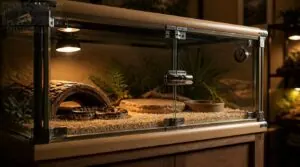
Size and security come first — everything else in habitat design builds on those two decisions.
From there, you’ll want to layer in the right hides, substrate, and temperature gradients—this guide to keeping your snake comfortable walks through those finer details.
- Hatchlings: 20-gallon minimum
- Juveniles: 40 gallons
- Adults: 55–75 gallons, with tamper resistant latches
Use two-handed latches, protected hinges, and sealed gaps for escape prevention. Choose PVC or reinforced glass meeting material durability standards — smooth, rounded edges reduce injury risk during handling and cleaning.
Temperature and Humidity Requirements

Get temperatures right, and you’ve solved half the battle. Set a thermal gradient with the warm side between 88–92°F and the cool end at 76–80°F, both regulated through a dimming thermostat.
Keep humidity at 50–60% baseline, rising to 70–75% during shedding cycles to prevent dysecdysis. A damp sphagnum hide creates an 80–85% microclimate. Monitor fluctuations daily with a reliable hygrometer.
Substrate and Decor Choices
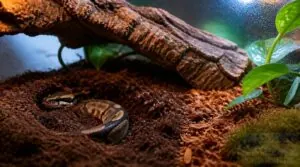
Safe substrate selection matters as much as temperature. Coconut fiber, cypress mulch, and organic topsoil hold humidity well and support burrowing at 2–4 inches deep. Skip pine and cedar entirely.
Watch for mold prevention—damp cypress can turn moldy fast without daily checks. Add cork bark or non-toxic plants for enrichment, keeping edges smooth and pieces stable so nothing topples inside the habitat setup.
Hides and Water Dish

A snug hiding area does more than décor — it’s your snake’s security blanket. Provide two hides minimum, one per thermal zone, sized so your python fits snugly with slight headroom.
For water, place the bowl away from heat sources, ideally near a hide. Choose sturdy, non-porous dishes and follow a strict cleaning routine: fresh water daily, deep scrubs weekly.
Feeding Your Ball Python Safely

Feeding time brings its own set of rules, and getting them right keeps your snake healthy and safe. From prey size to thawing methods, small details make a big difference. Here’s what you need to know before the next meal goes in the enclosure.
Since hatchlings grow so quickly, sticking to a proper snake feeding schedule by age and size helps you adjust meal frequency as your snake matures.
Diet and Prey Selection
Picking the right meal matters as much as picking the right enclosure. Offer frozen rodents sized 1.5–2.5 times your snake’s head width, always pre-killed and thawed—never live prey.
Prioritize:
- Mammalian prey preference over birds
- Nutrient density for steady growth
- Consistent sizing to prevent regurgitation
Scent cues trigger strikes, so warm, properly thawed rodents (handled with feeding tongs) meet essential dietary requirements safely.
Feeding Frequency by Age
How often you feed your ball python changes dramatically as it grows. Juveniles eat weekly, supporting rapid early growth, while adults shift to every 1–2 weeks.
Younger snakes have faster metabolisms and smaller stomachs, so frequent small meals suit their dietary requirements better than occasional large ones. As growth slows past three years, adult meal intervals stretch out—your snake’s appetite naturally tells you when it’s hungry again.
Safe Thawing Techniques
Never microwave frozen rodents—uneven heating creates bacterial hot zones fast. Refrigerator thawing is safest: place prey in a sealed bag, let it sit 12–24 hours below 40°F.
Short on time? Use cold water thawing, changing water every 30 minutes, then feed immediately with feeding tongs. Whichever method you choose, proper reptile husbandry means never leaving food at room temperature.
Common Feeding Problems
Even with proper thawing, feeding issues happen. Post-shed fasting is normal—wait 7-10 days before offering frozen rodents again.
Temperature-induced refusal occurs below 26°C; check your gradient first. Wrong prey size selection (over 40% girth) causes regurgitation. Use feeding tongs to gauge strike confidence.
Persistent refusal despite correct setup suggests parasite-related appetite loss—a red flag for reptile nutrition and overall Ball Python health.
Handling and Bonding Tips
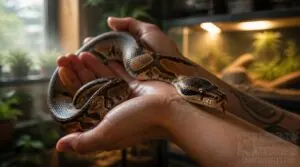
Handling your ball python is about more than picking it up. Done right, it builds real trust between you and a naturally shy snake. Here’s what you need to know to handle with confidence.
Safe Handling Techniques
Scoop your Ball Python from below the chest, supporting its full body length with both hands. Avoid sudden movements—slow, steady motion keeps this docile species calm.
- Wash hands before and after (scent transfer prevention)
- Never squeeze the throat
- Watch for hissing or tightening
- Keep sessions short at first
If stress signals appear, return your snake to its enclosure calmly.
Reducing Stress and Shyness
Ball pythons are naturally shy, so sensory stress triggers matter. Control visual stimuli with dim lighting and multiple hides for microhabitat variety.
| Trigger | Solution | Why It Works |
|---|---|---|
| Bright light | Dim, indirect lighting | Mimics natural conditions |
| Loud noise | Quiet equipment | Reduces vibration stress |
| Bare enclosure | Scent-based enrichment | Encourages exploration |
Consistent routines build lasting confidence.
Building Trust Over Time
Trust doesn’t happen overnight—it’s built through predictable handling cues and patient repetition. Use the same approach, lift, and support sequence every session, gradually extending desensitization pacing from seconds to minutes.
Watch body language: stillness and slow tongue flicks signal comfort. Documenting behavioral responses helps you spot progress.
Over weeks, defensive strikes fade, replaced by calm exploration—the hallmark of good reptile husbandry and lasting docile temperaments.
With patience, defensive strikes give way to calm exploration—the true mark of trust between snake and owner
Maintaining Long-Term Ball Python Health
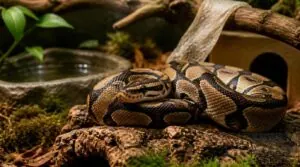
Good enclosure setup gets your ball python off to a strong start, but long-term health depends on what you do next. Small habits, checked consistently, catch problems long before they become emergencies. Here’s what steady, attentive care actually looks like day to day.
Monitoring Shedding Issues
A dull, faded appearance followed by milky blue eyes means a shed is coming—expect completion within 1 to 3 days. Watch for retained eye skin, stuck tail caps, or toe fragments, since dehydration or humidity fluctuation often causes dysecdysis.
A thorough shed quality inspection confirms clean, intact scales. If shed comes off in pieces rather than one sheet, reassess hydration and enclosure humidity levels.
Preventing Obesity and Malnutrition
Weight gain sneaks up quietly, so track body weight monthly and note thickness along the spine. Follow prey size guidelines—width matching mid-body diameter—rather than offering oversized frozen rodents for convenience.
Underfed snakes lose muscle tone despite eating; overfed ones develop fat rolls near the tail. Adjust portions based on trends, not guesswork, and treat feeding as preventative veterinary medicine, not habit.
Cleaning and Habitat Maintenance
Spot-clean daily, removing waste the moment you spot it. Do a full substrate swap every 1–2 weeks depending on humidity, using aspen or paper towels—never cedar or pine.
Disinfect hides, water dishes, and decor monthly with reptile-safe cleaner, then let everything dry fully. Wear gloves, use dedicated tools, and monitor your hygrometer to keep bacterial growth from taking hold.
When to Call a Vet
Some symptoms simply can’t wait. Labored breathing, gaping, or wheezing points to respiratory distress needing same-day care.
Repeated seizures, tremors, or loss of coordination signal neurological trouble.
Straining without producing waste, blood in stool, or bubbling around the mouth are digestive emergencies.
Add stuck shed with swelling, spreading scale rot, or steady weight loss despite normal eating, and it’s time to call your vet.
Frequently Asked Questions (FAQs)
Are ball pythons easy to take care of?
Picture a calm, coiled snake resting quietly under warm light, needs simple and steady. Yes, with beginner-friendly temperament and manageable husbandry, though consistent temperature regulation, humidity levels, and a daily routine mean real ownership responsibilities, not a hands-off pet.
How do I tell if my ball python is happy?
Look for calm, unhurried movement, regular tongue flicking, and loose coiling in hides. Curiosity toward new objects beats fearful hiding. Steady eating, clear eyes, and relaxed body language during handling all reflect good welfare and proper husbandry.
What not to do with a ball python?
Never grab your snake by the head or tail, feed oversized prey, or thaw rodents at room temperature. Skip dusty substrates and unstable humidity or temperature. Ignore stress signals at your peril, since neglecting them invites respiratory infections and shedding complications.
Do ball pythons enjoy being pet?
Don’t hold your breath waiting for cuddles: ball pythons tolerate handling, they don’t crave it. Watch for calm posture versus hissing or fleeing. Individual temperament varies, but bonding here means trust and routine, not social affection.
Are ball python snakes harmful?
Not really. They rely on constriction, not venom, so bites aren’t toxic. Risks are minor: bacteria, Salmonella exposure, or mild parasite transmission. Defensive coiling signals stress, not aggression. Proper handling and hygiene keep this species safe for responsible reptile keeping.
Are ball python snakes aggressive?
Not really. Ball pythons rarely show true aggression — defensive strikes usually stem from feeding scent confusion, handling shedding stress, or environmental stress responses.
With proper species-specific care, calm handling, and a stable enclosure, defensive displays become rare, predictable, and easy to manage.
Are ball pythons the most powerful snake?
Don’t expect a python to bench-press an anaconda—that title’s not up for grabs here. Ball pythons max out around 4–5 feet, relying on muscle density and coil stability rather than raw size, making them powerful for their frame, not the animal kingdom’s strongest constrictor overall.
Is a ball python snake friendly?
Yes — ball pythons are among the most docile pet snakes you can own. Their calm temperament, slow movements, and defensive ball posture (rather than biting) make them ideal for gentle handling, especially once they build trust with consistent, patient interaction.
Do ball pythons make good pets?
Like a quiet housemate who asks for little but rewards patience, this snake fits calm households well. With modest space needs, docile personality, and decades-long companionship, it suits beginner suitability and long-term commitment better than most exotic pets.
Can I have a ball python as a pet?
Absolutely, if you can commit to 20-30 years of species-specific care. You’ll need proper space for a reptile enclosure, a modest budget for setup and feeding, and beginner-friendly patience—making this a manageable exotic pet for daily responsibility.
Conclusion
A ball python’s care is a slow-burning fire, not a spark you light once and forget. Get the fundamentals right, and you’re not just keeping a snake alive, you’re building decades of trust.
Watch the thermal gradient, respect the shed cycle, and read your snake’s body language. These ball python pet care tips aren’t extras, they’re the backbone of a healthy, calm animal.
Master them now, and your snake will thank you for thirty years.