This site is supported by our readers. We may earn a commission, at no cost to you, if you purchase through links.

I’ve treated snakes with burns from heat rocks, respiratory infections from cedar bedding, and metabolic bone disease from bad UVB setups. Almost every case traced back to the same root cause: a new owner who meant well but never got the full picture. Snakes aren’t low-maintenance pets—they’re just quiet about their suffering until it’s severe.
That silence is exactly why snake owner advice from a clinical perspective matters so much. Get the setup wrong, and you won’t see symptoms for weeks or months.
What follows comes straight from years of exam-table experience: which species forgive beginner mistakes, what your enclosure actually needs, and how to catch trouble before it becomes an emergency.
Table Of Contents
- Key Takeaways
- Choose a Beginner-Friendly Pet Snake
- Check Snake Ownership Laws and Costs
- Set Up a Safe Snake Enclosure
- Maintain Temperature, Humidity, and Feeding
- Handle, Monitor, and Keep Snakes Healthy
- Frequently Asked Questions (FAQs)
- Will a snake recognize its owner?
- What is the best snake for a first time snake owner?
- What are 7 scents that snakes hate?
- Can I leave my snake alone for a week?
- How do I care for a snake?
- Should you own a pet snake?
- How do you handle a snake?
- How to prepare a snake’s home?
- Are snakes easy to care for?
- Should you keep a venomous snake?
- Conclusion
Key Takeaways
- Choose a beginner-friendly, captive-bred species like corn snakes or ball pythons, since captive-bred snakes show health issues in only 5% of cases compared to 30% for wild-caught ones.
- Set up your enclosure with a proper temperature gradient (warm side 26–32°C, cool side 20–24°C), 40-60% humidity, secure hides, and safe substrate before bringing your snake home, since husbandry mistakes cause most preventable illnesses.
- Feed frozen-thawed prey on a schedule matched to age (every 5-7 days for juveniles, 10-14 days for adults) and wait 24-72 hours after feeding before handling to avoid regurgitation.
- Quarantine new snakes for 60-90 days and schedule annual (or twice-yearly) vet checkups with fecal testing and bloodwork, since snakes hide illness until it becomes severe. For a complete breakdown of handling order, tool sanitation, and preventing cross-contamination, snake health quarantine procedures walks through every step that keeps your collection safe.
Choose a Beginner-Friendly Pet Snake

Picking your first snake sets the tone for everything that follows. Get this choice right, and you’ll build confidence instead of frustration. Here’s what to weigh before you bring one home.
Beginner-friendly species like corn snakes and ball pythons stay manageable in size, so this pet snake breed guide can help you match one to your space and experience.
Before deciding, it helps to browse this rundown of popular pet snake breeds for beginners to see which temperament and care routine actually fits your life.
Best Starter Snake Species
Four species stand out for beginners: corn snakes, ball pythons, California kingsnakes, and rosy boas. They’re manageable in size, dietary adaptable, and accept frozen-thawed prey reliably.
Corn snakes offer morph variety without added husbandry work. Lifespan expectations run 15-20+ years, so you’re committing long-term.
Compare temperaments before choosing—your comfort level matters as much as the snake’s care needs.
You should consider various beginner snake traits to make sure you have a successful first experience.
Temperament and Handling Needs
Temperament varies by individual, not just species, so assess each snake before bringing it home. Ball pythons and corn snakes tend to show calm, low-resistance handling, while others startle easily, hiss, or coil defensively.
Watch for stress indicators—rapid breathing, tail twitching, retreating postures. Start with short sessions, build a consistent handling routine, and respect the acclimation period before extended contact begins.
Captive-Bred Versus Wild-Caught
Where a snake comes from matters as much as which species you pick. Captive-bred snakes show health issues in only 5% of cases, versus 30% for wild-caught. That’s the parasite risk comparison in simple terms.
Sticking with reputable breeders also means you can ask directly about lineage and feeding history, which this first-time snake owner’s buying guide breaks down step by step.
You’ll also get temperament predictability and known genetic lineage. Reputable breeders back this with health records, supporting ethical sourcing and biodiversity conservation—skip wild-caught entirely.
Avoiding Venomous Species
Skip venomous species entirely as a beginner—no exceptions. Species selection starts with knowing your local venomous snakes, scorpions, and spiders, since regional risk varies widely.
Learn distinguishing color bands and shapes for wildlife encounter protocols. If you spot one in your yard, back away and call professional wildlife services. Keep emergency bite response numbers handy regardless—snake ownership basics include respecting what you don’t keep as a pet.
Finding Reputable Breeders
Who you buy from matters more than what you buy. Reputable breeders produce captive-bred snakes with a 5% health issue rate, versus 30% from pet stores.
Insist on health records, ask about lineage, and read buyer reviews for consistency. Visit if possible—clean housing and straight answers signal ethical breeding. Avoid sellers dodging questions about parent stock.
Check Snake Ownership Laws and Costs

Before you bring a snake home, you need to know what your state and wallet expect from you. Ownership rules and expenses vary more than most new owners realize, and skipping this step can cost you. Here’s what to check before you commit.
State and Local Restrictions
Legality isn’t optional here—it’s the foundation of responsible exotic pet ownership.
Beyond checking permits, building trust with your snake through consistent, gentle handling makes daily care easier—this simple guide to taming snakes offers practical tricks to get started.
Over 20 states restrict specific species, and preemption law means state statutes often override stricter city rules.
Check zoning ordinance compliance too, since some counties enforce dangerous animal classifications regardless of state law.
Protected species laws may bar wild-caught snakes entirely.
Skipping this step invites animal control inspections—and fines up to $5,000.
Required Permits
Where does the paperwork trail actually start? Right at your local animal authority’s front desk. Many jurisdictions require species-specific licensing, backed by proof of lawful acquisition, enclosure photos meeting inspection standards, and renewal every year.
Permits often govern transfers too—rehoming triggers new approval requirements. Keep records linking each snake to its permit; regulatory compliance depends on it, not guesswork.
Setup Cost Estimates
Habitat setup runs $150–$400 upfront: enclosure ($40–120), substrate ($15–35), heating/lighting ($25–120), and hides ($20–60). Add a $50–150 vet check for quarantine screening.
Buy substrate and furnishings in bulk—you’ll save 5–20%. Watch for seasonal sales too; they’ll cut costs another 10–25%.
Budget a 10–20% contingency for surprises. Your initial investment sets the foundation everything else depends on.
Annual Care Budget
Expect $450–$1,500 in annual expenses once setup’s done. Monthly feeding runs $15–45, with supplements under $5. Budget one wellness appointment ($40–150) plus preventative veterinary care and parasite testing. Veterinary insurance options can offset emergencies. Factor equipment replacement cycles for bulbs and hides, plus a 5–15% emergency fund. Track supplement expense against feeding logs monthly.
Long-Term Commitment
Ball pythons live 20–30 years — that’s a longer commitment than most dogs. Before you buy, plan for it.
If you’re weighing whether you’re ready for that kind of long-term responsibility, our guide to snake ownership basics covers what first-time keepers should honestly consider.
- Budgeting for growth (bigger enclosures)
- Long-term health records
- Consistent care routines
- Emergency veterinary funds
- Managing aging snakes’ changing needs
Preventative veterinary care and steady snake health monitoring across decades separate responsible owners from overwhelmed ones.
Set Up a Safe Snake Enclosure
Your snake’s enclosure is its whole world, so getting the setup right matters more than most new owners realize. A few key decisions determine whether your pet stays safe, calm, and healthy for years to come. Here’s exactly what you need to get in place before your snake ever comes home.
Proper Tank Size

Why does size matter so much? Undersized enclosures accelerate stress, shedding problems, and metabolic issues.
Start with 20-30 gallons for most beginner species, moving to a 40-gallon breeder as your snake grows. Plan tank length at 1.5 times your snake’s body length, plus a 2-inch margin. Footprint beats height—verify your stand can support the added weight safely.
Escape-Proof Lids

Once your tank’s sized right, lock it down. Snakes push against any weak point, so locking mechanism security matters as much as square footage.
Check for a tight-fitting lid with a silicone gasket and multiple latch points—this prevents humidity escape and keeps curious noses from prying gaps open. Inspect gaskets every 6-12 months; replace if cracked. Skip citrus cleaners—they degrade seals fast.
Secure Hiding Spots

Lids keep snakes in; hiding spots keep them sane. Dual hiding spots—one per thermal zone—cut stress and support natural hiding instincts.
- Half-logs or cork bark caves
- Moisture retaining caves for shedding
- Opaque hides for visual barrier benefits
- Enclosure safety features with no sharp edges
Reptile husbandry means enrichment, not just square footage. These additions round out your snake enclosure’s habitat enrichment.
Safe Substrate Choices
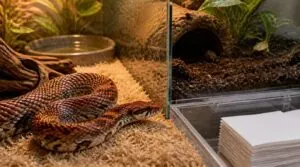
Substrate matters more than most new owners realize. Aspen shavings suit dry-loving corn snakes and ball pythons, while cypress mulch or coconut fiber retain humidity for burrowing species. Avoid loose substrate risking impaction—paper towels work best during quarantine for sterility and easy monitoring. Cedar and pine are off-limits; their oils harm respiratory health. Bioactive setups pair well with cypress or Repti Bark.
Enclosure Cleaning Routine

Every enclosure needs a rhythm: daily spot cleaning for waste, plus monthly deep cleaning with reptile-safe disinfectant.
- Remove feces and shed daily
- Scrub water dishes twice weekly (biofilm prevention)
- Replace substrate every 4-6 weeks
- Dedicate cleaning tools to one enclosure (cross-contamination risks)
- Disinfect thoroughly during deep cleans
This routine helps control pathogens and keeps hygienic substrate conditions intact—critical during quarantine procedures and everyday preventative healthcare.
Maintain Temperature, Humidity, and Feeding

Your snake’s enclosure is more than a home, it’s a life-support system. Get the temperature, humidity, and feeding routine right, and you’ll set your snake up for years of healthy living. Here’s exactly what you need to dial in.
Warm and Cool Zones
Snakes can’t shiver or sweat, so you’ll build their body heat for them through thermoregulation gradients.
| Zone | Range | Purpose |
|---|---|---|
| Warm | 26–32°C | Basking, digestion |
| Cool | 20–24°C | Retreat, recovery |
| Gradient | 6–10°C difference | Movement, thermoregulation |
Place digital thermometers at multiple heights—don’t guess. Heat sources need safety gear, never a single scorching hot spot.
Basking Spot Temperatures
Species Temperature Targets vary more than beginners expect. Ball pythons bask at 88–92°F, corn snakes prefer 90–95°F, king snakes settle near 90°F.
If you’re ever unsure whether your setup is dialed in correctly, knowing the warning signs that a heat lamp is running too hot can help you catch problems before they stress your snake.
For breeding success, pair these temperatures with natural snake breeding stimulation methods that mirror seasonal changes.
Measuring Surface Temps means using a digital probe or infrared thermometer directly on the basking surface—air readings won’t cut it.
Preventing Heat Burns: keep heat sources adjustable and shielded. Too hot causes dehydration or burns; back off the wattage.
Humidity Monitoring
Guessing your enclosure’s humidity is a gamble you can’t afford—get a hygrometer and know for sure.
Capacitive sensors react fast; resistive ones lag slightly. Mount yours at mid-height, away from heat lamps and water bowls, to avoid skewed readings.
Smart hygrometers log trends via app, flagging drift before problems start. Target 40-60% RH, adjusting for shedding humidity needs as cycles approach.
Frozen-Thawed Prey
Live rodents can bite back—literally. That’s why 88% of reptile vets recommend frozen-thawed prey instead.
- Submerge sealed prey in warm water until it hits body temperature
- Warm the surface to 100-105°F for heat-sensing cues
- Match prey width to your snake’s girth
- Offer head-first using tongs
- Discard anything left out over 2 hours
Vary prey types for balanced dietary needs—rarely does supplementation matter otherwise.
Feeding Schedule by Age
Age drives appetite. Juveniles burn through energy fast, so feed them every 5-7 days. Adults have slower metabolic rates—stretch that to every 10-14 days.
Scale prey size to roughly 10% of body weight as your snake grows. Watch for seasonal dips in appetite, especially during cooler months, and adjust feeding frequency accordingly. Frozen-thawed prey keeps nutrient density consistent year-round, supporting steady dietary needs without the guesswork.
Handle, Monitor, and Keep Snakes Healthy

Good husbandry gets your snake healthy, but daily habits keep it that way. You’ll need a routine for handling, watching for trouble, and catching problems before they become emergencies. Here’s what that routine should look like.
Safe Handling Sessions
Pick up your snake slowly, supporting its body from head to tail rather than gripping one segment. Keep hands in front, never reaching for the neck or tail.
- Calm space, no loud noises or pets nearby
- Watch for defensive signals: hissing, flattening, rapid tongue flicks
- End sessions at first sign of stress
Clean hands prevent residue transfer and protect your snake’s welfare.
Post-Feeding Handling Break
Once you’ve fed your snake, put it back and leave it alone for 24 to 72 hours—juveniles need 24-48, adults digesting larger meals need up to 72. Handling too soon risks regurgitation. Watch for relaxed coiling and normal breathing as digestion signs; reduced appetite during this window is normal, not illness.
Signs of Snake Illness
Know the difference between digestion and disease. Wheezing, clicking, or bubbles at the mouth signal respiratory infection—get an exotic animal vet involved fast. Watch for retained shed, especially around eyes and tail tip.
Lethargy, weight loss, and skipped meals beyond normal fasting windows matter too. Excessive soaking can mean mites or dehydration. Routine health checks catch problems early.
New Snake Quarantine
That vigilance doesn’t stop once your new snake settles in. Isolate new arrivals 60 to 90 days, using dedicated equipment—separate feeding tools, sanitized enclosures—to prevent cross contamination with your main collection. Run weekly health checks, watch for snake mites, and consider pathogen screening if origins raise concern. Clearance requires two consecutive clean assessments before they join the others.
Sound like overkill? It’s basic biological security.
Reptile Vet Checkups
Why leave wellness to guesswork? Schedule annual checkups with an ARAV-certified reptile vet—twice yearly catches problems earlier.
Expect a baseline physical exam, weight tracking, and fecal parasite testing, since parasites hide even in healthy-looking snakes.
Routine bloodwork flags organ issues before symptoms show. X-rays help when metabolic bone disease is suspected.
Preventative care beats emergency care, every time.
For snakes, preventative veterinary care always outperforms scrambling to fix a crisis later
Frequently Asked Questions (FAQs)
Will a snake recognize its owner?
Yes, through scent-based recognition—tongue flicking picks up your unique odor. Add vibrational cues and consistent handling routines, and your snake learns you’re safe, calm, and predictable, though responses vary by personality.
What is the best snake for a first time snake owner?
Picking the right species sets the tone for everything that follows. Corn snakes top the list for docile temperament and easy frozen-thawed feeding, with ball pythons, rosy boas, and Kenyan sand boas close behind for manageable size and calm handling.
What are 7 scents that snakes hate?
Try cinnamon oil, clove oil, vinegar-citrus blends, ammonia, and garlic-onion sprays around entry points. Cinnamon repels well diluted; clove irritates skin undiluted. Ammonia works but poses safety risks—use cautiously, and always reapply after rain.
Can I leave my snake alone for a week?
A snake’s patience is like a coiled spring — steady, waiting. Snakes tolerate a week alone on stable temps and full water dishes. Automate heat timers, feed beforehand, and line up a backup with emergency vet contacts ready.
How do I care for a snake?
Start with a beginner-friendly species, correct enclosure setup, and stable temperature and humidity control.
Feed frozen-thawed prey every 7-14 days, minimize stress triggers, track health records diligently, and schedule preventative veterinary medicine visits to catch problems early.
Should you own a pet snake?
Like Rilke’s caged panther, a snake thrives only when its world fits its nature. This isn’t a cuddly companion—it’s a decade-plus commitment demanding space, exotic pet expertise, and genuine responsibility before you commit.
How do you handle a snake?
Lift with full-body support under the belly, never gripping behind the head. Use a snake hook for defensive individuals.
Watch for hissing or coiling — defensive signals mean stop.
Wash hands after handling; it prevents scent-triggered stress and protects animal welfare.
How to prepare a snake’s home?
Get the enclosure ready days before your new pet arrives. Build a proper temperature gradient—80-90°F warm side, 70-75°F cool side—with secure hides, safe substrate like aspen shavings, and a hygrometer for humidity control between 40-60%.
Are snakes easy to care for?
Snakes demand less daily handling than dogs or cats, but don’t call them "easy." You’ll need precise temperature zones, humidity control, strict feeding schedules, and species-specific care to keep them thriving—true snake ownership basics for any beginner willing to learn.
Should you keep a venomous snake?
Fancy an antivenom fridge and a "dangerous wild animals" license? No, thanks. Venomous species demand strict licensing, costly emergency antivenom, and specialized vet care. Stick with non-venomous snakes—safer, legal, and far less liability.
Conclusion
Last year, a ball python came in with burns so bad the owner cried in my exam room—he’d only followed a pet store clerk’s advice. That’s the story I hear weekly.
Good snake owner advice isn’t optional extra credit; it’s the difference between a thriving animal and an emergency visit. Build the right enclosure, watch the small signs, and schedule checkups before problems start. Your snake won’t ask for help. You’ll need to notice first.