This site is supported by our readers. We may earn a commission, at no cost to you, if you purchase through links.

A snake that regurgitates its meal isn’t being difficult—it’s telling you something went wrong before the feeding even started. Most problems can be traced back to three decisions: the wrong prey size, improper thawing, or feeding at the wrong time. Get those right, and your snake eats cleanly, digests well, and stays healthy for years.
Rodents make up the backbone of most captive snake diets, but mice and rats aren’t interchangeable, and frozen-thawed isn’t as simple as defrost-and-drop.
This guide walks you through every step of feeding rodents safely and correctly.
Table Of Contents
- Key Takeaways
- Choose The Right Rodent Prey
- Measure Safe Prey Size
- Set Feeding Frequency by Age
- Use Frozen-Thawed Rodents Safely
- Thaw and Warm Rodents Correctly
- Offer Prey With Feeding Tongs
- Monitor Digestion and Feeding Problems
- Top 5 Snake Feeding Supplies
- Frequently Asked Questions (FAQs)
- What quarantine period for new rodent shipments?
- How to store bulk frozen rodents properly?
- Can snakes eat rodents with medication residue?
- What temperature should feeding enclosure be maintained?
- How to transition picky eaters to rodents?
- Can snakes fast safely between feeding sessions?
- How do I switch my snakes prey type?
- Should I feed my snake after handling it?
- Do snakes need water before or after eating?
- Can hatchlings eat rats instead of mice?
- Conclusion
Key Takeaways
- Match prey size to your snake’s widest body girth and keep it within 10–15% of body weight — getting this wrong is the single fastest way to cause regurgitation or injury.
- Always thaw frozen feeders in the fridge or cold water, then finish with a warm-water bath to 30–40°C — microwaving creates hidden hot spots that burn your snake’s mouth.
- Feed hatchlings every 5–7 days, juveniles every 5–7 days, and adults every 10–14 days, adjusting based on monthly weigh-ins rather than a fixed calendar.
- After every meal, leave your snake alone for at least 48 hours — handling too soon is one of the most common and avoidable causes of regurgitation.
Choose The Right Rodent Prey

Getting the prey right is the first real decision you’ll make as a snake keeper, shaping everything from nutrition to safety.
Whether you choose live, fresh-killed, or frozen-thawed feeders can affect your snake’s health long-term, so it’s worth reading up on beginner snake ownership fundamentals before committing to a feeding routine.
Not all rodents are created equal, and what works for one species might not suit another. Here’s what to know before you ever drop a feeder into the enclosure.
Mice Versus Rats
When selecting between mice and rats as prey for snakes, size is the critical factor. This distinction is further clarified by the following characteristics:
- Body proportions — rats typically weigh 250–500 g; feeder mice average 15–30 g
- Habitat preferences shape their build — rats are stocky, mice slender
- Social hierarchy makes rats more stress-reactive
- Reproductive rates ensure feeder mice remain widely available
- Metabolic needs scale with body mass
Rats generally weigh 250–500 g, whereas mice are only 20–40 g, highlighting a significant disparity in adult rat weight range.
Match the rodent to your snake’s girth, not habit.
Species-specific Feeding Needs
Not every snake eats the same way. A ball python’s species-specific diet differs sharply from a tree boa’s arboreal feeding posture needs or a water snake’s aquatic prey preference. Nocturnal timing adjustments matter too — night feeders rarely strike at noon. Seasonal feeding shifts happen naturally, so track them. Use this general feeding schedule by species as your baseline:
| Species | Feeding Notes |
|---|---|
| Ball Python | Prey size guidelines: mouse/rat matching mid-body girth; every 10–14 days |
| Corn Snake | Snake feeding schedule: hopper to adult mouse; every 7–10 days |
| Desert Species | Desert species hydration: lean prey; monitor weight closely |
| Arboreal Boas | Elevated presentation assists arboreal feeding posture |
| Water Snakes | Aquatic prey preference; faster digestion, smaller meals |
Prey size calculation starts with girth — not guesswork.
Frozen-thawed Versus Live
Once you’ve matched prey to your snake’s girth, the next call is frozen-thawed versus live. Frozen wins on nearly every front — lower risk of disease transmission, no stress impact from a fighting rodent, and solid nutrient preservation when stored correctly.
The main con? Feeding response can lag early on. Thawing frozen mice properly and using tongs to mimic movement usually fixes that fast.
Safe Feeder Sourcing
Where you source feeders matters as much as how you thaw them. Look for suppliers with certification verification, documented batch traceability, and regular supplier audits.
Cold chain shipping and consistent temperature monitoring protect quality from warehouse to your door.
Humane euthanasia methods like CO₂ euthanasia, plus solid parasite control, keep disease transmission risk low.
When in doubt, ask for the paperwork — reputable suppliers won’t hesitate.
Whole-prey Nutrition
A whole mouse is basically a complete meal in one package — nothing added, nothing missing.
The nutritional components of a whole mouse deliver unparalleled balance:
- Bone Calcium from skeletal tissue prevents metabolic bone disease
- Organ Vitamins — especially vitamin A from liver — cover what muscle alone can’t
- Essential Fatty Acids support energy and fat-soluble nutrient absorption
- Fiber Roughage from fur aids healthy digestion
- Mineral Profile across kidneys and organs delivers real nutrient density
That’s the balanced nutrition of wholeprey mice — and the nutritional value speaks for itself.
Measure Safe Prey Size
Getting prey size right is one of the most important choices you’ll make as a snake keeper. A meal that’s too big can cause real harm, and one that’s too small leaves your snake underfed over time.
Here’s what to look at when sizing up the right rodent.
Match Widest Body Girth

Think of your snake’s midsection as the definitive prey size guideline. The widest point of the body — measured with a Midsection Tape — establishes the maximum girth limit.
Prey width guidelines are simple: the rodent should never exceed that body thickness. This girth ratio maintains a safe prey-to-snake size ratio, preventing esophageal strain. When uncertain, opt for a slightly narrower choice.
Use 10–15% Body Weight
Once you know your snake’s current weight, the math is simple: prey should land between 10–15% of that number. This establishes the Targeted Portion Ratio, which serves as your Routine Size standard for every feeding session.
This approach embodies Condition-Driven Scaling in practice — maintaining a Consistent Mass Ratio ensures your weight-based feeding percentage remains honest.
Combining Adaptive Meal Percent and body thickness together forms the strongest prey size guideline.
Choose Smaller When Unsure

When selecting prey, opt for smaller when sizes seem comparable. The Body Girth Buffer exists as your Safety Margin Preference—a critical safeguard. This buffer ensures you respect the snake’s natural limits, as size tolerance varies individually.
Individual Tolerance Assessment is key, as size impacts each snake differently. Monitor for Feeding Hesitation Signals during trials; these cues reveal when the prey-to-snake ratio is mismatched.
Adjust by downsizing the prey. Your snake’s well-being depends on this attentive calibration.
Avoid Oversized Rodents

Oversized rodents push past your snake’s Jaw Gape Limits, triggering immediate Regurgitation Warning signs or worse — esophageal injury. Watch for Abdominal Bulge Signs and Snake Stress Cues like excessive writhing post-meal.
Always practice Swollen Prey Detection before feeding; engorged prey disrupts the prey-to-snake size ratio.
Your size chart and weight-based feeding percentage keep rodent prey size honest and digestion smooth.
Track Body Condition

Your snake’s body tells you more than a chart ever will. Run your fingers along the spine — that’s fat palpation, and it’s your most honest condition scoring tool. A healthy snake feels firm, not pinched or soft.
Your snake’s spine never lies — fat palpation is the most honest condition score you’ll ever get
- Watch shedding regularity; delayed sheds paired with weight shifts signal feeding plan problems.
- Use scale consistency — same scale, same method weekly.
- Activity monitoring, body width guidelines, and weight-based feeding percentage together drive obesity prevention, snake health, and steady snake growth.
Set Feeding Frequency by Age

Feeding frequency isn’t one-size-fits-all — it changes as your snake grows. A hatchling has very different energy needs than a full-grown adult, and getting the timing wrong can cause real health problems over time.
Here’s how to match your feeding schedule to your snake’s age and size.
Hatchling Feeding Intervals
Because hatchlings grow fast, their feeding frequency must keep pace. Most thrive when fed every 5 to 7 days, but if growth rate tracking shows steady gains, tighten the schedule to every 4 to 6 days.
Light cycle alignment and temperature significantly influence digestion speed. Use feeding log templates to identify patterns early and adjust feeding frequency before small problems compound.
Juvenile Feeding Schedules
As juvenile snakes grow, feeding frequency naturally stretches. Most juvenile snakes do well on a 5- to 7-day schedule, but Feed Log Analysis tells the real story — if weight-based feeding percentage stays on track and Temperature‑Dependent Digestion runs smoothly, you can shift to Adaptive Feeding Intervals without guessing.
Growth Rate Monitoring keeps prey size and timing honest across changing growth stages.
Adult Snake Timing
Once juveniles reach adult size, their metabolism settles into a slower rhythm. That’s your cue to extend the feeding schedule to every 10–14 days.
Feeding Window Consistency matters here — offer prey at the same time during your snake’s active period. Circadian Strike Timing, Temperature-Driven Timing, and Seasonal Appetite Shifts all shape how reliably adults accept meals.
Warm the enclosure fully before offering prey. Expect reduced appetite during cooler months.
- Feed every 10–14 days
- Match feeding windows to natural activity cycles
- Warm the enclosure fully before offering prey
- Expect reduced appetite during cooler months
- Observe Post-Meal Rest Period — no handling for 48 hours
Large Species Adjustments
Large constrictors play by different rules. While a corn snake is fed every 10–14 days, Burmese or reticulated pythons may require 14–21 days between meals—sometimes longer during breeding cycles or seasonal adjustments.
Temperature Control (26–32°C) and Humidity Levels (50–70%) directly affect digestion speed.
Use feeding tongs to offer appropriately sized prey—jumbo mice, Large Jumbo Colossals, or Mammoths—keeping the prey-to-snake size ratio accurate.
Growth Monitoring and Stress Mitigation keep everything on track.
Weight-based Schedule Changes
Your scale is your most reliable tool here. Weigh your snake monthly and adjust the feed frequency whenever weight trends shift.
Progressive Portion Scaling means moving up or down in prey size gradually, never jumping two sizes at once.
Seasonal Metabolic Shifts can slow digestion in cooler months, so stretch Weight-Driven Intervals accordingly.
Growth Curve Adjustments keep your prey-to-snake size ratio accurate as your snake matures.
Use Frozen-Thawed Rodents Safely

Frozen-thawed rodents are one of the smartest switches you can make for your snake’s long-term health and safety. They cut out a surprising number of risks that most new keepers don’t think about until something goes wrong.
Here’s what you need to know to use them the right way.
Benefits Over Live Prey
Frozen mice make your snake feeding guide simpler and safer across the board. Consistent nutrition is one of the biggest wins — frozen vs live feeder mice aren’t even close here. Frozen prey delivers nutritional completeness every time, reduces zoonotic risks, and aids stress reduction for both you and your snake.
Ethical feeding starts with a choice that’s just better all around.
Prevent Rodent Bite Injuries
Even a small mouse can bite hard enough to break skin. Prey handling safety starts before you ever open the enclosure. Use forceps or tweezers — not bare hands — and keep your hand positioning behind the prey, never above it.
Gloves Required isn’t just advice; it’s a habit. A dedicated feeding station hygiene routine and secure container security round out your defense.
For bite first aid, clean immediately with soap and running water.
Reduce Parasite Risks
Parasites don’t announce themselves — they hitchhike in quietly. Frozen-thawed feeders break that cycle before it starts, since deep-freezing kills internal parasites that live rodents carry.
- Practice strict Rodent Quarantine for all new arrivals
- Maintain Colony Cleanliness to stop parasite buildup
- Prevent Room Cross-Contamination with dedicated tools per area
- Keep Feed Prep Sanitation tight between every session
Store Feeders Properly
Your freezer is only as good as how you use it. Keep food in a vacuum-sealed bag inside airtight containers at –18 °C or colder — that’s your cold chain logistics working properly. Temperature monitoring keeps everything safe.
Humidity control matters too; aim below 60 percent to block mold.
Practice stock rotation with FIFO labeling, and use pest barriers to seal the storage room tight.
Avoid Refreezing Thawed Rodents
Once a rodent crosses the 5°C microbial threshold, refreezing it won’t reset the clock. Bacteria are already active, and no amount of cold chain logistics can undo that.
Watch for spoilage indicators like off odors or surface breakdown — both signal it’s time to discard safely.
Thaw only what you’ll use, and treat immediate use as the rule, not the goal.
Thaw and Warm Rodents Correctly

How you thaw and warm a feeder rodent matters more than most people realize — get it wrong and you risk burning your snake or triggering a feeding strike.
The good news is that the process is straightforward once you know the right steps.
Here’s what to follow every time.
Refrigerator Thawing Method
The refrigerator thawing method is the safest way to defrost frozen feeder mice because the steady thawing temperature of around 4°C (39°F) keeps bacterial growth in check throughout the entire thawing process. It’s slow, but that’s the point.
Follow these four steps for safe refrigerator thawing:
- Container Sealing – Place your frozen feeder mice in a sealed, leak-proof bag before refrigerating to secure cross-contamination prevention with other stored items.
- Shelf Placement – Always use the bottom shelf; this stops any drips from reaching food below.
- Thawing Timeline – Small mice need 12–24 hours; larger rats need up to 48 hours.
- Temperature Monitoring – Verify your fridge stays at or below 4°C throughout the thawing process to maintain food safety.
Cold-water Thawing Method
When time is tight, cold-water thawing works well. Place your frozen feeder mice in a sealed bag, then submerge them fully in cold tap water—full submersion is crucial for even thawing.
Change the water every 30 minutes and keep thawing temperature below 70°F. Maintain good hygiene by sanitizing your sink first.
Log the thaw duration to refine timing for each prey size.
Warm-water Finishing Step
Once your feeder is fully thawed, warm up the prey using a 36–40°C water bath for 10–15 minutes. Thermometer accuracy matters here—calibrate weekly and monitor closely so temperature regulation stays tight.
Use dedicated Water Bath Materials and follow Sanitation Protocols: fresh water, clean tools, and each batch timed carefully.
Batch Timing keeps the surface texture right and improves acceptance without degrading tissue.
Never Microwave Feeders
Skip the microwave entirely. It creates Hot Spot Hazards — pockets of intense heat surrounded by still-frozen tissue — and Mouth Burn Risks are real when your snake strikes warm prey with hidden scalding zones.
Uneven Thawing also triggers nutrient degradation, breaking down proteins and vitamins before your snake ever eats.
- Microwaves can’t distribute heat evenly through frozen-thawed mice
- Internal hot spots burn oral tissue without visible warning signs
- Nutrient degradation accelerates rapidly at uneven high temperatures
- Microwave safety myths suggest "low power works" — it doesn’t
- Proper warm-water methods preserve everything a whole prey item offers
Check Prey Temperature
Before offering a mouse, perform a temperature check. Frozen-thawed mice should reach 30–40°C—the ideal warm range that triggers natural striking behavior.
Use a calibrated infrared thermometer to verify uniform prey warmth from nose to tail. Ensure no cold pockets or hot zones exist.
Log each session in a temperature logbook to identify patterns. Preventing heat shock is simple: warm prey gradually, never rushed.
Offer Prey With Feeding Tongs

How you offer the prey matters just as much as what you’re offering. A few simple techniques can make the difference between a confident strike and a stressed, reluctant feeder.
Here’s what to keep in mind each time you open that enclosure.
Use Long Feeding Forceps
A good pair of 10–12-inch stainless steel forceps offers Extended Reach into deep enclosures, keeping your fingers safely away from strike range. Their Ergonomic Locking Grips reduce hand fatigue while enabling Precise Prey Placement. The Corrosion‑Resistant Build and Sterilization Friendly Design ensure effortless cleanup.
Three reasons forceps beat bare hands:
- They eliminate accidental bites during live prey handling.
- Locking tips guarantee prey immobilization, reducing snake stress management issues mid-feed.
- Extended reach minimizes stress caused by looming over the enclosure during feeding.
Mimic Natural Prey Movement
Your snake’s hunting instinct wakes up the moment prey moves. Use Side-to-Side Sway and Irregular Oscillation with your forceps to mimic live prey behavior — slow weaving, sudden Prey Acceleration, subtle Posture Shifts.
| Movement Type | Effect on Snake |
|---|---|
| Side-to-Side Sway | Triggers tracking behavior |
| Irregular Oscillation | Sustains strike anticipation |
| Posture Shifts | Prolongs visual focus |
| Prey Acceleration | Activates jaw response |
| Variable Speed | Increases feeding success |
Variable Speed keeps the response sharp.
Feed During Hunting Hours
Timing matters more than most keepers realize. Diurnal snakes are sharpest in the Morning Feeding Window, while nocturnal snakes hit their Evening Activity Peak once temperatures drop. This is Temperature-Driven Timing in action — your snake’s hunting instinct follows the thermometer.
Practicing Species Rhythm Matching and using Seasonal Light Adjustment as cues shift ensures alignment with natural patterns.
A well-timed offer guarantees a faster, cleaner feeding response every time.
Maintain Digestion Temperatures
After a meal, your snake’s reptile metabolism depends entirely on environmental temperature. Ensure Warm Zone Placement is set up before heating the prey — the temperature gradient should already be stable.
Use Thermostat Calibration alongside Temperature Logging to confirm accuracy. Prioritize Draft Prevention and Heat Retention Insulation to maintain a steady metabolic rate throughout the full digestion window.
Avoid Handling Afterward
Once the prey is swallowed, your job is done — step back and let digestion take over. A Handling Cooldown Period of at least 48 hours isn’t optional; it’s how you protect the meal.
- Create a Quiet Recovery Zone by reducing foot traffic and noise
- Watch for Stress Signals like defensive posturing or gaping
- Avoid Temperature Fluctuation Risks that disrupt gut movement
- Practice Minimal Enclosure Disturbance — no rearranging, no cleaning
- Premature handling risks regurgitation, intestinal blockage, and long-term feeding stamina loss
Monitor Digestion and Feeding Problems

Once your snake has eaten, the job isn’t over — digestion is where things can quietly go wrong. Knowing what to watch for after each meal helps you catch problems before they turn serious.
Keep an eye on these five key signs.
Watch for Regurgitation
Regurgitation timing tells you a lot. If your snake regurgitates during or shortly after feeding, that’s a clear signal — prey was too large, temperatures were off, or handling stress triggered it.
Watch for throat lump signs, visible feeding stress indicators, and breathing difficulty, which signals possible aspiration.
Always fully warm the prey to support feeding stamina.
Check Post-meal Bulges
After feeding, watch the bulge closely — it tells you whether your prey sizing was right. A healthy bulge feels firm but slightly elastic, shrinks steadily as digestion progresses, and stays proportional to your snake’s bite width.
If the bulge size ratio looks extreme or post-meal comfort seems off — repeated gaping, restlessness, or stalled digestion progress — impaction or oversized meal may be the cause.
Note Shedding Refusals
Shedding refusals aren’t hunger strikes — they’re biology. When your snake’s eyes go cloudy, that’s your signal to pause the feeding schedule without stress.
Cloudy eye timing, humidity management, and soak behavior all affect whether your snake eats.
Skip the meal, reduce handling for stress reduction, and wait. Most snakes resume normally within one to two feeds after post-shed recovery.
Track Waste Timing
Once your snake recovers from shedding, shift your attention to waste timing. Note the exact date and time after each feeding — this establishes your timestamp logging baseline. A healthy digestive cycle typically completes within five to seven days.
Track fecal consistency, temperature impact on digestion, and hydration notes as well. This observation window reveals more than any single meal can.
Log Weight Changes
Weighing your snake on a consistent weighing protocol — same scale, same container, same time relative to feeding — turns raw numbers into a readable trend. Log unit uniformity matters, too; switching between grams and ounces mid-record creates confusion fast.
Track meal-weight correlation over several cycles, and set weight change alerts for steady drops. This monitoring helps detect shifts early.
The data reveals snakes’ metabolism shifts, nutrient absorption gaps, and early obesity in snakes before problems escalate.
Top 5 Snake Feeding Supplies
Having the right supplies on hand makes every feeding session smoother and safer for both you and your snake. A few key tools can take the guesswork out of thawing, storing, and offering prey correctly.
Five worth keeping in your setup.
1. MiceDirect Frozen Pinkie Mice Snake Food

If you want a feeder you can actually trust, MiceDirect’s frozen pinkie mice are hard to beat. Each pack contains 40 pinkies averaging about 2 grams each — exactly right for hatchling corn snakes, ball pythons, and small lizards.
They’re raised in climate-controlled facilities in Cleveland, GA, fed a zoo-grade rodent diet, and humanely euthanized before freezing. This ensures no parasites, no bite injuries, no guesswork.
Freshness from euthanasia to delivery is about one week, so nutrient loss is minimal.
| Best For | Owners of hatchling corn snakes, ball pythons, or small lizards who want a clean, reliable feeder they don’t have to think twice about. |
|---|---|
| Primary Use | Reptile feeder food |
| Size | 40 pinkies, ~0.5–1 in each |
| Material | Organic rodent diet |
| Temperature Range | Shipped on dry ice |
| Noise Level | Not applicable |
| Reusability | Single-use feeders |
| Additional Features |
|
- Raised and processed domestically in climate-controlled conditions, so you’re not rolling the dice on parasites or pathogens.
- Zoo-grade diet means these pinkies are actually nutritious — not just filler.
- Arrives frozen on dry ice within about a week of euthanasia, so freshness is real, not just a marketing claim.
- Too small for medium or large reptiles — if your snake has grown past hatchling size, these won’t cut it.
- At $104.97 for 40 pinkies, the price is noticeably higher than bulk or local options.
- Dry ice shipping means you need to be home and ready to store them fast once the box arrives.
2. EUHOMY Compact Countertop Freezer
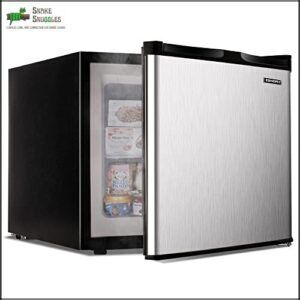
Once you’ve stocked up on frozen feeders, you need somewhere reliable to keep them. The EUHOMY Compact Countertop Freezer offers 1.1 cubic feet of dedicated storage, accommodating a solid supply of pinkies, fuzzies, or hoppers without overcrowding your main freezer.
It maintains temperatures between -7.6°F and 6.8°F, ensuring long-term nutritional preservation. The reversible door and adjustable feet allow flexible placement, while its quiet operation prevents disruption in nearby reptile rooms.
| Best For | Reptile keepers with limited space who need a dedicated, quiet freezer for storing frozen feeders like pinkies, fuzzies, or hoppers. |
|---|---|
| Primary Use | Frozen food storage |
| Size | 1.1 cu ft capacity |
| Material | Stainless-steel exterior |
| Temperature Range | -7.6°F to 6.8°F |
| Noise Level | Low-noise compressor |
| Reusability | Permanent appliance |
| Additional Features |
|
- Keeps temps as low as -7.6°F, so your feeders stay properly frozen and nutritionally intact long-term
- Quiet compressor means you can tuck it in a reptile room or bedroom without it being a nuisance
- Reversible door and adjustable feet make it easy to fit into tight or awkward spots
- At 1.1 cu ft, space fills up fast — not great if you’re buying in serious bulk
- Some buyers have noted finish issues out of the box, like plastic film residue or a door that smudges easily
- Needs 4 inches of clearance on all sides and has to sit upright for 24 hours before you plug it in, so setup takes a little planning
3. Kismile Compact Upright Freezer Stainless Steel

If you’re feeding multiple snakes or buying feeders in bulk, the Kismile Compact Upright Freezer offers ample space. At 3.0 cubic feet, it surpasses countertop units, accommodating dozens of sorted feeders organized by size across two removable shelves.
The freezer operates quietly at under 40 dB and consumes only ~0.6 kWh daily, ensuring minimal impact on your electricity bill.
Its reversible door and adjustable feet simplify placement, even in confined reptile rooms, enhancing versatility without compromising functionality.
| Best For | Snake keepers and reptile hobbyists who buy feeders in bulk and need organized, dedicated freezer space beyond what a countertop unit can offer. |
|---|---|
| Primary Use | Frozen food storage |
| Size | 3.0 cu ft capacity |
| Material | Stainless-steel exterior |
| Temperature Range | -7.6°F to 6.8°F |
| Noise Level | ≤40 dB operation |
| Reusability | Permanent appliance |
| Additional Features |
|
- Two removable glass shelves make it easy to sort and organize feeders by size
- Runs at under 40 dB and only ~0.6 kWh a day, so it won’t spike your electric bill or disturb your space
- Reversible door and adjustable feet give you real flexibility when fitting it into a tight reptile room
- Manual defrosting is required, and frost builds up faster than you’d expect
- The temperature knob is on the back, so adjusting it once it’s against a wall is a bit of a hassle
- At 3.0 cu ft, it may still feel cramped if you’re running a large collection or buying in serious bulk
4. Ziploc 2 Gallon Freezer Bags

Good storage starts with the bag—and Ziploc’s 2-gallon freezer bags deliver. Using Grip ‘n Seal technology and a double zipper, they lock out air and moisture to directly protect your food from freezer burn.
Each bag holds up to 7.6 liters, allowing you to sort and store bulk items by size without cramming.
They’re BPA-free, clear for quick visual checks, and writable for easy date-marking.
Simple, reliable, and worth keeping on hand.
| Best For | Home cooks and meal preppers who buy in bulk and need a reliable way to store large cuts of meat, big batches of soup, or full loaves of bread without worrying about freezer burn. |
|---|---|
| Primary Use | Food preservation bags |
| Size | 2-gallon per bag, 30 bags |
| Material | BPA-free plastic |
| Temperature Range | Freezer-rated use |
| Noise Level | Not applicable |
| Reusability | Limited reuse |
| Additional Features |
|
- The Grip ‘n Seal double zipper actually holds — air and moisture stay out, so food lasts longer in the freezer.
- Two gallons of space means you’re not squishing a whole chicken into a bag meant for sandwiches.
- BPA-free and reusable after a good wash, so you get more than one round out of each bag.
- The big size works against you for small portions — it’s overkill for a single serving and a little clunky to handle.
- Once sealed tight, getting back in isn’t always smooth, which is annoying for anything you’re dipping into regularly.
- Higher price per bag than standard sizes, so if you’re grabbing these often, the cost adds up fast.
5. Reptilia Care Reptile Infrared Thermometer
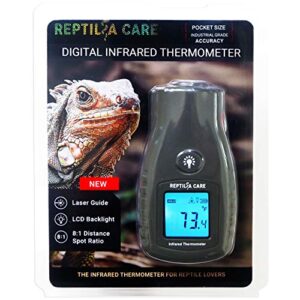
Temperature is the invisible variable that makes or breaks your snake’s health—and the Reptilia Care Infrared Thermometer puts that control in your hands. Just point, click, and read.
Its 8:1 distance-to-spot ratio lets you check basking zones and cool hides without reaching into the enclosure. It switches between Celsius and Fahrenheit, runs on standard batteries, and fits in a pocket.
One small tool that removes the guesswork from thermal management entirely.
| Best For | Snake and reptile keepers who want a quick, no-fuss way to check enclosure temps without disturbing their animals. |
|---|---|
| Primary Use | Habitat temperature monitoring |
| Size | Pocket-size handheld unit |
| Material | Plastic housing |
| Temperature Range | Celsius and Fahrenheit modes |
| Noise Level | Not applicable |
| Reusability | Reusable device |
| Additional Features |
|
- Pocket-sized and easy to use — one button, instant reading
- 8:1 spot ratio lets you measure basking zones and cool hides from a distance
- Switches between Celsius and Fahrenheit, so it works for any setup
- Temperature readings can drift 5–10°F over time, which is a real concern for precision care
- The laser pointer can cut out and needs a battery reset to get going again
- Doesn’t actually sweep a temperature range across surfaces, despite what the instructions suggest
Frequently Asked Questions (FAQs)
What quarantine period for new rodent shipments?
Better safe than sorry.
Most facilities quarantine new rodent shipments for 2–9 weeks, depending on the source.
Approved vendors typically require less time, while non-approved sources often necessitate the full duration plus veterinary clearance before release.
How to store bulk frozen rodents properly?
Keep bulk frozen rodents at –18 to –20°C in airtight, vacuum-sealed bags inside a dedicated chest freezer.
Label each batch with the date and rodent type, and always use the oldest stock first.
Can snakes eat rodents with medication residue?
No. Rodenticides carry residues in their liver and organs that transfer directly to your snake. Even sublethal amounts interfere with blood clotting and metabolism.
Always source feeders from verified, bait-free suppliers.
What temperature should feeding enclosure be maintained?
Your feeding enclosure should have a warm side around 85°F and a cool side in the low 70s. That gradient lets your snake thermoregulate and digest properly after meals.
How to transition picky eaters to rodents?
Some snakes act like toddlers at dinnertime — dramatic, stubborn, and convinced they deserve better. Start with scent-transferring prey from accepted food onto rodents. Patience and consistency usually win.
Can snakes fast safely between feeding sessions?
Yes, snakes fast safely between meals — it’s actually normal. Most healthy adults handle gaps of 10–14 days easily. Just watch weight and behavior to confirm everything’s on track.
How do I switch my snakes prey type?
Start slow, stay patient, and keep the process consistent.
Scent the new prey with the old type first, then gradually reduce the scent over several feedings until your snake accepts the switch fully.
Should I feed my snake after handling it?
Wait at least 48 hours after handling before you feed your snake. Offering prey too soon after stress can trigger regurgitation. Let it settle first, then feed.
Do snakes need water before or after eating?
Water should always be available — before and after meals. Digestion increases your snake’s hydration needs, so a clean, fresh bowl nearby matters most right after feeding.
Can hatchlings eat rats instead of mice?
Hatchlings can eat rat pups, but size matters more than species. A rat pup that’s too wide risks regurgitation.
When in doubt, stick with pinky mice until your snake grows confidently into larger prey.
Conclusion
Like a surgeon who preps everything before making the first cut, the best snake feeding guide for rodent keepers is built on decisions made long before the prey ever enters the enclosure. Prey size, thaw method, timing, and temperature—each variable matters. Get these right consistently, and feeding stops being a guessing game.
Your snake’s health isn’t determined by a single meal. It’s shaped by the small, deliberate choices you make every time.
- https://ghostconstrictors.com/blogs/news/feeding-your-ball-python-guide?srsltid=AfmBOorG37bjYK93zvOO44vLPa7EFkKuIf90TM8KJE7d1vjGPE7DYn9i
- https://www.zenhabitats.com/blogs/reptile-care-sheets-resources/what-size-rodent-should-i-feed-my-snake-zen-habitats?srsltid=AfmBOopxEImjxjl66QXp-mbp28IP613wkHL2cCkM7UgpKdskDeqwam9U
- https://www.rodentpro.com/categories/frozen-foods