This site is supported by our readers. We may earn a commission, at no cost to you, if you purchase through links.
That cloudy water sitting in your reptile’s dish isn’t just unappetizing—it’s a bacterial breeding ground that can make your animal seriously ill. Reptiles drink less than most pets, so when contaminated water is all they have access to, the health consequences sneak up fast.
Biofilm—that invisible slippery layer coating the inside of the bowl—starts forming within 24 hours. Most owners scrub it away without knowing what it is, and plenty skip cleaning altogether until the water turns murky. By then, harmful bacteria have already had a field day.
The good news: cleaning a reptile water dish safely doesn’t require expensive products or a complicated routine. A few targeted habits and the right disinfection method make all the difference between a thriving reptile and a dehydrated, sick one.
Table Of Contents
- Key Takeaways
- Choose a Safe Water Dish
- Clean Reptile Water Dishes Daily
- Scrub With Safe Cleaning Products
- Disinfect The Bowl Properly
- Prevent Future Water Contamination
- Frequently Asked Questions (FAQs)
- Can I use Dawn to clean my reptiles water bowl?
- How often should I clean my geckos water bowl?
- Why put a penny in a snake water bowl?
- Why does my snakes water bowl get slimy?
- Can reptiles share a single water dish safely?
- How does humidity affect water dish cleanliness?
- Should hatchlings use different dishes than adults?
- Can tap water cause mineral buildup over time?
- How often should water dishes be fully replaced?
- Conclusion
Key Takeaways
- Biofilm starts forming within 24 hours in a warm enclosure, so daily emptying, scrubbing, and disinfecting isn’t optional — it’s the bare minimum to keep your reptile safe.
- The dish material matters: nonporous surfaces like stainless steel, glass, or glazed ceramic resist bacterial buildup far better than scratched or cloudy plastic ever will.
- For disinfecting, you have a clear hierarchy — diluted white vinegar for mineral buildup, 3% hydrogen peroxide for tougher pathogens, reptile-safe products like F10SC for broad coverage, and bleach only as a last resort with serious ventilation.
- Your reptile can’t tell you the water tastes wrong, so watch for sunken eyes, wrinkled skin, or chalky urates as early warning signs that water quality has already taken a toll.
Choose a Safe Water Dish
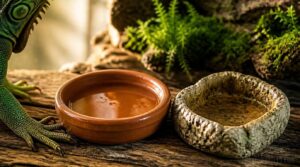
The dish you pick matters more than most people realize — it’s the foundation of everything that follows. A few key features separate a safe, easy-to-clean bowl from one that quietly harbors bacteria no matter how often you scrub it. Here’s what to look for before you buy (or swap out what you already have).
Choosing the right bowl also means getting the size right — this guide to proper snake feeding dish sizing walks you through exactly what to look for.
Nonporous Bowl Materials
The dish material you choose matters more than most people realize. Nonporous surfaces — like stainless steel, glass, porcelain, and glazed ceramic — don’t absorb water, oils, or bacteria the way rough plastic does.
Your best options include:
- Stainless steel: durable, odor-resistant, easy to scrub
- Porcelain or ceramic: smooth glaze seals the surface
- Glass: fully inert and visually inspectable
Silicone works too.
Proper Bowl Depth
Once you’ve got the material sorted, depth is the next thing to get right. Most small to mid-sized reptiles do well with 1.5 to 2.5 inches of water depth — shallow enough to prevent drowning, deep enough to drink comfortably.
Keep the rim height around 1 inch above substrate to cut down on contamination, reduce splash, and make your cleaning routine faster between full water changes.
Tip-Resistant Designs
Depth sorted, now think about stability. A knocked-over bowl means a wet enclosure and a stressed reptile.
Weighted ceramic construction (400–900g) resists nudges from heavier reptiles, while non-skid silicone feet grip enclosure floors without scratching. Look for:
- Wide base that spreads contact area
- Outward-extending rim for tip resistance
- Mounting brackets for fixed corner placement
- Canted angle keeping water accessible without spilling
When to Replace Plastic
Plastic won’t last forever, no matter how well you clean it. Once you spot surface scratches or cloudiness, bacteria can hide in those micro-grooves even after scrubbing.
Warping, persistent odors, or staining that won’t wash out means the material is breaking down — and possibly leaching chemicals into your reptile’s water. Swap plastic dishes out every 6–12 months.
Clean Reptile Water Dishes Daily
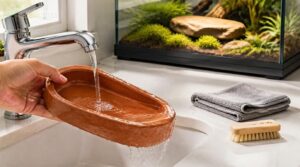
Daily cleaning is the foundation of good reptile care, and it doesn’t have to take more than a few minutes. A quick routine keeps harmful bacteria from turning your pet’s water dish into a health hazard. Here’s what to do each day to keep things fresh and safe.
Empty Old Water
Old water turns dangerous fast — in a warm enclosure, bacterial growth can begin within 2 to 4 hours.
Choosing the right bowl material can also slow that process — safest water bowl types for snakes tend to resist buildup and are far easier to keep clean.
Empty the dish at least once daily, and twice if you spot slimy buildup forming between changes. For hatchlings, every 12 hours keeps contamination risk low. Pour old water down a drain, never back into the enclosure.
Rinse With Hot Water
Hot water does more than just flush away visible gunk — it actually loosens biofilm and dissolves oils that cool water leaves behind. Aim for 120 to 150°F when rinsing a reptile water dish, but keep it brief to protect the bowl’s material. Using higher temperatures can increase organic solubility to help get a deeper clean.
Rinse thoroughly, letting the heat do the work, then set the dish aside to cool before the next step.
Remove Slime and Debris
Slime clings to curved edges and seams like glue — that’s exactly where your slime removal tools matter most. Work through each one:
- Soft-bristle brush for curved spots
- Non-abrasive sponge on flat surfaces
- Plastic scraper for dried debris
- Microfiber cloth for the final wipe
- Mild dish soap to cut through biofilm
These prevent micro-scratching that invites more bacterial buildup right back.
Refill With Fresh Water
Once the dish is clean, don’t just grab whatever’s nearest from the tap. Filtered or treated water is a smarter choice — tap water often carries chlorine that can stress sensitive species. Aim for a temperature between 70–75°F, since water that’s too cold can discourage drinking.
Check for cloudiness before refilling; fresh, clear water every 24 hours keeps dehydration and bacterial growth at bay.
Scrub With Safe Cleaning Products
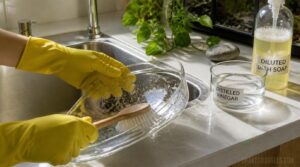
If you’re scrubbing your reptile’s water dish, what you use matters just as much as how often you do it. The wrong product can leave behind residue that’s harmful to your pet, even after a rinse. Here’s what to reach for to keep things clean and safe.
Mild Unscented Dish Soap
Your go-to safe cleaning agent for routine reptile hygiene is mild unscented dish soap. Scented formulas carry aromatic compounds that irritate your reptile’s airways — that’s why fragrance-free matters.
Look for:
- Plant-derived surfactants that lift grease safely
- A neutral pH (6–8) compatible with ceramic and plastic
- Biodegradable ingredients that rinse clean
Rinse thoroughly until no slippery residue remains.
Soft Brush or Toothbrush
Your regular toothbrush is actually the perfect scrubbing tool for a snake’s water bowl — soft nylon bristles reach into seams and grooves where bacteria hide.
| Feature | Benefit | Use Case |
|---|---|---|
| Rounded tips | No scratches | Ceramic bowls |
| Flexible array | Reaches crevices | Corners and seams |
| Color indicators | Shows wear | Replacement timing |
Replace it every 3 months, or when bristles splay and lose shape.
Avoid Harsh Chemicals
Some cleaners that work great on your kitchen counter can seriously harm a reptile. Ammonia, quats, and bleach-based sprays release fumes that irritate their respiratory systems fast.
Three chemicals to skip entirely:
- Ammonia-based cleaners
- Fragranced disinfectant sprays
- Heavy-duty degreasers with solvents
Stick to fragrance-free, biodegradable options — always flip the bottle and read the label before using anything near your reptile’s dish.
Rinse Until Residue-Free
Skipping harsh chemicals is a win, but mild dish soap still leaves behind a surfactant film unless you rinse thoroughly with hot water. That invisible layer is still toxic residue to your reptile.
Run your brush in circular strokes, then do the feel test: drag a dry fingertip across the bowl surface. Tacky means rinse again; smooth means you’re done.
| Rinse Stage | Technique | Purpose |
|---|---|---|
| First rinse | Hot water flush | Remove soap and debris |
| Brush pass | Circular scrubbing strokes | Lift biofilm and slime |
| Second rinse | Safe cleaning agent washoff | Clear surfactant residue |
| Final rinse | Distilled or filtered water | Prevent mineral deposits |
| Feel test | Fingertip drag across surface | Confirm residue-free bowl |
Disinfect The Bowl Properly
Scrubbing gets the visible gunk off, but disinfecting is what actually kills the bacteria you can’t see. A few safe options work really well for reptile water dishes, and each one has its place depending on what you have on hand. Here’s a look at the methods worth knowing.
Vinegar Soak Method
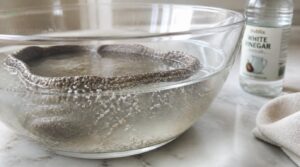
White vinegar is a surprisingly effective first line of defense against mineral buildup and slime. Mix one part vinegar to nine parts water, then submerge the bowl for 10–15 minutes. Gently swirl the solution to loosen residue without scrubbing.
Rinse thoroughly with clean water afterward — any lingering vinegar smell signals incomplete rinsing. Concentrated vinegar can degrade certain plastics over time, so always dilute it.
Hydrogen Peroxide Option
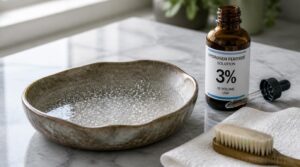
Vinegar experiences minerals well, but for tougher pathogen elimination, 3% hydrogen peroxide steps up. Pour it directly into the dish and let it sit for 1–5 minutes — it works as an oxidizing agent, breaking down biofilm and microbial cell walls without leaving toxic residues.
- Pre-rinse the dish before applying peroxide
- Use only 3% concentration — nothing stronger
- Soak 1–5 minutes depending on buildup
- Rinse thoroughly with clean water after
- Air dry completely before refilling
Reptile-Safe Disinfectants
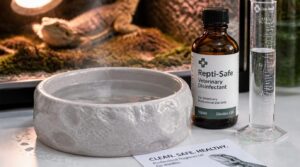
When vinegar and peroxide aren’t enough, a reptile-safe disinfectant like F10SC Veterinary Disinfectant is your strongest option. It hits a broad pathogen target spectrum — bacteria, viruses, and fungi — without harming your animal once dry.
Dilution accuracy matters here. Mix at the labeled ratio, usually 1:30 or 1:40, using a measuring container. Guessing concentrations can damage plastic dishes or leave residues that stress your reptile.
Diluted Bleach Precautions
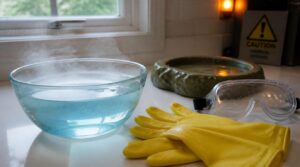
Bleach is the last resort, not the first move. When you do reach for it, mix a 1:10 diluted bleach solution using cool water — never hot, which intensifies fumes.
Open a window, wear gloves and eye protection, and keep pets out of the room. Mixing bleach with ammonia creates toxic gases, so check your other cleaners first. Rinse thoroughly until no odor remains.
Complete Air Drying

Letting the dish air dry completely matters more than most people expect. Set it upright on a rack with good airflow — humidity above 40% slows evaporation noticeably, so crack a window or run a fan. Stagnant corners trap lingering moisture.
Give the bowl a quick check before refilling; any damp spots mean bacteria can move right back in.
Prevent Future Water Contamination
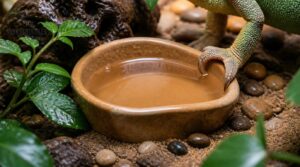
Cleaning the dish is only half the battle — keeping the water clean between washes is just as important. A few simple habits can make a huge difference in preventing bacterial buildup and keeping your reptile healthy. Here’s what to focus on from now on.
Sanitizing reptile decorations and hides regularly also reduces lingering germs that can contaminate freshly changed water.
Change Water Frequently
Stale water is a bacteria breeding ground, so change it daily — or twice daily if your reptile is sick or produces heavy waste. Match the fresh water to your enclosure’s temperature; even a small difference can cause thermal shock.
If the bowl looks cloudy or smells off before your scheduled change, don’t wait. Replace it immediately.
Keep Away From Feeding
Food and water don’t mix in a reptile enclosure. Feeding zone separation matters more than you’d think:
- Keep the water dish at least 12 inches from feeding areas.
- Use separate cleaning tools for each zone.
- Wash hands between feeding sessions and handling the dish.
- Never refill near active feeding spots.
Even a small food splash can start contamination fast.
Watch for Slimy Buildup
That slick film coating the inside of your reptile’s bowl isn’t just unpleasant — it’s biofilm, a sticky bacterial layer that forms when organic matter clings to the surface in warm, stagnant water.
That slick film in your reptile’s bowl is biofilm — a bacterial layer feeding on warm, stagnant water
| Warning Sign | Likely Cause | What to Do |
|---|---|---|
| Cloudy water | Bacterial growth | Rinse immediately |
| Slimy coating | Biofilm buildup | Scrub and disinfect |
| Foul odor | Microbial overload | Full sanitization |
Once that slime takes hold, your reptile may drink less — the water simply tastes wrong to them. That slime-related dehydration sneaks up fast. Check the bowl daily and scrub at the first sign of buildup.
Use Clean Water Sources
What goes into the bowl matters as much as how often you clean it. Tap water seems harmless, but municipal water chlorine levels can stress sensitive reptiles over time.
Use filtered or dechlorinated water — a water conditioner removes chlorine and heavy metals fast. Bottled spring water works well too, especially if your tap supply isn’t tested regularly.
Monitor Reptile Health
Clean water helps, but your reptile is the real quality check. Watch for:
- Sunken eyes or wrinkled skin — classic signs of dehydration
- Chalky, dry-looking urates — a quiet hydration red flag
- Nasal discharge or a gaping mouth — possible respiratory irritation from dirty conditions
If drinking drops off or lethargy sets in, revisit your water quality and dish cleanliness first.
Frequently Asked Questions (FAQs)
Can I use Dawn to clean my reptiles water bowl?
Yes, you can use Dawn, but rinse thoroughly — soap residue left behind can irritate your reptile’s skin and trigger drooling or distress. Reptile-safe cleaners are the safer long-term choice.
How often should I clean my geckos water bowl?
Rinse and refill daily, and do a full wash with soap once a week. In high-humidity setups, clean more often — slime and mold move fast when moisture is high.
Why put a penny in a snake water bowl?
Some keepers drop a pre-1982 copper penny into their snake’s water bowl believing copper’s natural antimicrobial properties slow slime and bacterial growth — though it’s never a substitute for regular cleaning.
Why does my snakes water bowl get slimy?
That warm enclosure creates the perfect breeding ground. Biofilm — a sticky layer of bacteria and fungi — clings to the bowl surface, fed by shed skin, saliva, and substrate debris settling into the water.
Can reptiles share a single water dish safely?
Like roommates sharing one bathroom, reptiles can share a dish — but only if species compatibility exists, the bowl suits the largest animal, and you clean it daily to stop shared pathogen spread.
How does humidity affect water dish cleanliness?
Humid enclosures speed up biofilm maturation and slime buildup on dish surfaces. When humidity tops 60%, moisture lingers longer, letting bacteria colonize faster — so ventilation matters as much as your cleaning schedule.
Should hatchlings use different dishes than adults?
Yes — hatchlings need shallower, smaller dishes than adults. Tiny reptiles can drown in deep bowls, and their faster metabolism means water gets dirty faster, so clean more frequently.
Can tap water cause mineral buildup over time?
Think of your reptile’s water bowl like a medieval kettle — mineral deposits build steadily. Tap water constituents like calcium can leave limescale behind, quietly turning clean water into a real contamination risk over time.
How often should water dishes be fully replaced?
Replace the dish every 1–2 weeks as a baseline. Swap it out immediately after mold, persistent odor, or substrate contamination. Hatchlings and multi-animal setups need more frequent changes — every 2–3 days.
Conclusion
Think of it like your grandmother’s kitchen rule: a clean dish is non-negotiable. Knowing how to clean a reptile water dish safely isn’t complicated—it just has to actually happen.
Biofilm builds fast, bacteria multiply faster, and your reptile can’t exactly tell you the water tastes off. Empty, scrub, disinfect, dry. That four-step rhythm, done consistently, keeps contamination from ever getting a foothold. Your reptile’s health is quiet proof that small daily habits win.