This site is supported by our readers. We may earn a commission, at no cost to you, if you purchase through links.

A glass terrarium on your desk does something a pot of soil on a windowsill can’t. It turns a handful of plants into something that looks deliberately designed.
Most people assume that kind of setup costs real money. It doesn’t. The best terrariums under $50 include propagation stations, geometric display cases, and house-shaped glass structures suited to different plants and spaces.
Glass thickness, ventilation style, and frame material separate a terrarium that lasts from one that fogs, cracks, or traps excess moisture. The picks and setup tips below cover exactly what to look for before you buy.
Table Of Contents
- Key Takeaways
- Best Terrariums Under $50: Quick Comparison
- Best Terrariums Under $50 Reviewed
- How to Choose a Budget Terrarium
- Best Plants for Small Terrariums
- Setting Up Your Terrarium Safely
- Frequently Asked Questions (FAQs)
- What are the best brands for terrariums?
- What’s the difference between a terrarium and a terrarium?
- What are common terrarium mistakes to avoid?
- What life can go in a terrarium that doesn’t open?
- What are some good places to buy affordable terrarium supplies?
- How often do I need to clean the inside of my terrarium?
- What should I do if mold starts growing inside my terrarium?
- Can terrariums be placed in outdoor spaces?
- How do you clean terrarium glass effectively?
- Are budget terrariums a good gift idea?
- Conclusion
Key Takeaways
- Glass thickness, ventilation style, and frame material are what separate a terrarium that lasts from one that fogs, cracks, or traps too much moisture — so don’t just shop by price.
- Matching your plant to your terrarium type is the real key: succulents need open designs with airflow, while moss and ferns thrive in enclosed setups that hold humidity between 70 and 90 percent.
- A simple three-layer base — gravel, activated charcoal, and potting mix — is the single most important thing you can do to prevent root rot from day one.
- The best terrariums under $50 can include propagation stations, geometric display cases, and house-shaped enclosures, with solid picks ranging from $15 to $45 without sacrificing durability or function.
Best Terrariums Under $50: Quick Comparison
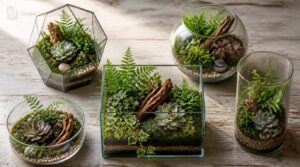
Not all terrariums are built the same, and at under $50, the differences in size, materials, and design can make or break your setup. The comparison below covers five options across those key factors — price, dimensions, glass quality, ventilation, and best use cases. Here’s what you need to know before picking one.
If you’re shopping beyond the $50 mark, this buyer’s guide to large terrariums under $100 breaks down how a slightly bigger budget opens up better glass quality and more versatile sizing options.
Price and Overall Value
Most budget-friendly planters in this category fall between $15 and $45, and value for money holds up well across that range.
| Cost Factor | Low End | High End |
|---|---|---|
| Purchase price | $15 | $45 |
| Value per cubic inch | $0.90 | $1.80 |
| Warranty | 1 year | 5 years |
| Replacement parts | $6 | $12 |
| Shipping | $4 | $9 |
Terrarium kits under 50 keep long-term costs predictable. To make the most of your budget, apply total cost of ownership principles by factoring in shipping, replacement parts, and warranty coverage alongside the purchase price.
Dimensions and Plant Capacity
Size affects how many plants you can actually fit. A Mini Glass Terrarium Container usually holds 2 to 4 small cuttings, while a 10inch large glass terrarium bumps that up to 5 or 6.
| Option | Typical Capacity |
|---|---|
| Tabletop terrariums | 3–5 plants |
| Hanging Glass Terrarium | 1–2 plants |
A 15Piece Terrarium Kit gives you enough variety to fill a medium desktop unit comfortably.
Glass and Frame Materials
Materials matter as much as measurements. Most glass containers use 3–4 mm panes, sturdy enough for daily misting.
| Material | What It Offers |
|---|---|
| Borosilicate glass | Heat and scratch resistant |
| Standard glass | Lightweight, affordable |
| Wooden stand | Natural, stable base |
| Metal frame | Durable, clean finish |
A borosilicate glass terrarium outlasts standard options. A wooden stand or metal frame keeps your glass terrarium secure and looking sharp.
Access and Ventilation
Once you know what the frame is made of, how the lid opens matters just as much.
Whether it slides, hinges, or locks from the outside, a secure closure is non-negotiable — browse corn snake classroom accessories with escape-proof lids to see what actually holds up against a determined snake.
| Access Type | Ventilation Style | Best For |
|---|---|---|
| Hinged door | Open design | Ferns, moss |
| Screw-on lid | Sealed terrarium | Succulents |
| Removable panel | Adjustable air circulation | Propagation |
Mesh-covered vents keep pests out while maintaining steady terrarium airflow without disrupting humidity.
Best Uses and Placement
Where you place your terrarium shapes how well your plants actually thrive from week to week.
| Placement | Best For |
|---|---|
| Office desk | Propagation stations, air plants |
| Windowsill | Moss, ferns, humidity-loving tropicals |
| Shelf or mantel | Geometric glass, display terrariums |
For balcony garden setups or casual patio gardening, open designs handle stronger airflow better without trapping excess heat indoors.
Best Terrariums Under $50 Reviewed
Each terrarium below brings something different to the table, whether you’re propagating cuttings or building a tiny moss garden on your desk. These picks range from compact propagation stations to charming house-shaped enclosures, all priced under $50. Here’s a closer look at what each one offers.
XXXFLOWER Three-Bulb Propagation Station
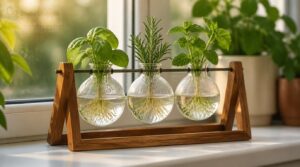
Want to watch roots develop without any guesswork? The XXXFLOWER Plant Terrarium pairs a wood stand with three glass terrarium bulbs, making hydroponic plant propagation simple at desk scale. If you’re ready to upgrade your setup, browsing a few desktop propagation station options can help you find the right size and style for your space.
- Transparent walls let you track root growth live
- Removable bulbs for no-fuss cleaning
- Holds herbs, greens, or ornamental cuttings
- Compact fit for windowsills and shelves
- Wood finish suits most decor styles
Ferrisland Geometric Glass Terrarium
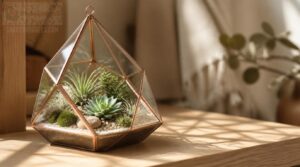
The Ferrisland geometric glass terrarium is a tidy, reliable choice for low-maintenance indoor gardening on a desk or shelf. Its geometric design pairs a copper-toned metal frame with clear sodium calcium glass panels, and the front-access door keeps both planting and watering pretty straightforward. At 8.3 by 4.7 by 5.5 inches, it fits small succulents or air plants without crowding.
Yimorence Glass House Terrarium
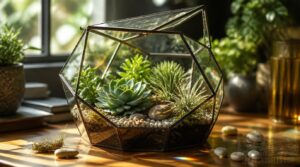
The Yimorence Large Glass House Terrarium looks like a small greenhouse sitting right on your desk. Its clear glass panels and hinged lid make it one of the stronger best terrarium planters under 50 for succulents and air plants.
The geometric design with a metal frame keeps things neat, and the built-in vent helps manage humidity without any extra gear.
Renmxj Desktop Propagation Station
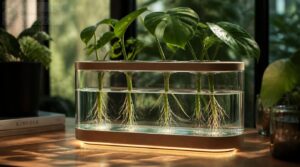
The Renmxj desktop plant propagation station takes a no-fuss approach to water propagation, giving your cuttings a clear glass chamber with built-in underside drainage so your desk stays dry. A small integrated LED and removable lid handle light and humidity without extra gear. Compact, clean, and practical, it’s one of the more capable desktop garden kits at this price.
ELEGANTLIFE House-Shaped Glass Terrarium
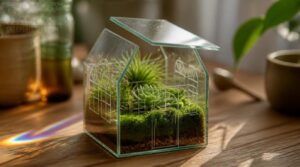
If you want a terrarium that doubles as decor, the ELEGANTLIFE Glass Geometric Plant Terrarium earns its place on a desk or mantel without trying too hard. The house-shaped terrarium design, complete with door and window accents, pairs well with moss, air plants, or small succulents. The lift-off roof keeps terrarium maintenance tips simple: open, water, adjust, close.
How to Choose a Budget Terrarium
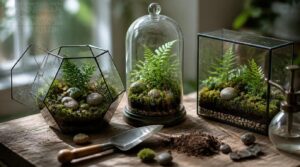
Picking the right terrarium on a budget comes down to a few key factors that are easy to overlook when you’re just shopping by price. Before you spend a dollar, it helps to know what to actually look for — design, size, glass quality, and what’s included in the box. Here’s what each of those things means for your setup and why they matter.
Open Versus Enclosed Designs
Choosing between an open design and closed terrariums starts with understanding your plants’ specific humidity needs. Open designs use natural ventilation and tend to dry out faster, so you’ll water more often.
Enclosed designs trap moisture and can develop self-sustaining ecosystems with minimal attention. That said, both still need a solid drainage layer to keep root rot from setting in.
Size and Available Space
Once you’ve settled on a design style, size becomes the next real decision. Most tabletop terrariums under $50 measure 6 to 12 inches tall, fitting comfortably on a desk or shelf with 12 to 24 inches of clearance.
Hanging terrariums and compact desktop garden kits work well in corners or tight windowsills where floor space is limited.
Glass Durability and Safety
Not all glass terrarium panels are equal. Budget options often use standard annealed glass, which cracks more easily than borosilicate glass or tempered varieties. Thicker panels, usually 4 to 6 mm, handle accidental bumps better and feel sturdier during setup.
Check edges too. Rough or unfinished cuts create weak points that crack under light pressure. Smooth, polished edges on glass containers signal better manufacturing quality, even at lower price points.
Doors, Lids, and Maintenance
Beyond the glass itself, door and lid design shapes your daily routine.
Watch for these three features:
- Magnetic latches that hold firmly but open without fuss
- Built-in vents for passive ventilation and humidity control
- Hinged lids that pair well with a built-in watering system
Good terrarium maintenance means checking drainage monthly, adjusting watering frequency, and wiping mineral buildup from seals.
Included Kit Accessories
Some kits give you far more than just a container, and that extra value adds up on a tight budget.
The LUCKYRUNES 15-Piece Terrarium Kit includes a moisture meter, mini spray bottle, and cotton brush, while the PYEF CRAFTS DIY Terrarium Kit adds decorative rocks and a drainage layer. The selfWatering Terrarium Planter bundles an LED strip and steel stand.
Best Plants for Small Terrariums
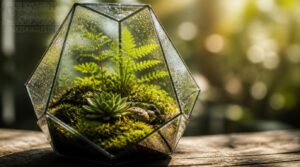
Not every plant belongs in a tiny glass box — but the right ones absolutely thrive there. Matching your plant to your terrarium type makes the difference between a setup that flourishes and one that fades fast. Here are the best plants for small terrariums, based on how they grow and what they need.
The right plant in the right terrarium doesn’t just survive — it thrives
Hydroponic Plant Cuttings
Many plant cuttings thrive in a hydroponic setup with no soil needed at all. Pothos, philodendron, and ficus root well in glass vase propagation using clean, room-temperature water changed every three to five days.
A propagation station or one of the Best Planter Terrariums Under 50 keeps this process neat and tidy, letting you watch roots develop in real time.
Succulents and Mini Cacti
Succulents and mini cacti are built for drought, storing water in their fleshy leaves and stems for weeks. An open glass terrarium suits them well, since good airflow prevents the root rot that enclosed designs can cause.
Check your Best Planter Terrariums Under 50 picks for open-top styles, and water only every two to three weeks for easy indoor gardening.
Moss and Humidity-Loving Ferns
Think of moss and ferns as the opposite of succulents. They crave steady moisture and shade, making a moss terrarium their ideal home.
Enclosed planter terrariums under 50 hold humidity between 70 and 90 percent, exactly what sheet moss and maidenhair ferns need. Mist two to three times weekly, keep the substrate consistently damp, and your humidity-loving plants stay vibrant.
Air Plants
Air plants are the rebels of the terrarium world. They don’t need soil, and roots serve only for grip. Weekly soaking or misting keeps them thriving inside a glass terrarium with good airflow. Bright indirect light and room-temperature water are your two non-negotiables. Budget-friendly planters with open frames work best since air plants need ventilation, not trapped humidity.
Small Carnivorous Plants
Carnivorous plants fit surprisingly well in closed terrariums, thriving on high humidity and nutrient-poor soil instead of fertilizer.
- Sundews catch insects with sticky glandular droplets
- Venus flytraps snap shut when trigger hairs are touched
- Small pitcher plants drown prey in liquid-filled leaves
Budget-friendly planters with sealed lids, like a simple DIY terrarium kit, maintain the moisture these humidity-loving plants need.
Setting Up Your Terrarium Safely

Getting the setup right makes all the difference between a thriving little world and a soggy mess you’d rather forget. There are a few key things to nail before you drop your first plant in — drainage, lighting, humidity, and yes, even what you shouldn’t use a terrarium for. Here’s what you need to know to get it right from the start.
Drainage and Substrate Layers
A solid pebble drainage layer at the base stops your roots from sitting in standing water. Start with 1-2 inches of clean gravel, add a thin layer of activated charcoal to keep odors and bacteria in check, then top it with your potting mix or soil mixture. That simple three-layer system gives roots the airflow and stability they need to thrive.
Watering Without Root Rot
Once your pebble drainage layer is in place, watering becomes a lot less guesswork. Only water when the top inch of substrate feels dry, and never let pooled water sit at the base.
Bottom watering works well here: set the pot in 1-2 inches of water for 10-20 minutes, then remove it. That keeps moisture even without saturating the roots.
Lighting and Temperature
Good drainage takes care of roots, and bright indirect light controls the rest. Place your terrarium where it gets indirect sunlight but not direct rays, which overheat the glass and stress plants fast.
- LEDs deliver ideal light transmission with low heat output
- Temperature stability for plants means holding steady at 65–75°F
- Skip spots near radiators or cold windowsills
Terrariums thrive in temperatures between 65–75°F, so your placement choice matters.
Humidity and Ventilation
Temperature sorted, now humidity is next. Condensation on glass walls signals high indoor humidity and poor airflow, so crack your vents slightly before mold takes hold.
Keep relative humidity between 40 and 60 percent and track it with a cheap hygrometer. Open designs breathe on their own, but enclosed terrariums need manual vent adjustments as conditions shift through the day.
Unsuitable for Housing Snakes
These terrariums, built for succulents and air plants, aren’t designed for reptiles. Any Geometric Terrarium Planter or glass terrarium in the Best Planter Terrariums Under Fifty Dollars category falls short:
- Open designs can’t hold heat or humidity
- Thin glass cracks under heat lamps
- Latches aren’t escape-proof
- No thermal gradient for thermoregulation
- Poor ventilation stresses snakes
Frequently Asked Questions (FAQs)
What are the best brands for terrariums?
A glass world in miniature always needs a reliable architect behind it. Ferrisland, ELEGANTLIFE, and NCYP lead with sturdy frames and borosilicate clarity, while Mkono and REDHUGO deliver clean, compact designs at accessible price points.
What’s the difference between a terrarium and a terrarium?
The question as written is identical on both sides, so there’s no actual difference to explain. A glass terrarium is a glass terrarium, no matter how you phrase it.
What are common terrarium mistakes to avoid?
Say you mist your closed setup daily and notice persistent fog on the glass. That’s overwatering, and without proper drainage, root rot sets in surprisingly fast. Always add ventilation gaps, or mold growth takes hold.
What life can go in a terrarium that doesn’t open?
Moss, small ferns, and humidity-loving plants thrive naturally inside closed terrariums without needing extra airflow. Pair them with springtails or isopods and you’ve built a compact self-sustaining system that largely takes care of itself week to week.
What are some good places to buy affordable terrarium supplies?
The best terrarium supplies don’t always come from fancy specialty stores. Dollar stores, thrift shops, and Amazon stock terrarium kits, budget-friendly planters, and substrate readily. Nurseries also carry affordable cuttings for a beginner DIY terrarium.
How often do I need to clean the inside of my terrarium?
Clean the inside every 1 to 4 weeks for closed terrariums, or every 1 to 2 weeks for open ones. Wipe the glass, remove dead leaves, and check for mold each time.
What should I do if mold starts growing inside my terrarium?
Think of mold as a warning light. Lift your plants, scoop out the top soil layer, and replace it with fresh substrate. Then reduce your watering frequency and crack the lid open to restore airflow.
Can terrariums be placed in outdoor spaces?
Yes, terrariums can go outdoors, but they need open or vented lids, a shaded spot away from afternoon sun, and weather-resistant materials to handle humidity swings and temperature changes safely.
How do you clean terrarium glass effectively?
Funny how a glass built to show off life is usually the first thing life clouds over.
Algae and fungal growth cut light transmission quickly. Wipe with a distilled water-vinegar mix and a microfiber cloth.
Are budget terrariums a good gift idea?
Budget terrariums make solid gift ideas for beginners and plant-curious friends. They’re low-risk, easy to find at major retailers, and simple to pair with a care card or small watering bottle for extra value.
Conclusion
Imagine a small geometric terrarium sitting on your work desk, moss layered over dark gravel, a single air plant tucked neatly into the corner. That entire setup costs under $30 and takes a single afternoon to build.
The best terrariums under $50 give you exactly that kind of result without the guesswork. Pick the right glass, match it to your plant type, and focus on drainage from day one. The rest follows naturally from there.