This site is supported by our readers. We may earn a commission, at no cost to you, if you purchase through links.

A ball python that hasn’t defecated in four weeks isn’t a mystery—it’s a red flag with a cause.
These snakes follow predictable digestive rhythms, and when that rhythm breaks down, the culprit usually traces back to something specific: humidity that’s too low, temperatures running cold, prey that was too large, or a combination of all three working against the gut at once.
The good news is that most cases of constipation in ball pythons respond well to targeted home care before they escalate into something more serious. Knowing what to look for and how to act fast makes all the difference.
Table Of Contents
- Key Takeaways
- Treating Ball Python Constipation
- Common Causes of Constipation
- Warning Signs to Watch For
- Safe Home Relief Steps
- Humidity and Heat Fixes
- Feeding Habits That Help
- Top 10 Relief Products
- 1. Vetericyn Plus Reptile Wound Spray
- 2. Zoo Med Electrolyte Soak
- 3. Gargeer Reptile Probiotics Powder
- 4. Nature Zone Appetite Plus Reptile Solution
- 5. Amber Naturalz Reptaid Herbal Supplement
- 6. Animal Essentials Colon Rescue Herbal Laxative
- 7. Snake Bite and Bee Sting Kit
- 8. Forlivese 25 Inch Drain Snake
- 9. Finever Venom Extractor Suction Kit
- 10. Beatifoyo Drain Snake Clog Remover
- When a Vet is Needed
- Preventing Future Blockages
- Frequently Asked Questions (FAQs)
- How can I treat a constipated ball python?
- How can you tell if a ball python is constipated?
- Does a ball python have irregular bowel movements?
- How is a ball python treated?
- What do I do if my ball python is constipated?
- What is the rule of 3 for constipation?
- Why is my snake always constipated?
- Are ball pythons constipated?
- Why is my ball python not pooping?
- How often do ball pythons poop?
- Conclusion
Key Takeaways
- If your ball python hasn’t defecated in three to four weeks and shows a swollen abdomen or reduced appetite, those are clinical warning signs — not normal variation — and you need to act now.
- Warm water soaks at 88–92°F for 10–20 minutes, followed by gentle abdominal massage toward the tail, are your first-line home treatment before considering any veterinary intervention.
- The most common root causes — humidity below 50%, basking temps under 88°F, and prey exceeding 10–15% of your snake’s body weight — are all fixable husbandry errors, not medical mysteries.
- When home care fails after one to two weeks, or if you see blood, regurgitation, or rapid swelling, stop treating it yourself and get to a reptile vet, because impaction and internal disease require diagnostics, not soaks.
Treating Ball Python Constipation
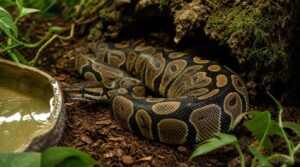
Constipation in ball pythons is more common than most keepers realize, and catching it early makes all the difference.
Their slow metabolisms make ball pythons especially prone to digestive slowdowns, so it’s worth understanding what causes snake constipation issues before symptoms sneak up on you.
Before you can fix the problem, you need to know what you’re actually dealing with — and what separates a manageable case from something more serious.
Here’s what to understand first.
What Constipation Means in Ball Pythons
Constipation in ball pythons isn’t just a skipped bowel movement — it means fecal frequency norms have broken down and gut peristalsis rate has slowed enough to stall the digestive cycle length. Feces stop reaching the cloaca, cloacal anatomy role aside.
Watch for a swollen abdomen, decreased appetite, and no defecation beyond four weeks. That’s when constipation becomes a real clinical concern.
Monitoring chalky white urate can help detect early signs of dehydration.
First Steps to Take at Home
Once you’ve spotted the signs, act quickly but calmly. Start with a warm water soak — 88–92 °F, belly-deep, 10–20 minutes — then follow with gentle belly massages to stimulate gut movement.
Increase humidity to 60–70 %, monitor daily activity, record feeding schedule changes, and inspect substrate cleanliness for ingested particles.
Hydration therapy and proper diet adjustments buy time while you assess next steps.
How Constipation Differs From Impaction
Both conditions affect your ball python’s gut, but they’re not the same problem. With constipation, stool consistency changes — it becomes hard and dry, but movement is still possible.
Impaction means a hardened mass is physically stuck, blocking evacuation entirely.
Symptom progression, mass presence, and treatment urgency differ substantially.
Constipation is treated with home care; impaction often needs veterinary intervention.
Common Causes of Constipation
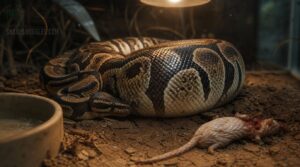
Constipation in ball pythons rarely happens out of nowhere — something in the enclosure or feeding routine is almost always to blame. Pinpointing the root cause is the fastest way to get your snake back on track.
most common culprits to look at first.
Low Humidity and Dehydration
Dry air is one of the sneakiest drivers of ball python constipation. When your humidity level drops below 50%, Skin Moisture Loss and Mucus Drying accelerate the Evaporation Rate inside the gut, pulling water from fecal matter and increasing Fecal Hardness. Dry Air Stress compounds dehydration fast. Watch for these signs:
- Skin appearing dull or tight
- Reduced drinking behavior
- Hard, pellet-like stools
- Prolonged inactivity near the water bowl
A warm water soak helps rehydrate immediately.
Incorrect Basking and Ambient Temperatures
Temperature drives digestion as much as anything else in your enclosure. When your basking spot surface drops below 88°F, enzyme activity slows and gut transit stalls.
Poor Thermostat Cycle Stability creates temperature swings that compound the problem. Use Temperature Probe Placement at snake level, verify Hotspot Surface Checks with an infrared thermometer, and size your Heat Source correctly — because low ambient temperature anywhere in the thermal gradient stops things moving.
Prey Items That Are Too Large
Gape Limitation matters more than most keepers realize.
When prey bulk exceeds 10–15% of your snake’s body weight, Transit Slowing becomes almost inevitable — the gut simply can’t move an oversized item efficiently.
Partial Ingestion of uneven tissue raises Impaction Risk substantially.
Tighten your prey size selection now: smaller, consistent meals keep feeding frequency manageable, and ball python constipation from compounding into a mechanical blockage.
Substrate Ingestion and Blockage
Loose substrates like cypress mulch create serious Clumping Impaction Risk — particles stick to prey through Bedding Particle Adhesion, then enter the gut and compact via Substrate Compaction Dynamics into dense, immovable masses.
Material Digestibility Factors are zero for these materials.
Feeding Area Cleanliness directly prevents substrate ingestion.
Switch to reptile carpet or aspen shavings, and always feed in a clean, substrate-free space.
Parasites and Internal Disease
Internal parasites are a silent wrench in your snake’s digestive system. Protozoan infections and helminthic infestations both disrupt gut barrier function, slow motility, and trigger an eosinophilic response that inflames intestinal tissue. The parasite life cycle can involve larval migration through organs, compounding damage well beyond simple digestive impaction.
Internal parasites silently disrupt gut function, slow motility, and inflame intestinal tissue far beyond simple impaction
Watch for these signs:
- Irregular or absent stools despite normal feeding
- Gradual weight loss over several weeks
- Mucus-coated or unusually soft feces
- Lethargy paired with reduced feeding response
- Recurring poor sheds without husbandry changes
Fecal parasite checks confirm infection. Metabolic disease in reptiles follows similar patterns, so parasitic infections require lab testing, not guesswork.
Warning Signs to Watch For
Constipation in ball pythons doesn’t always announce itself with obvious drama — sometimes you’re just noticing something feels slightly off before you can name it. Knowing what to look for makes the difference between catching a problem early and dealing with a full-blown impaction.
These are the five signs worth watching closely.
No Stool for Three to Four Weeks
Three to four weeks without a bowel movement is your clearest signal that something is wrong. At this point, long-term dehydration effects and gut motility decline are likely compounding each other — stool dries, hardens, and becomes increasingly difficult to pass.
Behavioral apathy and reduced feeding often follow. Don’t wait.
Vent irritation risks increase daily, and distinguishing ball python constipation from true impaction requires veterinary attention soon.
Abdominal Swelling or a Hard Mass
Run your fingers gently along your snake’s belly — if you feel a firm, immobile lump rather than smooth muscle, that’s a palpation technique revealing something serious.
Abdominal distension, vent swelling, or a swollen abdomen can signal impaction, fluid accumulation, or even tumor identification requiring imaging diagnostics.
Differential diagnosis matters here: not every hard mass is a stool blockage, and ball python constipation doesn’t always look the same.
Lethargy and Reduced Appetite
Beyond a hard mass, watch for subtler behavioral indicators: a ball python sitting motionless in one spot, ignoring prey, or hiding longer than usual. Lethargy and decreased appetite often signal metabolic slowdown tied directly to ball python constipation.
Hydration influence plays a real role here — dehydrated tissue slows everything. Stress factors from gut discomfort further suppress feeding drive.
Consult a reptile veterinarian if both signs persist.
Straining or Unusual Posture
Constipation shows up physically, too. Watch for Body Tension Patterns — your ball python may hold a rigid, braced posture instead of relaxing.
Cloacal Pressure Signs include repeated vent contractions with no stool output. An S-Curve Posture, Tail Base Bracing against the substrate, or Vent Seeking Restlessness — constantly repositioning the rear — all point to active straining.
Don’t ignore these signals.
Poor Sheds and Retained Skin
Straining isn’t the only physical signal. Dehydration — the same driver behind impaction or constipation — also wrecks the shedding cycle.
When humidity level drops below 50%, your ball python’s shedding cycle timing gets disrupted, leaving dry, dull shed bands, retained skin on toes, and cloudy eyes.
Poor shedding substrate choice and skipped shedding soak techniques compound the problem.
Shedding stress factors and digestive issues almost always travel together.
Safe Home Relief Steps
When your ball python is backed up, there are a few straightforward things you can try at home before calling the vet. None of these steps require special equipment or guesswork — just consistent attention and the right technique. Here’s what to work through, in order.
Warm Water Soaks for Hydration
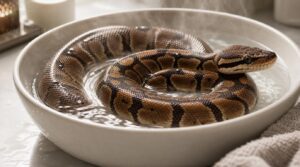
A warm soak is one of the simplest, most effective tools for reptile hydration therapy. Fill a shallow container with lukewarm water at 88–92°F and let your snake soak for 10–20 minutes.
- Soak Temperature: Keep it consistent — too hot causes heat stress
- Duration Frequency: Once daily until improvement, never open-ended
- Hydration Boost: Belly-deep water helps intestinal relaxation
- Post-Soak Monitoring: Watch for stool output and normal posture after each session
Gentle Abdominal Massage Techniques
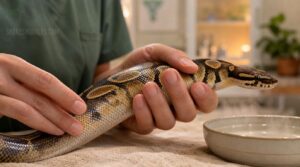
After your snake’s warm soak, follow up with a gentle abdominal massage to encourage movement. A reptile veterinarian generally recommends starting with Effleurage Strokes — slow, flat-hand passes toward the tail — then moving into Clockwise Colon Massage, using Circular Pressure Points and Light Kneading.
Keep your Session Rhythm steady and unhurried.
If your ball python tenses or writhes, stop immediately.
Raising Enclosure Humidity Short Term

Humidity is one of the fastest levers you can pull when your ball python is backed up. Aim to increase the humidity level to 60–70% temporarily using these targeted adjustments:
- Misting Duration: Short bursts (30–60 seconds) twice daily control evaporation without soaking the bedding
- Humidity Sensor Placement: Position your hygrometer near the snake, not the wall
- Water Bowl Location: Warm-side placement maximizes evaporation control naturally
- Localized Humidity: A moist hide creates a pocket of increased humidity without flooding the whole enclosure
- Ventilation Balance: Reduce airflow slightly to hold ideal humidity longer between misting sessions
Pausing Feeds While The Snake Clears
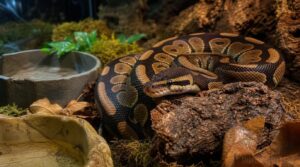
Once constipation sets in, pause feeding immediately — adding another meal on top of a sluggish gut only deepens the problem. Skip the next scheduled feeding and keep your enclosure routine consistent to reduce behavioral stress indicators.
Monitor weight loss during this window and track defecation frequency closely.
Resume only after a full bowel movement confirms the digestive tract has cleared.
Supporting Hydration Before Refeeding
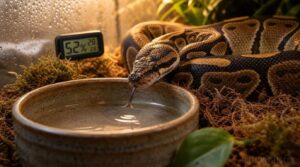
Before you offer that next meal, make sure your ball python is actually drinking. Watch for hydration behavior signs — head positioned at the water bowl, relaxed tongue flicking — before refeeding.
Offer an electrolyte soak in lukewarm water, check skin turgor, and monitor misting frequency to maintain increased humidity. Post-soak temperature should stay stable. Rehydration therapy comes first; refeeding follows.
Humidity and Heat Fixes
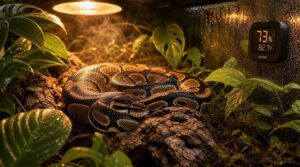
Your enclosure’s humidity and temperature levels do more for your ball python’s digestion than most people realize. Getting these two things right is often the simplest fix for constipation — and the most overlooked.
Here’s what to target and how to set it up correctly.
Ideal Humidity Range for Digestion
Keep your enclosure’s steady humidity between 50% and 60% relative humidity during normal digestion — that’s your ideal relative humidity sweet spot. Humidity fluctuations outside this range dry out gut tissue and harden stool.
Use a hygrometer usage routine to check levels daily. Consistent humidity control directly enhances digestion efficiency, so don’t let that number drift.
Warm-side and Cool-side Temperature Targets
Your enclosure temperature gradient does more than keep your snake comfortable — it drives digestion.
- Warm side basking surface: 88–92°F, verified with a digital probe for probe accuracy
- Cool side ambient: 76–80°F, measured at snake level
- Nighttime temperature drop: mid-70s°F is acceptable
- Thermostat calibration: check your heat source placement regularly to prevent overshooting
Without this side temperature gradient, gut motility stalls.
How Heat Affects Gut Motility
Temperature directly controls peristalsis speed in ball pythons — when the thermocline drops below ideal, gastric motility slows noticeably. Heat regulation isn’t just comfort; it drives smooth muscle excitability and keeps transit time consistent.
Dehydration impact compounds this: low heat means less fluid movement through the gut, altering microbiota changes that affect digestion. Without a proper thermal gradient, the whole digestive system stalls.
Water Bowl and Soaking Setup Tips
Your water setup directly extends what heat does for digestion. A heavy ceramic bowl — Bowl Material matters here — resists tipping and stays stable when your snake moves around. Change the water daily; Water Refresh prevents bacterial buildup that discourages drinking.
For hydration support during constipation, use lukewarm water in a shallow container:
- Place the bowl on a Non-slip Surface to prevent spills
- Keep soak duration to 15–20 minutes
- Maintain Bowl Stability by using weighted ceramic
- Use a shallow container so the head stays above water
- Provide fresh drinking water separately after soaking
Seasonal Adjustments for Drier Rooms
Winter heating changes your room fast.
Use a hygrometer for Room Humidity Monitoring near the enclosure — don’t guess.
Humidifier Usage Tips: run a portable unit nearby, never aimed directly at the tank.
Airflow Management Strategies matter too — seal gaps and redirect HVAC vents.
Enclosure Sealing Techniques prevent dry air exchange, and Seasonal Bedding Adjustments maintain substrate moisture when environmental humidity drops.
Feeding Habits That Help
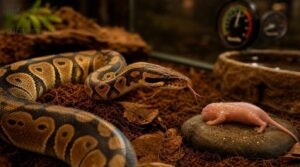
What ball python eats — and how you feed it — plays a bigger role in gut health than most keepers realize. Getting the details right can mean the difference between a snake that digests smoothly and one that gets backed up meal after meal.
Here’s what to focus on regarding feeding habits that actually help.
Choosing The Right Prey Size
Prey size is the most overlooked variable in ball python digestive health. Use widest-point measurement as your baseline — the prey width ratio should closely match your snake’s midsection diameter.
- A correct match produces a modest visible lump assessment while swallowing.
- No lump means undersized; scale-separation means too large.
- Apply growth-stage scaling as your snake’s midsection changes.
- Consider prey shape considerations — rounder rodents fit differently than elongated ones.
- Consistent feeding practices and size of prey items directly reduces constipation risk.
Feeding Frequency and Digestion Timing
Meal Interval Scheduling matters more than most keepers realize. Ball pythons are ectotherms — their Digestive Enzyme Activation depends entirely on Post-Feeding Warmth, so feeding too frequently overwhelms a gut that hasn’t finished processing the last meal.
| Feeding Stage | Key Requirement |
|---|---|
| Immediately after feeding | Warm side access (88–92°F) |
| Days 1–5 post-meal | Minimal handling, stable heat |
| Day 7–10 | Watch for stool before refeeding |
Metabolic Rate Fluctuations mean that Hydration Timing between meals keeps digestion on track.
Frozen-thawed Prey Preparation Tips
Thawing methods matter more than most keepers admit.
Defrost frozen prey in the refrigerator or cold water — never a microwave, which creates dangerous hot spots. Once fully thawed, warm to 100–105°F using a warm water bath, then confirm even heat distribution with an infrared thermometer.
Hygiene practices like tong handling and sealed bags reduce bacterial risk.
Timing before feeding is simple: warm, offer, don’t delay.
Avoiding Overfeeding and Fatty Meals
Overfeeding is one of the easiest mistakes to make, and it compounds directly into constipation. Keep prey size at 10–15% of your snake’s body weight — no exceptions.
Use weight monitoring charts to track gradual body condition changes, and apply portion scaling methods based on your snake’s midbody width.
Lean prey options, proper feeding frequency, and seasonal feeding adjustments guarantee nutritional balance for ideal snake defecation without excess fat content accumulation.
Tracking Feeding Response After Meals
A feeding log is one of the most underrated tools in your care routine. Track the date, prey weight, and enclosure temperatures every time you feed — then record when stool appears.
Watch for these post‑meal signals:
- Post meal activity dropping for several days
- Hydration patterns like increased water bowl use
- Weight fluctuations hinting at retained material
Defecation frequency in ball pythons, noting temperature preference shifts, and consistent recordkeeping for snake health turns guesswork into pattern recognition.
Top 10 Relief Products
When your ball python is backed up, having the right products on hand makes a real difference. Some are designed to support hydration and gut health directly, while others help you maintain the enclosure conditions that keep digestion moving.
Here are ten options worth knowing about.
1. Vetericyn Plus Reptile Wound Spray
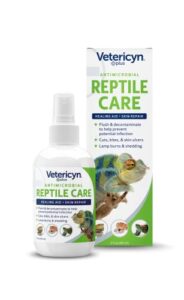
Vetericyn Plus Reptile Wound and Skin Care Spray won’t fix constipation directly, but it earns a spot here because constipated snakes often develop secondary skin issues — scale rot, stuck shed, and minor abrasions from repeated soaking sessions.
The active ingredient, hypochlorous acid at 0.012%, cleans affected skin without harsh chemicals, and it’s safe around eyes, nostrils, and mouth.
Apply it 3–4 times daily to troubled areas.
No rinsing needed, no strong odor to stress your snake.
| Best For | Reptile owners dealing with minor skin issues like scale rot, stuck shed, or lamp burns who want a safe, vet-recommended option that won’t stress their animal. |
|---|---|
| Product Type | Topical Spray |
| Package Weight | 0.2 lb |
| Primary Use | Wound/skin care |
| Target Species/User | Reptiles |
| Country of Origin | USA |
| Reusable | No |
| Additional Features |
|
- Hypochlorous acid formula is gentle enough to use near eyes, nostrils, and mouth — no harsh chemicals, no strong smell.
- You can apply it multiple times a day with no rinsing, which makes it easy to work into a care routine.
- Works across a wide range of species, from bearded dragons to ball pythons, at any life stage.
- It’s a supportive treatment, not a cure — serious infections still need a real vet and possibly antibiotics.
- The evidence behind it is mostly owner reports, so there’s no hard clinical data to back up the claims.
- Improper storage can reduce how well it works, and you’ll want to keep it away from kids and other pets.
2. Zoo Med Electrolyte Soak
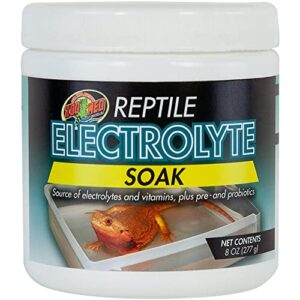
Zoo Med Electrolyte Soak gives your ball python’s gut a real hydration boost during constipation episodes. Mix 5 cc of the powder into one gallon of warm water, soak your snake for at least 10 minutes, and repeat up to three times per week as needed.
The formula includes B vitamins, vitamin C, electrolytes, prebiotics, and live probiotics — a combination that helps intestinal motility alongside basic hydration.
Store it sealed in a cool, dry place, and measure carefully; the container runs larger than it looks.
| Best For | Reptile owners who want to support hydration, shedding, and gut health for species like bearded dragons, ball pythons, and chameleons during bath time. |
|---|---|
| Product Type | Powder Supplement |
| Package Weight | 8 oz |
| Primary Use | Hydration/shedding |
| Target Species/User | Reptiles |
| Country of Origin | USA |
| Reusable | Yes |
| Additional Features |
|
- Packed with B vitamins, vitamin C, electrolytes, prebiotics, and live probiotics — solid all-in-one support for hydration and gut health.
- Unflavored and nut-free, so it works well for a wide range of reptiles without worrying about sensitivities.
- Helps speed up shedding and can improve color, appetite, and overall energy levels.
- The powder clumps and can feel hard — you’ll need to mix it really well before adding it to water.
- Has a strong protein-shake smell straight from the container, though it fades once dissolved.
- The container looks bigger than the actual 8 oz of product inside, so go by scoops, not eyeballing the fill level.
3. Gargeer Reptile Probiotics Powder
Where electrolytes handle hydration, gut bacteria handle the rest.
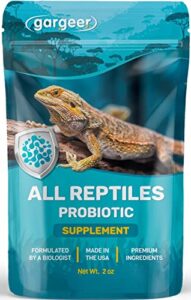
Gargeer Reptile Probiotics Powder delivers 200 million CFU per gram across four strains — Lactobacillus acidophilus, L. casei, Enterococcus faecium, and Aspergillus oryzae — directly targeting the microbial environment that drives intestinal motility.
The ultrafine particles stick to feeder prey without clumping, making dosing straightforward: one teaspoon per pound of food.
Refrigerate after opening to keep the cultures viable, and note that the maltodextrin carrier adds simple carbs — worth considering for metabolically sensitive animals.
| Best For | Reptile and amphibian owners who want an easy, dust-on solution to support gut health across a wide range of species, from bearded dragons to tortoises. |
|---|---|
| Product Type | Probiotic Powder |
| Package Weight | 2 oz |
| Primary Use | Digestive support |
| Target Species/User | Reptiles/amphibians |
| Country of Origin | USA |
| Reusable | Yes |
| Additional Features |
|
- Four live bacterial strains target digestive health directly, helping with appetite, nutrient absorption, and regular bowel movements
- Ultrafine powder sticks to feeder insects and mixes into salads without clumping, so dosing is simple and consistent
- Works across a wide variety of reptiles and amphibians, making it a versatile pick for multi-pet households
- Maltodextrin is the primary carrier, which adds simple carbs — not ideal for diabetic-prone or metabolically sensitive reptiles
- The one-teaspoon-per-pound dosage can be tricky to scale down for small eaters or picky feeders
- Some users have reported broken packaging on arrival and no included instructions, which makes first-time use a little frustrating
4. Nature Zone Appetite Plus Reptile Solution
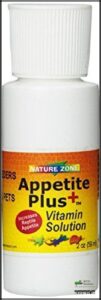
Probiotics rebuild gut flora, but sometimes the real problem is a snake that won’t eat in the first place.
Nature Zone Appetite Plus targets that gap directly.
A few drops of this concentrated vitamin B-12 solution daily — delivered by dropper or syringe — can help restart voluntary feeding in snakes recovering from illness or stress.
It’s adjunct care, not a cure, so don’t skip fixing husbandry.
Think of it as a nudge, not a solution.
| Best For | Reptile owners dealing with finicky feeders or animals recovering from illness, stress, or injury who need a simple way to encourage voluntary eating. |
|---|---|
| Product Type | Liquid Drops |
| Package Weight | 0.11 lb |
| Primary Use | Appetite stimulant |
| Target Species/User | Reptiles/amphibians |
| Country of Origin | USA |
| Reusable | Yes |
| Additional Features |
|
- Easy to dose — just a few drops by dropper or syringe, no stressful handling required
- Works across a range of species, from bearded dragons and leopard geckos to ball pythons and tortoises
- Small bottle goes a long way, making it a low-cost addition to your care routine
- Results aren’t guaranteed — some reptiles show no response at all
- It’s a nudge, not a fix — underlying health issues still need a vet
- Packaging quality has been inconsistent, with some bottles arriving with damaged labels
5. Amber Naturalz Reptaid Herbal Supplement

When feeding stimulants aren’t enough and you’re dealing with a possible infection driving digestive slowdown, Amber Naturalz Reptaid offers a different angle.
This herbal tincture — formulated for reptiles under 250 g — combines ingredients like Olive Leaf, Pau D’Arco Bark, and Black Seed to support immune function and reduce parasite load.
You administer roughly 0.05 ml via the included syringe.
It won’t replace a vet visit for severe cases, but it can support recovery when mild infection or parasites are complicating constipation.
| Best For | Small reptile owners (under 250 g) dealing with mild infections, parasites, or digestive issues who want a natural option alongside vet care. |
|---|---|
| Product Type | Herbal Tincture |
| Package Weight | 1 oz |
| Primary Use | Infection treatment |
| Target Species/User | Small reptiles ≤250g |
| Country of Origin | USA |
| Reusable | No |
| Additional Features |
|
- Targets multiple issues at once — infections, parasites, and respiratory problems — in one small bottle
- Tiny 0.05 ml doses mean less handling stress for your reptile
- Works as a helpful support tool when antibiotics haven’t done the trick
- Only works for reptiles under 250 g — larger animals need the XL version
- The alcohol base can taste harsh, and some reptiles flat-out refuse it
- Not a vet replacement — for serious or ongoing conditions, professional care is still a must
6. Animal Essentials Colon Rescue Herbal Laxative
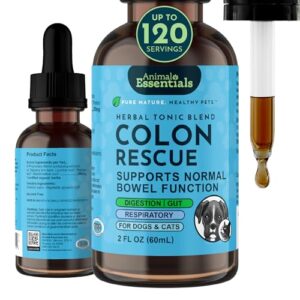
Where Reptaid targets infection, Animal Essentials Colon Rescue works directly on gut motility. This glycerin-based tincture blends slippery elm bark, marshmallow root, plantain leaf, and licorice root — four herbs known for coating and soothing irritated intestinal walls.
It’s formulated for dogs and cats, not reptiles, so you’d need to scale the dose carefully for a ball python’s body weight.
That said, the alcohol-free liquid mixes easily into water, making cautious, low-dose use practical while you monitor stool output over 24 hours.
| Best For | Dogs and cats dealing with occasional constipation, mild diarrhea, or general digestive upset — especially seniors or pets recovering from GI issues. |
|---|---|
| Product Type | Herbal Tincture |
| Package Weight | 2 oz |
| Primary Use | Digestive support |
| Target Species/User | Dogs/cats |
| Country of Origin | USA |
| Reusable | No |
| Additional Features |
|
- All-natural, certified-organic herbs with no synthetic additives — clean ingredients you can feel good about
- Glycerin-based and alcohol-free, so it mixes easily into water for fuss-free dosing
- Fast-acting formula — many pet owners noticed improved stool consistency within 24 hours
- Formulated for dogs and cats, not reptiles — dosing for other animals takes extra care and guesswork
- Licorice root limits long-term use to about two weeks without vet sign-off
- Pricier than most OTC digestive aids, and results aren’t guaranteed for every pet
7. Snake Bite and Bee Sting Kit
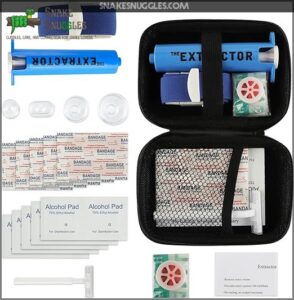
This one looks out of place on a constipation list — and it’s. A snake bite and bee sting kit isn’t a digestive remedy; it’s an emergency suction tool.
The included one-hand pump and four suction cup attachments create negative pressure at the skin surface, which some keepers repurpose experimentally to assist with cloacal blockages.
It won’t reach deep impactions. At 4.92 inches long and under half a pound, it’s compact enough to keep on hand, but veterinary intervention addresses what this kit simply can’t.
| Best For | Hikers, campers, anglers, and anyone spending time outdoors who wants a compact first-aid option for venomous bites and stings until they can get proper medical help. |
|---|---|
| Product Type | Suction Pump Kit |
| Package Weight | 0.44 lb |
| Primary Use | Venom extraction |
| Target Species/User | Humans |
| Country of Origin | Not specified |
| Reusable | Yes |
| Additional Features |
|
- One-handed pump design makes it easy to use on yourself in a pinch
- Four cup sizes mean it works on different body parts and wound shapes
- Tiny and light enough to toss in a backpack, glove box, or tackle bag without thinking twice
- Only pulls venom from just under the skin — anything deeper and it won’t do much
- How well it works depends a lot on the bite location, depth, and how fast you use it
- It’s a stopgap, not a fix — you still need to get to a doctor as soon as possible
8. Forlivese 25 Inch Drain Snake
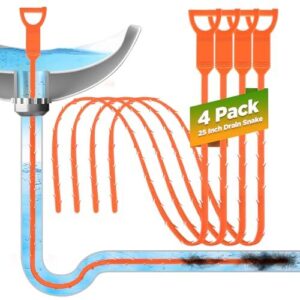
This one’s a plumbing tool, not a reptile product — and that distinction matters. The Forlivese 25-inch drain snake is designed to pull hair and debris from household pipes, not assist constipated snakes.
Its 0.45-inch-wide barbed wand can technically enter a cloaca, but the rigid barbs risk tearing delicate mucosal tissue. No anatomical justification permits using it on a ball python.
Keep it under your sink where it belongs, and reach for a warm soak instead.
| Best For | Homeowners who deal with frequent hair and debris clogs in sinks, showers, or bathtubs and want a simple, chemical-free fix without calling a plumber. |
|---|---|
| Product Type | Drain Snake Pack |
| Package Weight | 3.52 oz |
| Primary Use | Drain unclogging |
| Target Species/User | Households |
| Country of Origin | Not specified |
| Reusable | Yes |
| Additional Features |
|
- Four snakes in one pack means you’ve always got a spare when one gets gunked up beyond saving.
- Flexible enough to bend through P-traps, so it actually reaches the gunk instead of stopping at the first curve.
- Reusable and chemical-free — just rinse it off and toss it back under the sink.
- The plastic barbs can snap off inside the drain, which trades one problem for a worse one.
- Only works on clogs close to the surface — deep or stubborn blockages will laugh it off.
- Won’t fit drains narrower than half an inch, so it’s not a universal fix for every pipe in the house.
9. Finever Venom Extractor Suction Kit
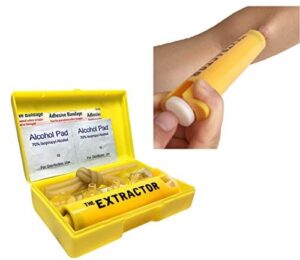
Another mislabeled product for the list. The Finever Venom Extractor Suction Kit is a first-aid tool designed for snake bites and insect stings — not for relieving constipation in ball pythons.
Its vacuum pump creates negative pressure over a wound site to draw out venom. That mechanism has no application inside a snake’s digestive tract. No suction cup touches intestinal blockage.
Save this kit for your hiking pack, and stick to warm soaks and proper husbandry for your python’s gut issues.
| Best For | Hikers, campers, and outdoor enthusiasts who want a compact first-aid kit for snake bites and insect stings on the trail. |
|---|---|
| Product Type | Suction Pump Kit |
| Package Weight | 3.52 oz |
| Primary Use | Venom extraction |
| Target Species/User | Humans |
| Country of Origin | Not specified |
| Reusable | Yes |
| Additional Features |
|
- Comes with four interchangeable suction cups so you can use it on different body areas
- Includes a solid little first-aid kit — alcohol pads, a tourniquet, bandage, and more all in one package
- Light and small enough to toss in any pack without a second thought
- Suction can be way too strong, leaving bruises or red marks on skin
- Can be tricky to operate one-handed, which is a real problem in an emergency
- Quality control seems hit or miss — some units fail to hold suction at all
10. Beatifoyo Drain Snake Clog Remover
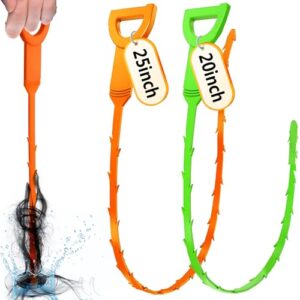
Let’s be direct: The Beatifoyo Drain Snake Clog Remover is a plumbing tool. Its 20–25 inch barbed polypropylene wand is built to hook hair and grease out of P-traps — not to treat gastrointestinal issues in a ball python.
Inserting any mechanical device into your snake’s cloaca would cause severe internal injury. Don’t let the word "snake" create confusion here.
For actual constipation relief, warm soaks at 88–92°F and gentle abdominal massage are your go-to tools.
| Best For | Homeowners and renters who want a cheap, no-fuss way to clear hair and gunk from clogged drains without calling a plumber or reaching for harsh chemicals. |
|---|---|
| Product Type | Drain Snake Set |
| Package Weight | 1.76 oz |
| Primary Use | Drain unclogging |
| Target Species/User | Households |
| Country of Origin | Not specified |
| Reusable | Yes |
| Additional Features |
|
- Comes in two lengths (20 and 25 in) so it can reach clogs sitting deeper in the pipe
- Flexible enough to navigate P-traps, and it won’t snap if you twist it gently while working
- At $3.99, it’s a easy impulse buy that pays for itself the first time it saves you a plumber visit
- Won’t fit drains smaller than 0.45 in wide, so check your drain opening first
- The prongs can bend or break if you push too hard on a stubborn clog
- Pulling out a wand full of wet hair is genuinely gross — some people just toss it rather than clean it
When a Vet is Needed
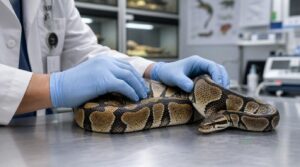
Home remedies work well in most cases, but there’s a point where they stop being enough. If your ball python isn’t responding after a week of soaks, massage, and humidity adjustments, it’s time to call a reptile vet.
Here’s what to watch for and what a vet can actually do to help.
Signs That Home Care is Not Working
If warm soaks and humidity boosts haven’t produced results after one to two weeks, your snake is telling you something home care can’t fix.
Watch for abdominal firmness unchanged after multiple sessions, vent swelling persists around the cloaca, reduced tongue flicking, excessive hiding behavior, and lethargy.
These signals — especially alongside a swollen abdomen or weight loss — mean impaction or constipation has moved beyond your control.
Abdominal Pain, Blood, or Regurgitation
Blood or regurgitation changes everything — these aren’t digestive slowdowns, they’re emergencies.
- Upper GI Bleeding presents as dark, tarry material or coffee-ground regurgitation, signaling serious internal damage.
- Lower GI Bleeding shows as bright red blood near the cloaca, often tied to impaction trauma.
- Regurgitation signs combined with a swollen abdomen and lethargy demand immediate veterinary diagnostics for reptiles — don’t wait.
Rapid Swelling or Weight Loss
Swelling that appears within days — not weeks — is a fluid retention sign, not a digestion delay. If you notice cloacal swelling, vent inflammation, or rapid mass decline alongside a ball python that is not pooping, stop home treatment immediately.
These point to organ enlargement or systemic disease.
Body condition scoring reveals the difference: a snake losing visible muscle mass during suspected impaction or constipation needs bloodwork, not a warm soak.
Diagnostic Tests for Parasites and Blockage
Once your vet suspects something beyond simple constipation, diagnostics take over. Here’s what that workup usually looks like:
- Fecal Parasite Microscopy — a fecal examination identifies parasite ova under a microscope
- Molecular PCR Screening — detects parasite infection in snakes with greater accuracy than microscopy alone
- Blood Chemistry Panel — flags systemic organ involvement
- Radiographic Imaging — x-rays confirm blockage location
- Ultrasound Evaluation — imaging distinguishes fluid from solid masses
Veterinary Treatments for Severe Constipation
Once diagnostics confirm the problem, treatment escalates quickly. IV or subcutaneous fluids rehydrate the snake and soften impacted stool.
From there, oral laxatives or osmotic laxatives draw moisture into the gut. If that stalls, enema protocols deliver fluid directly to the lower bowel.
Stubborn cases need manual fecal extraction under sedation. True obstructions may require surgical intervention.
Preventing Future Blockages
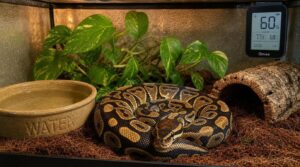
Once your ball python is back on track, the real work is keeping it there. Most blockages are preventable with a few consistent habits in how you set up and manage the enclosure.
Here’s focus on going forward.
Stable Enclosure Humidity and Temperature
Think of enclosure’s climate as a living system — it only works when every part stays calibrated.
Keep humidity between 50–60% using Humidity Stabilization Techniques like a layered mist schedule and covered sections for Ventilation Moisture Balance.
For Temperature Gradient Monitoring, use sensors with Sensor Placement Accuracy at both warm (88–92°F) and cool (75–80°F) zones, since Heat Source Types affect belly warmth differently than ambient air.
Safe Substrate Choices for Ball Pythons
Substrate choice is one of the simplest ways to reduce impaction risk.
Coco Coir Benefits include humidity retention and natural burrowing texture, while Paper Substrate Simplicity makes waste easy to spot.
Aspen Shavings Hygiene depends on frequent cleaning.
Cypress Mulch Risks rise when feeding over loose particles — always feed in a separate container.
Orchid Bark Handling requires monitoring for breakdown into fine, ingestible fragments.
Regular Water Changes and Hydration
Clean water is one of the easiest hydration strategies to improve reptile digestion — yet it’s often overlooked. Water Quality Monitoring and Fresh Water Frequency matter more than most keepers realize.
- Change the water bowl daily to prevent biofilm and waste buildup
- Apply Dechlorination Practices using a reptile-safe conditioner on tap water
- Follow Bowl Placement Tips — position it on the cool side to discourage bacterial growth
- Practice Hydration Temperature Control by matching soak water to 88–92°F
- Support rehydration therapy by maintaining your 50–60% humidity range consistently
Fresh water drives water intake and keeps digestion on track.
Routine Stool and Feeding Records
Keeping a simple record sheet changes how fast you catch problems. Log each feeding date, prey weight, and acceptance — that’s your Prey Size Tracking baseline.
Note stool firmness using consistent Stool Quality Scales, and record Hydration Activity Links by marking soak behavior around feeding days.
Data Logging Templates and Correlation Charts help you spot monitoring defecation frequency in ball pythons shifts before they become emergencies.
Ongoing Health Checks and Monitoring
Regular handling sessions double as quick health checks. Run through Weight Log entries weekly, note Body Condition Scoring during each interaction, and check Shedding Quality Monitoring for retained skin.
Cross-reference Enclosure Hygrometer Readings with your Behavioral Response Log to catch early shifts.
Monitoring defecation frequency in ball pythons, combined with consistent Recordkeeping for snake health, makes long-term health monitoring for captive ball pythons straightforward — and keeps small problems from becoming emergencies.
Frequently Asked Questions (FAQs)
How can I treat a constipated ball python?
Start with a warm soak — 10 to 15 minutes at 88°F — then gently massage the abdomen toward the tail.
If that doesn’t work, consult a veterinarian about oral laxatives or manual evacuation techniques.
How can you tell if a ball python is constipated?
Ironically, your ball python won’t tell you it’s constipated — but its body will.
Watch for absent stools beyond three weeks, dry stool consistency, belly palpation firmness, activity reduction, and shedding correlation.
Does a ball python have irregular bowel movements?
Yes — ball pythons naturally show irregular defecation patterns. Age-related frequency, stress-induced irregularity, and enclosure size impact digestion timing.
Monitoring defecation frequency in ball pythons helps you spot when irregularity crosses into a genuine ball python bowel health concern.
How is a ball python treated?
Treatment options for reptile constipation range from warm soaks and fluid therapy at home to enema techniques, probiotic use, medication protocols, and surgical options when a reptile veterinarian determines the blockage won’t resolve otherwise.
What do I do if my ball python is constipated?
Offer a warm soak first, then check your humidity and temperatures.
Reduce stress by limiting handling, skip feeding, and monitor closely.
If nothing moves in a few weeks, get veterinary care.
What is the rule of 3 for constipation?
rule of 3 flags constipation when stool frequency drops below three weekly bowel movements, effortful passage occurs, firm pellet formation appears, residual sensation persists, or an obstructive feeling develops during defecation.
Why is my snake always constipated?
Chronic constipation usually points to a husbandry pattern, not a one-time mistake.
Low humidity, wrong temperatures, oversized prey, and stress-induced motility disruptions all stack up quietly until your snake can’t clear waste regularly.
Are ball pythons constipated?
Ball pythons don’t get constipated constantly, but it happens.
constipation symptoms in snakes early — through behavioral indicators, stool color analysis, and monitoring defecation frequency in ball pythons — helps you act before it worsens.
Why is my ball python not pooping?
Your ball python isn’t pooping, likely due to low humidity, cool temperatures, or prey that’s too large.
Stress levels, enclosure dimensions, and gut microbiome imbalances are also common causes of constipation in ball pythons.
How often do ball pythons poop?
A snake that eats less actually poops less — and that’s completely normal. Adult defecation schedules usually run every 5–14 days post-meal, while juvenile defecation patterns trend closer to 3–4 times monthly.
Conclusion
Gut feeling counts for a lot in treating constipation in ball pythons—trust what you observe, then act on it with precision. Warm soaks, corrected temperatures, proper humidity, and right-sized prey aren’t guesses; they’re the levers that move digestion forward.
Track every feed, every shed, every stool.
When home care stalls and symptoms compound, a reptile vet isn’t a last resort—it’s the right call. Your snake’s health runs on consistency, not luck.