This site is supported by our readers. We may earn a commission, at no cost to you, if you purchase through links.

Some boa morphs carry more than striking colors—they carry genetic time bombs. Certain combinations, like Super Motley or Super Aztec, are linked to neurological deficits, stillbirths, and metabolic failure that no amount of good husbandry can fully reverse.
That’s something many keepers don’t learn until something goes wrong. Boa constrictor morph health problems range from manageable digestive issues to inherited conditions baked into the animal’s DNA. Knowing which morphs carry elevated risk—and what warning signs to watch for—gives you a real chance to intervene early and keep your animal in good health.
Table Of Contents
- Key Takeaways
- Common Health Issues in Boa Morphs
- Genetic Disorders Linked to Boa Morphs
- Recognizing Symptoms of Morph Health Problems
- Environmental Factors Worsening Morph Health
- Prevention and Management Strategies
- Lifespan and Quality of Life Concerns
- Top 10 Snake Toys for Boa Enrichment
- 1. Wooden Wiggle Snake Toy
- 2. Rhode Island Jointed Snake Toy
- 3. Realistic Rubber Black Snake Prop
- 4. Ace Hockey Stickhandling Trainer
- 5. UpBrands Stretchy Snake Toys
- 6. Giant Sticky Reptile Fidget Toy
- 7. Green Rubber Snake Toy
- 8. FauKait Smart Snake Toy
- 9. Stretch Fake Snake Toy
- 10. Rep Pals Stretchy Snake Toy
- Frequently Asked Questions (FAQs)
- How to tell if your boa has IBD?
- What is the disease in the boa constrictor?
- What is the fire gene in boas?
- What is the life expectancy of a boa constrictor?
- Can morph genetics affect immune system function?
- Do certain morphs require specialized veterinary diagnostics?
- Are morphs more prone to obesity issues?
- How do morphs handle stress compared to wild-types?
- Which morphs have undocumented long-term health risks?
- Can morph boas live with other snake species?
- Conclusion
Key Takeaways
- Some boa morphs, like Super Motley and Super Aztec, carry genetic defects that cause neurological disorders, stillbirths, or early death—no amount of good care can fix what’s built into the DNA.
- Environmental factors like low humidity, loose substrate, and poor sanitation quietly worsen genetic vulnerabilities, so getting husbandry right isn’t optional—it’s your first line of defense.
- Early warning signs like chronic regurgitation, head tremors, open-mouth breathing, or stargazing need a vet visit fast, not a wait-and-see approach.
- Choosing a breeder who tests for known genetic conditions and maintains quarantine protocols is the single most important decision you’ll make before bringing a morph home.
Common Health Issues in Boa Morphs
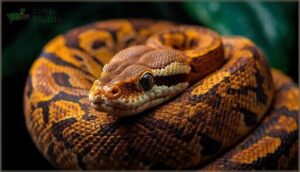
Boa morphs can look stunning, but some carry health risks that aren’t always obvious at first glance. Knowing what to watch for makes a real difference in how quickly you can act.
Once you’ve got a healthy snake, browsing boa constrictor morphs and genetics can help you understand which traits to prioritize.
Here are the most common health issues seen in boa morphs.
Regurgitation Syndrome and Digestive Disorders
Regurgitation syndrome is one of the sneakier digestive disorders you’ll encounter in boa constrictors. It’s chronic, not occasional — and it signals something deeper is off with gut function. Understanding the difference between these two conditions matters more than most keepers realize — regurgitation vs. vomiting in snakes aren’t the same thing, and misreading the signs can delay the right treatment.
Watch for these five warning signs:
- Repeated involuntary regurgitation after meals
- Undigested prey returned within 15 minutes
- Unexplained weight loss
- Reduced feeding response
- Visible abdominal discomfort after eating
Similar regurgitation issues can also be seen in other animals and are explored in greater detail in this.
Impaction and Gastrointestinal Blockages
Beyond digestive upsets, impaction poses a quieter but serious threat. Boa impaction happens when substrate, bark, or gravel blocks the intestines — a classic gastro blockage that stops normal gut motility cold.
| Impaction Causes | Risk Level |
|---|---|
| Loose substrate ingestion | High |
| Low enclosure temps | Medium |
| Dehydration | High |
| Oversized prey | Medium |
Severe intestinal obstruction may require boa surgery. Many keepers overlook how dehydration and husbandry issues are major factors in reptile impaction incidents.
Skin Infections and Scale Rot
Gut problems aren’t the only thing to watch. Skin infections move fast in boas, especially in morphs with thinner or more delicate scales.
Scale rot starts with damp, soiled bedding — bacterial infections take hold quickly under those conditions. Left untreated, it progresses to fungal dermatitis and open lesions. Solid boa hygiene practices and prompt skin lesion treatment are your best defense against these reptile health issues.
Parasite Susceptibility in Morphs
Skin issues and parasite problems often go hand in hand. Damaged scales give mites an easy entry point, and heavy mite infestations can cause serious anemia.
Morphs with a genetic predisposition toward immune suppression carry a higher parasite load than healthy wild-type boas. Environmental factors like shared tools and poor quarantine speed up disease transmission.
Parasitic infections, including coccidia and Cryptosporidium, hit delicate morphs hardest — making parasite control in reptiles a non-negotiable part of managing Boa Constrictor health issues.
Respiratory and Bacterial Infections
Respiratory problems can sneak up fast. Open-mouth breathing, clicking sounds, and mucus around the nostrils are classic warning signs you shouldn’t ignore. Morphs already stressed by genetics have weaker defenses, making bacterial pneumonia a real threat.
Watch for:
- Wheezing or labored breathing at rest
- Bubbles or discharge near the mouth
- Sudden feeding refusal
- Unusual lethargy
Infection control starts with boa sanitation and proper temperatures. Antibiotic therapy works best when paired with corrected husbandry — your vet will guide treatment based on culture results.
Genetic Disorders Linked to Boa Morphs
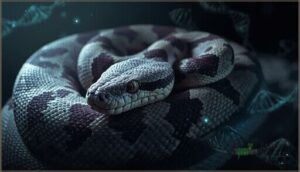
Some boa morphs carry genetic baggage that goes beyond just looks.
Certain gene combinations can cause serious health problems — sometimes fatal ones — right from the start.
Here’s a closer look at the specific disorders tied to some of the most commonly kept morphs.
Lethal Genetics in Super Motley Boas
Super Motley boas carry a genetic condition that’s basically a built-in expiration date. When two Motley boas are paired, 25% of offspring inherit two copies of the gene — and that homozygous combination is lethal.
Most don’t survive past two years. Missing core musculature, they’re weak from birth. From a boa welfare standpoint, breeding ethics must come first: intentionally producing these snakes is difficult to justify.
Super Motley boas rarely survive past two years, and breeding ethics demand we stop producing them
Neurological Issues in Super Aztec and Scoria Morphs
Morph genetics don’t always stay invisible. With Super Aztec and Scoria boa constrictors, a genetic condition shows up as a real, observable neurological disorder — the classic “wobble.” Reptile neurology calls it what it’s: a central coordination deficit tied to the morph itself.
Watch for these neurological signs:
- Head oscillation when tracking prey or resting
- Stargazing or corkscrewing in severe cases
- Unsteady strikes and poor righting reflex
Wobble severity varies widely. Simple husbandry adjustments — low hides, tong-fed prey, stable temps — protect quality of life for affected boa constrictors.
Reduced Fertility and Stillbirth Rates
Fertility problems are often the hidden cost of pushing morph genetics too far.
Super Aztec and Super Jungle boa constrictors frequently show low conception rates, small litters, and high stillbirth rates — outcomes tied directly to their genetic condition.
Poor maternal care, weak embryo development, and line-breeding all compound the problem.
Smarter breeding strategies that prioritize genetic diversity remain the most reliable path toward better reptile health and animal welfare.
Ocular Abnormalities in Albino Morphs
Albino boa constrictors carry a quiet trade-off: their striking coloration often comes with real ocular costs. Lacking melanin disrupts normal retinal development, leading to albino vision loss and visual impairment that affects strike accuracy and spatial awareness.
Eye malformations — including missing or bulging eyes — appear most in Kahl line boas. Photophobia causes stress under bright lighting. Watch for cloudiness or swelling, as ocular infections progress fast without treatment.
Recognizing Symptoms of Morph Health Problems
Catching health problems early can make a real difference for your boa.
Morph-related issues often show up in specific, recognizable ways — you just need to know what to look for.
Here are the key symptoms to watch.
Signs of Neurological Dysfunction
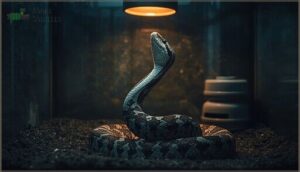
Neurological symptoms in boas rarely appear all at once. You might notice head tremors first, or watch your snake weave sideways instead of gliding smoothly — classic signs of coordination loss.
Abnormal posture like stargazing or opisthotonus signals deeper trouble. Seizure activity, when it appears, confirms serious neurological dysfunction. These symptoms, especially combined with regurgitation, strongly suggest Inclusion Body Disease, a severe reptile disease requiring immediate veterinary evaluation.
Visual and Skin Abnormalities
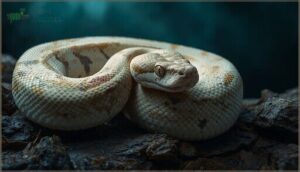
Beyond nerve signs, watch your boa’s skin and eyes closely. Color mutations like albino boas often develop eye defects — missing or malformed eyes aren’t rare.
Scale damage from scale rot shows as raised, discolored belly scales. Skin lesions, blisters, or pattern anomalies can signal underlying skin diseases. These boa constrictor health issues and broader reptile health concerns deserve prompt veterinary attention.
Digestive and Feeding Issues
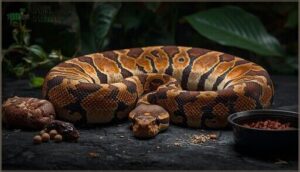
Skin and eye changes are easy to spot, but digestive issues can sneak up on you. A boa that regurgitates 3 to 5 days after eating is showing a classic Regurgitation Syndrome pattern — not random vomiting.
Watch for these red flags:
- Chronic regurgitation despite correct Feeding Techniques
- Visible weight loss even when your boa eats
- Poor Gut Health from disrupted Digestive Enzymes
- Irregular regurgitation patterns signaling reptile disease management concerns
- Declining Nutrition Balance despite a consistent diet
Early Indicators of Infection
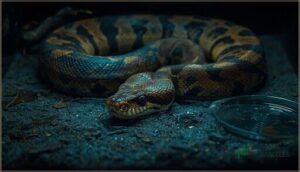
Digestive trouble often signals something bigger. Watch for Infection Signs beyond the gut: a normally alert boa sitting motionless, barely reacting when you open the enclosure, is showing an Early Warning flag.
Disease Detection starts with Snake Behavior shifts — unusual soaking, open-mouth breathing, or foamy saliva. These subtle cues call for prompt Health Monitoring and veterinary treatment options before Bacterial Infections escalate.
Environmental Factors Worsening Morph Health

Genetics aren’t the only thing working against some morphs — their environment can quietly make things worse.
Poor husbandry often pushes an already vulnerable boa past its limits. Here’s what to watch for in your setup.
Inadequate Enclosure Conditions
The enclosure itself can be the quiet culprit behind your morph’s declining health. Inadequate enclosure conditions — poor temperature gradients, wrong enclosure size, ventilation issues, substrate quality — compound genetic vulnerabilities fast.
For Boa constrictors, snake care and management starts with the setup:
- No thermal gradient means no thermoregulation
- Tight spaces concentrate bacteria and waste
- Poor ventilation breeds respiratory infections
- Dusty substrates irritate airways
- Missing hides trigger chronic stress
Fix the environment first.
Humidity and Shedding Complications
Humidity control sits at the heart of shedding issues in Boa constrictors. Keep ambient humidity between 55 and 75 percent for solid reptile health.
Drop below 45 percent and you’ll see retained eye caps, flaky shed, and scale rot risk climbing fast. A damp moss hide during shed cycles resolves most problems without soaking the whole enclosure.
Poor Sanitation and Disease Spread
Dirty enclosures don’t just look bad — they actively work against your boa’s health risks. Fecal management matters more than most keepers realize.
Waste left sitting raises bacterial counts fast, and poor water quality turns the drinking bowl into a disease vector. Substrate safety, cross contamination between animals, and zoonotic risks to your household are all tied directly to how consistently you clean.
Stress and Immune Suppression
Chronic stress is one of the quietest threats to your boa’s immune response. When environmental factors stay off — wrong temps, harsh lighting, no hides — corticosterone stays elevated, disrupting hormone balance and weakening white blood cell function.
Over time, that immune suppression turns minor bacterial exposure into real illness. Consistent, stress management isn’t optional for long-term snake health and disease prevention and treatment.
Prevention and Management Strategies
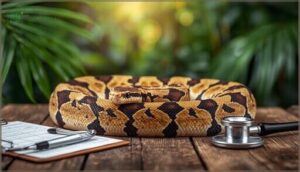
Preventing health problems in boa morphs starts well before you bring one home.
The choices you make around sourcing, documentation, vet care, and husbandry can save you a lot of trouble down the road.
Here’s what actually has a significant impact.
Choosing Reputable Breeders and Healthy Morphs
Finding a good breeder is half the battle with Boa Constrictors. Solid Breeder Research means looking for 10-plus years of consistent work, clear Morph Genetics explanations, and transparent Health Testing results.
Reputable breeder facilities follow strict Quarantine Protocols — usually 60 to 90 days — and maintain strong Reptile Hygiene standards. If a breeder dodges questions about Responsible Breeding practices or known Boa Constrictor Health Issues, walk away. Reptile care starts before you buy.
Importance of Health Documentation
Good records are your boa’s second brain. A solid Medical Record Keeping system gives your veterinarian real data, not guesses — and in veterinary medicine, that gap matters.
- Log weight, feeding dates, and shed quality weekly
- Track enclosure temps and humidity with date stamps
- Share full Health Tracking Systems files when working with any new vet
Breeder Transparency and Veterinary Collaboration both depend on documentation you actually maintain.
Routine Veterinary Screening
Even healthy-looking boas hide problems. Scheduling at least one annual Veterinary Exam with a reptile-experienced veterinarian is a core Prevention Strategy every keeper should follow.
Screening Protocols usually start with establishing a Health Baseline — weight, length, and condition — then layer in Diagnostic Tests like fecal flotation and blood tests to catch parasites or organ stress early. Consistent snake care and management starts here.
Morph-Specific Husbandry Adjustments
Screening tells you what’s wrong. How you keep your boa determines how often problems return.
Morph-specific reptile husbandry means adjusting everything from Enclosure Design and Temperature Control to Humidity Management and Lighting Adjustments based on your animal’s genetics. Albino morphs need dimmer setups. Regurgitation-prone Boa Constrictors need smaller meals and 48-hour post-feeding rest. Match the Feeding Strategies and environment to the morph, not the other way around.
Lifespan and Quality of Life Concerns
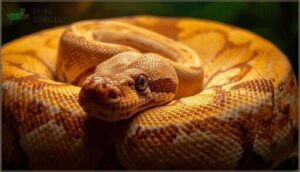
Not all boa morphs start life on equal footing. Some carry genetic baggage that shortens their lifespan or makes daily health maintenance a real commitment.
Here’s what you need to know about lifespan and quality of life across the most affected morph types.
Shortened Lifespan in Lethal Morphs
Some boa constrictor morphs carry what breeders call a genetic timebomb. Super Motley boas, for example, often look healthy at birth but experience rapid metabolic failure and structural weakness within months, dying before age two.
That’s a fraction of the twenty-plus years a normal boa lives. Mortality patterns like these raise serious ethical breeding questions — responsible breeding practices mean avoiding genetic conditions that guarantee a shortened life.
Chronic Health Challenges
Short lifespans aren’t the only concern. Many boa constrictors face chronic health challenges that grind on for years.
Chronic infections, digestive issues, and neurological decline often hit simultaneously, compounding each other. Immune suppression from poor husbandry turns minor problems into systemic diseases. Snake diseases like IBD or persistent parasites rarely resolve on their own — boa constrictor health deteriorates steadily when root causes go unaddressed.
Monitoring and Ongoing Care Recommendations
Managing these ongoing struggles means staying proactive — not reactive. Consistent daily checks, structured feeding schedules, and environmental tracking give you real data to act on before symptoms escalate.
- Log weight and feeding dates every two to four weeks.
- Record temperature and humidity readings several times weekly.
- Schedule veterinary care at least once annually, ideally twice.
Good health logging is your strongest tool in long-term boa constrictor health and reptile care and management.
Top 10 Snake Toys for Boa Enrichment
Enrichment isn’t just a nice extra for boas — it promotes mental stimulation and reduces stress-related health issues.
The right toys can make a real difference in how active and engaged your snake stays day to day. Here are ten options worth considering for your boa’s enclosure.
1. Wooden Wiggle Snake Toy
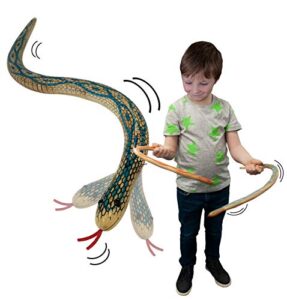
If you keep boas, you already know they don’t need much entertainment — but environmental enrichment still matters for mental stimulation.
The Wooden Wiggle Snake Toy is a solid option to have around. At nearly 20 inches long with a flexible, jointed body, it mimics natural movement in a way that can engage a curious boa during handling sessions or supervised exploration. It’s lightweight, nontoxic, and durable enough for routine use — just inspect it regularly for loose segments.
| Best For | Boa owners who want a simple, lightweight enrichment tool for handling sessions and sensory exploration. |
|---|---|
| Material | Wood |
| Primary Use | Sensory/Prank |
| Age Suitability | All Ages |
| Weight | 1.76 oz |
| Reusability | Yes |
| Durability Rating | Low |
| Additional Features |
|
- Nearly 20 inches long with a jointed, flexible body that mimics real snake movement pretty convincingly
- Lightweight and easy to handle, so it won’t wear out your wrist during longer sessions
- Works great as a low-cost enrichment option for supervised play and mental stimulation
- A few buyers noticed loose segments out of the box, so you’ll want to check it over before use
- It runs smaller than some people expect, which might be a letdown if you’re picturing something beefier
- Not built for rough handling — if your animal is on the more active or powerful side, it may not hold up long-term
2. Rhode Island Jointed Snake Toy
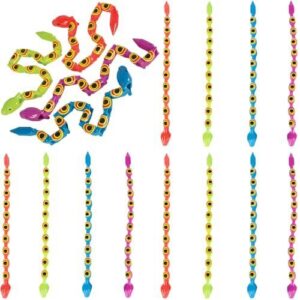
A good backup option, the Rhode Island Novelty Jointed Snake comes in a 12-pack with four colors and each piece runs 15 inches long. That bulk quantity makes it practical if you’re running enrichment rotations or want variety without the cost of multiple premium toys.
The flexible plastic joints mimic movement well enough to engage a boa during supervised handling. Just note that some users reported segment breakage, so inspect pieces regularly and replace anything that splinters or cracks.
| Best For | Teachers, party planners, or anyone who needs a bulk set of fun snake toys without spending a lot. |
|---|---|
| Material | Plastic |
| Primary Use | Party Favor |
| Age Suitability | 3 and up |
| Weight | 4.2 oz |
| Reusability | Yes |
| Durability Rating | Medium |
| Additional Features |
|
- Comes in a 12-pack with four colors, so you’ve got plenty of variety right out of the box
- At 15 inches each, they’re a solid size for kids to actually play with and enjoy
- Flexible and durable enough for classroom use, party favors, or casual playtime
- Stickers can fall off or arrive poorly attached, which is a little disappointing
- Some users have had segments break, so it’s worth checking pieces for cracks regularly
- Colors may not match what you see in the listing, and quality can vary between packs
3. Realistic Rubber Black Snake Prop
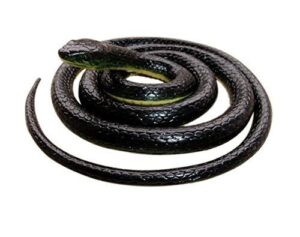
At 52 inches long, this rubber prop is sized close to a juvenile boa — which makes it genuinely useful as a decoy or habitat prop rather than a hands-on toy.
It’s modeled after a Black Mamba, with a yellow belly and realistic scale texture. Don’t expect it to replace interactive enrichment, but placed strategically near an enclosure, it can serve as low-cost visual stimulation.
Inspect the paint regularly, as fading and chipping are reported concerns with prolonged use.
| Best For | Pranksters, gardeners looking to keep birds off fruit trees, and anyone who wants a creepy-crawly addition to their Halloween setup. |
|---|---|
| Material | Rubber |
| Primary Use | Prank/Decor |
| Age Suitability | All Ages |
| Weight | 7.8 oz |
| Reusability | Yes |
| Durability Rating | Medium |
| Additional Features |
|
- At 52 inches, it looks convincingly real — great for scaring off birds and adding drama to garden or holiday décor
- The Black Mamba coloring (yellow belly, green sides) gives it a realistic look that holds up at a glance
- Lightweight and easy to place anywhere you need it
- Paint can fade or chip over time, even with the improved manufacturing process
- Won’t work on every pest — determined birds and squirrels may not care much
- It runs a bit smaller in person than you might expect from the listed size
4. Ace Hockey Stickhandling Trainer

This one’s a bit of an odd inclusion — the Ace Hockey Stickhandling Trainer is built for hockey players, not reptile keepers. It’s a lightweight, adjustable plastic trainer designed to weave pucks through tight lanes.
As boa enrichment, it doesn’t translate. There’s no sensory engagement, no texture variation, and no design feature that benefits a snake’s physical or cognitive needs. Save this for the driveway, not the enclosure. Your boa deserves better than repurposed sports equipment.
| Best For | Hockey players of all ages who want to sharpen their stickhandling and puck control skills at home or at the rink. |
|---|---|
| Material | Plastic |
| Primary Use | Sports Training |
| Age Suitability | All Ages |
| Weight | 0.59 kg |
| Reusability | Yes |
| Durability Rating | High |
| Additional Features |
|
- Works on and off the ice, so you can keep training no matter where you are
- Lightweight and easy to pack up and bring to practice or the backyard
- Adjustable cone setup means you can mix up your drills and keep things fresh
- A bit pricey compared to similar trainers on the market
- Setting up and adjusting the cones can take some trial and error to get right
- Not ideal for very young kids, and you’ll need a flat surface to use it effectively
5. UpBrands Stretchy Snake Toys
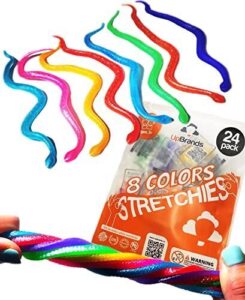
These aren’t designed for boas — and that’s worth saying plainly. UpBrands Stretchy Snake Toys are 6-inch SEBS rubber novelties made for kids’ party bags and Easter eggs.
They’re non-toxic and washable, which sounds reassuring, but “safe for children” doesn’t mean appropriate for a live boa’s enclosure. There’s no functional enrichment here — no texture, no resistance, no foraging simulation.
At best, they’re a fun human keepsake. Your boa won’t benefit from sharing shelf space with glitter rubber.
| Best For | Parents and teachers looking for fun, affordable party favors, classroom rewards, or Easter basket stuffers for kids ages 3 and up. |
|---|---|
| Material | SEBS Rubber |
| Primary Use | Party Favor |
| Age Suitability | 3 and up |
| Weight | 3.52 oz |
| Reusability | Yes |
| Durability Rating | Medium |
| Additional Features |
|
- 24 snakes in 8 glitter colors gives you plenty of variety for goodie bags or classroom prizes
- Made from non-toxic, washable SEBS rubber — easy to clean if they get sticky
- Individually wrapped, so they’re ready to hand out straight from the box
- Some buyers found them smaller and thinner than expected
- Unwrapping 24 individually wrapped snakes can get tedious fast
- They can feel sticky out of the package, which might put some kids off
6. Giant Sticky Reptile Fidget Toy
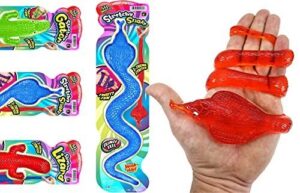
Here’s a case where “reptile toy” is purely in name only. The Giant Sticky Reptile Fidget Toy — a 14-inch rubber lizard, snake, or alligator from JA-RU — is built for kids, not constrictors.
It’s sticky and stretchy, and wall-tossable, which sounds entertaining until you picture your boa investigating that adhesive surface. The sticky coating poses a real entanglement risk. Keep this one in the party favor bag where it belongs.
| Best For | Kids who love sensory play, pranks, or need a fun stress-relief toy for parties and classrooms. |
|---|---|
| Material | Rubber |
| Primary Use | Sensory/Prank |
| Age Suitability | All Ages |
| Weight | 4.2 oz |
| Reusability | Yes |
| Durability Rating | Low |
| Additional Features |
|
- Super stretchy and sticky — great for tossing at walls and windows for instant entertainment
- Washable and reusable, so it holds up through repeated play
- Makes a solid party favor or goodie bag stuffer for animal-themed events
- Picks up carpet fibers over time, which dulls the sticky factor
- The rubber can break pretty easily with rough handling
- Some buyers only received one toy when they expected more, and getting help from the seller can be a hassle
7. Green Rubber Snake Toy
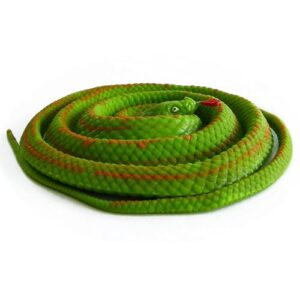
Unlike the sticky fidget toy, this one’s actually worth a look. The Green Rubber Snake Toy stretches to 130 cm, giving your boa something substantial to explore and push against. It’s non-toxic, textured for grip, and light enough to drape over branches without collapsing them.
That changing layout matters — boas respond to structural variety more than novelty alone. Check for peeling paint or surface degradation regularly. Worn rubber can harbor bacteria or break apart in ways you don’t want near your snake.
| Best For | Kids, pranksters, and anyone who wants a harmless way to spook their friends or family around Halloween. |
|---|---|
| Material | Rubber |
| Primary Use | Prank/Education |
| Age Suitability | All Ages |
| Weight | 5.6 oz |
| Reusability | Yes |
| Durability Rating | Low |
| Additional Features |
|
- At 130cm long, it’s surprisingly substantial and feels like the real thing
- Non-toxic and soft, so it’s safe for kids to handle and play with
- Realistic camouflage and texture make it convincing enough to actually work as a prank
- The soft material means it won’t hold up well to rough play — it can tear pretty easily
- The thin tail end is especially fragile and prone to damage
- Some people found it a bit too narrow and it tends to coil up on its own, which can be annoying
8. FauKait Smart Snake Toy
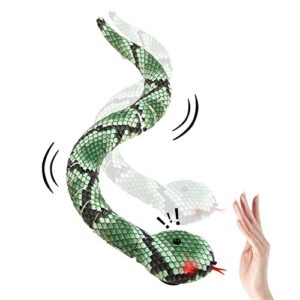
The FauKait Smart Snake Toy takes a different approach entirely. It actually moves. Infrared sensors detect obstacles and redirect the toy automatically, so it slithers around your space without getting stuck in corners.
For boas, motion is a stronger stimulus than static props. The segmented body mimics an S-shaped slither on hard floors, which can trigger exploratory behavior in younger or more active individuals.
Battery life runs 15 to 20 minutes per charge — short sessions, but enough for a structured enrichment window.
| Best For | Active cats, dogs, and curious kids (6+) who need a moving target to stay engaged — plus anyone looking for a low-effort Halloween prank prop. |
|---|---|
| Material | ABS Plastic |
| Primary Use | Pet Toy/Prank |
| Age Suitability | 6 and up |
| Weight | 4.2 oz |
| Reusability | Yes |
| Durability Rating | Medium |
| Additional Features |
|
- Actually moves on its own — infrared sensors steer it away from walls so it keeps going without you hovering over it
- Simple to use and recharge, with a tap-to-restart feature that makes playtime easy to extend
- Works double duty as a pet toy and a convincing prank for guests who aren’t fans of snakes
- Struggles on carpet and can snag on floor vents, so it really only shines on hard floors
- The motor isn’t quiet — if you’ve got a noise-sensitive pet, that hum might spook them off
- Not built for rough play, and the 1-minute auto-shutoff means you’ll be tapping the head pretty often during longer sessions
9. Stretch Fake Snake Toy
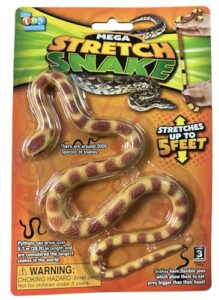
Not every enrichment item needs batteries. The Stretch Fake Snake Toy is low-tech by design — and that’s actually the point.
Starting at 22 inches and stretching toward 5 feet, it gives you flexibility in how you set up your boa’s environment. Drape it, coil it, or reposition it between feeding days to introduce novel visual cues. It won’t move on its own, but placement variety can still stimulate investigative behavior in curious individuals.
| Best For | Anyone who loves a good prank and wants a simple, reusable gag to mess with friends or family at parties and sleepovers. |
|---|---|
| Material | Flexible Material |
| Primary Use | Prank |
| Age Suitability | All Ages |
| Weight | 0.16 oz |
| Reusability | Limited |
| Durability Rating | Low |
| Additional Features |
|
- Stretches from 22 inches up to nearly 5 feet, giving you options for how you set it up
- Hyper-realistic scale detail makes it convincing enough to get a real reaction
- Lightweight and compact, so you can toss it in a bag and bring it anywhere
- Stretching it to the full 5 feet too often can cause it to snap or wear out
- The markings can peel off over time, which kills the realism pretty fast
- It’s pretty small at rest, so some people might clock it as fake before the scare lands
10. Rep Pals Stretchy Snake Toy
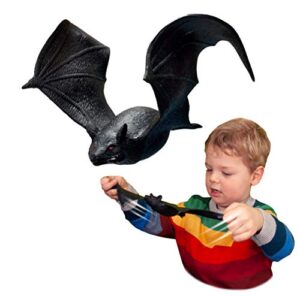
The Rep Pals Stretchy Snake Toy takes a different approach — small, tactile, and made for human hands rather than enclosure use. At under $8, it’s a practical pick for keepers who want something to fidget with during long observation sessions.
The bead-filled natural rubber body gives satisfying resistance when squeezed, and the realistic sculpted design appeals to snake enthusiasts. It won’t replace enclosure enrichment, but as a desk companion on monitoring days, it earns its spot.
| Best For | Kids and adults who want a fun, sensory-friendly fidget toy — especially great for children with autism or ADHD who enjoy tactile play. |
|---|---|
| Material | Rubber |
| Primary Use | Sensory/Stress |
| Age Suitability | All Ages |
| Weight | 2.12 oz |
| Reusability | Yes |
| Durability Rating | Low |
| Additional Features |
|
- Super stretchy and satisfying to squeeze, making it a solid stress-relief toy
- Collectible design with over 30 animals to choose from, so kids always want the next one
- At under $8, it’s an easy grab for party bags or a low-stakes gift
- Durability can be hit or miss — some users reported torn feet or broken parts after heavy use
- Aggressive stimmers may find it doesn’t hold up well over time
- A few shoppers found similar toys cheaper elsewhere, so it’s worth a quick price check
Frequently Asked Questions (FAQs)
How to tell if your boa has IBD?
Watch for chronic regurgitation, unexpected weight loss, and odd neurological signs like stargazing or head tremors. If your boa can’t right itself after rolling over, test for IBD immediately.
What is the disease in the boa constrictor?
Oddly enough, boas can suffer from many of the same problems you’d worry about in any reptile.
The most common diseases include Inclusion Body Disease, respiratory infections, mouth rot, skin infections, and internal parasites.
What is the fire gene in boas?
The fire gene is an incomplete dominant color morph in Boa constrictor imperator.
Single-gene animals show lighter, cleaner coloring.
Two copies produce a Super Fire — a striking white boa with black eyes.
What is the life expectancy of a boa constrictor?
A healthy boa constrictor usually lives 20 to 30 years in captivity. Some reach 35 to 40 years under ideal care. Plan for a long commitment before bringing one home.
Can morph genetics affect immune system function?
Yes, morph genetics can affect immune function. Color mutations may alter cell pathways that support immune response.
Albino boas, for example, often show higher stress sensitivity, which gradually suppresses their immune defenses.
Do certain morphs require specialized veterinary diagnostics?
Certain morphs do need specialized diagnostics. Albino boas often require detailed eye exams, while Super Motley and Super Jungle lines benefit from early bloodwork to catch metabolic problems before obvious symptoms appear.
Are morphs more prone to obesity issues?
Morphs aren’t inherently prone to obesity, but how they’re kept usually is the problem. Frequent feedings, small enclosures, and limited movement create the perfect conditions for steady, unnoticed weight gain.
How do morphs handle stress compared to wild-types?
Generally, they don’t handle it as well. Morph boas with underlying genetic vulnerabilities are hit harder by stress-induced immune suppression, recover more slowly from husbandry mistakes, and show more intense behavioral signs than wild-types.
Which morphs have undocumented long-term health risks?
Oddly enough, the morphs raising the most concern aren’t always the ones with obvious problems. Heavily linebred jungles, high-hypo combos, and certain albino lines quietly accumulate undocumented risks across generations.
Can morph boas live with other snake species?
No, morph boas shouldn’t live with other snake species. The risks — disease spread, competition, stress, and accidental predation — far outweigh any benefit. Keep them separate.
Conclusion
Think of morph genetics like a blueprint with known flaws—you can build carefully, but you can’t ignore what’s already in the design.
Boa constrictor morph health problems won’t always announce themselves early, but patterns do emerge for keepers who know what to watch. Document everything.
Work with a vet who understands reptile genetics. Choose breeders who prioritize health over novelty. The snake you invest in deserves care that matches the commitment it takes to keep one well.
- https://www.snakehaus.com/frontpage/education/genetics-morphs-breeding/locality-vs-morph/
- https://www.boa-constrictors.com/en/Interesting_facts_about_Boa_constrictor/Boa_constrictor_Care/diseases/Inclusion_Body_Disease
- https://www.eurekalert.org/news-releases/1081590
- https://www.sciencedaily.com/releases/2010/11/101103111210.htm
- https://www.reptifiles.com/red-tailed-boa-care/sick-boa/burns/