This site is supported by our readers. We may earn a commission, at no cost to you, if you purchase through links.
Check your snake’s belly tonight. Those tiny, fluid-filled bumps you spot on the ventral scales aren’t a cosmetic quirk, and they won’t heal on their own.
Blister disease in pet snakes starts quietly, often with a faint pink or brown stain, then turns septic in as little as 12 to 24 hours. Damp enclosures, dirty substrate, and a scratch from a sharp décor piece give bacteria the opening they need. Once infection reaches the bloodstream, you’re no longer treating a skin problem. You’re fighting for your snake’s life.
You can stop this. Learn the warning signs, the causes, and the fixes that work.
Table Of Contents
- Key Takeaways
- What is Blister Disease in Pet Snakes?
- Blister Disease Symptoms and Urgent Warning Signs
- Blister Disease Causes and Risk Factors
- Diagnosing and Treating Blister Disease in Snakes
- Preventing Blister Disease With Species-Appropriate Snake Care
- Frequently Asked Questions (FAQs)
- What is the most common cause of death in snakes?
- Can scale rot go away on its own?
- How long can snakes live with IBD?
- Can you get diseases from pet snakes?
- How to treat blister disease in snakes?
- What diseases can you get from pet snakes?
- What are the symptoms of paramyxovirus in snakes?
- Can blister disease spread between multiple pet snakes?
- How long does full recovery typically take?
- Are certain substrates safer than others for prevention?
- Conclusion
Key Takeaways
- Blister disease is a bacterial skin infection caused mostly by damp enclosures, dirty substrate, and skin injuries, and it can turn into life-threatening septicemia within 12 to 24 hours if you ignore it.
- You should check your snake’s belly weekly for fluid-filled bumps, discoloration, soft or lifted scales, discharge, or a foul smell, and call a reptile vet right away if you see any of them.
- It won’t heal on its own, so your vet will need to culture the infection, prescribe antibiotics for 45 to 60 days, and guide wound care, with full recovery taking around five months.
- You can prevent it by keeping humidity at 40-60%, using dry substrate like aspen or paper, cleaning the enclosure on a strict routine, and removing sharp décor that could scratch your snake.
What is Blister Disease in Pet Snakes?
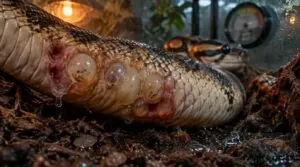
A snake’s skin is its armor, and blister disease breaks it down fast. Vets call it vesicular dermatitis, and it’s a bacterial skin infection that starts when your snake’s belly scales stay wet too long.
If you spot raised, fluid-filled bumps along the belly, this guide to snake skin infections and abnormal bumps can help you tell blister disease from other problems.
You’ll see fluidfilled lesions bubbling under the scales, usually along the underside. Left alone, those blisters rupture, and bacteria move deeper.
Excessive humidity and poor ventilation are the usual culprits. Damp, stagnant enclosures soften the skin, and soft skin invites infection. Don’t dismiss it as a cosmetic flaw.
Untreated, blister disease can turn into systemic infection: septicemia, organ damage, death. Catch it early and you’re looking at a manageable problem. Wait, and you’re looking at an emergency. Your snake can’t tell you that it hurts.
Blister Disease Symptoms and Urgent Warning Signs
Blister disease moves fast, and your snake won’t tell you it’s in trouble. Learn the warning signs below so you can catch the problem before it spreads beneath the skin. Check your snake’s belly and behavior against each one, and call your reptile vet the moment something matches.
Early Blisters And Discoloration
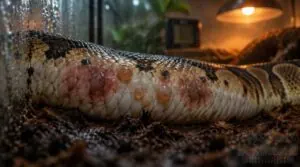
A small, raised bubble on your snake’s belly is never cosmetic. Early blisters are fluid-filled lesions, and they’re your best chance to stop vesicular dermatitis cold.
Check ventral scale lesions weekly. Look for red, pink, brown, yellow, or black discoloration where your snake touches the substrate.
Most cases trace back to excessive enclosure humidity, so reassess your humidity and temperature gradient whenever lesions appear.
Blisters lasting 48 hours mean the disease is advancing. Call your reptile vet today.
Lifted Or Soft Scales
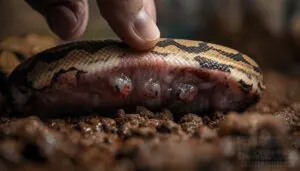
Blisters that go unnoticed don’t stay small. Fluid creeps underneath, and lifted scales follow.
Press gently along the belly. Healthy scales feel dry and papery. Soft scales feel spongy, almost waterlogged, and the edges turn red, pink, or brown. Ventral scale lesions like these mean poor husbandry and excessive moisture are winning.
Don’t wait for them to rupture. Book your vet now.
Discharge And Foul Odors
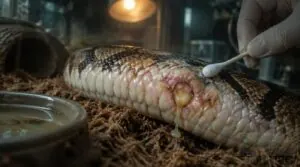
Once blisters rupture, purulent discharge takes over. It looks yellow or cloudy, and it brings foul odors you can’t miss. That smell means bacterial invasion is underway.
Keeping humidity in check and cleaning the enclosure regularly, as outlined in these proper snake hygiene practices, helps stop infections and mold from taking hold.
Check the lesion for skin maceration, soft and soggy tissue around the edges. This is secondary infection, not a simple blister.
Don’t wipe it and walk away. Call your vet today.
Appetite And Behavioral Changes
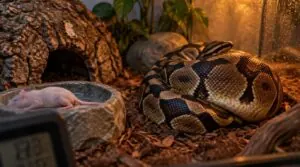
You’ll notice feeding refusal first. Don’t ignore it. Lethargy and behavioral changes follow fast.
Check these four things today:
- Verify temperature gradients with a digital thermometer.
- Watch for irritability, odd coiling, or rubbing on décor.
- Weigh your snake and log it.
- Start enclosure disinfection after removing the animal.
Refusal beyond three weeks means you call your vet immediately. Don’t wait.
Rapid Worsening And Weakness
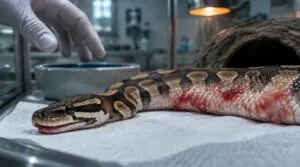
You can’t wait on this one. Rapid worsening means septicemia is taking over, and it moves fast.
Watch for lethargy, weakness, open-mouth breathing, red ventral scales, and a snake that won’t move or flick its tongue. Convulsions mean crisis.
Call your vet within 12 to 24 hours. Your snake needs systemic antibiotics now, not tomorrow.
Blister Disease Causes and Risk Factors
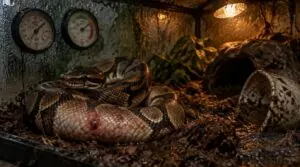
Blister disease doesn’t strike out of nowhere. It takes hold when your snake’s setup quietly fails it, and the warning signs you just read about are the end result. Here are the five risk factors to check in your own enclosure, starting today.
Excess Moisture And Poor Ventilation
Your snake’s skin can’t fight a swamp. Excessive humidity above 70% softens scales, and poor ventilation traps that damp air.
Fix these three things today:
- Cut vents to match 10% of surface area, curing any ventilation deficiency.
- Spot-clean wet substrate daily; substrate moisture over 25% invites lesions.
- Keep enclosure sanitation strict, and let humid hides dry completely.
Moisture never sleeps.
Contaminated Substrate
Dirty bedding is a slow-simmering stew, and your snake is sitting in it. Feces, urates, and spoiled food turn contaminated substrate into a breeding ground for bacterial infection.
Dirty bedding is a slow-simmering stew, and feces, urates, and spoiled food turn it into a breeding ground for bacterial infection
Don’t just spot clean. Pick a low-moisture substrate choice, skip cedar and pine, and practice weekly substrate replacement. Strict enclosure sanitation keeps pathogens from ever reaching softened skin.
Skin Injuries And Abrasions
A scrape looks harmless. It isn’t. Skin Injuries And Abrasions break the barrier that keeps bacteria out, and blister disease walks right in.
Check your enclosure setup today:
- Sanding sharp décor edges
- Replacing wire mesh your snake rubs against
- Swapping coarse bark for gentler substrate
- Watching for snout rubbing and behavioral changes
- Treating any skin trauma fast, before lesion progression starts
Parasites And Shedding Problems
Mites don’t just bite. Parasites drain blood and irritate skin, and shedding abnormalities follow. Retained shed then traps moisture against damaged scales.
| Problem | Effect | Action |
|---|---|---|
| Mites | Irritation | Treat |
| Retained shed | Moisture trap | Soak |
| Dry air | Poor separation | Husbandry review |
Do a husbandry review and substrate correction now. Don’t wait. Check the eyes, tail tip, and vent closely for stuck skin.
Opportunistic Bacterial Infection
Retained shed and mites leave skin barrier compromise behind. Then opportunistic bacteria move in. Aeromonas and Pseudomonas turn Blister Disease into bacterial dermatitis fast. Culture the fluid, because antibiotic sensitivity decides treatment. Watch for:
- Cloudy blister fluid
- Foul odor
- Soft, lifted scales
- Refusing food
- Sudden lethargy
Don’t wait for the smell. Call your vet today, before infection reaches the bloodstream.
Diagnosing and Treating Blister Disease in Snakes
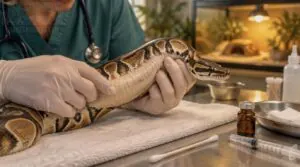
Blister disease won’t heal on its own, and waiting makes it worse. You need a reptile vet to confirm the diagnosis and start proper treatment before the infection spreads.
Here’s what recovery looks like, from prescribed antibiotics and wound care to safe supportive care at home and the follow-up visits that confirm your snake is truly healing.
Prescribed Antibiotics and Wound Care
A culture and sensitivity test comes first, because it tells your vet which systemic antibiotics will actually work. Enrofloxacin or ceftazidime are common picks, and you’ll give them for 45 to 60 days. Don’t stop early.
Wound care matters just as much. Soak your snake daily, use diluted Betadine, and skip salves. Your vet may add debridement and topical therapy.
Safe Supportive Care During Recovery
Antibiotics fight the infection, but your snake’s body does the healing. Support it. Check hydration levels first, because dehydrated snakes heal slowly. Offer fresh water and ask your vet about fluids.
Keep the temperature gradients species-correct, with a warm basking spot and a cool retreat. Weigh your snake weekly, and keep enclosure sanitation strict. Handle only when you must.
Healing Progress and Follow-Up Visits
Weigh your snake weekly and track every change. That’s your lesion monitoring routine: photograph blisters, note their size, and watch scales lie flat as the pink fades.
Expect your first vet recheck within 3 to 5 days, then followup visits every 7 to 14 days. Healing takes months, so don’t skip appointments. Stalled progress means repeat cytology or culture.
Preventing Blister Disease With Species-Appropriate Snake Care
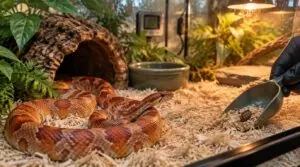
Always treat prevention as your first line of defense. Blister disease thrives on neglect, and your snake can’t tell you it’s suffering.
Start with species-specific care. Research your snake’s native habitat, then match its humidity, heat, and hiding spots. Your ball python’s needs aren’t your corn snake’s.
Make smart substrate choice decisions. Use aspen shavings or paper-based products, and never cedar or pine. Keep humidity at 40-60%, check your hygrometer daily, and keep air moving.
Build a proper temperature gradient, with a basking spot 8-10°F warmer than ambient, controlled by a thermostat.
Stick to a strict cleaning routine: spot-clean daily, change substrate every 4-6 weeks, and scrub water bowls weekly. Solid enclosure sanitation protects your snake’s skin from infection.
Frequently Asked Questions (FAQs)
What is the most common cause of death in snakes?
Poor husbandry is a silent assassin. Bad environmental management lets bacterial dermatitis erode skin barrier integrity, then septicemia strikes.
Don’t wait for systemic antibiotics to become your only option. Fix your enclosure setup right now.
Can scale rot go away on its own?
Scale rot is a slow leak in a hull.
Only very mild discoloration heals alone, after a husbandry review. Blisters mean blister disease; shedding won’t cure it. Call a vet for wound healing and prevention.
How long can snakes live with IBD?
IBD’s clock depends on species. Pythons often die within two to four months of neurological signs. Boas fight longer, sometimes years. Prognostic Factors like secondary infections decide everything. Protect your snake’s Quality of Life.
Can you get diseases from pet snakes?
Yes, you can. Salmonella is the big one, and zoonotic transmission happens through scales, water bowls, and unwashed hands. Wash for twenty seconds, every time. Kids under five and immunocompromised people face the highest risk.
How to treat blister disease in snakes?
You can’t fix this at home with ointment alone. Systemic Antibiotic Therapy from a herp vet comes first, and it’s what stops sepsis. Add Husbandry Correction, Substrate Hygiene, Topical Treatment, and Debridement when needed.
What diseases can you get from pet snakes?
Your snake can hand you Salmonella, and it’s the big one. Expect diarrhea, fever and cramps within days. Aeromonas, Pseudomonas and parasites like Cryptosporidium follow. Septicemia is the danger. Wash your hands, and call a reptile veterinarian.
What are the symptoms of paramyxovirus in snakes?
Watch for open-mouth breathing, wheezing, and nasal discharge. You’ll often see cheesy pus in the mouth. Feeding refusal and lethargy come first. Then comes head tremors, twisting, and lost muscle tone. Don’t wait.
Can blister disease spread between multiple pet snakes?
Your whole collection could rot overnight! Blister disease isn’t truly contagious transmission between snakes, but shared filth strikes everyone. Fix enclosure sanitation, humidity control and substrate correction now. Run a quarantine protocol, wash your hands, and separate every snake.
How long does full recovery typically take?
Expect a healing timeline of about five months. Your snake needs three to four complete sheds, plus a 45 to 60 day antibiotic course. Mild cases improve in weeks. Complications, like septicemia, stretch recovery time.
Are certain substrates safer than others for prevention?
Your snake’s bedding is either a shield or a trap. Substrate safety starts with dry, flat materials like newspaper or aspen. Skip any wet substrate. Contaminated substrate invites infection, so schedule a husbandry review and enclosure sanitation.
Conclusion
Last spring, a ball python owner spotted one pink-tinged scale and waited out the weekend. By Monday, the snake was septic.
Don’t repeat that. The truth about blister disease pet snakes: it moves fast, but you control the odds. Keep substrate dry, hides clean, décor smooth, humidity steady. Check bellies weekly. At the first fluid-filled bump, call your reptile vet, not tomorrow. Catch it early and your snake recovers. Wait, and you gamble its life.