This site is supported by our readers. We may earn a commission, at no cost to you, if you purchase through links.
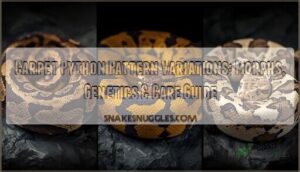
Every carpet python carries a unique fingerprint across its scales—banded stripes that spiral down the body, chaotic blotches that cluster near the spine, or clean geometric patterns that look hand-painted. These aren’t random accidents of nature.
Pattern variations in carpet pythons stem from specific genetic mechanisms that breeders have learned to manipulate, creating morphs that barely resemble their wild ancestors. Understanding what drives these pattern differences—from the subtle distinctions between subspecies to the dramatic transformations in designer morphs—gives you the foundation to identify what you’re looking at, predict what a breeding pair might produce, and appreciate the genetic artistry unfolding in your own collection.
Table Of Contents
- Key Takeaways
- What Are Carpet Python Pattern Variations?
- Key Subspecies and Their Natural Patterns
- Popular Natural and Selectively Bred Morphs
- Genetic Basis of Pattern Variations
- Breeding for Unique Carpet Python Patterns
- Caring for Carpet Pythons With Unique Patterns
- Frequently Asked Questions (FAQs)
- What are the different carpet python morphs?
- What are the unique markings of the carpet python?
- How many subspecies of carpet python are there?
- What is the most docile carpet python?
- How do temperature fluctuations affect pattern development?
- What feeding schedules optimize morph color intensity?
- Can stress influence pattern expression in juveniles?
- Do lighting conditions impact scale coloration patterns?
- Which substrates enhance natural pattern visibility best?
- Can pattern variations affect a pythons temperament?
- Conclusion
Key Takeaways
- Carpet python pattern variations stem from specific genetic mechanisms that differ from color morphs—pattern genes rearrange where markings appear on the body while color genes alter pigment chemistry, allowing breeders to combine both traits for designer morphs like Albino Jaguars.
- Geographic subspecies across Australia display distinct natural patterns shaped by their habitats, from high-contrast black-and-yellow jungle pythons in tropical rainforests to muted earth-toned desert populations, with each regional variation adapted for effective camouflage.
- Pattern inheritance follows predictable genetic pathways including simple recessive mutations (requiring two copies for expression), co-dominant mutations (visible with one copy), and complex polygenic traits that create spectrum outcomes rather than discrete categories in offspring.
- Breeding for specific patterns requires understanding both genetic testing to reveal hidden traits and ethical considerations, particularly avoiding morphs linked to neurological defects like the wobble syndrome that travels alongside certain pattern genes such as Jaguar.
What Are Carpet Python Pattern Variations?
Carpet python pattern variations are the visible differences in scale arrangements, markings, and designs that distinguish individual snakes from one another, whether through natural genetic diversity or selective breeding.
These visual traits can sometimes mirror those seen in different boa species characteristics, where geographic isolation has similarly shaped distinct color and pattern morphs.
While color morphs affect pigmentation, pattern variations specifically alter the physical layout of stripes, bands, blotches, or rosettes across the snake’s body. Understanding these variations helps you identify subspecies, predict breeding outcomes, and appreciate the stunning diversity within this species.
Breeders often combine these pattern traits with specific corn snake morphs to create visually striking animals that showcase both color and structural diversity.
Definition of Pattern Variations
Pattern variations in carpet pythons refer to the specific arrangement, shape, and distribution of scales and markings across the snake’s body, which can range from bold geometric designs to intricate, irregular patches. These visual phenotypes emerge from pattern genetics, creating everything from tight rosettes to sprawling saddles.
Understanding these pattern traits becomes especially important when selecting lighting for display enclosures, since proper lighting for different ball python morphs can either enhance or wash out these intricate color and pattern details.
For more information on proper temperature, humidity, and lighting, see these essential enclosure and lighting requirements.
You’ll notice these morph classification differences immediately:
Common morphs like amelanistic, anerythristic, and hypomelanistic varieties show distinct patterns in non-venomous snake types that help you identify them at a glance.
- Banded patterns – horizontal stripes wrapping around the body
- Blotched patterns – irregular patches scattered across the back
- Striped patterns – longitudinal lines running head to tail
- Reduced patterns – minimal markings with cleaner backgrounds
- Aberrant patterns – unique, asymmetrical arrangements breaking typical morph classification rules
Difference Between Pattern and Color Morphs
While those markings grab your attention first, understanding morph classification means recognizing that pattern expression and color variations work through completely different genetic pathways. Pattern morphs like Jaguar reorganize where markings appear on your carpet python’s body, while color morphs such as Albino alter pigment chemistry itself—think of one as rearranging furniture versus repainting walls.
Pattern morphs rearrange where markings appear on your carpet python, while color morphs alter the pigment chemistry itself
| Trait Type | What It Controls | Example Morph |
|---|---|---|
| Pattern Morphs | Marking arrangement, shape, continuity | Jaguar (incomplete dominant) |
| Color Morphs | Pigment type, concentration, tone | Albino (recessive) |
| Combined Morphs | Both pattern layout and palette | Albino Jaguar designer line |
Genetic testing reveals these differences clearly: color genetics affect chromatophores and pigment production, whereas pattern expression stems from developmental patterning genes that redistribute existing colors. Snake genetics shows morph inheritance follows predictable Mendelian ratios—Jaguar produces visible heterozygotes, but Albino carriers look normal until you pair them strategically. In the realm of carpet pythons, breeders working with can create striking new forms by combining these traits.
Why Pattern Variations Matter to Keepers
You’ll discover that visual appeal drives most keeper decisions—selective breeding has produced clean, vibrant black-and-yellow combinations that hobbyists prize, with high-contrast jaguars and diamonds commanding $1,500 to $2,200 on current market trends.
Pattern genetics shape five key keeper concerns:
- Investment value tied to morph rarity
- Breeding goals and lineage authenticity
- Visual satisfaction from unique color variations
- Identification accuracy for genetic tracking
- Breeder ethics around neurological traits in certain morphs
Key Subspecies and Their Natural Patterns
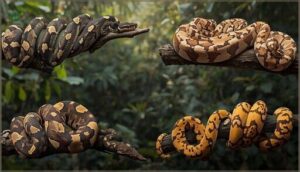
Carpet pythons aren’t just one species—they’re a diverse group spread across Australia, Papua New Guinea, and Indonesia, each with distinct natural patterns shaped by their environment.
Understanding these subspecies is essential if you want to identify wild-type patterns or appreciate how geography influences coloration and markings. Let’s break down the key subspecies and what makes each one visually unique.
If you’re planning to breed for specific patterns, understanding how recessive traits in corn snakes interact with subspecies genetics will help you predict which morphs might appear in your clutch.
Overview of Carpet Python Subspecies
The carpet python complex spans most of Australia’s coastline and beyond, encompassing several distinct subspecies that each bring their own genetic toolkit to the pattern variation game. From the coastal lowlands to rainforest pockets, habitat diversity drives subspecies classification.
You’ll find northwestern, coastal, jungle, and diamond pythons among others, each adapted to specific geographic ranges. Understanding species identification helps you recognize natural morphs before selective breeding enters the picture, which matters for both conservation status assessments and your breeding genetics decisions.
Distinctive Patterns by Geographic Range
You’ll notice geographic morphs shift dramatically across the species’ range. Tropical rainforest jungle pythons from northeastern Queensland flash high-contrast black and bright yellow bands, while humid eastern coastal populations showcase irregular tan or olive saddles.
Down south, temperate diamond pythons sport discrete pale rosettes on dark backgrounds—climate influence and habitat camouflage shaping each regional coloration. Desert populations favor muted earth tones adapted to rocky substrates.
Identification Tips for Wild-Type Patterns
Pattern recognition starts with examining the dorsal surface for irregular bands, saddle markings, and blotches characteristic of wild type markings. Scale edge color mirrors underlying patterns, creating effective camouflage strategies in native habitats.
Geographic variations produce distinct morphs—field guides detail these regional differences in snake genetics and color morphs. You’ll identify carpet python color variations by studying pattern intensity, contrast, and how reptile genetics shape natural forms.
Popular Natural and Selectively Bred Morphs
Carpet python morphs break the mold in terms of reptile diversity, offering everything from simple genetic mutations to jaw-dropping designer patterns.
Some morphs occur naturally in wild populations, while others are the result of careful selective breeding over multiple generations. Let’s examine the most popular morphs that have captured the attention of keepers and breeders worldwide.
Albino, Axanthic, Caramel, and Granite Morphs
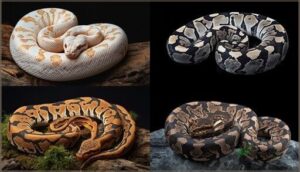
If you’re ready to break away from the ordinary and dive into the realm of genetic mutations, these four morphs represent some of the most well-documented and scientifically fascinating variations you’ll encounter in carpet pythons.
Albinos exhibit tyrosine-negative expression, eliminating dark pigmentation entirely. The axanthic morph removes yellow coloration, creating striking blue-grey specimens.
Caramels display co-dominant color genetics with warm, earthy tones, while granites showcase recessive pattern expression featuring fine, speckled appearances.
Jaguar, Zebra, and Other Designer Patterns
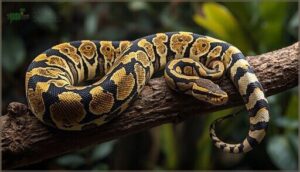
You’ll find jaguar morph specimens displaying bold, rosette-like blotching that sets them apart from conventional carpet python morphs.
Zebra morph variants feature striking perpendicular crossbands, creating high-contrast visual aesthetics through designer genetics. These designer morphs demonstrate variable pattern expression across lineages, with morph stability and color enhancement influenced by selective breeding techniques rather than simple recessive inheritance in snake genetics and morphs.
Combination Morphs and Unique Visual Traits
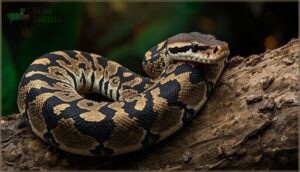
When you stack multiple genes, carpet python breeding creates phenotypes that push visual boundaries. Axanthic Jaguars blend desaturated silver tones with broken rosettes, while Caramel Axanthic combinations strip color down to striking black-and-white contrasts.
These multigene projects demonstrate how morph genetics and pattern expression interact—though jaguar-based morphs carry neurological risks you can’t ignore. Color variations and visual traits in snake genetics and morphs continue evolving through strategic lineage selection.
Genetic Basis of Pattern Variations
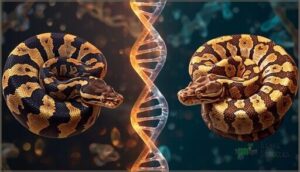
Understanding the genetics behind carpet python patterns unlocks your ability to predict what offspring will look like and why certain traits appear across generations.
The inheritance mechanisms range from straightforward single-gene mutations to complex polygenic interactions that shape everything from stripe width to color intensity. Let’s break down how these genetic principles actually work in practice.
Simple Recessive Vs. Co-dominant Mutations
Understanding snake genetics unlocks your freedom to create stunning carpet python morphs. Simple recessive mutations—like albino and granite—require two copies of the mutant allele for trait expression, while co-dominant mutations such as jaguar display visual changes with just one copy.
These inheritance patterns determine your breeding strategies and directly influence color variations and pattern outcomes in your collection.
Polygenic and Complex Inheritance Patterns
Beyond simple morph genetics, many carpet python pattern traits follow polygenic inheritance—where dozens or even hundreds of loci shape a single visual outcome.
You’ll see this in clutches where siblings show a spectrum of pattern intensity rather than discrete categories. Traits like stripe emergence and melanism don’t follow predictable Mendelian ratios, making quantitative genetics essential for predicting your breeding outcomes and understanding complex color variations in snake genetics.
How Genetics Influence Pattern Outcomes
Each allele you introduce modifies pattern development through gene expression and genetic linkage. When breeding jaguar morphs, you’re also selecting for wobble—the pattern gene and neurological trait travel together.
Allele interactions create surprising outcomes: pair zebra with granite and you’ll see additive effects neither parent showed alone. Your breeding choices enhance or mask genetic variation, so understanding morph development means tracking how multiple loci shape each python’s final appearance.
Breeding for Unique Carpet Python Patterns
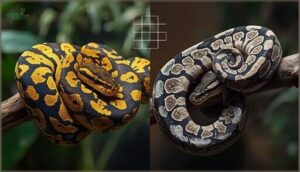
Breeding carpet pythons for specific patterns isn’t just about luck—it’s about understanding genetics and applying smart selective breeding techniques. You’ll need to predict which traits will show up in offspring, which means knowing how different morphs interact when paired together.
Before you start any breeding project, though, you should consider the ethical side of pattern selection and what it means for the health and welfare of these stunning snakes.
Selective Breeding Techniques
You’ll discover a whole new world of pattern possibilities once you master three core breeding techniques that top breeders use to produce those jaw-dropping carpet python morphs.
- Linebreeding: Pairing related specimens strengthens desirable genetic traits while maintaining heritability studies that track pattern inheritance across generations.
- Outcrossing: Introducing unrelated bloodlines prevents genetic bottlenecks and creates surprising morph combinations.
- Genetic testing: Laboratory analysis reveals hidden recessive genes, revolutionizing morph prediction accuracy for selective breeding strategies.
Predicting Offspring Patterns
Once you’ve paired your snakes, predicting offspring patterns demands solid genetic testing and a grasp of pattern inheritance modes. Simple recessive morphs need two copies from each parent, while co-dominant traits open up a spectrum of possibilities.
Track your breeding strategies with documented lineage data—accurate morph prediction hinges on knowing parental genotypes, not just their stunning color variations.
Ethical Considerations in Pattern Selection
Welfare priorities should drive every breeding decision you make—not just aesthetics. When selecting for patterns, breeder ethics require you to evaluate potential pattern risks alongside conservation impact.
Consider these principles:
- Avoid morphs linked to health defects or reduced vitality
- Document lineage transparently for owner responsibility
- Refuse patterns encouraging illegal wildlife capture
- Prioritize genetic mutations that don’t compromise snake welfare
Reptile enthusiasts deserve honest guidance on what their choices support.
Caring for Carpet Pythons With Unique Patterns
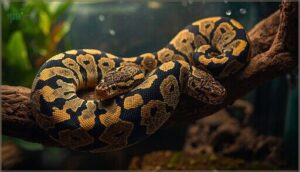
Caring for carpet pythons with unique patterns doesn’t require a completely different approach, but understanding a few key considerations will help you maintain your snake’s health and visual appeal.
Pattern morphs can sometimes come with specific genetic traits that affect husbandry decisions, from lighting needs to feeding responses. Let’s break down the essential care factors you should keep in mind when working with these stunning specimens.
Husbandry Needs for Patterned Morphs
Here’s the thing: your patterned morph doesn’t need special treatment. Maintain identical enclosure design and climate targets you’d use for wild-type carpet pythons—temperature gradients, humidity, and lighting schedules remain constant regardless of color variations.
Focus on environmental enrichment with varied substrates and hides for effective stress management. Track feeding strategies and growth independently to catch any morph-specific concerns during health monitoring routines.
Health Considerations Linked to Pattern Genetics
Pattern genetics can introduce health risks you shouldn’t ignore. Some morphs carry genetic disorders tied to pigmentation pathways, affecting immune response and neural development in subtle ways.
Watch for these morph syndromes:
- Vision impairments in certain color variations requiring regular veterinary care
- Skin integrity issues when genetic mutations compromise dermatitis resistance
- Reproductive complications from extreme morph combinations
- Neurological concerns linked to complex pattern genetics
- Susceptibility variations across different animal husbandry conditions
Track your snake’s health through detailed genetics-aware monitoring.
Tips for Maintaining Pattern Vibrancy
Sharp pattern preservation starts with proper lighting techniques and humidity control suited to your carpet python’s genetics. Maintain basking zones at 95-100°F and ambient humidity between 40-60% to support consistent shedding and scale health.
UVB provision enhances color variations by reaching pigment layers beneath the epidermis. Clean substrates every 3-4 months, and provide adequate hiding spots to minimize stress that dulls color enhancement in morphs over time.
Frequently Asked Questions (FAQs)
What are the different carpet python morphs?
Carpet pythons come in several morphs—from albino and axanthic color variations to jaguar morph rosettes and zebra stripes.
These pattern genetics result from selective snake breeding, creating stunning combinations like caramel morph and granite mutations.
What are the unique markings of the carpet python?
You’ll notice their skin features bold, irregular blotches and bands that create natural reptile camouflage.
Snake skin patterns vary dramatically between morphs—from striped zebras to spotted jaguars—making each python’s scale variations genuinely unique.
How many subspecies of carpet python are there?
How many variations exist among these pythons? Taxonomic debate continues, but two widely recognized Morelia spilota subspecies anchor carpet python species classification, with phylogenetic analysis revealing geographic variation that complicates species identification among regional morphs.
What is the most docile carpet python?
Coastal carpet pythons consistently demonstrate calmer temperaments in captivity, especially captive-bred individuals.
Proper handling techniques, python socialization, and enclosure enrichment substantially influence docile breeds’ behavior, making temperament testing and snake behavior observation essential for successful reptile care.
How do temperature fluctuations affect pattern development?
Temperature swings during embryonic development can dramatically reshape what your snake looks like at hatching—cooler incubation often mutes pattern contrast and darkens hatchlings, while excessive heat risks structural defects that disrupt normal banding.
What feeding schedules optimize morph color intensity?
You’ll want to feed hatchlings every 10 to 14 days and adults every 2 to 4 weeks with prey around 10 percent of body mass, avoiding powerfeeding that dulls color intensity.
Can stress influence pattern expression in juveniles?
Like a sculptor’s trembling hand, stress effects can distort juvenile development in carpet pythons.
Environmental factors may temporarily alter pattern expression and morph stability, though genetics ultimately guide the snake’s final appearance through proper reptile care and management.
Do lighting conditions impact scale coloration patterns?
Light exposure doesn’t alter your carpet python’s genetic color morphs, but ambient illumination dramatically enhances scale iridescence and perceived pattern depth.
Strategic lighting reveals hidden brilliance in axanthic and caramel specimens, amplifying their natural visual impact.
Which substrates enhance natural pattern visibility best?
Here’s the thing: matte substrates work wonders for pattern contrast and visual acuity in carpet python morphs.
Your enclosure design choices directly impact snake photography and how clearly you’ll observe genetic traits in reptile care.
Can pattern variations affect a pythons temperament?
Pattern genetics don’t influence carpet python temperament. Environmental impact, stress factors, and handling routines shape snake behavior far more reliably than morphs.
Temperament studies consistently show individual personality varies widely, independent of visible pattern variations.
Conclusion
Like Darwin’s finches evolving distinct beaks for different niches, carpet python pattern variations reveal nature’s blueprint for adaptation—then hand you the tools to push those boundaries further.
You’ve traced the genetic threads from wild-type bands to designer jaguar stripes, learned how inheritance shapes outcomes, and explored the care nuances each morph demands.
Now you hold the knowledge to curate collections that challenge convention, breed with intention, and celebrate the visual diversity these serpents offer without limits.