This site is supported by our readers. We may earn a commission, at no cost to you, if you purchase through links.
Your ball python hasn’t eaten in three weeks, and you’re starting to worry. The ambient temperature in your home has dropped with the season, and despite your best efforts to maintain the enclosure’s heat gradient, your snake seems less interested in food with each passing day.
This scenario frustrates countless reptile keepers every winter, but it’s not a crisis—it’s ectothermic biology in action. Cold weather fundamentally alters snake metabolism, slowing enzymatic activity and digestive processes to the point where feeding becomes risky rather than beneficial.
Understanding how temperature affects your snake’s internal systems determines whether you’re providing proper winter care or inadvertently creating health complications that won’t surface until spring.
Table Of Contents
- Key Takeaways
- How Cold Weather Affects Snake Feeding
- Recognizing Brumation in Pet Snakes
- Preparing Your Snake’s Enclosure for Winter
- Adjusting Feeding Schedules for Winter
- Safe Feeding Techniques in Cold Weather
- Monitoring Health During Winter Feeding
- Common Mistakes to Avoid in Winter Feeding
- Frequently Asked Questions (FAQs)
- Conclusion
Key Takeaways
- Cold weather slows snake metabolism by roughly 50% for every 10°C drop, making digestion dangerous below species-specific thresholds—feeding during temperature dips risks regurgitation, impaction, and respiratory infections.
- Brumation isn’t hibernation: snakes remain partially active and require you to pause all feeding once consistent dormancy signs appear (reduced activity across three feeding cycles, preference for cool zones, minimal responsiveness).
- Proper winter enclosure management demands stable thermal gradients (warm side 85–90°F, cool side 75–80°F), thermostat-controlled heating equipment, and humidity levels maintained at 50–60% to prevent respiratory distress and shedding complications.
- Species, age, and body condition dictate winter feeding frequency—ball pythons shift from weekly to monthly schedules, while juveniles across all species need tighter intervals than adults—but you must always warm frozen-thawed prey to appropriate temperatures and avoid handling for 24–48 hours post-feeding.
How Cold Weather Affects Snake Feeding
When temperatures drop, your snake’s entire system shifts gears—metabolism slows, digestion crawls, and appetite fades. Understanding these cold-weather changes isn’t just helpful; it’s essential for keeping your snake healthy and stress-free through winter.
Let’s break down exactly how cold weather impacts feeding behavior, digestion, and the risks you need to watch for.
Snake Metabolism and Temperature Changes
Thermal regulation drives everything about your snake’s winter survival. As ectothermic creatures, snakes rely entirely on external heat to power their metabolism—and when ambient temperature drops, their internal engines slow dramatically. This shift isn’t a malfunction; it’s an ancient adaptation that conserves energy when warmth becomes scarce.
That’s why accurate thermometer placement in your snake tank becomes essential during colder months—monitoring both basking and cool zones lets you replicate the temperature gradients wild snakes would naturally seek.
- Metabolic rates decline roughly 50% for every 10°C drop in core temperature
- Cold stress triggers reduced oxygen consumption and enzymatic activity
- Temperature fluctuations below species-specific thresholds initiate brumation responses
- Ectothermic responses include seeking refugia and abandoning routine feeding drives
Understanding the importance of methodological rigor scientific study audits can help inform decisions about snake care and brumation.
Impact on Digestion and Appetite
When temperatures drop, your snake’s digestive enzymes slow to a crawl. Metabolic slowdown means prey sits longer in the gut, reducing nutrient absorption and gut motility. This digestive health crisis elevates regurgitation risk and triggers appetite suppression, a survival reflex during brumation.
To safely navigate these shifts, check out our guide on seasonal appetite changes in snakes for feeding schedules that match your pet’s natural rhythm.
Winter snake feeding schedules must account for this shift in snake metabolism, because forcing meals during cold snaps can compromise reptile nutrition entirely.
Understanding language patterns is essential for researching and communicating effectively about snake care and brumation.
Risks of Feeding During Low Temperatures
Feeding your snake when temperatures fall below ideal thresholds invites serious digestive issues—prey can sit undigested, triggering impaction or regurgitation. Cold stress suppresses enzymatic activity, nutrient absorption falters, and respiratory infections take hold.
Temperature management becomes non-negotiable: without proper basking zones, your winter snake feeding schedule can’t support safe reptile health, and metabolic risks escalate rapidly during brumation-adjacent periods.
Recognizing Brumation in Pet Snakes

When temperatures drop, your snake’s behavior shifts in ways that can catch even experienced keepers off guard. Understanding brumation—the reptilian version of dormancy—is essential for knowing when to feed and when to step back.
Having the right feeding tools ready before brumation begins helps you respond quickly when your snake’s appetite returns.
Let’s break down what brumation actually looks like, how it differs from true hibernation, and the critical moments when you need to pause feeding entirely.
Brumation Vs. Hibernation Explained
Many reptile keepers mistakenly assume brumation and hibernation are interchangeable—they’re not. Understanding this metabolic shift is vital for your snake’s winter care. Brumation is reptile dormancy driven by cold adaptation, where ectotherm physiology allows periodic activity and thermoregulation continues at reduced levels.
Key differences include:
- Temperature control: Partial metabolic suppression versus dramatic drops
- Species: Reptiles brumate; mammals hibernate
- Activity: Periodic arousal versus deep torpor
- Feeding capacity: Irregular intake versus complete cessation
- Environmental cues: Thermal regulation response versus instinctual fat-reserve dependence
Recognizing these distinctions prevents dangerous husbandry errors during seasonal behavior changes.
For snakes that refuse food during winter months, understanding natural brumation cycles helps keepers avoid unnecessary stress or forced feeding attempts.
Behavioral Signs of Brumation
Vigilance during seasonal transitions helps you distinguish true brumation from illness. Your snake’s dormancy unfolds gradually—reduced responsiveness, feeding cessation, and extended periods in cooler hiding spots signal impending brumation patterns. Watch for tight coiling, slowed breathing, and minimal exploratory behavior as winter behavior intensifies. These brumation indicators confirm cold stress adaptation rather than compromised reptile health.
| Normal Brumation Patterns | Warning Signs Requiring Assessment |
|---|---|
| Gradual activity decline over weeks | Abrupt lethargy with mucous discharge |
| Stable weight despite reduced feeding | Rapid weight loss or visible emaciation |
| Occasional water intake maintained | Complete dehydration or labored breathing |
When Feeding Should Be Paused
Once your snake exhibits consistent brumation signs—reduced activity stretching beyond three consecutive feeding cycles—you’ll need to pause meals entirely.
Temperature readings below species-specific thresholds demand immediate feeding suspension, protecting against digestive complications during cold stress periods.
Resume winter care protocols only when seasonal behavior normalizes, appetite returns, and stable warmth maintains proper reptile care metabolism throughout your snake’s enclosure.
Preparing Your Snake’s Enclosure for Winter
Your snake’s enclosure is the first line of defense against winter’s chill, and getting it right means the difference between a thriving pet and a stressed one.
You’ll need to address three critical environmental factors: temperature gradients that allow thermoregulation, humidity levels that prevent respiratory issues, and heating equipment that works safely around the clock.
Let’s break down each component so you can create a winter-ready habitat that keeps your snake comfortable all season long.
Maintaining Proper Temperature Gradients

Your snake’s winter survival hinges on a stable thermal gradient across the enclosure—think of it as building a climate map your pet can navigate. Without proper temperature control through strategic heat source placement and enclosure design, brumation becomes dangerous territory.
To master gradient monitoring for effective reptile care:
- Position thermometers in warm and cool zones
- Verify surface temperatures with infrared readings
- Document daily fluctuations in your care log
Humidity Control in Cold Months
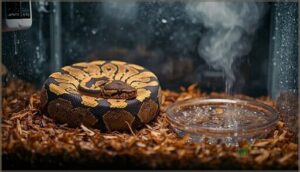
Cold air steals moisture from your enclosure faster than you’d expect, dropping humidity levels below the 50-60% threshold your snake needs for healthy shedding and respiratory function.
Install a digital hygrometer with an external probe for accurate humidity monitoring, adjust your winter substrate moisture accordingly, and track daily readings in your enclosure maintenance log to prevent skin irritation and support proper snake hydration throughout cold climate care.
Safe Use of Heating Equipment
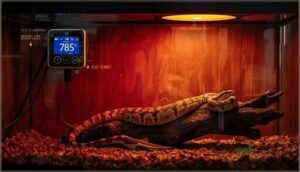
Thermostat settings aren’t optional—they’re your first line of defense against temperature swings that stress your snake.
Attach your heating elements to a dedicated controller, position temperature sensors at both basking and ambient zones to verify your thermal gradient stays within species range, and inspect heat sources monthly for frayed cords or malfunction that could spark disaster in your enclosure.
Adjusting Feeding Schedules for Winter
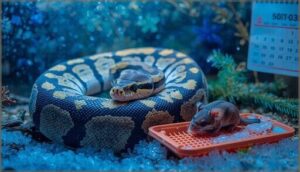
Winter transforms your snake’s feeding routine, and getting the schedule right makes all the difference between healthy maintenance and unnecessary stress.
Your snake’s species, age, and body condition determine how often meals should be offered when temperatures drop and metabolism slows.
Let’s break down the specific factors you need to take into account when adjusting your feeding protocol for the cold months ahead.
Species-specific Feeding Frequency
Not all snakes march to the same metabolic drumbeat, especially when winter’s chill sets in. Your feeding frequency must align with your species’ natural feeding cycles and metabolic rates to guarantee proper snake nutrition during cold months.
Here’s what you need to know:
- Ball pythons usually eat every 7–14 days as juveniles, shifting to 2–4 weeks as adults when accounting for brumation and reduced growth patterns.
- Corn snakes maintain 7–14 day intervals while growing, extending to biweekly or monthly feeds once mature.
- Boa constrictors require weekly feeds when young, shifting to 3–4 week cycles as dietary needs stabilize.
Matching winter care tips to your snake’s biology prevents digestive stress and aids healthy reptile nutrition year-round.
Age and Size Considerations
Beyond species differences, your snake’s age and size fundamentally reshape metabolic needs and feeding schedules. Hatchlings growing at rapid developmental stages demand prey sized 8–12% of body weight every 5–7 days, while adults tolerate 20–40% prey items spaced 2–4 weeks apart as growth rates plateau and energy demands shift toward maintenance rather than expansion.
| Life Stage | Prey Size (% Body Weight) | Feeding Frequency |
|---|---|---|
| Hatchling | 8–12% | Every 5–7 days |
| Juvenile | 10–15% | Every 7–14 days |
| Adult | 20–40% | Every 2–4 weeks |
Size adjustments prevent regurgitation while supporting healthy reptile nutrition through winter’s metabolic slowdown.
Tracking Appetite and Body Condition
Once you’ve dialed in prey size and feeding frequency, weight monitoring and body scoring become your early-warning system. Regular weighing and visual assessment of rib visibility, tail thickness, and spinal definition reveal whether your reptile nutrition strategy maintains healthy snake behavior through winter’s metabolic dip, protecting overall reptile health.
Keep feeding logs that track appetite trends—declining interest over consecutive meals signals shifting metabolic states tied to brumation or digestion efficiency concerns.
Safe Feeding Techniques in Cold Weather

When temperatures drop, the way you present food to your snake matters just as much as what you feed. Proper warming techniques, strategic timing, and post-meal protocols directly impact digestive success and minimize health risks.
Let’s walk through three essential practices that keep winter feeding safe and effective.
Warming Frozen-thawed Prey
Proper thawing techniques guarantee your snake receives frozen-thawed prey at an ideal temperature without bacterial risks. Thaw prey gradually—room temperature or cold water work best—then warm it to match your snake’s active range, verifying with a food-safe thermometer.
The surface should feel comfortably warm to gloved fingers, never hot, supporting safe handling and proper reptile nutrition throughout brumation and active feeding periods alike.
Best Times to Offer Food
Once your prey reaches the right temperature, timing becomes your next tool. Offer food late morning to early afternoon, when metabolic rhythms peak and thermal cues signal digestion readiness.
Track appetite patterns over several weeks to identify reliable feeding windows. Juveniles often need tighter schedules than adults, and individual snakes reveal their own metabolic rhythms once you observe consistently.
Minimizing Handling After Feeding
After your snake swallows its meal, patience becomes the most critical component of reptile care—resist handling for a full 24 hours to prevent Post Feeding Stress and Snake Regurgitation. Monitor through observation, not Gentle Interaction.
Document outcomes in your Feeding Logs, tracking winter preparation success. If brumation approaches, extend this hands-off period to 48–72 hours, safeguarding snake health when metabolic slowdown demands minimal disturbance.
Monitoring Health During Winter Feeding
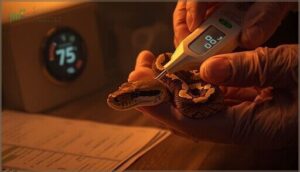
Winter feeding brings unique health challenges that require your careful attention and consistent observation. Even with perfect husbandry protocols, cold-weather months can trigger digestive complications, respiratory infections, and metabolic disturbances that demand early detection.
Let’s examine the critical warning signs you need to monitor and the specific thresholds that should prompt veterinary intervention.
Signs of Digestive Issues
Digestive health deteriorates rapidly when temperatures drop too low, manifesting in several unmistakable ways. You’ll notice regurgitation causes ranging from inadequate basking to prey that’s too large for slowed snake metabolism and behavior during brumation.
Watch for abdominal distress, abnormal fecal analysis results (watery, discolored, or absent), and persistent refusal to feed—all red flags signaling feeding issues requiring immediate intervention to preserve reptile health and wellness through winter months.
Recognizing Respiratory Problems
Breathing abnormalities demand your immediate attention, as respiratory signs often emerge when cold stress compromises immune function. Snake pneumonia develops insidiously during winter, particularly when ventilation issues combine with inadequate temperatures—a dangerous scenario affecting snake metabolism and behavior alongside digestive issues.
- Audible wheezing or gurgling during respiration indicates airway involvement requiring veterinary evaluation
- Mucus discharge from nostrils or mouth signals active infection, not normal brumation
- Open-mouth breathing coupled with reduced activity suggests respiratory distress
- Lethargy with abnormal breathing patterns differentiates illness from healthy brumation states
Monitor reptile health and wellness vigilantly throughout winter feeding periods.
When to Seek Veterinary Advice
When feeding stalls beyond two weeks or regurgitation becomes chronic, you’ve reached the threshold for veterinary care. Persistent bloating, respiratory distress, or stool abnormalities signal conditions requiring professional health checks. Reptile experts provide medical guidance essential for snake emergencies.
Veterinary medicine and advice specific to reptile and amphibian health ensures proper reptile care and management, safeguarding your pet snake care during winter when metabolic challenges intensify.
Common Mistakes to Avoid in Winter Feeding
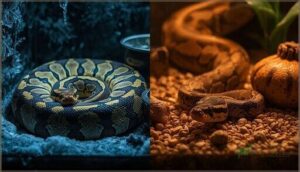
Even experienced keepers can stumble when adjusting their winter feeding protocols, and these missteps often stem from good intentions rather than negligence.
The most common errors involve feeding frequency miscalculations, temperature management failures, and timing conflicts with brumation cycles—each capable of triggering digestive distress or metabolic complications in your snake.
Let’s examine the three critical mistakes you’ll want to avoid this winter season.
Overfeeding or Underfeeding Risks
Getting feeding thresholds wrong during winter can devastate your snake’s health. Metabolic rates drop sharply in cold weather, making nutrition balance critical for reptile care and management.
Consider these dietary management principles:
- Obesity risk: Overfeeding causes fatty liver disease, increasing mortality
- Growth impairment: Underfeeding weakens immune function during brumation
- Regurgitation triggers: Inconsistent feeding frequency disrupts snake nutrition
- Dehydration complications: Reduced intake compounds winter health risks
Inadequate Temperature Control
Think of your enclosure as a tightly controlled laboratory—temperature fluctuations outside ideal ranges crash metabolic rate, triggering cold stress and digestive issues that leave prey rotting in the gut. Without proper thermal gradients (warm side 85–90°F, cool side 75–80°F), you’re gambling with regurgitation, immune suppression, and thermal burns from desperate basking.
Temperature control isn’t negotiable—fluctuations outside proper ranges crash your snake’s metabolism and turn meals into gut-rotting disasters
Heating safety protocols aren’t optional; they’re survival essentials respecting reptile physiology during brumation preparation.
Feeding During Deep Brumation
Once your snake enters deep brumation—that dormancy-like state coldblooded animals rely on for winter survival—feeding becomes dangerous. Metabolic shutdown means digestion stalls, and offering prey during this reptile hibernation period risks regurgitation, gut impaction, or energy waste your snake can’t afford.
Pause all meals until temperatures rise and activity returns; brumation nutrition is about respecting dormancy, not forcing winter snake care protocols that backfire.
Frequently Asked Questions (FAQs)
Can snakes eat live prey in winter?
While live prey seems natural, winter actually makes it risky. Brumating snakes have slow reflexes and reduced appetite, so feeding live food can lead to injuries—frozen-thawed alternatives are far safer.
How do wild snakes find food in cold?
In cold environments, wild snakes rely on infrared heat sensors to locate warm-blooded prey and shift their thermal hunting activity to warmer daylight hours when prey location becomes more predictable.
Should water temperature be adjusted for winter?
Like a thermostat that doesn’t need constant tweaking, water quality stays stable at lukewarm—never hot—to support hydration needs without disrupting thermal gradients. This prevents cold stress from temperature fluctuations during brumation-prone winter months in reptile care.
Do different snake species brumate at different temperatures?
Yes—brumation thresholds vary widely by species. Ball pythons slow at warmer temperatures than corn snakes, while garter snakes need cooler conditions.
Tropical species adapted differently than temperate relatives, reflecting each population’s seasonal metabolic rates.
What substrates work best for winter enclosures?
What keeps your snake’s feet comfortable when winter hits? Paper-based products, coconut husk fiber, and aspen shavings provide low-dust, hygienic substrate materials with moderate thermal mass for stable temperature and humidity control in reptile enclosure environments.
Conclusion
Knowledge is half the battle—execution completes it. Cold weather snake feeding demands vigilance: monitor temperatures daily, respect your animal’s metabolic signals, and never force meals when conditions aren’t ideal.
Your snake’s survival depends on precise environmental control, not arbitrary schedules. Document feeding responses, maintain thermal gradients within species-specific ranges, and recognize brumation as normal physiology rather than a medical emergency.
Winter care separates competent keepers from outstanding ones—your snake’s spring vitality reflects December’s discipline.