This site is supported by our readers. We may earn a commission, at no cost to you, if you purchase through links.
The wrong substrate can trigger respiratory infections in corn snakes within weeks—yet many pet stores still recommend cedar and pine shavings despite documented health risks. Your snake’s bedding isn’t just about aesthetics or odor control. It directly affects humidity levels, respiratory health, and natural behaviors like burrowing that reduce stress.
Choosing corn snake safe substrate options means understanding the difference between materials that support your snake’s wellbeing and those that quietly compromise it. The right substrate maintains 40-60% humidity without harboring mold, provides dust-free burrowing opportunities, and simplifies your cleaning routine.
From coconut fiber to bioactive mixes with live cleanup crews, you’ll find options that match both your snake’s needs and your maintenance preferences.
Table Of Contents
- Key Takeaways
- Factors to Consider When Choosing Substrate
- Safe Natural Substrate Options for Corn Snakes
- Substrates to Avoid and Potential Risks
- Top 10 Safe Substrates for Corn Snakes
- 1. Rural365 Hemp Animal Bedding
- 2. Galapagos Natural Aspen Pet Bedding
- 3. Riare Natural Coconut Fiber Reptile Bedding
- 4. Sukh Sphagnum Moss for Reptiles
- 5. Fluker’s Cypress Reptile Bedding
- 6. Zilla Coconut Husk Bedding
- 7. Riare Coconut Husk Reptile Substrate
- 8. ZeeDix Coconut Fiber Reptile Substrate
- 9. ReptiChip Coconut Reptile Substrate Bedding
- Chlorhexidine Antiseptic Solution for Horses and Dogs (for Cleaning, Not as Substrate)
- Substrate Maintenance and Hygiene Tips
- Frequently Asked Questions (FAQs)
- What is the best substrate for cornsnakes?
- What substrate to use for a corn snake?
- What bedding can I use for my corn snake?
- What can I use for corn snake substrate?
- What bedding is safe for corn snakes?
- What is the best flooring for snakes?
- What is the best substrate for rat snakes?
- How often should substrate be fully replaced?
- Can multiple substrate types be mixed together?
- What substrate works best during shedding periods?
- Conclusion
Key Takeaways
- Coconut fiber, cypress mulch, and hemp bedding are the safest substrate choices because they maintain 40-60% humidity, support natural burrowing behavior, and stay dust-free to protect your snake’s respiratory system.
- Cedar, pine shavings, sand, and gravel pose serious health risks—aromatic oils cause respiratory damage, sharp particles create impaction hazards, and these materials fail at moisture retention and odor control.
- Proper substrate depth of 3-4 inches for adults (4-6 inches for bioactive setups) allows natural burrowing while maintaining stable temperature gradients and humidity levels throughout the enclosure.
- Daily spot cleaning combined with full substrate replacement every 4-6 weeks prevents bacterial growth, mold, and mite infestations while maintaining the hygienic environment your corn snake needs to thrive.
Factors to Consider When Choosing Substrate
Choosing the right substrate for your corn snake isn’t just about what looks nice—it’s about creating a safe, functional environment that sustains their health. The wrong choice can lead to respiratory issues, dehydration, or even impaction if your snake accidentally ingests harmful materials.
Understanding reptile substrate options for beginners helps you weigh the pros and cons before making a decision that affects your snake’s daily comfort.
Choosing the right substrate isn’t just about aesthetics—it’s about creating a safe environment that prevents respiratory issues, dehydration, and impaction
Let’s break down the key factors you need to weigh before making your decision.
Moisture Retention and Humidity Control
Keeping humidity levels steady between 40 and 60 percent starts with choosing a substrate that manages moisture balance well. Here’s what you need to monitor:
- Water absorption and moisture retention — coconut fiber and cypress mulch hold moisture without soaking, while aspen shavings stay drier
- Substrate depth — 4–6 inches facilitates burrowing and prevents waterlogged bottoms
- Air circulation — proper ventilation stops condensation and mold growth
Dust Levels and Respiratory Safety
Fine airborne particles pose real dust hazards to both you and your snake—particles under 5 micrometers reach deep into lung tissue. Pine and fir pulp shavings, along with cedar, release respirable dust that can trigger coughing and airway irritation within minutes.
Choose low-dust substrates like coconut fiber or cypress to maintain a dust-free environment, ensuring respiratory health for reptiles and minimizing your own exposure during routine cage maintenance.
| Substrate Type | Dust Level | Respiratory Risk |
|---|---|---|
| Aspen shavings | Low–moderate | Minimal with ventilation |
| Coconut fiber | Very low | Safe for long-term use |
| Pine/Cedar | High | Severe—avoid entirely |
| Cypress mulch | Low | Safe with proper depth |
Natural Texture and Burrowing Support
Beyond dust control, your corn snake needs substrate that feels right underfoot—natural texture matters. Loose yet cohesive materials like coconut fiber or cypress support tunnel stability at 2–4 inches depth, letting your snake anchor grips and shape burrows that won’t collapse.
Natural materials with irregular surfaces encourage burrowing behavior, giving your pet the control and concealment that reduce stress daily.
Odor Control and Cleanliness
Strong substrate absorbency neutralizes ammonia from waste—your first line in odor control. Coconut fiber and hemp bedding excel at moisture retention without becoming waterlogged, keeping humidity regulation stable while locking in smells.
Here’s your cleaning schedule:
- Spot clean daily—pull feces and soiled patches immediately to halt odor buildup.
- Full substrate changes every 4–6 weeks—replace everything when smells persist despite cleaning.
- Use enzyme cleaners—spray enclosure surfaces weekly to break down residues without harsh chemicals.
Substrate Depth and Enclosure Size
Your enclosure dimensions dictate how deep you can layer substrate—adults need 40-gallon tanks (36″ × 18″) minimum, while juveniles thrive in 20-gallon setups. Aim for 3–4 inches of substrate depth for snake comfort, supporting burrowing space and humidity control without sacrificing vertical movement. Deeper substrate layering in larger enclosures stabilizes temperature gradients and naturalistic terrarium design.
| Enclosure Size | Recommended Substrate Depth |
|---|---|
| 20-gallon (juvenile) | 2–3 inches |
| 40-gallon (adult) | 3–4 inches |
| Bioactive setup | 4–6 inches |
Proper substrate depth requirements improve reptile enclosure maintenance and prevent compaction that restricts burrowing.
Safe Natural Substrate Options for Corn Snakes
Natural substrates offer the best balance of comfort, safety, and environmental enrichment for your corn snake. They support burrowing behaviors, regulate humidity effectively, and mimic the woodland floor habitats these snakes naturally inhabit.
Here are six proven substrate options that meet all the key criteria for healthy corn snake husbandry.
Coconut Fiber Substrate
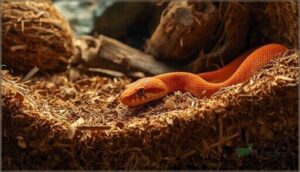
Coconut fiber stands as one of the most reliable reptile substrate options for your corn snake’s terrarium. This biodegradable material—derived from processed coconut husk—excels at maintaining humidity levels between 40-60% while supporting natural burrowing behavior.
You’ll want a substrate depth of 2-4 inches to encourage digging and enrichment. Its fibrous composition stays loose without compacting, and its eco-friendliness makes it a sustainable choice for conscientious keepers.
For more on its benefits, consider reading about the eco-friendly and sustainable substrate option made from coconut husks.
Cypress Mulch and Forest Floor Bedding
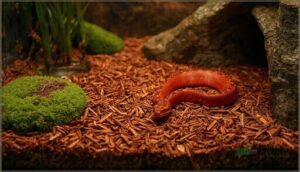
Cypress bedding offers a forest floor aesthetic with solid mulch benefits for your terrarium. This natural option accommodates burrowing needs while providing excellent moisture retention and odor control—ideal substrates for corn snakes requiring consistent humidity control.
Here’s what makes cypress safety standout:
- Low dust particles minimize respiratory irritation
- Fibrous texture encourages natural digging behaviors
- Long-lasting integrity reduces frequent replacement needs
Monitor moisture levels to prevent mold growth. Zoo Med is known for high-quality that’s favored by many reptile keepers.
Many keepers use a ball python setup cost calculator to budget for quality substrates and cleaning supplies before bringing their snake home.
Hemp Bedding
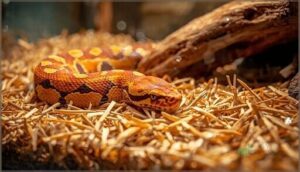
Hemp bedding might be the most underrated option for corn snake substrates—and for good reason. It absorbs moisture up to four times its weight, keeping humidity control manageable while naturally resisting mold. The low-dust fibers support healthy burrowing behavior without posing respiratory risks, and odor control remains effective between cleanings.
| Hemp Benefits | Why It Matters for Snake Health |
|---|---|
| Absorbs 4x its weight | Maintains consistent humidity levels |
| Low dust formula | Protects respiratory system |
| Soft texture | Encourages natural burrowing behavior |
| Antimicrobial properties | Reduces bacteria, odor buildup |
Use 3–4 inches of bedding depth for an ideal, naturalistic substrate in your snake habitat.
Aspen Shavings
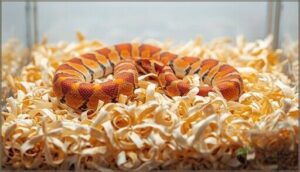
Aspen shavings deliver solid humidity control and odor management without breaking the bank—making them a go-to substrate for corn snake keepers. The kiln-dried texture facilitates natural burrowing behavior while absorbing several times its weight in moisture, keeping your enclosure cleaner between spot checks.
Aspen Benefits for Snake Comfort:
- Low dust formula protects respiratory health and reduces airborne irritants
- Soft, fibrous texture mimics forest floor bedding for natural enrichment
- 2–4 inch shaving depth provides adequate burrowing space without crowding
Sphagnum Moss
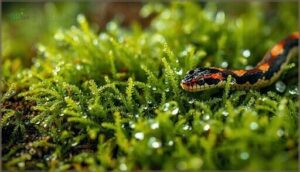
Sphagnum moss holds up to 20 times its weight in water, making it a powerful humidity booster for corn snake enclosures that need moisture retention. Its specialized cellular structure creates a sponge-like matrix that traps liquid and releases it gradually, stabilizing humidity between misting.
This bog habitat native thrives in waterlogged environments, but you’ll need vigilant mold prevention through regular spot cleaning and proper ventilation to protect reptile health and safety.
Bioactive and DIY Naturalistic Mixes
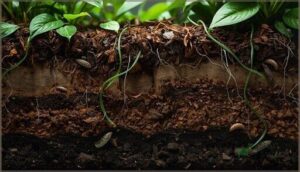
While sphagnum moss works in hides, you can build a complete living habitat with bioactive and DIY naturalistic mixes that regulate themselves. Layering coconut fiber, organic topsoil, and leaf litter creates a soil composition that maintains microbe balance and humidity control—replicating natural ecosystems your corn snake would explore in the wild.
Popular natural options include:
- Bio Dude Terra Firma kit – plant-ready with beneficial bacteria already established
- DIY naturalistic mix – 60% coconut fiber, 30% organic topsoil, 10% sphagnum moss
- Zilla Jungle Mix – pre-blended substrate layering for immediate use
- Isopods and springtails – cleanup crew that processes waste and controls mold
- Live plants – pothos or snake plants add oxygen and maintain moisture gradients
Substrates to Avoid and Potential Risks
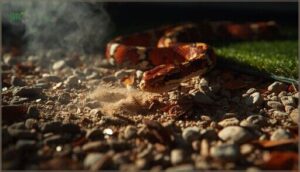
Not all substrate options are safe for your corn snake—some can cause serious health issues ranging from respiratory damage to impaction. While certain materials might seem convenient or affordable, they pose risks that far outweigh any short-term benefits.
Let’s walk through the substrates you should avoid and understand why they don’t belong in your snake’s enclosure.
Pine and Cedar Shavings
Pine and cedar shavings may seem like a cost-effective substrate, but they’re actually dangerous for your corn snake. The aromatic oils these wood shavings release can irritate your pet’s eyes and respiratory tract—leading to respiratory risks like bronchial inflammation and persistent sneezing.
These toxic effects extend to dermatitis causes when resinous compounds contact your snake’s belly, and small particles ingested during feeding can trigger gastrointestinal upset.
Gravel and Sand
Just as aromatic woods pose risks, gravel and sand hazards create equally serious problems. Fine sand can be inhaled, causing respiratory risks through impaction in your snake’s airway, while sharp grains abrade delicate mouth tissues during feeding. These substrates fail at moisture retention and odor control, creating unstable burrowing issues that stress your pet—despite their popularity in desert environments.
Why Gravel and Sand Fail Your Corn Snake:
- Respiratory tract damage – Dusty particles increase mold risks and cause inhalation injuries
- Poor substrate properties – No humidity absorption creates uneven microclimates across the enclosure
- Unsafe burrowing surface – Large particulates prevent natural digging behaviors essential for reptile care
Bark and Wood Chips
Wood chips and bark might look natural, but they bring wood chip hazards your corn snake doesn’t need. Chips harbor mold spores—respiratory issues spike when fungi multiply. They retain moisture poorly compared to coconut fiber or aspen shavings, accelerating ammonia buildup and odor. Bark allergens and chip irritation from residual tannins discolor mucous membranes, while toxicity risks emerge if ingested during feeding.
| Hazard Type | Health Impact |
|---|---|
| Mold & fungal spores | Respiratory tract inflammation |
| Residual oils & tannins | Mucous membrane irritation |
| Small chip migration | Eye and windpipe damage |
Skip bark-based reptile bedding alternatives—your snake deserves substrate that’s safe and functional.
Paper Towels and Reptile Carpet
Budget-friendly doesn’t mean risk-free. Paper towels crumble under moisture, blocking airflow and proper humidity control—your snake’s burrowing needs go ignored. Reptile carpet harbors bacteria and mold even after cleaning, compromising towel safety and snake comfort. Neither option aids odor control or natural digging.
For true reptile care, skip these carpet alternatives and choose functional reptile bedding that respects your corn snake’s instincts.
Shelf Liner and Contact Paper
Adhesive risks run high with shelf liner and contact paper—sticky residues cling to your corn snake’s belly, causing irritation and discomfort. Nonporous issues trap moisture, blocking natural humidity exchange. Injury hazards emerge from peeling fragments that snag mouths. No burrowing means your reptile’s instincts go unfulfilled.
For safe and hygienic reptile bedding, choose proper reptile substrate selection that promotes animal health and safety.
Top 10 Safe Substrates for Corn Snakes
Now that you know what to avoid, let’s get to the good stuff—substrates that actually work for your corn snake. I’ve tested and researched these options based on safety, humidity control, and how well they support natural behaviors.
Here are ten reliable choices that’ll keep your snake healthy and your enclosure clean.
1. Rural365 Hemp Animal Bedding
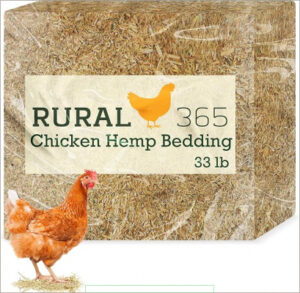
Hemp bedding is a standout for corn snakes—especially if you want serious absorbency and odor control. Rural365 Hemp Animal Bedding absorbs many times its weight in moisture, trapping ammonia and keeping your enclosure fresher between cleanings.
It’s dust-reduced compared to wood substrates, which protects your snake’s respiratory system. The soft, spongey texture allows for light burrowing and stays comfortable over time.
Plus, it’s environmentally friendly and lasts longer than traditional bedding. Just remember to spot-clean regularly and watch for mold in humid setups.
| Best For | Corn snake owners who prioritize low dust, high absorbency, and eco-friendly bedding that controls odor and moisture effectively. |
|---|---|
| Material Type | Hemp |
| Natural/Organic | Yes |
| Odor Control | Yes |
| Absorbency | High |
| Suitable For Snakes | Yes |
| Dust Level | Low |
| Additional Features |
|
- Absorbs multiple times its weight in moisture and traps ammonia, keeping the enclosure fresher longer
- Dust-reduced formula protects your snake’s respiratory health better than wood substrates
- Environmentally friendly and lasts longer than traditional bedding options, reducing how often you need to replace it
- More expensive upfront compared to common alternatives like aspen or paper bedding
- Requires regular spot-cleaning and monitoring in humid setups to prevent mold growth
- Contains a California Prop 65 warning about potential chemical exposure
2. Galapagos Natural Aspen Pet Bedding
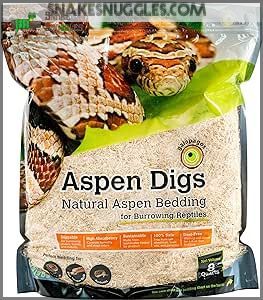
Aspen bedding remains one of the most trusted substrates in reptile care—and Galapagos Natural Aspen Pet Bedding delivers on that reputation. It’s 100% natural, chemical-free, and soft enough for your corn snake to burrow and dig comfortably.
The kiln-dried shavings absorb moisture well, keeping the enclosure drier and reducing odor buildup. Plus, it’s low dust compared to many wood products, which helps protect your snake’s respiratory system.
Just watch for occasional dust during setup and refresh regularly to maintain hygiene.
| Best For | Corn snake owners who want a natural, absorbent substrate that supports burrowing behavior without harsh chemicals. |
|---|---|
| Material Type | Chlorhexidine Solution |
| Natural/Organic | No |
| Odor Control | Yes |
| Absorbency | N/A |
| Suitable For Snakes | No |
| Dust Level | N/A |
| Additional Features |
|
- 100% natural aspen with no added chemicals, oils, or artificial additives
- Superior moisture absorption helps control odor and maintain a drier enclosure
- Soft texture encourages natural burrowing and digging behaviors
- Some users report dust issues despite low-dust claims—may need sifting before use
- 8-quart volume might not be enough for larger enclosures without frequent refills
- Requires regular replacement to maintain hygiene and prevent moisture buildup
3. Riare Natural Coconut Fiber Reptile Bedding
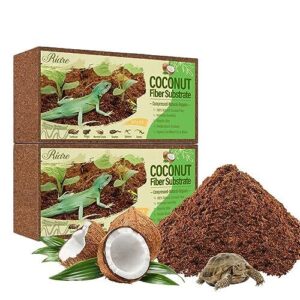
Riare’s coconut fiber bricks expand into a fluffy, breathable bedding that balances moisture retention with proper drainage—ideal for corn snakes that need moderate humidity. Each 7.8 x 3.9 x 1.97-inch brick soaks and fluffs quickly, creating a soft layer your snake can burrow through comfortably.
It’s odorless, biodegradable, and manages spot cleaning well. The substrate absorbs waste liquids efficiently while releasing excess moisture gradually, preventing soggy buildup.
Just expect some dust when handling dry bricks, and soak thoroughly before use.
| Best For | Corn snake owners who want a natural, low-odor substrate that holds humidity well and allows for natural burrowing behavior. |
|---|---|
| Material Type | Aspen Wood |
| Natural/Organic | Yes |
| Odor Control | Yes |
| Absorbency | Superior |
| Suitable For Snakes | Yes |
| Dust Level | Low |
| Additional Features |
|
- Expands quickly when soaked and creates a soft, breathable layer that’s comfortable for burrowing
- Retains moisture efficiently while draining excess to prevent soggy conditions
- Odorless, biodegradable, and handles spot cleaning well
- Can be dusty when handling the dry bricks before soaking
- Some users report the bricks are difficult to break down fully when hydrating
- May attract flies when used with certain feeders like crickets
4. Sukh Sphagnum Moss for Reptiles
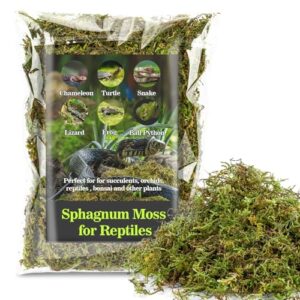
Sphagnum moss won’t work as your primary substrate, but it’s invaluable for creating humid microclimates during shedding. This 5-ounce fibrous moss holds moisture for days without turning soggy, releasing humidity slowly to help your corn snake shed cleanly and completely.
Place it in hide boxes or layered over problem shed areas—the damp surface reduces friction and keeps scales supple. Replace weekly to avoid mold, and skip it if your snake likes licking surfaces, since dust particles can irritate the digestive tract.
| Best For | Corn snake owners who need to boost humidity in hides during shedding periods without switching their entire substrate setup. |
|---|---|
| Material Type | Coconut Husk |
| Natural/Organic | Yes |
| Odor Control | Yes |
| Absorbency | High |
| Suitable For Snakes | Yes |
| Dust Level | Moderate |
| Additional Features |
|
- Holds moisture for days without getting waterlogged, creating steady humidity exactly where your snake needs it
- Soft, fibrous texture reduces friction on stuck shed and keeps scales supple during the molting process
- Works great in hide boxes or layered over problem areas like the tail tip without taking over the whole enclosure
- Can’t be used as the main substrate—only works as a supplemental humidity booster in specific spots
- Breaks down into dusty particles over time, which isn’t safe for snakes that lick their environment
- Needs weekly replacement to prevent mold growth, adding to your regular maintenance routine
5. Fluker’s Cypress Reptile Bedding
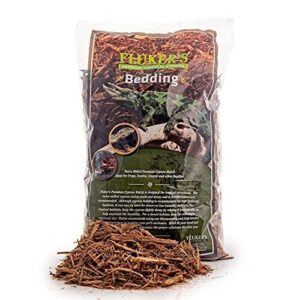
Twice-milled cypress mulch gives you a soft, forgiving texture your corn snake can burrow into without sharp edges. Fluker’s holds moisture without turning moldy—ideal for maintaining 40–60% humidity during sheds—and its natural aroma masks waste odors between spot cleanings.
Mist lightly after setup since it arrives dry, and layer two to three inches deep for burrowing species. Replace every four to six weeks or when you notice dampness turning stale. Some bags carry mites, so freeze for 48 hours before use if your snake’s sensitive.
| Best For | Corn snake owners who need a budget-friendly substrate that holds humidity during sheds and allows natural burrowing behavior. |
|---|---|
| Material Type | Sphagnum Moss |
| Natural/Organic | Yes |
| Odor Control | Yes |
| Absorbency | High |
| Suitable For Snakes | Yes |
| Dust Level | Moderate |
| Additional Features |
|
- Maintains 40–60% humidity without getting moldy or soggy
- Soft, twice-milled texture is gentle on snake bellies and encourages burrowing
- Natural cypress scent helps mask waste odors between spot cleanings
- Arrives dry and requires misting before use to reach ideal moisture levels
- Some bags may contain mites—freeze for 48 hours before adding to enclosure
- Needs full replacement every 4–6 weeks as dampness breaks down the mulch
6. Zilla Coconut Husk Bedding
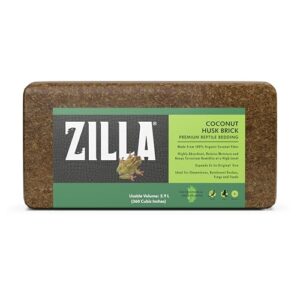
Compressed coconut fiber arrives as a brick and expands up to five times its size when you add water—enough to cover a 55-gallon enclosure floor. Zilla’s husk bedding holds moisture evenly, keeping tropical humidity steady at 50–70% without turning soggy, and its soft texture invites natural burrowing while cushioning eggs during incubation.
Break up clumps during hydration to avoid dense patches, then layer four to six inches deep. Spot-clean weekly and replace fully every three to four weeks once compaction or odor develops.
| Best For | Keepers of tropical reptiles like chameleons, rainforest geckos, frogs, and toads who need consistent humidity and soft bedding for burrowing or egg laying. |
|---|---|
| Material Type | Cypress Mulch |
| Natural/Organic | Yes |
| Odor Control | Yes |
| Absorbency | Moderate |
| Suitable For Snakes | Yes |
| Dust Level | Moderate |
| Additional Features |
|
- Expands up to five times its size when hydrated, covering a 55-gallon tank floor from a compact brick
- Holds moisture evenly to maintain 50–70% humidity without getting waterlogged or developing odor quickly
- Soft, non-toxic coconut fiber encourages natural burrowing and safely cushions eggs during incubation
- Requires patience to rehydrate and break up clumps—can be messy and time-consuming during initial setup
- Needs spot-cleaning weekly and full replacement every three to four weeks once it compacts or smells
- Not suitable for all species, including certain arid reptiles or invertebrates like jumping spiders
7. Riare Coconut Husk Reptile Substrate
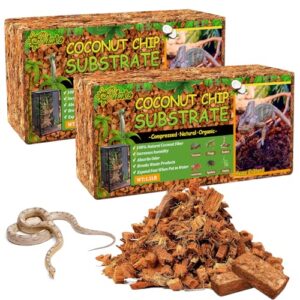
This two-pack expands into a soft, fibrous layer that absorbs odors and regulates humidity between 50–70% for weeks at a time. Organic coco chips compress neatly for storage, then fluff up when moistened—ideal for corn snakes that burrow and explore.
Rinse the brick before use to flush fine dust, sort through for stray clumps, then spread three to four inches deep. Spot-clean waste weekly and replace the entire bed every three to four weeks.
| Best For | Reptile owners who need an affordable, natural substrate that handles humidity and odor while giving burrowing species like corn snakes and ball pythons a soft digging surface. |
|---|---|
| Material Type | Coconut Fiber |
| Natural/Organic | Yes |
| Odor Control | Yes |
| Absorbency | High |
| Suitable For Snakes | Yes |
| Dust Level | Low |
| Additional Features |
|
- Expands into a thick layer that absorbs odors and holds moisture for consistent humidity
- Compresses small for storage, then fluffs up when you add water
- Can be reused as garden mulch after you replace it
- Takes time to rinse, moisten, and break apart the compressed bricks
- Some users found clay clumps, string, or plastic bits mixed in
- Needs sorting before use to remove debris
8. ZeeDix Coconut Fiber Reptile Substrate
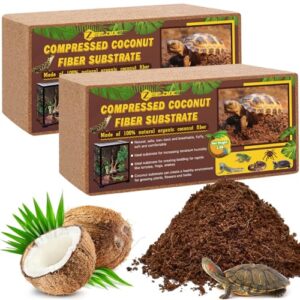
Each ZeeDix brick expands into lightweight, fluffy bedding when soaked—about 1.4 pounds per pack—creating enough material to layer three to four inches deep. Rinse the brick before spreading it to clear excess dust, squeeze out surplus water, then let it fluff overnight.
The organic coconut fiber absorbs moisture and waste quickly, holding enough humidity for corn snakes without turning soggy. Spot-clean droppings daily and swap the full bed every four to six weeks to prevent mold and keep odors at bay.
| Best For | Reptile owners looking for natural, affordable bedding that holds humidity well and controls odors without much hassle. |
|---|---|
| Material Type | Coconut Husk Chips |
| Natural/Organic | Yes |
| Odor Control | Yes |
| Absorbency | High |
| Suitable For Snakes | Yes |
| Dust Level | Low |
| Additional Features |
|
- Expands into a generous amount of lightweight, fluffy substrate that’s easy to spread and maintain
- Absorbs moisture and waste quickly while keeping the habitat humid enough for tropical and semi-tropical reptiles
- Made from 100% natural coconut fiber that’s biodegradable and safe for a wide range of pets
- Requires soaking, rinsing, and squeezing before use, which adds extra prep time
- May contain excess dust or water that needs to be cleared out before adding to the enclosure
- Some users have reported bad batches with foul odors or bricks that don’t expand properly
9. ReptiChip Coconut Reptile Substrate Bedding
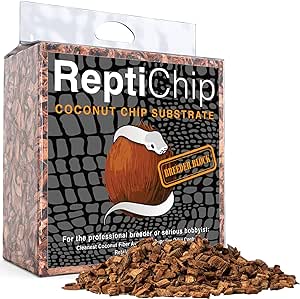
Each 72-quart ReptiChip brick expands into ten pounds of shredded coconut husk when you add water—enough to layer two to four inches deep across most corn snake enclosures. The chip texture stays dust-free and encourages natural burrowing while absorbing odor and moisture without turning waterlogged.
Rinse the block before use, then monitor humidity weekly to keep shedding cycles smooth. Spot-clean waste daily and replace the full bed every one to three months to avoid mold or mite buildup.
| Best For | Corn snake owners who want a natural, humidity-holding substrate that supports burrowing behavior and stays low-dust for cleaner habitats. |
|---|---|
| Material Type | Coconut Fiber |
| Natural/Organic | Yes |
| Odor Control | Yes |
| Absorbency | High |
| Suitable For Snakes | Yes |
| Dust Level | Low |
| Additional Features |
|
- Expands from a compact 72-quart brick to 10 pounds of bedding, covering most enclosures with 2–4 inches of substrate
- Absorbs odor and holds moisture without getting soggy, which helps maintain steady humidity for healthy sheds
- Shredded coconut texture stays dust-free and mimics natural ground cover, encouraging natural digging instincts
- Costs more upfront than paper or aspen alternatives
- Takes time to hydrate properly—rushing the process can leave dry pockets in the substrate
- Requires full replacement every 1–3 months to prevent mold, which adds to long-term maintenance effort
Chlorhexidine Antiseptic Solution for Horses and Dogs (for Cleaning, Not as Substrate)
You won’t use chlorhexidine as substrate—it’s a two-percent topical antiseptic for wound cleaning on horses and dogs, not reptiles. Antibacterial properties target gram-positive and gram-negative bacteria, supporting hygiene and odor control in veterinary first aid.
However, skin irritation risks and lack of reptile-specific data mean you should seek veterinary guidance before applying it near your corn snake. Prioritize animal safety and reptile health and safety with proven cleaning methods instead.
Substrate Maintenance and Hygiene Tips
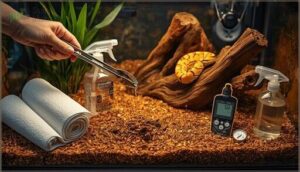
Even the best substrate won’t do its job if you don’t maintain it properly. Regular cleaning prevents bacterial growth, mold, and pest infestations that can threaten your snake’s health.
Here’s how to keep your corn snake’s enclosure clean and safe.
Spot Cleaning and Full Replacement Schedule
Keeping your corn snake’s enclosure fresh doesn’t have to feel overwhelming. Daily spot checks help you catch waste early, while humidity control and proper substrate depth guarantee your reptile habitat setup stays healthy. Here’s your cleaning roadmap:
- Daily Spot Cleaning — Remove visible waste immediately to prevent odor and retain moisture balance
- Weekly Deep Checks — Inspect damp areas where regular spot cleaning prevents mold
- Full Replacement — Swap substrate every 2–3 months, or sooner if saturation or persistent odors develop
Monitoring for Mold, Mites, and Odors
You’ll know your substrate’s working when you don’t smell it. Odor management means your nose leads the way: persistent smells trigger substrate maintenance, even if humidity monitoring shows proper levels.
Check for mold detection by looking for visible growth or musty odors—signs of excess moisture retention.
Mite control starts with visual scans for tiny white specks during spot cleaning.
Trust your senses.
Proper Disposal of Used Substrate
Check local regulations before tossing spent substrate—some areas ban animal bedding in household bins.
You can compost clean, feces-free material mixed with garden waste, though it must heat properly to kill pathogens. Donation options include community gardens seeking moisture retention boosters.
Bioactive substrate works well for waste reduction since it breaks down naturally, maintaining humidity and odor control while minimizing landfill contributions.
Safe Cleaning Practices for Enclosures
Regular spot cleaning keeps your corn snake’s space fresh without constant overhauls. Unplug heat sources and remove your snake before any deep work. Use fragrance-free, snake-safe cleaners on surfaces, rinse completely, and let everything dry.
A weekly inspection of substrate depth plus full changes every 4–6 weeks maintains hygiene, odor control, and a dust-free environment with proper humidity control and moisture retention.
Frequently Asked Questions (FAQs)
What is the best substrate for cornsnakes?
The best substrate for corn snakes balances humidity control with safety. Coconut fiber, cypress mulch, and hemp bedding top the list. Each facilitates natural burrowing behavior while maintaining proper moisture levels for healthy shedding.
What substrate to use for a corn snake?
The best substrate balances opposing needs: moisture for healthy sheds yet quick-drying structure.
Corn snakes thrive in coconut fiber, cypress mulch, or hemp bedding layered 3–4 inches deep—supporting burrowing behavior while controlling humidity and odor.
What bedding can I use for my corn snake?
You can use coconut fiber, aspen shavings, cypress mulch, hemp bedding, or bioactive mixes—each facilitates burrowing, controls odors, and maintains safe humidity without respiratory irritation for your corn snake.
What can I use for corn snake substrate?
You can use coconut fiber, cypress mulch, hemp bedding, or aspen shavings—all support natural burrowing, humidity control, and respiratory safety while mimicking your corn snake’s wild substrate materials and enclosure design preferences.
What bedding is safe for corn snakes?
Your corn snake thrives on coconut fiber, cypress mulch, hemp bedding, aspen shavings, and sphagnum moss. Each substrate supports humidity control, natural snake behavior, and respiratory safety while transforming enclosure design into a comfortable, low-dust habitat.
What is the best flooring for snakes?
Your snake enclosure needs absorbent, low-dust substrate depth of 4–6 inches for burrowing comfort.
Choose coconut fiber, aspen, or cypress mulch over reptile carpeting or snake floor mats—natural options support humidity control and healthy pet bedding.
What is the best substrate for rat snakes?
Think of substrate as a safety net—choose soft coconut fiber, cypress mulch, or hemp bedding that holds humidity well, allows natural burrowing, and stays dust-free to protect your snake’s respiratory health.
How often should substrate be fully replaced?
Plan to fully replace substrate every 6 to 12 months—sooner if you notice persistent odors, mold, or compaction.
Replacement schedules depend on humidity control, burrowing needs, and regular health monitoring of your snake.
Can multiple substrate types be mixed together?
Yes, you can mix substrates—like coconut fiber with cypress mulch—to balance moisture control and create a burrowing-friendly blend.
Verify hybrid layers are compatible, monitor humidity levels, and maintain proper substrate depth.
What substrate works best during shedding periods?
Nothing matters more than moisture retention during molts. You’ll want coconut fiber or sphagnum moss—both hold humidity around 60–70 percent without oversaturating, supporting burrowing needs while preventing crusty shed complications.
Conclusion
An ounce of prevention is worth a pound of cure—especially regarding respiratory health. Your choice among corn snake safe substrate options sets the foundation for everything from humidity regulation to stress-free burrowing.
Avoid aromatic woods and dusty materials that compromise breathing. Stick with coconut fiber, cypress mulch, or hemp bedding that fosters natural behaviors while simplifying maintenance.
The substrate you choose today determines whether your snake thrives or merely survives tomorrow.