
This site is supported by our readers. We may earn a commission, at no cost to you, if you purchase through links.

Corn snakes have quietly become most popular pet snakes in North America—and it’s not hard to see why.
They’re calm, manageable, and surprisingly personable for a reptile that can’t exactly wag its tail.
Unlike many exotic pets that come with a steep learning curve, a well‑kept corn snake usually meets you halfway.
Still, easy doesn’t mean simple.
Getting corn snake temperament and care right from the start makes the difference between a thriving animal and a stressed one.
What follows covers everything you need to know.
Table Of Contents
- Key Takeaways
- Corn Snake Temperament Explained
- Essential Corn Snake Care Basics
- Nutrition and Feeding Guidelines
- Common Health Issues in Corn Snakes
- Top 10 Products for Corn Snake Care
- 1. Repti Zoo 50 Gallon Glass Terrarium
- 2. ReptiChip Coconut Substrate for Reptiles
- 3. Zilla Reptile Shale Rock Den
- 4. iPower Hydroponic Seedling Heat Mat Thermostat
- 5. Exo Terra Large Reptile Water Dish
- 6. iPower Digital Heat Mat Thermostat Controller
- 7. iPower Reptile Under Tank Heater
- 8. TempPro TP50 Digital Hygrometer Thermometer
- 9. Corn Snakes Comprehensive Owner’s Guide
- 10. Complete Corn Snake Care Handbook
- Frequently Asked Questions (FAQs)
- Is it hard to take care of a corn snake?
- Are corn snakes beginner friendly?
- Are corn snakes friendly?
- How difficult is it to take care of a corn snake?
- What is the temperament of a corn snake?
- Can corn snakes live together peacefully?
- What causes corn snakes to refuse food?
- How do corn snakes reproduce and breed?
- Do corn snakes require special winter care?
- What plants are safe for corn snake enclosures?
- Conclusion
Key Takeaways
- Corn snakes are one of the calmest, easiest snakes to keep, but building real trust takes consistent, low-pressure handling over time — not just good intentions.
- Their enclosure needs a proper temperature gradient (cool side 75–82°F, warm side 85–88°F) and 65–75% humidity, because getting this wrong is the root cause of most health and behavior problems.
- Feed prey sized to 1–1.5× your snake’s midbody width, always frozen-thawed, and adjust frequency by age — hatchlings every 5–7 days, adults every 14–21 days.
- Most common health issues like respiratory infections, stuck sheds, and mites are preventable with clean enclosures, stable humidity, and annual vet check-ins.
Corn Snake Temperament Explained
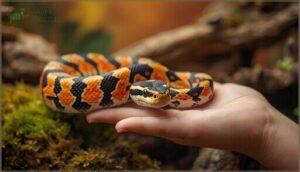
Corn snakes have a reputation for being one of the easiest snakes to keep — and their temperament is a big reason why. They’re naturally calm, curious, and with a little patience, genuinely enjoyable to handle.
Pair that calm nature with the right setup — like snake hides designed for kids with pet snakes — and you’ve got a setup that’s as stress-free for the snake as it is for its owner.
Here’s what you need to know about their personality, stress signals, and how to build real trust with your snake.
Docile Nature and Personality Traits
Corn snakes are genuinely one of the calmest pet snake species you can own. Their docile temperament makes handling feel easy and natural — most settle into relaxed Activity Patterns within weeks.
Individual Temperament varies, so some show bolder Curiosity Levels while others stay reserved.
Either way, consistent Affectionate Interactions build real trust, and Bonding Behaviors develop through steady, low-pressure snake behavior over time.
Remember that corn snakes are solitary and they shouldn’t be housed together.
Signs of Stress or Discomfort
Even the calmest temperament has its limits.
Watch for Defensive Body Language — tight S-coiling, tail rattling, or hissing — these are clear stress signals.
Feeding Refusal after two missed meals, unusual Hiding Patterns, and restless wall-climbing often point to Temperature Fluctuations or enclosure problems.
Your snake’s health also suffers from Vibration Sensitivity, so keep handling sessions calm and foot traffic minimal.
It’s recommended to wait two weeks before handling to let the snake settle.
Socialization and Building Trust
Once you’ve learned to read stress signals, building trust becomes your next step — and it’s simpler than you might think.
A Trust‑Building Routine starts with Scent Familiarization: sit near the enclosure daily so your snake links your presence with calm. Then try Choice‑Based Handling — let your snake come to you.
5 ways to build real trust:
- Wait 5–7 days before first handling
- Offer your hand and let your snake choose to climb on
- Keep sessions 5–10 minutes, a few times weekly
- Watch for Calm Body Language — slow movement means comfort
- Add Enrichment Interaction with hides and climbing textures to build confidence
A docile temperament flourishes with patience and consistency in pet care.
Handling Tips for Beginners
Now that trust is growing, it’s time to put it into practice.
Pick a Quiet Handling Area — low traffic, soft lighting, no other pets. Use a Paper Towel Cue before lifting to signal handling, not feeding.
Scoop mid-body using the Hand-over-Hand Technique, never grabbing the tail.
Respect Post-Meal Rest for 48 hours, and always honor Stress Signal Recognition by ending sessions early when needed.
Essential Corn Snake Care Basics
Getting the basics right makes all the difference when caring for a corn snake.
From the size of their enclosure to how often you clean it, every detail shapes how comfortable and healthy your snake will be.
Here’s what you need to know to set things up properly.
Housing and Enclosure Requirements

Your corn snake’s enclosure is its whole world — so getting it right matters more than most beginners expect.
- Enclosure Size Guidelines: Adults need at least a 48×24×24-inch terrarium — roughly 8 square feet of floor space
- Material Choice: Front-opening PVC holds heat better; glass offers easier visibility
- Ventilation Design: A fitted screen top keeps airflow steady without cold drafts
- Escape Prevention: Latch every gap smaller than a pencil’s width
- Enrichment Layout: Layer hides, branches, and cork bark across ground and mid levels
Temperature and Humidity Control

Think of your enclosure as a personal climate zone — your snake moves through it the way you’d move from a warm kitchen to a cool living room. That’s thermoregulation in action.
Your snake navigates its enclosure like you move between rooms — always chasing the perfect temperature
| Zone | Temperature | Purpose |
|---|---|---|
| Basking Spot | ~90°F | Digestion & metabolism |
| Warm Side | 85–88°F | Active thermoregulation |
| Cool Side | 75–82°F | Rest & cooling down |
| Nighttime | 70–75°F | Safe overnight drop |
| Humidity Target | 65–75% | Shedding & hydration |
Use proper thermostat settings on every heat source — heat mat safety isn’t optional. Daily humidity monitoring catches problems early, and gentle misting techniques near shedding time make a real difference. Gradient calibration with a quality digital thermometer keeps your reptile habitat and environment exactly where it needs to be.
Substrate and Hiding Places

Beneath the surface is where your corn snake truly feels at home.
Aspen shavings, coconut fiber, and cypress mulch all make excellent Burrowing Substrate Types — aim for Safe Substrate Depth of at least 1–2 inches.
Add a Humid Hide Setup packed with damp moss for clean sheds.
For Naturalistic Enclosure Cover, cork bark and DIY Hide Construction using opaque containers work beautifully throughout the Terrarium.
Daily and Weekly Maintenance
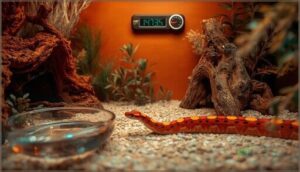
A clean enclosure isn’t just tidy — it’s your snake’s first line of defense.
Spend 5–10 minutes daily on your Spot Cleaning Routine: remove waste, check hides, and confirm Enclosure Temperature and Humidity are on target.
Weekly, tackle Substrate Rotation, Water Dish Hygiene, and Health Log Updates to stay ahead of problems.
Reptile Care and Maintenance keeps your snake thriving long‑term.
Nutrition and Feeding Guidelines

Feeding your corn snake well doesn’t have to be complicated, but getting it right makes a real difference in their health and happiness. What your snake eats — and how often — shifts as they grow, so it helps to know what to expect at each stage.
Here’s a breakdown of everything you need to feed them well.
Diet and Prey Size by Age
Getting your corn snake’s diet right starts with one simple rule: prey should match your snake’s mid-body width — never exceeding 1.5 times that thickness.
- Hatchlings (8–12 in): pinky mice, 1–2g each
- Juveniles (3–6 months): fuzzy mice, 4–6g
- Subadults (year two): small adult mice, 7–11g
- Adults: medium mice following the body‑width rule
- All ages: prey weight stays under 10% of body weight
Feeding Frequency and Schedule
Feeding your corn snake isn’t guesswork — it’s a rhythm.
Hatchling meal timing starts fast: every 5–7 days with pinky mice.
Juvenile interval adjustments slow things down to every 7–10 days.
Adult seasonal feeding stretches to every 14–21 days.
Senior portion scaling means smaller meals every 10–14 days.
Good feeding calendar planning keeps your reptile care and feeding nutrition consistent year-round.
Water and Hydration Needs
Just as a steady feeding schedule keeps your corn snake thriving, consistent hydration matters just as much. Water bowl size should allow full-body soaking — wide and shallow works best.
Check it daily; dirty water breeds bacteria quickly.
Watch for dehydration signs like wrinkled skin or sluggish movement.
Keep enclosure humidity around 30–40% for comfortable reptile care year‑round.
Safe Feeding Practices
Always use frozen-thawed prey — it protects your snake from bite injuries and keeps reptile health risks low. For safe thawing, warm the rodent in hot water until it reaches roughly 98–100°F.
Match prey size to 1–1.5× your snake’s midbody width. Use feeding tongs, keep substrate clear during meals, and leave your snake undisturbed for 48 hours after feeding.
Common Health Issues in Corn Snakes

Even the hardiest corn snake can run into health problems from time to time, and knowing what to watch for makes all the difference.
Most issues are manageable when you catch them early.
Here are the most common health concerns every corn snake owner should know.
Respiratory Infections and Mites
Two of the most common health issues you’ll face are respiratory infections and mites — both manageable with the right Snake Care approach.
Watch for open‑mouth breathing, wheezing, or mucus discharge.
Poor Humidity Management and weak Ventilation Strategies are frequent culprits.
Mites follow a persistent Mite Lifecycle, requiring full Enclosure Sanitation plus repeated treatments.
Reptile Health and Wellness depends on early action and proper Veterinary Medicine and Care, including Antibiotic Treatment when needed.
Shedding and Skin Problems
Shedding is one of those areas where Humidity Management quietly makes or breaks your snake’s comfort. Juveniles shed every 4–6 weeks; adults slow to every 2–3 months.
Keep enclosure humidity at 60–70% during active Shedding to support clean Shedding Cycle Timing. A damp moss hide provides Stuck Shed Prevention naturally.
Retained eye caps need Veterinary Care — do not pick them. Scale Rot Treatment starts with dry, clean bedding.
Recognizing Signs of Illness
Catching illness early can save your corn snake’s life. Watch for these red flags:
- Respiratory distress — wheezing, open‑mouth breathing, or neck‑stretching to clear airways
- Mouth rot or regurgitation — cheesy discharge, drooling, or bringing up food hours after eating
- Weight loss or abnormal stool — thinning spine, watery feces, or low energy
When multiple signs appear together, contact a reptile vet immediately.
Preventative Veterinary Care
Staying ahead of health issues means building a real prevention routine.
Schedule annual Wellness Exams with a reptile vet — younger snakes need check‑ins every 3–4 months.
Add Parasite Screening once or twice yearly using fresh fecal samples.
Since no reptile vaccines exist, Vaccination Alternatives such as strict Quarantine Protocols and smart Biosecurity Practices are your best defense.
Good Veterinary Medicine and Care keeps your snake thriving long‑term.
Top 10 Products for Corn Snake Care
Having right gear makes corn snake care a whole lot easier — and less stressful for both of you.
The products below cover everything from housing and heat to substrate and hydration.
Here are ten worth keeping on your radar.
1. Repti Zoo 50 Gallon Glass Terrarium
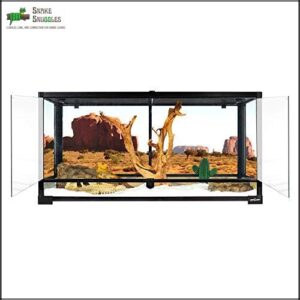
The REPTI ZOO 50 Gallon Glass Terrarium is one of the smartest investments you can make for your corn snake. At 36 × 18 × 18 inches, it gives adults real room to stretch, explore, and thermoregulate properly.
The dual front-opening doors make feeding low‑stress, and the raised base fits a heat mat underneath without hassle.
Tempered glass keeps things sturdy, while the mesh top lets UVB and heat lamps do their job.
Setup takes about five minutes — genuinely.
| Best For | Reptile owners keeping adult corn snakes, ball pythons, bearded dragons, or similarly sized reptiles who want a roomy, easy-to-maintain setup. |
|---|---|
| Primary Use | Reptile Enclosure |
| Species Suitability | Corn snakes, boas, bearded dragons |
| Ease of Maintenance | Wipe-clean glass panels |
| Brand | REPTI ZOO |
| Material | Glass |
| Beginner Friendly | Yes, 5-min assembly |
| Additional Features |
|
- Dual front-opening doors make feeding simple and reduce the chance of escapes
- Raised bottom frame fits a heat mat right underneath — no workarounds needed
- Quick to assemble or break down, around five minutes flat
- Screen panels on the side walls can make holding high humidity a real challenge
- The top frame may struggle under heavy lighting setups or constant use
- A few buyers have reported damaged glass doors arriving due to packaging issues
2. ReptiChip Coconut Substrate for Reptiles
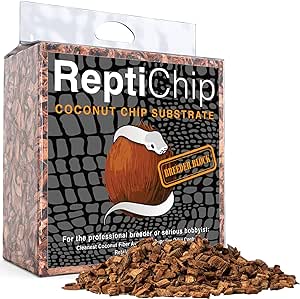
Good substrate does more than line the bottom of a tank — it shapes your snake’s whole environment. ReptiChip’s coconut husk substrate is a standout choice for corn snakes.
Each compressed brick expands to a full 72 quarts, covering even a 50‑gallon enclosure with ease.
It holds humidity well, which helps healthy shedding, and the micro‑pore structure traps odors without chemicals.
It’s 100% organic, soft enough to prevent impaction, and safe for colubrids.
Your snake’s enclosure stays fresher, longer.
| Best For | Reptile owners — especially snake, turtle, or tortoise keepers — who want a natural, odor-controlling substrate that maintains humidity without synthetic additives. |
|---|---|
| Primary Use | Reptile Substrate |
| Species Suitability | Snakes, turtles, tortoises |
| Ease of Maintenance | Rinse and replace substrate |
| Brand | ReptiChip |
| Material | Coconut husk (organic) |
| Beginner Friendly | Yes, easy hydration setup |
| Additional Features |
|
- Expands to a massive 72 quarts from one brick, so it easily fills large enclosures
- Holds humidity really well and traps odors naturally — no chemicals needed
- 100% organic and soft, making it safe and comfortable for your reptiles
- It’s pricier than basic substrate options, so budget-conscious buyers might hesitate
- Can kick up a fair amount of dust when you first hydrate it — handle it somewhere with good airflow
- Needs consistent moisture management, or you risk mold buildup over time
3. Zilla Reptile Shale Rock Den
Every corn snake needs a place to disappear — and the Zilla Reptile Shale Rock Den delivers that instinct beautifully.
At 9 inches long and 3.5 inches high, it fits comfortably in most setups without crowding the space.
The non-porous synthetic exterior won’t trap bacteria or moisture, so cleaning takes just warm soapy water and a rinse.
Your snake gets a secure, naturalistic retreat that reduces stress, and you get a hide that stays hygienic with minimal effort.
| Best For | Reptile owners with small to medium-sized pets like corn snakes, leopard geckos, or bearded dragons who want a naturalistic hide that’s easy to maintain. |
|---|---|
| Primary Use | Reptile Hide |
| Species Suitability | Bearded dragons, leopard geckos, reptiles |
| Ease of Maintenance | Wash with warm soapy water |
| Brand | Zilla |
| Material | Plastic |
| Beginner Friendly | Yes, simple placement |
| Additional Features |
|
- Non-porous surface resists bacteria and moisture, so it stays cleaner longer
- Compact size fits most standard enclosures without eating up valuable space
- Works in both terrestrial and aquatic setups, giving you some flexibility
- Too small for larger reptiles, so it won’t work for every setup
- May have an off-putting chemical smell straight out of the box
- Some buyers feel the price doesn’t quite match what you’re getting
4. iPower Hydroponic Seedling Heat Mat Thermostat

Temperature control isn’t optional for corn snakes — it’s the foundation of their health.
The iPower Hydroponic Seedling Heat Mat Thermostat gives you precise control from 40°F to 108°F, so hitting that warm-side sweet spot of 85–88°F is straightforward.
The digital display adjusts in single-degree increments, and built-in error codes alert you if something’s off.
Set the probe about an inch into the substrate near the warm hide, and your snake gets consistent, safe heat without guesswork.
| Best For | Corn snake owners who want reliable, precise temperature control without constantly second-guessing their setup. |
|---|---|
| Primary Use | Heat Regulation |
| Species Suitability | Reptiles, small pets, plants |
| Ease of Maintenance | Wipe-clean waterproof surface |
| Brand | iPower |
| Material | Waterproof fabric/wiring |
| Beginner Friendly | Yes, plug-and-play |
| Additional Features |
|
- Covers a wide temp range (40°F–108°F), so nailing that 85–88°F warm side is easy and consistent
- Digital thermostat takes the guesswork out — no more manual adjustments or hot spots
- Waterproof and durable, so cleanup is simple and it holds up over time
- Probe placement matters a lot — put it in the wrong spot and your readings won’t reflect what your snake actually feels
- Not ideal if you need temps outside its range, which could limit use for more exotic setups
- Instructions aren’t the clearest, so first-time users might need to dig into the manual or reach out to support
5. Exo Terra Large Reptile Water Dish

Once heat is dialed in, hydration becomes the next piece of the puzzle.
The Exo Terra Large Reptile Water Dish keeps things simple — it measures about 8.7 by 6.7 inches and holds enough water for your corn snake to drink and soak comfortably.
The non-porous, food-grade resin resists bacteria buildup, and the built-in steps prevent feeder insects from drowning.
It fits naturally in a 40-gallon setup and wipes clean easily, making daily maintenance genuinely low‑effort.
| Best For | Reptile and amphibian owners who want a low-maintenance, natural-looking water dish that keeps their terrarium clean and their animals well-hydrated. |
|---|---|
| Primary Use | Water/Soaking Dish |
| Species Suitability | Reptiles and amphibians |
| Ease of Maintenance | Non-porous smooth surface |
| Brand | Exo Terra |
| Material | Food-grade resin |
| Beginner Friendly | Yes, easy to clean |
| Additional Features |
|
- Non-porous, food-grade resin means bacteria has a hard time taking hold — easy to wipe down and keep clean
- Built-in safety steps stop feeder insects from drowning in the dish
- Blends right into a naturalistic terrarium setup without looking out of place
- A few buyers have flagged that the actual dimensions don’t always match what’s listed, so double-check before buying
- Not a great fit for very small or very large reptiles — the size is pretty middle-of-the-road
- Only one size option here, so if it doesn’t match your setup, you’re out of luck
6. iPower Digital Heat Mat Thermostat Controller

Keeping your water dish clean means nothing if your heat mat is running wild — that’s where the iPower Digital Heat Mat Thermostat Controller earns its place.
It controls temperatures between 40°F and 108°F in precise one-degree increments, so you’re not guessing whether your warm side is hitting that 85–90°F sweet spot. The LED indicators show you exactly what’s happening at a glance. Plug it in, set your target, and let it handle the rest.
| Best For | Reptile keepers, gardeners starting seeds, and homebrewers who need reliable, hands-off temperature control without the guesswork. |
|---|---|
| Primary Use | Temperature Control |
| Species Suitability | Reptiles, small pets, plants |
| Ease of Maintenance | External plug-in controller |
| Brand | iPower |
| Material | Copper/metal |
| Beginner Friendly | Yes, plug-in operation |
| Additional Features |
|
- Precise one-degree control from 40°F to 108°F — no more hot or cold surprises
- Works with any heating pad, not just iPower’s own mats
- Simple plug-in setup with clear LED indicators so you always know what’s going on
- Can only cut power to the mat — it can’t boost heat output if your mat isn’t strong enough
- Keep the probe out of standing water or soaked soil, which limits some use cases
- Error codes (E1, E2, E3) aren’t explained on the unit itself, so you’d need the manual handy
7. iPower Reptile Under Tank Heater

Once your thermostat is doing its job, it needs something reliable to actually produce that warmth — and the iPower Reptile Under Tank Heater delivers exactly that.
The 8×12-inch mat runs at 16 watts and fits snugly under 30–40 gallon tanks, providing steady belly heat that corn snakes naturally crave. Its upgraded PTC heating film distributes warmth evenly, while the 3M adhesive keeps it firmly in place. UL-listed, waterproof, and backed by a one-year warranty — it’s a solid foundation for your snake’s warm side.
| Best For | Corn snake owners with 30–40 gallon tanks who want a reliable, affordable heat source to pair with a thermostat. |
|---|---|
| Primary Use | Under-Tank Heating |
| Species Suitability | Reptiles, lizards, amphibians |
| Ease of Maintenance | Waterproof wipe-clean mat |
| Brand | Vivosun |
| Material | PTC heating element |
| Beginner Friendly | Yes, adhesive mount |
| Additional Features |
|
- Even heat distribution thanks to the upgraded PTC heating film — no hot spots, just steady warmth
- Sticks and stays put with 3M adhesive, so you’re not constantly repositioning it
- UL-listed and waterproof, which gives you peace of mind during day-to-day use
- No built-in temperature control, so a separate thermostat is a must
- Not ideal for larger tanks or species that need higher sustained temps
- Thick substrate can reduce how effectively the heat reaches your snake
8. TempPro TP50 Digital Hygrometer Thermometer
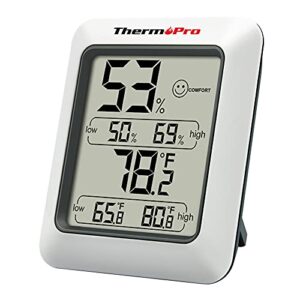
Now that your heat mat is working hard, you need accurate eyes inside that enclosure. The TempPro TP50 gives you exactly that — readings accurate to ±1°F and ±2% humidity, updating every 10 seconds so you’re never guessing.
Its large LCD shows a handy Dry/Comfort/Wet indicator, and the magnetic back sticks right to your tank. No blind spots, no surprises. When your corn snake’s environment stays dialed in, everything else — feeding, shedding, behavior — falls naturally into place.
| Best For | Reptile owners, hobbyists, and anyone who needs a no-fuss way to keep tabs on temperature and humidity inside a tank, greenhouse, humidor, or any small enclosed space. |
|---|---|
| Primary Use | Climate Monitoring |
| Species Suitability | Reptiles, various animals |
| Ease of Maintenance | Removable battery compartment |
| Brand | TempPro |
| Material | Plastic |
| Beginner Friendly | Yes, auto-refresh display |
| Additional Features |
|
- Accurate to ±1°F and ±2–3% RH, so you’re getting readings you can actually trust
- Updates every 10 seconds and shows a Dry/Comfort/Wet indicator at a glance
- Magnetic back and tabletop stand make it easy to place just about anywhere
- No Bluetooth, so you have to physically check it — no remote monitoring
- A few users noticed the display runs a little bright with no way to dim it
- Accuracy can drift slightly, with some reporting up to a 1°C difference from reference thermometers
9. Corn Snakes Comprehensive Owner’s Guide

Every serious corn snake keeper needs a reliable reference, and the Corn Snakes Complete Owner’s Guide by Bill and Kathy Love — world-leading breeders — delivers exactly that.
At 224 pages, it covers everything from housing and feeding schedules to breeding genetics and over 100 color morphs.
Whether you’re setting up your first enclosure or exploring combo morphs like snow and palmetto, this guide answers the questions you didn’t even know to ask.
It’s the kind of resource you’ll reach for again and again.
| Best For | Anyone who owns or is thinking about getting a corn snake — from total beginners to experienced keepers who want to level up their breeding and genetics knowledge. |
|---|---|
| Primary Use | Care Reference Book |
| Species Suitability | Corn snakes |
| Ease of Maintenance | No maintenance required |
| Brand | CompanionHouse Books |
| Material | Paper/print |
| Beginner Friendly | Yes, novice-focused |
| Additional Features |
|
- Written by Bill and Kathy Love, two of the most respected names in corn snake breeding — so the advice actually comes from experience
- Covers a ton of ground in one book: housing, feeding, breeding, genetics, morphs, and common health issues
- Full-color photos make it easy to identify morphs and understand what you’re looking at
- Care recommendations and regulations are US-focused, so some details won’t apply if you’re keeping snakes elsewhere
- A few medications or treatments mentioned may be hard to find depending on where you live
- Doesn’t get into specialized veterinary care, so it won’t replace a good reptile vet when something serious comes up
10. Complete Corn Snake Care Handbook

Rounding out this list is the Complete Corn Snake Care Handbook — a 176-page guide published in late 2025 that covers everything from enclosure setup to breeding and behavior. At just $12.80, it’s one of the most affordable references you’ll find.
The language stays clear and accessible, so whether you’re on your first snake or your fifth, it won’t talk over your head. Think of it as your go-to troubleshooting companion when questions come up at 11pm and your vet isn’t available.
| Best For | New and experienced corn snake owners who want a solid, affordable reference they can flip through anytime. |
|---|---|
| Primary Use | Care Reference Book |
| Species Suitability | Corn snakes |
| Ease of Maintenance | No maintenance required |
| Brand | Independently Published |
| Material | Paper/print |
| Beginner Friendly | Yes, all skill levels |
| Additional Features |
|
- At $12.80, it’s a steal for 176 pages of hands-on guidance
- Covers the full picture — anatomy, diet, habitat, breeding, and health all in one place
- Written in plain language that doesn’t require a biology degree to follow
- Only useful if you have a corn snake — won’t help much with other species
- Serious health issues may still need a vet’s input beyond what’s covered
- No digital version, so you can’t pull it up on your phone mid-tank-setup
Frequently Asked Questions (FAQs)
Is it hard to take care of a corn snake?
Not at all. Corn snakes are one of the easiest reptiles to keep. They don’t need daily feeding, and basic care takes just minutes a day.
Are corn snakes beginner friendly?
Yes — a thousand times yes.
Corn snakes are practically made for beginners. They’re calm, rarely bite, eat simple frozen-thawed mice, and don’t demand complex care.
You’ll feel confident from day one.
Are corn snakes friendly?
Honestly, yes — they’re one of the friendliest snakes you can keep. They tolerate handling well, rarely bite, and with regular interaction, they’ll calmly explore your hands like you’re old friends.
How difficult is it to take care of a corn snake?
Like learning to ride a bike, corn snake care feels tricky at first but quickly becomes second nature.
Daily upkeep takes just minutes, feeding happens every one to two weeks, and most health issues are preventable with proper setup.
What is the temperament of a corn snake?
most corn snakes are calm, curious, and easy to handle — making them one of the best starter snakes around.
They rarely bite and usually prefer exploring your hands over causing trouble.
Can corn snakes live together peacefully?
Most experts recommend keeping corn snakes alone. They’re solitary by nature, and sharing space causes stress, competition, and even cannibalism. Solo housing keeps your snake healthier and happier long-term.
What causes corn snakes to refuse food?
Food refusal usually comes down to stress, wrong temperatures, or illness.
A too-cold enclosure slows digestion, while prey served cool triggers instinctive rejection.
If skipping meals persists beyond two weeks, consult a vet.
How do corn snakes reproduce and breed?
Spring is their starting pistol. Males mature by 18 months, females by 2 to 3 years. After courtship and mating, females lay 10 to 15 leathery eggs, which hatch in 6 to 10 weeks.
Do corn snakes require special winter care?
Winter care for corn snakes is mostly about keeping temperatures stable. Maintain a warm side around 80–85°F and a cool side near 75°F — even when it’s freezing outside.
No special overhaul needed.
What plants are safe for corn snake enclosures?
Safe plant picks include pothos, spider plants, Boston ferns, and bromeliads.
toxic ones like English ivy or peace lilies.
Always rinse new plants and repot in reptile-safe soil before adding them.
Conclusion
Some assume corn snakes are "too simple" to be rewarding pets—that’s simply not true. Mastering corn snake temperament and care reveals an animal full of quiet personality, one that rewards patience with genuine trust.
You don’t need decades of reptile experience. You need the right setup, consistent habits, and a willingness to learn your snake’s cues. Give it those three things, and you’ll have a thriving companion for twenty years.
- https://www.allanglescreatures.com/blogs/news/how-to-handle-and-tame-your-corn-snake-safely
- https://www.cbreptile.com/handling-your-pet-corn-snake/
- https://www.xyzreptiles.com/corn-snake-handling-tips/
- https://reptilesupply.com/blogs/how-to-guides/how-to-set-up-a-corn-snake-enclosure
- https://www.visionproducts.us/blog/corn-snakes/