This site is supported by our readers. We may earn a commission, at no cost to you, if you purchase through links.

A well-meaning snake keeper once watched in horror as their otherwise docile ball python struck at their hand during feeding—not because the snake was aggressive, but because they’d positioned themselves directly in the strike zone. Understanding how far you should be when feeding a snake isn’t just about convenience; it’s the difference between a smooth feeding routine and a defensive bite that could have been avoided.
Most keepers underestimate their snake’s reach, forgetting that these predators can extend nearly their entire body length in a single forward lunge. The safe distance changes dramatically based on your snake’s size, temperament, and species-specific behavior. Hatchlings demand different clearance than full-grown adults, and a calm corn snake requires less buffer than a food-motivated boa.
Table Of Contents
Key Takeaways
- Maintain a minimum distance of 12 inches for hatchlings and scale up to 36+ inches for large adults, with the safe zone determined by your snake’s ability to strike nearly its full body length forward.
- Use 12- to 24-inch feeding tongs made of stainless steel or textured plastic to keep your hands completely out of the strike zone while presenting prey in a controlled, straight-line motion.
- Species temperament dramatically affects feeding distance—ball pythons stay calm during feeding while boas show stronger food responses that require greater clearance and more cautious prey presentation.
- Wait 48 to 72 hours after feeding before handling your snake to prevent regurgitation, and always watch for defensive postures like coiling, hissing, or raised heads that signal strike readiness.
Safe Distance Guidelines for Feeding Snakes
Feeding your snake safely starts with understanding how far you need to be from your pet during mealtime. The right distance depends on your snake’s size, species, and how far it can strike when going after prey.
Let’s break down the specific distance guidelines that will keep both you and your snake safe during feeding.
Recommended Minimum Distance for Different Snake Sizes
How close is too close when feeding your pet snake? For hatchlings, maintain at least 12 inches from the snake’s head during prey delivery. Juveniles require 18–24 inches of separation to accommodate their striking range. Small adults need a 24–30 inch buffer, while medium to large adults benefit from 30–36 inches. Very large or defensive individuals demand 36 inches or more for maximum feeding safety.
Matching these distance guidelines with proper prey proportions—like the feeding ratios based on your snake’s girth—creates a complete safety system for every feeding session.
When feeding snakes, maintain 12 inches for hatchlings and scale up to 36+ inches for large adults based on striking range
When evaluating the safety of feeding practices, consider the importance of methodological rigor in scientific studies.
Understanding Striking Range and Safety
Knowing your snake’s strike range helps you predict defensive bites and stay safe during feeding. Most snakes can reach one full body length forward when threatened, so place safety barriers between you and the animal. Watch for defensive postures—coiling, hissing, or raised heads signal strike readiness. Use these markers to enhance your feeding protocols:
- Maintain at least one body-length separation from the snake’s striking axis during all prey presentations.
- Install protective barriers like enclosure walls or feeding tubs to minimize proximity to the snake’s mouth.
- Verify proper lighting and clear line of sight to detect defensive postures early in the feeding process.
- Document feeding outcomes and adjust your approach based on observed strike zones and snake behavior patterns. Understanding language patterns is vital for effective communication about snake behavior.
Factors Affecting Safe Feeding Distance
Several distance variables shape your feeding safety margin beyond simple body length calculations. Snake temperament varies dramatically—ball pythons stay calm while boas show stronger feeding responses that expand strike zones. Prey movement triggers pursuit instincts, so frozen-thawed items reduce reactivity.
Understanding proper frozen-thawed techniques helps minimize feeding aggression, especially when transitioning ball pythons to frozen mice for the first time.
Feeding environments matter too: cluttered spaces obscure defensive signals and increase miscalculation risk. Adjust your snake care protocols based on these combined factors.
Tools and Techniques for Safe Feeding
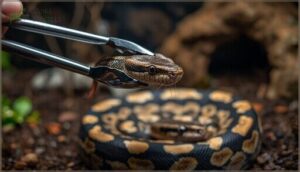
The right tools make feeding your snake safer and more predictable. You need equipment that keeps your hands away from striking range while still allowing controlled prey delivery.
For a detailed rundown of safe feeding gear, check out this guide to essential ball python feeding tools and tips.
Let’s look at the essential gear and methods that protect both you and your snake during feeding time.
Using Feeding Tongs and Protective Gear
You’ll need 12- to 24-inch feeding tongs to keep your hands out of striking range during snake feeding. Stainless steel or textured plastic tongs work best for secure grip and easy cleaning.
Always sanitize your tongs after each feeding session—proper safe snake feeding practices include regular disinfection to prevent bacterial contamination.
Always inspect your gear for cracks before each feeding session—damaged tools can fail when you need them most.
Wear protective gloves when handling prey to reduce bite risk and maintain control throughout feeding protocols.
Proper Prey Presentation Methods
Position prey just beyond your snake’s strike range, then advance it slowly in a straight line to trigger a feeding response. This controlled method prevents defensive reactions and promotes consistent target training through clear feeding cues.
- Present prey in a natural posture that mimics typical prey behavior to elicit proper strikes
- Move prey gradually toward the snake rather than swinging it in erratic patterns
- Watch your snake’s posture for readiness signs before advancing prey closer
- Use food motivation strategically by maintaining steady, predictable presentation during each session
Avoiding Direct Hand Contact
Hand safety tips start with your choice of tools. Use feeding tongs or long-reach implements to present prey, keeping your hands well away from the snake’s mouth. Protective gear like thick gloves adds a layer of security during accidental exposure.
Establish a consistent, non-contact feeding routine when feeding your snake. This reduces defensive strikes and builds predictable behavior patterns over time.
| Safety Practice | Tool/Method | Purpose |
|---|---|---|
| Snake feeding techniques | Feeding tongs (12–18 inches) | Maintain distance from strike zone |
| Protective gear usage | Thick gloves or sleeves | Reduce bite/constriction risk |
| Safe handling practices | Non-contact routine | Minimize defensive responses |
| Snake bite prevention | Fixed observer distance | Prevent close approaches |
Step-by-Step Feeding Process
Feeding your snake safely isn’t just about distance—it’s about following a consistent routine from start to finish. Each step matters, from setting up the space to watching how your snake responds after eating.
Let’s walk through the process so you can feed confidently every time.
Preparing The Feeding Area

Before you open that enclosure, establish a calm, predator-ready feeding zone. Clean surfaces eliminate competing scents that trigger false strikes. A non-slip mat stabilizes prey and prevents startling movements.
Maintain species-appropriate temperature and humidity—stressed snakes don’t feed predictably. Remove clutter and confirm your feeding tongs are within arm’s reach.
Proper enclosure setup and designated feeding zones protect both you and your snake’s health throughout every reptile care session.
Delivering Prey Safely

Your feeding tongs should grip prey firmly at arm’s length—roughly 1.5–2 snake lengths from the head. Present pre-killed, slightly warm prey on a neutral surface to reduce erratic strikes. Keep your hands clear and retreat immediately after release.
This feeding guide ensures proper prey temperature, refined feeding techniques, and handling precautions that protect both you and your snake’s health throughout each feeding session.
Monitoring Snake Behavior During Feeding
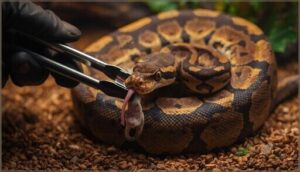
Watch your snake’s body language closely—tension, coiling, and rapid tongue flicking signal feeding readiness. Stay outside strike response range while documenting behavioral patterns and feeding cues throughout the session.
- Record head orientation and strike speed during prey presentation
- Note any defensive displays like gaping or tail thrashing
- Monitor appetite monitoring signs including refusal or hesitation
- Document environmental factors affecting snake behavior and reptile nutrition
Consistent observation protects your snake health and refines your feeding techniques over time.
Adjusting Distance for Snake Species and Behavior
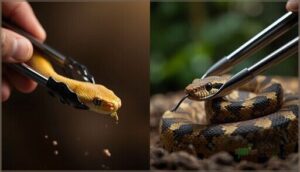
Not every snake feeds the same way, and your distance needs to shift based on who you’re working with. A docile corn snake won’t lunge like a hungry boa, and a skittish juvenile behaves nothing like a calm adult.
Let’s break down how species traits and individual temperament should guide your feeding approach.
Differences Between Ball Pythons, Boas, and Corn Snakes
You’ll notice significant snake size variations across species that directly impact feeding distance. Ball pythons reach 3 to 5 feet with stocky builds, requiring moderate clearance. Boas exceed 6 feet with sturdy girth, demanding greater distance during feeding. Corn snakes measure 4 to 5 feet but remain slender, allowing closer approach.
Each pet snake’s temperament comparison and feeding preferences also influence your safety protocols.
Recognizing Defensive or Aggressive Feeding Responses
Body language tells you whether your snake feels threatened or is genuinely hungry. Look for these defensive postures and aggressive cues:
- Head pulling back or coiling away from prey signals stress or reluctance
- Rapid striking without capture often indicates feeding stress rather than appetite
- Elevated body or flattened neck shows heightened alertness—hold back
- Tail whipping or thrashing means your snake’s uncomfortable with prey presentation
These attack signals help you adjust distance and reduce feeding refusal.
Customizing Approach for Juvenile Vs. Adult Snakes
Age-specific nutrition shapes your feeding approach. Juvenile snakes show sharper feeding reflexes and faster growth rates, so position prey mid-range—about one body length away—to avoid misreads. Adults tolerate slightly greater distance since their feeding schedule is more predictable.
Species variations matter too: a young corn snake’s strike differs from a juvenile boa’s. Adjust pet snake feeding distance as juvenile development progresses for ideal snake health and snake care.
Top Products for Safe Snake Feeding
Having the right tools makes feeding your snake safer and more efficient.
The following products can help you maintain proper distance and reduce direct contact during feeding sessions.
Each option fulfills a specific purpose in your snake care routine.
1. The Prepared Pantry White Bread Mix
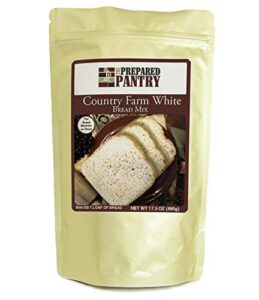
You should never use The Prepared Pantry White Bread Mix for snake feeding. This product isn’t documented as appropriate prey in any credible reptile veterinary guidelines.
Snakes require species-specific prey—mice, rats, or chicks—that match their dietary needs. Bread mixes introduce serious bread mix risks to snake health, including digestive upset and nutritional imbalances.
If you’re facing feeding refusal or searching for feeding alternatives, consult a qualified reptile veterinarian. Proper snake nutrition always prioritizes whole prey over carbohydrate-heavy products that don’t support snake diets or your pet’s feeding schedule.
| Best For | Home bakers who want an easy, convenient way to make fresh white bread without measuring multiple ingredients from scratch. |
|---|---|
| Brand | The Prepared Pantry |
| Weight | 1.08 Pounds |
| Made In | USA |
| Product Form | Dry Mix |
| Target Use | Bread Making |
| Special Features | Includes Yeast Mix |
| Additional Features |
|
- Simple preparation with just butter and water needed beyond the mix
- Works in both bread machines and conventional ovens for flexibility
- Includes yeast and herb blend already measured in the package
- Some users report bland flavor and recommend adding extra herbs or spices
- Yeast packet may arrive non-viable, requiring separate yeast purchase
- Recipe may need adjustments like reducing butter or changing water temperature for best results
2. Gargeer Land Snail Veggie Diet

Gargeer Land Snail Veggie Diet doesn’t belong in snake feeding protocols. This 2oz powder may excel at land snail care, offering calcium supplements and veggie benefits for snail nutrition and snail diet plans, but your pet snake requires a carnivorous diet.
Snakes need whole prey—rodents or chicks—that align with their feeding schedule. Using vegetable-based products disrupts proper snake diets and creates nutritional deficiencies.
If you’re troubleshooting feeding challenges, stick with frozen-thawed rodents. Consult a reptile veterinarian before introducing anything outside established snake feeding guidelines.
| Best For | Land snail owners looking for a convenient, non-GMO powder supplement to support shell health and overall vitality in garden or pet snails. |
|---|---|
| Brand | Gargeer |
| Weight | 2oz |
| Made In | USA |
| Product Form | Powder |
| Target Use | Snail Feeding |
| Special Features | Non-GMO Ingredients |
| Additional Features |
|
- Contains a diverse mix of natural ingredients like hemp seeds, pumpkin seeds, and black soldier fly larvae that provide essential proteins, fats, and minerals for snail growth
- Made in the USA without harmful additives like ethoxyquin or copper sulfate, offering a safer dietary option for all life stages
- Convenient powder form makes it easy to sprinkle and portion out for different terrarium setups
- Some snails may refuse to eat the powder, leading to wasted product and frustration for owners
- Can foul the substrate and water if not cleaned up promptly, requiring more frequent terrarium maintenance
- Results vary widely among users, with some reporting little to no improvement in snail health or appetite
3. Ahab Live Prey Vinyl Album

This Ahab live recording, priced at $35.56, doesn’t fit snake feeding protocols. Vinyl collecting and music reviews belong in your hobby space—not reptile care.
Live prey for snakes means thawed rodents matched to prey size, not album artwork or sound quality from doom metal concerts. When feeding snakes, you need proper tongs and frozen-thawed mice, not live recordings from Death Row Fest.
Skip this product for your terrarium. Focus on safe live feeding techniques and accurate prey size instead.
| Best For | Fans of Ahab and funeral doom metal who want to experience the band’s live sound from their iconic 2006 album “The Call of the Wretched Sea.” |
|---|---|
| Brand | NAPALM RECORDS |
| Weight | 1.25 pounds |
| Made In | Germany |
| Product Form | Vinyl |
| Target Use | Music Collection |
| Special Features | Special Etching |
| Additional Features |
|
- Captures the raw intensity of an Ahab concert with tracks from their celebrated debut album
- High-quality vinyl pressing with special etching on Side D and professional mastering
- Reasonably priced at $35.56 for collectors looking to expand their doom metal collection
- Limited setlist featuring only tracks from one album, missing songs like “The Sermon”
- Minimal audience presence in the recording diminishes the live concert atmosphere
- Not suitable for listeners wanting a comprehensive overview of Ahab’s full discography
Frequently Asked Questions (FAQs)
Can snakes recognize their owners during feeding?
Think of your pet snake as a creature of habit, not affection.
Research shows snakes usually respond to feeding cues and routine rather than recognizing individual owners, relying on habituation effects over true species behavior patterns.
How long after eating should you handle?
Wait at least 48 to 72 hours before handling your snake after feeding to prevent regurgitation risks.
Post-meal handling can disrupt snake digestion, so monitor feeding schedules carefully and respect this essential safety window.
What if my snake refuses food repeatedly?
If your snake refuses food repeatedly, check enclosure temperatures, humidity, and prey size first.
Persistent feeding refusal beyond two weeks in adults warrants a veterinary evaluation to rule out illness, parasites, or metabolic issues.
Should you feed snakes in separate containers?
Yes, you should feed snakes in separate containers. Individual feeding environments reduce competition, minimize contamination, allow better monitoring of each snake’s response, and support species-specific prey management while maintaining feeding hygiene.
Do snakes need vitamin supplements with rodents?
Fortifying rodents with vitamins isn’t usually on the menu for your pet snake. Quality feeder mice and rats already pack the nutrition requirements your reptile needs—excessive dietary balance adjustments actually create health risks rather than prevent them.
Conclusion
The next time you open your snake’s enclosure with prey in hand, you’ll know exactly where to position yourself—and why it matters. Understanding how far you should be when feeding a snake isn’t about fear; it’s about respecting your animal’s instincts while protecting yourself.
Measure twice, feed once. Use those tongs. Keep your distance calculated, not casual. One defensive strike teaches you more than any article could, but you don’t need to learn that lesson firsthand.
- https://azeah.com/reptiles-amphibians-snakes/benefits-feeding-frozenthawed-rodents-snakes
- https://researchers.uq.edu.au/researcher/1807
- https://reptilesmagazine.com/
- https://arav.org/
- https://academichelpexpress.blog/2024/08/please-use-the-bulleted-points-and-the-rubric-below-to-guide-your-work-your-pa/